
Reviewed · TICKETS
Tokyo: Robot Piloting Attraction Ticket
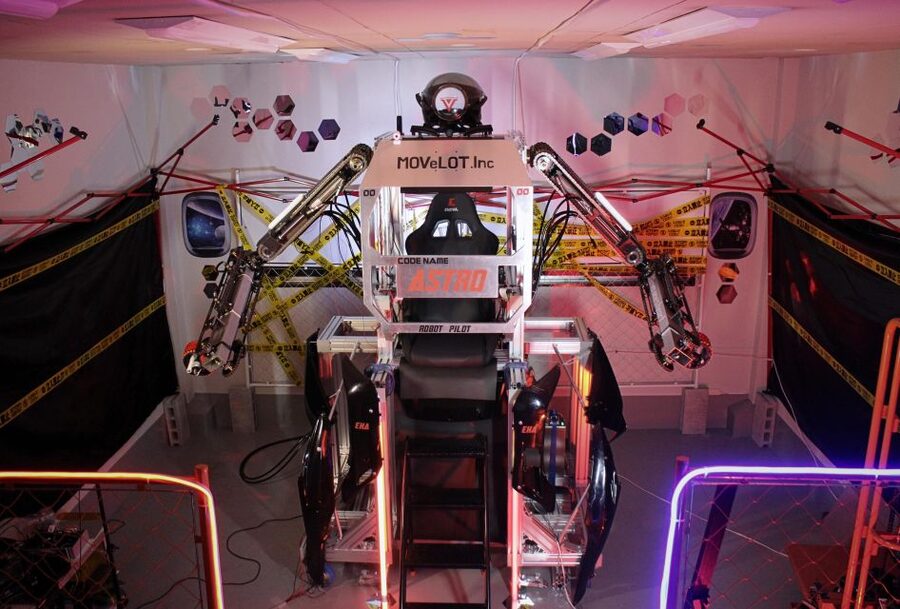
Tokyo’s Robot Base lets you do something rare: sit inside a human-piloted robot and move its arms while firing onboard blasters. The 50-minute visit wraps that hands-on session in a playful alien-invasion story, with VR games and a small programming activity along the way.
I like the small groups of up to four, which give the staff room to explain the controls and help you operate the machine safely. I also like the chance to meet people who are building real robotics, not simply displaying a movie prop. The main drawback is clear: this is an early prototype, so the robot cannot walk, and your personal piloting time is about 10 minutes.
In This Review
- Quick facts about the Robot Base experience
- Entering Tokyo’s small but serious Robot Base
- The three-part schedule: VR, coding, and piloting
- What it feels like to pilot ASTRO
- Why the developer story matters
- How much value do you get for $32?
- Who will enjoy this most?
- Getting there and timing your visit
- The best way to plan your group
- What I like, and what I would improve
- Should you book the Robot Base?
- FAQ
- Where is the Tokyo Robot Piloting Attraction?
- How do I reach the Robot Base?
- How long does the experience last?
- How much does the activity cost?
- How many people can join one group?
- What can I control on the robot?
- How long does each person pilot the robot?
- Is the activity available in English?
- What should I bring?
- Who cannot take part?
- Can I cancel the booking?
Quick facts about the Robot Base experience
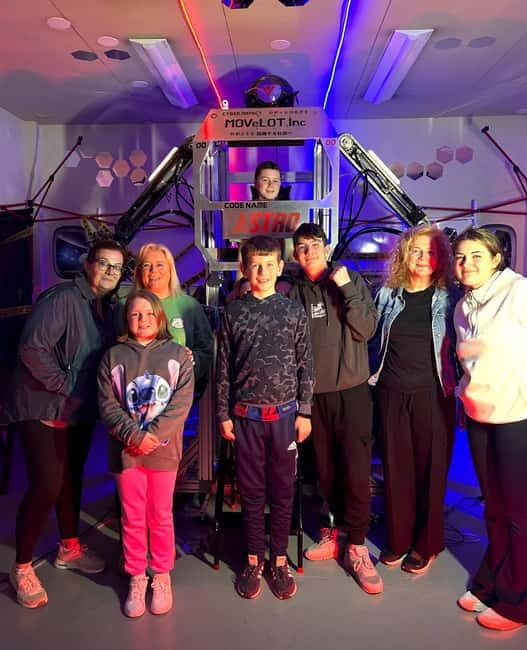
- You pilot ASTRO yourself: Move the robot’s arms and fire its blasters under staff supervision.
- The robot cannot walk yet: Its legs have been removed to fit inside the laboratory, and the project is still in its first development phase.
- Three activities fill the visit: Expect VR shooting games, a mini-robot programming task, and the robot-piloting session.
- English and Japanese support: Staff members including Tomo and Atsu have guided English-language sessions.
- Ryogoku location: The facility is a 7-minute walk from Toei Ryogoku Station and about 13 minutes from JR Ryogoku Station.
- Best for ages 11 and up: Comfortable shoes, an ID card, and overseas insurance are required.
Entering Tokyo’s small but serious Robot Base
The experience begins at MOVeLOT’s Robot Base in Ryogoku, a short walk from the train stations. This is not a giant theme-park attraction with rows of machines and flashing signs. It is a compact robotics development facility, and that modest scale is part of its appeal.
You check in with the staff, receive a safety briefing, and get the story. The lab becomes a base on another planet under attack by a large enemy robot. Your job is to prepare the hangar, clear out unidentified life forms, and help defend the base using the ASTRO prototype.
The science-fiction plot is deliberately broad, like a simple manga setup. That works well here. It gives children a mission and gives adults a reason to approach the equipment with more excitement than they might bring to a standard technology demonstration.
The staff’s enthusiasm adds a lot. English-language sessions have been led by Tomo and Atsu, and both have been praised for clear explanations and friendly help. You can ask about robotics, artificial intelligence, and mechatronics as you go. This personal contact makes the visit feel closer to a working workshop than a passive exhibit.
A few more Tokyo tours and experiences worth a look


The three-part schedule: VR, coding, and piloting
The visit is built around three activities. The exact order can vary, but you should expect a mix of digital games, hands-on programming, and the main robot session.
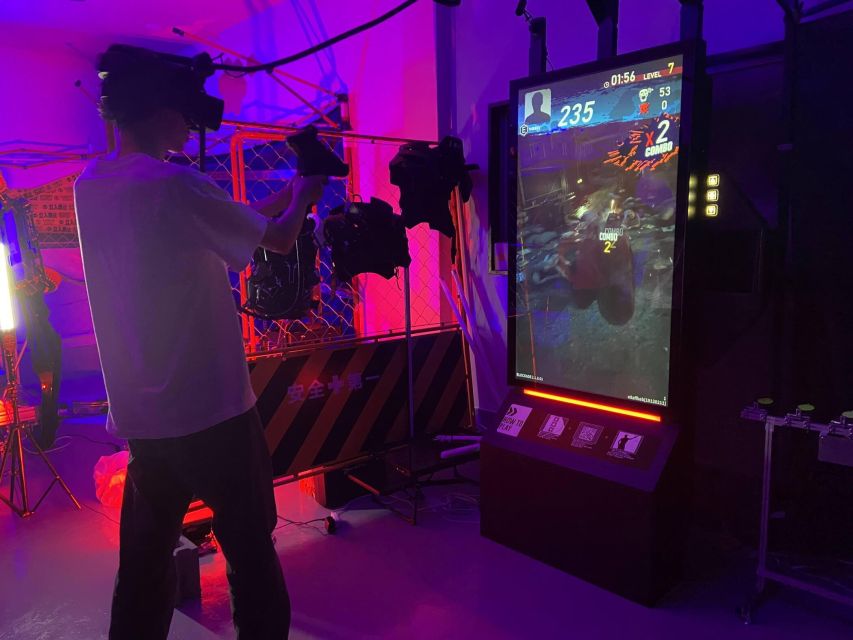
The first part uses VR shooting games. You put on a headset and take part in short shooting scenarios. The games help set the tone for the later robot mission, but they are also fun on their own.
The VR section has proved especially popular with children and people who already play console or computer games. If you are comfortable with VR controls, you will probably adjust quickly. If you are new to VR, the staff provides guidance before you begin.
Some descriptions of the activity refer to two VR games. Specific comments also mention shooting zombies, using lasers, and moving through a flying roller-coaster-style setting. The exact games may change as the facility develops, so think of this part as a series of short VR challenges rather than one fixed story.
Next comes the mini-robot coding activity. You may build a small robot using Lego Technic-style parts and program its controls on a laptop. This is the quietest part of the visit, but it gives you a useful look at the thinking behind the full-size machine.
I like this addition because it connects play with engineering. Instead of only pressing buttons, you get a taste of how commands are assembled and tested. Children may see it as a building game, while older visitors can better understand the link between simple code and physical movement.
You can also miss this section if time is tight or if your group chooses to focus elsewhere. It may appeal most to children and people who enjoy making things, but it gives the experience more substance than a quick cockpit photo.
What it feels like to pilot ASTRO
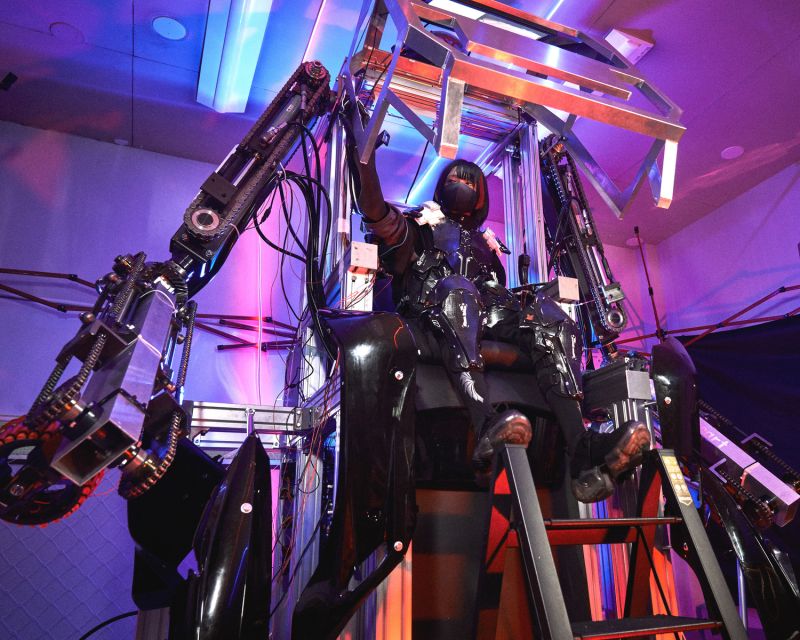
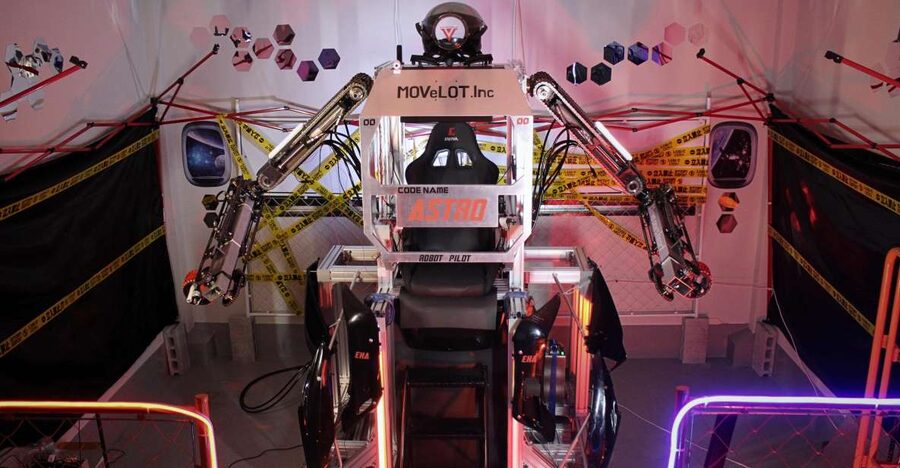
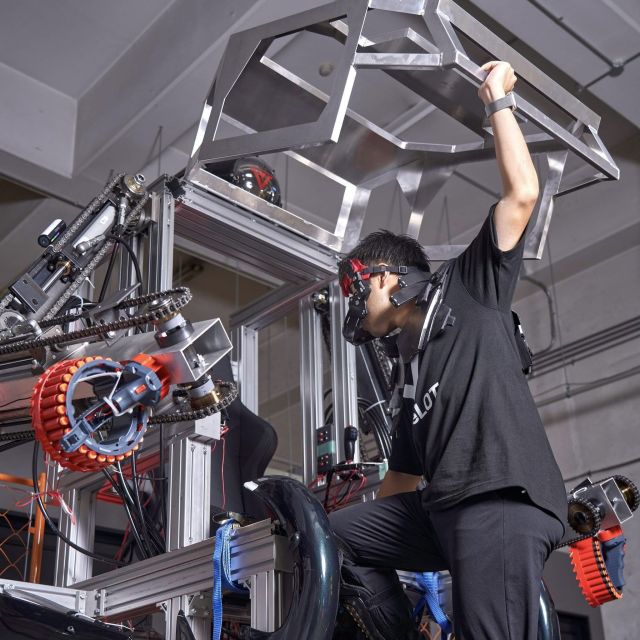
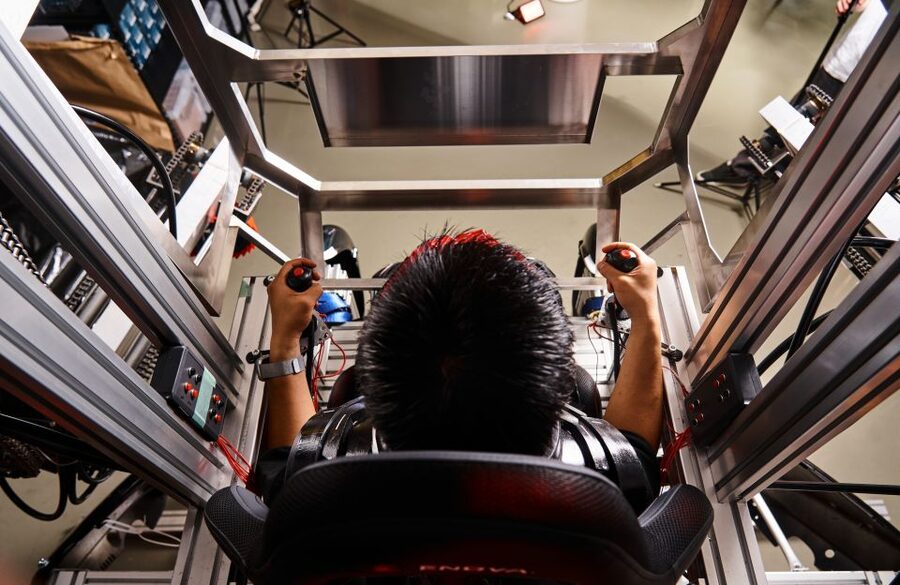
The main event is the ASTRO robot prototype. You climb into the piloting position and follow instructions from the staff. The current machine allows you to move the arms and fire the blasters, but it does not walk.
That limitation matters. If you arrive expecting a full-size robot to stride across the room, you will be disappointed. The legs have been removed so the robot can fit inside the lab, and the project is still in its first phase of development.
If you arrive expecting a real prototype with working controls, the experience makes much more sense. You are not operating a finished theme-park ride. You are trying out a developing machine while its makers explain what it can do now and what they hope to improve later.
The piloting portion lasts about 10 minutes per person. In a group of two, that gives both people a solid turn. With three or four participants, the schedule can feel shorter for each person, especially if everyone wants extra time at the controls.
The robot operates in a fairly small indoor area, so you need to watch the surrounding equipment and follow every instruction. Staff members remain involved during operation, both for safety and to help you complete the mission.
I would treat the robot as a target-practice machine rather than a moving battle vehicle. You get the satisfying feeling of controlling a large mechanical body, but the physical range is limited. That tradeoff is normal for a prototype and should be part of your decision before booking.
Why the developer story matters
The most interesting part for adults may not be the shooting. It is hearing the developers talk about how the robot is being made.
The facility presents robotics as an ongoing project. You see a machine that is not finished, and you get a better sense of the practical problems involved in building a human-piloted robot. The staff can explain the systems and the project’s development, rather than simply offering a scripted introduction to a polished attraction.
One visitor who returned after an earlier visit noticed improvements to the robot systems. That is a useful clue about the experience: the attraction may change as the project develops. A repeat visit could offer new controls or features, but there is no promise about when those changes will arrive.
For fans of Gundam, Patlabor, Armored Core, Avatar-style machines, and giant-robot anime, the appeal is obvious. The experience does not reproduce one of those fictional worlds, but it lets you perform a small, real-world version of the fantasy.
The facility is not the Patlabor Laboratory, so do not book it expecting a specific licensed anime setting. It is a separate robotics project with its own story and prototype.
How much value do you get for $32?
At $32 per person, the price is reasonable if you want a rare hands-on activity rather than a long sightseeing stop. You receive a 50-minute session combining VR, programming, and robot piloting. The small group limit also helps the visit feel personal.
The value depends on your expectations. If you judge the price by the amount of time inside the robot alone, 10 minutes per person can feel brief. If you value the full package, including VR games, the coding activity, safety instruction, and explanations from the development team, the cost is easier to justify.
I would compare it with the price of a conventional VR attraction, then ask how much you value operating a physical prototype. The Robot Base offers something you cannot easily duplicate at home or in an ordinary arcade: the combination of a real machine, a developer-led explanation, and a fictional mission.
Families should also consider how many people are joining. A parent and one child will have more individual robot time than a group of four. Groups larger than three may receive less time at the controls per person, so you should book with that tradeoff in mind.
A few more Tokyo tours and experiences worth a look



Who will enjoy this most?
This activity is a good match for:
- Robot and anime fans who want a physical version of a giant-machine fantasy.
- Families with children aged 11 and over who enjoy VR, building, and games.
- People interested in engineering who want to hear about a prototype from the team working on it.
- Gamers who already understand VR controls and want to try something physical.
- Repeat visitors to Tokyo searching for an unusual indoor activity away from the usual sightseeing circuit.
It is less suitable if you want a long, polished attraction with many different machines. It is also not a good choice if walking, climbing into the machine, or standing in a compact facility will be difficult.
Children under 11 are not accepted. Pregnant women, people with mobility impairments, people under 110 centimeters, and people over 100 kilograms are also excluded. These rules reflect the equipment and the size of the facility, so check them carefully before paying.
Getting there and timing your visit
The meeting point is MOVeLOT in the Robot Base facility. From the A3 exit of Toei Ryogoku Station on the Oedo Line, allow about seven minutes on foot. From JR Ryogoku Station, the walk takes about 13 minutes.
The location is convenient if you are already visiting the Ryogoku area. Plan your route before the appointment, since late arrivals cannot extend the time slot. You should arrive with enough time to find the building and check in without rushing.
There may not be a dedicated waiting area, so do not arrive far too early expecting a lounge. If you have extra time, nearby cafés can give you somewhere to sit before the appointment.
Wear comfortable shoes. Bring drinks and a passport or other ID card. The activity also requires all visitors to have overseas insurance in case of injury, even though staff safety measures are in place.
The advertised activity lasts 50 minutes. The schedule may show a longer period for the safety briefing and photo stop, so check the exact time when booking. If you want to stay beyond the scheduled period, an additional fee applies.
The best way to plan your group
A pair is the ideal setup if both people want plenty of robot time. Each person gets roughly 10 minutes at the controls, with less pressure from the clock.
A group of three still works well, especially if one person is more interested in VR or coding than piloting. A group of four can enjoy the full activity, but you should expect the robot time to be divided more tightly.
The staff will guide the operation, so you do not need technical training. Still, listen closely during the briefing. The robot responds to your controls, and the room is compact enough that careless movement could cause problems.
If you are visiting with children, explain beforehand that the machine does not walk. Present it as a working prototype with moving arms and blasters. That description sets the right expectation and lets the child appreciate the real engineering rather than waiting for a movie-style battle.
What I like, and what I would improve
I like the blend of real hardware and playful storytelling. The alien attack gives structure to the visit, while the developers’ explanations keep it tied to real robotics.
I also like that the experience does not hide the unfinished nature of the robot. You can see how far the project has come, operate its current systems, and understand that future versions may work differently.
The friendly staff are another strong point. Tomo and Atsu have been singled out for their help and clear explanations, and the English and Japanese language options make the activity accessible to international visitors.
The weak point is the short robot session, especially for a full group. The indoor setup is compact, the legs are absent, and the robot has limited movement. Some people will find the visit too brief, while others will appreciate that it packs several activities into less than an hour.
There is also a small practical issue with waiting. Since seating may not be available, arriving much earlier than your time slot is not especially useful.
Should you book the Robot Base?
Book it if you want an unusual Tokyo experience built around actual prototype robotics, not a standard arcade or a purely virtual ride. The combination of VR shooting, mini-robot programming, and ASTRO piloting gives you several ways to take part.
I especially recommend it to robot fans, families with children 11 and older, and anyone curious about how developers turn science-fiction ideas into working machines. Book in advance if your schedule is tight, since the group size is limited to four.
Skip it if you need a walking robot, a large facility, or a long piloting session. At $32, the experience is best viewed as a compact introduction to a developing project. Go with that expectation, and the chance to sit at the controls of a real human-piloted robot becomes a memorable Tokyo detour.
FAQ
Where is the Tokyo Robot Piloting Attraction?
It takes place at Robot Base, operated by MOVeLOT, in Tokyo’s Ryogoku area on Honshu.
How do I reach the Robot Base?
The facility is about a 7-minute walk from the A3 exit of Toei Ryogoku Station on the Oedo Line. It is about a 13-minute walk from JR Ryogoku Station.
How long does the experience last?
The ticket covers a 50-minute experience. The schedule also includes a safety briefing and photo stop, so check the exact starting time when booking.
How much does the activity cost?
The listed price is $32 per person.
How many people can join one group?
The activity is limited to four participants.
What can I control on the robot?
The ASTRO prototype currently allows you to move its arms and shoot its blasters. You cannot make it walk because its legs have been removed to fit inside the lab.
How long does each person pilot the robot?
The piloting experience lasts about 10 minutes per person. Groups of more than three people may receive less individual piloting time.
Is the activity available in English?
Yes. The experience is offered in English and Japanese.
What should I bring?
Bring a passport or ID card, comfortable shoes, drinks, and proof of overseas insurance as required for the activity.
Who cannot take part?
Children under 11, pregnant women, people with mobility impairments, people under 110 centimeters, and people over 100 kilograms cannot participate.
Can I cancel the booking?
You can cancel up to 24 hours in advance for a full refund. A reserve-now, pay-later option is also available.
More Tickets in Tokyo
More Tickets & Passes in Tokyo


More tours in Tokyo we've reviewed










Tickets, compared.
 ★ 4.5Tokyo: TOKYO SKYTREE® Admission ticketFrom $131 day
 ★ 4.6Tokyo: teamLab Planets TOKYO Digital Art Museum Entry TicketFrom $251 day
 ★ 3.9Tokyo: Hop-On Hop-Off Sightseeing Bus TicketFrom $301 - 2 days
 ★ 4.6Tokyo Tower: Admission TicketFrom $91 hour - 3 days
 ★ 4.8Tokyo: Japanese Dance Cabaret Theater Asakusa-Kaguwa TicketFrom $492 hours
 ★ 4.5Tokyo: Kamakura & Enoshima Day Trip including Temple TicketsFrom $589 hours - 570 minutes