
Reviewed · MT FUJI DAY TRIPS
Tokyo: Mt Fuji Lake Kawaguchiko Tour & Arakuyama Sengen Park
Mt. Fuji is the star here, but the clever part is seeing it from several very different angles in one day. You get the famous Chureito Pagoda view, clear ponds at Oshino Hakkai, the much-photographed Lawson stop, and seasonal color around Lake Kawaguchi.
I like the excellent photo variety and the fact that transport, tolls, parking, a guide, and a driver are wrapped into the $58 price. I also like the seasonal planning, especially the Maple Corridor from about October 30 to November 20 and the spring cherry blossom visit from March 30 to April 14.
The tradeoff is pace. You have about an hour at Arakurayama Sengen Park, 80 minutes at Oshino Hakkai, and 50 minutes at Lake Kawaguchi, so this is a highlights tour, not a slow country walk. Traffic and weather can also change the order or affect your Mt. Fuji view.
In This Review
- Key points to know before booking
- Why this Mt. Fuji day trip works
- Meeting at Tokyo Station before 8 a.m.
- The 105-minute ride toward Mt. Fuji
- Arakurayama Sengen Park and the Chureito Pagoda view
- Hikawa Clock Street, a short Fuji-framed walk
- Oshino Hakkai and its clear mountain-fed ponds
- The Lawson Kawaguchiko Station photo stop
- Lake Kawaguchi, Oishi Park, and the seasonal swap
- Guide support, group size, and the day’s pace
- Is $58 a good value?
- Who should book this Fuji tour?
- Should you book it?
- FAQ
- Where does the tour meet in Tokyo?
- What time should I meet the guide?
- How long does the tour last?
- Which languages are available?
- Is transportation included?
- Are meals included?
- Can I bring luggage?
- Is the tour suitable for wheelchair users?
- What happens if I need to cancel?
Key points to know before booking
- Chureito Pagoda delivers the classic Fuji photograph: Be ready for steps and a short walk to the viewing area at Arakurayama Sengen Park.
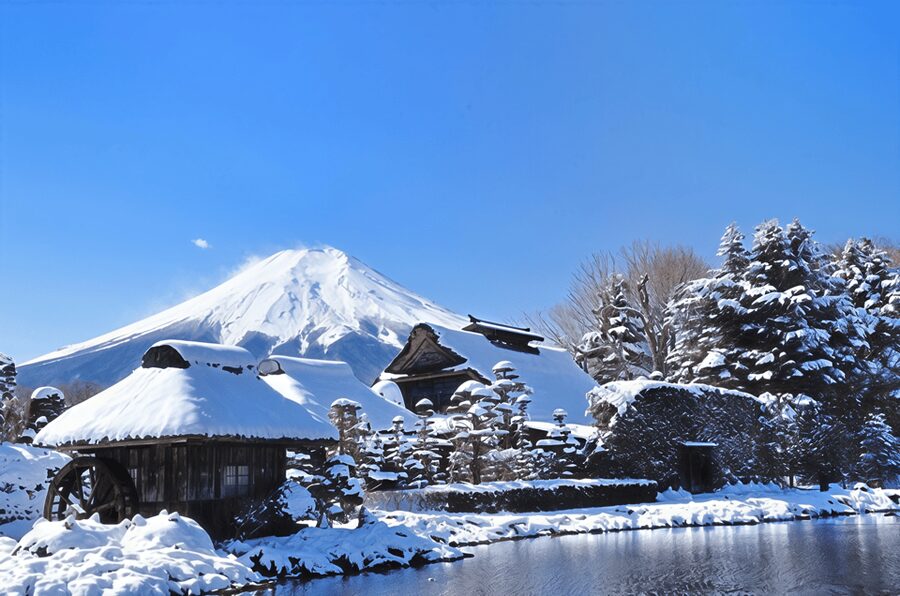
- Oshino Hakkai gives you a quieter stop: Clear ponds, traditional scenery, and views toward Mt. Fuji make this more than a quick photo pause.
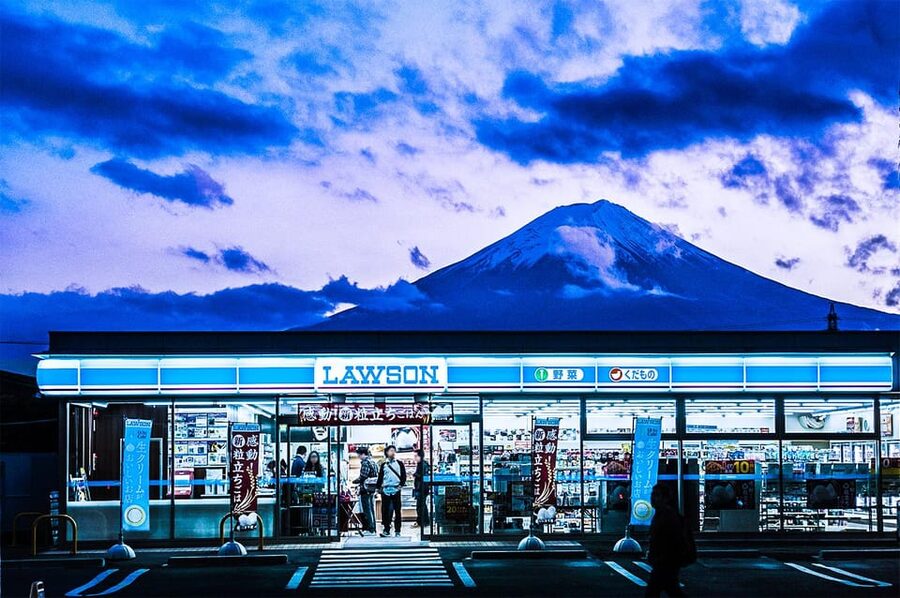
- The Lawson stop is intentionally playful: You get 20 minutes for the famous convenience-store-and-Fuji composition, plus time for a snack.
- Season affects the final stop: Oishi Park is used for seasonal flowers, while the Maple Corridor replaces it from about October 30 to November 20.
- The group size can vary widely: Some departures use a vehicle for up to 13 people, while others may carry 14 to 45.
- The early meeting time matters: You meet at Tokyo Station’s Marunouchi North Exit at 7:50 a.m. for an 8:00 departure.
Why this Mt. Fuji day trip works
This outing is built for someone who wants to see Mt. Fuji without piecing together several trains and buses. From Tokyo Station, the journey to the Fuji area takes about 105 minutes by coach, and the return ride takes about the same.
That convenience has real value. At $58 per person, you are paying for transportation, fuel, tolls, parking, and a live guide for roughly 10 hours. Meals and personal purchases are extra, but the main transport costs are already handled. For a first visit to the Fuji Five Lakes area, that is a fair price.
The day also avoids putting all your hopes on one viewpoint. Fuji can hide behind cloud, but this route gives you several chances to see it from different settings. The itinerary may change because of traffic, weather, or operating conditions, so flexibility is part of the deal.
The trip has a clear photography focus. If you want long hikes, museum visits, or a quiet lunch beside the lake, this is not the right format. If you want a broad sample of the area with a guide keeping the day moving, it makes sense.
A few more Tokyo tours and experiences worth a look
Meeting at Tokyo Station before 8 a.m.
The meeting point is Tokyo Station’s Marunouchi North Exit, at 1-chōme-9-1 Marunouchi, Chiyoda City. You are due there at 7:50 a.m., with departure planned for 8:00.
Tokyo Station is large and busy, so do not leave this detail until the morning. The operator sends the guide’s contact number, a meeting-point photo, and the vehicle license plate the evening before, usually around 7:00 or 8:00 p.m. Check your inbox and spam folder.
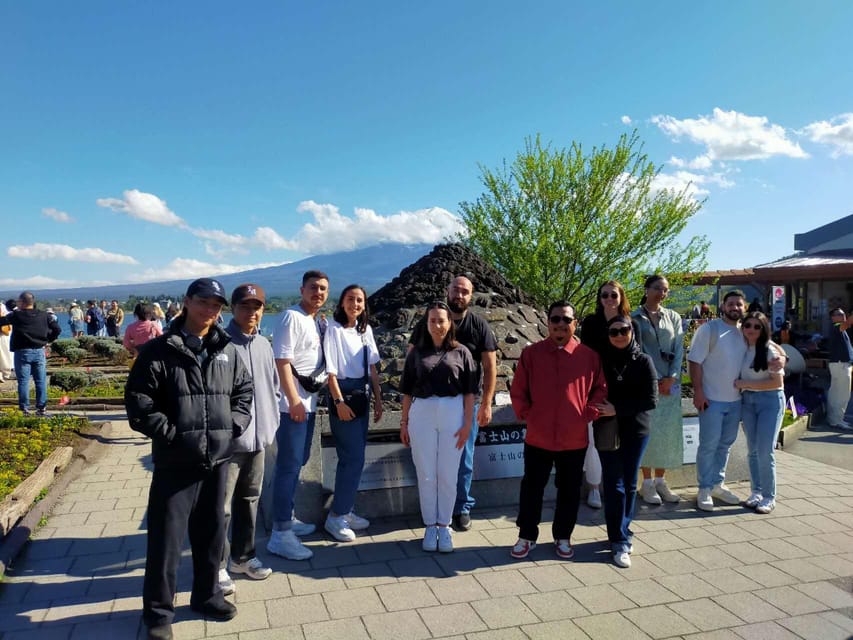
The meeting signal is intended to be easy to spot, but one important caution comes from the supplied trip information: the advertised blue flag was yellow for at least one departure, and a passenger nearly missed the coach despite arriving an hour early. Use the guide’s phone number, vehicle plate, and meeting-point photo as your main checks rather than relying on the flag alone.
Bring only what you need. One piece of luggage per person is allowed, while oversized or extra luggage may cost more and should be reported ahead of time. Smoking and eating are not allowed in the vehicle.
The 105-minute ride toward Mt. Fuji
The coach ride gives you time to settle in before the sightseeing begins. You will pass through the Tokyo area and continue toward Mt. Fuji, with scenic views along the way.
The transport setup depends on the departure. A smaller group may use a vehicle for up to 13 people, while a larger departure can carry between 14 and 45. That difference affects the feel of the day. A small group can make boarding and regrouping easier, while a full coach may feel more like a standard sightseeing excursion.
A guide and driver are included, with English, Chinese, and Japanese offered. One English-language departure had a guide named Hikari, who was praised for clear organization, humor, and making the day easier to follow. Guide assignments can vary, so do not assume Hikari will lead every date.
The ride is a practical part of the experience, not wasted time. Driving yourself would mean handling Tokyo traffic, parking, tolls, and unfamiliar roads. Here, you can focus on the views and keep your energy for the stops.
Arakurayama Sengen Park and the Chureito Pagoda view
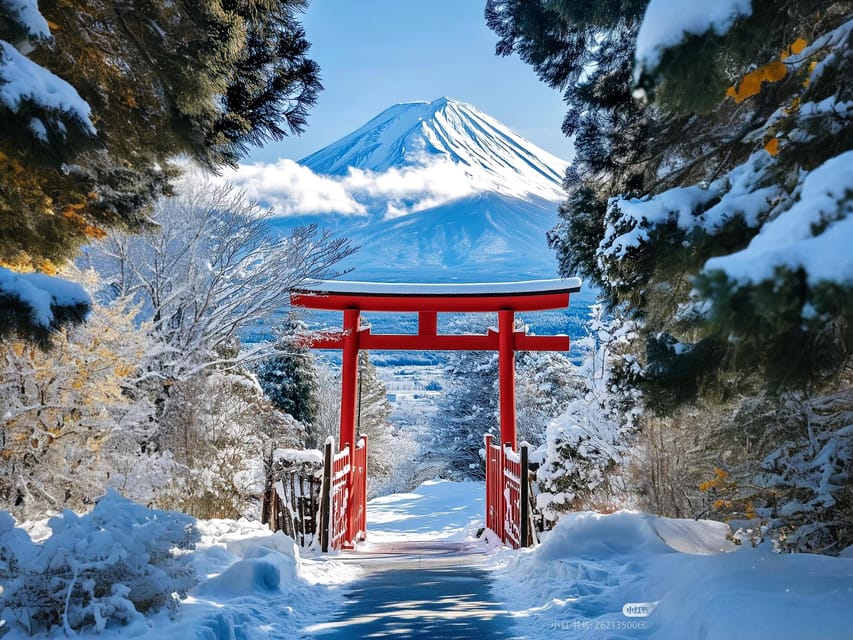
Arakurayama Sengen Park is the first major stop, scheduled for about an hour. The Chureito Pagoda area is one of Japan’s most recognizable Mt. Fuji viewpoints, with the pagoda, mountain, and seasonal surroundings arranged in one frame.
You should expect walking and steps. The itinerary gives you free time for sightseeing and photography, with around 30 minutes specifically associated with the Chureito Pagoda. This is enough for the main viewpoint, but it is not a leisurely park visit.
The scene changes sharply by season. Cherry blossoms frame the pagoda in spring, autumn leaves add warm color later in the year, and snow can give the mountain a clean winter profile. Clear weather makes a major difference. One February departure had unobstructed Fuji views through the morning, while other dates were shaped more by good luck with weather.
This is the stop where comfortable shoes matter most. The tour is not suitable for wheelchair users, and pregnant people are advised not to book. Even if you are fit, allow time for the walk up and back rather than spending every minute with your camera raised.
Hikawa Clock Street, a short Fuji-framed walk
After Arakurayama, the coach continues to Hikawa Clock Street, also called Hidakaya Clock Street in the schedule. You have about 20 minutes here, from roughly 11:45 to 12:05.
The appeal is the view down a traditional-looking Japanese street toward Mt. Fuji. The setting is more about composition and atmosphere than a long list of sights. You can take the photograph, walk the short stretch, and get a feel for the contrast between a quiet local street and the huge mountain beyond it.
The time is tight. Keep your camera ready and listen for the regrouping instructions. This is not a stop where you should wander far from the meeting area.
I like its place in the route because it breaks up the larger scenic stops. After the broad view from the pagoda, you get a more compressed, street-level image of Fuji. It also gives you another chance if clouds have softened the earlier view.


Oshino Hakkai and its clear mountain-fed ponds
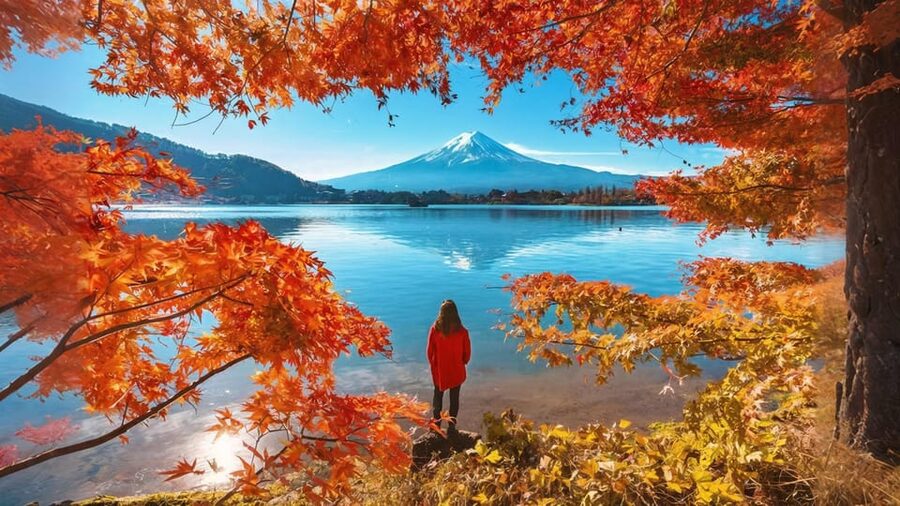
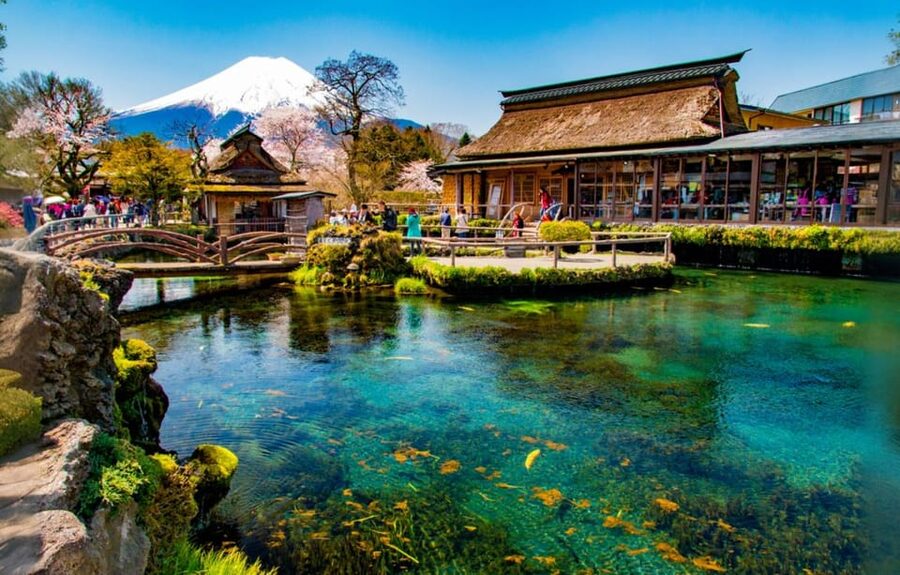
Oshino Hakkai receives the longest visit, about 80 minutes from 12:30 to 1:50 p.m. This UNESCO-recognized site is known for crystal-clear ponds, traditional buildings, small local stalls, and views toward Mt. Fuji.
The stop has more texture than the quick photo locations. You can walk between the ponds, take pictures, and pause for local snacks or drinks at your own expense. The water and surrounding scenery provide a calmer change of pace after the morning’s main viewpoints.
Eighty minutes is useful, but lunch is not included. You will need to buy your own food and beverages, so decide whether you want a proper meal, a quick snack, or simply more time outside. The supplied information does not promise a set restaurant or meal arrangement.
Oshino Hakkai is also a good place to put the camera down for a few minutes. The ponds, buildings, and mountain view give you a sense of the Fuji area beyond the famous postcard angle. At the same time, remember that it is a popular sightseeing site, so the experience may feel less quiet at busy times.
The Lawson Kawaguchiko Station photo stop
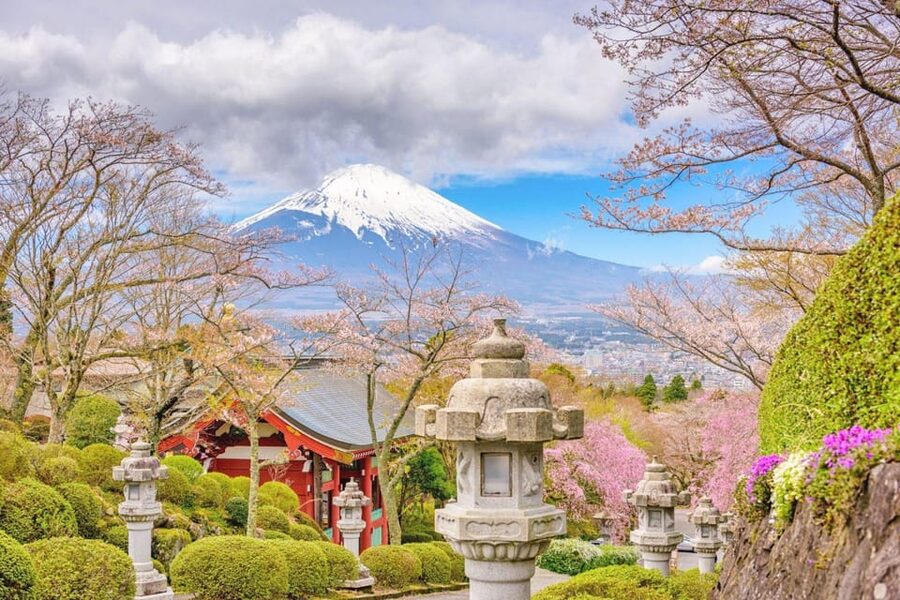
The Lawson Kawaguchiko Station stop lasts about 20 minutes, usually from 2:30 to 2:50 p.m. This is a modern, slightly funny contrast to the pagoda and ponds: a convenience store with Mt. Fuji rising behind it.
The shot is popular because it places an ordinary Japanese street scene beside an extraordinary mountain. You can also buy an ice cream, drink, or snack, though these costs are not included.
Keep this stop orderly. The area is a working public location, not a private photo set, so follow the guide’s instructions and avoid blocking entrances or traffic. Twenty minutes is enough for a few photographs and a quick purchase, but not for a long break.
Some people may find the stop too staged. I see it as a lighthearted bonus. It gives the day a different visual rhythm and lets you photograph the way Mt. Fuji appears in daily life, not only from formal viewpoints.
Lake Kawaguchi, Oishi Park, and the seasonal swap
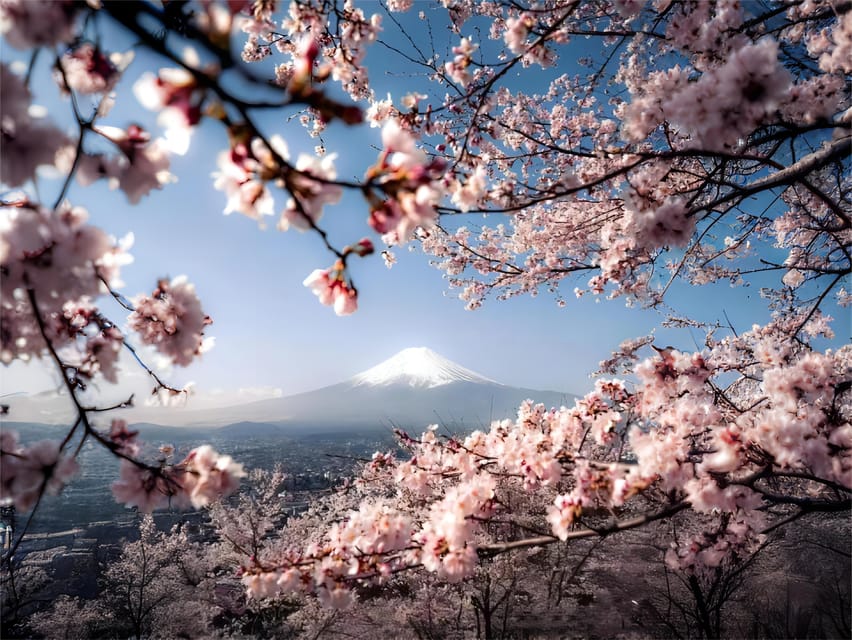
The last sightseeing stop is around Lake Kawaguchi, with about 50 minutes for walking, photographs, and views. The exact focus depends on the calendar.
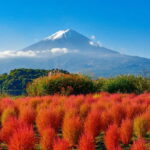
At Oishi Park, you may see flower fields arranged with Mt. Fuji behind them. Summer is associated with lavender, while other seasonal plantings add color at different times. The stop is designed for a relaxed final look at the mountain before the return drive.
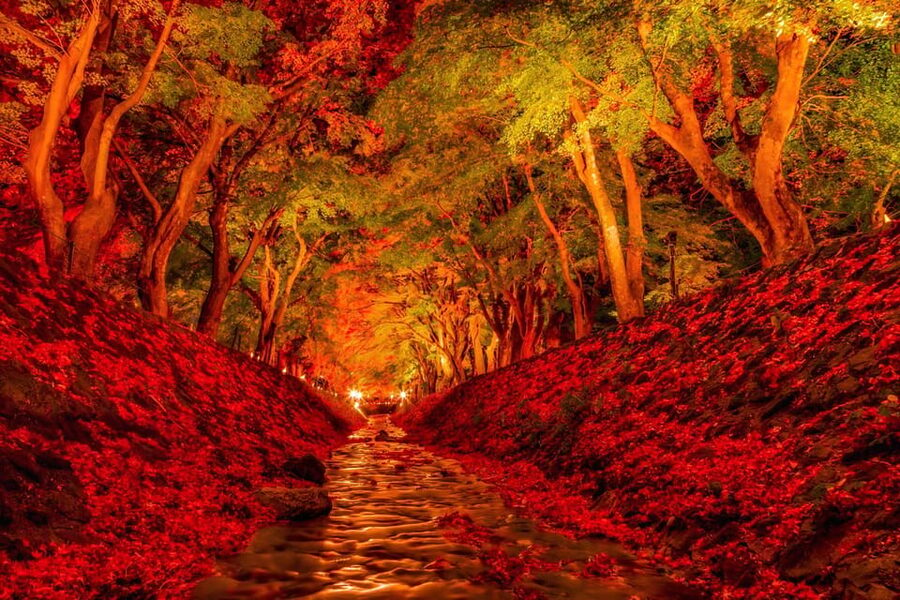
From about March 30 to April 14, the seasonal plan includes a cherry blossom festival, with Fuji viewed through spring flowers. From about October 30 to November 20, the tour visits the Kawaguchiko Maple Corridor instead of Oishi Park. Autumn leaves then become the main frame for the mountain.
The dates are useful, but nature does not follow a perfect calendar. Flower and leaf conditions can vary, and weather can still hide Fuji. The operator can also adjust the order for traffic or other operating reasons.
Fifty minutes is enough to enjoy the setting without making the whole day feel like a single park visit. It is not enough for a long lakeside outing, so keep your expectations focused on a scenic stop rather than a full exploration of Lake Kawaguchi.
Guide support, group size, and the day’s pace
The guide’s main value is practical. You receive help finding the vehicle, instructions for meeting back up, and explanations in English, Chinese, or Japanese. One especially useful point from the supplied feedback is that the guide clearly explained drop-off and pickup locations, which matters when you have several short stops.
The day moves quickly. The planned schedule is:
- 7:50 a.m.: Meet at Tokyo Station
- 8:00 a.m.: Depart
- 10:30 to 11:30 a.m.: Arakurayama Sengen Park
- 11:45 a.m. to 12:05 p.m.: Hikawa Clock Street
- 12:30 to 1:50 p.m.: Oshino Hakkai
- 2:30 to 2:50 p.m.: Lawson Kawaguchiko Station
- 3:20 to 4:10 p.m.: Oishi Park or the seasonal Maple Corridor
- Around 6:50 p.m.: Return to Tokyo Station
The schedule leaves time between stops for driving, traffic, and loading. The advertised return is around 6:50 p.m., but you should not schedule a tight evening reservation immediately afterward. Fuji-area traffic can be unpredictable.
The overall rating supplied for the experience is 4 out of 5 from 14 ratings. The strongest positive points are clear communication, good organization, friendly guiding, and the chance to see Fuji from several attractive locations. The main concerns are a rushed feeling for some people and one serious meeting-point communication problem.
Is $58 a good value?
For a full day from central Tokyo, I think the price is reasonable. You get a 10-hour outing with transport, a driver, a guide, fuel, tolls, and parking included. Reaching five sightseeing areas independently would take planning, transfers, and careful attention to the last return connection.
The price does not cover meals, drinks, snacks, souvenirs, or optional attraction fees. That is easy to manage if you bring some yen or a payment card and keep lunch simple.
The biggest value is time saved. You are not buying a deep visit to each location. You are buying access to a carefully connected set of Mt. Fuji viewpoints, with someone else handling the road work.
If you are traveling with a very young child, children under 2 are free when they sit on an adult’s lap and do not occupy a seat. The information also says children under 3 are free without a seat, so check the exact age rule when booking if your child is close to that limit.
Who should book this Fuji tour?
I would choose this tour if you are staying in Tokyo, want a straightforward Fuji day, and care about photographs more than independent wandering. It suits first-time visitors, couples, families with older children, and anyone who does not want to manage rural transport.
It is also a good fit if seasonal scenery is important. The cherry blossom and Maple Corridor dates give the route a clear seasonal focus, while summer adds lavender around Oishi Park.
I would hesitate if you dislike early starts, fixed meeting times, or short stops. You may also prefer another option if you need wheelchair access, are pregnant, want a full meal included, or plan to carry several large bags.
Free cancellation is available up to 24 hours before departure, and you can reserve while paying later. Those policies help if your Tokyo schedule is still changing, but they do not remove the need to watch the weather forecast and confirm the meeting message the night before.
Should you book it?
Book this tour if you want a high-value Mt. Fuji sampler from Tokyo, especially in clear weather or during the listed cherry blossom and autumn dates. The combination of Chureito Pagoda, Oshino Hakkai, Lawson, and Lake Kawaguchi gives you a satisfying range of views for one day.
Skip it if you want long, unhurried visits or complete control over your schedule. Before departure, check the evening message, save the guide’s phone number and vehicle plate, wear shoes suited to steps, and leave room in your evening plans for a traffic-delayed return.
FAQ
Where does the tour meet in Tokyo?
The meeting point is the Marunouchi North Exit of JR Tokyo Station, at 1-chōme-9-1 Marunouchi, Chiyoda City, Tokyo.
What time should I meet the guide?
You should meet at 7:50 a.m. for an 8:00 a.m. departure.
How long does the tour last?
The planned duration is 10 hours, with a return to Tokyo Station at around 6:50 p.m.
Which languages are available?
Live guiding is available in English, Chinese, and Japanese.
Is transportation included?
Yes. Transportation, the driver, guide, fuel, tolls, and parking fees are included.
Are meals included?
No. Meals, drinks, snacks, souvenirs, and personal expenses are not included.
Can I bring luggage?
One piece of luggage per person is allowed. Oversized or extra luggage may incur an additional fee, and you should notify the operator in advance.
Is the tour suitable for wheelchair users?
No. The activity is not suitable for wheelchair users. It is also listed as unsuitable for pregnant women.
What happens if I need to cancel?
You can cancel up to 24 hours before the activity for a full refund. Reserve now and pay later is also available.
More Mt Fuji Day Trips in Tokyo
More tours in Tokyo we've reviewed




Mt Fuji Day Trips, compared.
 ★ 5.0Mt Fuji and Hakone 1-Day Bus Tour Return by Bullet TrainFrom $163
 ★ 4.0Mt Fuji & Hakone Cruise, Drum Show Bullet Train 1 Day from TokyoFrom $149
 ★ 4.4Tokyo Mt Fuji 5th St & Hakone Cruise Bus Tour w/Bullet TrainFrom $15410 hours
 ★ 4.5From Tokyo: Mount Fuji Full-Day Sightseeing TripFrom $6810 hours
 ★ 4.7Tokyo: Mt. Fuji Tour, Hakone Ropeway, Owakudani, Lake AshiFrom $5410 hours
 ★ 4.4Tokyo:Mt.Fuji,Kawaguchiko Oishi Park,Arakurayama Sengen ParkFrom $5410 hours