
Reviewed · TOKYO
Tokyo: Learn to play traditonal songs on Tsugaru Shamisen
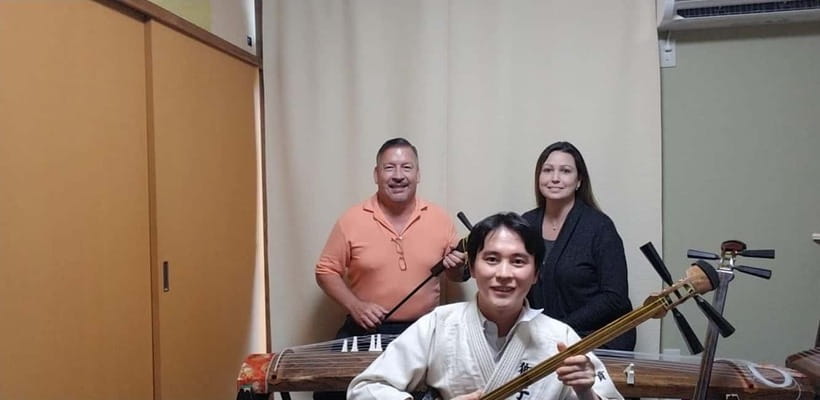
The striking part of this private one-hour lesson is that you do not just watch a shamisen performance. You pick up the three-stringed instrument and work toward playing a song yourself, guided by Kouzan Oyama, a two-time Tsugaru Shamisen World Cup champion. I like the lively, fast style and the chance to compare several Japanese instruments, including Okinawa’s sanshin. I also like that you can request a song in advance at the start of the lesson.
The main consideration is time. One hour passes quickly, especially if you want both a history lesson and hands-on practice. You may finish a simple tune, as some beginners have, but this is an introduction rather than a full course in Tsugaru shamisen.
In This Review
- Key points to know before you book
- Why Tsugaru shamisen sounds so different
- Meeting Kouzan Oyama near Shinjuku
- The first sounds and the shamisen’s construction
- Choosing a song for the lesson
- Practicing the Tsugaru style
- A short koto lesson and extra musical context
- Photos, videos, and the final performance
- Is $59 good value for one hour?
- Who will get the most from this lesson?
- Booking details worth knowing
- Should you book the Tsugaru shamisen lesson?
- FAQ
- Where does the shamisen lesson take place?
- How long does the experience last?
- How much does the lesson cost?
- Who teaches the lesson?
- Is the lesson taught in English?
- Can I request a song?
- Is the activity private?
- Is the activity wheelchair accessible?
- Can I cancel for a refund?
Key points to know before you book
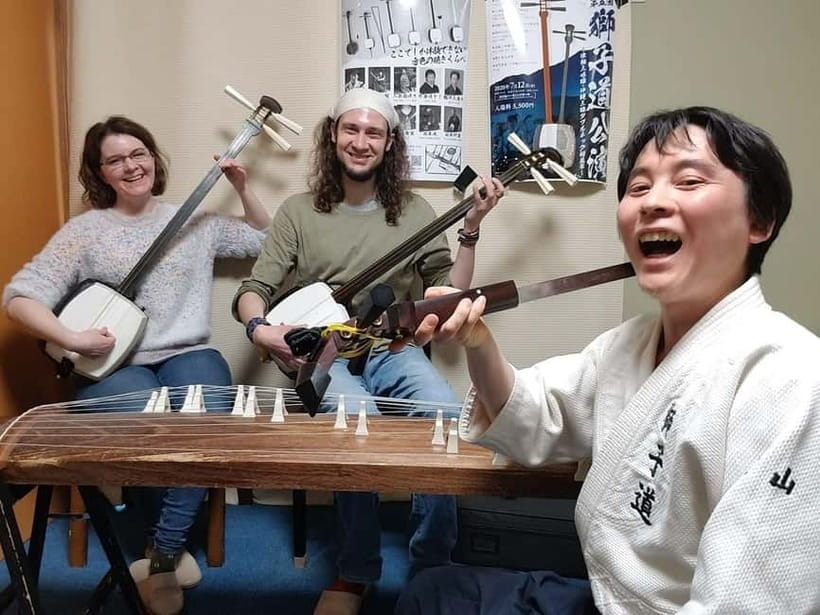
- Play a song in your first hour: The lesson uses teaching books written by Kouzan Oyama, helping beginners work toward a folk song or a tune of their choice.
- Learn from a two-time champion: Oyama won the Tsugaru Shamisen World Cup in 2018 and 2019 and teaches in English.
- Hear more than one Japanese instrument: You can hear different shamisen types and Okinawa sanshin during the session.
- Expect fast, forceful music: Tsugaru style has a sharp, energetic sound linked to northern Japan and traveling musicians.
- Keep photos and videos: The lesson includes chances to photograph and film your performance with the instructor.
- Book a private session near Shinjuku: The private format gives you room to ask questions and receive direct help.
Why Tsugaru shamisen sounds so different
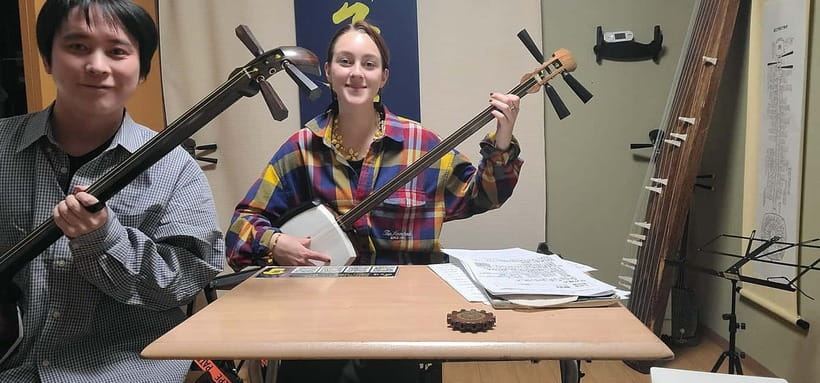
The shamisen looks a little like a Japanese banjo, but its voice is sharper and more percussive. It has three strings, and the performer uses a large plectrum called a bachi to strike them. The result can sound dry, bright, and forceful, with a pulse that suggests wind, waves, and the open country of northern Japan.
Tsugaru shamisen comes from the Tsugaru area of Aomori Prefecture in northern Honshu. Its roots are tied to itinerant musicians and ordinary people rather than formal court music. That background matters because the style feels direct and physical. The player uses rhythm, attack, pauses, and ornament rather than simply picking out a gentle melody.
You will hear this right away when Kouzan Oyama demonstrates the style. His performances help you understand why Tsugaru music can seem difficult at first. The pace is quick, the striking hand has a lot to do, and the sound has more force than the quiet image of a traditional Japanese instrument might suggest.
The lesson also gives you a useful point of comparison with Western instruments. A guitar player may expect to pluck individual strings with the fingertips, while shamisen technique depends heavily on the plectrum and the way the instrument is struck. You are learning a different physical approach to making music, not simply transferring a familiar guitar skill to a new instrument.
If you're still narrowing it down, here are other tours in Tokyo we've reviewed.


Meeting Kouzan Oyama near Shinjuku
This experience takes place near Shinjuku, a practical location if you are staying in central Tokyo or already planning time in one of the city’s busiest districts. The activity lasts one hour, so it can fit before dinner, between other plans, or near the end of a sightseeing day.
Your instructor is Kouzan Oyama, a master of the Oyama style, described as the most prominent school of Tsugaru shamisen. His competition record gives the lesson real weight: he won the Tsugaru Shamisen World Cup in both 2018 and 2019.
That does not mean the class is aimed only at serious musicians. The teaching is designed for first-time players, and Oyama’s own books are used during the lesson. This is a practical benefit. Rather than trying to remember every explanation by ear, you have written guidance to help you follow the notes and techniques.
English is the stated teaching language. The session also leaves room for questions about the instrument, its construction, and its place in Japanese music. One useful detail from the class experience is that Oyama can demonstrate techniques himself before asking you to try them. For a beginner, seeing the movement at full speed and then breaking it into smaller actions makes the instrument less intimidating.
The first sounds and the shamisen’s construction
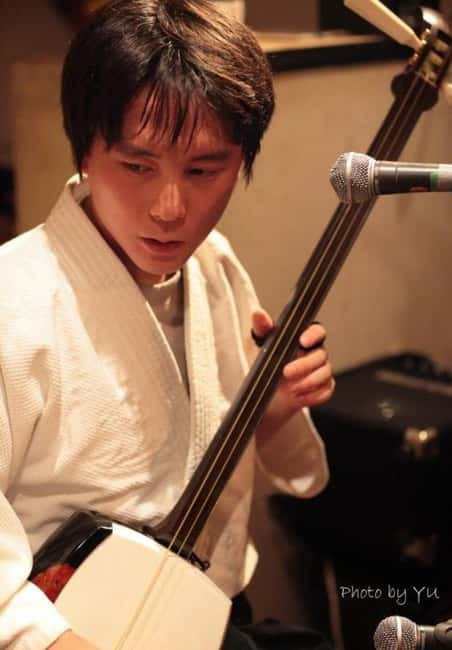
The lesson begins with an introduction to the shamisen and the way it produces sound. You learn about the three strings and the body of the instrument, as well as what shamisen are made of. The point is not just to memorize parts. Understanding the construction helps explain the instrument’s bright, cutting tone.
You also get to hear several kinds of shamisen. This is one of the stronger parts of the session because the word shamisen covers instruments with different styles and sounds. Hearing them side by side gives you a better ear for what makes Tsugaru playing distinctive.
Okinawa sanshin is included in the demonstration. It is related to the shamisen family but has its own sound and cultural setting. The contrast gives you a compact lesson in Japan’s musical variety without requiring a separate museum visit or lecture.
You then begin to work on the basic sound. The first attempt may feel less graceful than you expect. The bachi is larger than a guitar pick, and striking a string with the right amount of force takes coordination. That small moment of awkwardness is part of the value. You are not pretending to play a Japanese instrument for a photo. You are learning why its sound and technique developed as they did.
Choosing a song for the lesson
At the beginning, tell Oyama if you have a particular song you want to try. If you do not have a request, the lesson uses a traditional Japanese folk song. Sakura is one tune that can be learned in a single session, making it a sensible choice for a first visit.
Song choice affects how much you can achieve in an hour. A familiar, simple melody may help you keep track of the rhythm. A more ambitious request could be fun, but you should treat it as a challenge rather than expect a polished performance by the end.
The teaching books help keep the goal realistic. Oyama can guide you through a song or two before the hour ends, depending on your pace and the material chosen. He also demonstrates the music himself, so you hear the finished version instead of relying only on written instruction.
I like this balance between structure and choice. A set folk song keeps the lesson moving, while a personal request lets you make the session your own. If you are booking for two people, you can also expect the private format to allow individual help instead of leaving you to follow a large class from the back of a room.
Practicing the Tsugaru style
Tsugaru shamisen is not a soft, background style. It has a strong rhythmic drive and a fast pace, and the player’s attack is part of the music. During practice, you work on the actions that create this sound rather than merely tracing a melody.
Oyama’s demonstrations are especially useful here. He can play the same ideas at a level that shows the style’s speed and energy, then help you adapt them as a beginner. The gap between what a champion can do and what you can do in your first hour may be wide, but the demonstration gives you a clear sense of the instrument’s potential.
You should also expect the class to move quickly. A one-hour lesson cannot cover every technique used in a full Tsugaru performance. Still, it can give you a physical feel for the bachi, the strings, and the rhythm. You leave with more than a general impression of Japanese music because your hands have taken part in making it.
The instructor’s patience is important. Beginners need repeated correction with an unfamiliar instrument, and the private format makes it easier to ask for help. If your goal is perfection, one session will not be enough. If your goal is to understand the basic mechanics and play a short tune, the format makes sense.






A short koto lesson and extra musical context
The session may include more than shamisen. Kouzan Oyama also plays koto, and the experience can include a performance and a short tune for you to try on that instrument.
This is a pleasant extra, but it should not be your main reason for booking. The activity is centered on Tsugaru shamisen, and the description does not promise a separate full koto class. Think of the koto section as an added glimpse into another Japanese musical tradition.
It does, however, broaden the lesson. You hear how different Japanese instruments handle melody, rhythm, and tone. That comparison makes the shamisen easier to understand, especially if you have little background in Japanese music.
For anyone interested in sound, the session offers a useful question: how much of a musical identity comes from the instrument itself, and how much comes from the performer’s technique? Hearing Oyama play several instruments gives you a direct answer. Materials, shape, strings, and playing method all matter.
Photos, videos, and the final performance
The lesson includes chances to take photographs and videos of you performing with the instructor. This is more useful than a standard souvenir photo because it records the actual result of your practice.
You can use the video to remember the basic hand position, rhythm, or melody after you leave. It also gives you something concrete to show friends and family who have never heard Tsugaru shamisen played up close.
Do not expect the final recording to look like a professional concert. You are still learning, and the point is to capture the shared performance and the progress you made during the hour. The instructor can create a supportive setting for this final moment, which helps turn a lesson into a lasting memory.
If you are taking the class on your last day in Japan, the recording offers a personal souvenir that is more connected to local culture than a shop purchase. It also gives you a reason to keep practicing if the instrument catches your interest.
Is $59 good value for one hour?
At $59 per person, this is not the cheapest one-hour activity in Tokyo. The price makes more sense when you consider what is included: a private lesson, an English-speaking champion instructor, hands-on shamisen practice, demonstrations of different instruments, and time for photos and video.
You are paying for direct access to a specialist rather than a general cultural demonstration. In a large group, you might spend much of the hour watching. Here, the private format gives you a better chance to ask questions and have your technique corrected.
The value is strongest for people who want an active cultural experience. If you only want to hear traditional Japanese music, a concert may offer more performance time for the money. If you want to understand how the sound is made and try it yourself, this lesson offers more personal contact than a show.
The one-hour limit keeps the cost manageable, but it also sets a clear boundary. You can make progress on a simple song, yet you should not expect advanced Tsugaru technique or a full musical education in one visit.
Who will get the most from this lesson?
I would recommend this activity to curious first-time players, music lovers, couples, and small private groups. You do not need to arrive with formal musical training. A willingness to listen, copy movements, and accept a few rough first attempts matters more.
It also suits visitors who want a cultural activity with a clear result. By the end, you may have played part or all of a traditional song, heard several related instruments, and taken home a video of the session.
Families and mixed-interest groups may need to think about the one-hour pace and the musical focus. The activity is private and wheelchair accessible, but the supplied information does not describe age limits or specific room arrangements, so ask the provider if those details affect your plans.
I would be more cautious about booking if you want a long, relaxed performance or a detailed course in shamisen history. The lesson includes cultural background, but its main purpose is learning by doing.
Booking details worth knowing
The activity is near Shinjuku in Tokyo and lasts one hour. It is offered as a private group experience with instruction in English.
The lesson fee is included in the $59 price. You can cancel up to 24 hours before the activity for a full refund, and the reserve-now, pay-later option lets you hold a place without paying immediately. Check the available starting times because the exact schedule is not fixed in the basic description.
If you have a song in mind, raise it at the start. Otherwise, you will work on a traditional Japanese folk song. The experience is wheelchair accessible, but you should still check the meeting details and access arrangements when selecting a time.
Should you book the Tsugaru shamisen lesson?
Book it if you want to do more than look at Japanese culture from the outside. The strongest parts are the private teaching, Oyama’s competition-level skill, the patient beginner approach, and the chance to play a song in the same hour.
I especially like the mix of explanation and practice. You learn what the shamisen is, hear how Tsugaru style differs from other instruments, and then make your own attempt. That gives the hour a clear shape and a useful payoff.
Skip it if you want a full concert, a long class, or advanced instruction. For everyone else, $59 is a fair price for a focused encounter with one of Japan’s most distinctive musical traditions, particularly if you are near Shinjuku and have one free hour.
FAQ
Where does the shamisen lesson take place?
The lesson takes place near Shinjuku in Tokyo, on Honshu, Japan.
How long does the experience last?
The lesson lasts one hour.
How much does the lesson cost?
The listed price is $59 per person.
Who teaches the lesson?
Kouzan Oyama teaches the lesson. He is a master of the Oyama style of Tsugaru shamisen and won the Tsugaru Shamisen World Cup in 2018 and 2019.
Is the lesson taught in English?
Yes. English is the stated teaching language.
Can I request a song?
Yes. Tell the instructor at the beginning if you have a preferred song. Otherwise, you will practice a traditional Japanese folk song.
Is the activity private?
Yes. The group type is private.
Is the activity wheelchair accessible?
Yes. The activity is listed as wheelchair accessible.
Can I cancel for a refund?
Yes. You can cancel up to 24 hours in advance for a full refund.
More tours in Tokyo we've reviewed











Tokyo, compared.
 ★ 5.0Mt Fuji and Hakone 1-Day Bus Tour Return by Bullet TrainFrom $163
 ★ 5.01-Day Tokyo Bus TourFrom $129
 ★ 4.6Tokyo: teamLab Planets TOKYO Digital Art Museum Entry TicketFrom $251 day
 ★ 4.0Mt Fuji & Hakone Cruise, Drum Show Bullet Train 1 Day from TokyoFrom $149
 ★ 5.0Tokyo: Shinjuku Food Tour (13 Dishes at 4 Local Eateries)From $86
 ★ 4.4Tokyo Mt Fuji 5th St & Hakone Cruise Bus Tour w/Bullet TrainFrom $15410 hours