
Reviewed · TOKYO
Tokyo Ikebana, Japanese Traditional Flower Arrangement Experience
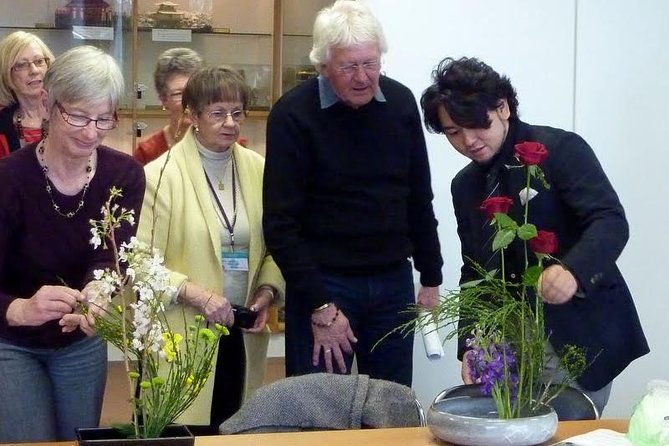
Ikebana here is not a quick craft project. You learn how angle, shape, space, and movement turn a few branches and flowers into a deliberate work of art. The class takes place at the Ichiyoshiki Ikebana headquarters, giving the lesson a proper setting rather than a tourist-style workshop.
I like two things in particular: all flowers and equipment are supplied, and you receive personal advice after making your arrangement. Instructors such as Naohiro Kasuya and Mrs. Shimakawa are patient with beginners, and the seasonal flowers give your finished piece a strong connection to Japan.
The main drawback is the firm cancellation policy. Once booked, the experience cannot be changed or refunded, so choose your date carefully. At about $67.28 for 70 minutes, it is good value for a focused cultural lesson, but less appealing if you want a long class or a broad sightseeing activity.
In This Review
- Key Points Before You Book
- What This Tokyo Ikebana Class Really Teaches
- Inside the Ichiyoshiki Ikebana Headquarters
- The First Lesson: Form, Angle, and Space
- Making Your Own Seasonal Arrangement
- Why the Seasonal Flowers Matter
- A Short Class With Real Personal Attention
- The Value of $67.28
- Who Will Enjoy This Most
- Practical Details to Know Before Arrival
- Is the Tokyo Ikebana Experience Worth Booking?
- FAQ
- Where does the ikebana experience take place?
- How long does the class last?
- Are flowers and equipment included?
- Is the class suitable for beginners?
- Can children participate?
- Can I cancel or change my booking?
Key Points Before You Book
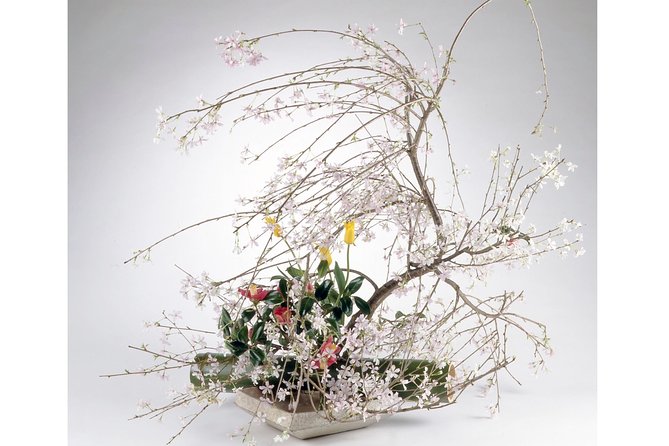
- You make your own seasonal arrangement: This is a hands-on class, not a demonstration you simply watch.
- The lesson suits first-timers: Instruction covers basic form, attractive angles, and how to combine materials.
- Naohiro Kasuya may lead the class: His teaching is described as patient, friendly, and clear, while Mrs. Shimakawa also receives warm praise for her careful instruction.
- The setting is the Ichiyoshiki Ikebana headquarters: You get a more traditional atmosphere than you would from a generic flower workshop.
- The class lasts about 1 hour and 10 minutes: It fits neatly into a Tokyo day, though the short format leaves little time for wandering or extended practice.
- The group is limited to 10 people: A small class gives you a better chance to receive individual guidance.
What This Tokyo Ikebana Class Really Teaches
Ikebana is often translated as Japanese flower arranging, but that simple label misses the point. The aim is not to fill a vase with as many blossoms as possible. Instead, you learn to show the character of each material, including the plant, the vase, the empty space, and the direction of each stem.
That difference matters. A branch may look awkward when held straight, yet become graceful when tilted. A flower may appear more attractive from one side than another. The instructor helps you notice these changes instead of treating every stem as a fixed decoration.
The lesson introduces the geometric and philosophical ideas behind ikebana before you begin your own work. You learn why form matters, how movement is created, and how small changes can alter the whole arrangement. This makes the class more than a souvenir-making session. You leave with a way of looking at plants and space.
The experience also connects to an old Japanese tradition associated with samurai culture. That does not mean you will receive a full history lecture in 70 minutes, but the background gives the activity more weight. Ikebana has long been tied to discipline, attention, and an appreciation of natural forms.
If you're still narrowing it down, here are other tours in Tokyo we've reviewed.

Inside the Ichiyoshiki Ikebana Headquarters
The meeting point is at 4-chōme-20-5 Nakano, Nakano City, Tokyo 164-0001, at the Ichiyoshiki Ikebana headquarters. The location is near public transportation, and the class ends at the same place.
That simple start and finish helps. You do not have to follow a guide across several Tokyo neighborhoods or worry about finding a second meeting point after the lesson. Still, allow enough time to reach Nakano. Tokyo addresses can be confusing, and the booking confirmation should be checked carefully for the exact meeting instructions.
The school setting is part of the appeal. You are learning in a place dedicated to ikebana, not in a restaurant or a general-purpose activity room. That gives the class a stronger sense of connection to the art form.
The group limit is 10 people. The class may be smaller, and one participant found herself as the only student. That can make the session feel almost private, with more room for questions and corrections. You should not assume every date will be a one-person lesson, but the maximum group size is still modest.
The First Lesson: Form, Angle, and Space
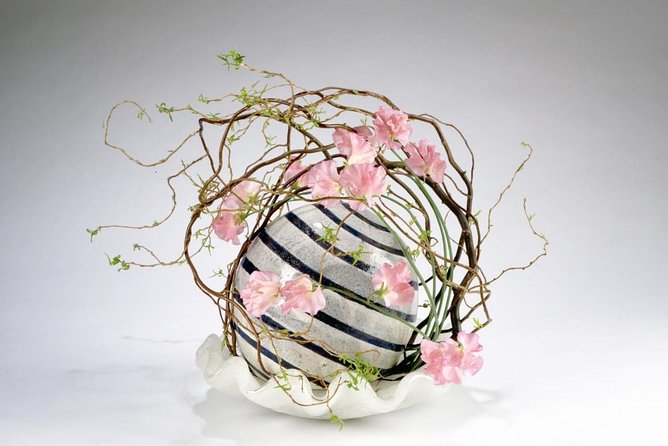
The instructor begins with the foundations. You learn how to bring out the beauty of the materials rather than hide them in a thick bundle of flowers.
Expect attention to:
- The angle of each stem
- The most attractive side of a flower or branch
- The relationship between tall and short materials
- The use of empty space
- The way the vase supports the overall design
- Color and material combinations
This is useful instruction for beginners because it gives you a method. Without guidance, it is easy to place flowers where they seem to fit and stop there. The class teaches you to look again and ask whether the arrangement has balance, direction, and character.
The instructor adjusts the explanation to your level. If you have never tried ikebana, you are not expected to know the names of styles or the rules of a particular school. At the same time, the class is not limited to absolute beginners. Someone with previous experience can still ask about form, movement, and ways to refine an arrangement.
The teaching style is one of the strongest parts of this experience. Naohiro Kasuya is described as patient, friendly, and able to explain the basics in a clear way. Mrs. Shimakawa is also praised for taking time with students and showing real feeling for the art. One participant noted that her English was easy to understand despite her apology for it.
That detail is worth keeping in mind if you worry about language. The available feedback describes communication as clear and supportive, but the exact instructor may vary. If you need a particular teacher, confirm that before booking rather than assuming.
Making Your Own Seasonal Arrangement
After the introduction, you work with the supplied flowers and equipment. The materials are local flowers in season, so your arrangement changes with the time of year. You are not simply copying a permanent sample with identical imported blooms.
Seasonal materials are a practical part of the lesson. They show you how ikebana works with what nature offers at a particular moment. A branch may have an unusual curve, or a flower may be smaller than expected. Instead of treating those traits as problems, you learn to make them part of the design.
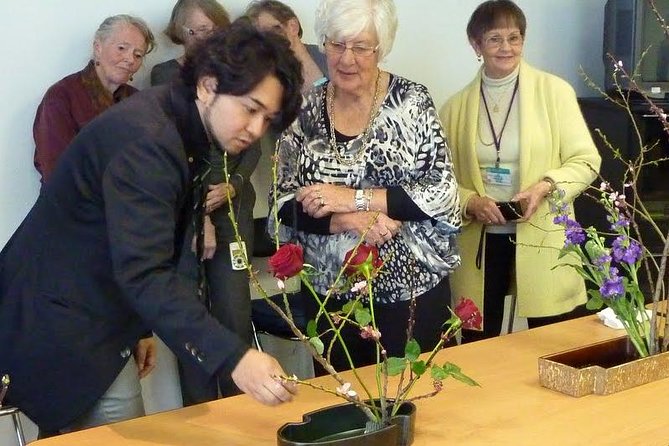
This is where the class becomes personal. You create your own arrangement, then the instructor examines it and suggests improvements. The advice may involve changing a stem’s angle, moving a flower, or giving one element more space. Those small adjustments let you see the difference between placing flowers and composing an arrangement.
The teaching approach is encouraging rather than harsh. Participants describe instructors as kind, supportive, and willing to guide them while they practice. That matters because ikebana can look simple from a distance. Once you start, deciding where one branch should go can feel surprisingly difficult.
You also have time to photograph your finished work. The photos make a useful record of your first attempt, especially since the arrangement itself may not travel home easily. The more important souvenir, however, is the method. You can use the same ideas with flowers in your own country.
Why the Seasonal Flowers Matter
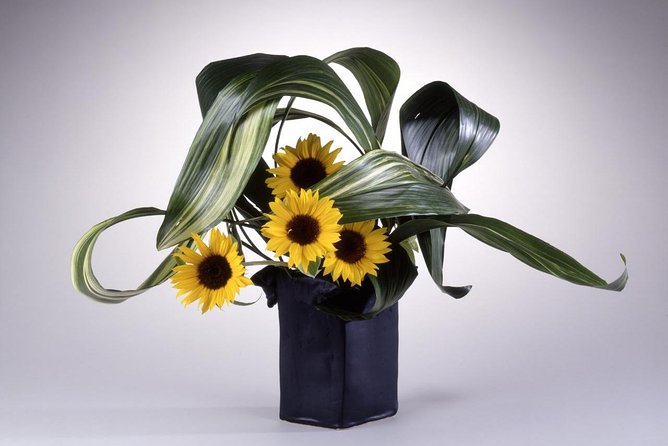
The flowers are provided, and the equipment is provided, so you can arrive without buying supplies or packing tools. That makes this a low-stress choice during a busy Tokyo trip.
The local, seasonal flowers also keep the experience tied to place. You are not arranging a standard kit assembled for every month of the year. The exact materials will depend on what is in season, so each class has its own look.
Ikebana can use flowers from around the world. That makes the lesson practical after you return home. You can apply the ideas to flowers from a market, garden, or florist rather than trying to recreate the exact Tokyo arrangement.
I like this lasting value. Many short activities give you a photo and a memory. This one also gives you a small skill. You may never study ikebana formally, but you will likely notice stems, gaps, and angles differently the next time you put flowers in a vase.

A Short Class With Real Personal Attention
At approximately 70 minutes, the class is compact. The schedule has to cover an introduction, a demonstration or explanation, your own arrangement, instructor feedback, and photographs.
That length works well if you want a single cultural activity without giving up half a day. You can place it between other plans in Tokyo, provided you allow time for transportation to Nakano and do not schedule something immediately afterward.
The tradeoff is depth. You will learn the basics, but you will not master a complete ikebana tradition in one hour. The lesson is best treated as an introduction and a first practice session, not as a full course.
The maximum of 10 participants helps offset the short duration. A large class could make the activity feel rushed, but a small group gives the instructor a better chance to look at each arrangement. If your date happens to have only one or a few students, the attention may be especially generous.
Children aged 6 and older can take part. Anyone aged 12 or younger must be accompanied by a parent. Since the activity involves careful placement and an art lesson rather than a fast physical challenge, it can suit families with children who enjoy making things and listening to instructions.
The Value of $67.28
The price is about $67.28 per person. That is not the cheapest activity in Tokyo, but the comparison should be made against what is included.
You receive the instruction, flowers, equipment, a hands-on arrangement session, feedback from the instructor, and time for photographs. You also get access to a traditional school setting and seasonal materials. You do not need to purchase flowers or tools beforehand.
For a visitor who wants an authentic cultural activity, the price is fair. It is especially reasonable if you value personal teaching and want to bring home an idea you can use again. The class is less convincing value if you mainly want a finished souvenir or a long social workshop.
The small group limit improves the value. A private class would normally cost more, while a group of up to 10 still allows personal corrections. The experience is also easier to fit into an itinerary than a longer craft course.
The instructor can be sent to a hotel in Tokyo, according to the activity information. Since that may involve separate arrangements, confirm the details before relying on it. The standard meeting point remains the Nakano school headquarters.
Who Will Enjoy This Most
I would choose this class for you if you like quiet, thoughtful activities. It suits people who enjoy design, flowers, Japanese culture, photography, or learning a skill with their hands.
It is also a good birthday gift. One participant used it as a birthday treat and described the class as a highlight of her time in Tokyo. The experience gives you something to do rather than something to watch, which makes it more memorable than a standard museum visit for some people.
Families can consider it for children aged 6 and up, but younger participants need a parent with them if they are 12 or younger. The class asks for attention and patience, so it may not suit a child who wants a noisy, fast-moving activity.
This is also a useful choice for repeat visitors to Japan. You do not need another major temple tour or city viewpoint. Instead, you spend time with a traditional art that many visitors miss.
The class may suit experienced ikebana students too, especially if you want an introduction to this school’s approach. The information does not promise advanced instruction, so beginners should remain the main audience.
Practical Details to Know Before Arrival
The activity is offered with a mobile ticket. Confirmation is normally received within 48 hours, subject to availability, so do not assume your place is final until you receive it.
The class is designed for a maximum of 10 people. Most people can participate, but you remain responsible for accidents or injuries during the activity. Keep valuables and personal belongings with you, since the school does not accept responsibility for lost items.
The cancellation rule is strict: the experience is non-refundable and cannot be changed for any reason. I would book only after fixing your Tokyo schedule. If your plans are uncertain, this is not the activity to reserve far ahead simply because the date looks convenient.
It is commonly booked about 16 days in advance. That gives you a useful planning guide, but availability can change. If you want a particular date or hope for a smaller class, booking ahead makes sense.
The experience ends back at the meeting point. Plan your next activity from Nakano rather than assuming you will finish in central Tokyo.
Is the Tokyo Ikebana Experience Worth Booking?
Yes, if you want a genuine, hands-on introduction to Japanese culture and are happy with a focused 70-minute lesson. You will learn basic principles, work with seasonal flowers, receive personal advice, and leave with photographs of your own arrangement.
I would skip it if you want a long workshop, a sightseeing tour, or a guaranteed private class. The non-refundable booking rule also calls for care.
For most people who enjoy flowers, design, and quiet cultural experiences, this is a strong use of part of a Tokyo day. The best reason to book is not simply that you make an arrangement. It is that you learn how to see the relationship between a plant, a container, and the empty space around them.
FAQ
Where does the ikebana experience take place?
The class takes place at the Ichiyoshiki Ikebana headquarters at 4-chōme-20-5 Nakano, Nakano City, Tokyo 164-0001, Japan.
How long does the class last?
The experience lasts approximately 1 hour and 10 minutes.
Are flowers and equipment included?
Yes. Flowers and the equipment needed for the class are provided.
Is the class suitable for beginners?
Yes. The program teaches the basics of ikebana and is designed for beginners. The instructor adjusts the teaching to your level.
Can children participate?
Yes. The program is designed for people aged 6 and older. Children aged 12 and younger must be accompanied by a parent.
Can I cancel or change my booking?
No. The experience is non-refundable and cannot be changed for any reason.
More tours in Tokyo we've reviewed




Tokyo, compared.
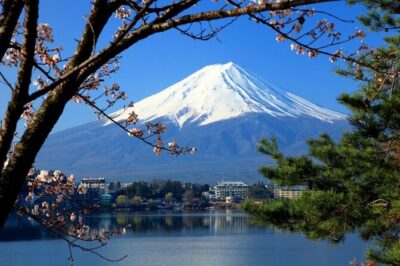 ★ 5.0Mt Fuji and Hakone 1-Day Bus Tour Return by Bullet TrainFrom $163
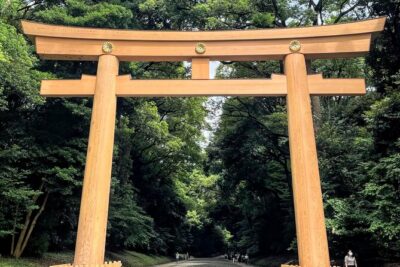 ★ 5.01-Day Tokyo Bus TourFrom $129
 ★ 4.6Tokyo: teamLab Planets TOKYO Digital Art Museum Entry TicketFrom $251 day
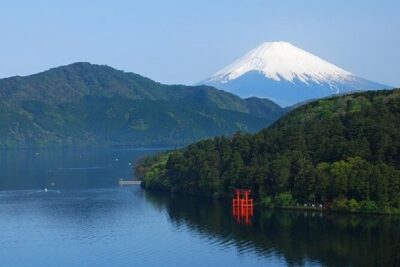 ★ 4.0Mt Fuji & Hakone Cruise, Drum Show Bullet Train 1 Day from TokyoFrom $149
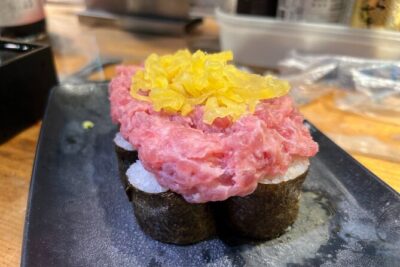 ★ 5.0Tokyo: Shinjuku Food Tour (13 Dishes at 4 Local Eateries)From $86
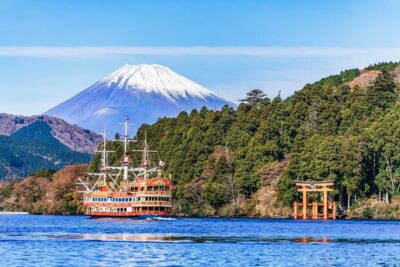 ★ 4.4Tokyo Mt Fuji 5th St & Hakone Cruise Bus Tour w/Bullet TrainFrom $15410 hours