
Reviewed · SHIBUYA TOURS
Shibuya and Harajuku Highlights Walking Tour
The clever part of this Tokyo walk is its route: you see quiet Meiji Jingu Shrine and youthful Takeshita Street, then finish amid the neon rush of Shibuya. It gives you two very different sides of the city in three to four hours.
I like the small group limit of 10, since you can hear the English-speaking guide and ask questions. I also like the included matcha drink or ice cream, a simple break that adds local flavor. The main drawback is the walking: you cover about 20 minutes between Harajuku and Shibuya, with more walking at each stop.
In This Review
- Key points to know before you book
- Why this Harajuku to Shibuya route works
- Meiji Jingu: a calm opening in the city
- Takeshita Street: Harajuku’s youthful side
- The matcha break near Harajuku Station
- Yoyogi Park: a short green pause
- Passing Shibuya PARCO on the way downtown
- Shibuya Crossing: Tokyo’s big city moment
- Hachiko: a brief story with a lasting place in Tokyo
- What the $78.04 price gets you
- Group size, guide style, and practical comfort
- Who should book this morning walk
- Should you book the Shibuya and Harajuku walk?
- FAQ
- How long does the Shibuya and Harajuku Highlights Walking Tour last?
- What time does the tour start?
- Where does the tour meet?
- Where does the tour end?
- What is included in the tour price?
- What matcha choices are available?
- How large is the tour group?
- How much walking is involved?
- Can I cancel for a full refund?
Key points to know before you book
- Two famous districts in one morning: The route links Harajuku and Shibuya without wasting time on a private transfer.
- A quiet start at Meiji Jingu: You begin in a forested shrine setting before entering Harajuku’s busy shopping streets.
- Matcha near Harajuku Station: Choose non-sweet matcha tea, a sweet matcha latte, or matcha ice cream.
- A small group capped at 10: The format makes it easier to follow the guide and stay together in crowded areas.
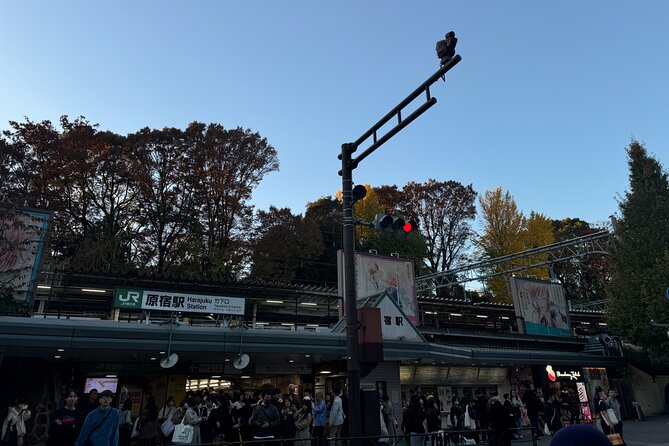
- A downhill-feeling city walk to Shibuya: You pass Yoyogi Park and Shibuya PARCO before reaching the crossing and Hachiko.
- A guide praised for warmth: Kayo is named in the feedback and was described as personable and a joy to spend the day with.
Why this Harajuku to Shibuya route works
Tokyo can feel too large to tackle on foot. Harajuku and Shibuya sit close enough to connect, yet they offer sharply different moods. This tour makes that contrast the main event.
You start near @cosme TOKYO at 9:30 a.m., then move through Meiji Jingu, Takeshita Street, a matcha shop, Yoyogi Park, Shibuya PARCO, Shibuya Crossing, and the Hachiko Statue. The route ends at Shibuya Station, so you can continue sightseeing, shopping, or catch a train from a useful central point.
The pace is planned rather than rushed. The listed stops add up to about three hours, while the full experience is described as three to four hours. That extra time allows for walking between places, explanations, and the matcha break.
I see this as a good first look at western Tokyo. It will not cover every corner of either district, but it gives you the major sights and a bit of cultural context without asking you to spend a full day on one neighborhood.
A few more Tokyo tours and experiences worth a look


Meiji Jingu: a calm opening in the city
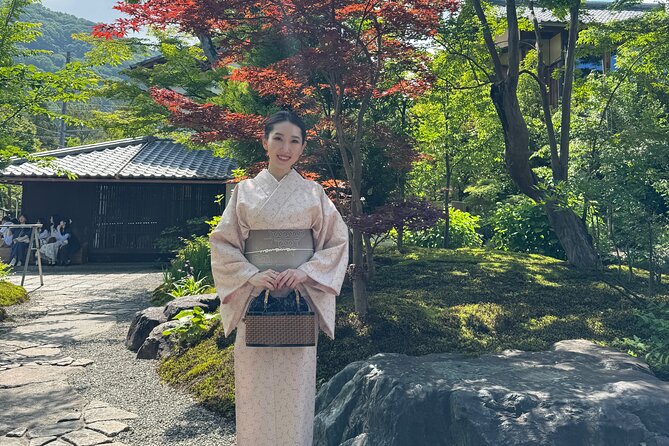
Meiji Jingu is dedicated to Emperor Meiji and Empress Shoken. The shrine sits in a forested area, which makes the opening feel far removed from the traffic and signs of nearby Harajuku.
You have about 50 minutes here, and admission is free. That matters because the shrine works best when you have time to notice the setting, not just snap a photo at the entrance.
Your guide can help explain the role of a Shinto shrine and the customs connected with visiting one. For many people, this is the most useful part of a guided walk. The buildings and paths may look simple at first, but the place has a clear religious purpose, and a guide gives you a better way to read what you see.
The contrast with the rest of the morning is part of the appeal. You begin with trees and shrine grounds, then walk into one of Tokyo’s best-known youth districts. If you want a slow, silent nature walk, this is not that. You are still visiting a major sight in central Tokyo. But the forested setting offers a welcome pause before the crowds of Harajuku.
Wear shoes with firm soles. Even a short shrine visit can involve more walking than expected, and you will continue on foot afterward.
Takeshita Street: Harajuku’s youthful side
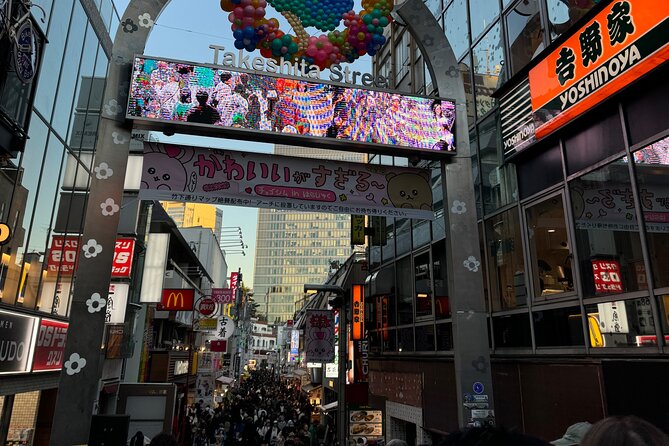
The next major stop is Takeshita Street, a pedestrian street known for trendy shops, kawaii fashion, and youth culture. You have roughly 50 minutes to look around.
This is not a traditional shopping street. It is a concentrated look at the colorful, playful side of Harajuku, with shops aimed at people seeking current fashion and pop-culture style. You might find the street exciting, crowded, or simply a little overwhelming. That depends on how much you enjoy busy retail areas.
A guide helps here because you are not left to guess why the street matters. The point is not only to shop. Takeshita Street shows how Tokyo’s fashion culture can develop in a very small area, with visual style and youth trends changing quickly.
Still, keep your expectations in check. This is a shared public street, not a private shopping experience. The tour does not include shopping vouchers or paid attractions. Your 50 minutes are better used for taking in the atmosphere and noting places you may want to revisit later.
I would avoid carrying bulky luggage. The tour is on foot, and crowded streets are easier with a light bag and both hands free.
The matcha break near Harajuku Station
After Takeshita Street, you stop at an authentic matcha shop beside Harajuku Station. You can choose from three included options:
- Non-sweet matcha tea
- Sweet matcha latte
- Matcha ice cream
You get about 30 minutes for this break. It is a small detail, but it improves the rhythm of the tour. After the shrine and shopping street, you have a chance to sit or pause before the longer walk toward Shibuya.
The choice also suits different tastes. Traditional matcha tea has a strong, unsweetened flavor. A matcha latte is the gentler pick if you prefer something sweet, while ice cream turns the stop into a dessert break.
This is included in the price, so you do not need to budget extra for the listed drink or ice cream. The information does not promise a full snack or meal, though, so do not treat this as breakfast or lunch. The tour begins in the morning, and the food inclusions are limited to the matcha choices.
I especially like this stop for people who want a taste of Japanese café culture but do not want to spend time researching where to go. It is also a useful point to tell your guide what you enjoyed most so far and ask about the next part of the route.
Yoyogi Park: a short green pause
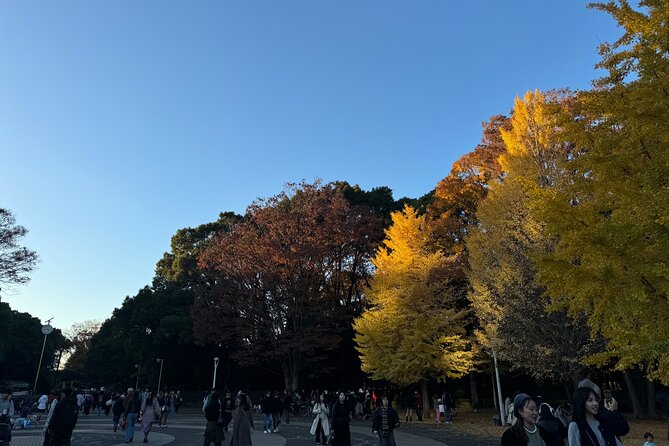
The group passes by Yoyogi Park on the way to Shibuya Crossing. The scheduled time here is about 20 minutes, so think of it as a walking segment and brief look, not a full park visit.
Yoyogi Park is one of Tokyo’s larger parks, with room for picnics, jogging, and outdoor activities. Its broad open feel gives you another change of pace after Takeshita Street.
Do not book this tour expecting a long nature stop. The park is included because it fits naturally between Harajuku and Shibuya. If you want to explore the park at length, you would need to return on your own.
That limitation is also what keeps the tour efficient. You see the park without giving up the two headline districts. For a short introduction to the area, that tradeoff makes sense.
The walk from Harajuku to Shibuya takes about 20 minutes. The route is manageable for anyone with moderate physical fitness, but it is not suitable if you cannot walk properly or comfortably. Comfortable shoes are essential.
Other walking tours we've reviewed in Tokyo



Passing Shibuya PARCO on the way downtown
The route passes Shibuya PARCO before reaching the crossing. This shopping complex is known for fashion boutiques, dining, and entertainment facilities.
You should see this as a city-life checkpoint rather than a scheduled shopping stop. The tour information does not include time for browsing inside, and the main focus remains the walk to Shibuya Crossing.
Still, the stop helps you understand the change in Shibuya’s character. Harajuku is known for youth fashion and Takeshita Street’s compact energy. Shibuya PARCO shows the district’s polished retail side, with bigger commercial spaces and a different shopping audience.
If you spot something you want to explore, note the location and return after the tour. Since the walk ends at Shibuya Station, you can easily plan a separate visit without backtracking across Tokyo.
Shibuya Crossing: Tokyo’s big city moment
Shibuya Crossing gets about 30 minutes, which is enough to watch the famous scramble and take in the surrounding screens and signs.
The crossing is one of Tokyo’s most recognizable public spaces. When the signals change, people move across from several directions at once. It is free to visit, but the experience is not just about stepping into the intersection. The surrounding buildings, signs, and constant movement create the real spectacle.
A guide adds value by helping you understand where the crossing fits within Shibuya. You are not simply dropped beside a famous road and told to take pictures. You have already walked from a shrine, through Harajuku, past a park, and into this dense commercial center. The route gives the crossing a stronger sense of place.
Thirty minutes is a fair amount of time for a first visit. You can watch more than one signal change and take photographs without losing the group. If you want to shop or visit a viewing point, save that for after the tour. Those activities are not included.
Crowds are part of the experience here. The small group helps your guide keep everyone together, but it cannot make Shibuya quiet. Stay alert with your belongings and listen for meeting instructions.
Hachiko: a brief story with a lasting place in Tokyo
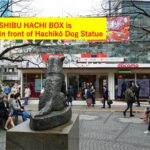
The tour ends at the Hachiko Statue outside Shibuya Station. You have about 10 minutes here.
Hachiko was an Akita dog remembered for waiting at the station for his deceased owner for nearly 10 years. The statue has become one of Shibuya’s best-known meeting points and a small memorial with an emotional story behind it.
Ten minutes is enough for an explanation and a few pictures. It is not a long historical presentation, and the area around the statue is usually a meeting place as much as a sightseeing stop.
Ending here is practical. You are already beside Shibuya Station, with the main sights of the route behind you. You can say goodbye to the guide and continue independently. The tour does not provide transport back to your hotel, so plan your next stop from the station.
What the $78.04 price gets you
At $78.04 per person, this is not the cheapest way to walk through Harajuku and Shibuya. You could visit all of the free sights on your own, and the matcha shop would cost less than the full tour price.
The value comes from time and structure. In three to four hours, you cover two major areas, hear explanations from a professional English-speaking guide, and avoid spending your morning working out the route. The small group, with a maximum of 10 people, is more personal than a large coach-style outing.
I would compare the price with the cost of your time in Tokyo. If you have only a few days, a planned route can be worth paying for. You get a clear start, a clear finish, cultural context at Meiji Jingu, a local drink or dessert, and help navigating the transition from Harajuku to Shibuya.
The price is harder to justify if you already know both neighborhoods well, speak Japanese, or prefer to wander without a schedule. It is also not a food tour, shopping tour, or private tour. Breakfast, lunch, private transport, and hotel pickup are not included.
One positive detail is the free cancellation policy up to 24 hours before the start time. If your plans change later than that, the amount paid is not refunded, and changes made within 24 hours are not accepted.
Group size, guide style, and practical comfort
The tour uses a professional English-speaking guide and limits the group to 10 people. That number is small enough for clear instructions and questions, while still keeping the price below many private tour options.
Kayo is the guide named in the available feedback. The description of Kayo is especially warm, calling her personable and a joy to spend the day with. That suggests the experience may depend in part on the guide’s friendly manner and ability to make conversation along the route.
The meeting point is outside @cosme TOKYO at 1-chome-14-27 Jingumae in Shibuya. The start time is 9:30 a.m. The end point is near Shibuya Station at 2 Chome-24, after the Hachiko stop and Shibuya Crossing.
There is no hotel pickup or drop-off, and no private transportation. You should arrive ready to walk from the first meeting point to the final station.
Service animals are allowed. The activity is near public transportation and calls for moderate physical fitness. The most important practical tip is simple: wear comfortable shoes, bring water, and keep your hands free for the walk.
Who should book this morning walk
I would recommend it to a first-time Tokyo visitor who wants orientation without spending a full day on a single neighborhood. It also suits you if you like a guide to explain cultural sites, but still want free time after the tour for shopping and food.
It is a good fit for solo visitors and couples who prefer a small group over a large bus. Families with older children may also like the mix of shrine, fashion street, park, matcha, and famous city sights.
I would think twice if you dislike crowds, cannot walk comfortably for several hours, or want a slow visit with long stops. Takeshita Street and Shibuya Crossing are busy by nature, and Yoyogi Park receives only a short pass through the route.
The tour is also not ideal if your main goal is shopping. You pass Shibuya PARCO and Takeshita Street, but there is no dedicated shopping period. Use the tour to learn the districts, then return to the stores that interest you.
Should you book the Shibuya and Harajuku walk?
Book it if you want an efficient morning that connects Tokyo’s shrine culture, youth fashion, matcha, park space, and city spectacle. The route is well chosen, the group is limited to 10, and the included drink or ice cream adds a pleasant break.
Skip it if you prefer to explore at your own pace or want a private, food-focused, or shopping-heavy experience. At $78.04, you are paying mainly for the guide, the organized route, and the time saved.
For a first look at Harajuku and Shibuya, I think the strongest reason to book is the contrast. You begin beneath shrine trees and finish at Hachiko beside one of the world’s best-known crossings. Few short walks in Tokyo change character so quickly.
FAQ
How long does the Shibuya and Harajuku Highlights Walking Tour last?
The tour lasts approximately three to four hours. The scheduled visits and walking segments fit within that time.
What time does the tour start?
The tour starts at 9:30 a.m.
Where does the tour meet?
The meeting point is at @cosme TOKYO, 1-chome-14-27 Jingumae, Shibuya, Tokyo 150-0001, Japan.
Where does the tour end?
The tour ends near Shibuya Station at 2 Chome-24, Shibuya, Tokyo 150-0002, after visiting Shibuya Crossing and the Hachiko Statue.
What is included in the tour price?
The price includes a professional English-speaking guide and one matcha drink or matcha ice cream.
What matcha choices are available?
You can choose non-sweet matcha tea, a sweet matcha latte, or matcha ice cream.
How large is the tour group?
The tour has a maximum of 10 people.
How much walking is involved?
You walk from Harajuku to Shibuya for about 20 minutes, with additional walking at the stops. Comfortable shoes are recommended, and moderate physical fitness is required.
Can I cancel for a full refund?
You can cancel up to 24 hours before the experience starts for a full refund. Cancellations or changes made less than 24 hours before the start time are not accepted for a refund.
More Walking Tours in Tokyo
More Shibuya Tours in Tokyo


More tours in Tokyo we've reviewed





Shibuya Tours, compared.
 ★ 5.0Official Street Go-Kart in ShibuyaFrom $76
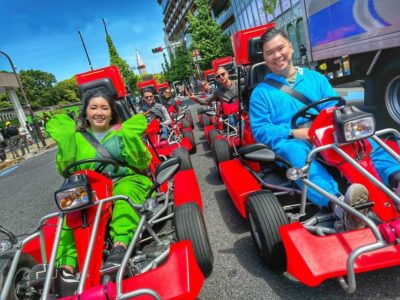 ★ 4.9Tokyo: Street Kart Experience in ShibuyaFrom $741 hour
 ★ 5.0Shibuya Meltdown Nightlife Tour: All-You-Can-Drink Bar HoppingFrom $106
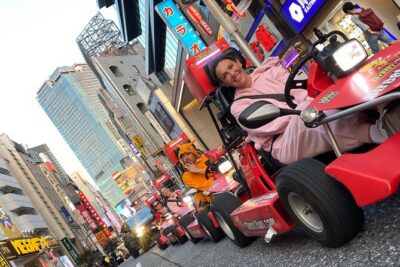 ★ 5.0Shibuya Official Street Go-Kart in Shibuya AnnexFrom $69
 ★ 5.0Tokyo: Shibuya Food Tour (13 dishes and 4 Eateries)From $77
 ★ 5.0Best of Shibuya Food TourFrom $217