
Reviewed · MUSASHINO
Experience Mikoshi Parade in Kichijoji, Tokyo!
The big draw here is simple: you do not just watch Kichijoji’s Autumn Festival from the pavement. On September 12, you can put on a Hanten festival jacket and help carry a mikoshi, a portable shrine, through the town with local residents. On September 13, you visit Musashino Hachimangu and see as many as 11 mikoshi come together for the festival’s main display.
I like two things right away. First, this is a small private activity, so your guide can explain what is happening instead of leaving you to guess at the chanting and movement. Second, the tour gives you a direct connection with Kichijoji residents. Guides Yamamoto and Kate help visitors take part in a local celebration rather than simply take photographs of it.
The main consideration is the fixed festival schedule. The activity begins at 3:00 p.m., lasts about two hours, and depends on good weather and a minimum number of participants. The September 12 carrying session also calls for physical participation, so it may not suit anyone looking for a quiet, sit-down cultural tour.
In This Review
- Key points to know before booking
- Kichijoji’s mikoshi parade puts you in the action
- Kichijoji Daiyagai: a shopping street turned festival route
- September 12 or September 13: choose the right festival day
- Musashino Hachimangu and the story of Kichijoji
- The final gathering of all 11 portable shrines
- What the $39.02 price gets you
- Getting there from central Tokyo
- Who will enjoy this most
- What the personal welcome adds
- Booking, cancellation, and weather details
- Should you book the Kichijoji mikoshi experience?
- FAQ
- Where does the mikoshi experience take place?
- How long does the experience last?
- What time does the tour start?
- Can I carry a mikoshi?
- What happens on September 13?
- How many mikoshi can I see?
- Is the experience private?
- Is food included?
- Can I cancel for a full refund?
Key points to know before booking
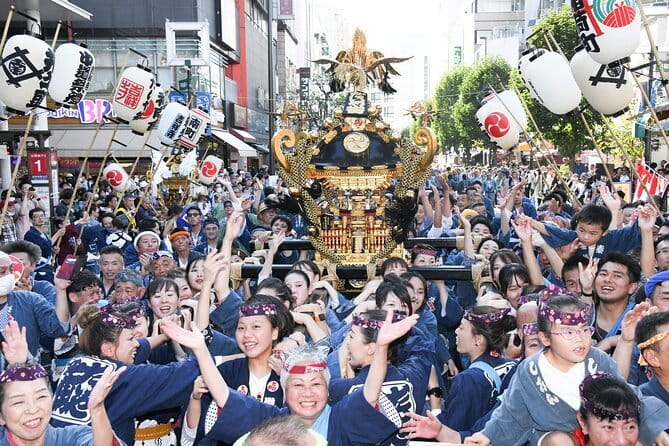
- Carry a mikoshi on September 12: Wear a Hanten jacket and join local residents from 3:00 to 6:00 p.m. as the portable shrine moves through Kichijoji.
- See up to 11 mikoshi together: On September 13, one shrine comes from Musashino Hachimangu and ten more represent Kichijoji’s town districts.
- Meet at Kichijoji Daiyagai: The main shopping street is the festival’s working center, not just a sightseeing backdrop.
- Visit an eighth-century shrine: Musashino Hachimangu gives the festival a clear religious and local setting.
- Private, guide-led format: Only your group takes part, with a professional guide explaining the customs and town.
- Easy Tokyo side trip: Kichijoji is about 15 minutes by train from Shibuya or Shinjuku, and the meeting point is near public transportation.
Kichijoji’s mikoshi parade puts you in the action
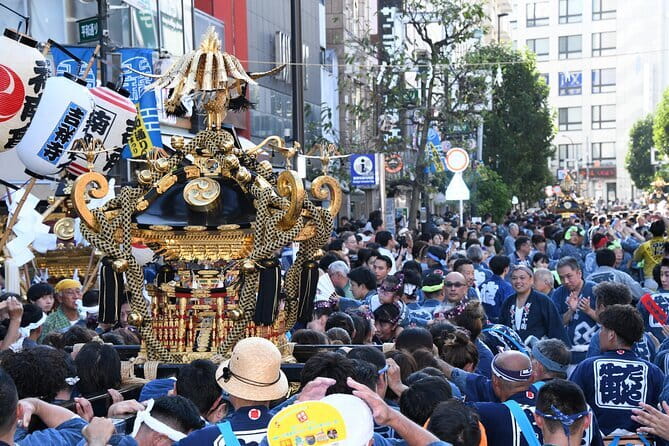
A mikoshi is a portable shrine carried during a Japanese festival. Here, each district brings its own shrine and its own way of moving, chanting, and celebrating. That local variation is what makes the Kichijoji Autumn Festival more than a single formal procession.
You can expect to see up to 11 mikoshi. One comes from Musashino Hachimangu, the guardian shrine of Kichijoji, while ten come from the town’s individual districts. Each group has its own style, so the procession has a strong neighborhood character.
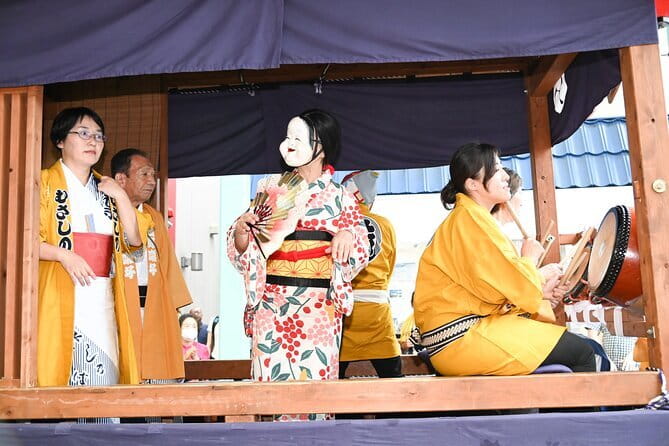
The September 12 session offers the most hands-on version. You wear a Hanten, the short festival jacket associated with local celebrations, and join the townspeople in carrying one of the mikoshi. The scheduled carrying portion runs from 3:00 to 6:00 p.m., although the tour itself is listed as approximately two hours. Confirm the exact arrangement after booking, since the festival timetable is the part that controls the day.
I like this format because it gives you a role. You are not asked to understand every custom before you begin. Your guide helps you take part, while the local group supplies the rhythm, calls, and shared effort. One useful point from the experience is that a family connection helped one visitor secure a place beside the local carriers, with Mr. Yamamoto providing permission to join. That detail makes one thing clear: participation depends on coordination, not on simply walking up and grabbing a shrine.
If you're still narrowing it down, here are other tours in Musashino we've reviewed.


Kichijoji Daiyagai: a shopping street turned festival route
Kichijoji Daiyagai is one of the town’s main shopping streets and the center of the festival activity. Shops, pedestrians, and shrine carriers meet here, giving you a lively urban setting rather than a staged cultural show in an isolated venue.
On September 12, you spend about one hour and 40 minutes in this area. The key activity is carrying the mikoshi through the streets. The experience is physical and public. You will be close to the movement of the shrine, the local carriers, and the festival sounds.
That makes comfortable clothing and sensible footwear a good idea, although the supplied details do not specify a dress code beyond the provided Hanten jacket. You should also expect the carrying portion to require standing, walking, and working with the group. If you have limited mobility or prefer not to take part physically, ask the provider in advance what viewing arrangement is possible.
This stop also works well for people who want to see modern Kichijoji as well as traditional Japan. The shrine does not move through a museum or a heritage park. It passes through an active town center where everyday shopping continues around the celebration.
The drawback is that the tour cannot promise a calm viewing position or a perfectly clear photograph. A mikoshi parade is communal and moving. You join the flow, and that means the best moments may come quickly.
September 12 or September 13: choose the right festival day
The two dates offer different experiences, and this is one of the most important booking decisions.
On September 12, the focus is participation. From 3:00 to 6:00 p.m., you wear the festival jacket and help carry a mikoshi with local residents. This is the better choice if you want an active role and do not mind following the group’s pace.
On September 13, the focus is explanation and observation. From 3:00 to 5:00 p.m., you visit Musashino Hachimangu to learn about the shrine and festival. You then walk through town and watch the demonstration in which all the mikoshi gather. This is the festival’s major visual moment.
The September 13 schedule may suit you better if you want cultural context without carrying a shrine. You still see the local groups in action, but your attention can stay on the different styles and the final gathering.
The supplied information describes the tour as about two hours, while the carrying schedule on September 12 runs for three hours. Treat the listed start time as firm, and check the exact meeting and end arrangements with the provider when your booking is confirmed. The activity returns to its meeting point.
Musashino Hachimangu and the story of Kichijoji
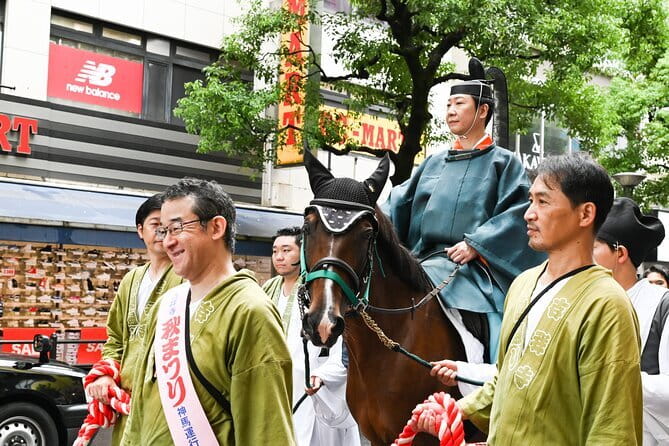
Musashino Hachimangu is the guardian shrine of Kichijoji and dates back to the eighth century. That long span matters because the festival is tied to the place itself, not simply added for visitors.
The shrine also helps explain how Kichijoji developed. After the Great Meireki Fire in the seventeenth century, people from Edo rebuilt their lives in this area and established the town around the shrine. Your guide can connect the festival to that local story, giving you a better sense of why the shrine remains important to residents.
People visit Musashino Hachimangu for New Year celebrations, festivals, family events, and prayers at other turning points in life. On September 13, you have about 20 minutes at the shrine. That is not enough for an exhaustive visit, but it is enough for a focused introduction before the mikoshi gathering.
I appreciate that the shrine visit is brief rather than padded. The main event is still the festival in the streets. You get the religious setting first, then see how the town carries that tradition into public life.
If you are hoping for an extended shrine tour, this may feel short. The included professional guide is there to explain the history and customs, but the experience does not include a long independent visit or extra sightseeing inside the shrine grounds.
The final gathering of all 11 portable shrines

The September 13 climax comes when the mikoshi gather together. One represents Musashino Hachimangu, and ten come from the town districts. Seeing them in one place lets you compare the groups instead of watching each shrine in isolation.
Pay attention to the way each group carries and chants. The different styles are a central part of the experience. You are not just looking at eleven similar objects. You are seeing how separate neighborhood groups express their own identity within one town festival.
This is also where a guide adds real value. Without explanation, the event can look like a loud procession of people carrying decorated shrines. With context, you can follow the relationship between the main shrine, the districts, and the festival’s shared finale.
The timing is important. The September 13 schedule runs from 3:00 to 5:00 p.m., so arrive ready to start at 3:00. The meeting point is listed at 1-chōme-1-24 Kichijōji Minamichō, Musashino, Tokyo 180-0003, and the activity ends back there.


What the $39.02 price gets you
At $39.02 per person, this is not a full-day sightseeing tour. You are paying for roughly two hours, a professional guide, and access to a local festival experience that would be difficult to understand fully on your own.
The value is strongest on September 12, when you may carry the mikoshi and receive the Hanten jacket for the activity. You are paying for participation and local coordination, not for admission to a monument. Admission is listed as free, and snacks are not included.
On September 13, the price buys a more structured introduction to Musashino Hachimangu, the town festival, and the gathering of all the shrines. That is a fair use of the fee if you want someone to explain what you are seeing and keep the short schedule organized.
The activity is private, meaning only your group participates. That matters at a busy festival. You can ask your guide about what is happening, and the experience is not built around a large bus group. The tradeoff is that the tour is centered on one event and one neighborhood. If you want a broad Tokyo history tour, this is not the right purchase.
Getting there from central Tokyo
Kichijoji is about 15 minutes by train from Shibuya or Shinjuku. That makes the festival easy to add to a Tokyo day, especially if you are already planning time at Inokashira Park.
The meeting point is near public transportation, but the information does not specify a particular station exit or train line. Use the exact address when planning your route and allow enough time to find 1-chōme-1-24 Kichijōji Minamichō before the 3:00 p.m. start.
A practical plan is to visit Inokashira Park earlier, then head toward the meeting point with time to spare. Do not count on arriving at 3:00 and sorting out the location while the parade begins. Festival streets can be confusing, and the carrying session has a fixed schedule.
A mobile ticket is provided, which is useful when you are moving around Tokyo. Confirmation is sent within 48 hours, subject to availability. The experience may be canceled for poor weather or if the minimum number of participants is not reached.
Who will enjoy this most
I would choose this for you if you want to meet a local side of Tokyo and take part in a seasonal event. It suits couples, families, and small private groups who prefer a short activity with a clear focus.
The September 12 date is best for active participants. You should be comfortable walking and standing, and you should welcome the idea of joining a group effort. The September 13 date is better if you want the shrine, the festival story, and the large gathering without making the carrying itself the center of the day.
The experience also suits repeat visitors to Tokyo. Kichijoji offers a change from the major central districts, while the festival gives you a reason to visit at a specific time of year.
I would be more cautious about recommending it if you need a flexible schedule. The dates, start time, weather, and festival timetable all matter. It is also not designed around snacks, shopping time, or a long list of sights. The experience is narrow by design.
What the personal welcome adds
The strongest quality here is the human scale. One participant was warmly welcomed by local people and found that taking part made the town easier to understand. That is the point of this activity: participation changes the way you see the procession.
Yamamoto is closely involved with the experience, and Kate is also identified as one of the guides. Questions before the activity were answered within 24 hours in one case, which suggests that contacting the provider about the date or participation details is sensible.
You should still keep your expectations practical. A local welcome does not mean every part of the festival will be translated or explained minute by minute. The guide’s role is to provide context and help you take part, while the festival itself remains a real community event.
That balance is a strength. You get help entering the celebration, but you are not placed in a performance created only for an overseas audience.
Booking, cancellation, and weather details
The tour offers free cancellation up to 24 hours before the local start time for a full refund. Changes or cancellations made less than 24 hours before the start are not accepted and are not refunded.
Good weather is required. If poor weather causes cancellation, you are offered another date or a full refund. If the minimum number of participants is not reached, you are offered another date or experience, or a full refund.
Since the activity takes place only on September 12 and 13, build a little flexibility into your Tokyo plans if this festival is a priority. Confirmation arrives within 48 hours, subject to availability.
Should you book the Kichijoji mikoshi experience?
Book it if you want a short, local, participatory festival experience and you like the idea of joining a Japanese neighborhood celebration rather than simply watching one. September 12 gives you the rare chance to carry a mikoshi with local residents. September 13 gives you the better viewing and learning format, including the gathering of all 11 shrines.
Skip it if you want a relaxed sightseeing tour, a long shrine visit, or a flexible activity that can move around your schedule. The price is reasonable for a private guide and organized festival access, but the value depends on your interest in this one event.
For most visitors choosing between the two dates, I would pick September 12 for personal involvement and September 13 for cultural explanation and the strongest overall view of the parade.
FAQ
Where does the mikoshi experience take place?
It takes place in Kichijoji, in Musashino, Tokyo. The main meeting point is listed at 1-chōme-1-24 Kichijōji Minamichō, Musashino, Tokyo 180-0003, Japan.
How long does the experience last?
The experience lasts approximately two hours. The listed September 12 carrying schedule runs from 3:00 to 6:00 p.m., while the September 13 schedule runs from 3:00 to 5:00 p.m.
What time does the tour start?
The activity starts at 3:00 p.m.
Can I carry a mikoshi?
On September 12, you can wear a Hanten festival jacket and join local residents in carrying a mikoshi through Kichijoji. Participation depends on the arrangements for the festival session.
What happens on September 13?
You visit Musashino Hachimangu, learn about its history and the festival, walk through town, and watch a demonstration in which all the mikoshi gather.
How many mikoshi can I see?
You can see up to 11 mikoshi. One comes from Musashino Hachimangu Shrine, and ten come from districts in the town.
Is the experience private?
Yes. Only your group participates in this private activity.
Is food included?
No. Snacks are not included.
Can I cancel for a full refund?
Yes, if you cancel at least 24 hours before the experience start time. Cancellations made less than 24 hours in advance are not refunded. If the activity is canceled because of poor weather or an insufficient number of participants, you are offered another date or experience, or a full refund.
More tours in Musashino we've reviewed
Musashino, compared.
 ★ 5.0The 10 Tastings of Tokyo With Locals: Private Street Food TourFrom $199
 ★ 5.0EXCLUSIVE Tokyo Secret: Kichijoji Small-Group Food & Bar HoppingFrom $105
 ★ 5.0Explore Kichijoji: Walk Through One of Tokyo’s Beloved DistrictsFrom $45
 ★ 5.0Samurai Guide Sho’s:Kichijoji Night Training–Drink & Dish PairingFrom $97
 ★ 5.03-Hour Manga Drawing Workshop in TokyoFrom $97
 ★ 5.0Tokyo Kichijoji Twilight: Explore Instagram-Worthy Hidden SpotsFrom $39