
Reviewed · FOOD
REAL, All-Inclusive Tokyo Food and Drink Adventure (leave the tourists behind)
Tokyo’s best food memories often begin far from the neon crowds. This three-hour evening moves through Oimachi and Kamata, two local neighborhoods where narrow lanes, old shopping streets, standing bars, and everyday Tokyo life replace the usual entertainment districts. You’ll eat enough for dinner, enjoy three drinks, and travel between areas by train with a guide.
I like the small maximum group of six, which makes it easier to ask questions and adjust the food to your taste. I also like the mix of Japanese and Western-style pub food, since you can try unfamiliar dishes without being forced into a full evening of advanced flavors.
The main catch is that this is a standing-bar experience, not a seated restaurant crawl. You’ll also need to be at least 18 to join, and at least 20 to drink alcohol. The evening involves walking and train travel, so comfortable shoes matter.
In This Review
- Key points at a glance
- Why Oimachi is a smart place to begin
- What a tachinomi evening feels like
- The walk between plates in Oimachi
- Taking the train from Oimachi to Kamata
- Kamata’s older streets and bubble-era character
- The guide can make or break the evening
- What the $125 price includes
- Who should book this Tokyo food tour
- Practical details for a smooth evening
- Should you book it?
- FAQ
- Where does the Tokyo food tour begin?
- What time does the tour start?
- Where does the tour finish?
- How long does the experience last?
- How many people can join?
- Are food and drinks included?
- Can people under 20 join?
- Is a vegetarian option available?
- Is transportation included?
Key points at a glance
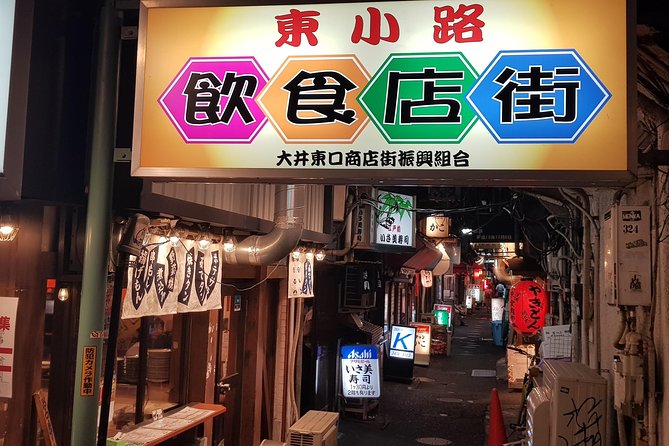
- Two local neighborhoods: Start in Oimachi, then take a six-minute train ride to Kamata.
- Dinner is included: Several small eateries provide enough food for a full evening meal.
- Three drinks included: Choose alcoholic or non-alcoholic beverages, with sake and beer among the possibilities.
- A very small group: The maximum is six people, creating a friendly setting for questions and conversation.
- Guides who add practical help: Andrew, Mini, Ryuhki, Lukas, Yeman, and others have helped visitors with local customs, food choices, and train tickets.
- A true age requirement: Everyone must be at least 18, while the minimum drinking age in Japan is 20.
Why Oimachi is a smart place to begin
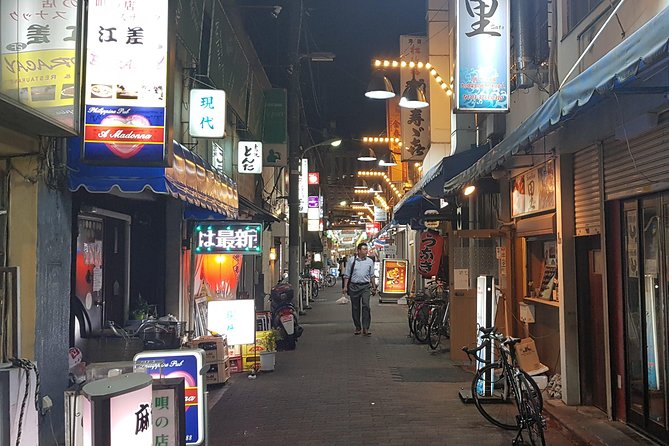
Oimachi sits only about two minutes from Shinagawa on the Yamanote Line. That easy connection matters. You can reach the meeting point at Ōimachi Station without committing half an evening to a distant suburb, yet the mood changes quickly once you leave the main station area.
The route heads into narrow backstreets and older shopping lanes. These streets offer the sort of ordinary Tokyo setting that is easy to miss when your plans focus on Shibuya, Shinjuku, Asakusa, or Tokyo Station. You might see older storefronts, small businesses, and compact food places serving local regulars.
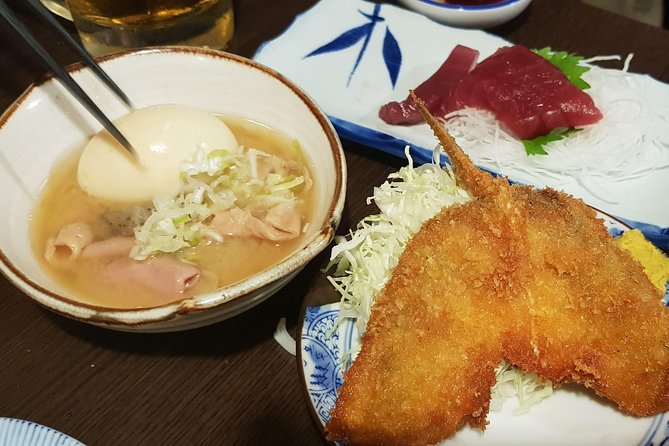
The first tachinomi, or standing bar, sets the tone. You’ll have a cold beer or another drink, then try Japanese-style pub food. The food selection can also include more familiar Western-style choices, a useful touch if you are curious about Japan but not ready to order every unusual dish on the menu.
I like this opening because it lowers the pressure of eating in an unfamiliar place. Your guide can explain what is arriving, how people eat it, and which items suit your preferences. Adventurous eaters can ask for more unusual options, while cautious eaters still have a way into the meal.
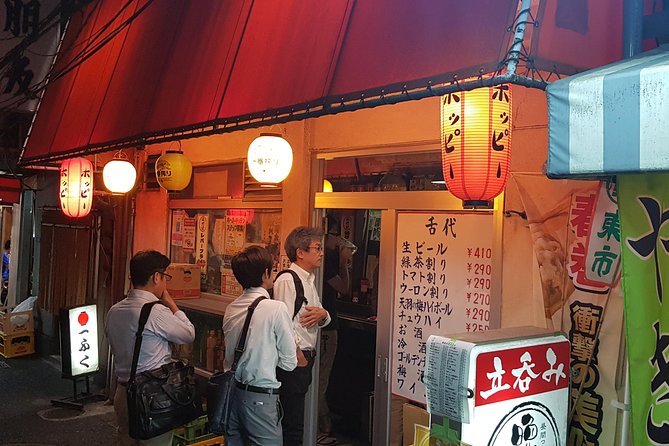
A standing bar is part restaurant, part neighborhood meeting place. You generally have less space than at a formal dining room, and you should not expect a long, leisurely meal at one table. That compact setting is part of the appeal, but it may not suit anyone who needs a seat or prefers a quiet dinner.
A few more Tokyo tours and experiences worth a look
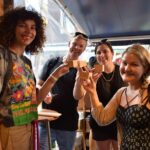
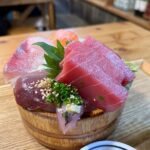
What a tachinomi evening feels like
The word tachinomi means standing drinking. These bars are built for short visits, small plates, and conversation. You stop in, order a drink and a few bites, then move on rather than spending the whole evening in one establishment.
For you, that creates variety. Instead of choosing one restaurant and hoping the menu works, you can sample several settings and food styles. The included meal is spread across the evening, so you get a broader sense of local nightlife than a single fixed dinner would provide.
The drinks are not unlimited. The package includes a total of three alcoholic or non-alcoholic beverages. Beer and sake have featured in the evening, but you can choose other available options if alcohol is not your preference. Vegetarian food is available when requested at booking, though you should give the operator advance notice.
The food can include both Japanese and Western-style pub dishes. Past evenings have included unusual items for adventurous eaters, along with familiar choices for those who prefer a gentler introduction. Your guide’s role is important here. Andrew, Mini, Ryuhki, Lukas, and Yeman have all been singled out by name for being friendly, helpful, and good at explaining the food and culture.
You should approach the meal with an open mind, but you do not need to pretend you enjoy something you do not. Tell the guide what you eat, what you avoid, and how adventurous you want to be. The small group makes that kind of adjustment more realistic than it would be on a large food tour.
The walk between plates in Oimachi
After the first bar, the evening includes an educational walk through the area. The walk is not simply a way to burn time between restaurants. It gives your guide room to explain neighborhood details, local customs, and the difference between Tokyo’s major nightlife zones and its smaller backstreets.
This is also where a good guide can make the night feel personal. Andrew has been praised for adding local knowledge and historical context, while Mini has helped with practical matters such as using a Suica card and finding flavored Kit Kats for souvenirs. Those extra moments are useful because they connect the food outing with the rest of your time in Japan.
The experience can also touch on subjects that are unusual but very much part of Tokyo’s urban culture, including the city’s love hotels. If that topic interests you, ask about it. The evening is designed to show you parts of the city that standard sightseeing routes often skip.
The walk requires a moderate level of fitness. The streets are not presented as a difficult hike, but you will be on your feet, moving through bars and neighborhoods, then boarding a train. Wear shoes that are comfortable for several hours and be ready for a casual pace rather than a formal guided walk.
Taking the train from Oimachi to Kamata
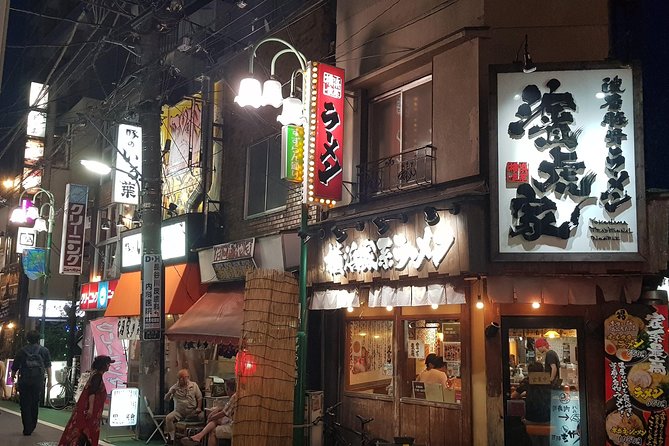
After two restaurants and two drinks, the group leaves Oimachi for Kamata. The train ride takes about six minutes. On a practical level, this keeps the evening efficient. You do not lose a large block of time getting from one neighborhood to the next.
It also shows how close together different sides of Tokyo can be. Oimachi and Kamata are not isolated villages. They are connected parts of the enormous city, yet each has a different feel and collection of local businesses.
The end point is Kamata Station, not the original meeting point. Your guide can help you get on the right train when the evening ends, a valuable service if Tokyo rail travel still feels confusing. One guide was specifically praised for showing a participant how to purchase a train ticket home.
You should plan your route back before joining the experience. Hotel pickup and drop-off are not included, and the tour does not return you to Ōimachi Station. The route ends at Kamata Station, where your guide can help you with the next train.
Kamata’s older streets and bubble-era character
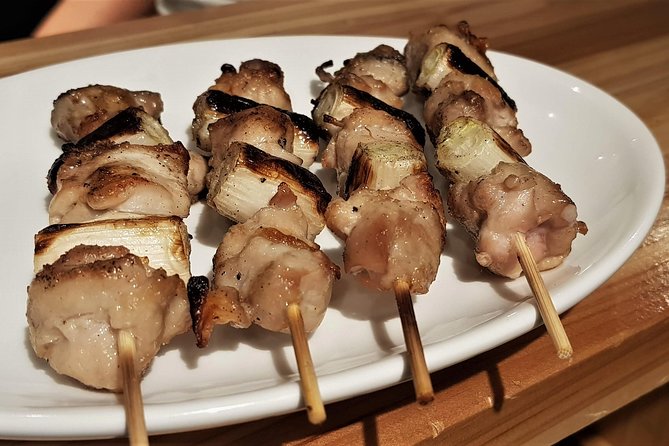
Kamata brings a different look. The neighborhood has architecture from Japan’s bubble era, especially from the 1980s into the early 1990s, mixed with newer improvements. It also has a classic shotengai, or covered shopping street, where local shopping traditions remain visible.
This is the sort of place I value on a food outing. You are not just moving between famous restaurants. You are seeing how a less celebrated part of Tokyo works after dark, with older buildings, small shops, and neighborhood eateries that do not need a famous name to attract customers.
The second part of the evening includes another local food stop with a relaxed mood and friendly clientele. You will have the final included drink and more food, completing a meal that is intended to replace dinner rather than merely provide a snack.
Kamata may appeal most to people who have already seen Tokyo’s headline sights and want another angle. It is also a good first-night activity if you want an introduction to local customs, food, and rail travel. The setting is less polished than a major nightlife district, and that is exactly the point. Do not book this expecting a glamorous restaurant or a carefully staged photo stop.



The guide can make or break the evening
The strongest part of this experience is the guide. The group is small enough that the guide can explain dishes, answer questions, and shape the food choices around the people present.
Andrew has been praised for his history knowledge, personal stories, humor, and practical recommendations for later days in Tokyo. Mini has been described as friendly and accommodating, with useful help beyond the meal. Ryuhki has been appreciated for knowing the areas well and making the evening feel like time spent with a local friend.
Other guides named in the feedback include Yeman and Lukas. Yeman led an evening that included sake, unusual food, local history, and discussion of love hotels. Lukas guided a family group through unfamiliar establishments while explaining the culture along the way.
Guide assignments are not guaranteed, so you should not book solely to meet one particular person. Still, the repeated praise for several guides points to a clear strength in the format: this is not just a route between food stops. Conversation and explanation are a major part of what you are paying for.
Tell your guide early if you are vegetarian, cautious about certain dishes, eager to try unusual food, or unsure about train tickets. The experience works best when the guide knows what you need.
What the $125 price includes
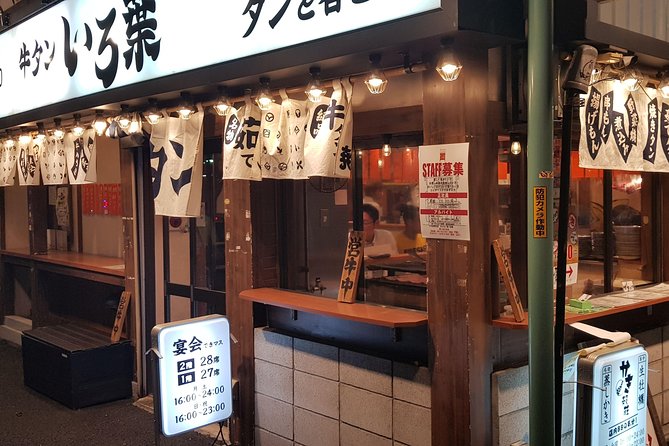
At $125 per person, this is not the cheapest way to eat in Tokyo. You can buy inexpensive food and drinks on your own for less, especially if you already know where to go and can read the menus.
The price makes more sense when you count what is included: dinner, three drinks, local transportation between Oimachi and Kamata, and a small-group guide for about three hours. You are also paying for access to places that can be intimidating to enter without Japanese language skills or local guidance.
The value is strongest if you want confidence. Your guide handles the movement between stops, explains the food, and helps you understand the social rules of standing bars. You also avoid spending your evening guessing which narrow doorway might lead to a good meal.
The value is weaker if you want a large number of drinks, a formal seated dinner, or a broad sightseeing tour. Three beverages is a set amount, and the focus is local food culture rather than Tokyo’s major landmarks.
Group discounts are available, and the activity is offered with a mobile ticket. The experience is often booked well in advance, with an average booking lead time of 42 days. If your dates are fixed, reserving early is sensible.
Who should book this Tokyo food tour
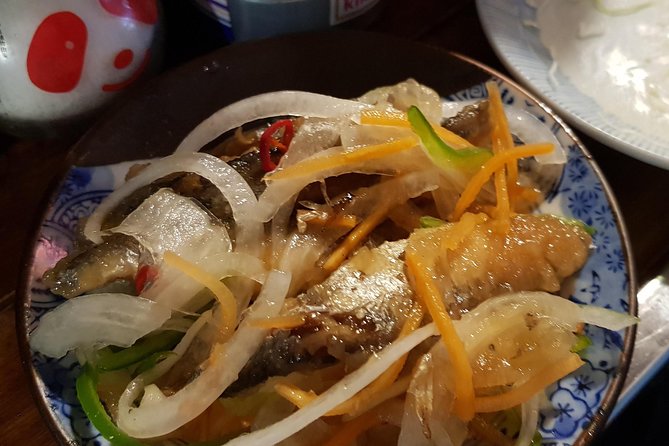
I would recommend it to adults who enjoy small eateries, local neighborhoods, and trying dishes they might not order alone. It suits solo visitors, couples, and small groups who want conversation with a guide instead of a large organized outing.
It is especially useful during your first few nights in Tokyo. You can learn how local bars work, pick up restaurant ideas, ask about neighborhoods, and get help with the train system. Andrew has provided recommendations for later days, and that sort of advice can improve the rest of your trip.
Families with adult children can enjoy it too. The experience requires every participant to be at least 18, so it is not suitable for a family traveling with a younger teenager. Alcohol can only be served to people who are at least 20.
You should think twice if you dislike standing, have difficulty walking through several neighborhood streets, or want complete control over every dish. The evening is relaxed, but it is still active and social. The food is enough for dinner, yet it is served in small bars rather than a conventional dining room.
Practical details for a smooth evening
The meeting point is Ōimachi Station at 6:30 pm. The exact station area matters, so arrive with enough time to find the guide rather than stepping off the train at the last moment.
The tour lasts about three hours and finishes at Kamata Station. Hotel pickup and drop-off are not included. Your guide can help you board the correct train at the end, but you remain responsible for getting to the starting point and continuing from Kamata.
The maximum group size is six people. Some descriptions refer to a small group of five, so the safest expectation is a compact group with no more than six participants. That is still far smaller than a typical city food outing.
Confirmation is provided when you book. Vegetarian food is available if you request it in advance. The cancellation terms are strict: a full refund requires cancellation at least six full days before the start time, a 50 percent refund applies two to six full days before the start, and cancellations less than two full days ahead are not refunded.
Should you book it?
Book this experience if your idea of a good Tokyo night includes standing bars, local food, sake, and neighborhood streets rather than famous views or polished dining rooms. The combination of Oimachi and Kamata gives you two different local settings, while the train ride and small group keep the evening moving.
I would choose it for an adult who wants a friendly introduction to Tokyo nightlife and needs help ordering, navigating, or understanding the customs. I would skip it if you need a seated meal, dislike unfamiliar food, or want more than three drinks.
For the right person, $125 buys more than dinner. It buys a guided way into parts of Tokyo that are easy to pass by and hard to enter with confidence on your own.
FAQ
Where does the Tokyo food tour begin?
The experience begins at Ōimachi Station, located at 1 Chome-1 Ōi, Shinagawa City, Tokyo.
What time does the tour start?
The stated start time is 6:30 pm.
Where does the tour finish?
The tour ends at Kamata Station, at the address listed as Japan, 144-0051 Tokyo, Ota City, Nishikamata 7 Chome-23.
How long does the experience last?
The experience lasts approximately three hours. The Oimachi portion is listed at about one hour and 30 minutes, and the Kamata portion at about one hour and 15 minutes.
How many people can join?
The maximum is six participants. The experience is designed as a very small group outing.
Are food and drinks included?
Yes. Dinner and three total alcoholic or non-alcoholic beverages are included. Alcoholic beverages are listed among the inclusions.
Can people under 20 join?
Everyone must be at least 18 to participate. The minimum drinking age is 20, so participants aged 18 or 19 cannot drink alcohol.
Is a vegetarian option available?
Yes. A vegetarian option is available, but you must advise the operator when booking.
Is transportation included?
Transportation during the tour is included, including the train ride from Oimachi to Kamata. Hotel pickup and drop-off are not included.
More Food Experiences in Tokyo


More tours in Tokyo we've reviewed




Food, compared.
 ★ 5.0Tokyo: Shinjuku Food Tour (13 Dishes at 4 Local Eateries)From $86
 ★ 5.0Tokyo Tsukiji Fish Market Food and Culture Walking TourFrom $99
 ★ 4.9Tokyo: Shinjuku Food Tour (15 Dishes and 4 Eateries)From $853 hours
 ★ 5.0Best of Shinjuku: Izakaya Food Tour (4 Stops, 14+ Tastings)From $92
 ★ 5.0Tokyo: Tsukiji Fish Market Food and Walking tourFrom $30
 ★ 5.0Tokyo Night Foodie Tour in Shinjuku – Seasonal Sushi, Wagyu BeefFrom $111