
Reviewed · SAMURAI & NINJA EXPERIENCES
Martial Arts: Samurai Experience (Iaido)
The sharpest part of this Kanto experience is its focus on Iaido, the disciplined Japanese art of drawing and handling a sword. You are not simply posing in costume. You learn basic movements, work with a katana, then watch the Master handle a real sword, known as a shinken.
I like the hands-on sword practice and the chance to see traditional technique taught in a dojo, rather than only hearing stories about samurai. The main consideration is that this is a structured martial arts lesson, not a sightseeing tour, and it is not suitable for children under five or wheelchair users.
In This Review
- Key points at a glance
- A dojo lesson, not a costume photo stop
- Changing into samurai clothing
- Learning the first movements of Iaido
- Handling the katana with care
- The Master’s real-sword performance
- Photos and questions with the Master
- What the $161 price includes
- Who will enjoy this most
- A few practical tips before you go
- Should you book this Iaido experience?
- FAQ
- Where does the Iaido experience take place?
- How much does the Samurai Experience cost?
- How long does the activity last?
- Is instruction available in English?
- Are samurai clothing and a katana included?
- Is food or drink included?
- Is hotel pickup and drop-off provided?
- Who cannot take part in this activity?
Key points at a glance
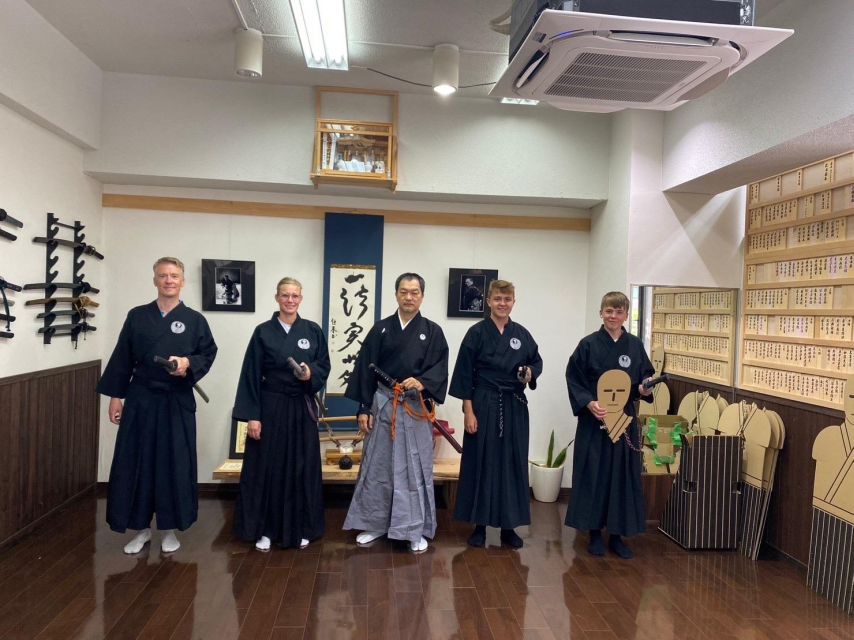
- Learn Iaido basics: Practice fundamental samurai movements under instruction before handling the katana.
- Wear a samurai outfit: Rental clothing and a practice sword are included, making the lesson feel more connected to the setting.
- Watch a shinken performance: The Master demonstrates with a real sword after your own practice.
- Ask questions directly: English and Japanese instruction is available, followed by a question-and-answer session.
- Leave with photos: Commemorative pictures with the Master are part of the program.
- Plan for the practical details: The price is $161 per person, food and drinks are not included, and the activity begins and ends at the meeting point.
A dojo lesson, not a costume photo stop
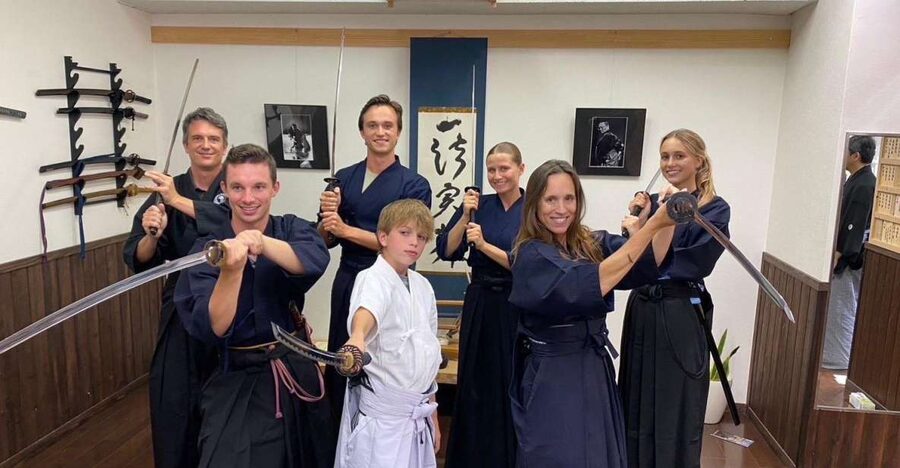
This experience gives you a short, focused introduction to Iaido, often described here as Japanese sword technique. Its purpose is to connect the physical movements of the katana with the discipline and pride associated with the samurai tradition.
That distinction matters. Many samurai-themed activities are built around dressing up and taking pictures. Here, the outfit is only one part of the visit. You also learn how to stand, move, handle the sword, and follow the Master’s instructions. The pace and format are designed for beginners, so you do not need prior martial arts training listed as a requirement.
The activity takes place at a dojo in the Kanto Region. You go to the meeting-point building and head to the third floor, where the Iaido session is held. After the question-and-answer period, the program ends at that same meeting point. There is no hotel pickup or drop-off, so you need to arrange your own way there and back.
The exact starting time depends on availability. Since the experience is listed as one day rather than with a fixed number of hours, check the available start times carefully before booking. That small detail matters if you are fitting the lesson around train connections, meals, or another activity.
A few more Tokyo tours and experiences worth a look


Changing into samurai clothing
The first step is changing into the rental outfit. Clothing is provided as part of the activity, so you do not need to bring a costume. You should arrive in comfortable clothes that are easy to change out of and suitable for movement.
The outfit helps set the tone, but it also serves a practical purpose. Iaido relies on controlled posture and deliberate motion, and ordinary street clothes may not give you the same feel as traditional clothing. You get a better sense of the ceremony and discipline when you are dressed for the lesson.
This is not the place for restrictive clothing or footwear that makes movement awkward. The instructions only require comfortable clothes, but that is good advice. Keep your own outfit simple and easy to manage.
The changing period also marks the shift from ordinary sightseeing to a formal class. You are entering a working practice space, not a stage set. Treat the dojo with care, listen closely, and wait for instructions before touching the katana.
Learning the first movements of Iaido
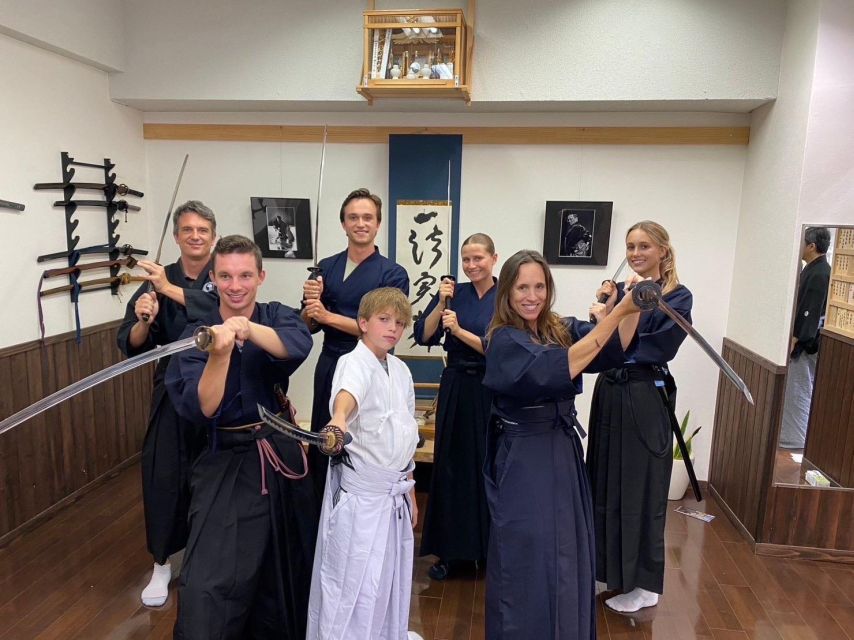
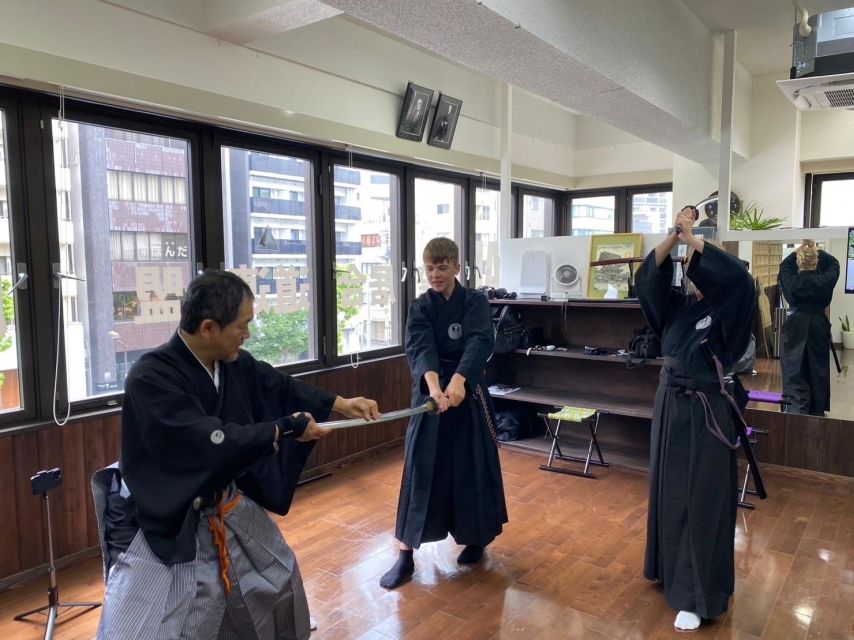
After changing, you begin with a summary of samurai culture and the basic movements used in Iaido. The Master leads the practice, showing you how the body, hands, and sword work together.
You should expect the lesson to focus on control rather than speed. The appeal of Iaido is not wild swordplay. It is the careful sequence of movements, with attention to posture, timing, and form. Even a simple action can feel surprisingly exact when you are asked to repeat it properly.
The instruction is available in English and Japanese. That makes this a practical option for international visitors, especially because martial arts instruction depends on seeing and copying movement as much as listening to words. You can follow the demonstration, try the motion yourself, and ask questions later.
I would pay close attention to the early explanations. The first movements give you the tools to understand the later demonstration. Without that foundation, the Master’s performance might look impressive but difficult to read. After practicing yourself, you can better appreciate the precision involved.
Handling the katana with care
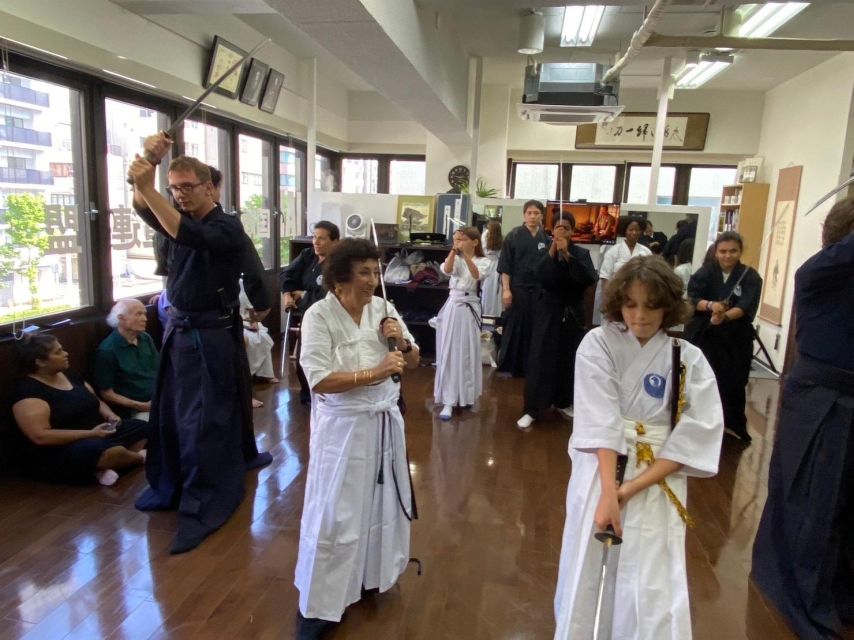
The next stage covers the use of the katana. A rental katana is included, along with the outfit, so you can take part without bringing equipment. The lesson introduces the sword as a traditional weapon and as an object that demands discipline and care.
The wording of the activity includes both learning katana usage and putting that knowledge into practice. In practical terms, you get an active role rather than sitting through a talk. You follow the Master’s instruction and perform the fundamental actions yourself.
That hands-on element is one of the strongest reasons to choose this program. If you already enjoy Japanese history, the lesson gives physical meaning to ideas such as samurai discipline and pride. You are not only looking at armor or reading about battles. You are trying to coordinate your own movement with the form being taught.
At the same time, you should keep your expectations sensible. This is an introductory lesson. The available details do not promise advanced combat training, sparring, or a long martial arts course. Think of it as a guided first encounter with Iaido, with a demonstration at the end.
The Master’s real-sword performance
The highlight comes when the Master performs with a shinken, or real sword. This is different from your introductory practice and gives the session a clear climax.
A real-sword demonstration carries a serious tone. The program presents it as a way to honor the samurai legacy and show the level of skill behind the movements you have just practiced. The contrast is useful: first you struggle through the basics, then you see the same kind of controlled motion performed by an expert.
The performance is not just a theatrical extra. It helps explain why the earlier exercises emphasize calm, accuracy, and restraint. You can watch the Master’s technique with a better eye because you have already tried the basic movements.
The activity also includes a show fight by the Master’s pupils, according to the experience details. That adds another layer to the presentation and lets you see how the techniques can appear in a staged martial arts performance. The important point is to watch carefully and follow all safety instructions. You are there to learn and observe, not to imitate advanced movements on your own.
The performance received especially strong praise for being impressive, insightful, and presented in a fun way. The instruction and demonstrations seem to work well together, giving the activity both a serious cultural side and an entertaining finish.





Photos and questions with the Master
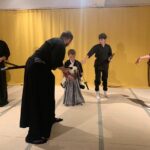
After the demonstration, you have the chance to take commemorative photos with the Master. This gives you a lasting souvenir that feels more personal than a standard posed picture at a tourist attraction.
The photos are also part of the program’s rhythm. You have completed the lesson, watched the performance, and can relax a little before leaving. If you want a good picture, keep your own phone or camera ready, provided the dojo’s instructions allow it.
The final question-and-answer session is worth using. You can ask about Iaido, katana technique, samurai customs, the lesson itself, or points you did not understand during the practice. The availability of English and Japanese instruction makes this a useful closing chance to clarify details.
The teaching team is described as helpful and willing to answer questions. That is important in a martial arts setting, where a small misunderstanding about posture or movement can affect the whole exercise. Do not be shy about asking for a repeat demonstration.
What the $161 price includes
At $161 per person, this is not a bargain-priced photo opportunity. The value comes from the combination of instruction, equipment, clothing, demonstration, photos, and travel insurance.
The activity fee includes:
- The Iaido lesson
- Rental samurai clothing
- Rental katana
- Travel insurance
- The Master’s shinken performance
- Commemorative photos
- The question-and-answer session
The price makes the most sense if you want an active cultural experience with a clear instructor-led program. You are paying for access to a dojo lesson and a demonstration, not just for a costume rental.
Food and drinks are not included. You should plan those separately, especially since the exact starting time can vary and the program is listed as a one-day activity. Hotel transportation is also not included, so your budget should include the cost of reaching the meeting point.
For someone with a strong interest in samurai culture, the included equipment and personal instruction add real value. If you mainly want a quick photograph in traditional clothing, the price may feel high because much of the experience is built around learning rather than posing.
Who will enjoy this most
I would recommend this for adults and older children who are fascinated by samurai history, Japanese martial arts, or traditional sword technique. It is also a good fit if you prefer a cultural activity that asks you to participate rather than simply watch.
You do not need to be a martial artist. The lesson begins with basic movements, and the program is designed to introduce the subject. Still, you should be comfortable following physical instructions and standing or moving during the practice.
This suits solo visitors, couples, and small groups looking for a memorable activity in the Kanto Region. The English-language option is a major help if you do not speak Japanese, though Japanese is also available.
I would be more cautious about booking it for very young children. Children under five are not permitted, and the activity is not suitable for wheelchair users. The available information does not give a detailed mobility breakdown, so anyone with other access needs should confirm directly before reserving.
A few practical tips before you go
Wear comfortable clothes that are easy to change. You do not need to bring a sword or costume because both are supplied.
Arrive with enough time to find the correct building and reach the third floor. The meeting point is also the end point, but there is no hotel transportation included.
Check the available start time before you finalize the rest of your day. The listed duration is one day, but no exact number of hours is provided in the available details.
Keep an open mind about the pace. Iaido is based on measured movement, not fast action. The lesson may feel slower than a stage performance, but that slow pace is exactly what lets you notice the technique.
Use the question period. The history and cultural meaning are part of the appeal, and a few direct questions can make the visit more rewarding.
You can cancel for a full refund up to 24 hours in advance. The reserve-now, pay-later option also helps if you are still arranging your Kanto schedule.
Should you book this Iaido experience?
Book it if you want to practice with a katana, learn the basic discipline behind Iaido, and see a Master perform with a real sword. The strongest parts are the hands-on lesson, the careful instruction, and the performance that follows.
It is less suitable if you want a broad samurai museum visit, a full-day historical tour, or a casual costume photo session. The focus is narrow and physical: learn the basics, watch skilled performers, take photos, and ask questions.
For $161, I see good value for someone who cares about Japanese culture and wants a structured experience rather than a quick attraction. Comfortable clothes, independent transport, and a willingness to follow instructions are the main requirements. If those fit your plans, this is a memorable way to meet samurai tradition through movement, not just sightseeing.
FAQ
Where does the Iaido experience take place?
It takes place at a dojo in the Kanto Region. The session is held on the third floor of the meeting-point building.
How much does the Samurai Experience cost?
The price is $161 per person.
How long does the activity last?
The activity is listed as one day. You need to check availability for the specific starting times.
Is instruction available in English?
Yes. Instruction is available in English and Japanese.
Are samurai clothing and a katana included?
Yes. Rental outfits and a katana are included in the activity fee.
Is food or drink included?
No. Food and drinks are not included.
Is hotel pickup and drop-off provided?
No. You need to arrange your own transportation to and from the meeting point.
Who cannot take part in this activity?
The experience is not suitable for children under five or wheelchair users.
More Samurai & Ninja Experiences in Tokyo
More tours in Tokyo we've reviewed









Samurai & Ninja Experiences, compared.
 ★ 4.5Tokyo: Samurai Restaurant Show Ticket with 2 DrinksFrom $551h 30m
 ★ 4.6Tokyo: Samurai Ninja Museum Guided tour and ExperienceFrom $27
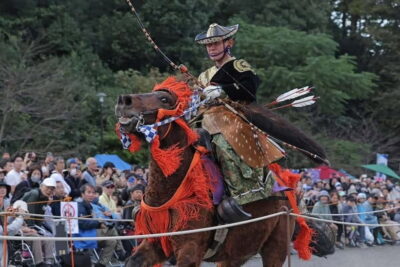 ★ 5.0Tokyo: Samurai Sword & Archery Class from Samurai DescendantFrom $1933 hours
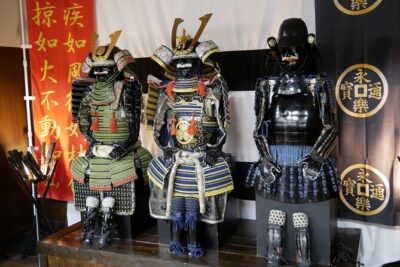 ★ 5.0Best Samurai Experience in TokyoFrom $65
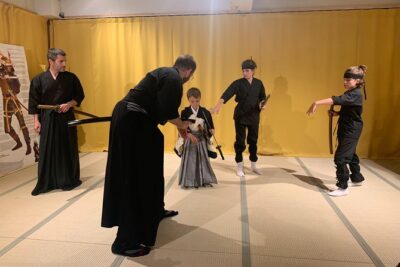 ★ 5.0Ninja Experience (Family Friendly) at Samurai Ninja Museum TOKYOFrom $47
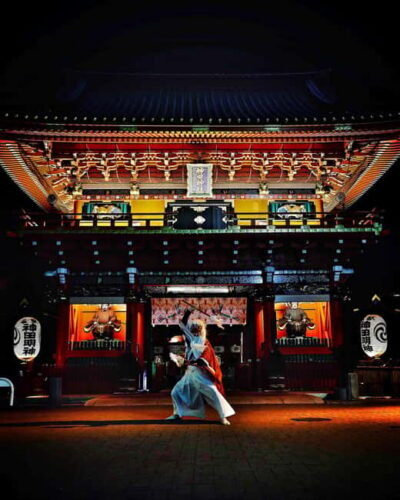 ★ 4.6Tokyo: Samurai Entertainment Night Show in Kanda ShrineFrom $412 - 3 hours