
Reviewed · TEA CEREMONY & MATCHA
Japanese Traditional Breakfast and Tea Ceremony
Tokyo mornings can be loud, crowded, and rushed. This experience takes a different route: you begin with a short meditation, eat a light Japanese breakfast, and learn the careful movements of a traditional tea ceremony from a bilingual licensed tea master with more than five years of experience.
I like two things especially. First, you do not simply watch the ceremony. You prepare your own matcha with instruction, so the lesson can travel home with you. Second, the breakfast gives the morning real substance, with rice balls, local flavors, and Japanese sweets. The main drawback is the venue, which can be a little hard to find, and a group of up to 28 people may feel less personal than a small private lesson.
In This Review
- Key points to know before booking
- Starting the morning in Shibakoen
- A light breakfast with onigiri and local flavors
- Beginning with meditation and Zen ideas
- Watching a tea master prepare matcha
- Taking your own turn at the tea bowl
- Why the $60.81 price can make sense
- What the 90-minute schedule feels like
- The best fit for different kinds of visitors
- Small details that improve the experience
- Should you book this Tokyo tea ceremony?
- FAQ
- Where does the Japanese breakfast and tea ceremony begin?
- What time does the activity start?
- How long does the experience last?
- Does the activity include breakfast?
- Can I make my own matcha?
- Is the tea ceremony explained in English?
- How many people can join the activity?
- Can I cancel for a full refund?
Key points to know before booking
- A breakfast with cultural meaning: Eat rice balls and other Japanese flavors instead of grabbing a standard hotel meal.
- You make your own matcha: The second tea ceremony is performed by you, with the host guiding each step.
- Zen is part of the lesson: A short meditation, a hanging scroll, and tea utensils help explain the ideas behind the ritual.
- Led in English: A bilingual licensed tea master and nationally certified guide interpreter provide the commentary.
- A compact morning activity: The session starts at 9:00 am, lasts about 90 minutes, and returns to the meeting point.
- Good value for a hands-on class: At $60.81 per person, the price includes breakfast, sweets, matcha, instruction, and both tea demonstrations.
Starting the morning in Shibakoen
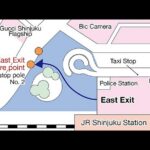
The experience begins at 9:00 am at Kikai Shinko Kaikan, 3-chome-5-8 Shibakoen, Minato City, Tokyo 105-0011. The meeting point is near public transportation, but allow extra time to locate the exact entrance. Finding the venue has been the one practical snag attached to this activity, so I would not cut it close.
The timing works well for a Tokyo sightseeing day. You finish after roughly an hour and a half, with most of the day still ahead. It is also a useful choice if you want to replace a hotel breakfast with something tied to Japanese culture rather than adding another evening activity to an already full schedule.
The group can include as many as 28 people. That is not a tiny tea room lesson, and you should expect a shared class rather than a private appointment. Still, the program includes personal participation, so you are not merely sitting at the back while someone else performs.
A nationally certified guide interpreter provides hospitality and English explanation. The tea master is also licensed and bilingual, which matters here. Tea ceremony has many small gestures, and clear instructions make it easier to understand the purpose behind them rather than copying movements without context.
A few more Tokyo tours and experiences worth a look
A light breakfast with onigiri and local flavors
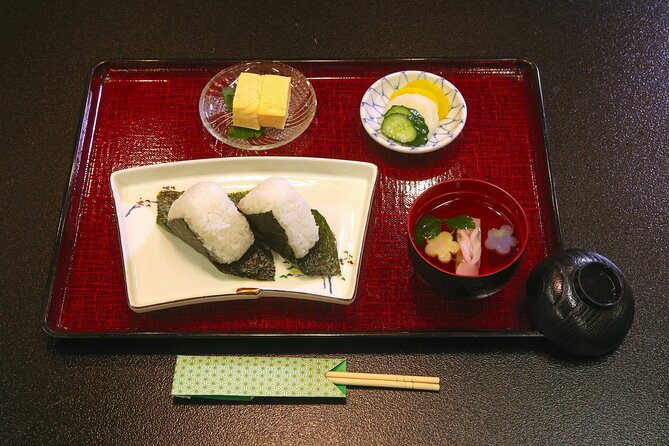
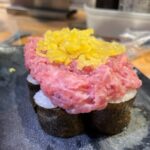
The food portion is described as a light breakfast, not a large feast. You can expect freshly prepared rice balls, often called onigiri, along with other local flavors and traditional Japanese sweets. One appealing part of the session is the chance to make your own onigiri before eating it with the rest of the breakfast.
That simple activity gives you a better sense of how an ordinary Japanese staple is handled and served. Onigiri is familiar to many people from convenience stores and train stations, but making one by hand adds a practical link to the food. It also makes the breakfast more active and family-friendly.
The meal is especially useful if you have not yet tried a traditional Japanese breakfast. You get a taste of the balance and presentation without committing to a long formal meal. The food also sets up the tea portion nicely, since sweets are served as part of the ceremony.
Keep your expectations sensible. This is a light breakfast, and the price does not include extra food or drinks beyond what is provided. If you need a large meal first thing in the morning, you may want to eat a little before arriving.
Beginning with meditation and Zen ideas
Before the tea preparation, there is a short meditation period. It is not presented as a lengthy spiritual retreat. Instead, it gives you a quiet pause before the food and tea lesson begin.
That small change of pace is one reason this activity feels different from a standard cooking class or sightseeing stop. The meditation helps you notice the calm, deliberate rhythm of the ceremony. You do not need previous experience with meditation or Zen practices. The guide explains the ideas in English and keeps the activity accessible.
You will also hear about a hanging scroll that expresses the spirit of Zen. The scroll is not just decoration. It helps show how the setting, written words, utensils, sweets, and movements all contribute to the tea gathering.
This context is valuable because tea ceremony can seem overly formal if you only watch the gestures. Once you understand that the host is creating a focused moment for the people present, the details make more sense. You can pay attention to the room and objects without treating every movement as a puzzle to solve.
Watching a tea master prepare matcha
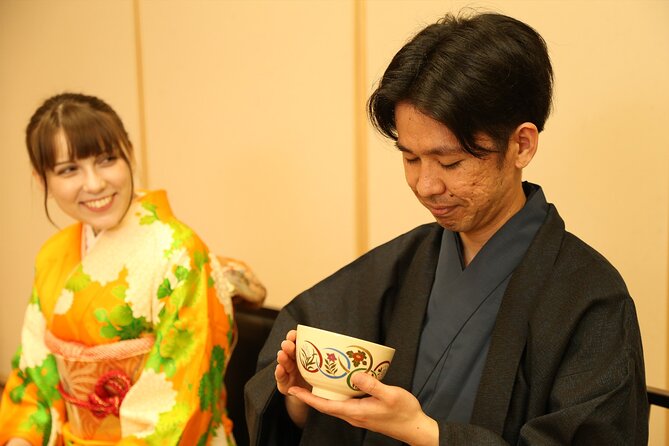
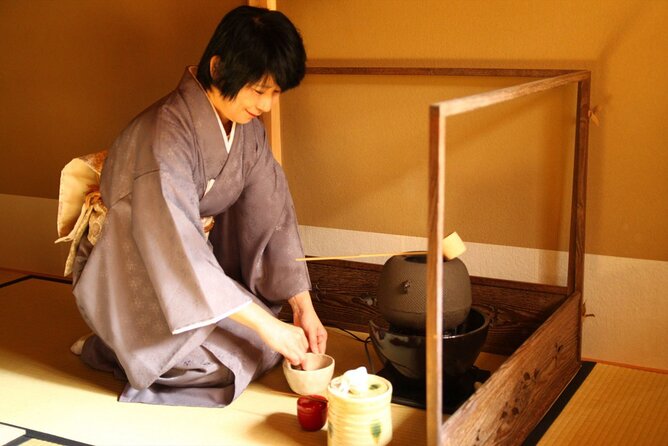
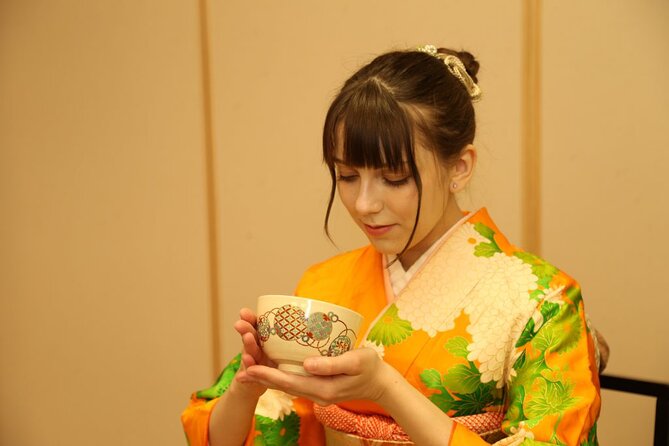
The first ceremony is performed by the tea master. You will see authentic matcha made with high-quality tea, and the host explains the tea utensils and the customs surrounding them.
The tea master has more than five years of experience and is licensed to conduct the ceremony. That does not turn the session into a lengthy professional training course, but it does give the demonstration a solid foundation. You can ask questions through the English-speaking instruction and learn what the movements mean.
Matcha has a distinctive flavor and texture. It is not the same as a mild cup of green tea, since the powdered tea is whisked into the water and consumed rather than steeped and discarded. The traditional sweet helps balance the tea’s sharper taste.
The sweets are more than a snack between activities. In a tea ceremony, a sweet prepares your palate for the matcha and forms part of the hospitality. You will get a better sense of that relationship here than you would from drinking matcha alone at a café.
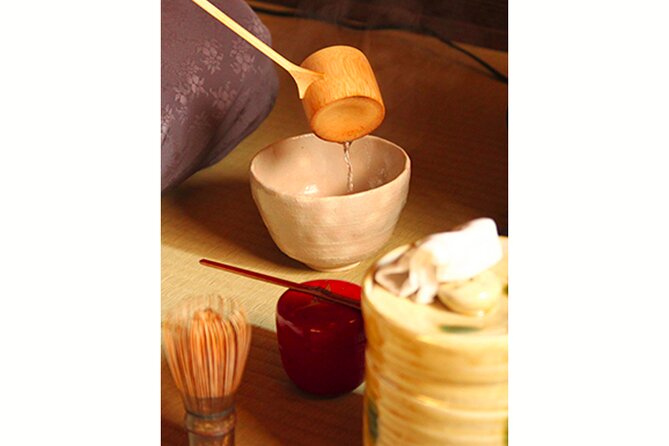
The explanation of the utensils is another useful touch. Tea bowls and other tools can look simple, but their handling and placement have purpose. You do not need to memorize every term. The value is in learning to notice the care given to ordinary objects.
Taking your own turn at the tea bowl
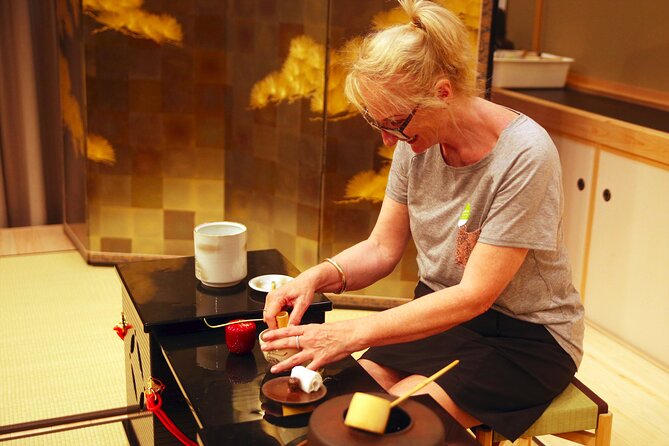
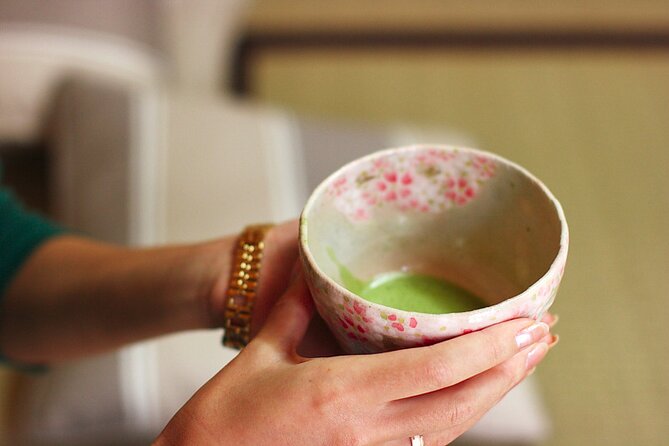
The strongest hands-on feature comes after the demonstration. You have the chance to prepare your own tea, with the host explaining the process. This is described as a second tea ceremony performed by you, not simply a quick attempt at whisking matcha.
Your turn lets you feel how much attention the ritual demands. The motions are controlled, and the order matters. With guidance, you can focus on the experience without worrying about getting everything perfect.
I like this part because it gives you something practical to remember. After returning home, you can recreate the matcha ritual using the basic method you learned. The activity does not claim to make you a tea master in 90 minutes, but it can give you a respectful starting point.
For families, the chance to make tea and onigiri keeps the session from becoming a lecture. Children may need help with the quieter meditation and formal movements, but the food preparation and tea making offer clear points of participation. The family feedback attached to this activity gives the breakfast and ceremony particular weight as a shared memory.




Why the $60.81 price can make sense
At $60.81 per person, this is not the cheapest breakfast in Tokyo. You are paying for more than the food, though. The price covers a guided cultural lesson, a tea ceremony performed by an experienced tea master, a second ceremony that you perform yourself, authentic matcha, traditional sweets, breakfast, and English explanation of Zen practices, the scroll, utensils, and tea customs.
That package compares well with a simple meal followed by a casual matcha drink. A café can give you tea and a sweet, but it will not usually explain the ritual or let you prepare your own bowl. A museum can provide cultural background, but it may not offer breakfast and direct instruction.
The value depends on your interests. If you mainly want a filling meal, this is not the right purchase. If you want a structured introduction to Japanese customs and prefer doing something over simply taking photos, the cost is easier to justify.
Group discounts are available, which may help families or larger parties. Since the experience is often booked about 53 days ahead, reserve early if the 9:00 am timing fits your plans. Confirmation arrives within 48 hours, subject to availability.
What the 90-minute schedule feels like
The short duration is a strength for most Tokyo itineraries. You get a complete cultural activity without giving up half a day. The likely flow is:
- Arrival at the Shibakoen meeting point for the 9:00 am start
- A short meditation and introduction to Zen ideas
- A light breakfast with rice balls and other Japanese flavors
- Traditional sweets served alongside the tea experience
- A tea ceremony performed by the tea master
- Explanation of the hanging scroll, tea utensils, and ceremony customs
- Your own guided preparation of matcha
- Return to the same meeting point after about 90 minutes
The activity ends where it starts. There is no pickup or drop-off service, so you handle your own route to and from Kikai Shinko Kaikan. The nearby public transportation is helpful, but the venue-finding issue means you should check the address carefully before leaving your hotel.
Because the start is fixed at 9:00 am, this is best placed on a morning when you can arrive relaxed. A late arrival would cut into the meditation, breakfast, or your own tea preparation.
The best fit for different kinds of visitors
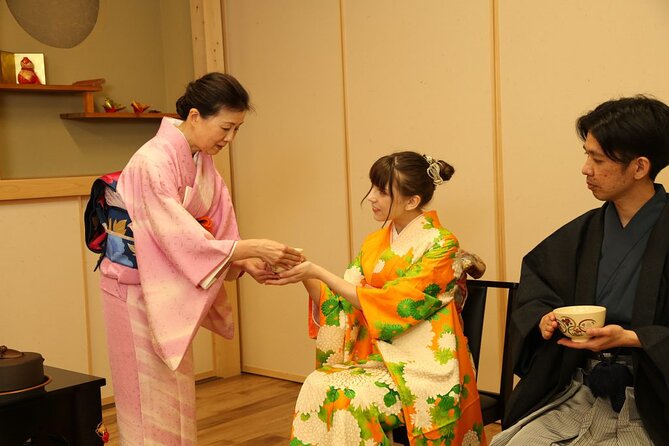
This experience suits first-time visitors who want an easy introduction to Japanese tea ceremony. You receive the cultural explanation in English, and the activities are organized in a way that does not require prior knowledge.
It also fits families well. Making onigiri, eating sweets, and preparing tea provide several kinds of participation. The quiet meditation and formal manners may appeal more to adults, but the session offers more for children than a ceremony that only asks them to sit and watch.
Couples and solo visitors who want a calm start to the day should also consider it. The experience is not built around a major attraction or a long transfer. You get a focused cultural lesson and can continue sightseeing afterward.
It may be less suitable if you want an intimate private ceremony, a full Japanese breakfast, or a long lesson on the history of tea. The maximum group size is 28, the breakfast is light, and the entire program is designed as a compact introduction.
Small details that improve the experience
Arrive early enough to find the building. Since the exact venue can be challenging to locate, save the meeting address and allow a margin before 9:00 am. That is more useful than rushing in after the meditation has started.
Wear something comfortable enough for a seated cultural activity. The provided information does not specify a dress code or seating arrangement, so you should not assume a particular format. Simply arrive ready to listen, eat, and follow instructions.
Think of the activity as participation with explanation, not a performance staged only for photos. Pay attention to the hanging scroll and the utensils, and ask questions when the guide invites them. Those details help connect the food and tea to the Zen ideas introduced at the start.
The experience requires good weather, and the operator may cancel if conditions are poor. If that happens, you are offered another date or a full refund. A minimum number of participants is also required, with the same choice of an alternative or refund if the activity cannot run.
Free cancellation is available until 24 hours before the start time. Cancellations or changes made less than 24 hours before the start are not refunded or accepted, and the cutoff follows Tokyo local time.
Should you book this Tokyo tea ceremony?
I would book this if you want a hands-on cultural morning rather than another sightseeing stop. The combination of onigiri making, sweets, meditation, Zen commentary, a professional tea demonstration, and your own matcha preparation gives the 90 minutes a clear purpose.
The activity earns its price through instruction and participation, not through a large meal. You should skip it if breakfast size is your priority or if a group of up to 28 feels too large for your ideal tea ceremony.
For families, first-time visitors to Japan, and anyone curious about the meaning behind matcha rituals, it is a well-shaped introduction. Just plan your route to Shibakoen carefully and arrive early. With that small bit of preparation, you can start your Tokyo day quietly, eat something local, and leave with a tea ritual you can try again at home.
FAQ
Where does the Japanese breakfast and tea ceremony begin?
It begins at Kikai Shinko Kaikan, 3-chome-5-8 Shibakoen, Minato City, Tokyo 105-0011, Japan.
What time does the activity start?
The start time is 9:00 am.
How long does the experience last?
The activity lasts approximately 1 hour and 30 minutes.
Does the activity include breakfast?
Yes. A light breakfast is included, with rice balls and other local flavors. Traditional Japanese sweets are also provided.
Can I make my own matcha?
Yes. The experience includes a second tea ceremony that you perform yourself with instruction from the host.
Is the tea ceremony explained in English?
Yes. A bilingual licensed tea master provides English instruction, and the experience includes explanation of the ceremony, Zen practices, hanging scrolls, and tea utensils in English.
How many people can join the activity?
The maximum group size is 28 people.
Can I cancel for a full refund?
Yes, if you cancel at least 24 hours before the experience start time. Cancellations or changes made less than 24 hours before the start are not refunded or accepted.
More Tea Ceremony & Matcha in Tokyo
More tours in Tokyo we've reviewed









Tea Ceremony & Matcha, compared.
 ★ 5.0Matcha Making Class in Tokyo with Authentic Japanese Sweets SetFrom $21
 ★ 5.0Tokyo: Traditional Tea Ceremony with a Tea MasterFrom $381 hour
 ★ 4.5Dynamic Tokyo: Tokyo Tower, Tea Experience, Bay Cruise Day TourFrom $99
 ★ 4.9Tokyo: Matcha Making Experience with Mochi Sweets in AsakusaFrom $221 hour
 ★ 4.7Tokyo: Matcha and Kimono ExperienceFrom $57
 ★ 5.0Tea Ceremony Workshop in Tokyo by the Experienced InstrucorFrom $38