
Reviewed · WORKSHOPS
Experience Big soba knife Soba Making Class in Tokyo Kappabashi
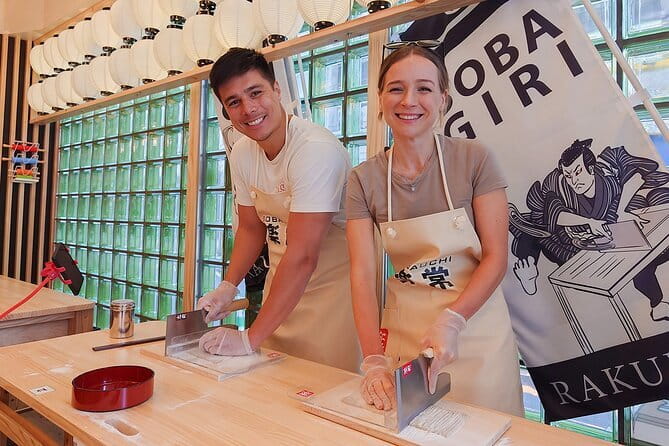
Making soba with a large traditional soba knife is the hook here, but the real pleasure is learning how four simple steps turn buckwheat flour and water into lunch. You mix, knead, stretch, and cut the dough, then the chef cooks what you made.
I like the practical setup: aprons and gloves come in several sizes, and you can eat your noodles or take them away. I also like the setting in Kappabashi, Tokyo’s kitchen-supply district, where the class fits neatly into a visit to Asakusa. The main consideration is the short schedule. You get a focused introduction rather than a slow, detailed cooking lesson, and people with buckwheat allergies cannot enter the restaurant.
In This Review
- Key points to know before booking
- Making soba in Tokyo’s kitchen town
- The four steps, from flour to noodles
- Why Kappabashi makes the setting worthwhile
- The instructor’s style and the language question
- What you eat, and what you can add
- Is $51.33 a fair price for 50 minutes?
- Who will enjoy this soba class most?
- Practical details that affect your choice
- Should you book Big Soba Knife Soba Making Class?
- FAQ
- How long does the soba-making experience last?
- Where does the class take place?
- Is the soba tasting included?
- Can I take my handmade noodles away?
- Are aprons and gloves provided?
- Are there extra fees for dietary options?
- Can I cancel for a full refund?
Key points to know before booking
- You make the noodles yourself: The class covers adding water, kneading, stretching, and cutting.
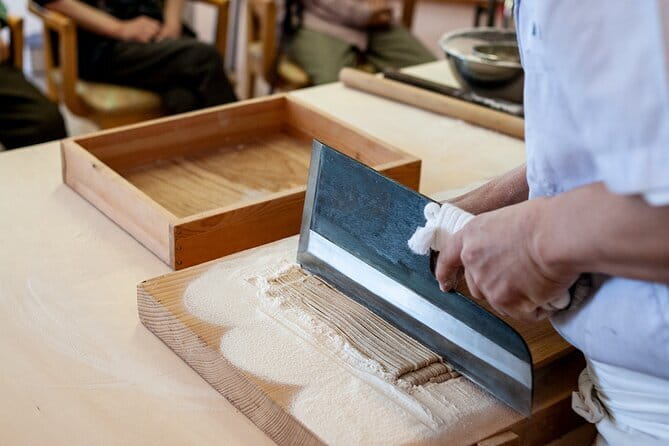
- The oversized knife is part of the fun: You use a tool made specifically for cutting soba into long, thin strands.
- Your work becomes a meal: The chef cooks your noodles, and you can taste them at the end.
- Kappabashi adds local flavor: The studio is about 25 minutes from Sensoji Temple along the famous kitchen-tool street.
- The class is compact: The hands-on portion takes about 30 minutes within an experience lasting roughly 50 minutes.
- Optional add-ons are available: Matcha soba costs 700 yen, while a tasting of three selected sakes costs 1,500 yen.
Making soba in Tokyo’s kitchen town
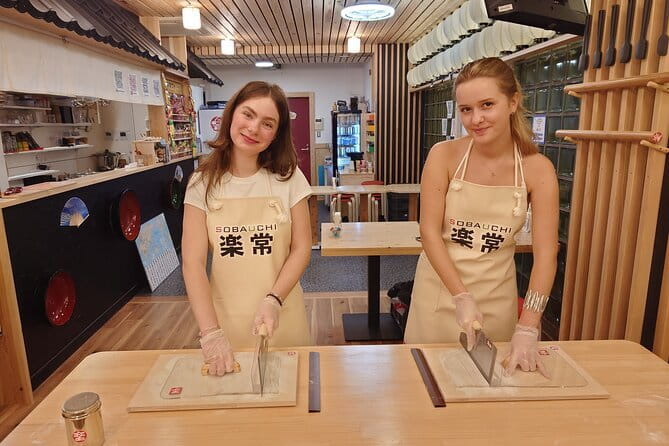
This is not a sightseeing bus ride with a cooking demonstration tacked on. You walk into Open Kitchen Studio in Kappabashi and work with the dough yourself. That matters, because soba can look simple in a bowl while being surprisingly sensitive during preparation.
The base is buckwheat flour from Nagano Prefecture, with no wheat flour used in the class. You are shown the process in four steps: adding water, kneading, stretching, and cutting. The activity provider describes its method as smart technology, but the actual work remains pleasingly old-fashioned. Your hands shape the dough, and the big knife does the final work.
The class lasts about 50 minutes in total, with the noodle-making process taking around 30 minutes. That is enough time to understand the basic method and produce noodles, but not enough for a long lesson on regional soba styles or advanced technique. If you want a quick cultural activity between Asakusa sights, this pace is useful. If you hope to become a serious soba maker in one session, keep your expectations in check.
The restaurant is on the ground floor of Matsugaya Center Building, at 3-1-12 Matsugaya, Taito City, Tokyo 111-0036. It can accommodate up to 30 people, although this particular class is limited to 15 participants. That smaller limit should make the hands-on portion more manageable than a large demonstration.
A few more Tokyo tours and experiences worth a look
The four steps, from flour to noodles
The first stage is adding water to the buckwheat flour. This sounds basic, but the mixture must come together before you can work it properly. The instructor demonstrates the process, then gives you a chance to follow along.
Next comes kneading. This is where the class becomes more than a photo stop. You work the dough and learn how it feels as it changes. The experience provider says the method uses only flour and water, and the activity does not depend on electric equipment. That gives the class a direct connection to the physical craft of Japanese noodle making.
After kneading, you stretch the dough. The aim is to create a broad, even sheet that can be cut into noodles. You will not be left to guess at each stage. One of the useful features of the class is its organized structure, with clear steps that help first-time cooks keep moving.
The final step is cutting. This is where the large soba knife comes in. The tool is specially designed for soba and lets you try to make long, thin strands. Cutting evenly takes care, so your noodles may not all look identical. That is part of the charm. You are producing a meal, not assembling a factory-perfect souvenir.
The chef then cooks the soba you cut. You can eat it as a snack or meal, with a choice of flavors available. The exact flavor selection is not specified, so do not book this expecting a particular sauce or topping. If you prefer, you can take the noodles away instead.
Why Kappabashi makes the setting worthwhile
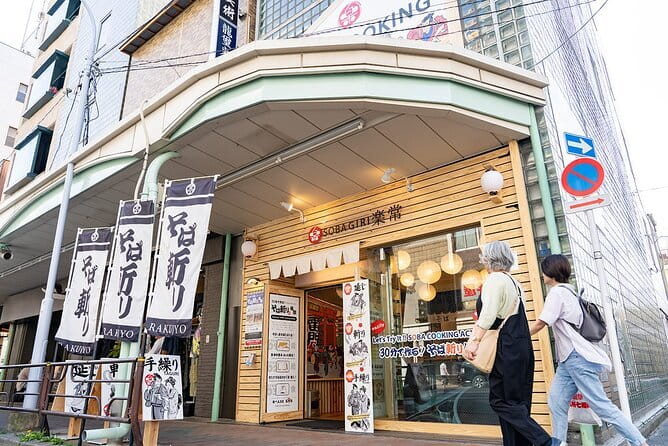
Kappabashi Dogugai is known as Tokyo’s kitchen town. Its specialist shops supply professional cooking tools, dishes, restaurant equipment, and other food-service goods. Even if you only come for the class, you are in a part of Tokyo that feels closely tied to the working side of Japanese food culture.
The studio is about 25 minutes from Sensoji Temple in Asakusa. You can pair the activity with time around Sensoji, then walk toward Kappabashi for the class. The experience begins and ends at the same meeting point, so there is no complicated transfer to another part of the city afterward.
I would allow extra time around the class rather than racing straight in and out. The supplied details do not give a required arrival buffer, but Kappabashi has enough cooking-related shops to make an early arrival useful. You might find knives, ceramics, restaurant signs, or tools worth browsing, though purchases are not part of the activity.
The drawback is that Kappabashi is a district visit, not a formal guided tour of the street. The class does not promise a separate shopping walk or commentary on every shop. You should treat the neighborhood as a bonus you explore on your own.
The instructor’s style and the language question
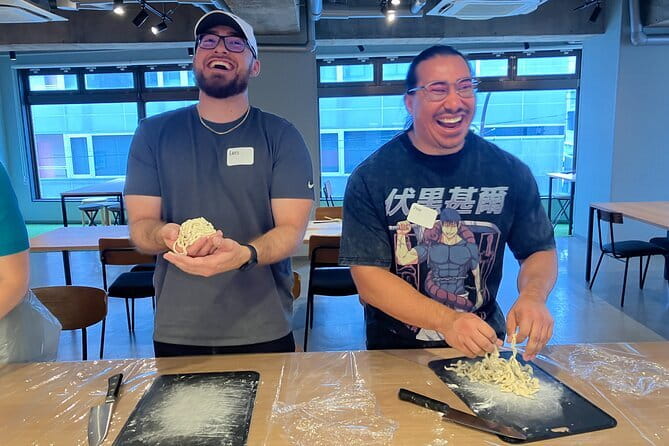
The class is designed for an international audience, but the instructor may not speak English. That does not necessarily make the activity hard to follow. The teaching is built around demonstration and repetition, and the instructor’s humor helps keep the mood light.
The most useful detail here is that the process is laid out clearly. You do not need a long lecture to understand when to add water, knead, stretch, or cut. Still, if you need detailed verbal explanations about flour ratios, technique, or Japanese food terms, you may find the language gap limiting.
The class has earned strong praise for being organized, funny, and approachable. I would read that as a sign that the experience works best when you are willing to watch closely, copy the movements, and enjoy the hands-on process. It is less suited to someone who needs every instruction translated word for word.
Photos and videos may also be taken and sent to you. This is a welcome touch for a hands-on activity, since your own hands may be covered in dough at the moment when you would otherwise reach for your phone. The supplied information does not state the delivery method or timing, so consider this a possible perk rather than a guaranteed technical package.
What you eat, and what you can add
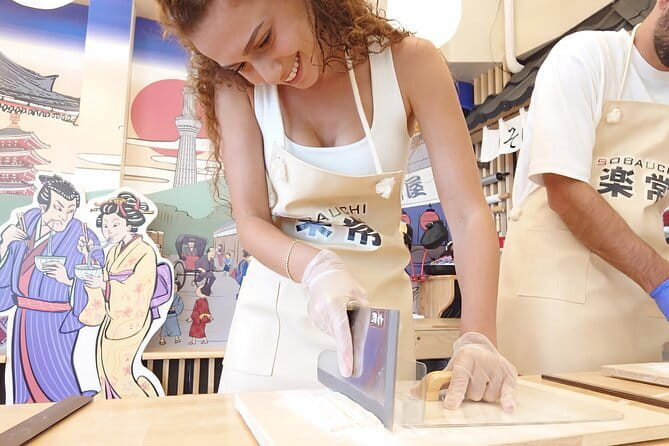
Your freshly cut soba is cooked for you at the end. That turns the class into a proper food experience rather than a craft lesson where you leave with raw dough. You get to see the result of your work almost immediately.
You can choose to eat the noodles as a snack or meal, and you can also take them out. The standard price includes the soba tasting, all fees and taxes, and use of aprons and gloves. This makes the $51.33 cost easier to judge, since you are paying for instruction, ingredients, equipment, protective clothing, and food in one short visit.
A vegan or no-pork flavor option costs an additional 500 yen. That extra charge is important to budget for if either option is necessary for you. The information does not describe the standard flavors or explain the full ingredient list, so ask the staff about ingredients if you have dietary restrictions beyond the stated options.
You can also add matcha soba for 700 yen. In that version, matcha green tea is mixed into the soba flour. A three-sake comparison costs 1,500 yen, with the owner selecting the bottles. These extras can make the session more varied, but they also raise the price quickly. I would choose them only if you are especially interested in green-tea noodles or sake tasting.

Is $51.33 a fair price for 50 minutes?
The price is not cheap for a class lasting less than an hour. Tokyo offers plenty of inexpensive meals, and a bowl of soba alone would cost far less. The value comes from combining food with a hands-on lesson in a distinctive neighborhood.
You are not only eating soba. You are handling the dough, trying a professional-style cutting tool, receiving protective clothing, and having the chef cook the result. For a first-time visitor who wants a short cultural activity, that package is reasonably fair.
The small-group limit of 15 also helps. A class capped at that size gives you a better chance to see the demonstration and work with the tools without being lost in a crowd. The restaurant itself can hold more people, up to 30, but this activity is advertised for a smaller group.
The price makes less sense if you dislike cooking, cannot eat buckwheat, or want a long, technical workshop. People with buckwheat allergies are not permitted to enter the restaurant, so this is a firm exclusion rather than a dietary request the staff can work around.
Who will enjoy this soba class most?
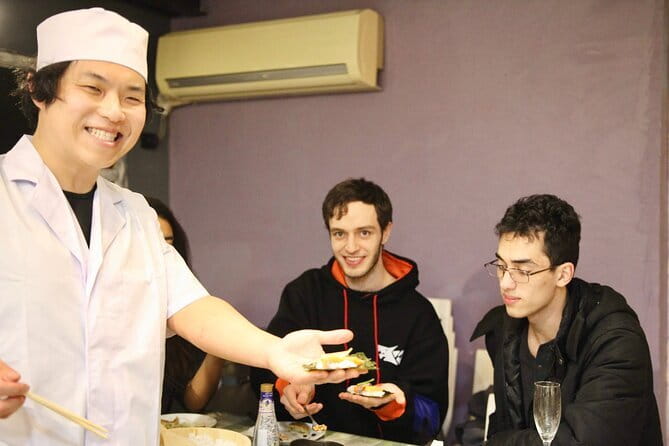
This is a strong choice for couples. The studio’s own usage pattern places couples first, followed by families with children and groups of four or more friends. The steps are short and physical, so you can share the fun of comparing your noodles without needing advanced cooking skills.
Families may like the clear progress from flour to finished food. Children should have an adult nearby when using the large knife, and the supplied information does not state a minimum age, so check before booking if you are bringing young children.
Groups of friends can make the session lively, especially with the optional sake tasting. The ground-floor restaurant has room for groups to relax, but the actual class has a maximum of 15 people. Larger parties should confirm that everyone can be accommodated in one session.
I would also recommend it for people who have already planned time in Asakusa. Since the studio is roughly 25 minutes from Sensoji, it works well as one stop in a neighborhood day. It is less convenient if your plans are based far across Tokyo and you would be making a special trip solely for a 50-minute class.
Practical details that affect your choice
The experience includes mobile ticketing, which is useful if you are moving around Tokyo with your booking on your phone. Public transportation is nearby, and the meeting point is also the return point, so you do not need to find a second departure location.
Aprons and gloves are supplied in various sizes. That keeps your clothing safer and removes the need to pack cooking gear. You should still wear clothes you do not mind wearing during a flour-based activity, since the class involves direct contact with dough.
Service animals are allowed, according to the supplied information. Buckwheat allergies are the major restriction: anyone with that allergy cannot enter the restaurant. The information does not specify details about other allergies, so ask before booking if you have concerns about ingredients or cross-contact.
Free cancellation is available when you cancel at least 24 hours before the local start time. A cancellation or change made less than 24 hours ahead is not refunded or accepted. That policy is reasonable, but you should avoid booking this class too tightly against another timed activity.
The activity has received a five-star rating from 71 people, with 100 percent recommending it. The strongest praise centers on four things: the clear process, the funny and generous instruction, the chance to eat the noodles you make, and the suitability for families. Those are exactly the areas where this class offers its best value.
Should you book Big Soba Knife Soba Making Class?
Book it if you want a short, active food experience near Asakusa and like the idea of eating something you made yourself. The big knife, Nagano buckwheat flour, small-group format, and Kappabashi location give the class more character than a simple tasting.
I would especially choose it for couples, families, or friends who have about an hour to spare. Add matcha soba or sake only if those extras fit your interests and budget.
Skip it if you have a buckwheat allergy, need a fully English-speaking instructor, or want a lengthy technical course. For everyone else, this is a compact way to connect Tokyo’s kitchen-supply district with one of Japan’s most familiar foods, and you leave with either a warm snack, a meal, or noodles to take away.
FAQ
How long does the soba-making experience last?
The full experience lasts approximately 50 minutes. The hands-on noodle-making process is taught in four steps and takes about 30 minutes.
Where does the class take place?
It takes place at Open Kitchen Studio in Kappabashi, Asakusa, at Matsugaya Center Building, 3-1-12 Matsugaya, Taito City, Tokyo 111-0036.
Is the soba tasting included?
Yes. The price includes a chance to taste the soba you cut yourself, cooked by the chef.
Can I take my handmade noodles away?
Yes. You can either eat the noodles at the studio or take them out.
Are aprons and gloves provided?
Yes. Aprons and gloves are available in various sizes and are included in the experience.
Are there extra fees for dietary options?
A vegan or no-pork flavor option costs an additional 500 yen. Matcha soba costs 700 yen, and a tasting of three types of sake costs 1,500 yen.
Can I cancel for a full refund?
You can receive a full refund if you cancel at least 24 hours before the experience start time. Cancellations or changes made less than 24 hours before the start are not accepted or refunded.
More Workshops & Classes in Tokyo
More tours in Tokyo we've reviewed


Workshops, compared.
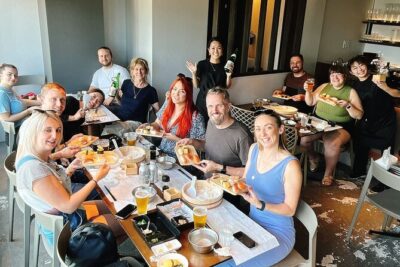 ★ 5.0Sushi Making Tokyo Roll and Authentic Japanese Sushi ClassFrom $59
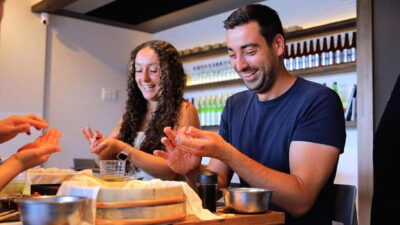 ★ 4.9Tokyo: Roll and Authentic Sushi Making Class in AsakusaFrom $581h 40m
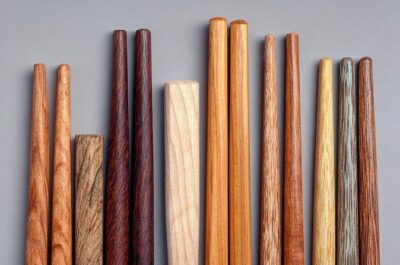 ★ 5.0Tokyo Shinjuku Chopsticks Making ClassFrom $20
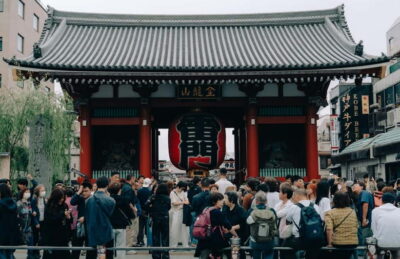 ★ 4.9Tokyo: Sushi Making Class in a Happi Coat near a Famous SpotFrom $421h 30m
 ★ 4.8Chopstick Making Workshop in GinzaFrom $251 hour
 ★ 5.0Tokyo Sushi Making Class in Tsukiji with Professional ChefFrom $49