

Reviewed · TOKYO
Discover the Secrets of Pachinko, Japan’s Traditional Game
Pachinko looks like a wall of flashing lights until someone shows you how to read it. This 75-minute lesson takes you into BB Station near Nippori, explains the rules and manners, then puts you at a real machine with an instructor beside you. You do not need to know the game beforehand.
I like the hands-on format, especially the simple lesson on buying credits with an IC card and flicking the handle to launch balls. I also like the small group limit of 10, since the guide can help you find a machine and correct your grip. The main catch is cost: the $70.73 tour price does not include the ¥4,000 per-person fee for balls or tokens.
In This Review
- Key points at a glance
- Why pachinko makes a good Tokyo activity
- From Nippori Station to BB Station
- The 5 to 10 minute lesson before play
- Using the IC card and launching the balls
- Finding a machine and trying the real game
- What makes the instructor useful
- How the $70.73 price works
- Timing, group size, and who should book
- The practical details that matter
- My take on the pachinko lesson
- Should you book this experience?
- FAQ
- Where does the pachinko experience begin?
- Where does the activity end?
- Which pachinko parlor does the tour use?
- How long does the experience last?
- How many people can join the activity?
- What will I learn before playing?
- How do I begin playing pachinko?
- Is the fee for balls or tokens included?
- Are gratuities included?
- Can I cancel for a full refund?
Key points at a glance
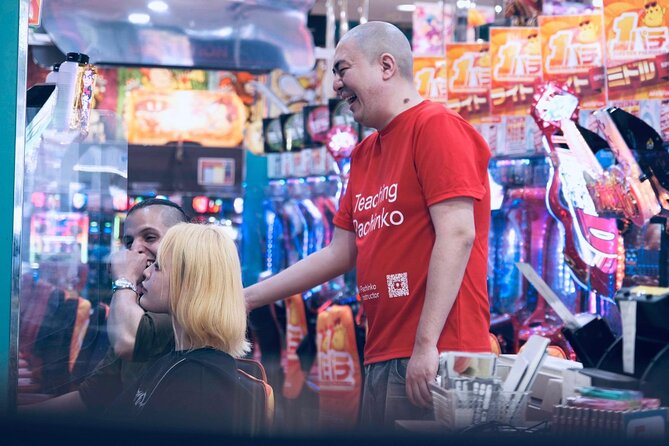
- Play at BB Station near Nippori Station: You enter a working pachinko parlor rather than just hearing a classroom explanation.
- A 5 to 10 minute rules lesson comes first: The guide covers game flow and proper parlor manners before you play.
- Learn handle control and aiming: Small changes in the handle position affect how balls launch toward the machine.
- IC card credits are part of the lesson: You learn the modern way to buy credits before starting.
- Groups are capped at 10 people: That keeps the experience fairly personal, though individual attention can vary.
- Extra playing cost is separate: Budget ¥4,000 per person for balls or tokens, on top of the tour price.
Why pachinko makes a good Tokyo activity
Pachinko is easy to spot in Japan, but not easy to understand from the outside. The machines flash, bells ring, and rows of players work small handles with steady concentration. Without help, you may wonder what the buttons, balls, cards, and pockets are doing.
This experience gives you a way into that world without asking you to pretend you understand it. The guide explains the basic flow in plain steps, then lets you try it at a real parlor. That change from explanation to action matters. Pachinko is a physical game, and you learn much faster when you can feel the handle and watch the balls move.
You meet at Nippori Station, at 2 Chome-19 Nishinippori, Arakawa City, Tokyo 116-0013. The parlor is called BB Station and is nearby, so the activity does not require a long transfer across Tokyo. At the end, you return to the same meeting point.
The location also makes the timing manageable. At about one hour and 15 minutes, this is short enough to fit between sightseeing plans. You are not giving up half a day for an activity that may or may not suit you.
If you're still narrowing it down, here are other tours in Tokyo we've reviewed.


From Nippori Station to BB Station
The experience begins at Nippori Station. From there, you go with the guide to the nearby BB Station parlor. The information provided does not give a detailed walking time, so allow enough margin to find the meeting point before the start.
Starting at a railway station is useful in Tokyo, where a neighborhood address can be harder to recognize than a station name. You should still arrive early. A late arrival would cut into a short activity, especially because the first part includes a rules briefing.
BB Station is not presented as a museum or staged attraction. It is a working pachinko parlor. That is the point. You see the machines in their normal setting, with the sounds and visual clutter that make pachinko confusing to first-time players.
For some people, that real setting will be the best part. For others, the noise and flashing machines may feel intense. The tour is designed to guide you through it, but it does not turn the parlor into a quiet demonstration room.
The 5 to 10 minute lesson before play
Before you touch a machine, the instructor explains the basic rules and manners. This briefing lasts about five to 10 minutes, so it is compact rather than a long technical lecture.
You learn the game flow first. The guide explains how you purchase credits with an IC card, how balls are released, and what you should do once you are seated at a machine. That order helps because pachinko has several small steps that are easy to miss when you are watching from behind someone else.
The manners lesson is just as useful. A pachinko parlor has its own rhythm, and you need to know how to behave around machines and other players. A short orientation helps you avoid feeling lost once the lights and sounds begin.
Do not expect to master every possible version of pachinko in five minutes. The goal is to get you operating a machine and understanding what you are seeing. The guide can explain more as you play, which is a better use of time than loading the briefing with every rule at once.
Using the IC card and launching the balls
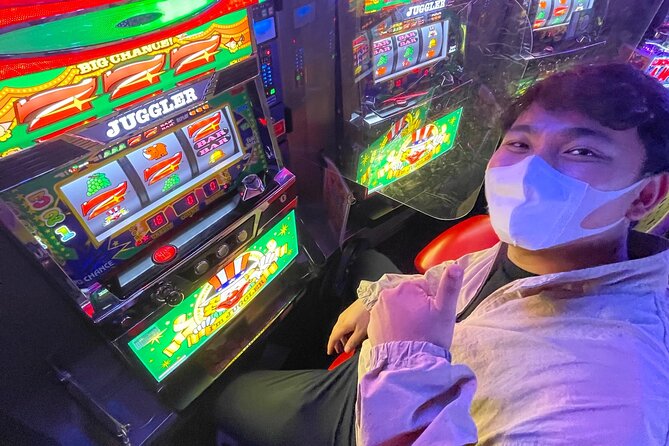
The activity includes instruction on using an IC card to buy credits. This is an important practical detail because the exchange process is part of the modern pachinko experience, not an optional extra.
Once you have credits, you launch balls by flicking a small handle. The movement may look simple, but the guide points out that the handle position matters. Adjust it too far or too little, and the balls may follow a different path through the machine.
The lesson focuses on aiming toward the center pocket. That does not mean the guide can guarantee a result. Pachinko still depends on chance, and the machine does not reward every ball. But understanding the handle gives you some control over the starting direction, which makes the game feel less like random button pressing.
This is where the hands-on format earns its price. You can watch a video about pachinko, but a video cannot tell you how the handle feels or show you the effect of a small adjustment in real time. The instructor can point out what to change while you are still playing.
Finding a machine and trying the real game
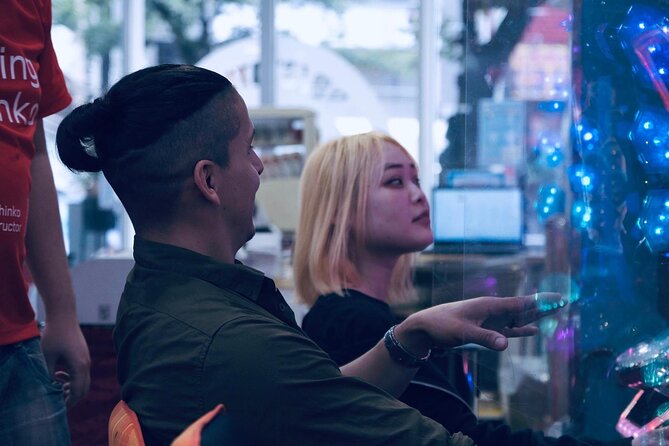
After the briefing, you choose a machine and begin playing with the instructor’s help. The guide assists you with the basic setup and helps you stay in the game rather than stopping at the first confusing step.
The experience is not a formal demonstration where you stand behind a rope. You try the real machine yourself. That makes the hour more active, but it also means the pace can depend on how quickly you pick things up and how much help your group needs.
A participant who started on a machine that seemed to be doing well was able to keep playing after the scheduled hour, giving time to try different games. You should not count on extra time, since the advertised duration remains about 75 minutes, but this detail suggests the instructor may be flexible when the group is engaged and the situation allows it.
The same practical caution applies to winning. You might win money or keep the machine running for a while, but there is no promise of a payout. Treat the result as part of the fun, not as a way to recover the tour price or fund your evening.




What makes the instructor useful
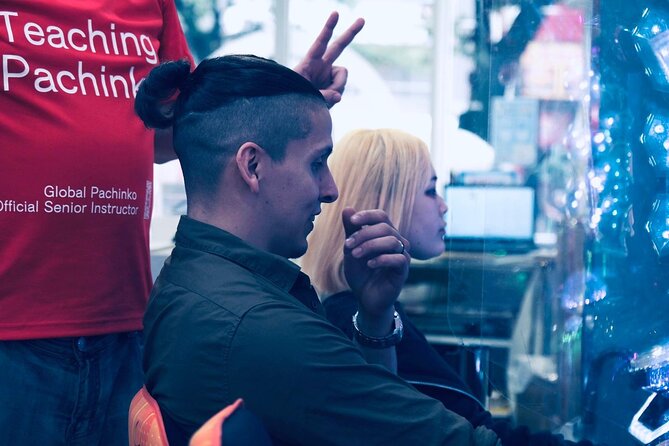
The guide’s role is more than translation. You receive help with the sequence of actions, the machine controls, the correct handle position, and the basic etiquette of the parlor.
That matters because pachinko has a steep first-minute learning curve. You can understand the words and still not know what to do with your hands. An instructor can get you through that awkward opening, then let you play with less interference.
The small maximum group of 10 is a reasonable compromise. It keeps the experience from becoming a private lesson priced for one person, while limiting the number of people competing for help. If all 10 spaces are filled, you may not receive constant one-to-one attention. Still, the activity is more personal than a large walking tour.
No guide name is provided for this experience, so you should not book it expecting a particular named instructor. You are booking the service of a professional pachinko instructor who teaches the game inside the parlor.
How the $70.73 price works
The listed price is $70.73 per person. Gratuities are included, which removes one small decision at the end. The required playing money is not included, however. You must also pay ¥4,000 per person to rent balls or tokens.
That extra fee is the most important value point. The tour is not simply a guided walk through a pachinko parlor. It includes instruction and supervised play, but the activity’s central material cost remains separate. Check the current exchange rate before booking and think of the total as the tour price plus ¥4,000.
I find the price easier to justify if you want context and support rather than a quick look inside. The guide saves you from figuring out the IC card, machine controls, and etiquette alone. You also avoid spending your limited Tokyo time standing beside a machine with no idea what is happening.
If you already understand pachinko or are comfortable learning by trial and error, the value is less clear. You could prefer to visit a parlor on your own and keep your budget for other activities. For a first-time player, the instruction is the product.
Timing, group size, and who should book
At about one hour and 15 minutes, the tour suits a short Tokyo schedule. You can place it near other plans in the Nippori area, though the exact timing between activities is your responsibility.
The tour is open to most people, is near public transportation, and accepts mobile tickets. Confirmation arrives when you book. Those details make it a fairly simple add-on for an independent Tokyo itinerary.
I would recommend it most strongly to:
- First-time visitors curious about a famous Japanese pastime
- People who want to play rather than only photograph the machines
- Small groups looking for an unusual activity near a major station
- Visitors who enjoy learning a game through direct coaching
- Anyone who feels unsure about entering a pachinko parlor alone
You may want to skip it if you dislike loud, highly illuminated rooms or if you want a quiet cultural lesson. You should also avoid booking it with the expectation of guaranteed winnings. The guide can teach technique and manners, but chance remains part of the game.
The practical details that matter
Free cancellation is available if you cancel at least 24 hours before the experience starts. A cancellation made less than 24 hours before the start time is not refunded, and changes inside that window are not accepted. The cut-off follows Tokyo local time.
The activity begins and ends at the Nippori Station meeting point. It has a maximum of 10 people, includes a mobile ticket, and is close to public transportation.
Bottled water is not included. That is a minor issue for a 75-minute activity, but you may want to carry your own, especially if you plan to continue sightseeing afterward.
The balls or tokens cost ¥4,000 per person and are not part of the listed tour price. Set that money aside before you arrive so the payment does not come as a surprise.
My take on the pachinko lesson
I like this experience because it tackles the exact problem most first-time visitors have: pachinko is easy to see but hard to enter. A short explanation, followed by real play, gives you a usable understanding instead of another piece of Tokyo trivia.
The strongest feature is the instructor’s practical help. You learn how to buy credits with an IC card, operate the handle, adjust your aim, and follow the parlor’s manners. You may even win, as one player did, but the lasting value is knowing what you are doing.
The weak point is the added ¥4,000 playing fee. The experience also cannot promise a particular machine, a win, or extra time after the planned session. Keep your expectations modest and your budget clear.
Should you book this experience?
Book it if you want to try pachinko properly and would rather have someone guide you through the first confusing steps. The Nippori meeting point, short duration, mobile ticket, and small group limit make it easy to fit into a Tokyo plan.
Skip it if you are looking for a free cultural stop, dislike noisy gaming parlors, or only want to watch. For everyone else, the tour offers a direct way to understand one of Japan’s most distinctive games, with enough instruction to make the flashing machines finally make sense.
FAQ
Where does the pachinko experience begin?
It begins at Nippori Station, at 2 Chome-19 Nishinippori, Arakawa City, Tokyo 116-0013, Japan.
Where does the activity end?
The activity ends back at the Nippori Station meeting point.
Which pachinko parlor does the tour use?
The group visits BB Station, a pachinko parlor near Nippori Station.
How long does the experience last?
The experience lasts approximately one hour and 15 minutes.
How many people can join the activity?
The maximum group size is 10 travelers.
What will I learn before playing?
You receive a five to 10 minute explanation of pachinko rules and proper manners inside the parlor.
How do I begin playing pachinko?
The guide explains how to purchase credits with an IC card, then shows you how to launch balls by flicking the machine handle.
Is the fee for balls or tokens included?
No. You must pay an additional ¥4,000 per person to rent balls or tokens.
Are gratuities included?
Yes. Gratuities are included in the tour price.
Can I cancel for a full refund?
Yes, if you cancel at least 24 hours before the experience start time. Cancellations made less than 24 hours before the start time are not refunded.
More tours in Tokyo we've reviewed











Tokyo, compared.
 ★ 5.0Mt Fuji and Hakone 1-Day Bus Tour Return by Bullet TrainFrom $163
 ★ 5.01-Day Tokyo Bus TourFrom $129
 ★ 4.6Tokyo: teamLab Planets TOKYO Digital Art Museum Entry TicketFrom $251 day
 ★ 4.0Mt Fuji & Hakone Cruise, Drum Show Bullet Train 1 Day from TokyoFrom $149
 ★ 5.0Tokyo: Shinjuku Food Tour (13 Dishes at 4 Local Eateries)From $86
 ★ 4.4Tokyo Mt Fuji 5th St & Hakone Cruise Bus Tour w/Bullet TrainFrom $15410 hours