
Reviewed · TOKYO
A Tokyo Karate Dojo Activity Experience
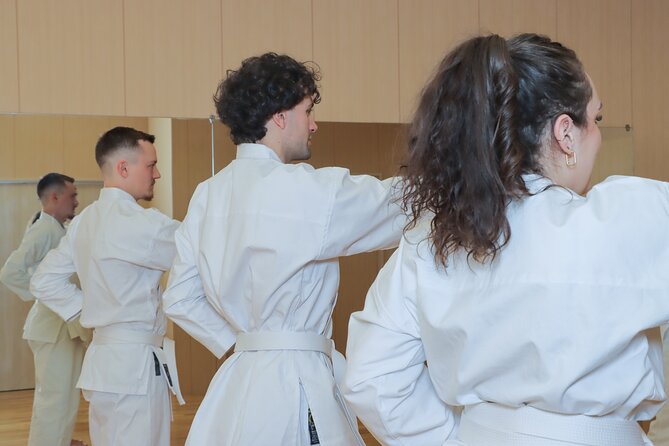
Karate here is more than a few punches and kicks. At Soshikan Dojo, you learn the manners, basic training methods, and after-practice customs of a Japanese karate practitioner, then finish at a standing sake bar beside the dojo. I like the English-speaking instruction and the chance to learn etiquette, not just movements. I also like that the $86 price includes a uniform, water, towel, snacks, and two drinks.
The main consideration is that this is a short introduction, not a full martial arts course. You get about two hours, and the experience may feel less appealing if you want hard physical training or already practice karate at an advanced level.
In This Review
- Key points at a glance
- Starting at Soshikan Dojo in Shimo
- Putting on the karate uniform
- Learning karate basics and proper etiquette
- From dojo etiquette to everyday culture
- A cold drink at the standing sake bar
- What the $86 price really covers
- Who will enjoy this two-hour experience
- Practical details before you go
- Should you book Tokyo karate at Soshikan Dojo?
- FAQ
- Where does the Tokyo karate experience take place?
- How long does the activity last?
- Is the activity suitable for beginners?
- Is the instructor English-speaking?
- Is a karate uniform included?
- What should I bring?
- Are drinks included?
- Is bottled water provided?
- Is this a private activity?
- Where does the activity end?
Key points at a glance
- Karate for beginners: The instructor explains basic movements and proper dojo etiquette in English.
- A new dojo in Shimo: Soshikan Dojo opened in July 2023 and combines a kamidana shrine with modern facilities.
- The uniform is provided: You only need to bring a T-shirt to wear underneath it.
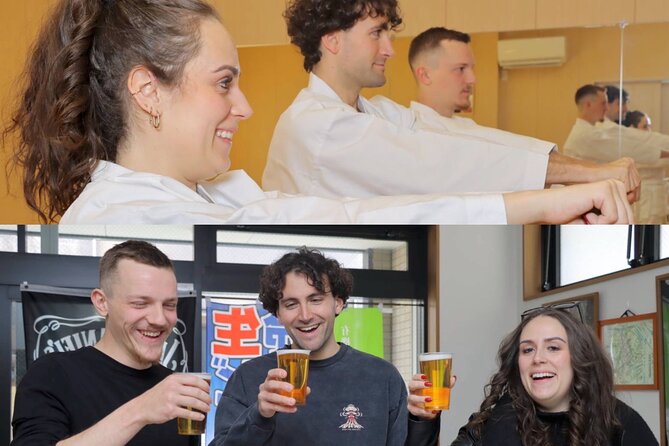
- Training followed by drinks: Two alcoholic beverages, such as beer or sake, plus snacks are included.
- A private group activity: Only your own group participates, which can make instruction feel more personal.
- A useful cultural exchange: The experience covers training, manners, clothing, and the social time after practice.
Starting at Soshikan Dojo in Shimo
Your meeting point is Soshikan Dojo at 4-chōme-6-2 Shimo in Kita City, Tokyo. The dojo is near public transportation, though you should allow enough time to find the correct building and arrive ready for a prompt start.
Shimo is an old-fashioned Tokyo neighborhood, a useful change of pace from the city’s giant stations and shopping districts. The activity keeps you in one area rather than sending you across Tokyo, so the two-hour schedule is easy to fit into a busy day.
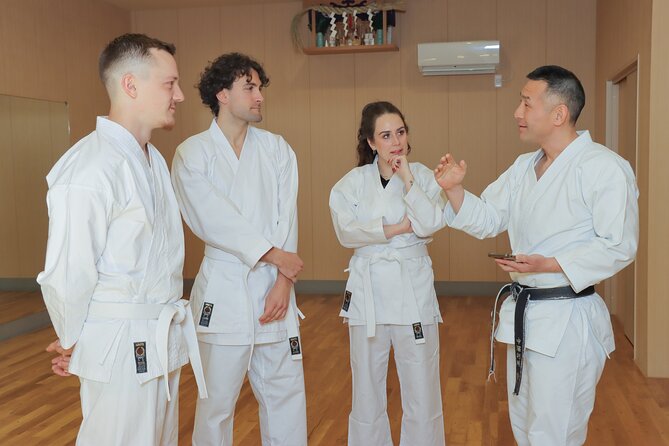
The dojo itself is clean and modern. It was newly built in July 2023, but it does not ignore tradition. A kamidana, or small Shinto shrine, is part of the space. That detail matters because etiquette is not treated as decoration here. You are introduced to the respectful behavior that forms part of practice in a Japanese dojo.
You participate as a private group, rather than joining a large public class. The supplied details do not specify the maximum group size, so I would not assume one-on-one instruction. Still, having only your own party involved gives the session a more relaxed setting for questions and photos.
If you're still narrowing it down, here are other tours in Tokyo we've reviewed.
Putting on the karate uniform
A karate uniform is included, which saves you from packing special clothing or buying an outfit for a single activity. You do need to bring your own T-shirt to wear underneath it. That is an easy detail to miss, so put one in your day bag before leaving your hotel.
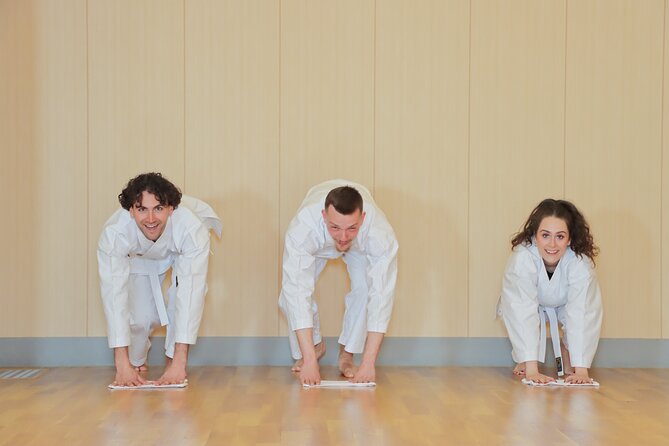
Changing into the uniform helps mark the shift from sightseeing to practice. It also gives the instructor a practical way to show you how karate clothing should be worn. You are not simply watching a demonstration in street clothes. You take part in the small routines that shape a dojo visit.
A tenugui towel and bottled water are provided. The towel is useful after training, and water is a welcome inclusion even though this is not described as an intense workout. Wear comfortable clothing underneath the uniform and shoes that are easy to remove if needed.
The activity includes photo sessions. That makes the uniform rental more worthwhile, especially if you want a clear keepsake of the experience. The details do not promise a professional photo package, so think of this as a chance to take photographs during the activity rather than a formal studio session.
Learning karate basics and proper etiquette
The heart of the experience is beginner-level karate instruction. An English-speaking instructor guides you through the basics and explains proper etiquette. This is important for first-time participants, since a dojo has its own expected behavior and rhythms.
You can expect the lesson to focus on introductory movements and training methods rather than advanced techniques. The exact sequence is not specified, so I would not book this expecting a fixed belt-level curriculum or a hard sparring session. The value is in receiving a clear first look at how karate practice works.
The instructor also explains the culture and history of the art. That turns the class into more than physical activity. You learn why the setting, manners, and training structure matter, not just where to place your feet or hands.
The available feedback praises the teacher as friendly and experienced, with particular emphasis on authentic karate instruction and explanations of the art’s culture and history. That is the strongest reason to choose this activity over a generic martial arts photo opportunity. You get context alongside movement.
You should still keep your expectations sensible. A two-hour session cannot provide mastery, serious technical correction, or a long-term training plan. It can give you a useful foundation and a better understanding of what a regular practitioner experiences.
From dojo etiquette to everyday culture
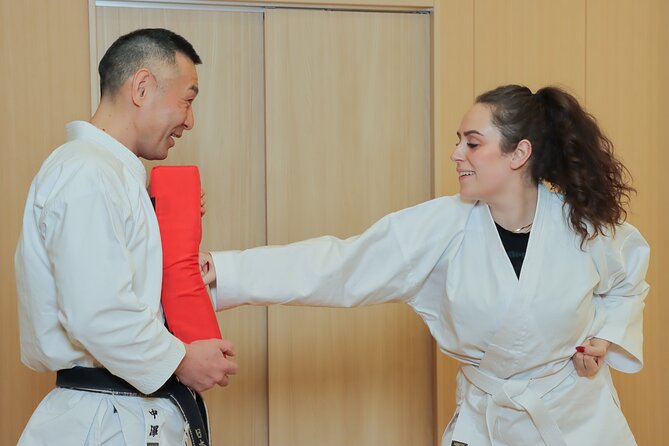
The activity is designed around the daily life of a karate practitioner. That phrase covers more than the class itself. You learn etiquette, put on the uniform, train in a purpose-built dojo, and then take part in the social time that follows.
This is where the programme gains its unusual character. Many martial arts activities stop when the physical lesson ends. Here, the post-training gathering is part of the experience. The idea is that some of the important conversation and fellowship happen after practice, in a drinking establishment.
That does not mean you need to be a serious drinker. Two alcoholic beverages are included, such as beer or sake, and non-alcoholic drinks are available. If you do not drink alcohol, you can still join the final part with a non-alcoholic option.
The cultural point is useful: martial arts are not only about individual discipline. They can also create a social connection between instructor and students. You get a small look at that transition from formal training to casual conversation.
A cold drink at the standing sake bar
The standing-style sake bar sits next to the dojo. After changing or finishing practice, you can relax there with snacks and your included drinks. The setting is traditional and informal, quite different from a polished restaurant or a large tourist venue.
The bar is one of the most distinctive parts of the programme. It gives the experience a clear local flavor without asking you to plan a second stop. You do not have to search for a suitable izakaya after class, and you do not need to wonder where to go for a drink in an unfamiliar neighborhood.
Two alcoholic beverages and snacks are included in the price. Beer or sake are examples, not a promise of one exact drink, and non-alcoholic choices are available. If you have dietary restrictions, the supplied information does not specify the snacks, so ask the provider before booking if that point matters to you.
The standing format may not suit everyone. If you have difficulty standing for a period after exercise, this part could be less comfortable. The programme information does not describe seating arrangements, so do not count on a standard seated bar experience.


What the $86 price really covers
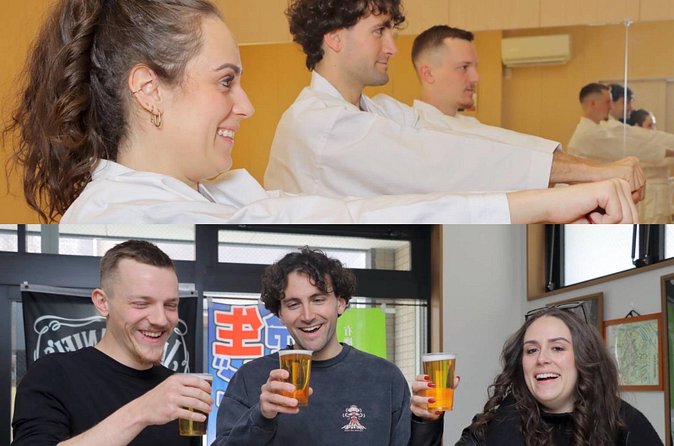
At $86 per person, this is not the cheapest way to spend two hours in Tokyo. The price makes more sense when you count the included pieces: instructor-led karate training, uniform rental, bottled water, a tenugui towel, a photo opportunity, snacks, and two alcoholic drinks.
You are also paying for a private activity, an English-speaking instructor, and a purpose-built dojo. For someone who wants a quick cultural introduction with no equipment to purchase, that package has reasonable value.
The value is weaker if you only want a basic exercise class. You could find less expensive ways to move your body in Tokyo, but they would not necessarily include the dojo setting, traditional etiquette, cultural explanation, uniform, and sake bar visit.
Group discounts are available. That can improve the price for families, friends, or a small private party. Since the activity is private, it is especially suited to people who want to share an unusual afternoon with their own group rather than join strangers.
The average booking lead time is 32 days. That suggests you should reserve ahead, particularly if your Tokyo dates are fixed. Confirmation is sent within 48 hours, subject to availability, so do not treat an unconfirmed request as a final appointment.
Who will enjoy this two-hour experience
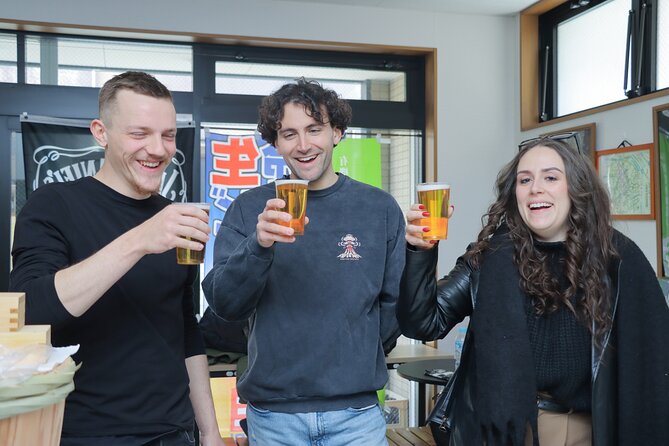
I would recommend this activity to a first-time karate participant who wants a cultural lesson with some physical activity. You do not need previous martial arts experience, and most people can participate.
It also suits visitors who like small, focused experiences. You stay at one dojo, work with an English-speaking instructor, and finish next door at a local-style bar. That makes the programme easy to understand and easy to fit between other Tokyo plans.
Families and friend groups may appreciate the private format and group discounts. The uniform and photo session add a playful element, while the cultural explanation gives the activity more substance than a costume photo stop.
You may want something else if you are seeking serious karate conditioning, contact practice, or advanced instruction. The available information describes beginner guidance and an introduction to basic methods. It does not promise sparring, grading, or a demanding athletic session.
People who do not drink can still participate because non-alcoholic beverages are available. People with mobility concerns should note that the final stop is a standing-style bar, and no specific accessibility details are provided.
Practical details before you go
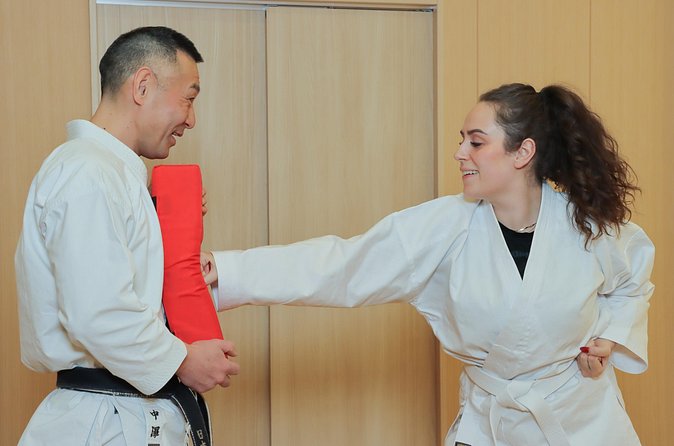
Bring a T-shirt for underneath the rented karate uniform. That is the only personal item specifically required, but comfortable clothing will make changing and moving easier.
The activity lasts approximately two hours and ends back at the dojo meeting point. You do not need to arrange a separate return transfer. Because the programme combines instruction and drinks, avoid scheduling an important timed attraction immediately afterward.
The meeting point is near public transportation in Shimo, Kita Ward. Use the full address, 4-chōme-6-2 Shimo, Kita City, Tokyo 115-0042, Japan, when planning your route. The provider does not list a hotel pickup service.
Free cancellation is available if you cancel at least 24 hours before the local start time. Changes or cancellations made inside that window are not accepted for a refund. Keep that deadline in mind when Tokyo weather, illness, or a changing itinerary might affect your plans.
Should you book Tokyo karate at Soshikan Dojo?
Book it if you want a compact cultural experience with real participation. The strongest parts are the beginner-friendly English instruction, the attention to etiquette and karate culture, the new dojo with its kamidana, and the unusual finish at a standing sake bar.
The $86 cost is fair for a private two-hour session that includes clothing, drinks, snacks, and guidance. Just remember what you are buying: an introduction, not a full karate course. Bring your T-shirt, reserve ahead, and choose this activity for its mix of martial arts, manners, and neighborhood social life.
FAQ
Where does the Tokyo karate experience take place?
It takes place at Soshikan Dojo, 4-chōme-6-2 Shimo, Kita City, Tokyo 115-0042, Japan.
How long does the activity last?
The experience lasts approximately two hours.
Is the activity suitable for beginners?
Yes. The programme is suitable for beginners and includes detailed instruction in basic karate and proper etiquette.
Is the instructor English-speaking?
Yes. An English-speaking instructor provides guidance during the experience.
Is a karate uniform included?
Yes. Karate uniform rental is included in the price.
What should I bring?
Bring your own T-shirt to wear under the rented karate uniform.
Are drinks included?
Yes. Two alcoholic beverages, such as beer or sake, are included, along with snacks. Non-alcoholic beverages are also available.
Is bottled water provided?
Yes. Bottled water and a tenugui towel are included.
Is this a private activity?
Yes. Only your own group participates in this private activity.
Where does the activity end?
The activity ends back at the meeting point at Soshikan Dojo.
More tours in Tokyo we've reviewed











Tokyo, compared.
 ★ 5.0Mt Fuji and Hakone 1-Day Bus Tour Return by Bullet TrainFrom $163
 ★ 5.01-Day Tokyo Bus TourFrom $129
 ★ 4.6Tokyo: teamLab Planets TOKYO Digital Art Museum Entry TicketFrom $251 day
 ★ 4.0Mt Fuji & Hakone Cruise, Drum Show Bullet Train 1 Day from TokyoFrom $149
 ★ 5.0Tokyo: Shinjuku Food Tour (13 Dishes at 4 Local Eateries)From $86
 ★ 4.4Tokyo Mt Fuji 5th St & Hakone Cruise Bus Tour w/Bullet TrainFrom $15410 hours