
Reviewed · TOKYO
Urban Geometry with Laurence Bouchard
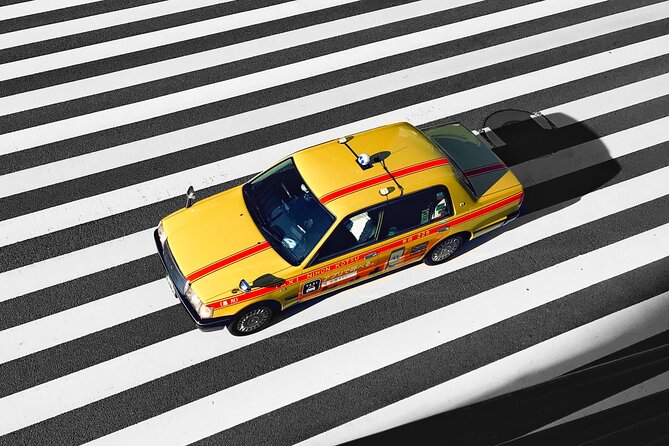
Tokyo reveals a different personality when you stop chasing landmarks and start looking for lines, shadows, and reflections. Photographer Laurence Bouchard leads you from Ebisu to Roppongi and Yurakucho, showing you how ordinary corners can become bold black-and-white compositions.
I like the small maximum of six people, which gives Laurence room to review your images and offer advice suited to your camera and skill level. I also like the practical focus: timing, light, framing, and working with people in the scene, including the useful trick of having Laurence model when a passerby is not available.
The main consideration is that this is a focused photography workshop, not a broad Tokyo sightseeing walk. You will cover several areas in four hours, use public transportation, and spend time making pictures rather than simply seeing the sights.
In This Review
- Key points to know before you book
- Why this Tokyo workshop feels different
- Starting at 9:00 am in Ebisu
- Roppongi and the value of small-group guidance
- The National Art Center’s glass and shadow play
- Yurakucho and the Tokyo International Forum
- What Laurence’s feedback adds
- Four hours, six people, and a $130.31 price
- What to bring for a smooth morning
- Who will get the most from this experience
- Should you book Urban Geometry with Laurence Bouchard?
- FAQ
- Where does Urban Geometry with Laurence Bouchard start?
- What time does the workshop begin?
- How long does the experience last?
- What locations are included?
- How many people can join?
- What should I bring?
- Can I cancel for a full refund?
Key points to know before you book
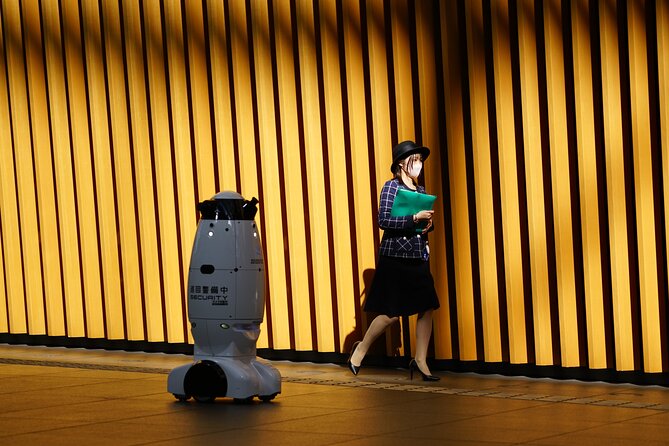
- Ebisu begins the visual lesson: Garden Place offers trellis shadows and strong geometric patterns right from the start.
- The National Art Center is a major photo stop: Its huge glass facade provides changing shadows, reflections, and clean architectural lines.
- Laurence gives hands-on feedback: You can show him your work and receive advice matched to your camera and current skill level.
- The route favors graphic photography: Expect high contrast, black-and-white shooting, careful framing, and ordinary scenes made visually stronger.
- The group is capped at six: That matters when you want personal help rather than a lecture delivered to a crowd.
- Come prepared for a mobile morning: Charge your phone or camera fully, wear comfortable shoes, and bring a Suica or Pasmo card if possible.
Why this Tokyo workshop feels different
Most first visits to Tokyo follow an easy script: temples, towers, crossings, markets, and neon. This workshop asks you to put that script aside for four hours and study the city as a collection of shapes.
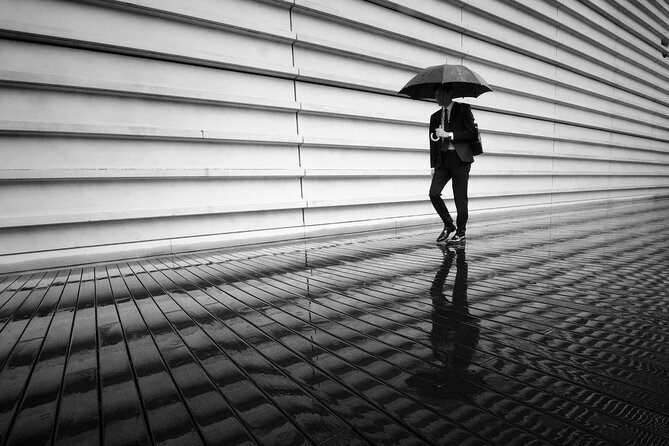
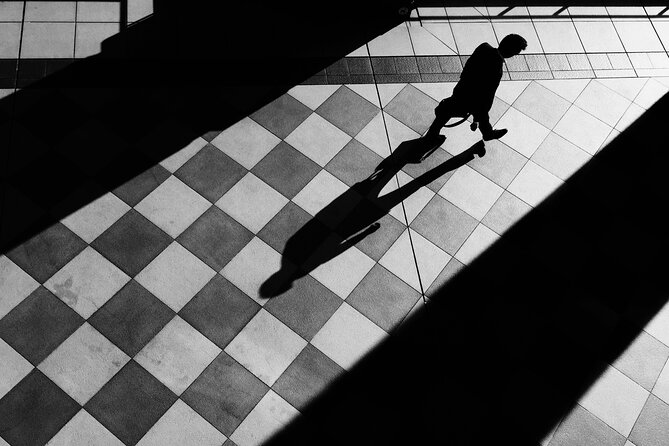
That change in viewpoint is the real value. A railing becomes a diagonal. A hard patch of sun becomes a block of white. A person crossing a polished floor gives scale to an otherwise abstract frame. You are not just collecting Tokyo souvenirs. You are practicing a way of seeing that can work in any city.
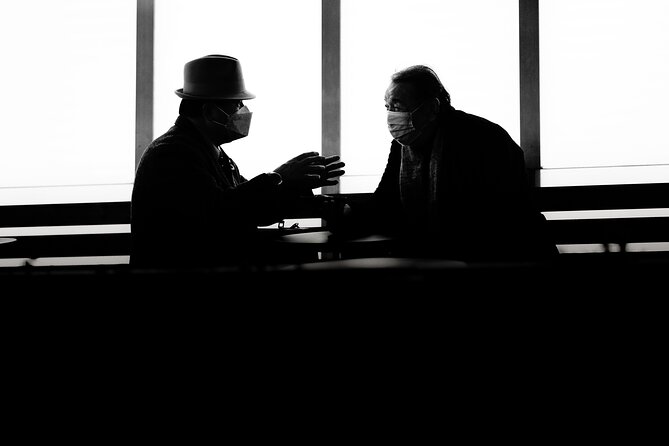
Laurence Bouchard keeps the work practical. You receive guidance on when to press the shutter, how to frame a scene, and how to use light instead of waiting for a famous subject. The emphasis on high contrast and black and white is especially useful because it removes the distraction of color and makes you pay attention to structure.
I would not choose this experience if you want a relaxed walking tour with long stops for background stories. I would choose it if you want to return from Tokyo with stronger photographs and a clearer idea of why an image works.
If you're still narrowing it down, here are other tours in Tokyo we've reviewed.
Starting at 9:00 am in Ebisu
The meeting point is at 4-chōme-2-6 Ebisu, Shibuya, Tokyo 150-0013, and the workshop starts at 9:00 am. That early start puts you on the streets before the day has fully gathered pace, though the precise light will depend on the season and weather.
The first stop is Ebisu Garden Place, a broad complex known here for the shadows cast by its trellised canopy. This is a smart opening exercise because the setting gives you clear patterns without requiring a dramatic subject.
You can expect to work with repeated lines, blocks of shade, and the contrast between the canopy and the open spaces around it. Laurence’s advice about framing should help you decide how much of the setting to include. A wide view may show the larger pattern, while a tighter frame can turn the shadows into an almost abstract design.
This first stop also lets you settle into your camera. If you use a dedicated camera, you can start checking exposure and focusing choices. If you use a phone, the same lesson still applies: look for clean edges, strong shapes, and a clear subject before you tap the screen.
I like that the workshop starts with a scene that is visually organized rather than asking you to find order in a crowded street. It gives you a useful warm-up and a quick test of how you respond to light.
Roppongi and the value of small-group guidance
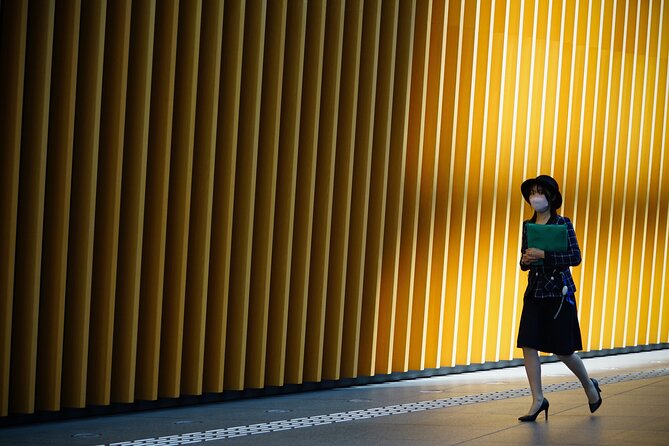
The route then moves to Roppongi for several less obvious photo locations. The exact spots are not specified, which is part of the appeal and part of the uncertainty. You are being guided toward details and patterns rather than given a fixed list of major attractions.
Roppongi can reward a photographer who pays attention to surfaces, angles, and passing figures. You might find a useful reflection, a sharp shadow, or a strong contrast between built forms. The goal is not to photograph Roppongi as a postcard. It is to isolate a small visual idea within the city.
This is where a group capped at six makes a real difference. Laurence can look at what you are doing, suggest a different position, and respond to the camera or phone in your hands. In a larger group, that sort of help would be harder to provide.
The hands-on style also includes working with people in the frame. Laurence has acted as a passerby when no suitable subject was available, and he has modeled in quieter spaces so participants could practice composing around a human figure. That is a small but useful detail. A person can add scale, movement, and a point of focus, yet you cannot always wait for the right figure to appear.
You should still expect to do your share of the work. This is not a session where Laurence simply points out the best angle and takes you from one finished shot to the next. You will need to look, test, adjust, and show him what you are trying to do.
The National Art Center’s glass and shadow play
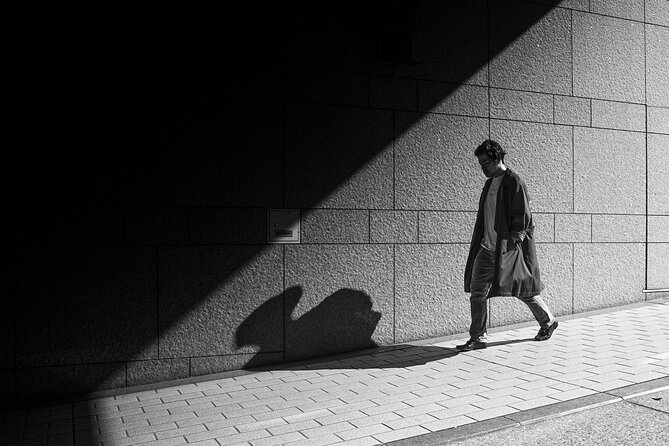
Next comes the National Art Center, Tokyo, one of the most promising stops for this particular style of photography. The building’s massive glass facade gives you broad reflections, strong architectural lines, and shadows that change as the light moves.
Glass can be tricky. It may reflect the photographer, flatten the subject, or produce too many competing details. That makes it useful practice. You can work on choosing a clean angle, controlling what enters the frame, and deciding when a reflection adds meaning rather than clutter.
The building also suits black-and-white photography. Without color, the facade becomes a study in light, dark, transparency, and repetition. You may find that a simple architectural frame has more force when you remove signs and colors that would otherwise pull attention away from its structure.
Laurence’s role here is to help you make decisions, not to hand you a single correct answer. He can guide you toward better timing or framing, then review the result. That feedback is likely to be most valuable if you are willing to show images that are still works in progress.
A practical note: the activity description gives you a sequence of outdoor and public locations, but it does not promise access to special areas or a private space inside the art center. Treat the National Art Center as a location for architectural photography, with the glass exterior and its shadows as the main attraction.
Yurakucho and the Tokyo International Forum
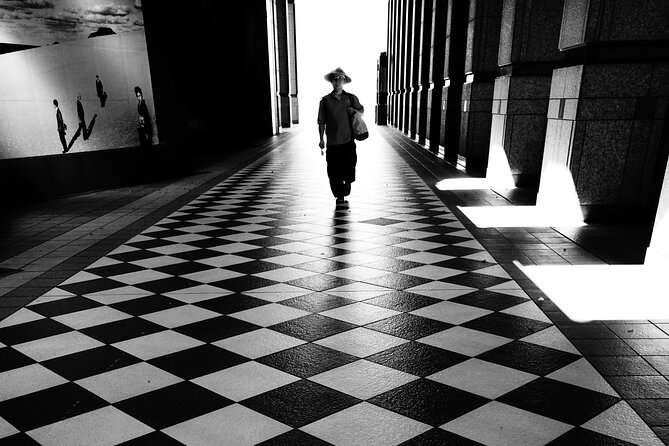
The final photography area is Yurakucho, where you explore the hidden depths of the Tokyo International Forum. This is another strong match for the workshop’s graphic approach.
The forum is known in this experience for its large-scale interior spaces and structural lines. The phrase hidden depths suggests that the best photographs may come from looking down, up, or along the building’s geometry rather than standing in front of it and recording the whole structure.
Large public architecture can overwhelm a camera. A wide composition may lose the clean shape you noticed in person. A tighter view can give you repetition, symmetry, or a bold diagonal. Laurence can help you decide which parts deserve the frame and which distractions should be left out.
Yurakucho also provides a useful final test. By this point, you have worked with shadows at Ebisu, less obvious scenes in Roppongi, and glass at the National Art Center. At the forum, you can apply the same ideas to a much larger structure.
The supplied details say the activity ends back at the meeting point, while the listed route finishes with Yurakucho. Because the route includes several Tokyo districts, confirm the final return arrangement when you meet Laurence. In any case, plan your next appointment with some flexibility rather than scheduling something immediately afterward.

What Laurence’s feedback adds
A photo walk can be pleasant and still leave you unsure what you learned. This workshop tries to avoid that by including image review and advice tailored to your equipment and ability.
That matters because a phone photographer and a manual-camera user may face different problems. One person may need help seeing a stronger crop. Another may need to think about exposure, timing, or how to handle a bright facade. The available details do not promise a formal classroom session, so think of the feedback as field coaching connected to the images you make during the morning.
The personal approach is also helpful for beginners. You do not need to arrive with a polished portfolio. You need enough curiosity to try a different angle, wait for a shadow, or remove a distracting element from the frame.
More experienced photographers can benefit too, especially if Tokyo has become visually overwhelming. A fresh prompt, such as shooting in high contrast or limiting yourself to black and white, can give your work a clear direction.
I would bring a small selection of images from earlier in your trip if you have them, but the provided details do not say that Laurence offers a formal portfolio review. The safest expectation is feedback on the photographs you make during the workshop.
Four hours, six people, and a $130.31 price
The price is $130.31 per person for about four hours. That is not the cheapest way to spend a morning in Tokyo, since you can walk through these districts without booking a guide. The question is what you want from the time.
If you already know how to read light, frame architecture, and edit your own work, you may find the cost harder to justify. You could make your own route and photograph at your own pace.
If you want direct instruction, the price is easier to understand. You are paying for Laurence’s eye, a planned route through several visually different locations, practical suggestions in the field, and a small group where your photographs can receive attention. The maximum of six keeps the workshop personal without making it a private lesson.
The route also gives you a useful sample of Tokyo rather than confining you to one neighborhood. Ebisu, Roppongi, and Yurakucho each offer a different setting, and the National Art Center and Tokyo International Forum add major architectural subjects.
Still, public transportation time is part of the morning. You should not expect four continuous hours of shooting at one site. Bring a Suica or Pasmo card if possible, as recommended, and keep your equipment light enough to carry comfortably between stops.
The activity is often booked about 36 days ahead. That is a helpful planning signal if your Tokyo dates are fixed, though availability can change. Confirmation is provided at booking, and free cancellation is available until 24 hours before the start time. Changes or cancellations inside that 24-hour window are not accepted for a refund.
What to bring for a smooth morning
Charge your phone or camera to 100 percent before you leave. You will be taking photographs for several hours, and public architecture can tempt you into far more shots than expected.
Wear comfortable shoes. The route covers several parts of Tokyo and includes time on foot, even if transportation connects the main areas.
A Suica or Pasmo card is recommended if possible. The supplied information does not state that transportation is included in the price, so you should be ready to handle your own metro travel.
Bring the camera you actually want to use. The workshop is designed to provide feedback suited to your camera and skill level, so there is no clear reason to rent unfamiliar equipment for the morning.
You may also want spare phone storage, though that is general preparation rather than a stated requirement. The firm requirement is a full charge.
Who will get the most from this experience
I would recommend this workshop to photographers who want more than a record of Tokyo’s famous sights. It fits you especially well if you enjoy architecture, abstract patterns, black-and-white images, and the challenge of making a strong composition from an ordinary corner.
Beginners should find the format approachable because the instruction takes place while you are making pictures. You do not need advanced technical skills to benefit from help with timing, light, and framing.
It also suits visitors who want practical skills that carry beyond Japan. The central lessons are not tied to one temple or one neighborhood. Lines, shadows, reflections, and human scale appear in almost every city.
The experience may be less suitable if you want a relaxed cultural tour, a long explanation of Tokyo’s history, or plenty of free time at each stop. Four hours is enough for a focused workshop, but not enough to linger at every location.
The small group is a strong reason to book, especially if you value personal feedback. Laurence’s willingness to model or serve as a passerby can also help you practice photographs with people in the frame without waiting for chance to provide the right subject.
Should you book Urban Geometry with Laurence Bouchard?
Book it if you want Tokyo to sharpen your photography rather than simply fill your camera roll. The route offers varied material, from Ebisu’s patterned shadows to the National Art Center’s glass and the Tokyo International Forum’s large structural spaces.
The best reason to choose it is Laurence’s practical involvement. You get help finding strong spots, working with subjects, and reviewing your images, all within a group of no more than six.
Skip it if your priority is landmark sightseeing, a low-cost walk, or a slow morning with no fixed photographic goal. At $130.31, the value depends on using the feedback. If you arrive ready to look closely, experiment, and ask for advice, this can be a productive four hours and a useful way to bring home photographs that feel more like your Tokyo than standard postcard views.
FAQ
Where does Urban Geometry with Laurence Bouchard start?
The meeting point is 4-chōme-2-6 Ebisu, Shibuya, Tokyo 150-0013, Japan.
What time does the workshop begin?
The start time is 9:00 am.
How long does the experience last?
The workshop lasts approximately four hours.
What locations are included?
The route includes Ebisu Garden Place, Roppongi, the National Art Center, Tokyo, Tokyo International Forum, and Yurakucho.
How many people can join?
The activity has a maximum of six participants.
What should I bring?
Bring a fully charged phone or camera, wear comfortable shoes, and bring a Suica or Pasmo card for the metro if possible.
Can I cancel for a full refund?
Yes. You can cancel at least 24 hours before the experience start time for a full refund. Cancellations or changes made less than 24 hours before the start time are not accepted for a refund.
More tours in Tokyo we've reviewed





Tokyo, compared.
 ★ 5.0Mt Fuji and Hakone 1-Day Bus Tour Return by Bullet TrainFrom $163
 ★ 5.01-Day Tokyo Bus TourFrom $129
 ★ 4.6Tokyo: teamLab Planets TOKYO Digital Art Museum Entry TicketFrom $251 day
 ★ 4.0Mt Fuji & Hakone Cruise, Drum Show Bullet Train 1 Day from TokyoFrom $149
 ★ 5.0Tokyo: Shinjuku Food Tour (13 Dishes at 4 Local Eateries)From $86
 ★ 4.4Tokyo Mt Fuji 5th St & Hakone Cruise Bus Tour w/Bullet TrainFrom $15410 hours