
Reviewed · BAR HOPPING & IZAKAYA TOURS
Tokyo The Izakaya tour
Tokyo’s best food nights often happen behind an ordinary door in a narrow lane. This Ebisu izakaya tour gives you a way into that local bar culture without guessing at menus, ordering rules, or what has just arrived at the table.
I like the small eight-person limit, which should keep the evening social rather than unwieldy. I also like the clear rhythm of the night: yakitori, seafood, a lively alley pub, then a Japanese dessert. The main caution is the food policy. This is not a good fit for serious allergies, and vegans and vegetarians may find the group-menu choices limited.
In This Review
- Key points
- Why Ebisu is a smart place to learn izakaya culture
- Three hours, three pubs, and a useful food progression
- What the translation help really adds
- Food portions, drink choices, and dietary limits
- Is $198 a fair price for this Tokyo evening?
- The practical shape of the evening
- Who will enjoy this more than a self-guided bar night
- My take on the strongest features
- Should you book the Ebisu Izakaya tour?
- FAQ
- Where does the Tokyo Izakaya tour start?
- What time does the tour begin?
- How long does the tour last?
- Where does the tour end?
- How many izakayas do you visit?
- Is food included?
- Is a drink included at each stop?
- Does the guide translate?
- Is the tour suitable for vegans and vegetarians?
- Can I cancel for a refund?
Key points
- Three different Ebisu pubs: Move from a yakitori izakaya to a fish restaurant, then finish in a small alley bar.
- A guide handles translation: You can ask questions and order with help instead of decoding every menu alone.
- Food and a drink at every stop: Alcoholic and non-alcoholic drinks are available.
- A compact evening: The tour lasts about 3 hours and 10 minutes, beginning at 5 p.m.
- A group capped at eight: The size suits people who want conversation and personal help.
- A dessert finish: A traditional Japanese sweet provides a light ending after the savory stops.
Why Ebisu is a smart place to learn izakaya culture
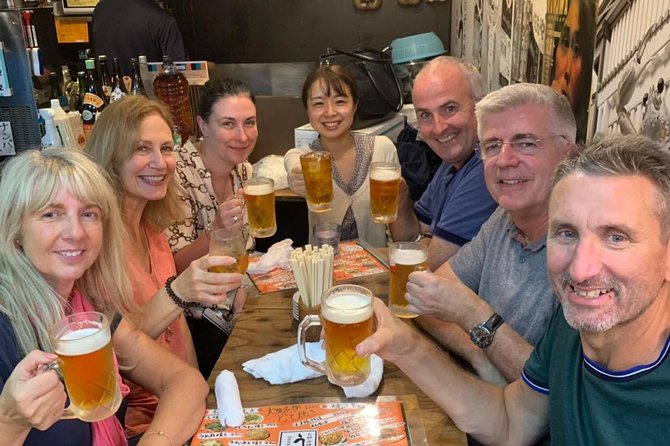
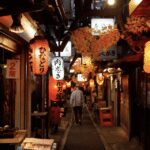
Ebisu is known for its concentration of izakayas, Japanese-style pubs where food and drinking share equal billing. You are not simply being taken to one restaurant for a fixed meal. You are shown several versions of the format, each with its own mood and menu.
That variety matters. A first-time visitor may think an izakaya is just a place for skewers and beer. In Ebisu, you can see how the idea stretches from a focused yakitori counter to a seafood restaurant and then to a compact pub tucked into a side alley.
The tour begins at 5 p.m. at the Shake Shack in the Atre Ebisu West Wing, on the first floor at 1-6-1 Ebisuminami. This gives you a clear landmark near public transportation. The opening stop is listed as about 10 minutes, likely allowing the group to gather, get oriented, and begin the walk into the neighborhood.
The activity ends back at the meeting point. You will need to make your own way there and back, since hotel pickup, drop-off, and transport between attractions are not included.
A few more Tokyo tours and experiences worth a look
Three hours, three pubs, and a useful food progression
The evening is planned around three very different izakayas. That is the strongest part of the format. Each stop lasts long enough to eat and drink, but not so long that you are stuck in one setting for the whole night.
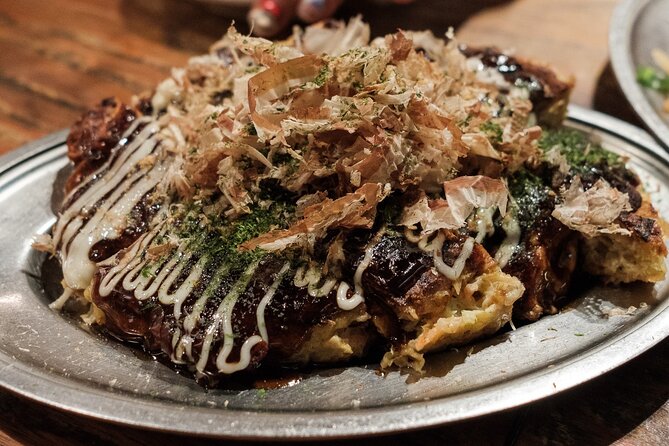
The first major stop is a yakitori izakaya, scheduled for about 45 minutes. Yakitori means grilled chicken skewers, and an izakaya centered on them gives you a direct introduction to one of Japan’s most familiar pub foods. The guide can explain what is being served and help with translation, which is useful when the menu offers more than the basic items you already know.
One drink is included at each venue. You can choose an alcoholic or non-alcoholic option, so you are not required to drink to take part. The food is also included, with enough variety intended to leave you full by the end of the evening.
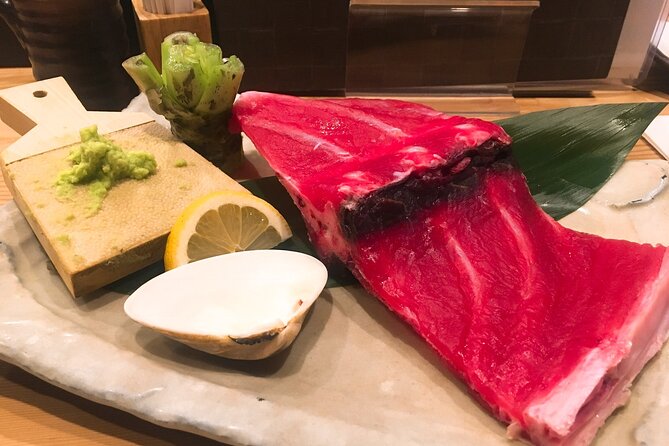
The second major stop is a fish restaurant, also for about 45 minutes. This changes the pace and flavor of the night. Seafood gives the group a look at another important part of Japanese dining, and the guide can explain the dishes as they arrive.
I like this middle stop because it prevents the tour from becoming a single-note skewer crawl. You get a wider sense of how Japanese pubs use small plates, shared food, and drinks to build a meal.
The final izakaya lasts about an hour and sits in a small alley. It is described as lively, though the exact menu is not specified. The extra time here gives you room to settle into the evening rather than rushing through another tasting. It is also the stop most likely to feel like a proper night out, with the group sharing food in a compact local setting.
The final 10 minutes are reserved for a traditional Japanese dessert. That is a modest but welcome detail. After several savory dishes and drinks, a sweet ending keeps the evening from finishing abruptly at the last pub.
What the translation help really adds
The language support is not just a convenience. It changes how confidently you can approach the meal.
At an izakaya, you may need help understanding dish names, choosing between options, or knowing what is included at the table. A guide translates for you and explains local delicacies as the night unfolds. You can focus on tasting and asking questions instead of worrying that you have ordered the wrong thing.
The guide listed for this experience may be Fuyu, whose warm and gracious manner received specific praise in the available feedback. Since guide assignments can vary, I would treat Fuyu as a possibility rather than a guarantee. Still, the positive mention points to the kind of hosting that matters on a food tour: someone who keeps the group moving while making room for questions.
The group limit of eight is another practical advantage. With a larger party, translation becomes harder and conversation can split into separate clusters. Eight people is small enough for the guide to explain dishes, keep track of dietary concerns, and help the group participate together.
Food portions, drink choices, and dietary limits
The tour includes one drink at each place, with alcohol or non-alcoholic drinks available. That makes the price easier to assess, since you are not paying nearly $200 only for introductions and restaurant access. You are also receiving a series of drinks and a substantial amount of food across the evening.
The food is described as enough to fill your stomach, with different dishes served along the route. Exact dishes and portion sizes are not fixed in the information provided, so you should not book this expecting a precise tasting menu. The appeal is variety and guidance, not control over every plate.
There is an important limit for people with dietary restrictions. The experience is not recommended for anyone with a serious food allergy. It is also not recommended for vegans or vegetarians because the group format limits the variety and quantity available. A private tour may be possible if you contact the operator, but that option is not part of the standard booking.
If you have a mild preference rather than a serious allergy, contact Oishii Food Tours before booking. The available information does not promise substitutions, so you should not assume that the included food can be changed on the night.
Is $198 a fair price for this Tokyo evening?
At $198 per person, this is not a cheap bar crawl. You are paying for a hosted, small-group evening in one of Tokyo’s popular dining neighborhoods, with translation, food at several stops, and a drink at each place.
The value depends on what you want. If you already speak Japanese, feel comfortable ordering in local pubs, and know where you want to eat in Ebisu, you could spend less by exploring on your own. You would also have more freedom to choose your own dishes and stay as long as you like.
I think the price makes more sense for a first visit to Tokyo, especially if local bar culture feels difficult to approach alone. The guide removes much of the uncertainty, and the three-stop structure gives you several chances to taste rather than gambling your evening on one restaurant.
The size also matters. A maximum of eight people is more personal than a large group outing. You are paying for access and interpretation as much as for the food itself. The included dishes and drinks help, but the strongest value is the guided route through places you may not feel ready to enter on your own.
The tour is booked an average of 192 days ahead, which suggests that you should not leave it until the last few days of a Tokyo stay. Since the booking is non-refundable and cannot be changed after purchase, check your schedule, meeting point, dietary needs, and companions carefully before paying.
The practical shape of the evening
Plan to arrive at the Shake Shack meeting point with enough time to find the Atre Ebisu West Wing. The listed start is 5 p.m., and the activity uses a mobile ticket. Keep your phone charged and make sure you can display the booking confirmation.
You will walk between the venues in Ebisu, but transportation to and from the attractions is not included as a separate service. The meeting point is near public transportation, so reaching the neighborhood should be manageable, but you remain responsible for getting there and returning afterward.
The tour lasts about 3 hours and 10 minutes. Starting at 5 p.m. means you should expect to finish in the evening, with the final stop back at the original meeting point. That timing works well as a first-night activity, though you should avoid booking another fixed dinner immediately afterward. The included food is intended to be filling.
Most people can participate, according to the activity information. No special mobility details are provided, so contact the operator directly if you have concerns about walking between stops or using the venues.
Who will enjoy this more than a self-guided bar night
I would choose this tour for you if you want a confident introduction to Tokyo’s pub culture and do not want to spend your first evening studying menus or guessing at local customs. It also suits solo visitors and couples who like meeting a small group while eating food designed to be shared.
It is useful for people who want contrast. One pub might teach you about grilled skewers, another about fish, and the alley stop may show a more casual side of Ebisu. That progression offers more than a standard dinner, but it still gives you enough food to count as a full evening meal.
You may prefer to skip it if you want a quiet, private dinner. The group setting means you will eat on the tour’s schedule, and the restaurant choices are selected for you. The same is true if you have strict dietary needs, dislike alcohol-centered settings, or want to order only familiar foods.
The activity suits curious eaters more than cautious ones. You do not need to know Japanese, and you can choose non-alcoholic drinks, but you should be comfortable with a menu that is not fully specified in advance.
My take on the strongest features
The best feature is the combination of translation and variety. Either one alone would be useful, but together they turn an intimidating part of Tokyo dining into a guided evening with a clear purpose.
The second strength is the group size. A cap of eight lets the guide explain dishes without shouting across a crowded party. It also leaves room for the social side of an izakaya night, which is part of the point.
The food receives the strongest praise in the available feedback, with the full evening described as worth the cost and each stop offering a different feel. That matches the design of the tour: three venues, several types of food, and a dessert at the end.
The main weakness is the lack of flexibility. You cannot change or cancel for a refund, the standard tour is not built for vegan or vegetarian diets, and serious allergies are a clear concern. At this price, those limits deserve careful thought.
Should you book the Ebisu Izakaya tour?
Book it if you want a guided introduction to Japanese pub food, need language help, and value a small group over the freedom to choose every restaurant yourself. The three-stop route, included drinks, generous food, and translation make it a practical choice for a first Tokyo visit.
Skip it if you are comfortable exploring izakayas alone, need strict dietary control, or want a private meal. For everyone else, this is a well-focused evening in Ebisu, with enough food to replace dinner and enough variety to teach you how local pub dining works.
FAQ
Where does the Tokyo Izakaya tour start?
It starts at Shake Shack Ebisu, at the Atre Ebisu West Wing, first floor, 1-6-1 Ebisuminami, Shibuya, Tokyo 150-0022.
What time does the tour begin?
The scheduled start time is 5 p.m.
How long does the tour last?
The activity lasts approximately 3 hours and 10 minutes.
Where does the tour end?
It ends back at the original meeting point.
How many izakayas do you visit?
The tour visits three different Japanese-style pubs in Ebisu: a yakitori izakaya, a fish restaurant, and a lively izakaya in a small alley.
Is food included?
Yes. Various foods are included throughout the evening, with enough food intended to fill you.
Is a drink included at each stop?
Yes. One drink is included at each place, and you can choose an alcoholic or non-alcoholic drink.
Does the guide translate?
Yes. A guide provides translation to help with ordering and communication at the izakayas.
Is the tour suitable for vegans and vegetarians?
It is not recommended for vegans and vegetarians because the standard group tour offers limited food variety and quantity for those diets.
Can I cancel for a refund?
No. The experience is non-refundable and cannot be changed after booking.
More Bar Hopping & Izakaya Tours in Tokyo
More tours in Tokyo we've reviewed



Bar Hopping & Izakaya Tours, compared.
 ★ 5.0Tokyo Bar Hopping Tour in Shinjuku (All-You-Can-Drink + Dinner)From $106
 ★ 5.0Best of Shinjuku: Izakaya Food Tour (4 Stops, 14+ Tastings)From $92
 ★ 4.9Tokyo: Shinjuku Local Bar and Izakaya Guided Walking TourFrom $343 hours
 ★ 5.0Shibuya Meltdown Nightlife Tour: All-You-Can-Drink Bar HoppingFrom $106
 ★ 4.5Tokyo: Pub Crawl and Bar TourFrom $275 hours
 ★ 5.0Tokyo: Shinjuku Local Bar & Izakaya Crawl TourFrom $39