
Reviewed · SHIBUYA TOURS
Tokyo: Shibuya Local Bar & Izakaya Crawl Tour
Shibuya after dark is more than giant screens and the famous crossing. This three-hour walk takes you from the Shibuya Scramble Crossing to small drinking spots, an izakaya, a sake bar, and sometimes karaoke. I like the local guidance and the social setup: guides such as Kota, Ken, Riku, Sora, and Momoko help you find places you might skip on your own, while a group of no more than 16 makes it easier to meet people.
I also like that the tour works well on a first night in Tokyo, when you want help getting oriented without giving up a full evening. The catch is that food and drinks cost extra, and the quality of the explanation can depend on the guide and the noise inside each bar. One person found it hard to hear the guide, so this is more about access, company, and a good night out than a formal lesson in sake.
In This Review
- Key points at a glance
- Why this is a smart first night in Shibuya
- Shibuya Crossing starts the night with a jolt
- Miyashita Park gives the walk some breathing room
- Center-gai brings you into the real nightlife route
- Izakaya food is about sharing, not a full dinner
- Sake tasting adds the clearest cultural angle
- Karaoke is the likely crowd-pleaser
- The guide matters more than the route
- What $39.79 really buys you
- Who will enjoy this most
- Should you book the Shibuya crawl?
- FAQ
- How long does the Shibuya bar and izakaya crawl last?
- What time does the tour start?
- Where is the meeting point?
- Where does the tour finish?
- Are food and drinks included?
- Is karaoke guaranteed?
- How many people can join the tour?
- Can I cancel for a full refund?
Key points at a glance
- Sake tasting can be a highlight: Some routes include a small sake bar where you may sample many varieties and learn about flavor and origin.
- Karaoke is often part of the fun: Several guides finish in a karaoke bar, sometimes with an all-you-can-drink option paid separately.
- The group is capped at 16: Actual groups may be much smaller. One couple had a group of only six.
- The meeting point needs care: Start at Mizuho Bank Shibuya Branch at 8 p.m., and allow extra time to find it.
- Your guide shapes the evening: Kota, Ken, Riku, Sora, Yasu, Momo, Momoko, Aki, Satumi, Yoshi, and others have been praised for energy, communication, and local tips.
- The price covers the access, not the tab: At $39.79 per person, you pay for the guide, walking route, venue admission, and photos, then buy your own food and drinks.
Why this is a smart first night in Shibuya
Shibuya can feel like a wall of signs, side streets, station exits, and packed sidewalks. At 8 p.m., you are stepping into one of Tokyo’s busiest nightlife areas, and finding a small bar without Japanese language skills can take time. This tour removes much of that guesswork.
The route begins at Shibuya Crossing, then moves toward Miyashita Park and Shibuya Center-gai. Those stops give you a sense of the area before the drinking portion takes over. You are not simply dropped into a bar. You walk through three recognizable parts of Shibuya while your guide explains where the group is going and helps keep everyone together.
I see the tour as a useful bridge between sightseeing and a longer night out. It lasts about three hours, so you can treat it as your evening activity or continue on your own after the final stop. The tour ends in Center-gai, surrounded by bars, restaurants, and entertainment, which makes extending the night simple.
The social side matters just as much. Solo visitors can join a ready-made group, while couples and friends get a local host without having to plan every stop. The people who had the best time were open to chatting, trying unfamiliar drinks, and singing a little karaoke, even if they arrived knowing nobody.
A few more Tokyo tours and experiences worth a look


Shibuya Crossing starts the night with a jolt
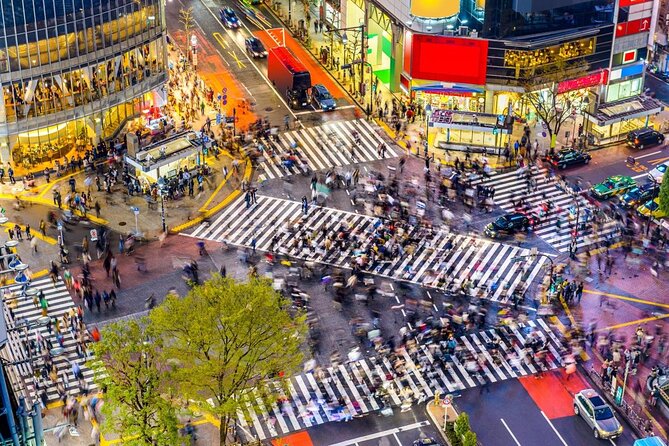
The first stop is Shibuya Scramble Crossing, the huge intersection where streams of people cross from every direction. The tour information says as many as 3,000 people may cross at once, though the exact crowd changes by time and day.
You get about an hour at this opening stop. That does not mean you spend an hour standing in the middle of the crossing. It gives the guide time to gather the group, explain the meeting point, take photos, and set the scene for the evening.
This is a good beginning because Shibuya Crossing is easy to recognize but not always easy to use as a meeting point. The actual start is at Mizuho Bank Shibuya Branch, at 1-chōme-24-16 Shibuya, rather than simply somewhere near the crossing. One person who was new to Tokyo advised allowing an extra 20 minutes to find the spot. That is sound advice, especially if you are arriving by train and still learning the station’s exits.
If you arrive late, contact with the guide may help. A guide named Ken contacted one late arrival and directed that person to the first stop, while another guide helped a participant who was delayed by traffic. Do not count on this as a guarantee, but save the tour contact details before leaving your hotel.
The opening walk is also your first test of the group’s pace. Shibuya is crowded, and you need to stay alert at crossings and station entrances. Wear shoes you can walk in, and keep your phone charged for messages and maps.
Miyashita Park gives the walk some breathing room
From the intense movement around the crossing, the route heads to Miyashita Park. This is a green public space in the middle of Shibuya, with open areas, benches, a playground, and space for events and gatherings.
The contrast is useful. You move from a famous urban spectacle to a calmer place where the guide can talk and the group can settle in. The park is not the main reason to book the experience, but it gives the evening a better rhythm than rushing straight from one bar to another.
The schedule allows roughly an hour here. The supplied details do not promise a particular event or activity, so think of Miyashita Park as a walking and orientation stop rather than a ticketed attraction. Your guide may explain the area, take photos, and lead the group toward the evening’s drinking venues.
This is also a practical point for getting acquainted with the people in your group. Several of the strongest experiences came from mixed groups of solo visitors, couples, and friends from different countries. A small group can quickly become a dinner party, but that depends on how willing everyone is to talk.
The park itself can be busy, and the evening remains a walking tour. If you want a seated, quiet food experience from the start, this may not be your ideal format. If you like a little movement and a gradual build toward the nightlife, the stop makes sense.
Center-gai brings you into the real nightlife route
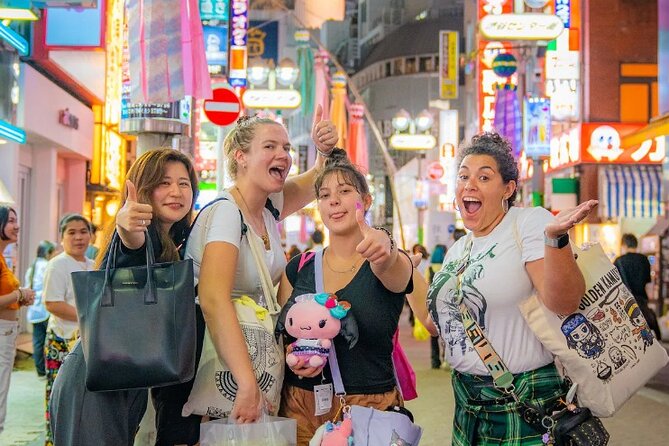
The final area is Shibuya Center-gai, a dense entertainment district filled with restaurants, bars, and late-night places. The tour ends at a bar in this area, at 21 Udagawachō, Shibuya.
This is where the experience becomes most useful. You are no longer just seeing Shibuya’s famous face. You are being led into the kind of local drinking setting that can be hard to locate on a first visit, particularly when signs are in Japanese and many bars are tucked above street level or down narrow lanes.
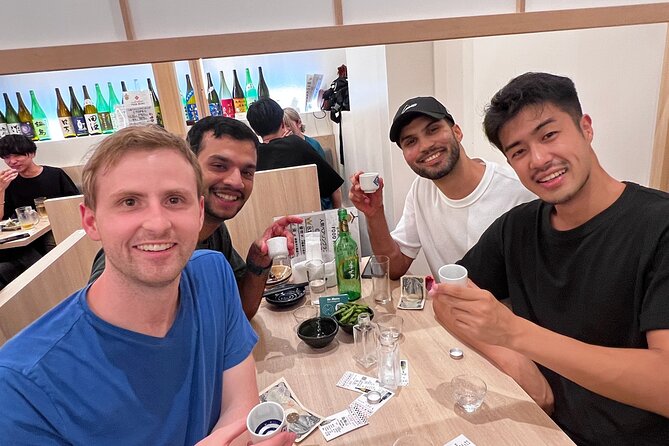
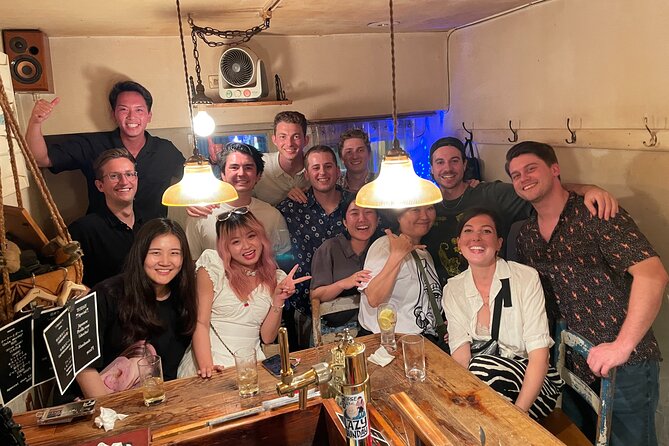
The route can vary with the guide and the night. Common elements described for the tour include an izakaya with small dishes, a sake bar, and a karaoke bar. One group began at a local izakaya, moved to a small sake bar for an extensive tasting, and finished with karaoke. Another group enjoyed food, drinks, and singing at the final stop.
Do not treat those details as a fixed menu. The official information promises a bar and izakaya crawl, but it does not guarantee a specific restaurant, number of sake samples, or karaoke session every time. That flexibility is part of the appeal, though it also means the experience may differ from one date to another.
Izakaya food is about sharing, not a full dinner
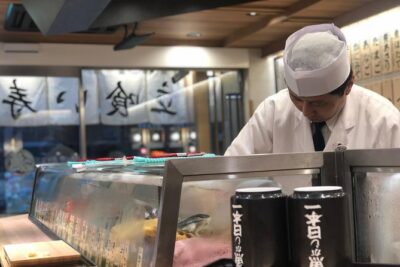
An izakaya is a Japanese drinking establishment where food is ordered in smaller portions for the table. That format suits a group crawl. You can try several dishes without committing to one large meal, and your guide can help explain what to order.
Food is not included in the $39.79 price. You pay for anything you eat and drink along the way. One useful piece of advice is to have a light meal before meeting the group, especially if you want to save room for several small dishes and drinks. Do not arrive stuffed, but do not rely on the crawl as a prepaid dinner.
The food can be one of the most enjoyable parts because the setting is informal. You may sit with people you met only that evening and pass dishes around while the guide translates or offers suggestions. At the same time, eating in a noisy bar can make long explanations difficult to follow.
That is the main balance here. You get a chance to try Japanese drinking culture in context, but this is not a carefully staged food tour with a guaranteed tasting list. If you need exact dishes, dietary planning, or a quiet explanation of every ingredient, ask the provider before booking.
A few more Tokyo tours and experiences worth a look

Sake tasting adds the clearest cultural angle
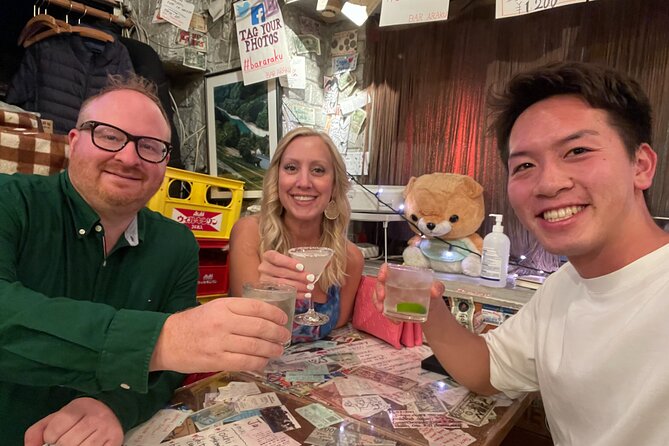
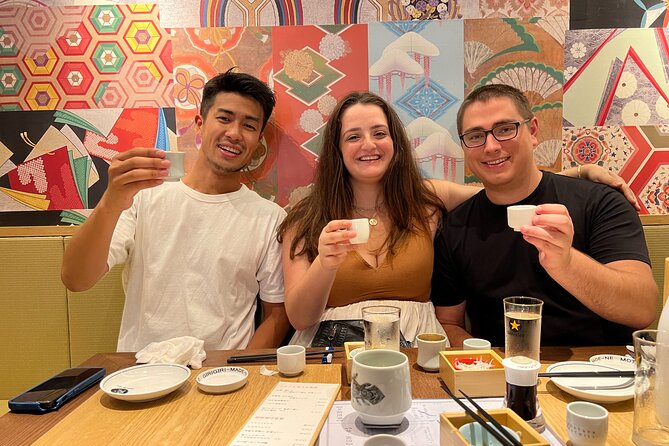
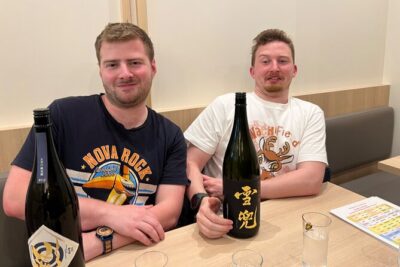
The sake portion gives the crawl more purpose than a standard pub night. Some routes include a small sake bar where you can taste a wide range of sake and learn about different flavors and origins.
One group sampled around 20 sakes at its stop. That number should not be treated as a promise, but it shows how varied the tasting can be. For many people, this is the most distinctive part of the evening because sake can seem mysterious when you only see bottles on a restaurant menu.
Guides such as Riku and Yasu received special praise for explaining the drinks and making recommendations. A good guide can help you notice the difference between lighter and fuller styles, or simply point you toward something you might enjoy. The value is not just in the liquid itself. It is in having someone connect the drink to the setting and local habits.
Still, the guide may be speaking in a crowded room. One participant found the explanation hard to hear and felt the tour lacked enough information about the sake. If the group is large or the bar is loud, the tasting may feel more like social drinking than a structured class.
Pace yourself. The evening can include several venues, and your personal spending rises with every order. You do not need to match the group round for round to enjoy the night.
Karaoke is the likely crowd-pleaser
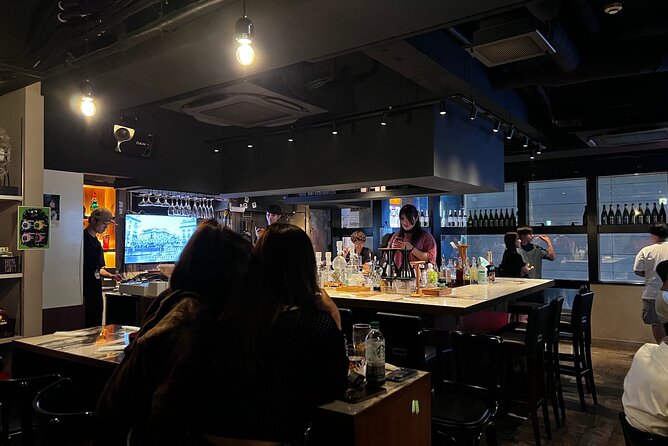
Karaoke appears often in the strongest accounts of this tour. Several guides, including Ken, Riku, Sora, Satumi, and Momoko, have led groups to karaoke bars at the end of the evening.
This is a very Japanese nightlife experience, especially when you share a private room or sing with new friends. You do not need to be a good singer. The appeal is the group energy, the translation help if locals are involved, and the chance to do something you might not attempt alone.
Some groups used an all-you-can-drink karaoke option and sang until the evening ended. One group nearly missed the last train because the night was going so well. That makes the final stop memorable, but it also gives you a practical warning: check your return route before the tour begins.
Karaoke is not listed as a guaranteed inclusion, so ask the provider if it is a must-have for your date. If it does happen, expect the atmosphere to be informal and playful rather than polished. Guides who join in, such as Riku, can help shy guests take part, but nobody should feel forced to sing.
The guide matters more than the route
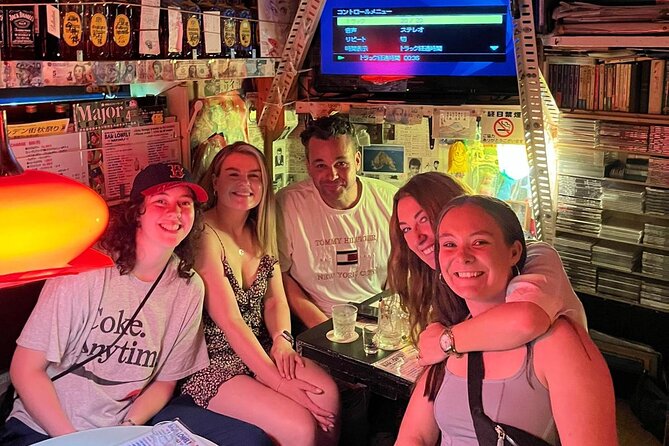
The route is useful, but the guide controls the tone. Kota is repeatedly praised for high energy and travel advice. Ken is described as personable, generous, and strong in English. Riku is praised for sake explanations and making sure everyone joins in. Sora is noted for organization and keeping the group moving.
Other guides, including Momo, Momoko, Aki, Satumi, Yasu, Yoshi, and Miyabi, are also described as friendly and helpful. Their strengths range from taking photos to translating, suggesting food and drinks, and introducing the group to local places.
That range tells you what to expect. This is not a single-host product where every departure feels identical. Your guide may be a lively social leader, a calm local companion, or someone better at getting the group from place to place than giving long explanations.
The best approach is to decide what you want. If you want conversation, new friends, and help ordering, the tour has a lot to offer. If you want detailed history at every stop, the noisy bar setting may disappoint.
What $39.79 really buys you
The price is $39.79 per person. It includes an English-speaking guide, the walking tour, admission fees for each venue, and photos taken during the evening. Food and drinks are extra.
That is fair value if you would otherwise spend time searching for suitable bars, worrying about cover charges, and trying to understand how each place works. The admission fees matter because some nightlife venues charge a door fee or seating charge. Paying one fixed amount for the guide and access also makes the first night easier to plan.
Your total evening cost will be higher than the advertised price. You may buy food at the izakaya, several drinks, sake, and karaoke. Set a personal budget before you go, and remember that the final stop can tempt you to stay longer.
The tour has a maximum of 16 people, but some departures are much smaller. A group of six created a more personal evening and made it easier to share dishes and talk. A larger group may have more social variety but can be harder to hear and keep together.
The high overall rating, 4.9 from 218 ratings with 97 percent recommending it, points to a consistently strong experience. I would still read that figure alongside the one clear concern: the level of cultural explanation varies. You are paying mainly for local access and a social night, not a formal sake seminar.
Who will enjoy this most
I would recommend the crawl to:
- Solo visitors who want company on their first night out
- Couples who want local nightlife without planning every stop
- Friends who enjoy small dishes, drinks, and karaoke
- Visitors who are curious about Japanese bar customs
- People staying near Shibuya who want to continue the night after 11 p.m.
I would be more cautious if you need a quiet tour, a fixed tasting menu, or a complete dinner included in the price. It also may not suit anyone who dislikes group activities or wants to choose every bar independently.
The tour is near public transportation, and most people can participate. You still need to walk through crowded streets for about three hours, so comfortable footwear and a charged phone are sensible.
Cancellation is flexible if you act early. You can receive a full refund by canceling at least 24 hours before the 8 p.m. start time. Changes or cancellations made inside that window are not accepted for a refund.
Should you book the Shibuya crawl?
Book it if you want a friendly introduction to Tokyo nightlife, especially if you are traveling alone or arriving in Shibuya without a plan. The strongest reasons are the small local bars, the chance to try sake in context, and the easy social setting that often leads to karaoke.
Think twice if you expect every guide to give a detailed explanation at every stop, or if the extra spending on food and drinks will make you uneasy. For most visitors, the $39.79 fee is a sensible way to get your bearings, meet people, and reach places you might not find on your own. Just arrive early, keep your expectations flexible, and save some energy for Center-gai.
FAQ
How long does the Shibuya bar and izakaya crawl last?
The experience lasts approximately three hours.
What time does the tour start?
The tour starts at 8:00 p.m.
Where is the meeting point?
The meeting point is Mizuho Bank Shibuya Branch, 1-chōme-24-16 Shibuya, Tokyo 150-0002, Japan.
Where does the tour finish?
The crawl finishes at Shibuya Center-gai, 21 Udagawachō, Shibuya, Tokyo 150-0042, Japan.
Are food and drinks included?
No. Food and drinks are extra. The price includes the English-speaking guide, walking tour, venue admission fees, and photos taken during the tour.
Is karaoke guaranteed?
Karaoke is not listed as a guaranteed inclusion. Several routes described for the experience finished at a karaoke bar, but the specific stops can vary.
How many people can join the tour?
The maximum group size is 16 people. Some departures may be smaller.
Can I cancel for a full refund?
Yes. You must cancel at least 24 hours before the experience start time for a full refund. Cancellations or changes made less than 24 hours before the start are not accepted for a refund.
More Bar Hopping & Izakaya Tours in Tokyo
More Shibuya Tours in Tokyo

More tours in Tokyo we've reviewed










Shibuya Tours, compared.
 ★ 5.0Official Street Go-Kart in ShibuyaFrom $76
 ★ 4.9Tokyo: Street Kart Experience in ShibuyaFrom $741 hour
 ★ 5.0Shibuya Meltdown Nightlife Tour: All-You-Can-Drink Bar HoppingFrom $106
 ★ 5.0Shibuya Official Street Go-Kart in Shibuya AnnexFrom $69
 ★ 5.0Tokyo: Shibuya Food Tour (13 dishes and 4 Eateries)From $77
 ★ 5.0Best of Shibuya Food TourFrom $217