
Reviewed · MORNING
TOKYO , No1 Yokozuna Stable Morning Practice in Ryogoku
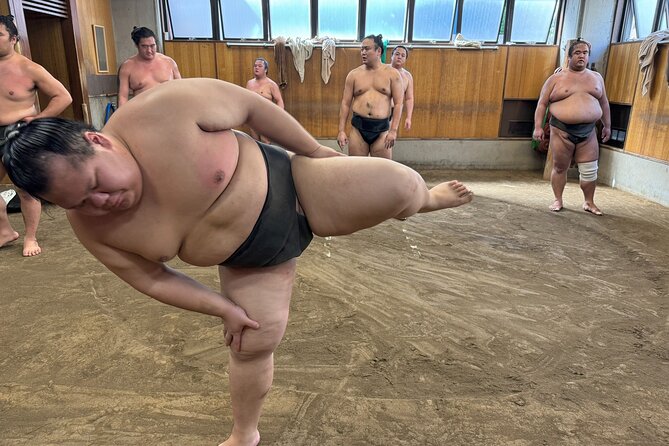
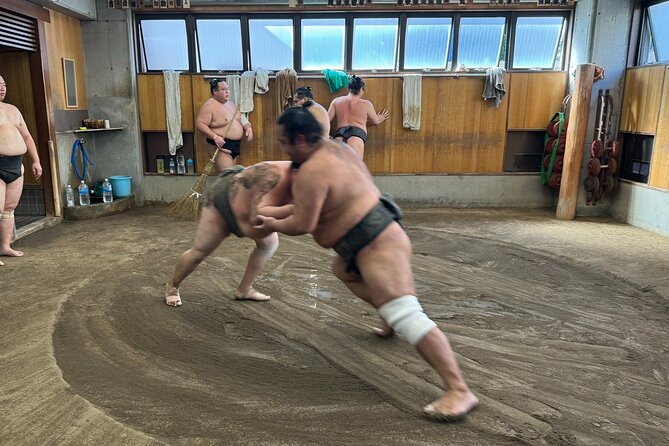
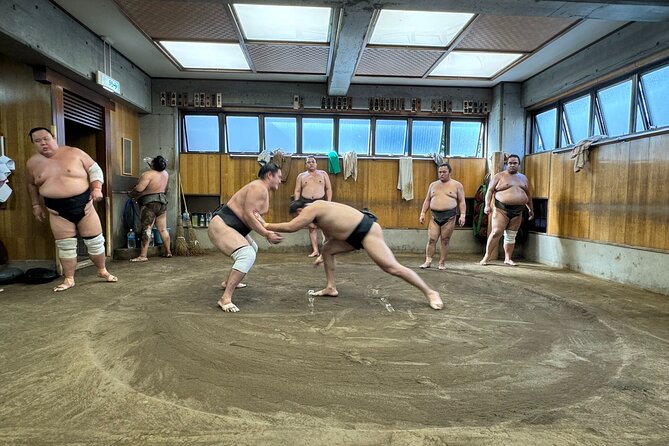
The best part comes first: you sit close to a real sumo practice session inside a stable led by a Yokozuna, or Grand Champion. The wrestlers may be only a few feet away, and the training is not staged for tourists. You watch a serious morning ritual shaped by Shinto tradition, so silence and respect matter.
I like two things here. First, the stable visit gives you access to a side of sumo that a tournament ticket cannot provide. Second, the walk through Ryogoku connects the practice to shrines, monuments, the national arena, Hokusai, and local food. The main drawback is the early start and the variable second half, since the Hokusai Museum and Sumo Museum may receive only brief stops, or no stop at all if time runs short.
In This Review
- Key points to know before you book
- Why the morning stable visit matters
- Meeting at 7:45 a.m. in Ryogoku
- How to behave inside the sumo stable
- Nominosukune Shrine and the religious side of sumo
- Walking past Kokugikan, the heart of tournament sumo
- Hokusai in his Sumida home district
- Edo-style food at Ryogoku Edo Noren
- Is $110 a fair price?
- Who will enjoy this morning most?
- Booking, cancellation, and small practical details
- Should you book this sumo morning practice?
- FAQ
- Where does the tour start?
- How long does the experience last?
- What is included in the price?
- What costs extra?
- Can I take photographs with the wrestlers?
- Is the Sumo Museum always included?
- What is the cancellation policy?
Key points to know before you book
- A Yokozuna-led stable: Only 72 Yokozuna have emerged in more than 1,500 years of sumo history, and one now leads this stable.
- Very close viewing: You may be seated just a few feet from the wrestlers during morning training.
- A small group: The maximum is 14 people, which helps the guide keep the visit orderly and quiet.
- Ryogoku beyond the ring: Nominosukune Shrine, Yokozuna monuments, Kokugikan, the Sumo Museum, Hokusai, and Edo Noren fill out the morning.
- An early, fixed meeting time: You meet at 7:45 a.m. outside the 7-Eleven by JR Ryogoku Station’s West Exit.
- Extra costs are limited but real: The stable and a small gift are included, while transport, food, beverages, and the ¥400 Hokusai Museum admission are not.
Why the morning stable visit matters
Sumo is easy to see as a tournament spectacle: colorful aprons, formal ring ceremonies, and two huge athletes colliding in seconds. Morning practice shows the less polished side of the sport. You see repetition, discipline, and the quiet rules that shape daily life inside a stable.
This is especially unusual because the stable is led by a Yokozuna. In sumo, that title belongs to the top rank, and only 72 men have reached it across more than 1,500 years. You are not simply looking at athletes preparing for a match. You are entering a place connected to the highest level of the sport.
The experience is also close. One account describes the wrestlers as just a couple of feet away, which gives you a far better view than you usually get from arena seating. That closeness comes with a clear responsibility: watch quietly, follow the guide’s instructions, and do not treat the practice room like a photo shoot.
Photography may be possible if you are lucky, including a photo with a wrestler. It is not guaranteed, so I would treat a picture as a bonus rather than the reason to book. The stable practice itself is the main event.
A few more Tokyo tours and experiences worth a look

Meeting at 7:45 a.m. in Ryogoku
The tour begins at JR Ryogoku Station. After leaving through the West Exit, look for the 7-Eleven at 1-chōme-3-20 Yokoami, Sumida City, and meet the guide outside at 7:45 a.m.
This is not a casual arrival time. The group heads to the stable after a short introduction, and punctuality is specifically required. Build in enough time to reach Ryogoku Station, find the West Exit, and locate the meeting point without rushing.
That early hour is part of the value. Morning practice is when the stable is active, and the timing lets you see the wrestlers in their normal training period. The tradeoff is obvious: this is a poor fit if you prefer slow mornings or plan a late night in Tokyo.
The tour lasts about two and a half hours. Transportation to the meeting point is not included, but the activity is near public transport and ends back at the same meeting point. That makes it easy to continue sightseeing in eastern Tokyo afterward.
How to behave inside the sumo stable
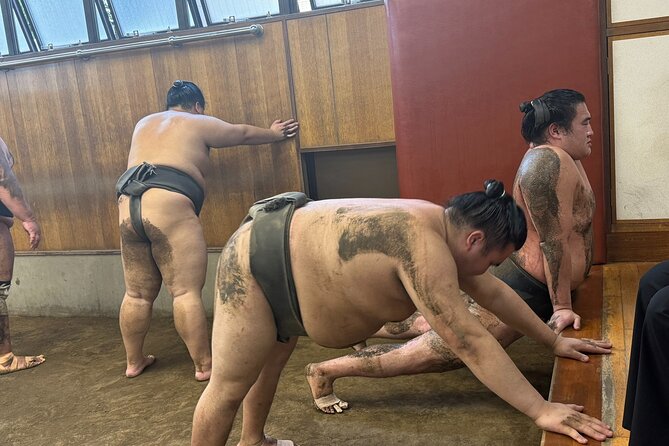
The stable is not a theater. There may be no running commentary during every moment of practice, and the group must keep still and quiet while the wrestlers work.
Your guide will give a short introduction before the visit and provide context along the way. Guides named Rothko and Ryoko have been praised for making the experience easier to understand, with Ryoko noted for explaining the background and history as the morning continued.
One useful point is that explanations may vary by guide and by the needs of the group. One guide used laminated information sheets to explain what was happening, which can be helpful when you are unfamiliar with Japanese terms, training customs, or the order of events. The important thing is that the stable visit remains the focus, not a running lecture.
You should also expect the practice itself to be unpredictable. The supplied plan allows about 90 minutes at the stable, but the exact training you see, the chance for photographs, and the timing of the departure can change. That uncertainty is normal for an authentic practice session, and it is one reason this experience feels different from a fixed museum tour.
Nominosukune Shrine and the religious side of sumo
After the stable, the walk turns to Nominosukune Shrine. The shrine is dedicated to Nominosukune, known here as the god of sumo, and its grounds contain stone monuments honoring past Yokozuna.
This stop gives useful context. Sumo is not only a contest between two athletes. Its ceremonies and customs are tied to Shinto traditions, and the shrine helps you see how the sport connects to worship, honor, and public memory.
Newly promoted Yokozuna traditionally perform their first ring-entering ceremony at the shrine. That detail makes the visit more than a quick photo stop. It links the present-day champion who leads the stable with the long line of grand champions represented by the monuments.
The shrine visit is listed at about 10 minutes, so expect a compact introduction rather than a long religious tour. I like the stop because it gives the morning a sense of place, but you should not book this activity expecting extended time at each landmark.
Walking past Kokugikan, the heart of tournament sumo
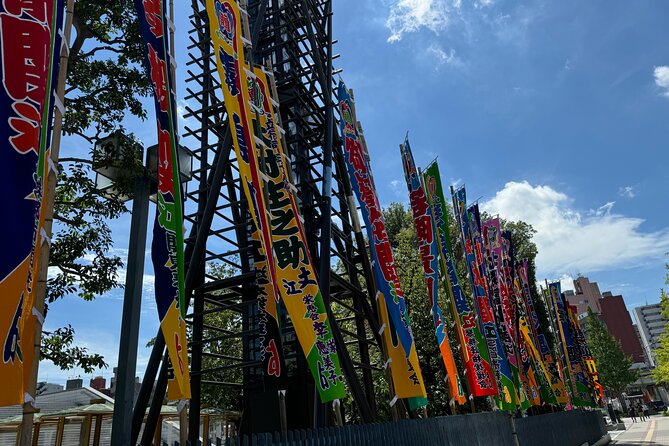
The next landmark is Ryogoku Kokugikan, the national sumo arena. Grand Sumo Tournaments are held there three times a year, and simply walking past the building lets you connect the private practice you just watched with sumo’s public stage.
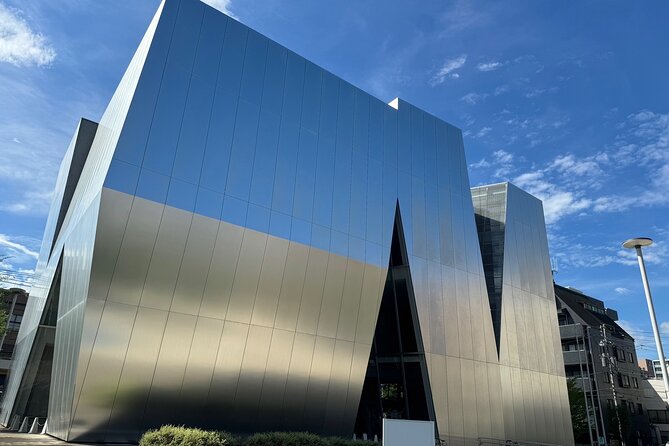
The Sumo Museum is also nearby. Admission is free, but opening conditions matter: it is closed on weekends and holidays. The plan allows a possible 10-minute visit if time permits, so you may get a quick look rather than a full museum session.
That flexibility is worth understanding before you book. The arena and museum are useful additions, but they are not the reason to choose this tour over other Ryogoku walks. The stable visit is fixed at the center. The later stops depend on the day, available time, and museum opening schedule.
If you want a longer look at sumo objects and tournament history, plan a separate visit when the Sumo Museum is open. Here, the museum works best as a short extension of the morning’s theme.


Hokusai in his Sumida home district
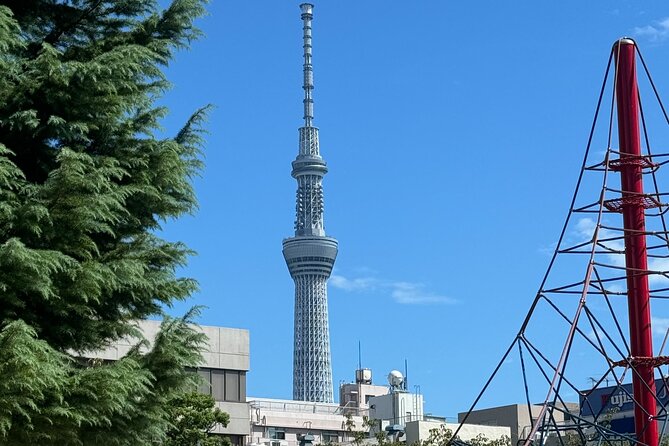
The Sumida Hokusai Museum changes the mood from physical training to Edo-period art. Katsushika Hokusai was born in what is now the Kamezawa area of Sumida Ward in 1760 and spent almost all of his roughly 90 years in the district.
That local connection gives the museum a clear purpose on this route. You are not stopping at a random art gallery. You are seeing work by an artist whose life was tied to the same part of Tokyo where sumo still shapes the streets.
The listed visit is only about five minutes, and the ¥400 admission fee is not included. That is enough for a quick orientation if the group is moving on, but not enough for a careful look at the collection. I would consider the museum a welcome extra, not a complete Hokusai visit.
If Hokusai is a major reason for your Tokyo plans, return on your own with more time. The short stop works well for people who want a taste of Edo art without making the morning primarily an art museum outing.
Edo-style food at Ryogoku Edo Noren
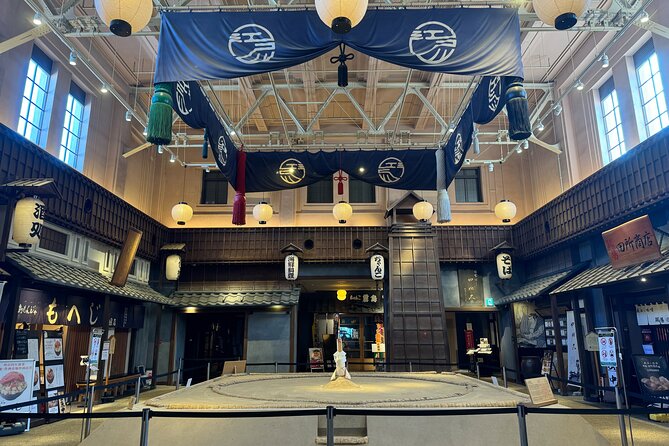
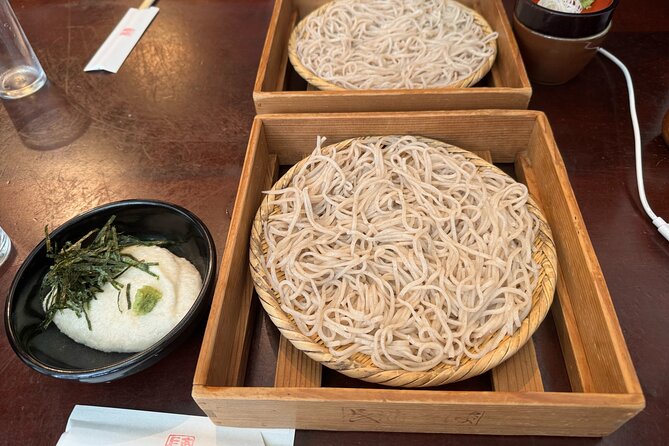
The final planned stop is Ryogoku Edo Noren, located in the old Ryogoku Station building. Its open-ceiling design recalls an Edo-period setting, and it brings together food and culture in a single place.
The stop is about 10 minutes, and lunch and drinks are not included. That means you should not assume a meal is part of the tour price. You may have a chance to look around and choose Edo-style food, but the supplied schedule does not promise a sit-down lunch.
This is a practical place to finish because you can eat after the guided portion ends. The activity returns to the starting point, so you can decide for yourself how long to stay and what to order.
Is $110 a fair price?
At $110 per person, this is not a cheap neighborhood stroll. The value rests almost entirely on access to the sumo stable. Admission to the stable is included, along with a small gift, and that is the part of the morning you would have difficulty arranging independently.
The small maximum group of 14 also matters. A large crowd would be a poor match for a quiet training room, while a smaller group makes it easier to listen, keep out of the wrestlers’ way, and maintain a respectful atmosphere. The guide’s role is important here, especially if this is your first contact with sumo.
The price includes more than the stable, but some additions are brief. The shrine and Kokugikan walk are free. The Sumo Museum is free when open, and the Hokusai Museum costs ¥400 extra. You also pay your own transport, food, beverages, and tips.
I see this as good value for a sumo fan, a first-time visitor who wants cultural context, or anyone who values access over a long list of included attractions. It is less attractive if you mainly want museums, a full lunch, or a slow walking tour. In that case, you may spend less by visiting Ryogoku independently and using the saved money for a tournament ticket or a longer museum visit.
Who will enjoy this morning most?
You will get the most from this activity if you are curious about how sumo works away from the tournament crowd. The close view, strict quiet, and connection to a Yokozuna-led stable make it especially useful for people who want something more personal than arena seating.
It also suits visitors who enjoy a guide-led introduction to a neighborhood. Rothko and Ryoko are two guide names associated with this experience, and the strongest praise centers on the way the guides add context and history without taking attention away from the practice.
Families and most able visitors can participate, according to the supplied information, but the early start and quiet setting may not suit every child. The group maximum is 14, and a mobile ticket makes entry simple once your booking is confirmed.
You should be comfortable with a morning that has some uncertainty. The training is real, photography is not promised, the museum stops may be short, and the Sumo Museum may be closed on weekends and holidays. Those limits are manageable if you place the stable ahead of the add-ons.
Booking, cancellation, and small practical details
Confirmation is sent within 48 hours of booking, subject to availability. The activity is often reserved about 18 days ahead, so I would not leave it until the last day of a short Tokyo visit, especially if your dates are fixed.
The August and September plans are currently available. Check the date carefully, since the stable’s schedule is central to the experience and the activity requires a minimum number of participants.
You can cancel for a full refund up to 24 hours before the local start time. Changes or cancellations inside that 24-hour window are not accepted and are not refunded. If the minimum number is not reached and the operator cancels, you will be offered another date or experience, or a full refund.
The tour is provided by Sakura Concierge. Tips are not included, though you can leave one for excellent service. Your tour ends at Ryogoku Station, so you can continue to the riverfront, other parts of Sumida, or your next Tokyo stop without arranging a separate return transfer.
Should you book this sumo morning practice?
Book it if seeing real sumo training up close is high on your Tokyo list. The combination of a Yokozuna-led stable, only 14 possible participants, and a walk through sumo’s home district gives the morning a purpose that a standard sightseeing bus cannot match.
Skip it if you dislike early starts, need a guaranteed photo opportunity, or want long visits at the Hokusai and Sumo Museums. For the right visitor, the $110 price pays for access to the stable and careful cultural guidance. The later stops are useful, but the wrestlers training only a few feet away are the reason to go.
FAQ
Where does the tour start?
Meet at 7:45 a.m. in front of the 7-Eleven after exiting the West Exit of JR Ryogoku Station. The address is 1-chōme-3-20 Yokoami, Sumida City, Tokyo 130-0015, Japan.
How long does the experience last?
The full activity lasts about two hours and 30 minutes. The morning practice portion is scheduled for about 90 minutes.
What is included in the price?
The price includes admission to the sumo stable and a small gift from the stable.
What costs extra?
You pay separately for transportation, lunch, beverages, personal expenses, gratuities, and admission to the Sumida Hokusai Museum. The Hokusai Museum admission is ¥400.
Can I take photographs with the wrestlers?
You may have the chance to take photographs with a wrestler if you are lucky, but this is not guaranteed. You must watch the practice quietly and respectfully.
Is the Sumo Museum always included?
The Sumo Museum may be visited if there is time. It is free, but it is closed on weekends and holidays, so a visit is not guaranteed.
What is the cancellation policy?
You can cancel at least 24 hours before the local start time for a full refund. Cancellations or changes made less than 24 hours before the start time are not accepted or refunded.
More Morning in Tokyo
More tours in Tokyo we've reviewed










Morning, compared.
 ★ 4.8Tokyo: Sumo Morning Practice Viewing TourFrom $8190 minutes - 2 hours
 ★ 4.4Tokyo: Sumo Morning Training VisitFrom $771 hour
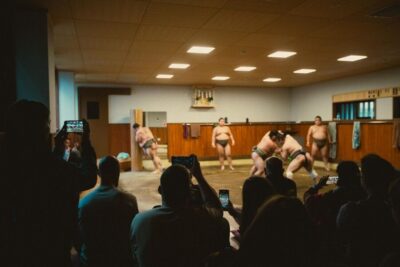 ★ 4.8Tokyo: Sumo Morning Practice Tour at Sumida CityFrom $1162 hours
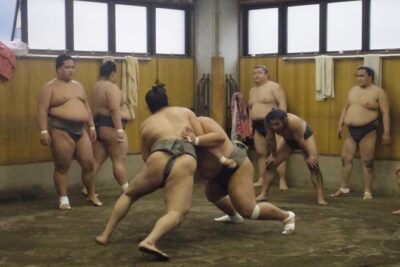 ★ 5.0Tokyo Sumo Morning Practice Tour at StableFrom $83
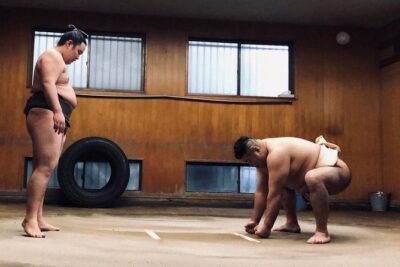 ★ 4.5Tokyo Ryogoku Sumo Morning Practice + Photo Shoot with WrestlersFrom $98
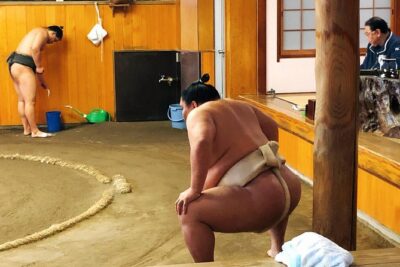 ★ 4.0Watch Sumo Morning Practice at Stable in TokyoFrom $95