
Reviewed · NIKKO DAY TRIPS
Tokyo: Nikko Trip Toshogu Shrine Kegon Falls & Lake Chuzenji
Nikkō packs an astonishing amount into one day: a lavish Tokugawa mausoleum, a 97-meter waterfall, a mountain lake, and sacred cedar forests. This private trip gives you a guide and round-trip transport from Tokyo, so you can focus on the views instead of working out the connections.
I like the mix of culture and nature, especially the contrast between Toshogu’s detailed gates and carvings and the cool spray at Kegon Falls. I also like the small-group format, with room for up to six people and guides such as Anees, who can help with site context and lunch suggestions.
The main drawback is the length of the day. Eight to nine hours from Tokyo leaves little slack, and the route includes plenty of walking, stairs, and mountain roads. The optional Akechidaira Ropeway also costs extra, so check the final price before you commit.
In This Review
- Key things to know before booking
- Why Nikkō makes a strong day trip from Tokyo
- Toshogu Shrine and the Tokugawa story
- Shinkyo Bridge, a short but worthwhile stop
- Lunch with room for local advice
- Kegon Falls and the lower viewing deck
- Lake Chuzenji below Mount Nantai
- Should you pay extra for the Akechidaira Ropeway?
- Transport, timing, and physical effort
- Who will get the most from this Nikkō day trip?
- Should you book this Nikkō tour?
- FAQ
- How long does the Nikkō tour last?
- What is included in the price?
- Is lunch included?
- Is the Akechidaira Ropeway included?
- How many people can join the private group?
- Which guide languages are available?
- What should I bring and wear?
Key things to know before booking
- Toshogu Shrine delivers the cultural centerpiece: See the ornate Yomeimon Gate, the Three Wise Monkeys carving, and Tokugawa Ieyasu’s mausoleum.
- Kegon Falls is the visual high point: An elevator takes you to a lower viewing area near the base of the 97-meter cascade.
- Lake Chuzenji adds a quiet mountain pause: The lake sits below Mount Nantai and is especially appealing during autumn foliage.
- The tour is private for up to six people: You get transport and a live guide without joining a large coach group.
- The Akechidaira Ropeway is optional: It offers broad views of the mountains, lake, and waterfall, but requires an extra fee.
- Plan for a full walking day: Wear comfortable shoes, carry water, and dress for the forecast.
Why Nikkō makes a strong day trip from Tokyo
Nikkō is far enough from Tokyo to feel like a change of world. The city’s shrines and temples sit among old cedar trees, while the road higher into the mountains reaches Kegon Falls and Lake Chuzenji.
That variety is the reason I find this route more satisfying than a shrine-only outing. You get Japan’s Edo-period story at Toshogu, spiritual landmarks such as Shinkyo Bridge, and open mountain scenery later in the day.
The private format matters here. Nikkō has several major stops, and a guide can explain why the shrine looks so different from the quieter temple paths around it. You also avoid the mental work of arranging round-trip transport from Tokyo, which can be valuable when your available time in Japan is limited.
The tradeoff is simple: this is a long day. You are covering Tokyo, central Nikkō, the waterfall area, and the lake before returning to Tokyo. I would choose this tour for a first visit when you want the major sights in one go, not for a slow, unhurried exploration of every corner of Nikkō.
A few more Tokyo tours and experiences worth a look
Toshogu Shrine and the Tokugawa story
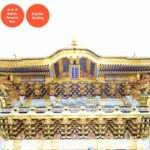
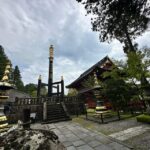
Toshogu is the cultural heart of the trip. It is the mausoleum of Tokugawa Ieyasu, the founder of the shogunate that ruled Japan during the Edo period. The shrine complex is known for its lavish decoration, with carved animals, painted details, ornate gates, and layered religious buildings.
Your guide can help make sense of the visual overload. Without context, it is easy to spend the visit simply pointing at bright colors and intricate woodwork. With an explanation of the people and beliefs connected to the site, the shrine becomes more than a collection of beautiful buildings.
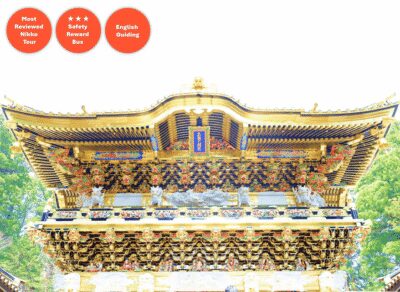
Look for the Three Wise Monkeys carving, one of Toshogu’s most recognizable details. The monkeys represent seeing no evil, hearing no evil, and speaking no evil. You will also see Yomeimon Gate, often called the Gate of the Sun, where the decoration rewards a slow look.
The stated visit lasts about one hour. That is enough for a focused introduction, but it is not a leisurely study of every hall and path. If you love Japanese religious architecture, you may wish for more time. Still, the guide-led visit helps you use the hour well, especially if this is your first Japanese shrine complex.
Photography is restricted in some areas, and flash photography is not allowed. Follow the guide’s instructions rather than treating every carved surface as a photo opportunity. The site is sacred, not just scenic.
Shinkyo Bridge, a short but worthwhile stop
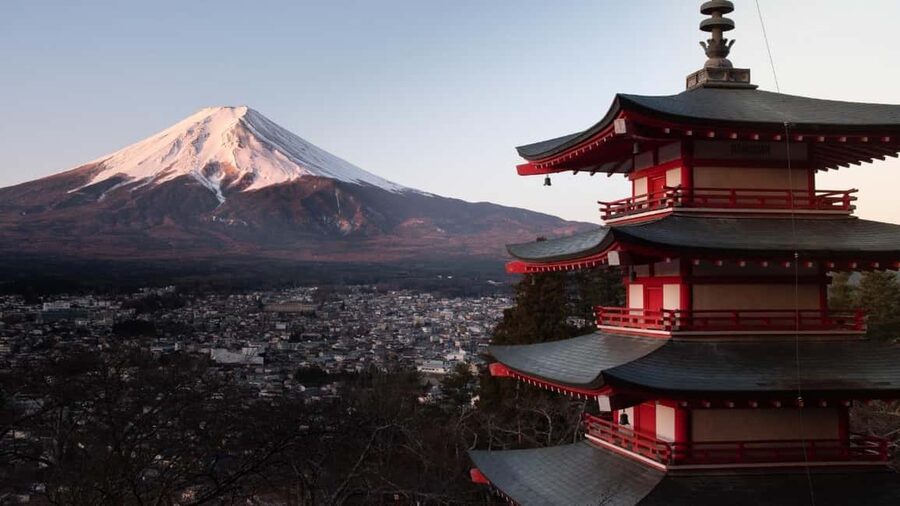
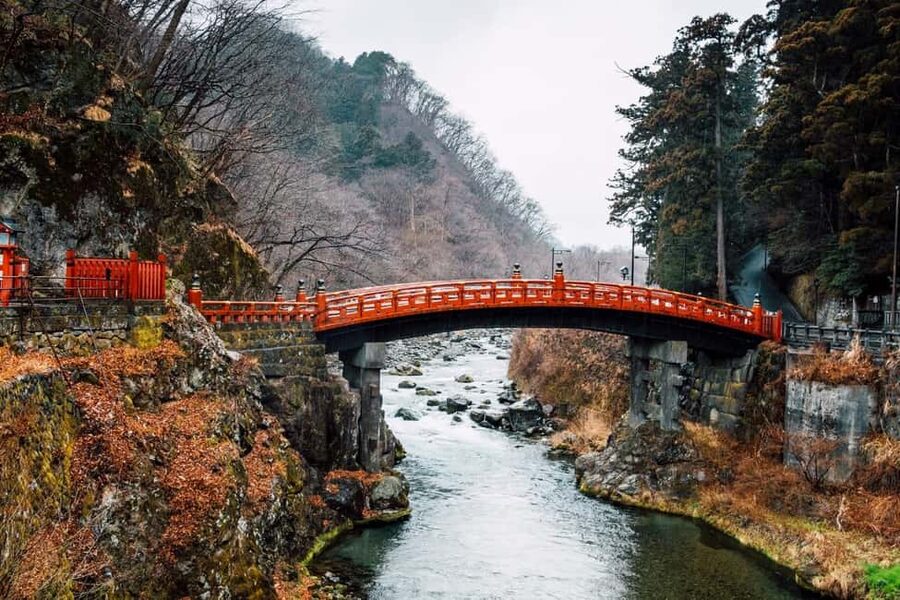
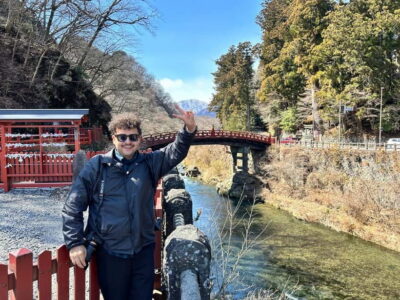
Shinkyo Bridge is a bright vermilion arch crossing the Daiya River. It is one of Nikkō’s most recognizable views and a useful transition between the city’s religious sights and its mountain scenery.
The stop lasts about 40 minutes, including walking, photographs, and views along the river. That gives you time to see the bridge properly without turning it into a rushed roadside snapshot.
I like this part of the route because it is visually simple after the intense detail of Toshogu. The red bridge, moving water, and wooded slopes create a calmer scene. You can walk and take photographs, while your guide explains its place in Nikkō’s spiritual setting.
The bridge itself is a photo stop rather than a long activity. If you want extended time beside the river, this schedule may feel brief. You might also take a peaceful walk along the Daiya River, where rows of Jizo statues line the route. These small Buddhist figures are linked with protection and remembrance, and local tradition says their number seems to change when counted.
That detail gives the river walk a touch of mystery, but keep your expectations practical. The experience does not promise a long dedicated hike. Think of it as an optional quiet moment if the timing and route allow.
Lunch with room for local advice
Lunch is scheduled for about one hour at a local restaurant, but the meal is not included. You will need to pay for food and drinks yourself.
That arrangement gives you some freedom, though the exact restaurant choice can affect the day. One useful detail from the guide service is the lunch help offered by Anees, who recommended a reasonably priced Indian restaurant with homemade-style food. If Anees is your guide, you can ask about that option. If another guide leads your trip, ask what is practical near the route.
This is a good place to be clear about your preferences. The tour is designed around sightseeing, not a fixed culinary program, so lunch may suit you best if you want a simple meal and a chance to sit down. If food is a major reason you travel, you should not book this expecting a food-focused experience.
Kegon Falls and the lower viewing deck
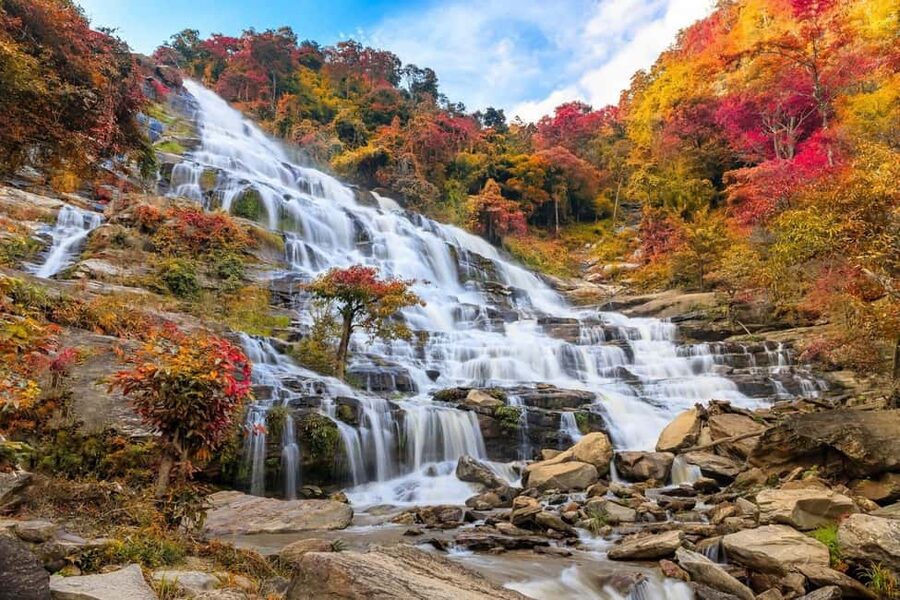
Kegon Falls is the biggest nature stop of the day. The water drops about 97 meters, making it one of Japan’s top three waterfalls. The scale is impressive, especially after the confined detail of Toshogu Shrine.
The waterfall portion is listed at about two hours and 15 minutes, including scenic views along the way. That is the longest stop on the route, and sensibly so. You have time to reach the viewing area, take photographs, and enjoy the setting instead of being hurried straight back to the vehicle.
An elevator takes you down to a lower viewing deck, where you can see the fall from closer to its base. The change in height gives you a stronger sense of the drop, and the mist can be refreshing. Bring a camera, but protect it if the spray is heavy.
The waterfall is likely to be the day’s most dramatic sight. One traveler described it as spectacular, and I can understand why this stop earns that response. The vertical drop is easy to appreciate, even if you are not especially interested in waterfalls.
Weather will shape the experience. Clouds, rain, or low visibility can soften the views, while autumn adds color around the surrounding slopes. Bring a hat, water, sunscreen, and clothing suited to the forecast. Comfortable shoes matter here because the day involves walking between viewing areas and transport points.
The two-hour-plus allocation does not mean you will spend every minute staring at the falling water. It includes the movement through the site and the scenic road. That longer block is useful because mountain attractions can take time to reach and enjoy.
A few more Tokyo tours and experiences worth a look

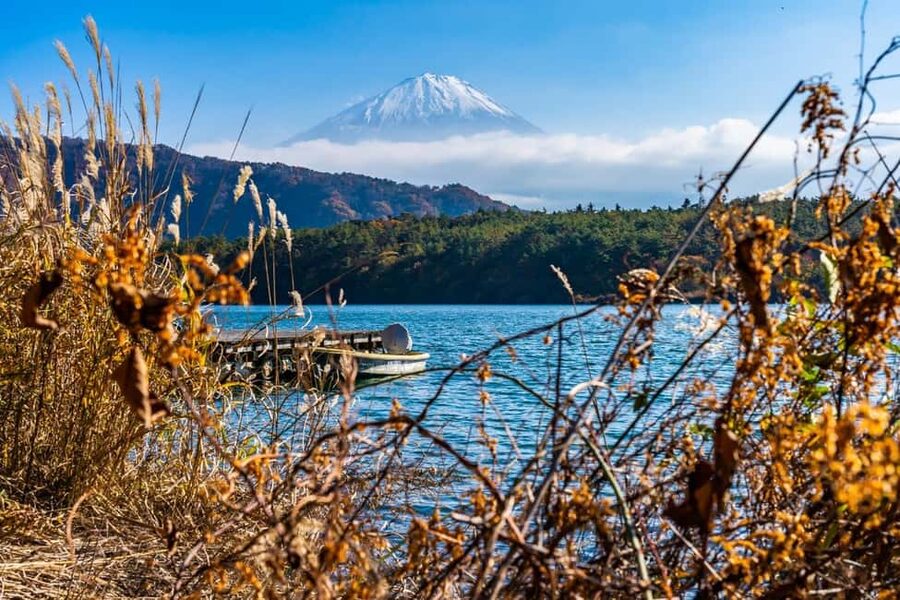
Lake Chuzenji below Mount Nantai
Lake Chuzenji offers a quieter finish to the mountain portion of the trip. It lies at the base of Mount Nantai, and the shore gives you open views after the enclosed shrine grounds and concentrated waterfall stop.
The planned visit lasts about 45 minutes. That is enough for a photo stop and a short look across the water, but it is not enough for a long lakeside walk. I would treat it as a chance to slow down, breathe mountain air, and take in the setting.
Autumn is likely to be the most colorful season here, with foliage adding contrast around the lake. Other seasons can still provide a peaceful view, but the supplied details specifically point to fall as a strong time for photographers and nature lovers.
The lake also helps pace the day. After Toshogu and Kegon Falls, you get a less crowded-feeling scenic pause before the return to Tokyo. Do not expect a boat ride or extended recreation, since neither is part of the stated plan. The value is the view and the change of mood.
Should you pay extra for the Akechidaira Ropeway?
The Akechidaira Ropeway is an optional upgrade, not part of the basic included admission. It offers panoramic views of the Nikkō mountains, Lake Chuzenji, and Kegon Falls.
I would consider the upgrade if clear weather is forecast and broad mountain views matter to you. Seeing the lake and waterfall from above gives you a useful sense of how the individual sights fit together.
I would be more cautious on cloudy or poor-weather days. The ropeway requires an additional fee, and its value depends heavily on visibility. Ask your guide about conditions and timing before paying for it.
The option is also useful for people who want a stronger scenic focus. If Toshogu is your main reason for visiting Nikkō, the basic route may be enough. If you are choosing this day trip for mountain views, the ropeway can add a memorable high point.
Transport, timing, and physical effort
Round-trip transportation from Tokyo is included, which is one of the tour’s clearest practical benefits. Nikkō is not a quick neighborhood outing, and arranging the entire journey independently can take planning. Here, you have a private vehicle and a guide moving the day along.
The group size is capped at six people. That is small enough to make questions easier and keep the day more personal, while still spreading the cost across a group.
At $550 per group, the value depends on how many people join. For six, the cost works out to about $91.67 per person before meals and any ropeway upgrade. For two people, the per-person cost is much higher, but you are paying for private transport, a guide, shrine and attraction admission, and the convenience of a direct day from Tokyo.
The 8 to 9 hour duration is realistic for the number of stops, but it can feel demanding. You will walk at shrine grounds, bridges, viewing areas, and the waterfall site. The tour is not suitable for wheelchair users, pregnant women, or children under five according to the provided restrictions.
You should wear comfortable shoes with reliable soles. Bring water, a hat, sunscreen, and a camera. Dress for changing conditions, since Tokyo and the higher mountain areas may feel different on the same day.
The available guide languages are English, Urdu, Japanese, Hindi, and Punjabi. Anees is a named guide associated with the experience and is described as polite, helpful, and strong at explaining the places visited. Guide quality can shape a packed day, so this is a useful feature for anyone who wants more than a driver and a list of sights.
Who will get the most from this Nikkō day trip?
I would recommend this tour to a first-time Japan visitor who wants a clear introduction to Nikkō without spending a night outside Tokyo. It suits couples, families with older children, friends, and small private groups who value direct transport and a live guide.
It is also a good choice if you want both culture and scenery. Toshogu gives you the history, Shinkyo Bridge supplies a quick symbolic stop, and the waterfall and lake provide the mountain setting.
I would hesitate if you dislike long day trips or prefer to linger. The schedule gives you a solid taste of each major stop, but it cannot provide the slow pace of an overnight stay. I would also think twice if you need step-free access or have difficulty walking for extended periods.
The private format makes the price easier to justify when six people share it. Solo visitors or couples may find the total cost steep, especially after adding lunch and the optional ropeway. Free cancellation up to 24 hours before departure and reserve-now, pay-later terms add flexibility, but they do not change the basic question: are convenience and a private guide worth the premium for you?
Should you book this Nikkō tour?
Book it if you want Nikkō’s major sights in one organized day and you value a private group over the lowest possible price. The best reasons are the strong culture-to-nature mix, the included transport and admissions, and the chance to have a guide such as Anees help with context and lunch.
Skip it if you want a leisurely mountain stay, a food-centered outing, or a route built around long walks. For most first-time visitors with one free day from Tokyo, though, this is a well-shaped introduction to Toshogu, Kegon Falls, and Lake Chuzenji.
FAQ
How long does the Nikkō tour last?
The tour lasts approximately 8 to 9 hours, including transportation from Tokyo and the return journey.
What is included in the price?
The price includes round-trip transportation from Tokyo, an English-speaking guide, and admission to Toshogu Shrine, Shinkyo Bridge, and Kegon Falls.
Is lunch included?
No. Meals and drinks are not included, and lunch is scheduled at a local restaurant for about one hour.
Is the Akechidaira Ropeway included?
No. The ropeway is an optional upgrade and requires an additional fee. It provides views of the Nikkō mountains, Lake Chuzenji, and Kegon Falls.
How many people can join the private group?
The private group can include up to six people.
Which guide languages are available?
Live guide languages include English, Urdu, Japanese, Hindi, and Punjabi.
What should I bring and wear?
Bring a hat, camera, sunscreen, and water. Wear comfortable shoes, check the weather forecast, and dress appropriately for the conditions. Flash photography and smoking are not allowed.
More Temples & Meditation in Tokyo
More Nikko Day Trips in Tokyo
More tours in Tokyo we've reviewed









Nikko Day Trips, compared.
 ★ 4.6Nikko: Kegon Falls, Lake Chuzenji & Toshogu TempleFrom $8911 hours
 ★ 4.5Tokyo: Nikko Toshogu Shrine and Kegon Waterfall TourFrom $8410h 30m
 ★ 5.0Nikko Full-Day Private Tour with Government-Licensed GuideFrom $155
 ★ 4.9From Tokyo: Nikko World Heritage Site Private Full-Day TripFrom $4831 day
 ★ 4.3Nikko: Edo Wonderland Edomura Cultural Theme Park TicketFrom $351 day
 ★ 4.8Tokyo: Nikko World Heritage Private Day Trip Hotel Pick-upFrom $39011 hours - 1 day