
Reviewed · DINNER EXPERIENCES
Tokyo: Japanese Experiece Dinner with Diving Ama Performance
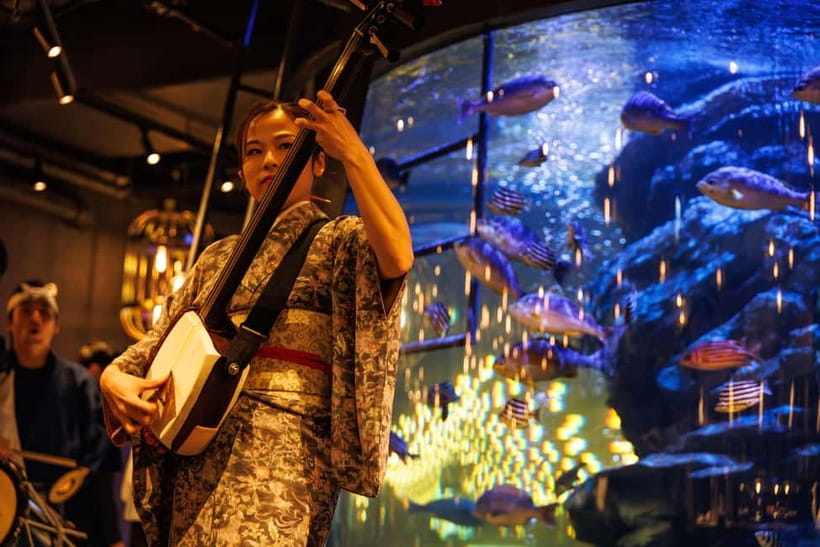
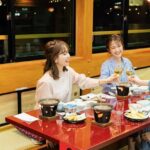
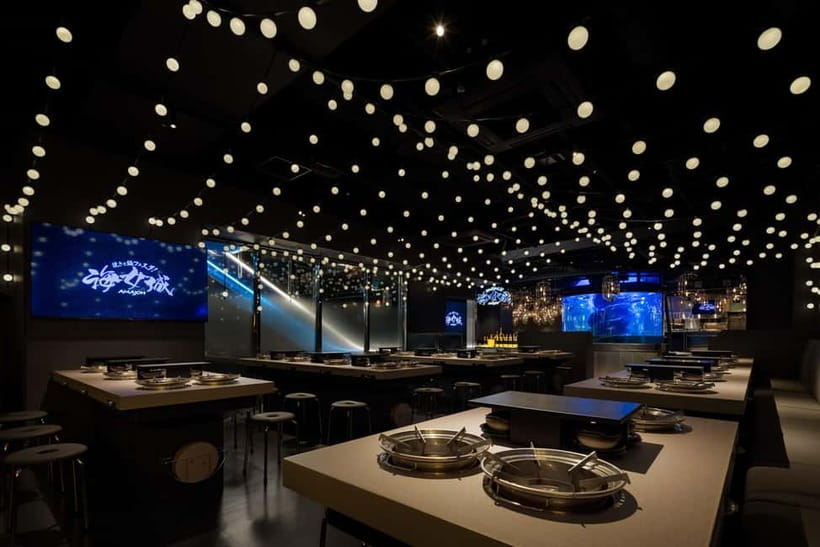
The main event here is an Ama fishing performance staged beside a 20-ton aquarium. You sit close to the water, watch this old Japanese coastal tradition brought indoors, and then settle in for a personal hotpot of seafood or premium black wagyu beef.
I like the unusual setting and the freedom to choose your meal. The aquarium gives dinner a blue-lit, almost theatrical backdrop, while the one-person pots let each diner pick a broth and ingredients. My main caution is the meeting point: the basement entrance can be hard to find, even though it is only a minute from Shimbashi Station.
In This Review
- Key points to know
- An Ama performance beside a 20-ton aquarium
- What happens during the two-hour evening
- Choosing between seafood, wagyu, and hotpot styles
- The aquarium atmosphere, useful but not quiet
- Finding AMAJOH near Shimbashi Station
- Is $88 a fair price?
- Timing, language, and the early start
- Who will enjoy this Tokyo dinner
- My call: book it if the format fits
- FAQ
- How long does the Ama dinner experience last?
- Where is AMAJOH located?
- What is included in the price?
- Are drinks included?
- What meal choices are available?
- Is the activity wheelchair accessible?
- Can I cancel for a full refund?
Key points to know
- A 20-ton aquarium forms the restaurant’s centerpiece, with seating arranged around it for the Ama performance.
- The two-hour experience combines dinner and culture, rather than offering a meal alone.
- You choose your own cooking style, including shabu-shabu, sukiyaki, seafood hotpot, grilled seafood, and wagyu yakiniku.
- Fresh seafood and premium black wagyu give the meal more substance than a standard casual dinner.
- Drinks cost extra and require separate cash payment, so plan for that before you sit down.
- The entrance is in Grandhammer B1F, just in front of Shimbashi SL Square, but you should allow extra time to locate the basement space.
An Ama performance beside a 20-ton aquarium
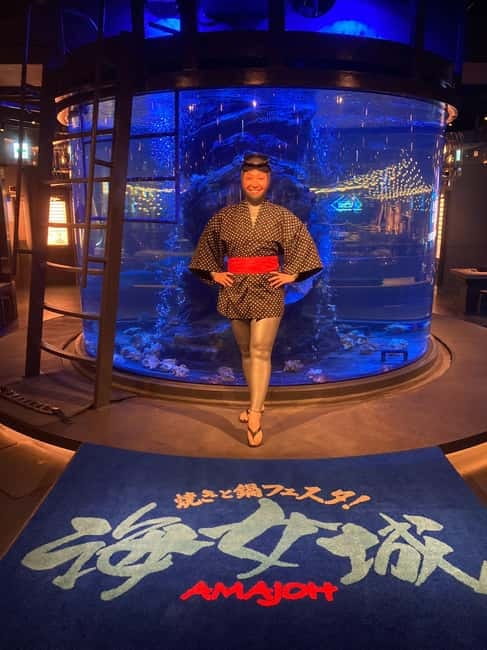
Ama fishing is a Japanese coastal tradition with more than 2,000 years of history. Ama fishers traditionally gather seafood from the sea without modern fishing equipment, and this restaurant presents that heritage as a live performance in the middle of Tokyo.
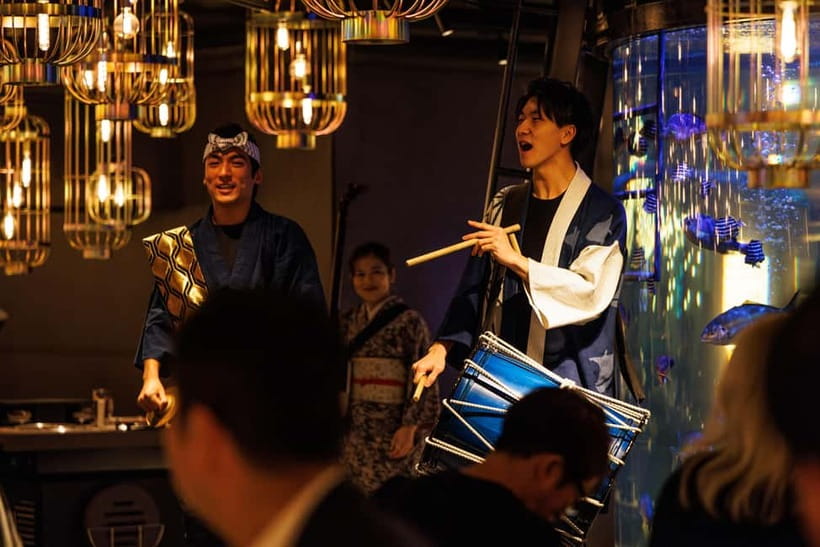
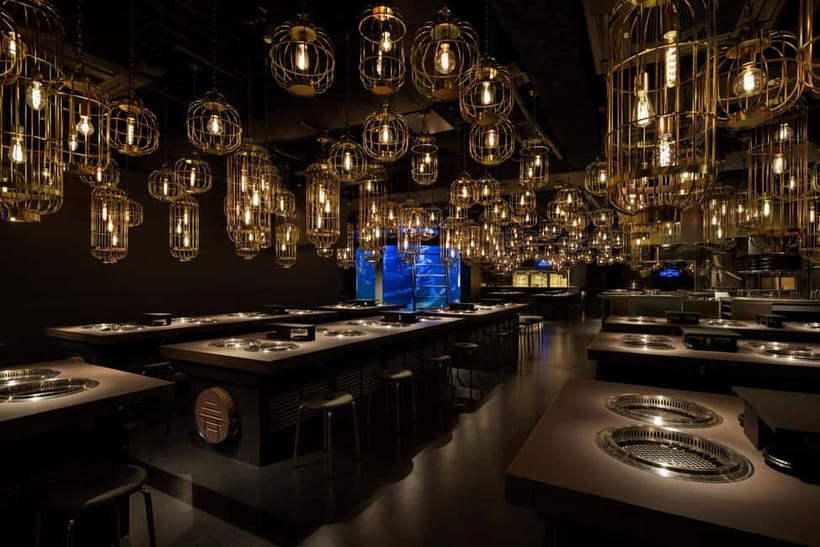
The setting does much of the work. AMAJOH sits around a massive aquarium, with the blue light from the tank mixing with warmer interior lighting. Instead of looking at a small stage from a distance, you watch the action with the aquarium as the central visual feature.
I like the basic idea because it connects Tokyo diners with a way of life associated with Japan’s coastal communities. You are not simply eating seafood in a themed room. The performance gives context to the food and shows why Ama culture remains meaningful.
At the same time, you should keep your expectations sensible. This is a restaurant presentation, not a trip to a coastal fishing village. The appeal is the compact combination of food, spectacle, and cultural background in a convenient Tokyo location.
A few more Tokyo tours and experiences worth a look
What happens during the two-hour evening
The experience lasts about two hours, and the Ama performance is presented as part of the meal. The exact order can depend on the restaurant’s schedule, but you should expect the evening to move between the live presentation and your individual hotpot dinner.
The performance is the cultural centerpiece. You watch the Ama tradition in the aquarium setting, then have time to focus on your meal. This format suits you if you want a clear introduction to a Japanese custom without giving up an entire day for an excursion outside Tokyo.
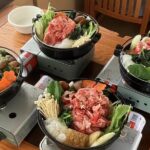
The dinner uses one-person hotpots, which is a practical touch. You do not have to agree with everyone at your table about the broth or cooking style. Each person can make a separate choice, which works well for families, couples with different tastes, or solo diners who want control over the meal.
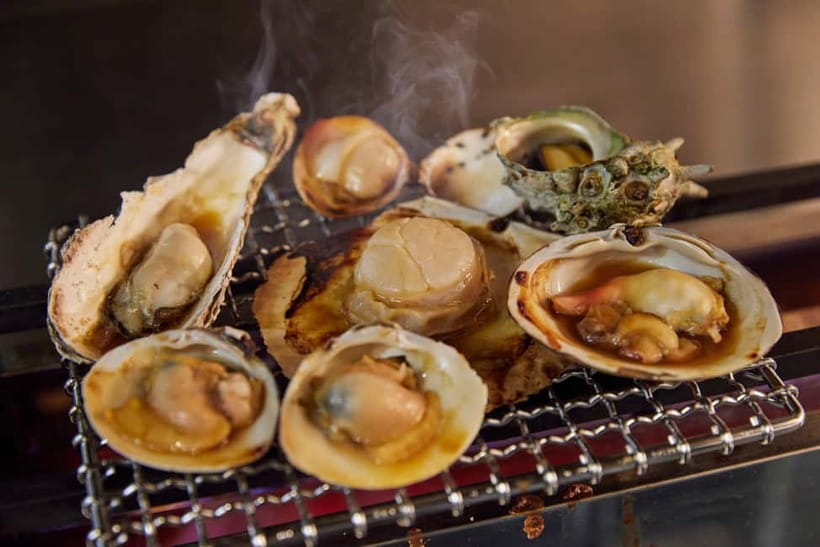
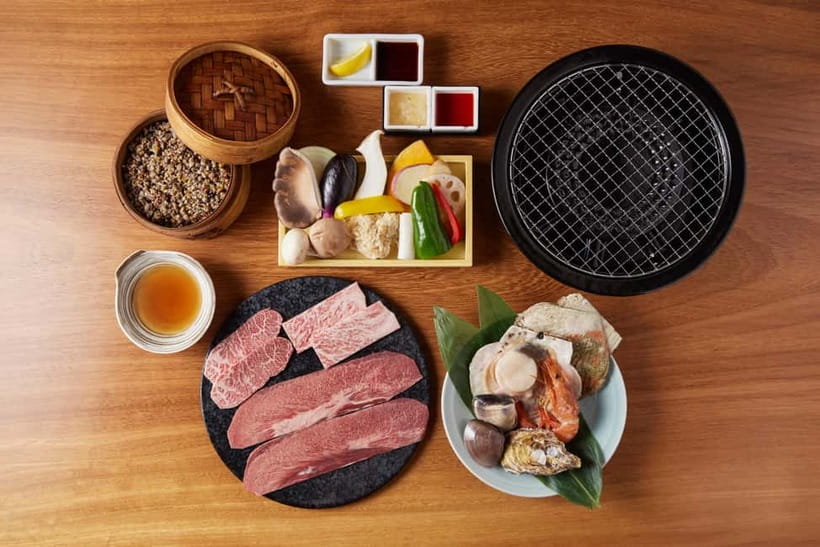
The restaurant also offers grilled options. Depending on your selection, you can choose wagyu yakiniku, grilled seafood, shabu-shabu, sukiyaki, or a seafood hotpot. The supplied details do not spell out the exact ingredient list for every plan, so check the available choices when booking.
Choosing between seafood, wagyu, and hotpot styles
The meal is where this experience gains much of its value. At $88 per person, you are paying for food, the Ama performance, service, and consumption tax. Drinks are not included, and you pay for them separately in cash.
For seafood lovers, the seafood hotpot is the most natural match for the setting. The aquarium and Ama theme make seafood feel connected to the evening’s subject, rather than just another menu item. You can also choose grilled seafood if you prefer a firmer texture and a meal that feels less broth-based.
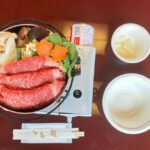
Premium black wagyu gives the evening a different direction. Wagyu yakiniku or sukiyaki may suit you better if you want beef as the main event. Having both seafood and beef choices is useful because it prevents the cultural theme from forcing everyone into the same kind of dinner.
Shabu-shabu is the lighter, more interactive option. You cook ingredients briefly in broth, which lets you control how well done they become. Sukiyaki brings a sweeter flavor profile, while a seafood hotpot keeps the focus on the ocean theme.
I would compare the options before booking, especially if you have a strong food preference. The experience includes food, but the supplied information does not state that every guest receives every option. Your choice of plan and ingredients matters.
The aquarium atmosphere, useful but not quiet
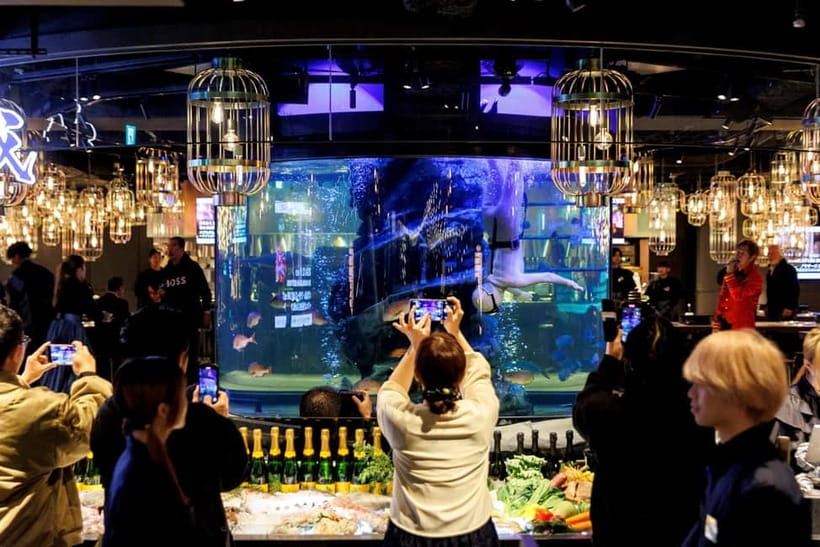
The restaurant’s interior uses blue aquarium light and warm-colored lamps. That combination is meant to create a magical atmosphere, and it gives the meal a clear identity that a normal hotpot restaurant would not have.
The aquarium view is also practical. Since it is the focal point of the room, seating around it is designed to give diners a look at the performance. Still, the atmosphere may not suit everyone. One reported experience described the room as stuffy, and another noted that the presentation and setting did not match expectations.
I would treat the room as part of the show, not as a quiet fine-dining space. If you want a calm dinner with lots of personal space, this may feel busy or enclosed. If you like unusual interiors and a meal with a live feature, the aquarium gives the two hours a stronger sense of place.
The age and interests of your group matter, too. Children may enjoy the fish and the action, but locating the entrance in bad weather can be frustrating. One family had trouble finding the site while walking around the block in the rain with children, so I would not cut your arrival time close.
Finding AMAJOH near Shimbashi Station
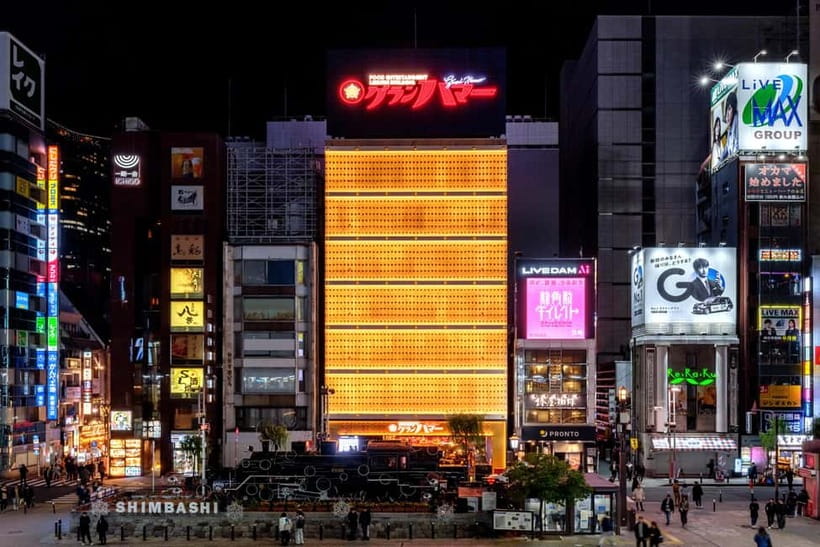
The restaurant is listed as Grandhammer B1F, AMAJOH, one minute from Shimbashi Station. The stated station access is Shimbashi, exits H04 and E21, with West Exit 7 and Shimbashi SL Square as useful landmarks.
That sounds simple. In practice, it may not be. The restaurant is in a basement or lower-level area within a shared co-op restaurant space, and the entrance is not necessarily obvious from the street. Even local people may not recognize the restaurant name or know exactly where the basement entrance is.
My advice is simple: arrive early, stand in front of Shimbashi SL Square, and look specifically for Grandhammer B1F rather than relying only on AMAJOH signs. Keep the address ready on your phone. If you are coming with children, luggage, or anyone with limited mobility, give yourself extra time.
The activity is wheelchair accessible, which is important. However, the difficult-to-spot entrance still makes careful arrival worthwhile. Accessibility does not remove the need to identify the correct building and lower-level access point.
The central Tokyo location is a major advantage. You do not need a long transfer to reach a coastal area, and you can fit the dinner into an evening around Shimbashi. The tradeoff is that you are seeing a restaurant interpretation of Ama culture, not the fishing communities where the tradition developed.
A few more Tokyo tours and experiences worth a look

Is $88 a fair price?
The price is not a bargain dinner, but it is not just the cost of a hotpot meal. Your payment covers the food, live Ama presentation, service fee, and consumption tax. That makes the value easier to judge if you want both dinner and a cultural activity in one booking.
I would consider $88 reasonable for someone who wants a distinctive evening in central Tokyo and would otherwise pay separately for a meal and an attraction. The package also removes some decision-making. You choose the hotpot or grilled style, then enjoy the performance without arranging another cultural visit.
The value is weaker if you are mainly looking for the cheapest way to eat wagyu or seafood. A large part of the price goes toward the aquarium setting and live presentation. If the Ama theme does not interest you, a regular restaurant may give you more food choice for less money.
Drinks are separate and paid in cash, so the final cost will be higher than the advertised amount if you order beverages. I would carry enough Japanese yen for that part of the evening. The supplied details do not state drink prices, so do not assume they are included.
The overall score is 4.2 from five ratings, which suggests a generally positive but not universal response. The strongest praise centers on the performer, service, and food. The clearest concerns are the hard-to-find entrance, the room atmosphere, the early 5 p.m. timing for some schedules, and the possibility that the presentation may not suit people who do not speak Japanese.
Timing, language, and the early start
The activity lasts two hours, and starting times depend on availability. One available time was described as 5 p.m., which may work well if you want an early dinner and a free evening afterward. It may feel inconvenient if you prefer to eat later or have already spent the afternoon sightseeing.
I would check the start time before paying. Tokyo evenings often involve tight train and dinner plans, and a fixed early slot can affect your day. The two-hour length is manageable, but you should include extra time for finding the building.
Language is another point to consider. The information does not promise an English-speaking guide or English-language presentation. A French-speaking visitor found the experience difficult for people who do not speak Japanese and felt the visuals gave a misleading impression.
That does not mean you cannot enjoy it without Japanese. The aquarium, cooking, food, and live action are visual. Still, if the cultural explanation is central to your decision, you should not assume every part will be available in your preferred language.
The booking information has a confusing section that lists cancellation wording under languages, but it does not provide a clear language list. I would confirm what language support is available if you need detailed interpretation.
Who will enjoy this Tokyo dinner
I think this works best for you if you want a short, unusual evening activity with food built in. It is especially useful when you want to stay close to central Tokyo and prefer one booking that combines a performance and dinner.
It also suits groups with different appetites. One-person pots mean you can choose seafood while someone else orders wagyu, or select different broths without turning the meal into a negotiation.
Families may like the aquarium and live action, but I would be careful about the entrance and timing. Arrive early, especially in rain, and do not expect the space to feel open or spacious.
Food-focused visitors should study the meal choices. The black wagyu and fresh seafood are strong draws, but the experience is not designed solely as a premium steak dinner or a specialist seafood tasting.
I would be more cautious if you need a fully explained English-language cultural program, dislike enclosed restaurant settings, or want a late-night meal. The show may still interest you, but those concerns could outweigh the novelty.
My call: book it if the format fits
I would book this experience if you want to see a Japanese coastal tradition presented in Tokyo, enjoy an aquarium setting, and value a dinner with several cooking choices. The combination is unusual, and the central Shimbashi location makes it easy to add to a city itinerary.
I would skip it if you mainly want a quiet meal, a late start, or guaranteed language support. I would also avoid arriving at the last minute. The practical fix is easy: use Shimbashi SL Square and Grandhammer B1F as your landmarks, allow extra time, and carry cash for drinks.
For the right audience, the $88 price buys more than hotpot. It buys a compact cultural presentation, a distinctive room, and a flexible dinner. Just remember that the restaurant experience is the attraction, and the Ama tradition is being presented in a Tokyo dining room rather than on Japan’s coast.
FAQ
How long does the Ama dinner experience last?
The experience lasts two hours.
Where is AMAJOH located?
AMAJOH is in Grandhammer B1F, one minute from Shimbashi Station, near West Exit 7 and directly in front of Shimbashi SL Square.
What is included in the price?
Food, the Ama performance, consumption tax, and the service fee are included.
Are drinks included?
No. Drinks are not included and require separate cash payment.
What meal choices are available?
Choices include wagyu yakiniku, grilled seafood, shabu-shabu, sukiyaki, and seafood hotpot. You can choose ingredients and broth for your hotpot.
Is the activity wheelchair accessible?
Yes, the activity is wheelchair accessible.
Can I cancel for a full refund?
Yes. You can cancel up to 24 hours in advance for a full refund.
More Dinner Experiences in Tokyo
More Dining Experiences in Tokyo
More Shows & Performances in Tokyo
More tours in Tokyo we've reviewed

Dinner Experiences, compared.
 ★ 5.0Tokyo Bar Hopping Tour in Shinjuku (All-You-Can-Drink + Dinner)From $106
 ★ 4.8Tokyo: Sumo Show and Dining ExperienceFrom $7990 minutes - 2 hours
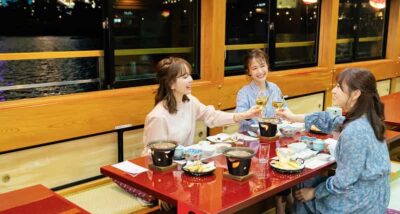 ★ 4.6Sumida River: Japanese Traditional Yakatabune Dinner CruiseFrom $1032h 30m
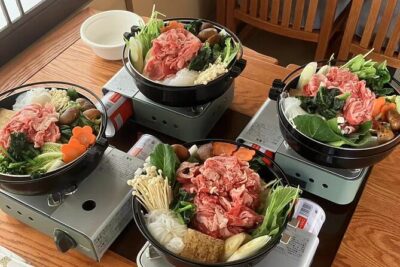 ★ 4.5Tokyo Bay Yakatabune Dinner/Day Cruise with Japan Show and DrinksFrom $65
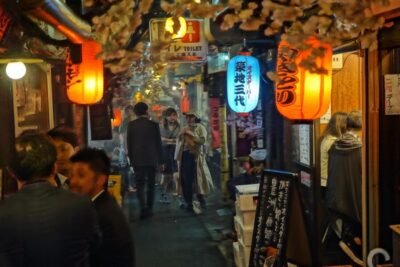 ★ 4.9Tokyo: Shinjuku Bar Hopping with All-You-Can-Drink & DinnerFrom $1083 hours
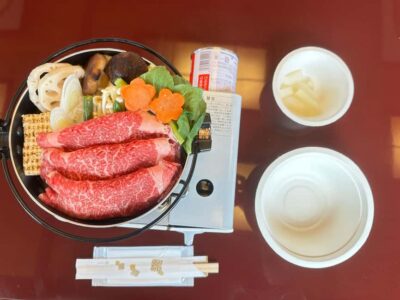 ★ 4.7Tokyo Dinner Cruise & Tradition Show & Drinks & Tokyo TowerFrom $951h 40m