
Reviewed · DINNER EXPERIENCES
Tokyo Traditional Geisha Show and Japanese Fine Dining Experience
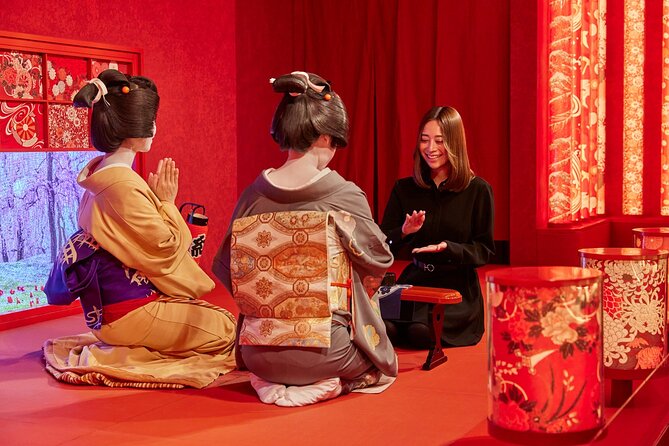
Tokyo’s geisha culture is usually kept behind closed doors, but BENITSUYA offers a direct, welcoming introduction: you dine while two trained Tokyo geishas perform traditional dances, answer questions, and teach playful ozashiki games. It is a rare chance to see the art up close rather than from a distant stage.
I like the personal contact and the chance to join the games, which turn a formal performance into a social evening. I also like the central Shinbashi setting and the polished crimson dining room, a practical choice when you want culture without giving up an entire night.
The weak point is value. At $144.96 per person, this is expensive for 90 minutes, and some meal packages have felt too modest for a fine-dining claim. Check exactly which dinner option you are buying before you pay.
In This Review
- Key points at a glance
- What the BENITSUYA evening is really like
- A Kyoto-style meal with a Tokyo performance
- The dances: graceful, brief, and close enough to study
- Games turn a formal show into a social evening
- Small groups are a major advantage
- Finding Grand Hammer and arriving on time
- Is $144.96 a fair price?
- Who should book this experience
- Practical tips for getting more from the evening
- Should you book BENITSUYA?
- FAQ
- Where does the geisha dining experience take place?
- How long does the experience last?
- What is included in the cultural program?
- Is the experience open to children?
- How many people can join?
- Can I cancel for a refund?
Key points at a glance
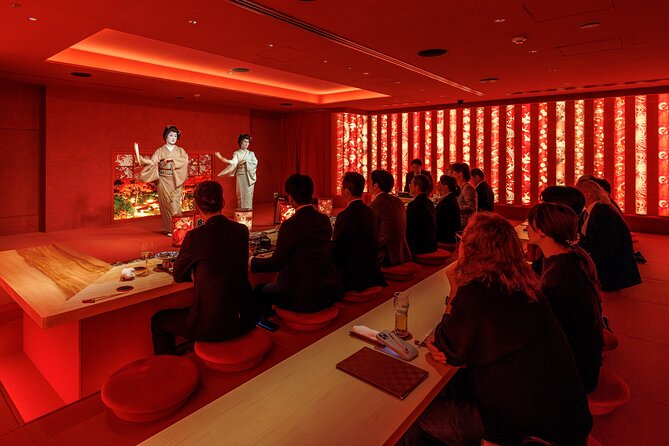
- Two Tokyo geishas perform several traditional dances, with time for questions and conversation.
- Traditional geisha games give you an active role instead of leaving you to watch from your table.
- Kyoto-style kaiseki is supervised by chef Naoki Okumura, associated with Gion Okumura in Kyoto.
- BENITSUYA occupies the sixth floor of Grand Hammer, a new food and entertainment complex in Shinbashi.
- Small groups can make the evening quite intimate, although the experience can feel rushed at the fixed 90-minute length.
- The activity is for people aged 20 and over, and free cancellation is available until 24 hours before the start time.
What the BENITSUYA evening is really like
This is not a long theatrical production with a large cast and elaborate scenery. Think of it as a compact cultural dinner, built around food, dance, conversation, and participation.
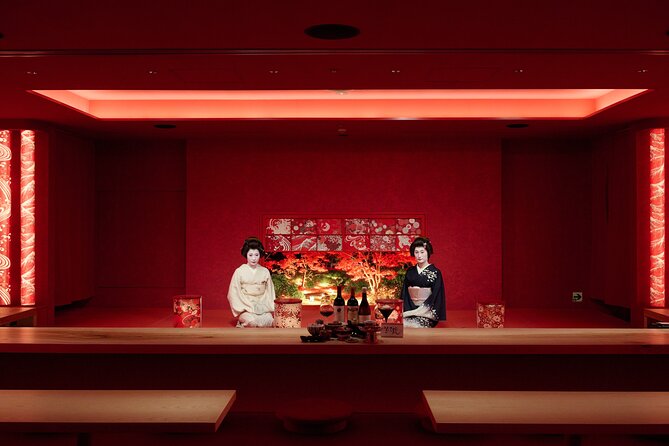
You arrive at BENITSUYA on the sixth floor of Grand Hammer, at 2-chōme 8-5 Shinbashi in Minato City. The venue opened in November 2024 and was produced by Hamakura, the company behind Ebisu Yokocho, Shibuya Yokocho, and Kabuki Hall. Inside, the crimson walls and modern Japanese decoration create a more polished setting than a casual neighborhood restaurant.
The room matters because the geishas work close to the tables. In a large theater, you might admire costumes and movement but miss the small gestures. Here, you can watch the fan work, ask questions, take photographs afterward, and see how the performers handle conversation as well as dance.
The schedule lasts about one hour and 30 minutes. It begins promptly, so do not count on arriving early to settle in. The escalator or elevator may not take you to the sixth floor before the start, and the building can be slightly confusing to navigate. One useful landmark is the gold-colored building near McDonald’s, but allow time to find the correct entrance and floor.
A few more Tokyo tours and experiences worth a look

A Kyoto-style meal with a Tokyo performance
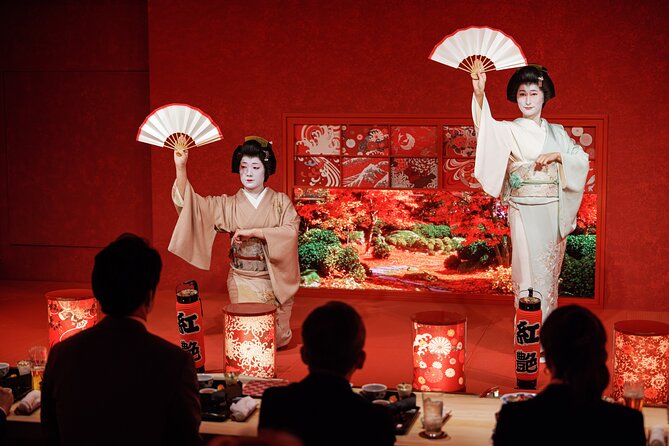
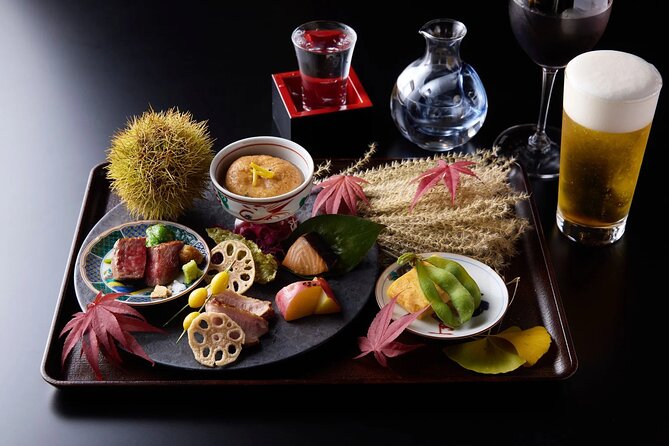
The food is presented as Kyoto-style kaiseki under the supervision of Naoki Okumura of Gion Okumura. Kaiseki is not simply a large meal. It is a planned series of courses, with attention given to seasonality, order, appearance, and portion.
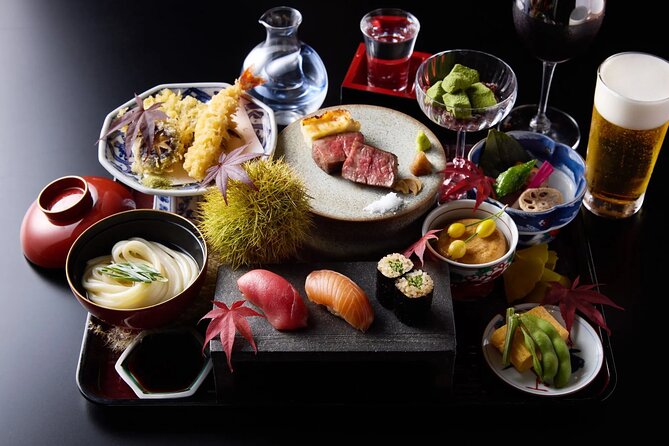
That sounds impressive, but your expectations should be sensible. The experience offers more than one dinner format, and the difference between a lighter meal and a seven-course option matters. Some diners found the fuller meal delicious and satisfying, while others felt the basic package was closer to a light dinner than fine dining.
If you have a large appetite, even the seven-course meal may not feel especially generous. If you are cautious about seafood or unfamiliar ingredients, ask what your selected package includes before booking. One person who paid for the higher-level meal found several dishes too fishy or exotic to finish. That does not make the food poor, but it shows why the menu choice is important.
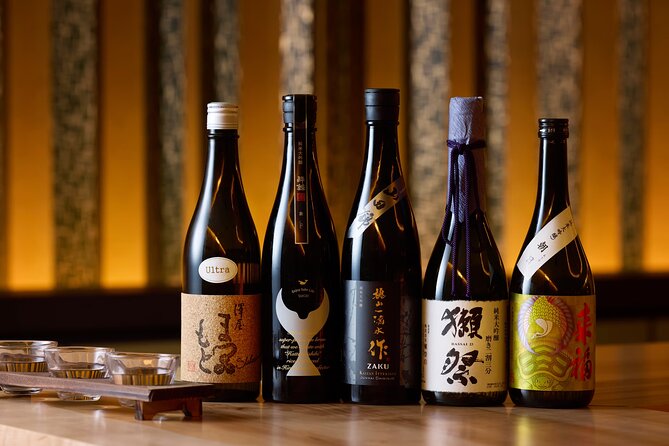
Drinks also deserve attention. Soft drinks were not included in at least one upgraded meal package, so review the beverage terms before you arrive. A $144.96 ticket feels very different when it includes a substantial seven-course meal than when it covers a smaller meal, paid drinks, and a short show.
Food quality appears uneven from one person’s point of view to another, which may reflect different menus or expectations. I would book this for the combination of cuisine and culture, not as a stand-alone fine-dining bargain. Tokyo has many excellent restaurants where your money buys more food and more time at the table.
The dances: graceful, brief, and close enough to study
The traditional dances are the heart of the evening. Two geishas perform several pieces, using controlled gestures, fans, posture, and precise movement. This is quiet, deliberate art. Do not expect a fast pop-style show or a broad stage spectacle.
The compact room helps. You can see the details of hand positions and fan movements, and the performers are close enough for the dance to feel personal. One part of the program includes a fan demonstration with audience participation, which gives you a better sense of the skill involved.
The dance portion is not especially long. The evening includes food, conversation, games, and photographs, so the show is only one part of the program. That suits you if you want a cultural introduction. If you mainly want a lengthy performance, the 90-minute format may leave you wanting more.
The geishas themselves receive the strongest praise. They are described as friendly, elegant, funny, and generous with their time. The experience works best when you treat them as professional artists and hosts, not as costumed photo props. Their work includes making conversation, pouring drinks, explaining customs, performing, and helping people feel included.
Games turn a formal show into a social evening
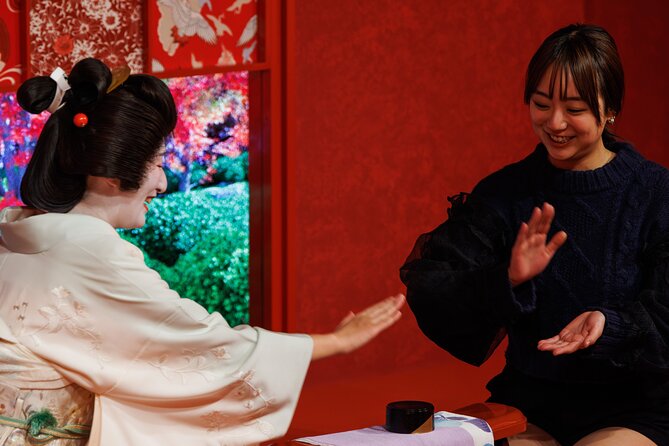
After the dances, you can join traditional geisha games. These are simple, lighthearted activities that make the evening more memorable, especially if you are willing to participate rather than sit quietly with your camera.
The games are a strong reason to choose this experience over a standard dance performance. You do not need specialist knowledge, and the performers explain what to do. Children cannot attend because the minimum age is 20, but adults who feel shy about audience participation should still give the games a chance. They are meant to be fun, not a test.
The games also reveal the geishas’ skill as hosts. A good host notices who is engaged, keeps the pace moving, and draws quieter people into the activity. Several accounts describe the geishas as especially good at this. Nana, one performer named by a participant, was singled out for her warmth and humor.
Still, group dynamics can affect your evening. With only a few people present, you may receive much more conversation and attention. With a larger group, or if the geishas are drawn into long conversations with Japanese-speaking diners, you could feel less involved. The stated maximum is 30 people, though actual groups can be much smaller.
Small groups are a major advantage
The best version of this experience seems to happen when the group is small. Groups of two, three, or around nine people allow the two geishas to speak with nearly everyone, answer personal questions, and adapt the games to the room.
A very small group can make the evening feel almost private. That is good if you want to ask about Japanese culture or hear about a performer’s path into geisha work. Translation devices help when English and Japanese do not match, and the geishas make a clear effort to communicate.
The same small group can also expose the limits of the production. With only two guests and two performers, the event may feel less like a full show and more like a hosted cultural encounter. Some people find that intimate and special. Others expect a larger production and feel the price is hard to justify.
Language is worth considering. Translation devices are available, but conversation through a device takes longer and can interrupt the natural flow. You can still ask questions, but this is not the same as a fluent English-language tour.
A few more Tokyo tours and experiences worth a look





Finding Grand Hammer and arriving on time
BENITSUYA is in Shinbashi, an area with easy access to public transportation. The meeting point is the restaurant itself, and the activity ends there. You do not need to arrange a separate return transfer or follow a guide through several parts of Tokyo.
The tricky part is the building. Grand Hammer is new, and the sixth-floor location is not always obvious once you enter. The escalator may stop before the restaurant, and access to the elevator can be limited before the official start time. Arrive with enough time to identify the building and entrance, but do not assume you can go upstairs well before the scheduled start.
The strict timing is both useful and limiting. You know the event will fit into a compact Tokyo evening, but there is little room for a late arrival. One person who arrived late after a flight still managed to enjoy the dinner and show, but that should not be your plan. A delayed train, a wrong entrance, or a slow elevator can quickly eat into a 90-minute program.
Is $144.96 a fair price?
The ticket price is high for the length of the experience. The price makes more sense if you value direct contact with geishas, a traditional dance performance, and a full multi-course meal as one package. It makes less sense if you are judging it only by food quantity or stage time.
I would separate the value into three parts. First, you are paying for access to a cultural practice that is not easy to arrange independently. Second, you are paying for the performers’ time and hospitality, not only for the dances. Third, you are paying for the meal and the setting.
The first two parts are the reason many people consider the evening worthwhile. The performers are not simply appearing for a quick dance. They converse, teach games, answer questions, pour drinks, pose for photographs, and adjust their approach to the group.
The third part is where the price becomes harder to defend. The lighter dinner can feel basic, and soft drinks may cost extra. Some diners found the food excellent, while others found it average or too limited. If your main goal is a memorable meal, spend your budget elsewhere. If your goal is a rare geisha encounter with dinner attached, the calculation changes.
The advertised $144.96 should also be treated as a starting point for comparison, not a guarantee that every package has identical inclusions. Different dinner levels have caused confusion, so read the selected option carefully.
Who should book this experience
I would recommend it most strongly to an adult visiting Tokyo for the first time who wants a structured introduction to geisha culture without arranging a private dinner.
It also suits you if you like personal interaction, traditional dance, and food that may include unfamiliar Japanese ingredients. The games make it a good choice for people who enjoy taking part rather than only watching. Several adults have also found it a fun family evening for older children, but remember that everyone must be at least 20.
This is less suitable if you want a long show, a large production, a guaranteed English-language conversation, or a generous Western-style dinner. It may also disappoint you if you assume every ticket includes the same menu or complimentary soft drinks.
Business visitors can fit it into a short evening because the activity returns to its starting point. Couples and solo diners may appreciate the small-group format, especially when attendance is light. If you are shy, do not worry too much. The geishas’ role is to help the room relax, and the games give you an easy way to join in.
Practical tips for getting more from the evening
- Confirm the meal level before booking. The basic and upgraded options are not interchangeable, and the difference affects how much value you receive.
- Ask about drinks if you want more than what is included. Soft drinks have not been included in at least one package.
- Arrive early enough to find Grand Hammer, but expect the activity to start at the stated time.
- Keep your questions ready. You may be able to ask about dance, customs, or the performers’ work, especially in a small group.
- Take part in the games. They are one of the most distinctive parts of the evening.
- Expect translation devices, not necessarily fluent English conversation. The geishas make an effort, but communication can take extra time.
- Leave room in your schedule afterward. The program lasts about 90 minutes, not two hours, so it works best as one part of a Shinbashi evening.
Free cancellation is available up to 24 hours before the scheduled start time. Changes or cancellations made later are not refunded, and the cut-off follows Tokyo local time.
Should you book BENITSUYA?
Book it if you want a close, sociable introduction to geisha performance and you understand that the meal is only part of the value. The dances, games, photographs, and personal contact can create a special evening, particularly when the group is small.
Skip it if you are seeking the best food deal in Tokyo or a long, polished stage show. At $144.96, the price demands realistic expectations. Choose the fuller meal if dinner matters to you, confirm what is included, arrive on time, and treat the event as a cultural encounter with food rather than a luxury restaurant meal with entertainment added.
FAQ
Where does the geisha dining experience take place?
It takes place at BENITSUYA on the sixth floor of Grand Hammer, at 2-chōme 8-5 Shinbashi, Minato City, Tokyo 105-0004. The activity ends at the same location.
How long does the experience last?
The experience lasts approximately one hour and 30 minutes.
What is included in the cultural program?
You can expect Kyoto-style kaiseki dining, traditional dances by Tokyo geishas, conversation, traditional geisha games, and a brief photo opportunity.
Is the experience open to children?
No. Guests must be at least 20 years old.
How many people can join?
The maximum group size is 30 people. Actual attendance can be much smaller, and a small group may allow more conversation with the geishas.
Can I cancel for a refund?
Yes. You can cancel at least 24 hours before the local start time for a full refund. Cancellations or changes made less than 24 hours before the start time are not refunded or accepted.
More Dinner Experiences in Tokyo
More Dining Experiences in Tokyo
More Shows & Performances in Tokyo

More tours in Tokyo we've reviewed







Dinner Experiences, compared.
 ★ 5.0Tokyo Bar Hopping Tour in Shinjuku (All-You-Can-Drink + Dinner)From $106
 ★ 4.8Tokyo: Sumo Show and Dining ExperienceFrom $7990 minutes - 2 hours
 ★ 4.6Sumida River: Japanese Traditional Yakatabune Dinner CruiseFrom $1032h 30m
 ★ 4.5Tokyo Bay Yakatabune Dinner/Day Cruise with Japan Show and DrinksFrom $65
 ★ 4.9Tokyo: Shinjuku Bar Hopping with All-You-Can-Drink & DinnerFrom $1083 hours
 ★ 4.7Tokyo Dinner Cruise & Tradition Show & Drinks & Tokyo TowerFrom $951h 40m