
Reviewed · TOKYO
Experience Tokyo Through the Lens of a Local Artist
Tokyo is hard to photograph yourself, especially when you want more than an arm’s-length selfie. This private session with Marvin turns Shinjuku’s neon streets, narrow alleys, and late-night energy into a personal photo story. I like the relaxed posing help and the chance to see corners of the district you might otherwise walk past.
I also like that the route can match your mood, from Shibuya Crossing to old-world Asakusa or elegant Ginza. The main consideration is the short one-hour format, plus a mismatch in the stated photo count: one description promises 70 to 150 edited images, while the included details say 40 to 50.
In This Review
- Key Points at a Glance
- Why a Tokyo Photo Session Can Be Worth the Cost
- Meeting Marvin at Shinjuku East Exit
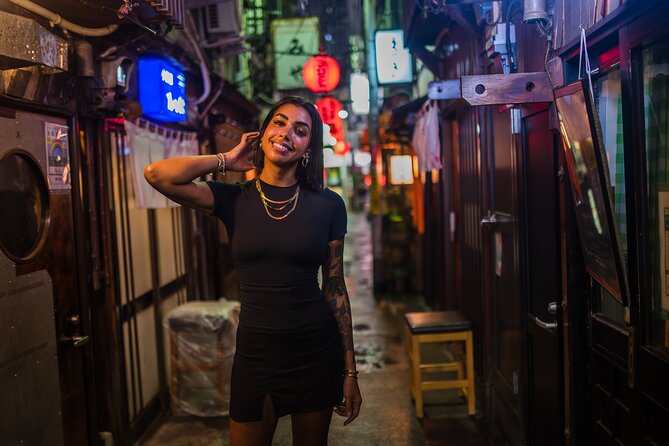
- Omoide Yokocho: Tight Alleys and Old Tokyo Atmosphere
- Kabukicho District: Neon, Signs, and Big-City Energy
- Shinjuku Golden Gai: Small Streets with a Cinematic Feel
- Choosing a Different Tokyo Neighborhood
- Posing Help for Solo Visitors and Couples
- What You Receive After the Session
- Who Should Book This Experience
- Should You Book Marvin’s Shinjuku Photo Walk?
- FAQ
- How long does the photo experience last?
- Where does the session begin?
- Where does the session end?
- Is this a private activity?
- Which Shinjuku locations are included?
- Can the route be customized?
- How are the photos delivered?
- Are RAW or unedited files included?
Key Points at a Glance
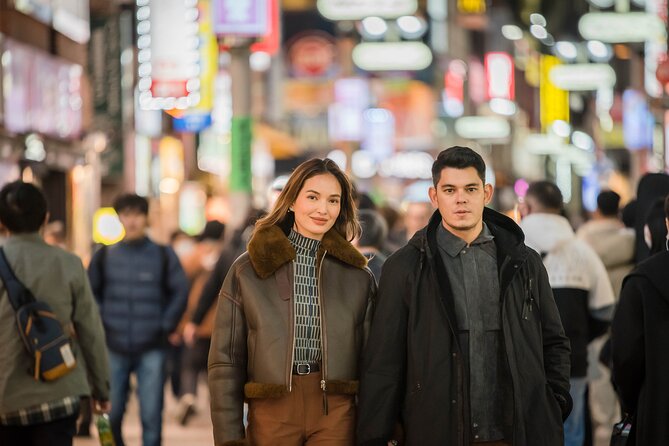
- Shinjuku after dark: Photograph Omoide Yokocho, Kabukicho, and Golden Gai in one compact walk.
- Private attention: Only your group joins, so Marvin can guide poses and adjust the route to your ideas.
- Useful posing direction: You do not need modeling experience. Marvin helps with head position, body movement, and natural poses.
- Flexible Tokyo routes: Shibuya, Asakusa, Ginza, Ueno, Harajuku, Tokyo Tower, and Hamarikyu Garden are possible options.
- Edited digital photos: Images are sent through Google Drive, usually within 7 to 12 days.
- Clear limitation: RAW and unedited files are not provided, and the advertised number of final images should be confirmed before booking.
Why a Tokyo Photo Session Can Be Worth the Cost
The price is $131.78 per person, and the session lasts about one hour. That is not a cheap sightseeing walk, but it is not simply a photography fee either. You are paying for a private guide, location planning, posing help, shooting time, and edited images that preserve your visit.
The value makes the most sense for a couple, solo visitor, honeymooner, engagement shoot, or small group. If you are traveling alone, this solves the familiar problem of asking strangers to take a picture, only to receive a crooked frame with half your head cut off. If you are with a partner, you can both appear in the photograph instead of taking turns behind the camera.
I would judge the price against your priorities. If photographs are a major part of your trip, the cost can be sensible. If you mainly want to see sights, the hour is too short to replace a proper neighborhood tour. You are getting a compact photo experience with some local orientation, not a full Tokyo excursion.
The strongest value comes from Marvin’s practical approach. He has eight years of photography experience and knows how to work around busy city scenes. Several visitors describe him as friendly, easy to talk with, and good at making first-time subjects feel comfortable. That matters in a portrait session. A technically sharp photo is not much use if you look stiff in every frame.
If you're still narrowing it down, here are other tours in Tokyo we've reviewed.
Meeting Marvin at Shinjuku East Exit
The meeting point is the police box at the East Exit of Shinjuku Station, listed as 3-chōme-38-1 Shinjuku, Shinjuku City. This is a sensible place to begin because Shinjuku Station is served by public transportation and the police box gives you a clear landmark.
Shinjuku Station can be confusing, so allow extra time to reach the East Exit. Your session starts at the stated meeting point and ends there as well. That makes the experience easy to fit before dinner, after shopping, or between other plans in central Tokyo.
The activity is private, meaning only your group participates. That is a real advantage over a group photo walk. You can ask for more solo portraits, more couple shots, or a different balance between posed and spontaneous images without holding up strangers.
The usual route covers three Shinjuku locations: Omoide Yokocho, Kabukicho District, and Shinjuku Golden Gai. The exact rhythm depends on the light, crowd conditions, and the look you want. Tell Marvin in advance if you prefer bright neon, quieter streets, food alleys, or a more cinematic night style.
Omoide Yokocho: Tight Alleys and Old Tokyo Atmosphere
Omoide Yokocho is a strong opening stop because it gives the photos texture right away. Its narrow lanes and small eating places create a close, layered background that feels very different from Tokyo’s wide roads and modern towers.
The confined setting can make portraits feel intimate. Marvin can place you near the entrance, along a lane, or beside the warm signs and shop fronts, depending on what is open and how crowded the area is. The space is compact, so you may move quickly from one angle to another rather than stopping for long.
That compactness is also the main drawback. Omoide Yokocho is a working food district, not a private studio. People may pass behind you, and you may need to share the space respectfully with diners and shop staff. This is part of the scene, but it means the final images will have a more candid city feel rather than a perfectly controlled background.
For clothing, simple colors and clean lines should work well against the signs and busy details. You do not need special equipment or a costume. Bring your best smile, and let Marvin handle the technical side.
Kabukicho District: Neon, Signs, and Big-City Energy
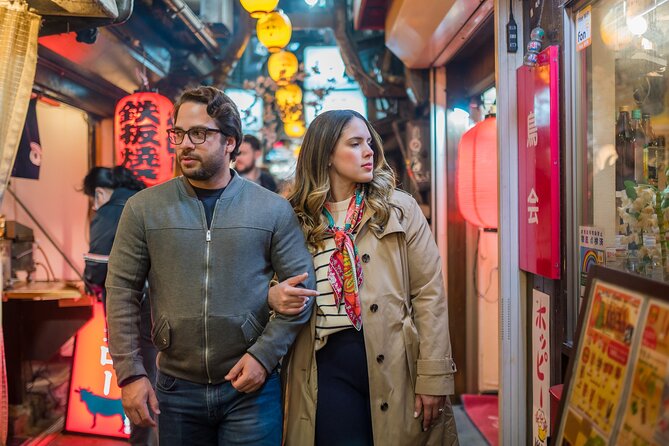
Kabukicho gives the session a larger, louder look. Here, the background can shift from narrow lanes to illuminated signs and broad city scenes. It is the part of the walk most likely to produce the classic Shinjuku-at-night feeling.
Marvin’s local familiarity is useful here because the best angle is not always the most obvious one. A major sign may look impressive in person but create a cluttered portrait if you stand in the wrong spot. The photography depends on small choices: where you stand, how you turn your shoulders, and how much of the street enters the frame.
Several people who worked with Marvin specifically appreciated his ability to suggest poses. That is valuable in Kabukicho, where a natural expression can be difficult to hold while lights, people, and traffic compete for your attention. You might be asked to shift your head, move your body, or change your stance. That direction keeps the session moving and helps prevent a set of photographs that all look alike.
Kabukicho is not a quiet place. If you want peaceful shrine scenes or soft garden portraits, ask for another neighborhood instead. If you want your Tokyo photographs to look energetic and unmistakably urban, this stop is a good match.
Shinjuku Golden Gai: Small Streets with a Cinematic Feel
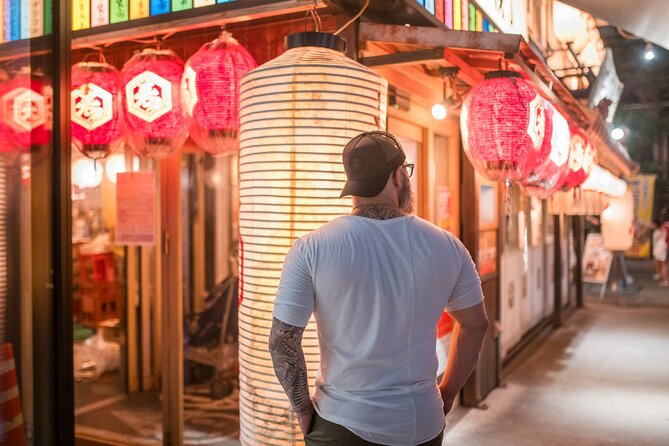
Golden Gai is the most atmospheric of the three stops. Its tiny lanes and closely packed bar fronts create strong lines, color, and shadow. The setting can make a one-hour session feel more like a short film than a standard sightseeing portrait.
This is where you may get quieter, more stylized images after the larger signs of Kabukicho. Marvin can use the narrow streets for close portraits and wider frames that show the unusual architecture around you. The area also gives you a chance to vary the mood without leaving Shinjuku.
As with Omoide Yokocho, Golden Gai is an active neighborhood. You should not expect every doorway to be available as a backdrop, and you may need to move when a lane becomes busy. The best approach is to treat the location as a real place where people live, work, and go out, not as a set built for photographs.
The three-stop plan is efficient, but it does not leave much room for wandering. If you want extensive coverage of each district, ask about the route before the session. An hour passes quickly once you include introductions, walking, posing, and changes in location.

Choosing a Different Tokyo Neighborhood
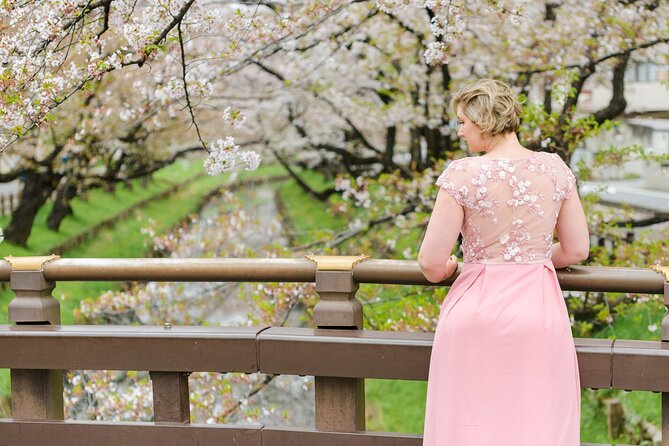
The experience is not limited to Shinjuku. You can request a route in Shibuya, Ginza, Yurakucho, Ueno, Asakusa, Yoyogi and Harajuku, around Tokyo Tower, or at Hamarikyu Garden. Seasonal cherry blossoms can also shape the route when conditions are right.
Each choice gives the photographs a different character:
- Shibuya: Best for major city scenes and the famous crossing atmosphere.
- Asakusa: A useful choice if you prefer older streets and traditional surroundings.
- Ginza: Suits a polished, refined city look.
- Yurakucho: Offers a different urban setting close to central Tokyo.
- Ueno: Can work well for a mix of city and park surroundings.
- Yoyogi and Harajuku: Good options for colorful, youthful street scenes.
- Tokyo Tower: Gives the session a recognizable landmark backdrop.
- Hamarikyu Garden: A calmer choice for greenery and formal garden views.
Do not assume every route is included without discussion. The stated meeting point and standard route are in Shinjuku, so contact Marvin ahead of time if you want another district. Tell him the mood you want, not only the place. Words such as neon, quiet, elegant, traditional, romantic, or spontaneous give him useful direction.
Posing Help for Solo Visitors and Couples
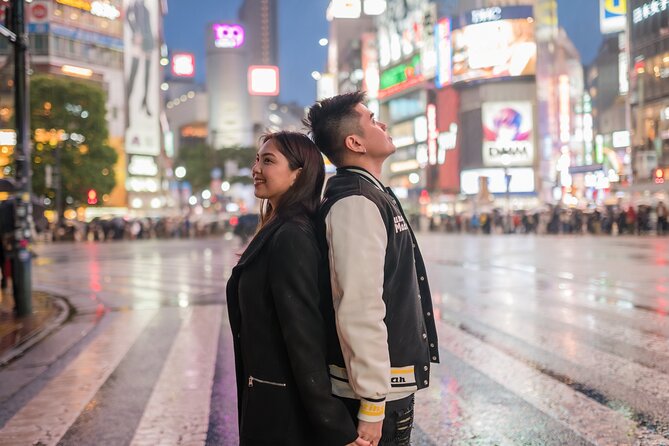
You do not need to know how to pose. That is one of the clearest strengths of this experience. Marvin guides your head, shoulders, hands, and body position, then adjusts the frame as the scene changes.
Solo visitors get particular value from this help. You can arrive with a simple goal, such as wanting stylish night photographs, and receive direction throughout the hour. The session also becomes a small introduction to Shinjuku, since Marvin points out photo locations while moving between them.
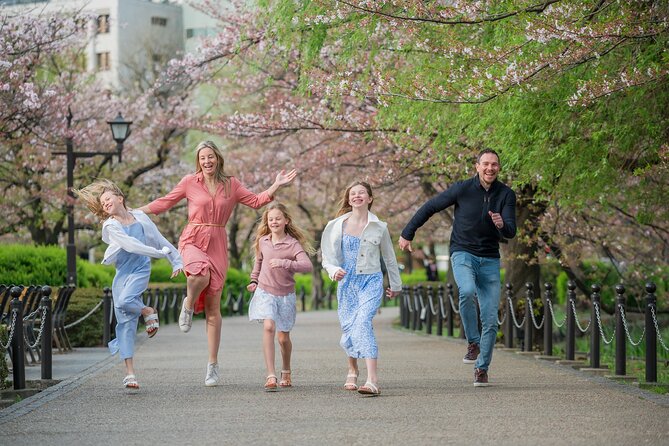
Couples can use the hour for a mix of individual and shared portraits. This is especially useful for honeymoon and engagement photographs, where you may want both polished portraits and more relaxed moments. Small groups can participate too, but the more people you bring, the more important it becomes to discuss the desired balance of group and individual images.
The private format should help you relax. You are not performing in front of a large group, and you can explain if a pose feels awkward. A good portrait session is a conversation as much as a series of camera clicks, and Marvin’s friendly manner is repeatedly praised in the supplied feedback.
What You Receive After the Session
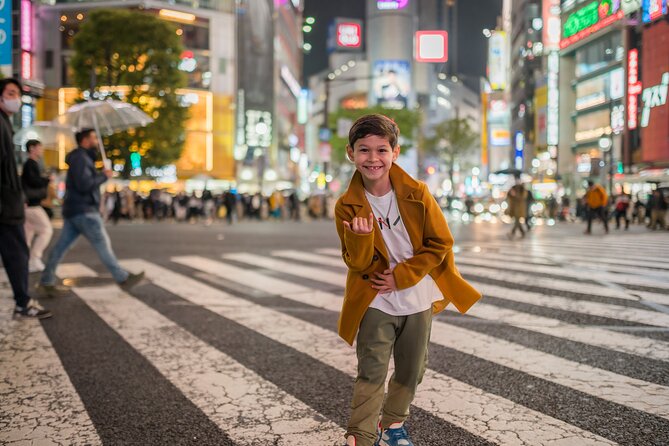
The photographs are edited and enhanced, then shared through Google Drive. The expected delivery window is 7 to 12 days, although one account says images arrived within a few days. Plan on waiting rather than expecting same-day files.
There is an important difference in the stated package details. The main description says you will receive 70 to 150 high-resolution edited photos, while the included section says 40 to 50 edited photographs. Since that is a meaningful gap, I would confirm the expected number before paying. The final count may depend on the group size, route, and usable images, but the information provided does not explain the difference.
RAW and unedited files are not supplied. That is normal for many portrait services, but it matters if you like to edit your own pictures or want every frame from the camera. You receive the photographer’s finished selection and editing style, not the original files.
Google Drive is convenient for downloading, sharing, and printing. Make sure you can access the email or account used for the booking, and save the files after delivery. Digital galleries are easy to lose months later.
Who Should Book This Experience
I would recommend it most strongly to:
- Solo visitors who want polished photographs in Tokyo
- Couples marking a honeymoon, engagement, or special trip
- Friends or families wanting a private group session
- First-time portrait subjects who want clear posing instructions
- People who prefer city nightlife, signs, alleys, and street scenes
- Short-stay visitors who can spare one focused hour in Shinjuku
You may want another option if you dislike being photographed, need a long sightseeing tour, or want unedited files. It may also be less suitable if your main goal is a large number of family combinations, since one hour can become tight with several people.
The experience has a perfect five-star rating from 27 ratings and is recommended by 100 percent of participants. That is a strong signal, but I would still focus on the practical fit: route, timing, photo count, and editing policy.
Booking about 20 days ahead is the average pattern, so reserve early if you need a particular date or want seasonal scenery. Free cancellation is available until 24 hours before the start time. Inside that window, the payment is not refunded, and changes are not accepted.
Should You Book Marvin’s Shinjuku Photo Walk?
Book it if you want Tokyo memories that include you, not just photographs of buildings and food. Marvin’s strengths are personal attention, clear posing help, flexible location ideas, and strong knowledge of Shinjuku’s photographic angles.
The best version of this experience begins with a short message before booking. Confirm the final photo count, explain your preferred neighborhood, and say if you want solo portraits, couple photographs, group shots, or a mix. If you do that, the $131.78 price can deliver real value, especially for a solo visit or once-in-a-lifetime trip.
Skip it if you want a full neighborhood tour, a long portrait session, or RAW files. For everyone else, this is a focused and personable way to leave Tokyo with photographs that feel connected to the city rather than pulled from a phone at arm’s length.
FAQ
How long does the photo experience last?
The session lasts approximately one hour.
Where does the session begin?
It begins at the police box by Shinjuku Station’s East Exit, at 3-chōme-38-1 Shinjuku, Shinjuku City, Tokyo 160-0022, Japan.
Where does the session end?
The activity ends back at the meeting point.
Is this a private activity?
Yes. Only your group participates.
Which Shinjuku locations are included?
The stated Shinjuku route includes Omoide Yokocho, Kabukicho District, and Shinjuku Golden Gai.
Can the route be customized?
Yes. Possible locations include Shibuya, Ginza, Yurakucho, Ueno, Asakusa, Yoyogi and Harajuku, Tokyo Tower, Hamarikyu Garden, and other requested areas.
How are the photos delivered?
The edited photographs are delivered through Google Drive.
Are RAW or unedited files included?
No. RAW and unedited files are not provided.
More tours in Tokyo we've reviewed

Tokyo, compared.
 ★ 5.0Mt Fuji and Hakone 1-Day Bus Tour Return by Bullet TrainFrom $163
 ★ 5.01-Day Tokyo Bus TourFrom $129
 ★ 4.6Tokyo: teamLab Planets TOKYO Digital Art Museum Entry TicketFrom $251 day
 ★ 4.0Mt Fuji & Hakone Cruise, Drum Show Bullet Train 1 Day from TokyoFrom $149
 ★ 5.0Tokyo: Shinjuku Food Tour (13 Dishes at 4 Local Eateries)From $86
 ★ 4.4Tokyo Mt Fuji 5th St & Hakone Cruise Bus Tour w/Bullet TrainFrom $15410 hours