
Reviewed · ASAKUSA TOURS
Can Am Ryker Cruising in Asakusa Adventure
Tokyo sightseeing usually means trains, temples, and a lot of walking. This tour changes the pace: you and a companion ride a two-seat Can-Am through the streets around Asakusa, following a guide past Skytree, Sensoji, Ueno, Akihabara, and other central districts. The unusual vehicle is the main event, but the route also gives you a quick look at several very different parts of the city.
I like two things right away: the driver does not need to navigate, and the price is for a group of up to two rather than two separate tickets. The guide handles the route after a short safety briefing, while you focus on the ride and the city around you. The main consideration is time. At about one hour, this is a fast-moving overview, not a slow temple visit or a full neighborhood tour.
In This Review
- Key points before you book
- Why this Asakusa ride feels different
- Getting ready at Monkey Kart Asakusa
- Skytree views from the road
- Passing the sumo district near the stadium
- Akihabara’s anime and manga streets
- A calmer look at Ueno
- Sensoji and the old Asakusa atmosphere
- Nihonbashi’s old and new Tokyo
- What one hour can realistically cover
- Is the $228.94 group price good value?
- Who will enjoy this most
- Practical tips for a smoother ride
- Should you book the Asakusa Can-Am ride?
- FAQ
- Where does the Can-Am tour begin?
- How long does the experience last?
- How many people can join?
- Does the driver need an International Driving Permit?
- Does the passenger need an International Driving Permit?
- What sights are included on the route?
- How early should I arrive?
- What happens if bad weather cancels the ride?
Key points before you book
- Two people share one Can-Am: One person drives and one rides as passenger, making this a good choice for couples or friends.
- The route links major Tokyo sights: You may pass Skytree, the sumo district, Akihabara, Ueno, Sensoji Temple, and Nihonbashi.
- Only the driver needs an IDP: The permit must be valid under the 1949 Geneva Convention.
- A guide leads the way: After instructions, you follow the guide instead of managing directions through Tokyo traffic.
- Plan for a one-hour ride: The sights are viewed from the road, so the schedule does not allow long stops at each place.
- Weather can affect departure: Poor weather may lead to a new date or a full refund.
Why this Asakusa ride feels different
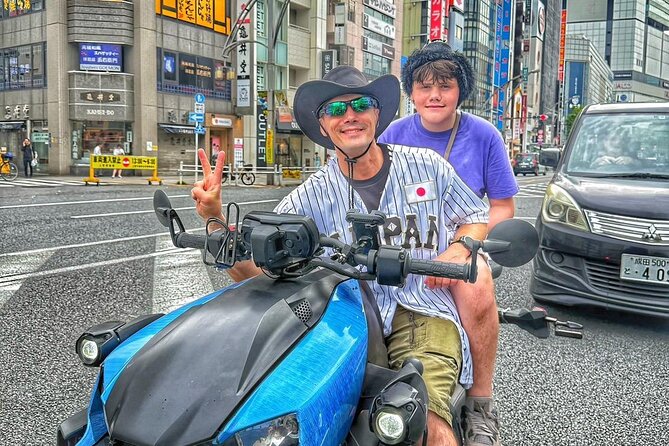
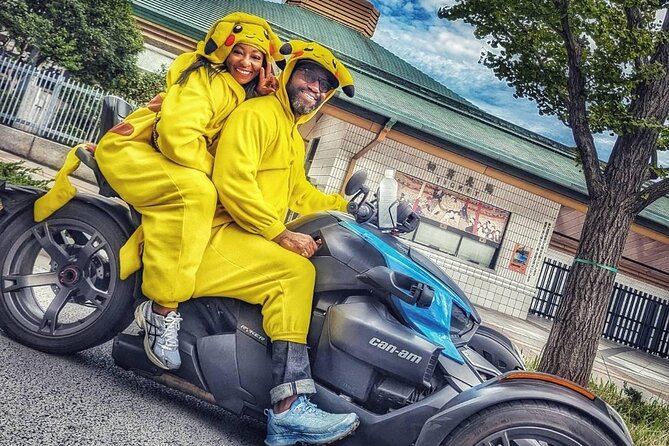
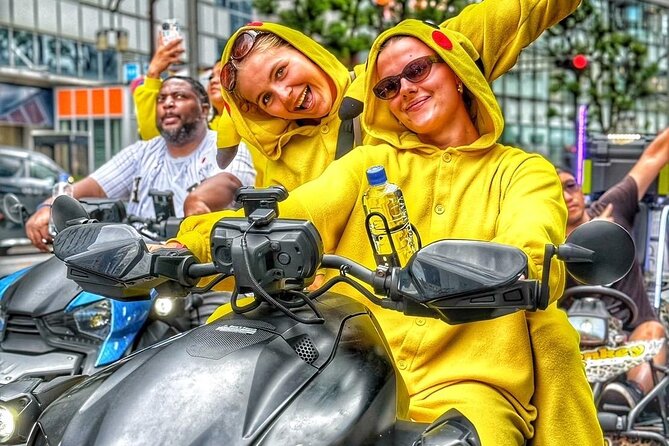
The appeal here is simple: you are not looking at Tokyo through a train window or from the back seat of a bus. You are out in the open on a Can-Am, with a passenger beside you and a guide ahead. The vehicle gives the outing a playful, social feel, and the route lets you move through several districts in a short time.
This is the Asakusa branch experience, based at Monkey Kart Asakusa in Sumida City. The meeting point is on Yokokawa 4-chome, close to public transportation. You should arrive at least 20 minutes before departure. That early arrival matters because check-in, the safety briefing, and bike preparation all happen before the one-hour ride begins.
The experience is limited to a maximum of two people. That keeps the arrangement personal, but it also means you need to understand the setup: this is one two-seater bike for a driver and a passenger, not two separate motorcycles. If you want to switch roles, confirm the practical rules at check-in rather than assuming you can do so during the route.
The staff are a big part of the experience. Past rides specifically praised Reece, Adam, and Lewis for being friendly and helpful. That is useful information for a vehicle-based activity, since clear instructions and a calm guide matter more here than fancy narration.
A few more Tokyo tours and experiences worth a look

Getting ready at Monkey Kart Asakusa
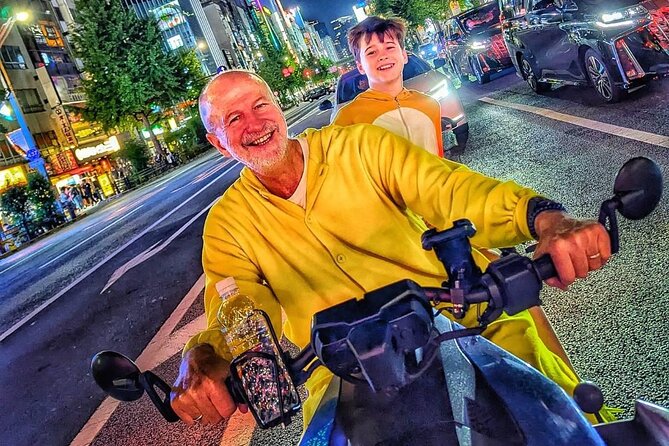
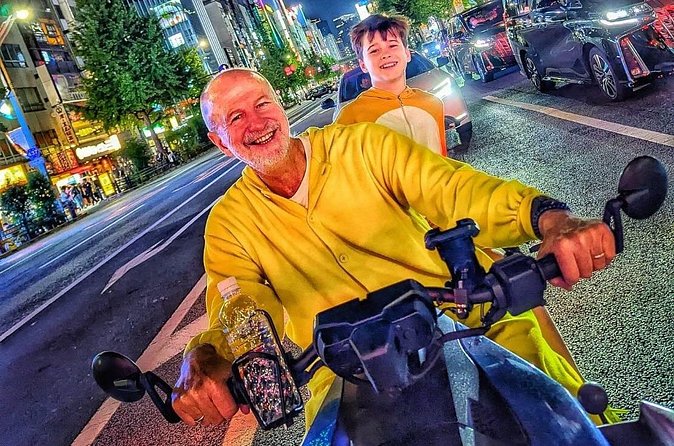
The tour begins with a short safety briefing and operating instructions. You do not need to work out the route or keep a map open. The guide leads the group, and you follow the colorful line of riders through the streets.
The driving requirement is the detail you must settle before paying. Only the driver needs a valid International Driving Permit based on the 1949 Geneva Convention. The passenger does not need to hold the permit, but the activity is still designed around a driver and passenger sharing one vehicle.
The supplied information does not give a separate minimum age, clothing rule, or helmet policy, so you should ask the operator if any of those details affect your plans. The same applies if you have concerns about driving in Tokyo. Most people can participate, but the ride takes place on city streets, and the driver needs to be comfortable operating the vehicle.
The mobile ticket is handy. Keep your booking confirmation available on your phone, and allow extra time to reach the Asakusa meeting point. The tour ends where it starts, which makes it easier to fit into a day of sightseeing.
Skytree views from the road
One early highlight is the view toward Tokyo Skytree, the city’s towering landmark. Skytree is famous for its height and unusual design, and seeing it while moving through Sumida City gives you a useful sense of scale.
Do not treat this part as a tower visit. The Can-Am route provides a moving viewpoint, not entry to the observation decks. You will want to keep your attention on the road and the guide, so take the view as it comes rather than expecting time for a long photo stop.
Still, this is a strong opening sight. Skytree is easy to recognize, and the open vehicle gives you a better visual connection to the streets and buildings around it than an enclosed ride would. If you are staying in Asakusa, this portion also helps connect the area around your accommodation with one of Tokyo’s most recognizable landmarks.
Passing the sumo district near the stadium
The route also goes through Tokyo’s sumo district. The area is linked with the picturesque stadium, and you might see a sumo wrestler passing by if your timing is lucky.
That last point is important. A wrestler sighting is possible, not promised, so you should not book the tour solely for that. The district itself adds a distinctly Japanese theme to the route, especially when set beside the modern tower views and pop culture streets that come later.
From the Can-Am, you get a quick street-level impression rather than a detailed look inside the sumo world. If you want a full sumo experience, you would need a separate visit or event. Here, the value is the contrast: in one short ride, Tokyo shifts from tower architecture to a neighborhood shaped by one of Japan’s best-known sports.
Akihabara’s anime and manga streets
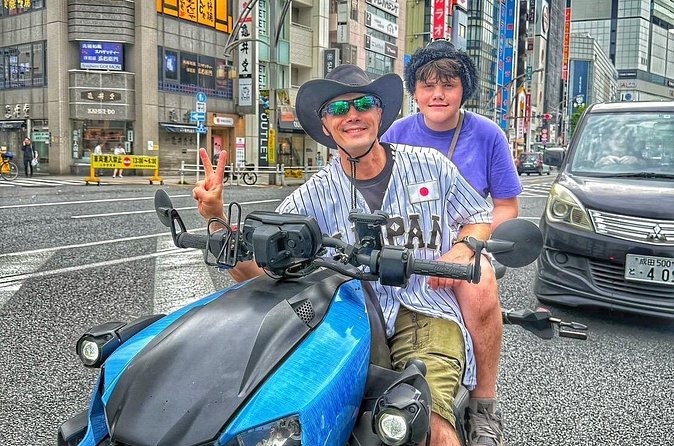
Akihabara brings a sharp change of mood. Its streets are filled with anime and manga imagery, and you might see cosplayers on the sidewalks. The district is one of Tokyo’s clearest expressions of modern fan culture.
The Can-Am is well suited to this kind of pass-through sightseeing. You can absorb signs, storefronts, costumes, and street activity without spending the whole day inside shops. That said, Akihabara deserves more time if you want to browse electronics, collect souvenirs, or visit themed stores. The ride gives you a first look, not enough time to explore the district in detail.
I like Akihabara’s place on this route because it keeps the tour from becoming only a traditional sightseeing loop. Sensoji and sumo offer older cultural associations, while Akihabara shows a very different side of Tokyo. The quick sequence helps you understand how varied the city can be within a short distance.
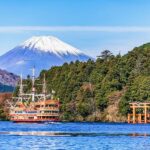
A calmer look at Ueno
Ueno adds parks and open space to the route. The district is known for its large parks and a distinctly Japanese atmosphere, giving you a break from the signs and commercial streets of Akihabara.
Again, the vehicle is passing through rather than stopping for a park walk. You might see the greenery and broad public spaces, but you will not have time to explore the park paths or its attractions during a one-hour ride. That is not a flaw if you want a sampler. It is a limitation if Ueno is high on your sightseeing list.
For a first visit, I find this contrast useful. Tokyo can feel dense and highly built up, yet Ueno shows how much nature and public space can sit within the city. The ride lets you compare that setting with Sumida’s tower views and Akihabara’s commercial energy without arranging separate transportation between each area.
Sensoji and the old Asakusa atmosphere
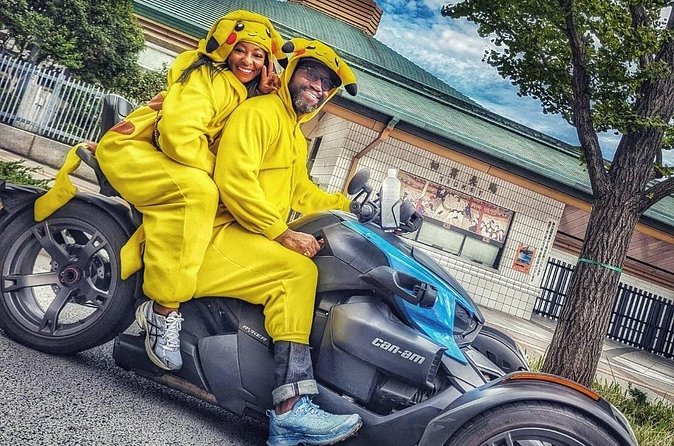
Sensoji Temple is the route’s most iconic traditional sight. Its strong visual presence and surrounding streets offer a quick reminder of old Tokyo, especially after the modern districts earlier in the ride.
The temple area is one of the places where you should manage expectations. A Can-Am pass gives you a view of the landmark and its surroundings, but it is not the same as walking through the temple grounds, approaching the gates, or taking time along the nearby streets. If you have never visited Sensoji, use this ride as an introduction and return later on foot.
That can actually work well in your schedule. The tour ends back at the meeting point, so you can plan a separate Sensoji visit before or after the ride. The Can-Am outing provides orientation, while a walking visit lets you slow down and see the temple properly.
Nihonbashi’s old and new Tokyo
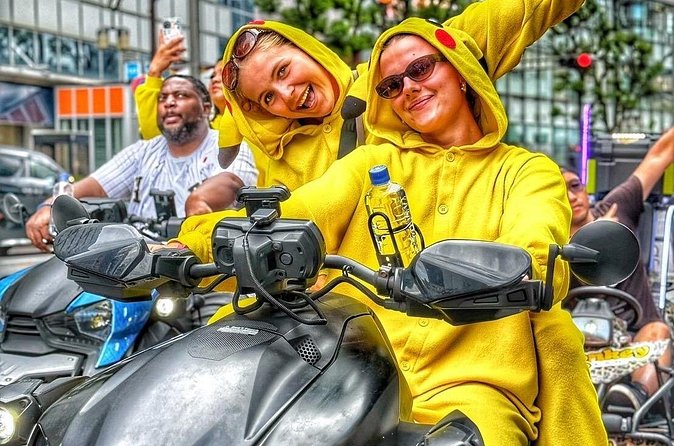
The route also reaches Nihonbashi, a commercial and cultural district centered on the Nihonbashi area. Major company headquarters sit alongside older and newer architecture, creating another change in scenery.
Nihonbashi is valuable here because it adds a business and architectural side of Tokyo. The district is not presented as a long walking stop, but the ride can give you a quick look at how historical structures and high-rise buildings share the same city center.
This is one reason the tour works best as a broad city sampler. Each area contributes a different idea: Skytree gives you scale, the sumo district gives you sport, Akihabara gives you pop culture, Ueno gives you parks, Sensoji gives you tradition, and Nihonbashi gives you commerce and architecture.
What one hour can realistically cover
The one-hour length is both the tour’s strength and its limit. You can fit it into a busy Tokyo day without giving up half a morning or afternoon. It also means the route can connect several districts quickly, something that would take more planning by foot and train.
The trade-off is depth. You should expect a moving sightseeing ride with brief visual highlights, not extended stops at six attractions. The supplied route does not state how long the bike pauses at each location, so plan on seeing the sights from the road unless the guide says otherwise.
I would use this experience early in a Tokyo stay if possible. It can help you decide which districts deserve a later, longer visit. You might return to Sensoji for a proper walk, spend an afternoon in Ueno, or set aside shopping time in Akihabara after seeing each area from the Can-Am.
Is the $228.94 group price good value?
The listed price is $228.94 per group of up to two people. That works out to about $114.47 each if two people share the vehicle. For a one-hour activity, that is not cheap. You are paying for the unusual vehicle, the guide-led route, the novelty of riding together, and the convenience of seeing several parts of Tokyo without planning the navigation yourself.
The price makes more sense for a pair who specifically wants an experience rather than standard transportation. If you mainly want to reach Sensoji or Skytree, trains and walking will cost far less and give you more time at each sight. If you want a memorable way to move through the city and enjoy the ride itself, the group pricing is easier to justify.
The tour is also often booked about 19 days ahead. That suggests you should not leave it until the last minute if your Tokyo schedule is fixed. Since weather affects departure, booking well ahead gives you a better chance of finding another suitable time if conditions cause a change.
Free cancellation is available up to 24 hours before the start time for a full refund. Changes or cancellations inside that 24-hour window are not accepted for a refund. If poor weather cancels the ride, you are offered another date or a full refund.
Who will enjoy this most
I would recommend the Can-Am ride to a couple or pair of friends who want something more playful than a standard sightseeing walk. The two-seat format is especially useful when one person has the required driving permit and the other wants to ride along.
It also suits repeat visitors who have already seen Tokyo’s main sights and want a fresh way to connect districts. First-time visitors can enjoy it too, as long as they understand that the ride is an overview and not a replacement for visiting the sights on foot.
This may not suit you if you dislike road-based activities, want a quiet cultural tour, or need a long stop at each attraction. It is also a poor fit if the driver does not have the correct IDP. Check that document before booking, since the passenger cannot substitute for the driver.
The strongest praise attached to this experience centers on fun, helpful staff, and the novelty of the ride. Reece, Adam, and Lewis are each singled out as friendly or helpful, which gives you a useful sense of the service style. The small group size also means you are not joining a large sightseeing coach.
Practical tips for a smoother ride
Arrive 20 minutes early, not at the scheduled departure time. You need time for check-in and the operating instructions, and arriving late could make the start stressful.
Keep your phone ready for the mobile ticket, but do not plan to spend the ride constantly taking pictures. You are moving through city streets, and the guide’s route and safety instructions deserve your attention.
Choose this activity on a day when the weather looks dependable. The experience requires good weather, and poor conditions can lead to a new date or refund. Since the ride is outdoors, weather has a direct effect on comfort and visibility.
If you are planning Sensoji, Skytree, Ueno, or Akihabara as major stops, place those visits before or after the ride rather than expecting the Can-Am tour to cover them fully. The route is best used as a lively introduction to the city’s variety.
Should you book the Asakusa Can-Am ride?
Book it if you want a one-hour Tokyo adventure built around the ride itself. The two-seat Can-Am, guide-led route, small group limit, and mix of Skytree, sumo, Akihabara, Ueno, Sensoji, and Nihonbashi make it a memorable city sampler.
Skip it if your main goal is value-priced sightseeing or detailed visits inside each district. At $228.94 for two, the cost is high for a short outing, but the unusual format and shared experience are the point. For the right pair, this is less a transport option than a fun story to take home from Asakusa.
FAQ
Where does the Can-Am tour begin?
The tour begins at Monkey Kart Asakusa, located at 4-chome 9, Yokokawa, Sumida City, Tokyo 130-0003. It ends back at the same meeting point.
How long does the experience last?
The ride lasts approximately one hour.
How many people can join?
The activity has a maximum of two participants. The vehicle is a two-seater, with one driver and one passenger.
Does the driver need an International Driving Permit?
Yes. Only the driver is required to have a valid International Driving Permit based on the 1949 Geneva Convention.
Does the passenger need an International Driving Permit?
The supplied details specify that only the driver needs the permit. The passenger rides as the second person on the Can-Am.
What sights are included on the route?
The route includes views of Tokyo Skytree, the sumo district, Akihabara, Ueno, Sensoji Temple, and Nihonbashi.
How early should I arrive?
You should arrive at least 20 minutes before your scheduled tour time for check-in and preparation.
What happens if bad weather cancels the ride?
You will be offered a different date or a full refund if poor weather causes cancellation.
More Asakusa Tours in Tokyo
More tours in Tokyo we've reviewed

Asakusa Tours, compared.
 ★ 4.8Tokyo: Japanese Dance Cabaret Theater Asakusa-Kaguwa TicketFrom $492 hours
 ★ 4.7Tokyo: Meiji Shrine, Asakusa, Skytree Bus Tour and CruiseFrom $12210 hours
 ★ 4.9Tokyo: Roll and Authentic Sushi Making Class in AsakusaFrom $581h 40m
 ★ 4.8Tokyo: Asakusa Walking Tour with Sensoji Temple VisitFrom $222 hours
 ★ 5.0Tokyo Asakusa Rickshaw TourFrom $42
 ★ 4.5Tokyo Panoramic 1 Day: Meiji Shrine, Asakusa, Odaiba and SKYTREE®From $85