
Reviewed · SUSHI MAKING CLASSES
Sushi Making in Tokyo at a Michelin-Listed Restaurant
Tokyo’s best food lessons often happen in working restaurants, and this one puts you behind the counter at Tachiguisushi Sushikawa, a Michelin-listed standing sushi restaurant in Shibuya. You make 10 pieces of nigiri yourself, then taste 10 pieces prepared by the chef with upgraded ingredients.
I like the small maximum of 10 people, which should give you useful time with the chef rather than a quick demonstration at the front of a large class. I also like the balance between doing and eating: you practice the technique, then compare your work with the chef’s version over tea or sake.
The main caution is reliability. One booking ended with the restaurant closed and the operator unreachable, although the provider apologized and accepted responsibility. That appears to be an isolated but serious failure, so confirm your booking and meeting details before setting out.
In This Review
- Key points to know before booking
- Making nigiri at Tachiguisushi Sushikawa
- Ten pieces to make, ten pieces to taste
- A standing sushi setting with a Tokyo feel
- Tea or sake with the lesson
- Why the small group matters
- What the $99.08 price really covers
- Reliability, booking, and cancellation
- Who will enjoy this sushi class most
- Practical tips for a smoother visit
- Should you book this Tokyo sushi-making class?
- FAQ
- Where does the sushi-making class take place?
- How long does the activity last?
- How many people can join the class?
- How many sushi pieces will I make?
- How many pieces does the chef prepare?
- Is a sushi chef costume provided?
- Is a drink included?
- Can I request vegetarian or restricted-diet options?
- Can I cancel for a full refund?
Key points to know before booking
- You make 10 pieces of nigiri yourself, with tools, ingredients, and a sushi chef costume supplied.
- You taste 10 pieces made by the chef, including upgraded ingredients.
- The class takes about 90 minutes, so it fits neatly into a Tokyo sightseeing day.
- The group is limited to 10 people, giving the lesson a more personal feel.
- Tea or sake is included, along with commemorative chopsticks to take home.
- The meeting point is in Sasazuka, Shibuya, not in central Shibuya near the famous crossing.
Making nigiri at Tachiguisushi Sushikawa
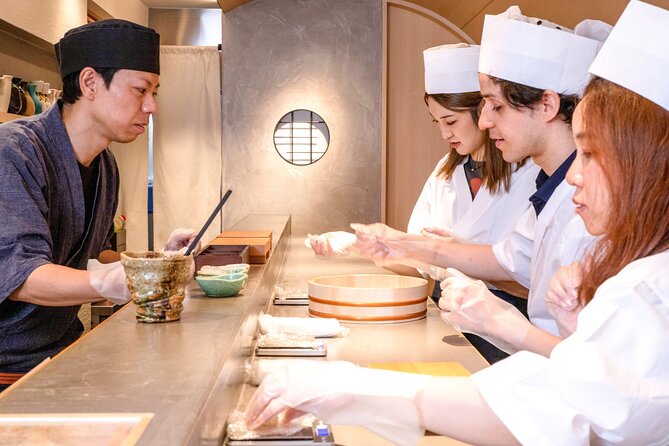
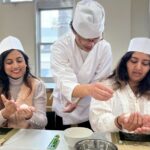
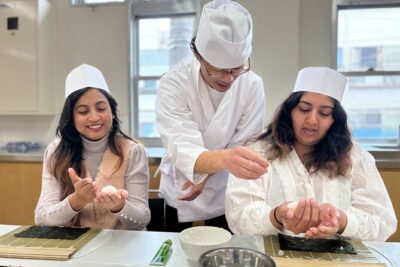
This is not a lecture about sushi. You put on a sushi chef costume, take up the tools, and work through the basic steps of nigiri under the chef’s direction.
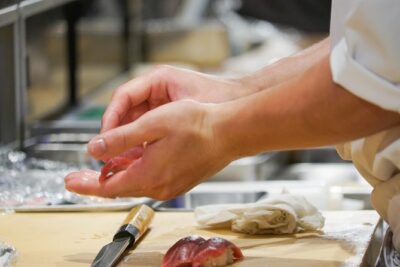
Nigiri looks simple: a small mound of rice topped with fish. The difficulty appears when you try to make one. Rice can be too loose, too packed, or the wrong shape. The topping must sit neatly, and the finished piece should be easy to pick up and eat.
That contrast is one of the best parts of the class. You get to see how much control goes into a form that looks effortless at the counter. The chef demonstrates the method, then you try it yourself with guidance nearby.
The supplied information does not name the individual chef or guide, so you should not expect a particular instructor by name. The class does include an English guide, which matters when small movements and hand positions are being explained.
You make 10 nigiri pieces. That is enough repetition to understand the basic motion without turning the class into a long technical workshop. Your first piece may look rather different from the chef’s. That is part of the lesson, not a sign that the class has gone wrong.
A few more Tokyo tours and experiences worth a look

Ten pieces to make, ten pieces to taste
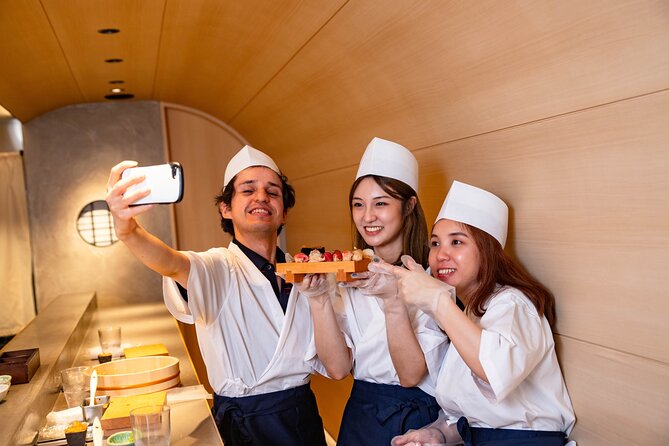
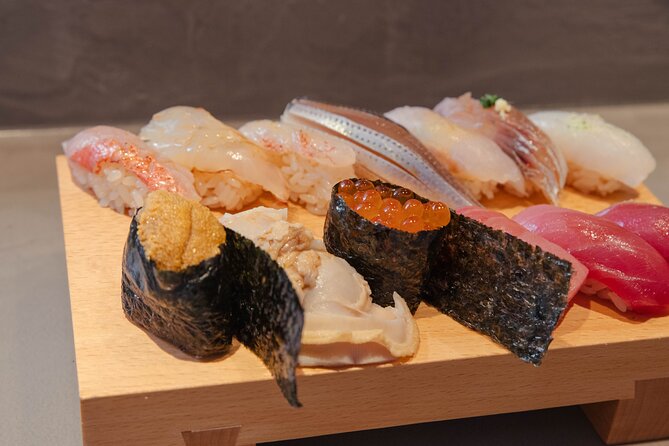
Your own sushi forms part of the meal. You also receive 10 pieces prepared by the chef, made with upgraded ingredients. This two-part tasting gives you a useful comparison.
Your sushi lets you judge the practical side of the class. Is the rice holding together? Is the fish sitting straight? Can you make a piece that looks tidy and feels balanced?
The chef-made sushi gives you the flavor benchmark. You can notice the difference in shape, rice handling, and presentation while eating the same style of food from a trained hand. I like this setup because the meal does not depend only on how well you perform during a short lesson.
A previous participant described the fish as beautiful cuts and found the method deceptively simple. That is a fair warning for anyone expecting an easy craft activity. Sushi making is accessible, but making nigiri look like professional nigiri takes practice.
The ingredients are not described in detail, and the exact fish selection may vary. If a particular fish matters to you, ask in advance rather than assuming the menu. The same applies to food restrictions and vegetarian preferences. The operator asks you to provide that information before the class so suitable options can be discussed.
A standing sushi setting with a Tokyo feel
The restaurant is presented as an authentic Edo-style standing sushi setting. That gives the class a different tone from a cooking school with individual workstations and a formal dining room.
Standing sushi restaurants are built around a direct relationship between chef and customer. You are close to the action, and the format keeps the focus on the food and the handwork. For some people, that setting will feel more connected to everyday Japanese dining than a polished tourist kitchen.
The tradeoff is comfort. The activity is described as a standing sushi restaurant experience, so it may not suit anyone who needs a seated class for the full 90 minutes. The available information does not promise seating or describe the exact room layout. If standing for the lesson is a concern, ask the operator before booking.
The meeting point is in Sasazuka, within Shibuya, at Japan, 151-0073 Tokyo, Shibuya, Sasazuka, 1-chōme 62-6. It is near public transportation, but it is not the same area as Shibuya Station’s famous crossing. Allow enough time to reach the address, and check the exact map pin and local meeting instructions before leaving your hotel.
Tea or sake with the lesson
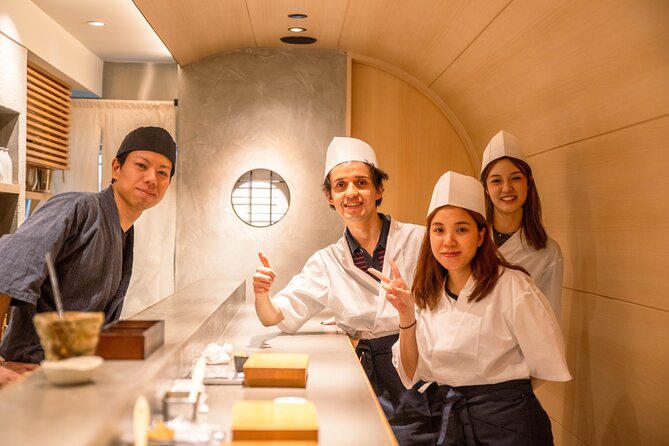
A Japanese tea or sake set is included. You choose between the two, giving the final tasting a small personal touch.
Tea is the straightforward choice if you want to keep the class family-friendly or avoid alcohol during a busy sightseeing day. Sake makes the meal feel more like a traditional restaurant tasting, but the supplied details do not state the type, amount, or whether age restrictions apply.
The drink is not the main reason to book. It is a pleasant addition that helps round out the meal after the hands-on work. The real value lies in having the chef’s sushi beside your own, with an English guide helping you follow the technique.
Why the small group matters
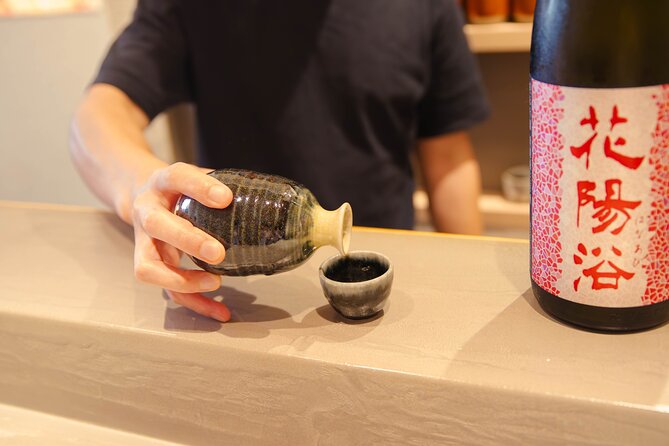
The maximum group size is 10 people. That is not a private class, but it is small enough to make individual help more realistic than in a large demonstration.
Nigiri is a hands-on skill. You need to see the chef’s finger placement, copy the movement, and receive correction when the rice or topping is not behaving. A small group makes it easier to watch closely and ask questions.
The phrase group discounts is included among the features, but no discount amount or group size requirement is provided. If you are booking with friends or family, check the current price for your party rather than assuming a discount will appear automatically.
This format suits couples, families with an interest in food, and small groups who want an activity that produces an actual meal. It also works for solo visitors who prefer a guided class with a defined start and end rather than wandering through another food market.
A few more Tokyo tours and experiences worth a look

What the $99.08 price really covers
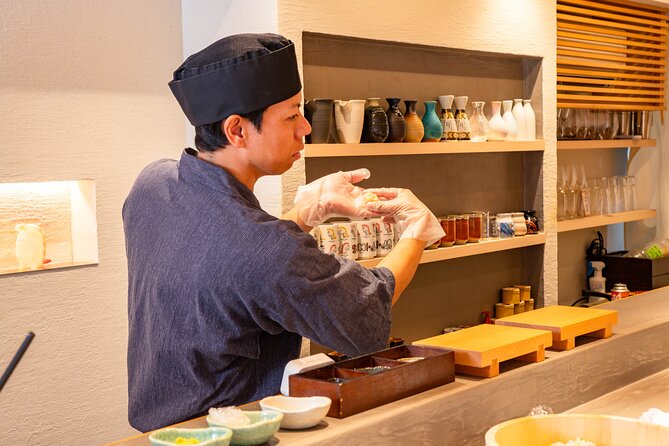
At $99.08 per person, this is not a cheap lunch. It is also more than a simple sushi demonstration because the fee includes the class, all sushi-making tools, a chef costume, your 10 pieces, 10 chef-made pieces, tea or sake, an English guide, and commemorative chopsticks.
The value is strongest if you would otherwise pay separately for a quality sushi meal and want a practical activity at the same time. You are paying for instruction, food, access to a Michelin-listed restaurant setting, and a souvenir rather than just for the fish.
The value is weaker if you mainly want a large sushi meal or already know how to make nigiri. The class portion is the point, and the lesson takes about 90 minutes. You should book it for the combination of food and skill, not simply because the restaurant has a Michelin listing.
The chopsticks are a modest but useful keepsake. They will not transform the price calculation, but they give you something practical to bring home and a reminder of the lesson. The more important souvenir is the technique, which you can try again in your own kitchen.
Reliability, booking, and cancellation
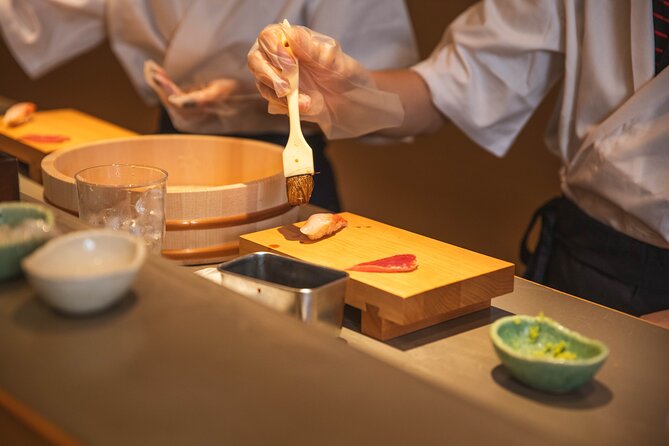
The experience has a rating of 4.9 out of 5 from 40 reviews, with 98 percent recommending it. The strongest praise focuses on the hands-on teaching, the quality of the fish, the chef’s skill, and the fun of wearing the sushi costume.
There is also a serious service problem to consider. One party arrived after booking well in advance and found the restaurant closed. Attempts to contact the operator by email, text, and phone received no response at the time. The provider later apologized and said an internal oversight meant the restaurant preparations had not been completed.
I would not ignore that incident, even with the strong overall score. After booking, confirm the date, time, meeting point, and venue directly if contact information is available. Keep your confirmation handy on the day, and avoid scheduling a nonrefundable major attraction immediately afterward.
Free cancellation is available up to 24 hours before the start time for a full refund. Changes or cancellations inside that 24-hour window are not accepted for a refund, and the cut-off follows Tokyo local time. Confirmation is sent within 48 hours, subject to availability.
Who will enjoy this sushi class most
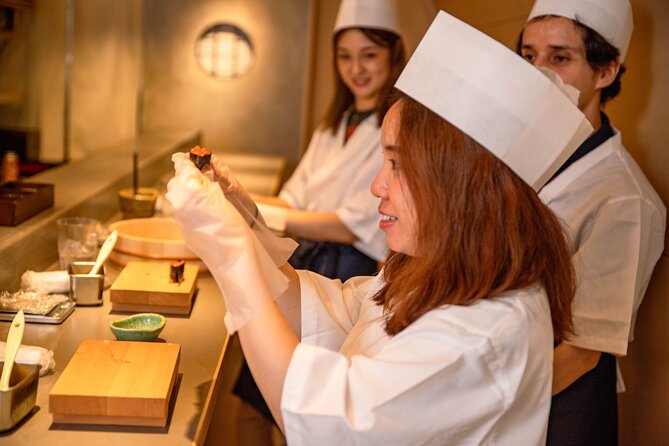
I would recommend this to you if you enjoy food activities where you take part rather than simply sit and eat. It is especially well suited to first-time sushi makers, couples, families, and small groups who want a light cultural activity in Tokyo.
You do not need to be an accomplished cook. The chef teaches the method, and the class is designed around making 10 pieces. Still, you should arrive ready to practice rather than expecting every piece to look perfect.
It may be less suitable if you want a quiet, seated meal, dislike raw fish, need a fully private class, or have strict dietary needs that cannot be accommodated. Vegetarian and restricted-diet options may be possible, but you must provide notice in advance and wait for the operator to confirm what can be arranged.
The class also suits people who want a souvenir with more meaning than a generic Tokyo gift. The chopsticks are nice, but the better take-home item is the ability to show friends how difficult it is to make one small piece of nigiri look right.
Practical tips for a smoother visit
Check the route to Sasazuka carefully. The address is in Shibuya, but it is not the central Shibuya sightseeing zone most visitors picture. Since the activity ends where it starts, you can plan another nearby stop afterward, but allow travel time before the class.
Wear something comfortable under the costume. The class provides the sushi chef outfit and equipment, so you do not need to bring cooking tools.
Tell the operator about vegetarian preferences or food restrictions before the day of the activity. Do not wait until you arrive, since suitable ingredients need to be discussed in advance.
If you choose sake, remember that the tour includes a tasting set, not a promise of unlimited drinks. The provided information does not specify the serving size.
Finally, keep your schedule flexible enough to absorb a possible delay. The activity lasts about an hour and a half, but Tokyo transport and meeting-point confusion can cost time. A little planning will let you enjoy the lesson instead of watching the clock.
Should you book this Tokyo sushi-making class?
Book it if you want a compact, hands-on food activity with a real sushi chef, a small group, and enough food to compare your work with the professional version. The Michelin-listed setting, chef costume, tea or sake, and commemorative chopsticks add character, while the 10 pieces you make give the class a clear purpose.
I would be cautious if you need a fully dependable schedule or cannot stand for the activity. The one documented closure and failed contact attempt are worth taking seriously, even though the overall satisfaction score is very high and the provider apologized.
For most food-focused visitors, this is a good use of 90 minutes in Tokyo, provided you confirm the arrangements and notify the operator about dietary needs early. You leave with lunch, a new kitchen skill, and a better understanding of why excellent nigiri looks so simple.
FAQ
Where does the sushi-making class take place?
The class takes place at Tachiguisushi Sushikawa in Sasazuka, Shibuya, Tokyo. The listed meeting point is Japan, 151-0073 Tokyo, Shibuya, Sasazuka, 1-chōme 62-6.
How long does the activity last?
The activity lasts approximately 1 hour and 30 minutes.
How many people can join the class?
The maximum group size is 10 people.
How many sushi pieces will I make?
You will make 10 pieces of nigiri yourself with guidance from the sushi chefs.
How many pieces does the chef prepare?
You will taste 10 pieces made by the chef, including upgraded ingredients.
Is a sushi chef costume provided?
Yes. The sushi chef costume and all tools required for making sushi are included.
Is a drink included?
Yes. You can choose a Japanese tea or sake set.
Can I request vegetarian or restricted-diet options?
Yes, but you must inform the operator in advance. Suitable options will be discussed based on your needs.
Can I cancel for a full refund?
Yes. You can cancel at least 24 hours before the local start time for a full refund. Cancellations or changes made less than 24 hours before the start time are not refunded.
More Dining Experiences in Tokyo
More Sushi Making Classes in Tokyo
More tours in Tokyo we've reviewed




Sushi Making Classes, compared.
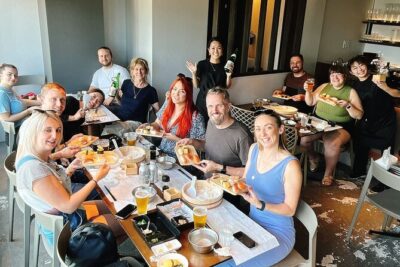 ★ 5.0Sushi Making Tokyo Roll and Authentic Japanese Sushi ClassFrom $59
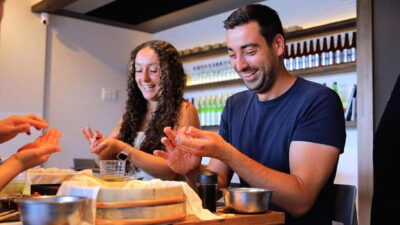 ★ 4.9Tokyo: Roll and Authentic Sushi Making Class in AsakusaFrom $581h 40m
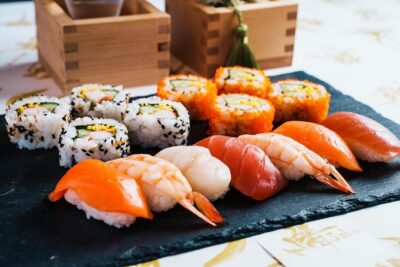 ★ 5.0Make Sushi and Create Unforgettable Memories in TokyoFrom $79
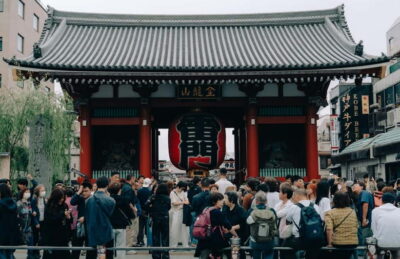 ★ 4.9Tokyo: Sushi Making Class in a Happi Coat near a Famous SpotFrom $421h 30m
 ★ 5.0Tokyo Sushi Making Class in Tsukiji with Professional ChefFrom $49
 ★ 5.0Tokyo Night Foodie Tour in Shinjuku – Seasonal Sushi, Wagyu BeefFrom $111