
Reviewed · BAY & RIVER CRUISES
Tokyo Bay: Traditional Japanese Yakatabune Dinner Cruise
Tokyo looks different from the water. On this traditional yakatabune dinner cruise, you eat a full Japanese course meal while the city lights slide past the windows. The boat usually travels from Shinagawa toward Rainbow Bridge, Odaiba, the Sumida River, and Tokyo Skytree, with time on the upper deck for photographs.
I like the fresh tempura served in stages, rather than left sitting on a tray, and the all-you-can-drink service, which includes beer, sake, shochu, wine, whiskey, plum liqueur, and soft drinks. I also like that this feels closer to a local Japanese evening than a standard sightseeing boat.
The main drawback is language. Much of the commentary and onboard entertainment is in Japanese, and the dinner cannot be adjusted for dietary requirements. You can still follow the meal and enjoy the scenery, but this is not the cruise to choose if you need detailed English explanations.
In This Review
- Key points to know before booking
- What a Tokyo yakatabune evening feels like
- Starting at Funasei pier in Shinagawa
- Settling into the air-conditioned dining room
- Course after course of Japanese food
- Unlimited drinks and an easygoing dinner pace
- Tokyo Bay, Odaiba, and Rainbow Bridge
- The Sumida River and Tokyo Skytree after dark
- A local atmosphere with a few tourist comforts
- Is $108 a fair price?
- Weather, timing, and practical limits
- Who will enjoy this cruise most
- Should you book the Funasei yakatabune?
- FAQ
- Where does the Tokyo yakatabune cruise depart?
- How long does the dinner cruise last?
- What food is served on the boat?
- Are drinks included?
- Is the cruise conducted in English?
- Can the dinner accommodate dietary requirements?
Key points to know before booking
- Three hours on a traditional houseboat: The evening combines a seated Japanese dinner, Tokyo Bay scenery, and stops for rooftop photographs.
- A full course meal: Expect appetizers, sashimi, fresh tempura, seasonal rice, pickles, salad, noodles, and dessert.
- Unlimited drinks included: Beer, sake, shochu, wine, whiskey, plum liqueur, and soft drinks are available throughout the cruise.
- The best views come from above: The top deck gives you photo opportunities with Tokyo Skytree, Rainbow Bridge, and Odaiba.
- Departure time changes by date: The boat leaves between 5:00 PM and 6:30 PM, with the exact time sent separately.
- English support is limited: Staff are friendly and often help with practical matters, but the main announcements may be in Japanese.
What a Tokyo yakatabune evening feels like
A yakatabune is a traditional Japanese pleasure boat, built for dining and social gatherings on the water. In Tokyo, these boats have long been used for celebrations, company dinners, family occasions, and evenings with friends.
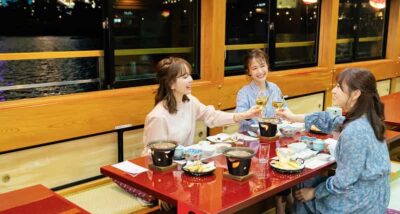
That setting matters. You are not simply riding around Tokyo Bay with a boxed meal. You sit in a dining room designed for a shared Japanese meal, often alongside local families and groups. Some people wear traditional dress, and the mood can be lively without feeling like a staged show for tourists.
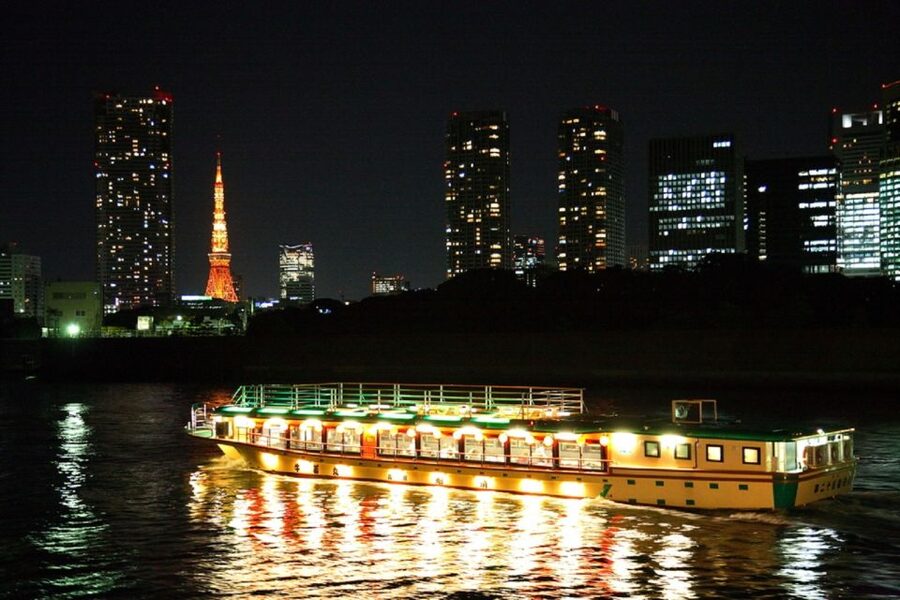
The boat carries you through a changing mix of Tokyo scenery. At one moment, you are looking across dark water toward the city. At another, an illuminated bridge or tower fills the view. The route is subject to change, but the cruise generally links Shinagawa, Tokyo Bay, Rainbow Bridge, Odaiba, the Sumida River, and Tokyo Skytree.
I would plan this as an evening activity rather than a quick sightseeing ride. The advertised duration is three hours, and the meal arrives over the course of the cruise. You have time to eat, order drinks, look outside, and go upstairs when the boat pauses at good photo locations.
Starting at Funasei pier in Shinagawa
The cruise begins at the Funasei Boat Pier in Shinagawa-Ku. There is no hotel pickup or drop-off, so you need to make your own way to the pier.
Give yourself extra time. One person found that Google Maps directed them to the wrong place, and another chose a taxi because the pier was not easy to locate. The practical move is to check the meeting point carefully before leaving your hotel and arrive at least 30 minutes before departure.
The departure window is between 5:00 PM and 6:30 PM, but the exact sailing time depends on the date and weather. You receive that final time in a separate email once it is confirmed. Do not rely only on the original booking time.
Late arrival is a serious problem here. If you miss the departure, there is no refund. I would treat the pier as a destination that needs a small time cushion, especially if you are coming from another part of Tokyo with luggage, children, or a large group.
Settling into the air-conditioned dining room
Inside, the dining room is fully air-conditioned. Seating may be at a normal table with chairs or at a low table over a recessed floor area. The latter is a familiar Japanese dining style, but it is worth considering if you have trouble sitting low for a long meal.
You may share a table with up to six other people. That can be part of the charm, since the cruise is built around communal dining rather than private restaurant-style seating. It also means this is not the best choice if you expect an intimate table for two or a fully private celebration.
The crew is one of the strongest parts of the evening. Staff are described as warm, attentive, and quick to help. They have helped international diners understand how to order drinks, when to go upstairs, and how to use the items set on the table.
You may not understand every announcement, but the staff still make a clear effort to include you. Some diners received help from an English-speaking crew member, while others had key instructions explained through gestures or simple translation. That friendly practical help goes a long way.
Course after course of Japanese food
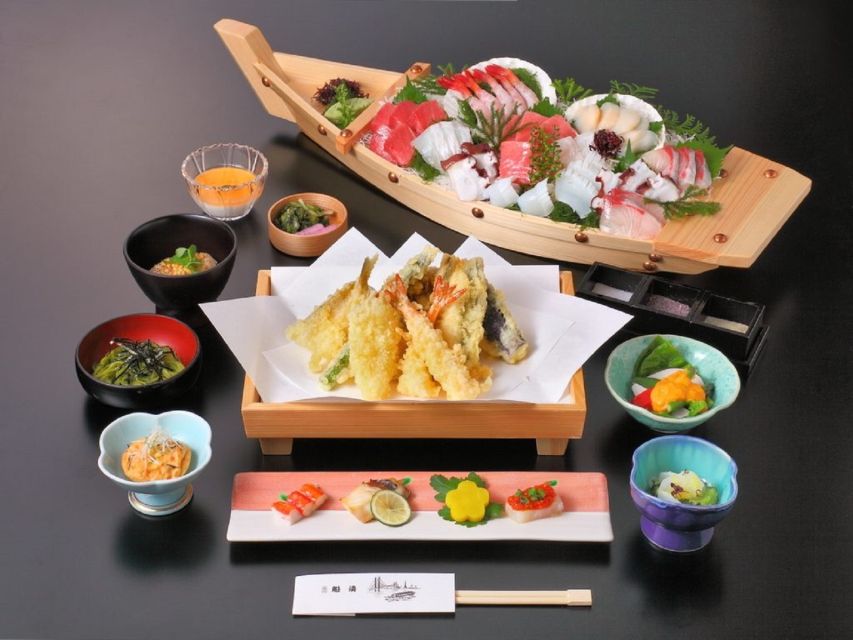
The meal is a Japanese-style course dinner prepared on the day. The exact menu can vary with the season, but the planned progression includes several distinct parts:
- Appetizers such as shikidashi, vegetables, and kobachi
- A sashimi boat
- Fresh tempura
- Seasonal rice
- Pickled vegetables
- Salad
- Noodles to finish
- Dessert
This is a substantial meal, not a light snack between viewpoints. The food arrives throughout the cruise, which keeps the dinner moving and gives you something new to try at several points.
The tempura is a highlight. It is cooked in stages and carried out while fresh, rather than served all at once after it has cooled. That small detail makes a real difference. The meal may include fish and vegetables, and the portions keep coming often enough that you should pace yourself early.
The sashimi and small opening dishes give the meal a traditional rhythm. You can try several flavors without needing to order individual plates. English labels on the table may help explain basic items, including which sauce to use with the sashimi.
The seasonal rice and noodles provide a more filling close to the savory courses. Dessert follows, though the exact sweet is not specified. Since the meal is prepared for the group in advance, you cannot request special dietary changes. This is important for anyone with allergies, strict religious dietary rules, or a vegetarian or vegan diet.
There is a special meal for children aged three to five. The supplied information does not promise a custom menu for older children or other dietary needs, so families should clarify their situation before booking.
Unlimited drinks and an easygoing dinner pace
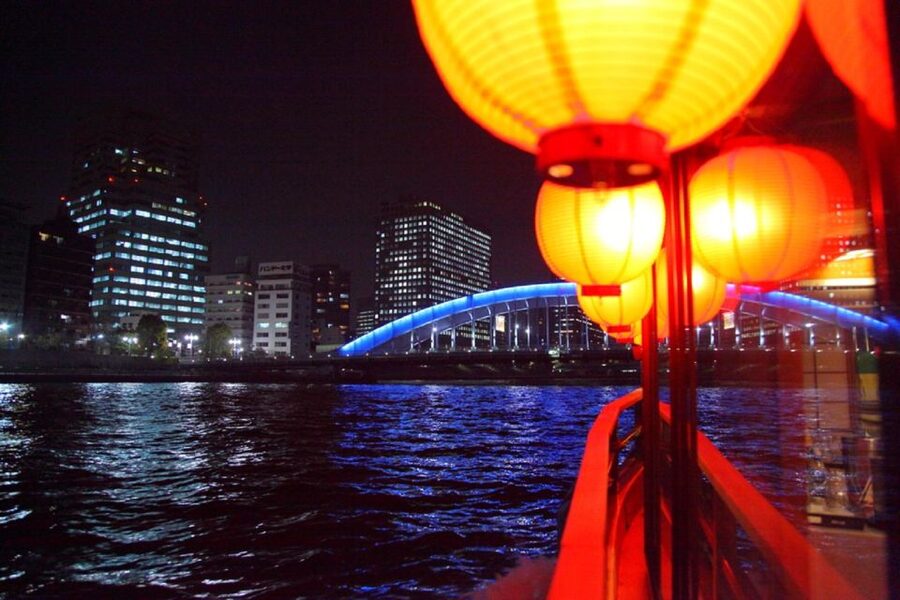
Unlimited drinks are included in the price. The selection covers beer, shochu, Japanese sake, wine, whiskey, plum liqueur, and soft drinks.
The drink service is handled efficiently. A QR code or barcode can be scanned to order, and drinks may arrive within seconds. That means you do not need to leave your seat or interrupt the meal to find a bar.
Plum wine is a good choice if you prefer something sweet. Sake and beer suit the meal more traditionally, while soft drinks make the cruise workable for teenagers and anyone who does not drink alcohol.
The all-you-can-drink arrangement adds real value to a three-hour dinner. A restaurant meal with several courses and multiple drinks can become expensive in Tokyo, so the bundled price is easier to justify for people who will make use of the beverage service. If you do not drink, the value rests more heavily on the food, boat setting, and views.
Please pace yourself. The cruise lasts several hours, and the boat may be lively. You want to remember the illuminated bridges, not just the first round of drinks.
Tokyo Bay, Odaiba, and Rainbow Bridge
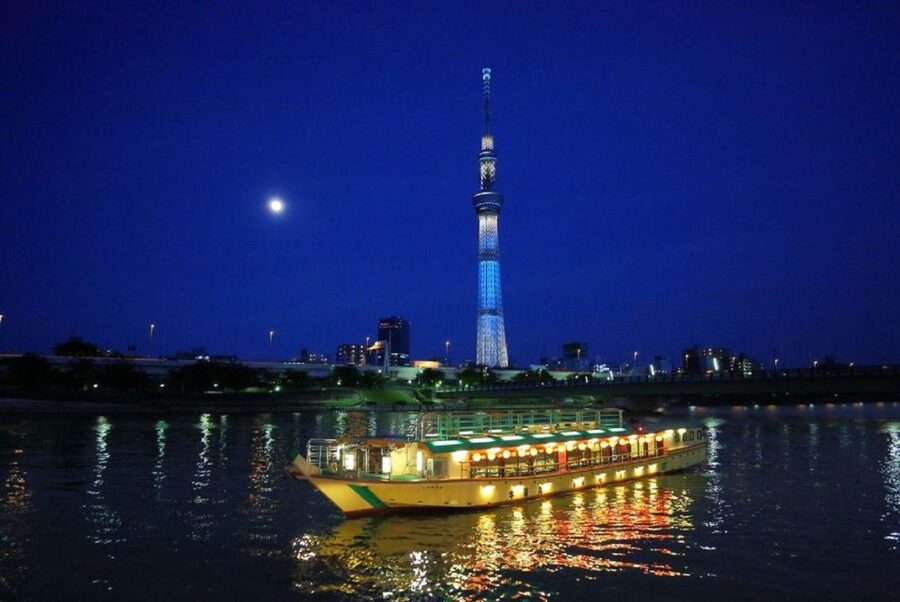
After leaving Shinagawa, the boat generally works its way through Tokyo Bay and toward major waterfront sights. The water gives you a broad view of the city, rather than the street-level perspective you have from trains and pavements.
Odaiba is especially appealing after dark. Its waterfront views show Tokyo as a wide, glowing city rather than a wall of buildings. The cruise route can change, so the exact order and timing of the sights are not fixed.
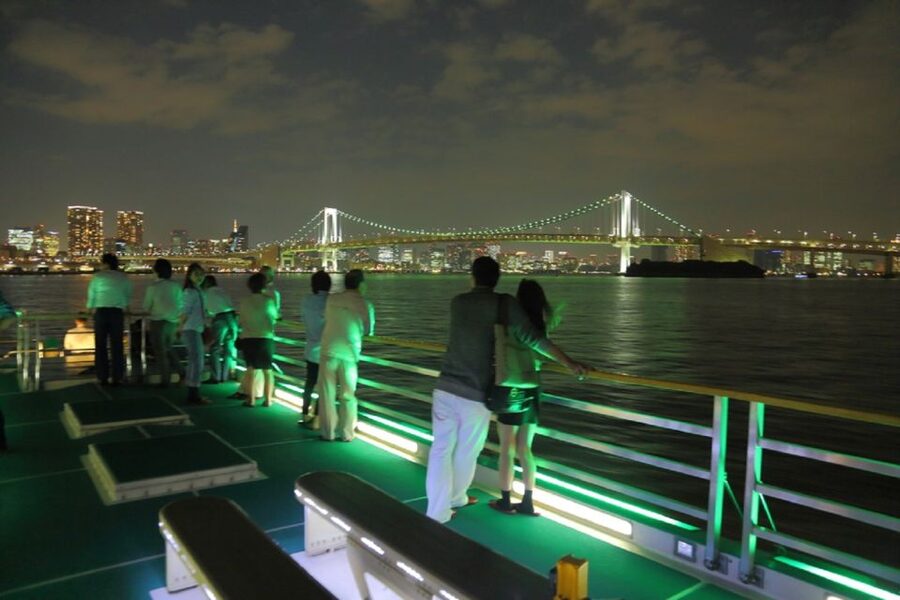
Rainbow Bridge is one of the evening’s main visual points. Seen from the water, its illuminated span has more impact than it does from a nearby road. The boat may pause at scenic locations, giving staff time to help take photographs.
The upper observation deck is the place to go for the best pictures. Bring a layer, even in warm weather, because the open deck can feel cooler once the boat is moving. You may need to share the space with other people heading up for the same view, but the crew helps organize photo opportunities.
The Sumida River and Tokyo Skytree after dark
The route also includes the Sumida River. This section offers a different view of Tokyo, with bridges, riverside buildings, and the city’s changing night lights.
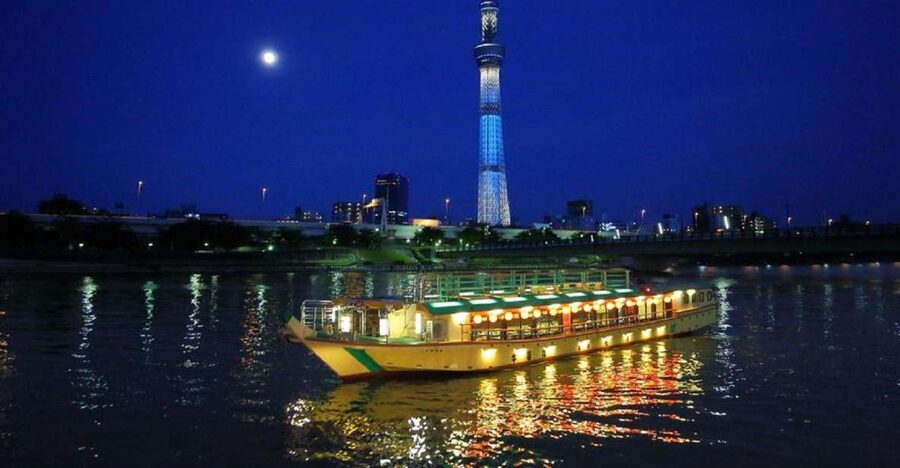
Tokyo Skytree is the major photo moment. The boat stops at a position where you can go onto the roof and photograph the illuminated tower. Crew members may help take pictures, and the pause gives you more than a quick glimpse through a window.
This is a useful contrast with visiting Skytree itself. From the tower, you look out over Tokyo from high above. From the yakatabune, you see the tower as part of the city skyline, framed by water and the boat’s rooftop. You get a sense of scale that an observation deck cannot provide.
The commentary about landmarks is mostly in Japanese. A map can help you identify what you are seeing, and staff may translate the basic information, but you should not expect a full English sightseeing narration. If every building and bridge needs explanation, you may prefer a dedicated guided tour.
A local atmosphere with a few tourist comforts
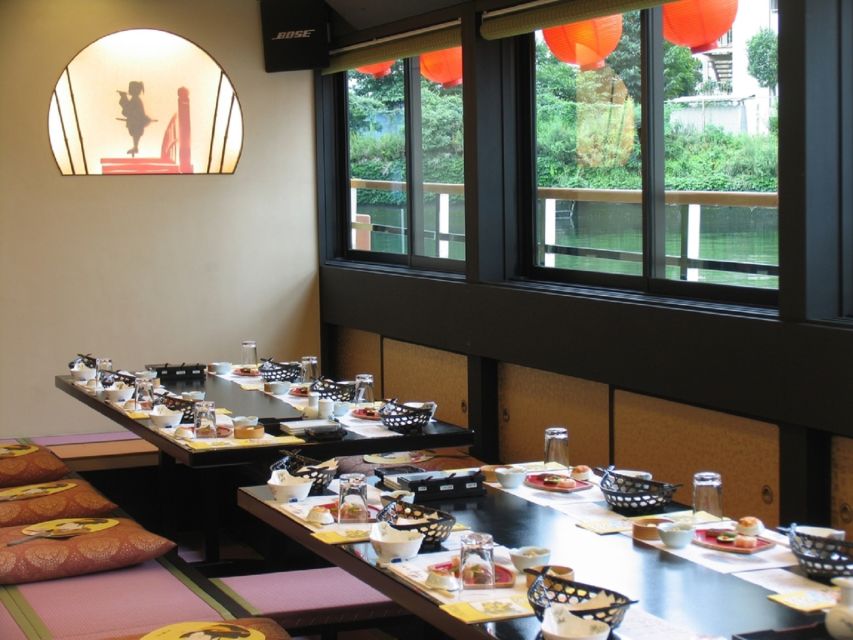
The cruise works because it sits between a local celebration and a visitor-friendly activity. Japanese families and groups use these boats for their own occasions, so the setting does not feel built only for international sightseeing.
At the same time, the crew knows how to look after people unfamiliar with Japanese dining. They may explain the meal, point out when it is time for rooftop photographs, lend traditional clothing for pictures, or arrange a small birthday or honeymoon surprise when notified.
The onboard host may make jokes or give lively commentary in Japanese. You may miss the words, but the energy is easy to understand. The atmosphere is social and cheerful, not silent or formal.
That mix is a major reason I would recommend the cruise to people who want something more distinctive than a standard restaurant dinner. You get a comfortable meal and clear tourist highlights, but the evening still feels rooted in a Japanese custom.
Is $108 a fair price?
At $108 per person, this is not a budget dinner. The price becomes more reasonable when you add up what is included: a three-hour yakatabune cruise, a multi-course Japanese meal, unlimited drinks, staff service, and rooftop viewing stops.
The value is strongest for people who want one carefully planned evening rather than separate meals and sightseeing stops. You do not have to arrange a restaurant reservation, find a waterfront viewpoint, or pay separately for drinks. The boat supplies the setting and the schedule.
The value is weaker if you need a private table, English commentary, or special food. It is also less compelling for non-drinkers who would not use the unlimited beverage service. In that case, compare the price with a regular Japanese dinner followed by a less expensive harbor cruise.
The cruise can fill quickly, especially during popular travel periods. Booking early is sensible if your Tokyo schedule is tight, but check the cancellation terms carefully: a full refund is available only when you cancel at least 11 days ahead.
Weather, timing, and practical limits
The boat operates in rain, so a wet forecast does not automatically cancel the evening. It does not operate under special conditions such as an earthquake, tsunami, or storm. If the operator cancels, you receive an email.
The route can change, too. Treat the listed landmarks as likely highlights rather than a guaranteed sequence. Weather and operating conditions may affect where the boat goes and how long it pauses.
The exact departure time is announced separately and may fall anywhere from 5:00 PM to 6:30 PM. Check your email before the day of the cruise, then arrive 30 minutes early.
I would also keep the rest of the evening flexible. A three-hour meal cruise is not something to squeeze between two timed attractions. Let the boat be the main plan for the night.
Who will enjoy this cruise most
This experience suits couples marking a birthday, honeymoon, or anniversary, especially if you tell the company in advance. Small families also fit well, and teenagers can enjoy the skyline, generous food, and soft drinks without needing to understand every announcement.
It is a good pick for first-time visitors who want a single evening that combines several sides of Tokyo: traditional dining, modern architecture, waterfront scenery, and Japanese hospitality.
You should think twice if you have strict dietary needs, dislike shared seating, or want a detailed English guide. The cruise can still be enjoyable without Japanese, but you will miss much of the spoken commentary.
Should you book the Funasei yakatabune?
I would book this cruise if you want a memorable Tokyo evening with food, drinks, and city views in one package. The fresh tempura, attentive crew, rooftop photographs, and local social setting give it more character than a basic sightseeing boat.
Book it for the experience, not for a formal English tour. Confirm the departure email, allow plenty of time to find Funasei pier, and arrive early. If you can accept shared seating and a Japanese-language atmosphere, the $108 price offers a strong evening of dining and sightseeing.
FAQ
Where does the Tokyo yakatabune cruise depart?
The cruise departs from the Funasei Boat Pier in Shinagawa-Ku. Hotel pickup and drop-off are not included.
How long does the dinner cruise last?
The cruise lasts about three hours. The exact starting time is announced separately and falls between 5:00 PM and 6:30 PM, depending on the date and weather.
What food is served on the boat?
The Japanese course meal includes appetizers, vegetables, sashimi, fresh tempura, seasonal rice, pickled vegetables, salad, noodles, and dessert. The menu is prepared on the day and can vary by season.
Are drinks included?
Yes. Unlimited drinks are included, with beer, shochu, Japanese sake, wine, whiskey, plum liqueur, and soft drinks available.
Is the cruise conducted in English?
Much of the onboard commentary and entertainment is in Japanese. Staff may help explain practical instructions and some of the meal, but detailed English sightseeing commentary is not guaranteed.
Can the dinner accommodate dietary requirements?
No. The dinner cannot be catered for dietary requirements. A special meal is provided for infants aged three to five.
Bay & River Cruises, compared.
 ★ 4.0Mt Fuji & Hakone Cruise, Drum Show Bullet Train 1 Day from TokyoFrom $149
 ★ 4.4Tokyo Mt Fuji 5th St & Hakone Cruise Bus Tour w/Bullet TrainFrom $15410 hours
 ★ 4.2Tokyo: Mt. Fuji 5th Station & Hakone Cruise 1-Day Bus TourFrom $12911 hours
 ★ 4.7Tokyo: Meiji Shrine, Asakusa, Skytree Bus Tour and CruiseFrom $12210 hours
 ★ 4.0Mt Fuji & Hakone Cruise, Drum Show Bus 1 Day from TokyoFrom $122
 ★ 4.6Sumida River: Japanese Traditional Yakatabune Dinner CruiseFrom $1032h 30m