
Reviewed · GO-KARTS
Cherry Blossom Go-Kart Tour with Insta360 Video & Photos
Tokyo’s cherry blossom season gets a very different treatment from the seat of a go-kart. This two-hour outing takes you through Tokyo traffic and past the Skytree, Imperial Palace, Ginza, Kabuki-za, and other major sights, while your guide stays ahead and talks to you by two-way radio.
I like the stable karts with comfortable seating, especially for larger or taller drivers. I also like the small-group size, capped at 10 people, and the chance to record the drive with an Insta360 camera. The main consideration is simple: you must arrive early with the correct driving documents, and street driving may not suit anyone who wants a quiet, slow sightseeing tour.
In This Review
- Key points before you book
- What this Tokyo go-kart tour is really like
- Starting at Kartzilla in Higashiyotsugi
- Getting comfortable in the go-karts
- Tokyo Skytree and Skytree Town
- Edozakura-dori, the Sword Museum, and Nihonbashi
- Tokyo Station and the Imperial Palace area
- Ginza, Kabuki-za, and Tsukiji Honganji
- The Insta360 camera and included photos
- Is $116 a fair price?
- Who will enjoy this most
- Timing, cancellation, and planning advice
- Should you book the spring go-kart tour?
- FAQ
- How long is the Cherry Blossom Go-Kart Tour?
- Where does the tour start and finish?
- What driving documents do I need?
- Can I use a digital license or a photo of my license?
- Is a Micro SD card included?
- What languages are available?
- Can I cancel the booking?
Key points before you book
- Tokyo sightseeing from street level: See the Skytree, Nihonbashi, Tokyo Station, the Imperial Palace area, Ginza, and more without sitting inside a tour bus.
- Designed for larger riders: Reinforced frames, comfortable seats, smooth suspension, and hydraulic brakes make the karts less intimidating for first-time drivers.
- Live guidance by radio: Your guide leads the group and gives instructions through two-way communication.
- Spring route with famous city views: Edozakura-dori, Chidorigafuchi, and the Imperial Palace area bring seasonal scenery into a busy urban route.
- Photos and 360-degree video: Complimentary photos are included, while Insta360 footage requires your own Micro SD card or an on-site purchase.
- Bring the right license: A valid license is essential. Digital copies, photographs, and expired documents are not accepted.
What this Tokyo go-kart tour is really like
This is not a theme-park ride or a private track session. You drive a street-legal go-kart on public roads, following a professional guide through Tokyo. That makes the experience exciting, but it also means you need to be comfortable obeying traffic rules and staying with the group.
The route is built around famous places rather than long stops inside museums or temples. You will pass each landmark, hear commentary, and keep moving. Think of it as a fast-moving city tour with a steering wheel, not a traditional walking tour with extended sightseeing time.
The karts are designed for urban use. Reinforced frames help accommodate big and tall riders, while stable handling, suspension, and hydraulic braking add confidence. Those details matter more here than they would on a short recreational kart track because you are driving through real city streets.
The group limit of 10 people is another practical plus. A guide can keep a small line together more easily than a large convoy, and the radio system gives you a way to hear instructions while wearing a helmet or dealing with city noise. The supplied information does not name the individual guides, but the tour is offered with English, German, and Persian guidance.
A few more Tokyo tours and experiences worth a look
Starting at Kartzilla in Higashiyotsugi
The experience begins and ends at Kartzilla Go Kart Base in Higashiyotsugi, Katsushika-ku. The meeting-point information also names Kinegawa Central Park, so I would confirm the exact check-in location and map pin before leaving your hotel. This is the sort of detail worth settling in advance, particularly if you are coming from central Tokyo.
Arrive at least 40 minutes before your scheduled departure. That time is used for check-in, document checks, costume selection, and the required safety briefing. Arriving late could delay the whole group, and one previous customer specifically advised arriving early so the briefing can begin on time.
You will need:
- Your passport
- Your physical driving license
- Your International Driving Permit, if required
- A Micro SD card if you want to save Insta360 footage directly
A Japanese license is accepted for Japanese citizens and residents. Non-residents need an International Driving Permit issued under the 1949 Geneva Convention. Licenses from Switzerland, Germany, France, Belgium, Monaco, or Taiwan must be accompanied by an official Japanese translation issued by JAF.
Do not rely on a phone photograph of your documents. Digital licenses, license photos, and expired licenses are not accepted. If you cannot present the required documents on the day, you cannot join and no refund is provided.
Getting comfortable in the go-karts
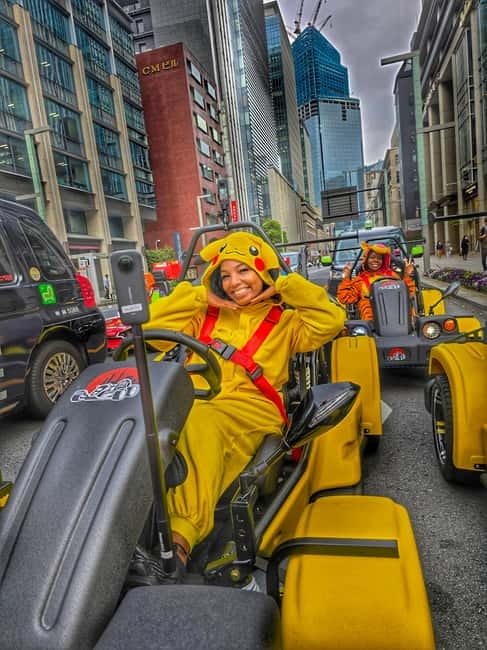
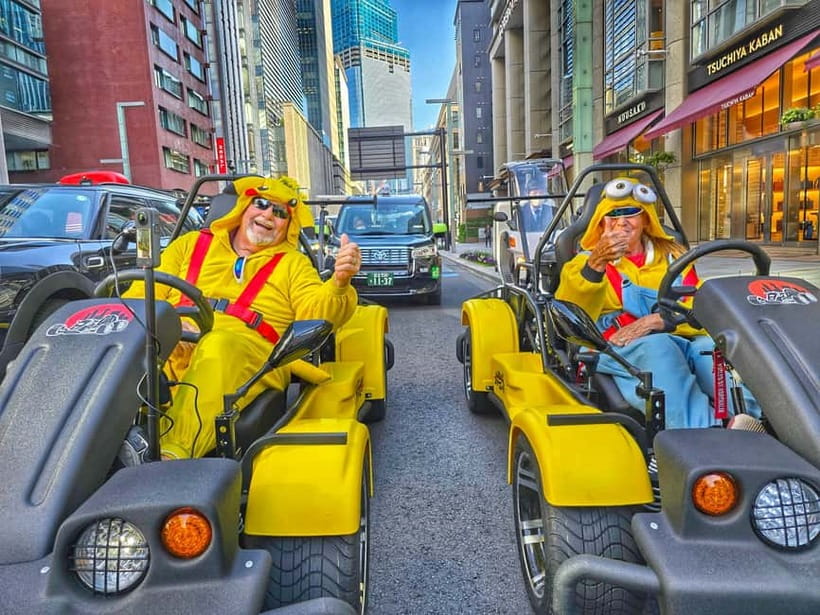
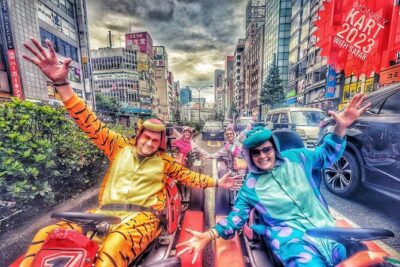
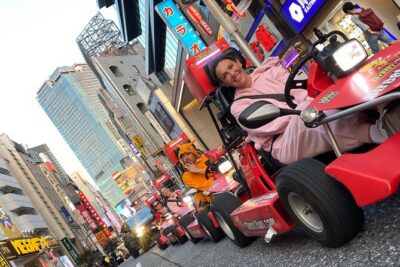
After check-in, you select an anime costume if you wish. The costume rental adds a playful touch to the photos, though you can treat it as optional in spirit if dressing up is not your thing.
The safety briefing is important. You will learn how the kart handles, how to brake, and how to follow the guide. Since the tour uses public roads, this is not a place to show off or race. The guide controls the pace and group movement.
The karts have reinforced frames, comfortable seating, smooth suspension, and hydraulic brakes. One strong point here is the attention to rider comfort. A customer who had driven alongside other go-kart companies specifically praised Kartzilla’s suspension as superior, and that is a useful comparison if you are choosing between operators.
You will also have two-way radio communication with the guide. This lets the guide give clear directions and share information while you drive. It is a small feature with a big practical benefit: you do not have to guess where the group is going or wait for a stop to hear instructions.
Water, tea, and coffee are included. Meals are not, so eat beforehand if you know you get hungry after an active morning or afternoon.
Tokyo Skytree and Skytree Town
The early part of the route brings you toward Tokyo Skytree, Japan’s tallest tower. From a go-kart, you see the tower in the context of Tokyo’s roads and neighborhoods rather than approaching it through a standard attraction entrance.
That change in viewpoint is the main appeal. You are not spending time going up the tower, and admission is not part of this tour. Instead, Skytree becomes a major visual marker as you pass through the eastern side of the city.
The route also includes Tokyo Skytree Town. These locations help set the scale of Tokyo, especially for first-time visitors. Keep your attention on driving, however. You may have time for quick photos, but this is not designed as a long stop with a full visit inside the complex.
Edozakura-dori, the Sword Museum, and Nihonbashi
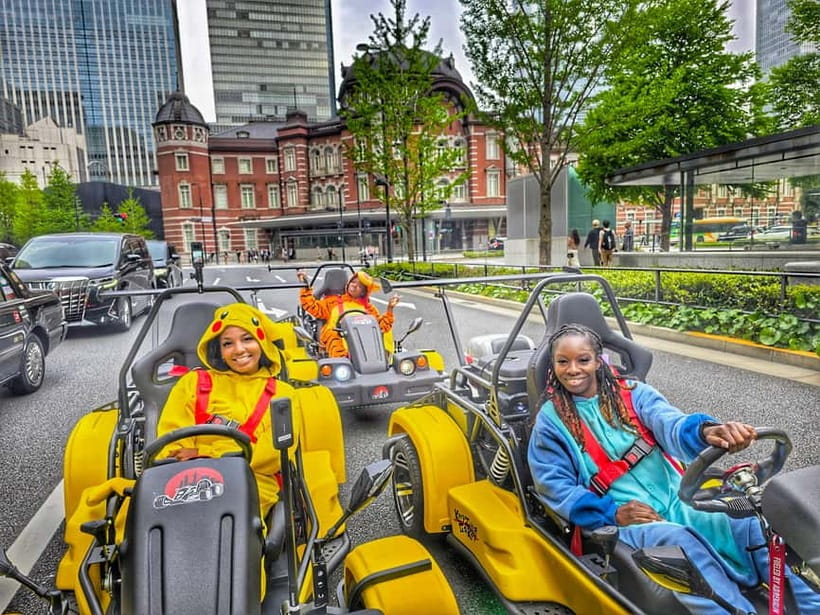
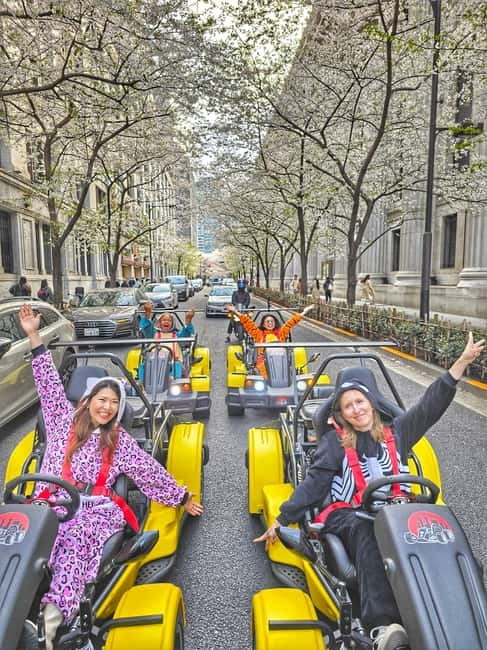
From the Skytree area, the route moves through streets associated with old Tokyo and spring greenery. Edozakura-dori is especially fitting for a cherry blossom-themed trip, as the road gives the outing a seasonal link rather than simply passing modern commercial streets.
The Japanese Sword Museum adds a cultural note. You pass a place connected to centuries of Japanese craftsmanship, but the stop is a guided drive-by rather than a museum visit. If the museum is high on your personal list, plan a separate visit on another day.
Nihonbashi brings a different view of the city. This historic district links Tokyo’s past with its commercial present, and the tour lets you see that transition while moving through the streets. I like this part because it prevents the outing from becoming only a parade of famous photo points. You get a sense of how Tokyo’s older routes fit into the modern city.
Other photography tours in Tokyo


Tokyo Station and the Imperial Palace area
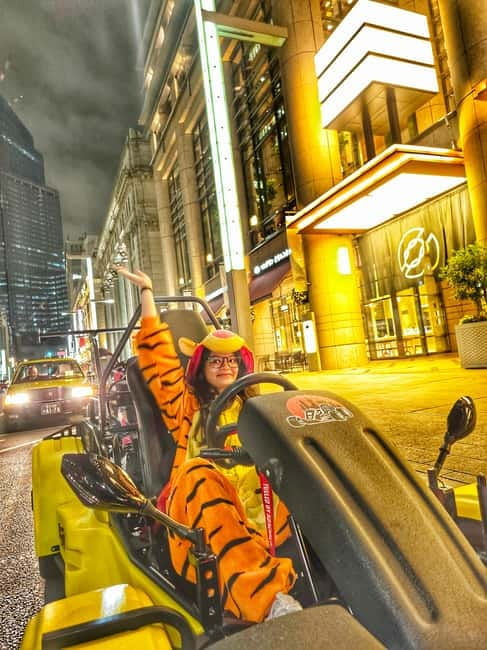
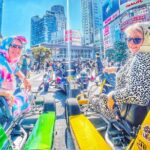
Tokyo Station is one of the route’s major urban landmarks. From the kart, you see the station area as part of the city’s daily movement rather than as an isolated building. The surrounding streets also give you a sense of Tokyo’s formal business center.
The tour then continues toward the Imperial Palace area and Chidorigafuchi. This is where the spring theme becomes most important. Tree-lined waterways and open views provide a calmer contrast to the dense commercial districts earlier in the route.
Chidorigafuchi is particularly well suited to a cherry blossom drive because of its water, trees, and open park setting. The exact blossom conditions depend on the season, of course. Early or late dates may bring fresh green leaves instead of full flowers, so book this for the spring atmosphere as much as for a guaranteed peak bloom view.
You should also keep your expectations in check about time. A two-hour tour covering many parts of Tokyo cannot give you a long, quiet visit at every location. The value comes from seeing several districts in one continuous outing.
Ginza, Kabuki-za, and Tsukiji Honganji
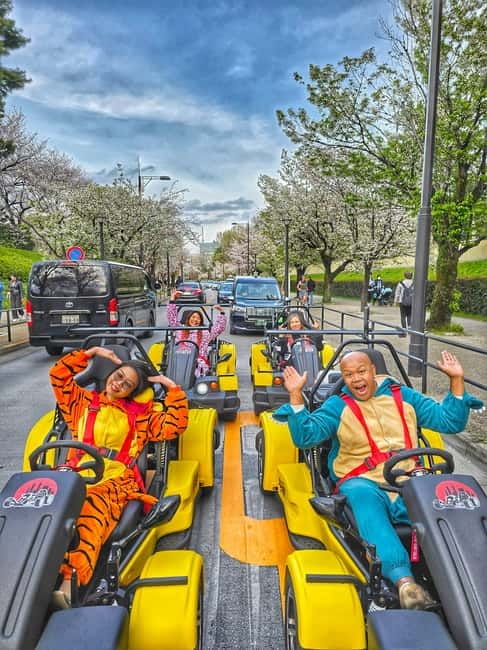
The route continues into Ginza, Tokyo’s polished shopping and dining district. Here, the experience shifts from park scenery to grand city streets and modern elegance. Driving through Ginza gives you a quick visual sample of the district without requiring a separate walking circuit.
Kabuki-za adds a traditional cultural landmark to the same stretch of the route. You will pass the theater rather than attend a performance, but its presence helps show how old Japanese arts remain part of central Tokyo’s modern streets.
Tsukiji Honganji brings a spiritual landmark into the mix. The temple’s distinctive architecture and setting make it a worthwhile sight from the road, even though the tour does not include an indoor visit or a formal temple tour.
Suitengu Shrine is another historic religious site on the route. Together, Tsukiji Honganji and Suitengu Shrine keep the experience from focusing only on towers, shopping streets, and government buildings. You get glimpses of Tokyo’s religious life as well as its commercial center.
The Insta360 camera and included photos
The camera option is one of the more unusual features. An Insta360 camera can record 360-degree video and photos as you drive, giving you footage of the kart, the road, and the surrounding city from a wide viewpoint.
You need a Micro SD card to use the camera output. The card is not included, but it can be purchased on-site. Bring one if you already have a compatible card and want to avoid an extra purchase.
Complimentary photos are included, so you can still receive visual memories even if you do not bring a card. It is worth asking about the camera and photo process during check-in rather than waiting until departure.
One practical tip comes from the road conditions. A previous customer said dust got into their eyes and advised bringing sunglasses or asking the staff for them. Sunglasses are a sensible item to pack, even if the spring weather looks mild. The supplied information does not say that sunglasses are included, so do not assume they will be offered automatically.
Cellphones are not allowed during the activity. That rule makes sense for safety, but it also means you should not plan to use your phone as your main camera while driving. The Insta360 setup and complimentary photos are the intended way to record the outing.
Is $116 a fair price?
At $116 per person, this is not a cheap way to get around Tokyo. You are paying for a specialized street-legal kart, fuel, a professional guide, insurance, costume rental, drinks, radio communication, and camera access. The small group also matters because you are not joining a huge convoy.
The value depends on what you want from a sightseeing experience. If your priority is entering museums, spending time at the Imperial Palace grounds, or stopping for meals, this tour will not replace those activities. It gives you a broad look at Tokyo from the road, with the added thrill of driving.
I see the price as reasonable for someone who wants a memorable activity rather than the most efficient transport between landmarks. The suspension and comfortable design add value for larger riders, while the photos and 360-degree footage may justify the cost for couples, photographers, and people marking a special trip.
Fuel is included, so you do not need to budget for that separately. Hotel pickup, drop-off, and meals are not included. You will need to make your own way to the starting point and arrange food around the two-hour schedule.
Who will enjoy this most
I would recommend this tour to confident drivers who want a new way to see Tokyo. It suits couples, small groups of friends, photographers, and anyone who likes combining sightseeing with an active experience.
It also makes sense for big and tall riders who worry about cramped recreational karts. The reinforced frames and comfortable seating are specific advantages here.
The tour is less suitable if you dislike city traffic, have no accepted driving documents, or want a slow and quiet spring walk. It is also not suitable for people without a driver’s license or people with visual impairments.
Wheelchair accessibility is listed, but the activity still involves operating a go-kart. If accessibility is important for your booking, contact the provider directly to clarify how the accessible arrangements work with the driving requirement.
The tour does not allow smoking, drones, intoxication, alcohol, or drugs. Those rules are firm and fit the safety needs of a public-road activity.
Timing, cancellation, and planning advice
The tour lasts two hours, with starting times based on availability. Spring dates can be popular, especially around the cherry blossom period, so check the schedule before building the rest of your day.
Free cancellation is available up to 24 hours in advance for a full refund. You can also reserve now and pay later, which helps if your Tokyo plans are still shifting.
I would avoid scheduling a major timed attraction immediately afterward. Traffic, group movement, and the required return to the base can affect your end time. Leave a little breathing room, especially if you need to return rental equipment or collect photos.
Before booking, confirm four things: the exact meeting point, the accepted license documents, the Micro SD card requirement, and the available language. Those checks prevent the most avoidable problems.
Should you book the spring go-kart tour?
Book it if you want to see Tokyo from street level and you are comfortable driving in real traffic. The best reasons are the stable karts, small group, radio guidance, broad route, and unusual 360-degree camera option.
Skip it if you mainly want long visits at each landmark, a relaxed blossom walk, or a low-cost sightseeing ride. At $116, the experience earns its price through the driving element, not through admission to attractions.
For the right person, this is a memorable way to connect Tokyo’s spring scenery with its streets, districts, and landmarks. Arrive early, bring the correct physical documents, pack sunglasses and a Micro SD card, and treat the safety briefing as part of the experience rather than a formality.
FAQ
How long is the Cherry Blossom Go-Kart Tour?
The tour lasts two hours, including the guided drive through Tokyo and the return to Kartzilla Go Kart Base.
Where does the tour start and finish?
The experience starts and ends at Kartzilla Go Kart Base in Higashiyotsugi, Katsushika-ku. Kinegawa Central Park is also listed as the meeting point, so confirm the exact location before departure.
What driving documents do I need?
You need a valid physical driving license. Japanese citizens and residents can use a Japanese license. Non-residents need an International Driving Permit issued under the 1949 Geneva Convention. Licenses from Switzerland, Germany, France, Belgium, Monaco, or Taiwan need an official Japanese translation issued by JAF.
Can I use a digital license or a photo of my license?
No. Digital licenses, photos of licenses, and expired licenses are not accepted. Bring the required physical documents or you will not be able to participate, with no refund provided.
Is a Micro SD card included?
No. You need a Micro SD card for the Insta360 footage. You can bring your own or purchase one on-site. Complimentary photos are included separately.
What languages are available?
The live tour guide is available in English, German, and Persian.
Can I cancel the booking?
You can cancel up to 24 hours in advance for a full refund. Reserve-now, pay-later booking is also available.
More Photography Tours in Tokyo
More Go-Kart Tours in Tokyo
More tours in Tokyo we've reviewed

Go-Karts, compared.
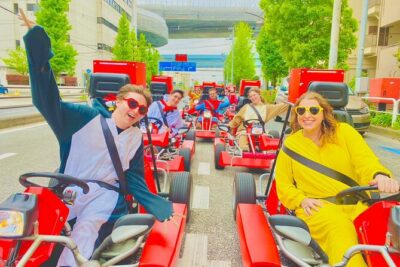 ★ 5.0Flagship 2-Hours Official Street Go-Kart Tour – Tokyo Bay ShopFrom $642 hours to 2 hours 30 minutes (approx.)
 ★ 5.0Official Street Go-Kart in ShibuyaFrom $76
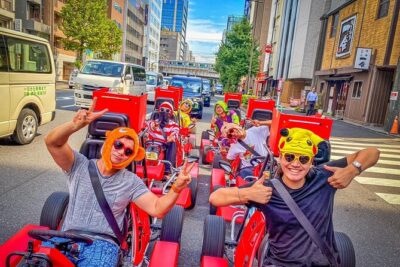 ★ 5.0Official Street Go-Kart Tour – AkihabaraFrom $61
 ★ 5.0Tokyo Go Kart: Asakusa, Skytree, and Akihabara **IDP MUST**From $99
 ★ 5.0Shibuya Official Street Go-Kart in Shibuya AnnexFrom $69
 ★ 4.7Tokyo: Asakusa, Skytree & Akhihabara Go-Kart City ExperienceFrom $961h 10m