
Reviewed · MT FUJI DAY TRIPS
Tokyo: Mt. Fuji, Arakurayama Sengen Park, Oshino Hakkai Tour
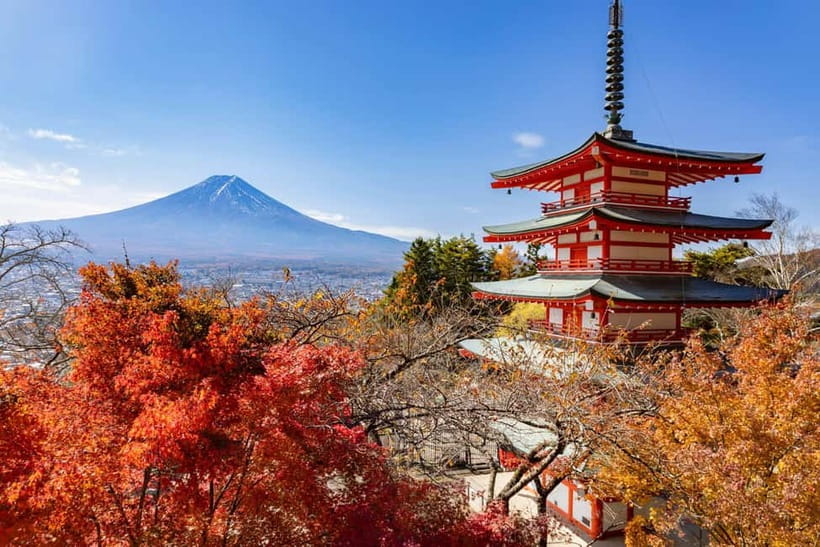
The main draw is the classic Mount Fuji and pagoda view at Arakurayama Sengen Park. I like that this outing also reaches Oshino Hakkai’s clear spring ponds and Saiko Iyashi-no-Sato Nenba’s old thatched houses, giving you more than one scenic stop in a single day.
I also like the simple $50 price, which covers round-trip transport, an English or Chinese guide, and the Nenba entry ticket. The tradeoff is time: at 570 minutes, with long bus rides and several popular stops, this is a big day. Some sections involve uphill walking and long stairs.
In This Review
- Key points to know before booking
- Why this Mount Fuji day trip works
- Meeting in Shinjuku and settling into the bus
- Arakurayama Sengen Park and the Fuji postcard view
- Hikawa Clock Shop and Fujiyoshida’s old street view
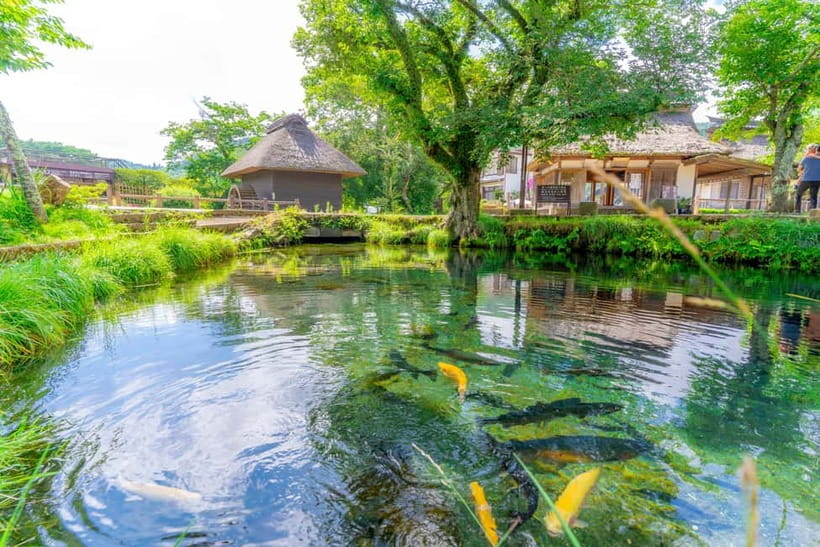
- Oshino Hakkai and its clear spring water
- Oishi Park, only when the weekday plan holds
- Saiko Iyashi-no-Sato Nenba and old rural Japan
- The long return to Shinjuku
- How the $50 price measures up
- The best time to go
- Who should book this Fuji tour
- Should you book it?
- FAQ
- Where does the tour start?
- Where does the tour finish?
- How long does the activity last?
- What languages are available?
- Is transportation included?
- Is the Saiko Iyashi-no-Sato Nenba admission ticket included?
- Are meals included?
- Is Oishi Park visited every day?
- Can I bring luggage?
- Is the tour suitable for people with limited mobility?
Key points to know before booking
- The postcard view comes with stairs: Arakurayama Sengen Park pairs a five-story pagoda with Mount Fuji, but parts of the route are uphill.
- Oshino Hakkai adds quiet water scenery: You get 1.5 hours around clear spring water, village views, and Fuji reflections.
- The Fujiyoshida street stop is brief: Hikawa Clock Shop offers 30 minutes for photos and traditional street views.
- Oishi Park is weekday-only: It can be canceled on weekdays if traffic causes delays, and it is closed on weekends, holidays, and Golden Week.
- The Nenba ticket is included: Saiko Iyashi-no-Sato Nenba gives you one hour among thatched-roof houses and rural scenery.
- Bring cash and expect a full day: Meals and personal purchases are extra, while the bus ride from Shinjuku can take about 1.5 hours each way.
Why this Mount Fuji day trip works
This tour is built for you if you want to see several Fuji-area sights without piecing together trains, local buses, and admission tickets. You leave from the Shinjuku area, travel by bus, and return to Shinjuku Station after a long day.
The route has a clear rhythm. You begin with a famous high viewpoint, move to a historic street, then spend time around springs, Lake Kawaguchi, and an old rural village. It is not a slow countryside retreat. It is a sightseeing circuit with enough stops to give you a broad look at the Fuji region.
The strongest appeal is variety. Arakurayama Sengen Park gives you the iconic Fuji photograph. Oshino Hakkai slows things down with water, bridges, and small-scale village scenery. Saiko Iyashi-no-Sato Nenba adds architecture and local rural character.
At $50 per person, the value is good if you want transport handled for you. The price includes the round trip and the Nenba ticket, but not meals, drinks, or purchases. You should still carry cash, as requested for the day.
A few more Tokyo tours and experiences worth a look
Meeting in Shinjuku and settling into the bus
The meeting point is in front of Kogakuin University near the Shinjuku West Exit. From the underground Central West Exit, walk for about one or two minutes toward the Tokyo Metropolitan Government Building. Keio Plaza Hotel is opposite the meeting area, and you should look for the Wonder Tour flag.
Arrive on time. No advance contact is promised, so do not expect a last-minute phone call to guide you to the group.
The first ride lasts about 1.5 hours. That matters because Tokyo traffic can affect the rest of the day, especially the weekday visit to Oishi Park. If the vehicle is a Hiace or microbus, the driver may provide Chinese or machine-translated English commentary rather than a professional guide. If having a full live guide is important to you, confirm the vehicle and guiding arrangement before booking.
The language options are Chinese and English. One suitcase per passenger is allowed, up to 30 kilograms and 155 centimeters in total dimensions. Keep valuables with you, not in the bus trunk.
Arakurayama Sengen Park and the Fuji postcard view
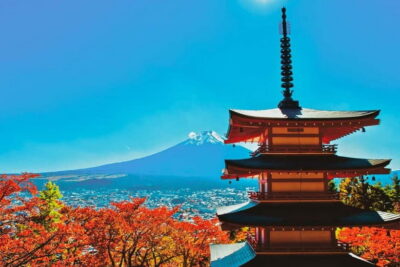
The first major stop is Arakurayama Sengen Park, with about one hour for sightseeing. Its signature view brings together a five-story pagoda, Mount Fuji, and the hillside setting. This is the image many people associate with a Fuji day trip, and it is the stop most likely to justify the outing on its own.
The season changes the mood:
- In spring, about 650 cherry trees bloom around the park. The usual Fuji-area cherry blossom period is late April to early May, though weather can shift the timing.
- Summer brings thick green foliage, fresh air, and a blue sky when conditions cooperate.
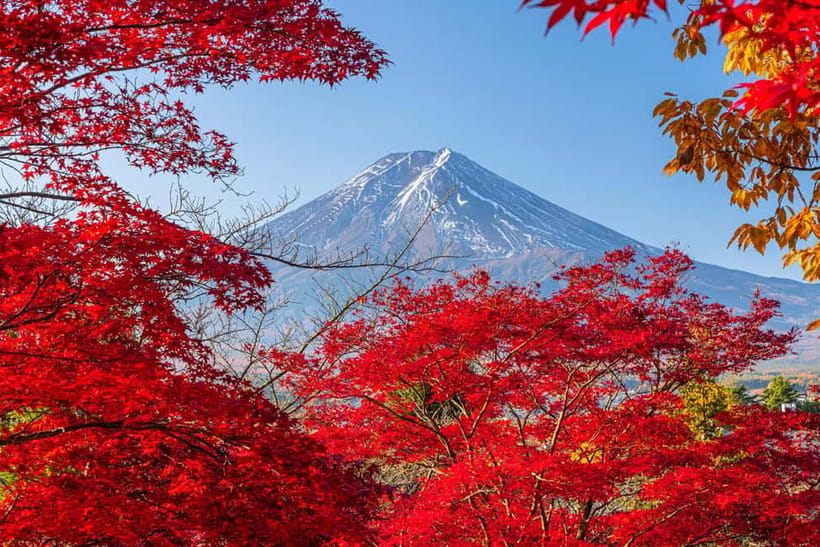
- In autumn, red and orange leaves frame the pagoda and hillside. The best period is generally late October to early November.
- Winter can produce a crisp view of the snow-covered pagoda roof and Mount Fuji.
You should plan for walking here. The route includes long stairs and uphill sections. This is not a good choice for someone over 70 or for anyone who needs crutches, according to the activity restrictions. Wear shoes with a secure grip and keep your camera or phone easy to reach.
The key practical point is visibility. Mount Fuji views depend on weather, and no tour can guarantee a clear summit. On a bright day, this is the emotional high point. On a cloudy day, the pagoda and trees still offer a pleasant visit, but the famous Fuji backdrop may be hidden.
Hikawa Clock Shop and Fujiyoshida’s old street view
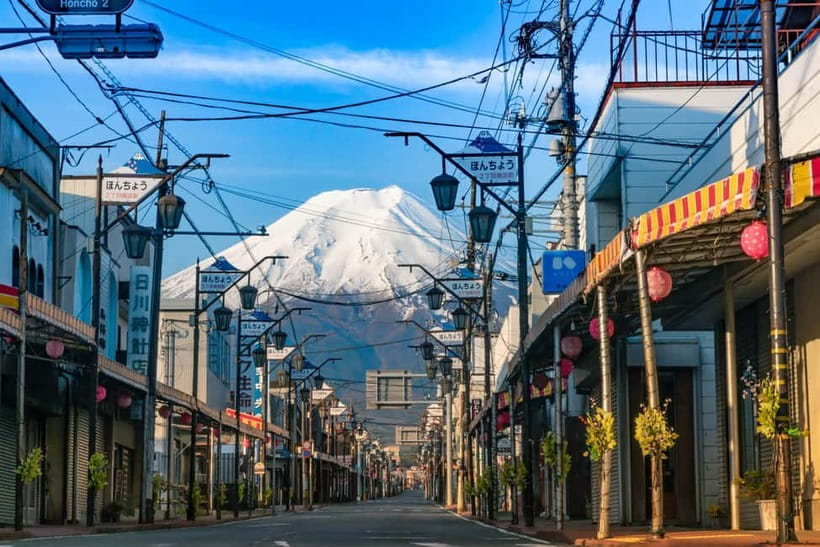
After the park, the bus takes you to Hikawa Clock Shop, with about 30 minutes to explore. This is a short stop, so think of it as a photo break rather than a long shopping visit.
The appeal is the view along Fujiyoshida Honcho Street, where traditional Japanese architecture and shops lead the eye toward Mount Fuji. In spring, cherry trees add color along the street. Summer can bring festival activity and fireworks, while autumn leaves and early winter snow may frame the distant mountain.
This stop gives you a different angle on the Fuji area. Arakurayama is a formal park viewpoint. Fujiyoshida is a working town street, where the mountain becomes part of the everyday setting.
Thirty minutes goes quickly. You will need to stay aware of the meeting time, especially if you want photographs. The street is also one of the places that can feel crowded, so patience helps.
Oshino Hakkai and its clear spring water
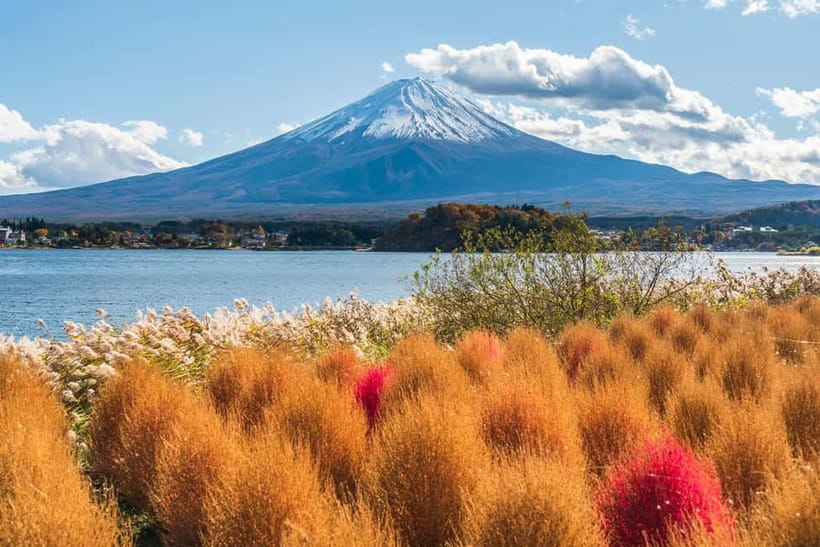
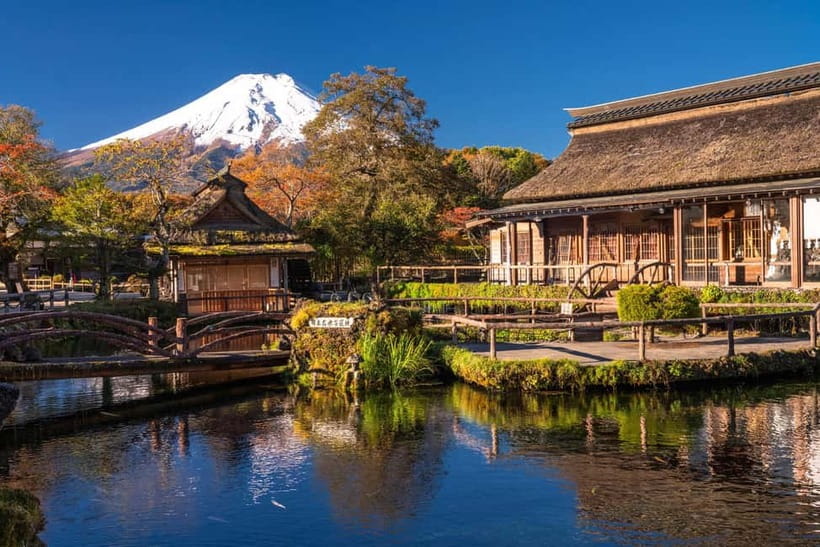
The bus ride to Oshino Hakkai takes about 20 minutes, followed by 1.5 hours of free time. This is one of the better-balanced stops on the route because you have enough time to walk, take photographs, and pause by the water without rushing every few minutes.
Oshino Hakkai is known for clear spring water and small ponds set among village surroundings. Mount Fuji may appear in reflections on the surface, and the scenery changes nicely through the year:
- Spring brings cherry blossoms beside the water.
- Summer offers cool, clear springs and green reflections.
- Autumn adds falling red leaves and a quieter mood.
- Winter covers the village in snow while the spring water remains clear.
I like this stop because it gives you a calmer counterpoint to the crowded Fuji viewpoints. The scenery is close and detailed: water, trees, village buildings, and mountain views when the sky is open.
You may find shops and food opportunities here, but meals are not included. Bring cash for any snacks or personal purchases. Since the tour does not provide meals, Oshino Hakkai is a sensible place to plan your own food break, while keeping enough time for the scheduled departure.


Oishi Park, only when the weekday plan holds
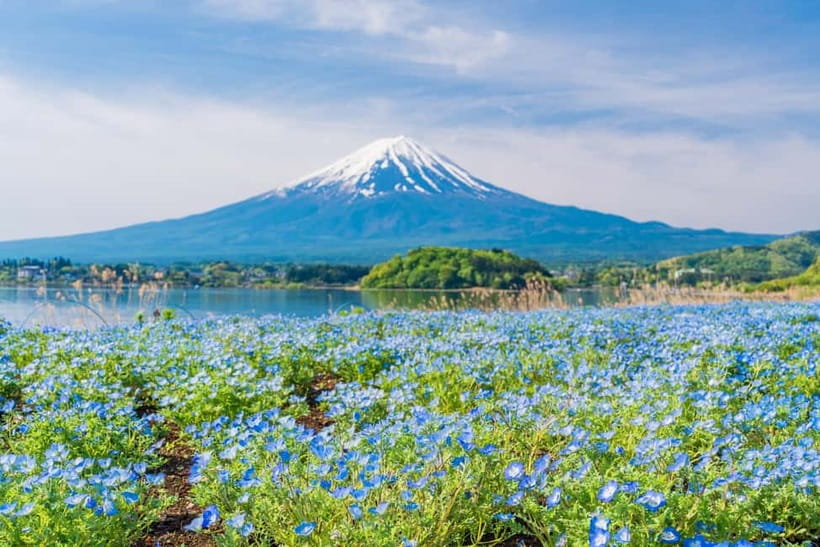
The next bus ride takes about 30 minutes, followed by a 20-minute transfer to Oishi Park. The park visit itself lasts about 30 minutes and is listed as a photo stop with free time.
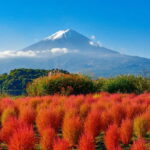
This stop looks toward Lake Kawaguchi and Mount Fuji. Its seasonal appeal is strong:
- Spring brings tulips and moss phlox near the lakeshore.
- Summer is known for purple lavender and its fragrance.
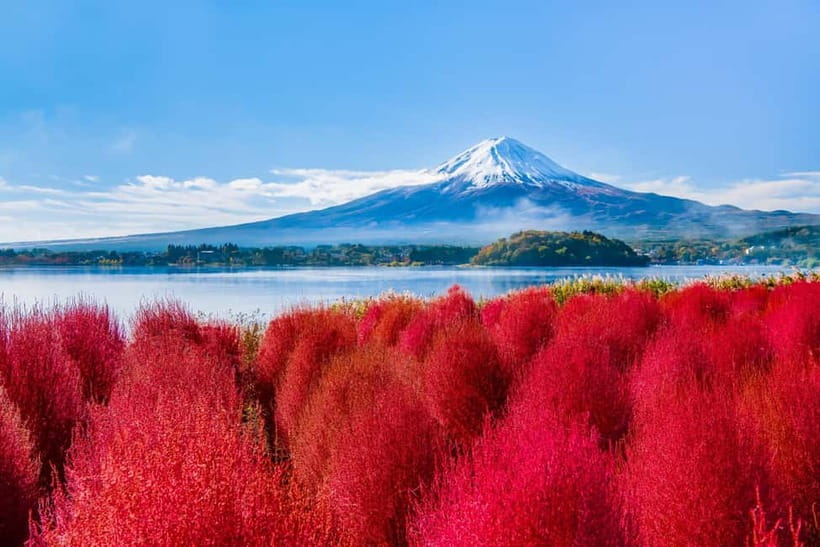
- Autumn turns the lakeside grass golden, with the first snow sometimes appearing on Fuji.
- Winter offers a quiet lake reflection and snowy mountain views.
There is an important catch. Oishi Park is visited only on weekdays. It is closed on weekends, holidays, and during Golden Week, from April 29 through May 5. Even on a weekday, traffic delays may force the operator to cancel this stop. If the park is a must-see for you, do not book this tour on a weekend and do not treat the visit as guaranteed during a congested period.
The short stop also means you should keep your expectations in check. This is a quick chance for lakeside photographs, not a long walk or a relaxed picnic. The park adds a useful Lake Kawaguchi viewpoint to the day, but it is the least secure part of the schedule because of its weekday and traffic conditions.
Saiko Iyashi-no-Sato Nenba and old rural Japan
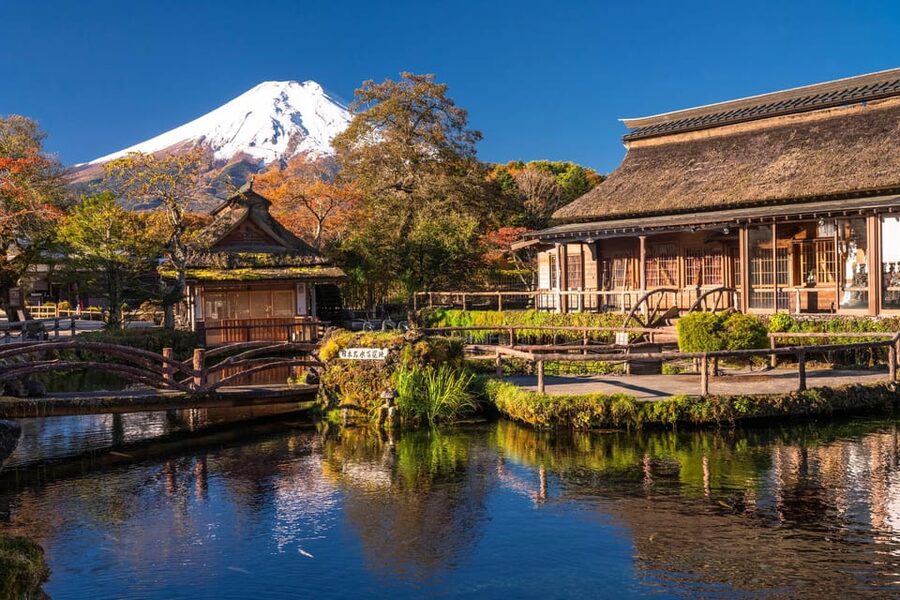
The final sightseeing stop is Saiko Iyashi-no-Sato Nenba, reached after about 20 minutes on the bus. You get roughly one hour here, and the admission ticket is included.
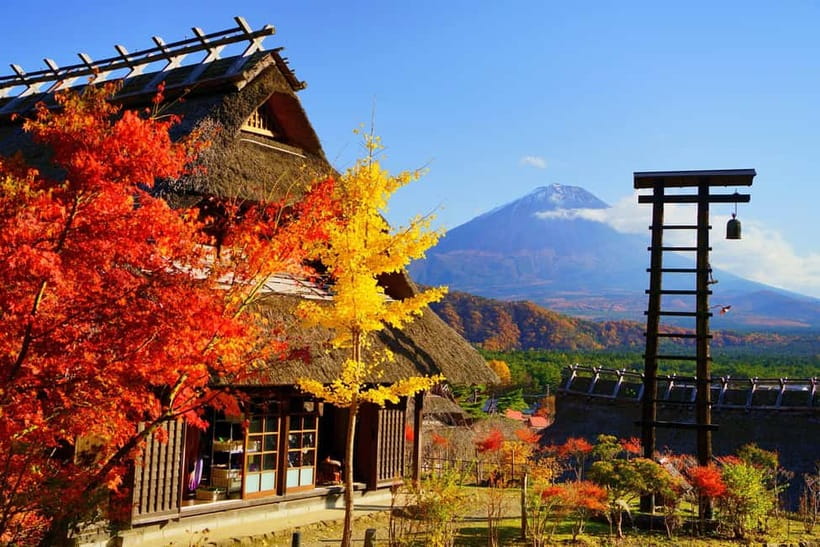
Nenba is known for traditional thatched-roof houses set against the Fuji-area countryside. The seasonal scenes are especially appealing:
- Spring combines old houses with cherry blossoms.
- Summer brings rice fields, clear streams, and mountain air.
- Autumn places red leaves behind the thatched roofs.
- Winter covers the roofs in snow, with hot spring steam adding a storybook touch.
I find this stop valuable because it provides cultural texture after a day of viewpoints and water. You are not only looking at Mount Fuji from a distance. You are also seeing a preserved rural setting tied to older Japanese building traditions.
One hour is enough for a focused visit, but not for a slow, detailed exploration of every corner. If you enjoy architecture, photography, or quiet village settings, you will want to use this time carefully. The included ticket also improves the tour’s value, since you do not need to pay a separate admission charge at the gate.
The long return to Shinjuku
After Nenba, the return bus to Shinjuku takes about two hours. The listed tour duration is 570 minutes, or 9.5 hours, so you should treat this as a full-day commitment rather than a half-day outing.
The long rides are the price of covering this much ground from Tokyo. You will have time to rest, but traffic can make the return later or less predictable. Avoid scheduling a tight evening reservation immediately after the tour.
The route begins at Kogakuin University and finishes at Shinjuku Station. Round-trip transport is included, which is the main reason this tour makes sense for visitors who do not want to manage the Fuji region independently.
How the $50 price measures up
At $50, this is a practical package for a day that includes several distant stops. You receive transportation, a live guide in English or Chinese, and admission to Saiko Iyashi-no-Sato Nenba. You do not receive meals or personal expenses, so the final cost will be higher if you buy lunch, snacks, drinks, or souvenirs.
The value is strongest for you if convenience matters more than flexibility. You can visit Arakurayama, Oshino Hakkai, Oishi Park, and Nenba without changing trains or figuring out rural connections. You also get a guide to help with the route and attractions.
The value is weaker if you want a quiet, private experience or lots of time at one place. This is a shared sightseeing day with fixed departure times. The popular stops can be crowded, and one recent booking described some unexpected walking. That is useful warning: the schedule may look easy on paper, but you should expect stairs, slopes, and movement between viewpoints.
The current rating is 4.3 out of 5 from 35 ratings. The most praised points are the guide service and the chance to see Mount Fuji. Those are fair strengths, provided the weather cooperates and your guide arrangement matches your expectations.
The best time to go
For cherry blossoms, aim for late April to early May, but bloom dates vary with the weather. This period also overlaps with Golden Week, when Oishi Park is closed from April 29 through May 5 and crowds may affect the wider route.
For autumn color, late October to early November is the usual target. Again, conditions can shift. Summer offers green hills, lavender at Oishi Park, and clear spring water, while winter gives you snow on Fuji, pagoda roofs, village houses, and lake views.
A clear day matters more than a particular month if your main goal is Mount Fuji. Clouds can hide the peak in any season. The tour still has value in poor visibility because of the pagoda, springs, street, and thatched houses, but the most famous photographs are never guaranteed.
Who should book this Fuji tour
I would recommend it to first-time visitors who want a broad introduction to the Fuji area from Tokyo. It suits you especially well if you like photography, seasonal scenery, traditional architecture, and a guide-led day with transport included.
It is also a good fit if you prefer a fixed plan. The tour removes much of the planning work and gives you several distinct stops instead of one single viewpoint.
Think twice if you dislike bus rides, crowds, or scheduled departures. It may also be unsuitable if you have difficulty with stairs, uphill walking, or long days outdoors. The activity is not recommended for people over 70, and the route is not designed around limited mobility.
Free cancellation is available up to 24 hours before departure, and you can reserve now and pay later. Weather or other unforeseen events may force changes or cancellation. If the operator cancels, you can reschedule or request a full refund, but no refund is offered when severe conditions prevent the planned itinerary from being followed.
Should you book it?
Book this tour if you want maximum Fuji-area coverage for a modest price and are willing to accept a long, structured day. The combination of Arakurayama’s famous pagoda view, Oshino Hakkai’s spring water, Fujiyoshida’s street scene, and Nenba’s thatched houses gives you a useful mix of nature and culture.
Skip it if Oishi Park is essential on a weekend, if you need a guaranteed clear Fuji view, or if stairs and bus travel will make the day tiring. For most able walkers who want the logistics handled, this is a sensible way to see several highlights beyond central Tokyo.
FAQ
Where does the tour start?
It starts in front of Kogakuin University near the Shinjuku West Exit. Walk one or two minutes from the underground Central West Exit toward the Tokyo Metropolitan Government Building, opposite the Keio Plaza Hotel, and look for the Wonder Tour flag.
Where does the tour finish?
The tour finishes at Shinjuku Station.
How long does the activity last?
The listed duration is 570 minutes, or 9.5 hours.
What languages are available?
The activity is offered in English and Chinese. If the vehicle is a Hiace or microbus, the driver may provide Chinese or machine-translated English commentary instead of a professional guide.
Is transportation included?
Yes. Round-trip transportation from the Shinjuku meeting point is included.
Is the Saiko Iyashi-no-Sato Nenba admission ticket included?
Yes. The entry ticket for Saiko Iyashi-no-Sato Nenba is included.
Are meals included?
No. Meals are not included, and personal expenses are also separate. Bring cash for food or purchases.
Is Oishi Park visited every day?
No. Oishi Park is visited only on weekdays. It is closed on weekends, holidays, and Golden Week from April 29 to May 5. The stop may also be canceled on a weekday if traffic causes delays.
Can I bring luggage?
Each passenger may bring one suitcase weighing up to 30 kilograms, with total dimensions no greater than 155 centimeters. Keep valuables out of the bus trunk because the company is not responsible for loss, theft, or damage.
Is the tour suitable for people with limited mobility?
Some sections include long stairs and uphill walking. The activity is not recommended for seniors who require crutches, and it is listed as unsuitable for people over 70.
More Mt Fuji Day Trips in Tokyo
More tours in Tokyo we've reviewed


Mt Fuji Day Trips, compared.
 ★ 5.0Mt Fuji and Hakone 1-Day Bus Tour Return by Bullet TrainFrom $163
 ★ 4.0Mt Fuji & Hakone Cruise, Drum Show Bullet Train 1 Day from TokyoFrom $149
 ★ 4.4Tokyo Mt Fuji 5th St & Hakone Cruise Bus Tour w/Bullet TrainFrom $15410 hours
 ★ 4.5From Tokyo: Mount Fuji Full-Day Sightseeing TripFrom $6810 hours
 ★ 4.7Tokyo: Mt. Fuji Tour, Hakone Ropeway, Owakudani, Lake AshiFrom $5410 hours
 ★ 4.4Tokyo:Mt.Fuji,Kawaguchiko Oishi Park,Arakurayama Sengen ParkFrom $5410 hours