
Reviewed · SHIBUYA TOURS
Tokyo Tour in Spanish (Shibuya – Harajuku – Shinjuku)
Tokyo can feel like three cities at once. This Spanish-language tour gives you a clear route through Shibuya, Harajuku, and Shinjuku, with about two hours in each district and local trains connecting the stops. I like the mix of famous city scenes, shopping time, and cultural explanation.
I also like the small group of up to 10 people and the guides’ more than 15 years of experience living in Japan. The main drawback is that transportation, food, drinks, and entrance fees are extra, so the $103 price is not the full cost of your day.
The tour’s most praised quality is its balance. It covers Tokyo’s pop culture while also making room for the spiritual side of Japan, which is exactly the kind of contrast that can be hard to find when you are moving through the city on your own.
In This Review
- Key points to know before booking
- A full day built around Tokyo’s west-side icons
- Starting in the hotel lobby or at a meeting point
- Shibuya: Tokyo’s famous crossing and a fast start
- Harajuku: youth culture with room for a quieter side
- Shinjuku: a final look at Tokyo on a giant scale
- What the $103 price really covers
- Local trains are part of the experience
- Walking, free time, and the real pace of the day
- Pop culture and the spiritual side of Japan
- Who will get the most from this Tokyo tour
- Should you book this Shibuya, Harajuku, and Shinjuku tour?
- FAQ
- Where does the tour begin?
- Which Tokyo neighborhoods does the tour visit?
- How long does the tour last?
- Is the guide Spanish-speaking?
- How large is the group?
- Is transportation included in the price?
- Are food and drinks included?
- Are temple and viewpoint entrance fees included?
Key points to know before booking

- Three famous Tokyo districts: Spend roughly two hours each in Shibuya, Harajuku, and Shinjuku.
- Spanish guide all day: Your guide explains each area and helps you handle the city without a language barrier.
- Local transportation: Trains and metro rides connect the neighborhoods, but fares are not included.
- Small-group format: The group is limited to 10 participants, with hotel-lobby pickup sometimes available.
- Eight-hour schedule: The advertised tour lasts eight hours, and an extension may not add a charge.
- Walking is central: Comfortable shoes are important because each district includes guided walking and free time.
A full day built around Tokyo’s west-side icons
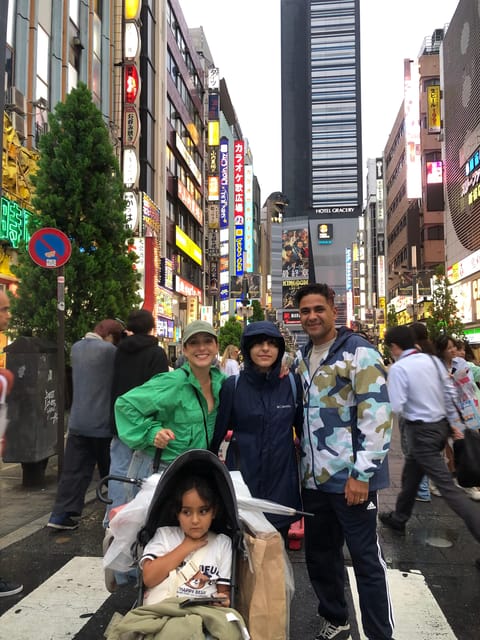
This is a city tour for people who want an introduction to modern Tokyo without spending the day inside a bus. You move by local transportation, then explore each neighborhood on foot with a Spanish-speaking guide.
The route is simple: start in Tokyo, travel to Shibuya, continue to Harajuku, then finish in Shinjuku before returning to Tokyo. Each train or metro segment is listed at about 30 minutes, and each main stop receives roughly two hours.
That structure gives you a useful first look at three very different parts of the city. You get the spectacle of Shibuya, the youth style and cultural contrast of Harajuku, and the huge urban scale of Shinjuku.
The pace should suit you if you want guidance but still want some freedom. At each stop, the plan includes a guided visit, walking, shopping, and free time. You are not simply led from photo stop to photo stop.
A few more Tokyo tours and experiences worth a look


Starting in the hotel lobby or at a meeting point
The tour normally begins at a hotel lobby, though groups may use a designated meeting point. That distinction matters, so you should confirm the exact arrangement when booking.
The starting location is given as Tokyo rather than one specific hotel or station. If you are staying outside the usual pickup area, ask where you need to meet before the day begins. The supplied information does not name individual guides, but it does state that the guides have lived in Japan for more than 15 years.
That experience is useful in a city where a small mistake with the train system can cost time. Your guide’s role is not only to point out sights, but also to help you understand the culture and move through Tokyo with less stress.
The tour is conducted in Spanish throughout. For Spanish-speaking visitors, that can make a major difference when explanations become more detailed than a quick English-language sign or translation app.
Shibuya: Tokyo’s famous crossing and a fast start
The first major stop is Shibuya, reached by local transportation in about 30 minutes. You receive around two hours here for a guided visit, walking, shopping, and personal time.
Shibuya Crossing is the obvious centerpiece. It is one of Tokyo’s most recognizable urban scenes, and the tour lets you experience it as part of a real neighborhood rather than as an isolated attraction. The crossing gives you the visual drama, while the surrounding streets provide time to see how the district works as a shopping and entertainment center.
Your guide can help you understand what you are seeing and suggest places that an independent visitor might miss. The information does not promise a particular viewpoint or observation deck, so do not assume that an admission ticket or special rooftop stop is included.
Shibuya is a strong opening because it immediately shows Tokyo’s scale and energy. It can also feel crowded and intense, especially if you are new to Japan. Having a Spanish-speaking guide nearby should make the first major urban stop easier to handle, but you will still be walking through a large, active district.
The two-hour block is enough for an introduction, some photographs, and shopping time. It is not enough for a deep exploration of every street or store. Think of Shibuya as a focused first chapter, not a complete tour of the neighborhood.
Harajuku: youth culture with room for a quieter side

After another local train or metro ride of about 30 minutes, the tour continues to Harajuku. This stop also lasts about two hours and combines a guided walk with free time and shopping.
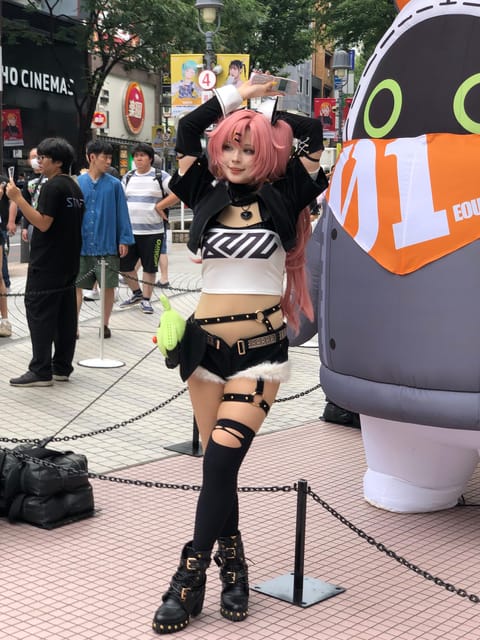
Harajuku is a useful counterpoint to Shibuya. The route is designed to show Tokyo’s pop-culture side, and this is likely the part of the day most closely tied to youth fashion, creative style, and shopping. The exact stores and streets are not specified, so your experience will depend partly on the guide’s choices and the time available.
The guide’s cultural explanation is important here. Harajuku can be easy to reduce to fashion and photographs, but the tour also aims to show a spiritual side of Japan. That contrast is one of the strongest reasons to choose this experience instead of visiting the three districts without help.
Do not expect every temple or viewpoint to be included. Entrance fees are not part of the price, and the exact sites visited are not listed. If a temple or paid viewpoint matters to you, ask the guide or provider in advance about the plan for your chosen tour option.
The schedule also asks you to balance guided time with personal time. You may use the free period for shopping, photographs, or a closer look at the area. That flexibility is helpful, though shoppers who want a long, relaxed retail session may find two hours short.
Shinjuku: a final look at Tokyo on a giant scale
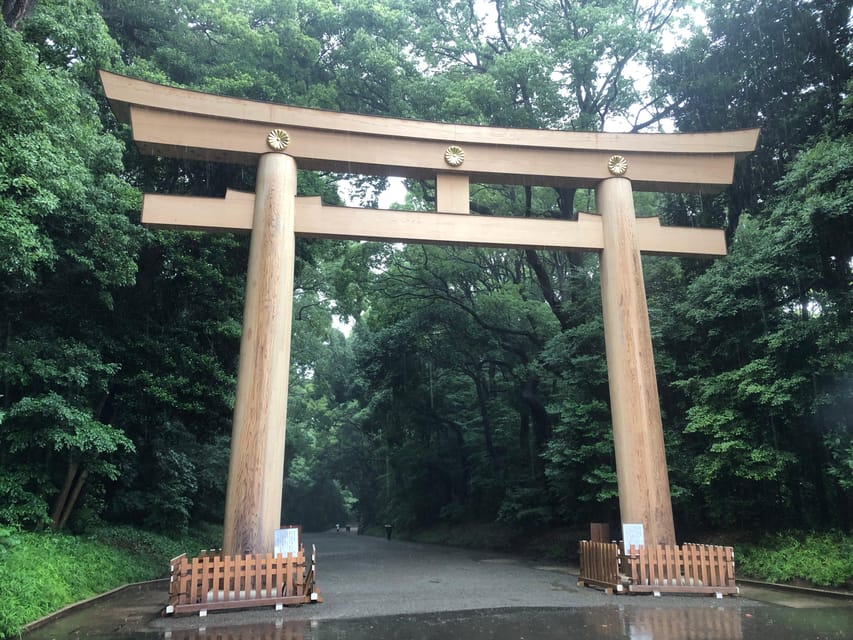
The third district is Shinjuku, reached by another train ride of about 30 minutes. As with the first two stops, you have about two hours for a guided visit, walking, shopping, and free time.
Shinjuku gives the day a fitting finish. It is another major Tokyo center, but its character differs from Shibuya and Harajuku. The district helps complete the picture of Tokyo as a huge metropolis rather than a collection of postcard sights.
The route does not specify a particular tower, observation deck, shrine, department store, or nightlife street. That is worth noting because Shinjuku contains far more than any two-hour stop can cover. You should see this portion as a guided introduction, with the chance to decide what you may want to return to later.
There is also a practical advantage to finishing in Shinjuku. By this point, you will have used local transportation several times and seen how the three districts connect. The guide can help you get back to Tokyo at the end, though the information does not promise a return to your specific hotel.
After Shinjuku, you return to Tokyo. The whole experience lasts eight hours, with the possibility of an extension at no extra charge according to the tour details. Since the exact meaning of an extension is not explained, confirm how it works before relying on extra time.
A few more Tokyo tours and experiences worth a look




What the $103 price really covers
At $103 per person, this is not a bargain sightseeing pass, but it can be fair value for a visitor who wants a full day of Spanish-language guidance in Tokyo.
The price covers the guide and the organized experience across three major districts. It also gives you a small group rather than a large coach setting. That matters in Tokyo, where a smaller group is easier to move through train stations and busy streets.
You must budget separately for local transportation. The tour uses trains or metro services, but fares are not included. Food and drinks are also extra, as are entrance fees for viewpoints or temples.
Those exclusions are reasonable for a walking and public-transport tour, but they should be part of your calculation. You will want money or a payment method for train fares, a meal, and any optional admission. The final cost will therefore be higher than $103.
The best value comes if you want interpretation in Spanish and help navigating the city. If you already speak Japanese or feel comfortable with Tokyo’s trains, you may prefer to visit these areas independently and spend the $103 on admissions, meals, and shopping instead.
On the other hand, a private guide for eight hours would normally offer more control, but this experience is not presented as a private tour. The group limit is 10, so you receive personal attention without the cost structure of a fully private day.
Local trains are part of the experience
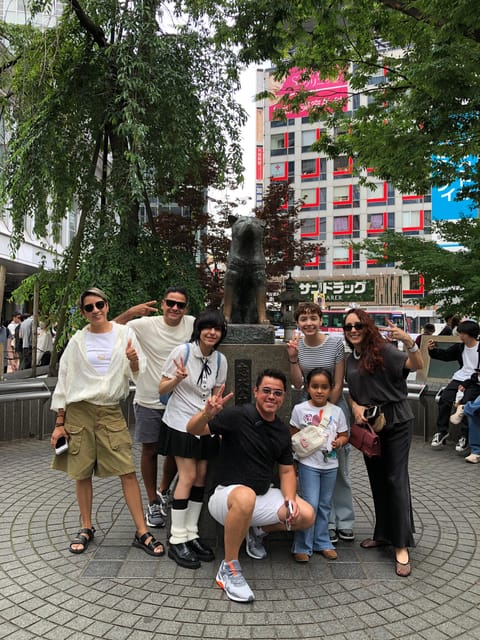
The transportation is not just a way to get from one attraction to another. You use Tokyo’s local system as residents do, which gives you a practical glimpse of daily life in the city.
There are three listed train or metro journeys, each estimated at about 30 minutes. That means roughly 90 minutes of the day is set aside for transportation, not including station transfers or boarding time. The schedule is therefore full, but it is not wall-to-wall sightseeing.
The guide should help you avoid the common confusion of a giant station, a useful service when you are still learning Tokyo’s layout. Still, public transportation involves walking, stairs, platforms, and crowds. Wear comfortable shoes and keep your belongings secure.
Because fares are excluded, ask how tickets are handled at the start. The supplied details do not say if the guide buys tickets for the group or simply directs you through the stations. A quick clarification can prevent delays.
For anyone who wants only private-car comfort, this may not be the right choice. For you if the goal is to understand how Tokyo works, using the metro is part of the value.
Walking, free time, and the real pace of the day
The tour is designed for all ages, but it is clearly a walking experience. You will walk within all three districts, with time for shopping and independent exploration at each one.
Comfortable shoes are not a minor suggestion. The day combines three neighborhood walks with station access and train changes. The exact distance is not provided, so you should be prepared for a fairly active day without assuming that every stop is close to the next one.
The free-time blocks are a good feature. You can take photographs, browse shops, or pause after the guided section. You are not required to stay in a tightly controlled group every minute.
At the same time, the schedule may feel quick if you want to shop seriously. Two hours per district includes orientation, walking, and free time. The tour is better for sampling each area than for spending half a day in one department store or shrine complex.
The eight-hour length is also worth considering. It gives you a proper full-day introduction, but it can be tiring. Plan to eat and drink along the way, since neither is included. Ask how meal breaks fit into the schedule if you have dietary needs or prefer a set lunch time.
Pop culture and the spiritual side of Japan
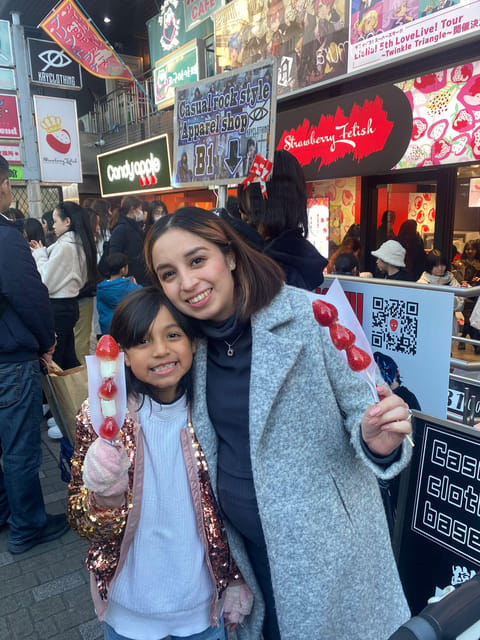
The most appealing promise of this tour is its attempt to connect two sides of Tokyo. You see districts associated with fashion, shopping, and popular culture, while the guide also explains spiritual and cultural elements.
That balance can improve your understanding of Japan. A day spent only at famous crossings and shopping streets may leave you with a narrow view of the country. Cultural context helps you see how modern city life and older traditions can exist close together.
The tour does not give a fixed list of temples or spiritual sites, so you should not book it expecting a specific religious attraction. Instead, think of the spiritual content as part of the guide’s explanation and the places selected during the day.
This is also why the guide matters more than the route alone. Shibuya, Harajuku, and Shinjuku are easy to find on a map. What you cannot get from a map is an explanation of why these areas matter, how to read what you are seeing, and where to look for less obvious local details.
Who will get the most from this Tokyo tour
I would recommend this experience to Spanish-speaking visitors who are in Tokyo for the first time and want a structured introduction. It is especially useful if you worry about getting lost, feel uncertain about local trains, or want cultural explanations in your own language.
It should also suit couples, families, and mixed-age groups who can manage a full day of walking. The group cap of 10 keeps the format more personal than a large sightseeing bus.
You may want to choose another option if you prefer a slow day in one neighborhood, need a private itinerary, or want every entrance ticket and train fare bundled into one price. The exact start arrangements and stops within each district should also be confirmed before payment.
The experience is offered in three tour versions, identified as Tour 1, Tour 2, or Tour 3. You are asked to specify which type you want when booking, but the supplied information does not explain the differences. Do not skip that step. Ask what each version includes so you select the right route.
Cancellation is flexible up to 24 hours before the start for a full refund, and you can reserve now and pay later. Check the available starting times because the eight-hour duration does not by itself tell you when the day begins.
Should you book this Shibuya, Harajuku, and Shinjuku tour?
Book it if you want Spanish guidance, local train practice, and a broad first look at Tokyo in one day. The strongest point is the mix of modern pop culture and the spiritual side of Japan, supported by guides who have lived in the country for more than 15 years.
Before booking, confirm the meeting point, the exact Tour 1, 2, or 3 route, and how any extension works. Also budget for transportation, food, drinks, and optional entrance fees.
At $103, the tour makes the most sense for you if the language support and navigation help are central to your trip. If you are already comfortable exploring Tokyo alone, the same three districts can cost less independently, but you will give up the structure and cultural explanation that make this full-day experience useful.
FAQ
Where does the tour begin?
The tour begins at a hotel lobby in some cases. If there is a group, the meeting point may be a designated location instead. Confirm the exact starting place when booking.
Which Tokyo neighborhoods does the tour visit?
The route visits Shibuya, Harajuku, and Shinjuku, then returns to Tokyo.
How long does the tour last?
The tour lasts eight hours. The tour information also states that an extension may be possible without an extra charge.
Is the guide Spanish-speaking?
Yes. A live Spanish-speaking guide accompanies you throughout the tour.
How large is the group?
The experience is offered as a small group with a maximum of 10 participants.
Is transportation included in the price?
No. The tour uses local transportation, but city transportation costs are not included.
Are food and drinks included?
No. You pay separately for food and drinks during the day.
Are temple and viewpoint entrance fees included?
No. Entrance fees for viewpoints or temples are not included.
More Shibuya Tours in Tokyo
More Shinjuku Tours in Tokyo


More tours in Tokyo we've reviewed









Shibuya Tours, compared.
 ★ 5.0Official Street Go-Kart in ShibuyaFrom $76
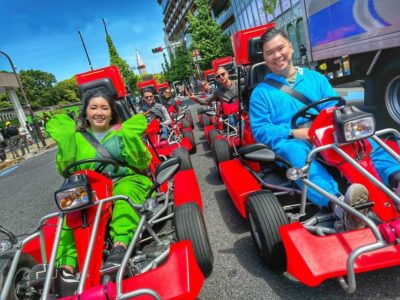 ★ 4.9Tokyo: Street Kart Experience in ShibuyaFrom $741 hour
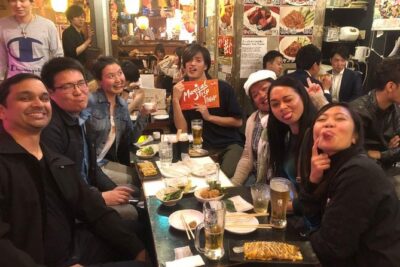 ★ 5.0Shibuya Meltdown Nightlife Tour: All-You-Can-Drink Bar HoppingFrom $106
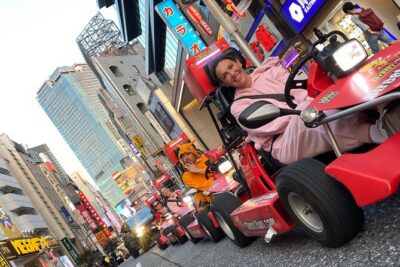 ★ 5.0Shibuya Official Street Go-Kart in Shibuya AnnexFrom $69
 ★ 5.0Tokyo: Shibuya Food Tour (13 dishes and 4 Eateries)From $77
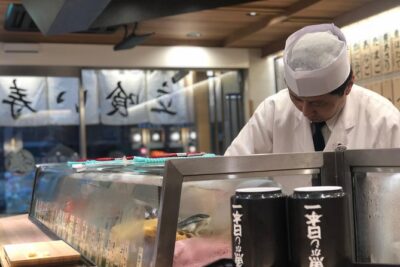 ★ 5.0Best of Shibuya Food TourFrom $217