
Reviewed · BAY & RIVER CRUISES
Tokyo Spectacular View Day-Cruise in 90 Minutes
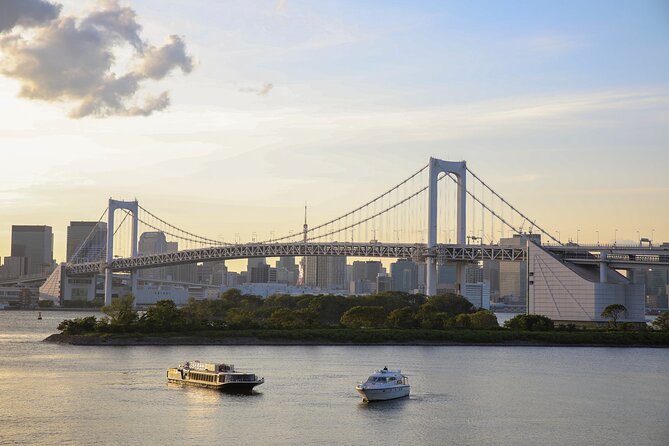
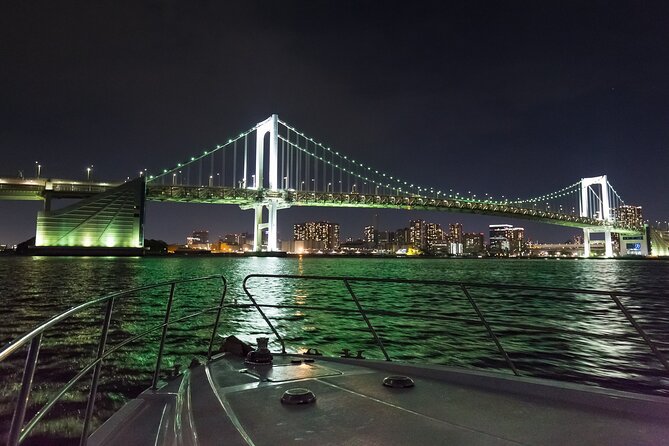
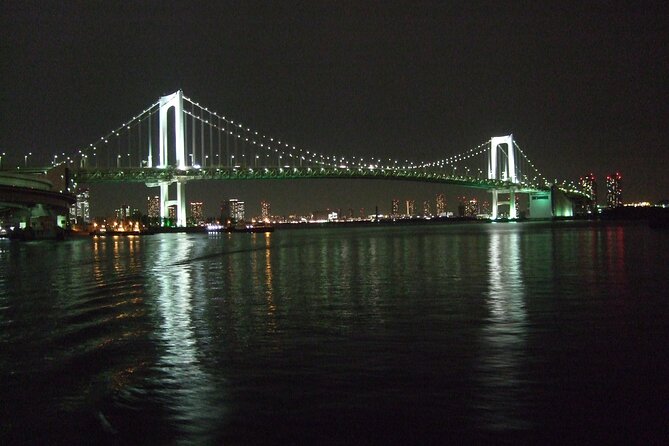
Tokyo’s skyline makes more sense from the water. On this 90-minute cruise, you pass beneath Rainbow Bridge, glide by Tokyo Tower, Odaiba, Tsukiji, Toyosu, and several historic bridges, all without the packed sidewalks and photo queues of central Tokyo. The night sailing adds city lights reflected on the bay, while the afternoon trip gives you clearer views of the buildings and bridge structure.
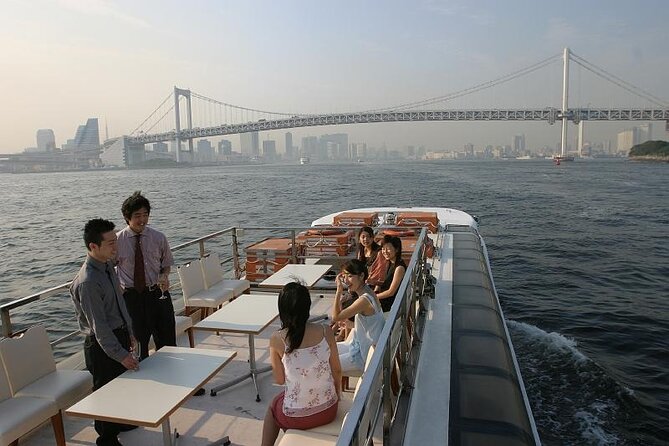
I like the open-air top deck, which gives you the best angle for photos, and the downstairs cabin, where tables, chairs, air conditioning, and a restroom make the ride easier in cold or wet weather. The crew provides background on the architecture and history along the route, and the smooth ride has earned strong praise for its friendly service and clear English. The main drawback is price: at $65.89 per person, this is not a cheap way to spend 90 minutes, and commentary may be harder to hear on the upper deck.
In This Review
- Key points to know before booking
- Why a 90-minute cruise works well in Tokyo
- Boarding at Tennoz Yamatsu Pier
- The upper deck is best for photos
- The downstairs cabin gives you comfort and a backup plan
- Rainbow Bridge and Tokyo Bay
- Tokyo Tower from the water
- Kachidoki Bridge and the working waterfront
- Tsukiji, Toyosu, and Tokyo’s food trade
- Eitai Bridge and the changing Sumida River
- Drinks, snacks, and what the price includes
- Afternoon or night sailing?
- Who should book this cruise?
- Should you book the Tokyo Spectacular View Day-Cruise?
- FAQ
- How long is the Tokyo Spectacular View Day-Cruise?
- Where does the cruise begin?
- Where does the cruise end?
- Is the ticket available on a mobile phone?
- What major sights can I see from the boat?
- Can I sit outside during the cruise?
- Is there indoor seating?
- Are food and drinks included?
- Is there a restroom on the boat?
- How far in advance can I cancel?
Key points to know before booking
- Rainbow Bridge from below: You pass under one of Tokyo’s largest bridges, with the roadway high above the water.
- Tokyo Tower from the bay: The tower looks different when framed by the waterfront instead of city streets.
- Day or night departures: Afternoon sailings favor structure and visibility, while evening trips show Tokyo lit up.
- Open-air and indoor seating: Use the top deck for photos or the downstairs tables when you want warmth and shelter.
- Small maximum group: The boat carries no more than 57 people, and some departures can feel far less crowded.
- Easy cancellation window: Cancel at least 24 hours before departure for a full refund, subject to the weather and minimum-group rules.
Why a 90-minute cruise works well in Tokyo
Tokyo can wear you out. The city asks you to walk long distances, change trains, climb stairs, and keep moving. This cruise gives you a clean break without wasting half a day. In an hour and a half, you get a different view of several major sights and return to the same pier.
That short length is useful if you have a packed itinerary. You can fit it between sightseeing in Shinagawa, Odaiba, Tsukiji, or other waterfront areas. It is also a good final activity at the end of a long Japan trip, when sitting down and watching the city pass by sounds better than chasing another attraction.
The cruise is not a full sightseeing tour of Tokyo. You will not visit the monuments or step ashore at each location. Instead, you get a moving viewpoint, with the boat passing close enough for photos and the crew explaining what you are seeing. I see the value in that change of pace, especially if you have already done the usual city observatories and street walks.
A few more Tokyo tours and experiences worth a look

Boarding at Tennoz Yamatsu Pier
The cruise begins at Tennozu Yamatsu Pier, at 1-chome-39-21 Higashishinagawa in Shinagawa City. The location is near public transportation, but you should still allow time to find the pier and reach the boarding point. A mobile ticket makes entry simpler, since you can show your booking from your phone.
The boat returns to the same place after the trip. That makes planning easier than a one-way cruise, since you do not need to arrange a second meeting point or work out how to get back to your hotel from a distant dock.
The maximum capacity is 57 passengers. That is large enough to provide a social setting, but small enough to avoid the feel of a giant sightseeing vessel. The exact crowd depends on the sailing. One late Wednesday departure had only about 10 people aboard, creating an unusually quiet, almost private feel. You should not count on that every time, but late or less popular departures may be calmer.
The upper deck is best for photos
The open-air upper deck is where you should head if your main goal is photographs. From the water, the skyline is free of many street-level obstacles. You can frame bridges, towers, waterfront buildings, and the changing reflections without squeezing past a crowd at a railing.
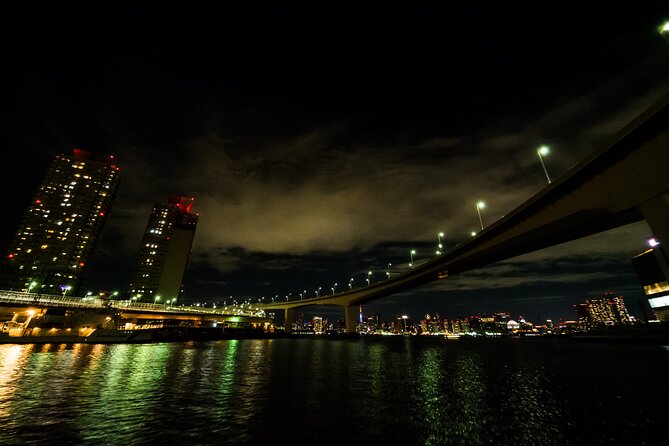
Night trips are especially attractive for photography. Tokyo Tower is lit after dark, and the city lights add color to the water. The night view is less about seeing every architectural detail and more about mood, reflections, and the broad shape of Tokyo Bay.
There is a practical tradeoff. The upper deck can be cold, especially after sunset, and one useful improvement would be blankets for passengers sitting outside. Bring an extra layer if you choose the evening sailing. The crew’s commentary may also be less clear outdoors, particularly if people are spread across the deck. For the best balance, listen from below and go upstairs when the boat reaches a photo-friendly section.
The downstairs cabin gives you comfort and a backup plan
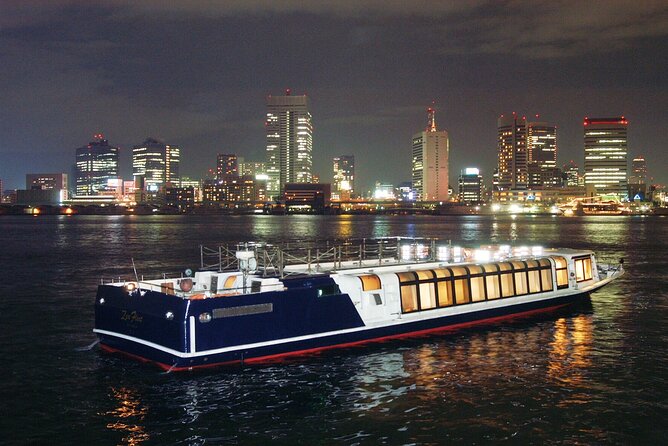
The lower level has tables and chairs, along with air conditioning and an onboard restroom. That matters more than it may sound. Tokyo weather can change, and a scenic cruise is less enjoyable if you spend the whole time worrying about cold, rain, or finding a place to sit.
The cabin is also the better choice if you want to focus on the guide’s explanations. The crew has been praised for friendly service and strong English, though the volume can be an issue. A guide may speak clearly, but a large cabin or noisy upper deck can still make details difficult to catch. Sit near the guide if the historical information is important to you.
Children are accommodated with chairs available for them. The activity is open to most people, and the gentle format suits families, couples, older adults, and anyone who wants sightseeing with little walking. The boat has a maximum capacity rather than an unlimited crowd, which helps keep the setting manageable.
Rainbow Bridge and Tokyo Bay
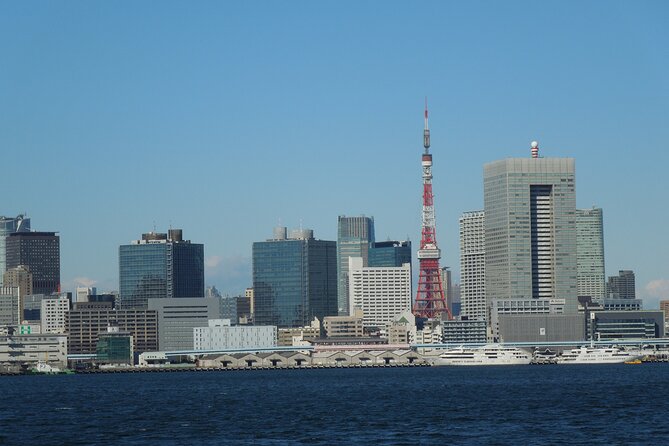
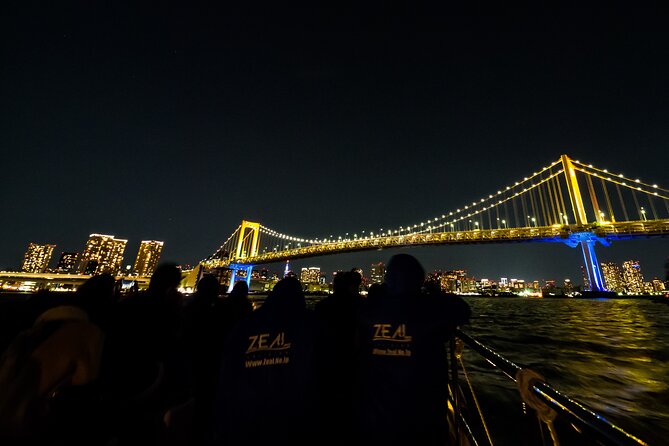
One of the first major sights is Rainbow Bridge, which connects Shibaura and Odaiba. Its roadway sits roughly 50 meters above sea level, so passing underneath gives you a strong sense of its size. From land, you usually see the bridge from the side. From the boat, you experience the structure overhead, with its supports and span filling your view.
This is one of the cruise’s most distinctive moments. You are not simply looking at a landmark from another platform. You are moving through the space beneath it, which gives the bridge a more physical presence. Keep your camera ready before the boat reaches the span, since the best angle will not last long.
Odaiba Seaside Park follows as part of the waterfront route. The name Daiba refers to a place where cannons were positioned. These defensive sites were built during the late Edo period, when the Tokugawa government grew concerned about foreign ships approaching Japan. The cruise does not replace a visit to Odaiba, but it gives you useful context for why the area matters.
Other boat tours in Tokyo
Tokyo Tower from the water
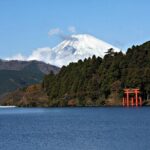
Tokyo Tower appears from a waterfront angle rather than the familiar city-street view. Built in 1958, it was Japan’s tallest television tower until 2011. It is now one of Tokyo’s best-known landmarks, and at night its lights make it easy to pick out from the bay.
The boat cannot give you the same close-up detail as an observation deck or a walk around the tower. What it does provide is a wider composition. You can see the tower as part of Tokyo’s larger built environment, with the bay and bridges helping explain the city’s scale.
For night photography, this is one of the cruise’s strongest scenes. Use the open deck for an unobstructed view, then return downstairs if the wind makes it uncomfortable. On an afternoon cruise, you may get a clearer sense of the surrounding buildings and infrastructure.
Kachidoki Bridge and the working waterfront
The route passes beneath Kachidoki Bridge, one of the few bascule bridges in Japan. A bascule bridge lifts to let ships pass, and its design reflects an earlier period when large vessels regularly used the Sumida River.
The bridge’s story connects Tokyo’s waterway to its commercial past. The river was not simply a backdrop for sightseeing. It carried goods and ships into the city, and bridge design had to accommodate that traffic. The cruise’s commentary helps turn what might look like another piece of steel into a clue about how Tokyo functioned.
You will not see the bridge open during every sailing, and the cruise does not promise a special bridge lift. The value comes from viewing the structure from below and hearing why it was built in that form.
Tsukiji, Toyosu, and Tokyo’s food trade
The boat passes by Tsukiji, once Japan’s largest central market. Its wholesale operations later moved to Toyosu because of the aging Tsukiji building. From the water, you get a broad look at this part of Tokyo’s food and port system without dealing with market crowds.
The cruise also passes the newer Toyosu market area, which replaced Tsukiji as the central wholesale market. The newer building has an unusual shape, and the water offers a useful view of the whole complex. You will not be touring the market or sampling its food on this cruise, so think of this section as a visual introduction rather than a market visit.
I like this part of the route because it adds working Tokyo to the postcard views. The trip is not only about towers and lights. It also shows the docks, bridges, commercial buildings, and transport links that keep the city supplied.
Eitai Bridge and the changing Sumida River
Eitai Bridge is another landmark along the route. The current bridge dates from 1926, and its story includes an earlier 1897 road bridge that used iron for the first time in Japan. Because that earlier structure had a wooden floor, it was destroyed by fire.
Details like this give the cruise some substance. You see a bridge for a few minutes, but the explanation connects it to changes in Japanese engineering and urban growth. The boat’s pace gives you time to look closely at the form of the bridge rather than rushing past it from a train or taxi.
As with every stop, the view depends on your position on the boat and the light. The top deck gives the clearest photos, but the cabin may give you the best chance of hearing the explanation. If you care about both, move between levels during the trip.
Drinks, snacks, and what the price includes
The $65.89 price covers the boarding fee, the cruise itself, the onboard restroom, and the air-conditioned vehicle or cabin. Alcoholic drinks and light snacks are available for purchase onboard, but they are not included in the ticket price.
That distinction matters. You are paying mainly for the route, the boat, the views, and the crew commentary. If you expect a dinner cruise with a full meal or included drinks, this is not that product. If you want a scenic sightseeing ride with the option to buy a Japanese alcoholic beverage, the arrangement is more straightforward.
I consider the price fair only if the waterfront viewpoint is important to you. A public train ride or free city lookout will cost less, but neither gives you the same passage beneath Rainbow Bridge or the same moving view of Tokyo Bay. The value improves for a special evening, a final night in Japan, or anyone who has already seen Tokyo from street level and wants a fresh angle.
The high rating and full recommendation rate suggest strong satisfaction, particularly with the crew, clean facilities, smooth operation, and night views. Still, your own value calculation should include the weather, the sailing time, and whether you plan to buy drinks or snacks.
Afternoon or night sailing?
Choose the afternoon if you want to study the bridges and waterfront buildings. Daylight helps you see structural details, the shape of the newer Toyosu market, and the layout around Odaiba. It is also the safer choice if you dislike cold air on an open deck.
Choose the night option for atmosphere. Tokyo Tower glows, the skyline lights up, and reflections add color to the bay. Several strong comments focus on the beauty of the city at night, and one late Wednesday cruise had just 10 people aboard. Evening trips can feel special, but bring warm clothing and be prepared for darker photos.
There is no single best sailing. I would choose based on your camera, the season, and where the cruise fits in your day. The boat has indoor seating, so you can still enjoy an evening trip if you need to spend part of it below deck.
Who should book this cruise?
I would recommend it to you if you want:
- A low-walking way to see several Tokyo landmarks
- A calm break from busy streets and train stations
- Night photography of Tokyo Bay and Tokyo Tower
- A family-friendly outing with seating and a restroom
- A different view of Odaiba, Tsukiji, Toyosu, and the major bridges
- A short activity that returns to its starting point
I would think twice if you want a full meal, a long cruise, or guaranteed solitude. The maximum is 57 people, and the top deck may feel crowded on a popular departure. You should also avoid treating this as a substitute for visiting Tokyo Tower, Tsukiji, Toyosu, or Odaiba on foot. It gives you an overview and a new viewpoint, not an in-depth visit to each place.
The crew is one of the strongest reasons to book. Service has been described as kind, friendly, and helpful, and the English commentary adds useful context. No guide names are provided, but the captain and guide are part of the appeal.
Should you book the Tokyo Spectacular View Day-Cruise?
Book it if you value the view from the water more than the lowest possible price. The route packs Tokyo Tower, Rainbow Bridge, Kachidoki Bridge, Eitai Bridge, Tsukiji, Toyosu, and Odaiba into 90 minutes, with both indoor comfort and an outdoor photo deck.
I would choose the night sailing for a memorable final evening, provided you bring a warm layer. Choose the afternoon for clearer architecture and easier photography. At $65.89, it is a considered purchase, but the short duration, clean facilities, kind crew, and unusual waterfront angle make it a sensible choice for a first visit or a trip-ending change of pace.
FAQ
How long is the Tokyo Spectacular View Day-Cruise?
The cruise lasts approximately 1 hour and 30 minutes.
Where does the cruise begin?
It begins at Tennozu Yamatsu Pier, 1-chome-39-21 Higashishinagawa, Shinagawa City, Tokyo 140-0002, Japan.
Where does the cruise end?
The cruise returns to the same meeting point at Tennozu Yamatsu Pier.
Is the ticket available on a mobile phone?
Yes. The activity provides a mobile ticket, and booking confirmation is received at the time of booking.
What major sights can I see from the boat?
The route includes views of Rainbow Bridge, Tokyo Tower, Kachidoki Bridge, Tsukiji, Eitai Bridge, Toyosu, and Odaiba Seaside Park.
Can I sit outside during the cruise?
Yes. The boat has an open-air top deck for views and photos.
Is there indoor seating?
Yes. The downstairs level has tables and chairs, with air conditioning for a more comfortable indoor option.
Are food and drinks included?
No. Alcoholic beverages and snacks are available for purchase onboard but are not included in the ticket price.
Is there a restroom on the boat?
Yes. An onboard restroom is included.
How far in advance can I cancel?
You can cancel at least 24 hours before the start time for a full refund. Cancellations or changes made less than 24 hours before departure are not accepted for a refund. If poor weather or an insufficient number of passengers cancels the cruise, you can choose another date or receive a full refund.
More Boat Tours & Cruises in Tokyo
More Bay & River Cruises in Tokyo
More tours in Tokyo we've reviewed

Bay & River Cruises, compared.
 ★ 4.0Mt Fuji & Hakone Cruise, Drum Show Bullet Train 1 Day from TokyoFrom $149
 ★ 4.4Tokyo Mt Fuji 5th St & Hakone Cruise Bus Tour w/Bullet TrainFrom $15410 hours
 ★ 4.2Tokyo: Mt. Fuji 5th Station & Hakone Cruise 1-Day Bus TourFrom $12911 hours
 ★ 4.7Tokyo: Meiji Shrine, Asakusa, Skytree Bus Tour and CruiseFrom $12210 hours
 ★ 4.0Mt Fuji & Hakone Cruise, Drum Show Bus 1 Day from TokyoFrom $122
 ★ 4.6Sumida River: Japanese Traditional Yakatabune Dinner CruiseFrom $1032h 30m