
Tokyo crams most of its summer hanabi season into a roughly ten-week window, from late May through late September, with eight major fireworks festivals that each pull crowds between 80,000 and over a million. The tricky part isn’t finding one. It’s that several of the biggest clash on the same night — the most notorious being the first Saturday of August, when both the Edogawa Fireworks and the Itabashi Fireworks fire simultaneously from opposite ends of the city. If you’re coming to Tokyo this summer, the realistic question isn’t “which fireworks festival should I see” — it’s “which one lines up with my dates, and do I pick scale, a unique effect, or the quieter crowd?” This guide compares all eight side-by-side and tells you exactly which to pick for your trip.
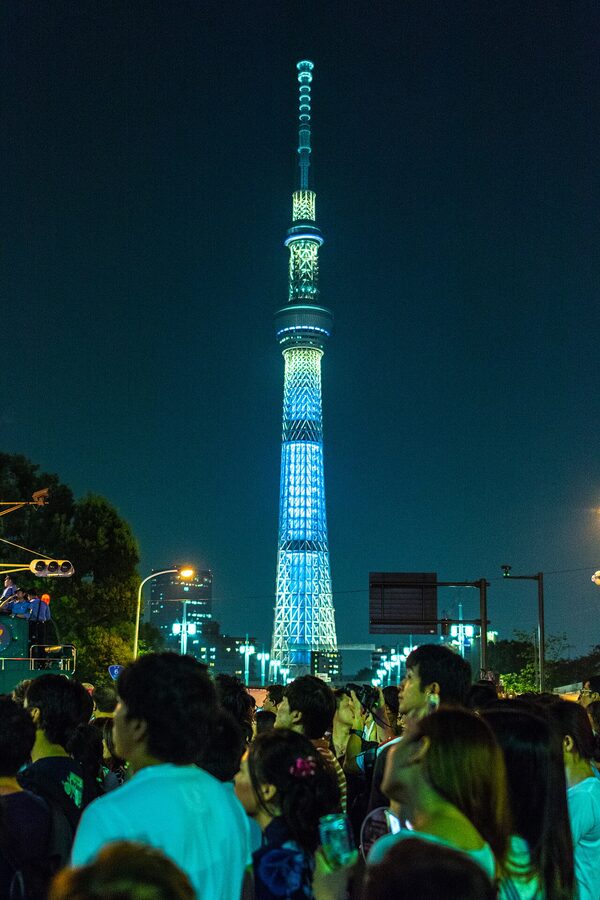
I’ll say up front: I’ve been to five of these festivals over a few summers, and my honest opinion is that the two you hear about in every guidebook — Sumida River and Jingu Gaien — are a) the most crowded thing you’ll ever do in your life, and b) no longer running respectively. Tokyo has at least four other fireworks festivals at the same scale, in neighbourhoods with fewer tourists and easier stations to escape from. The ten-week calendar below should let you work out which one fits your trip, rather than defaulting to the famous one because it’s the only one anyone wrote about in English.
The weather has also changed the calculation. 2024 saw Adachi cancelled 20 minutes before launch because of lightning. 2025 cancelled it again on wind. The Sumida event went ahead in 2025 but has no rain date. Several of the August festivals are now permanently exposed to typhoon-season risk. So this isn’t just a pick-one-to-watch guide — you need a Plan B.
In This Article
- The 8 Tokyo fireworks festivals at a glance
- The Tokyo fireworks calendar for 2026
- Late May — Adachi
- Late July — Sumida River, Katsushika and Hachioji (often same week)
- First Saturday of August — the big clash (Edogawa vs Itabashi)
- Late August — Setagaya-Tamagawa
- Late September — Chofu
- How to pick if you only have one night
- Practical tips that apply to all eight
- What to bring (non-negotiable list)
- Yukata — welcomed but not required
- Arrival timing
- Exit strategy
- Paid seating
- Weather and cancellation reality
- Skip these (former or never-was Tokyo fireworks)
- Pairing each festival with the rest of your day
- My ranked picks for a first-time Tokyo visitor
- Essential numbers at a glance
- Verifying a festival the week of your trip
- One last thing
The 8 Tokyo fireworks festivals at a glance
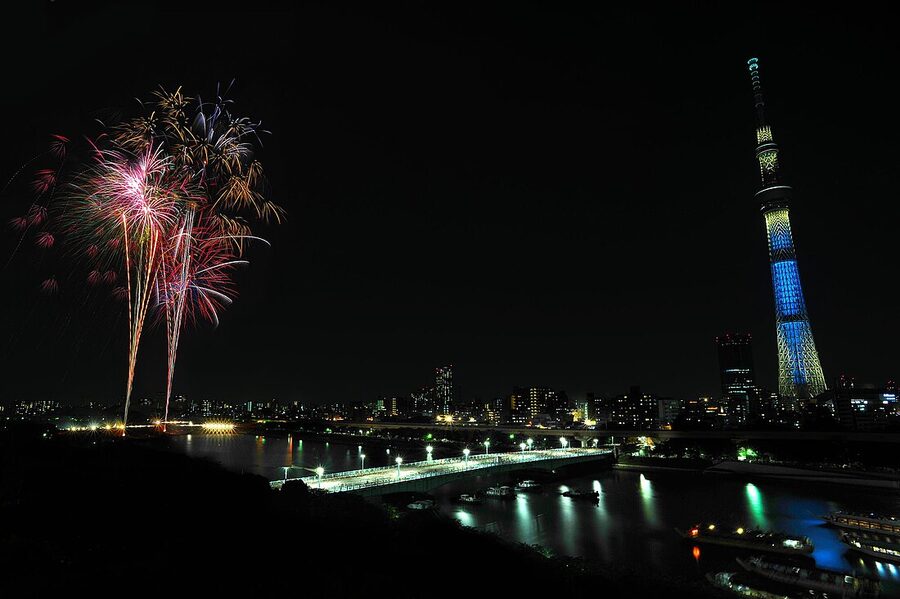
Here’s the full comparison. Every number has been verified against the festival’s own organiser page and the Japanese-language Wikipedia fireworks list. Dates are the 2026 edition.
| Festival | Date 2026 | Shells | Attendance | Venue | Nearest station | Best for | Full guide |
|---|---|---|---|---|---|---|---|
| Sumida River | Sat 25 Jul | ~20,000 | ~900,000-1m+ | Asakusa riverbank | Asakusa | iconic Skytree shot + the biggest name | Sumida River guide |
| Adachi | Sat 30 May | ~13,000 | 600,000-700,000 | Arakawa, Kita-Senju | Kita-Senju | kicks off the season + compact 60 minutes | Adachi guide |
| Edogawa | Sat 1 Aug | ~14,000 | ~1.39m (peak) | Edo River | Shinozaki / Ichikawa | scale + 1,000 shells in 5 seconds opening | Edogawa guide |
| Itabashi | Sat 1 Aug | ~12,000 | ~570,000 | Arakawa at Toda Bridge | Takashimadaira | the Niagara Falls waterfall effect | Itabashi guide |
| Katsushika | late July (weekday) | ~13,000 | ~770,000 | Edo River at Shibamata | Shibamata / Keisei Takasago | Tora-san heritage + weeknight timing | Katsushika guide |
| Setagaya-Tamagawa | late August | ~6,000 (+6,000 Kawasaki side) | ~600,000 combined | Tamagawa at Futako-Tamagawa | Futako-Tamagawa | upscale west Tokyo + joint with Kawasaki | Setagaya-Tamagawa guide |
| Chofu | late September | ~8,000-10,000 | ~300,000 | Tamagawa at Chofu | Keio-Tamagawa / Chofu | last of season + music-synced programme | Chofu guide |
| Hachioji | late July / 1st Sat Aug | ~3,300-3,500 | 80,000-100,000 | Fujimori Park | Hachioji | small and family-friendly, west Tokyo | Hachioji guide |
A few things to read off that table before you pick.
First, the Sumida River festival isn’t even the biggest by attendance — Edogawa’s peak year in 2019 drew about 1.39 million people across both the Tokyo and Chiba banks. Sumida is the biggest by reputation and the one with the Skytree in the photos. If you want scale in raw numbers, Edogawa wins. Second, Adachi has quietly moved from its traditional late-July slot to the last Saturday of May, which genuinely does open the Tokyo hanabi season six weeks earlier than it used to. Third, Hachioji with 3,300 shells is tiny by Tokyo standards but also the only one where “arrive 90 minutes early” isn’t a lie.
The Tokyo fireworks calendar for 2026
Tokyo’s hanabi calendar is compact. Here’s what lands when, and what the trade-offs are.
Late May — Adachi
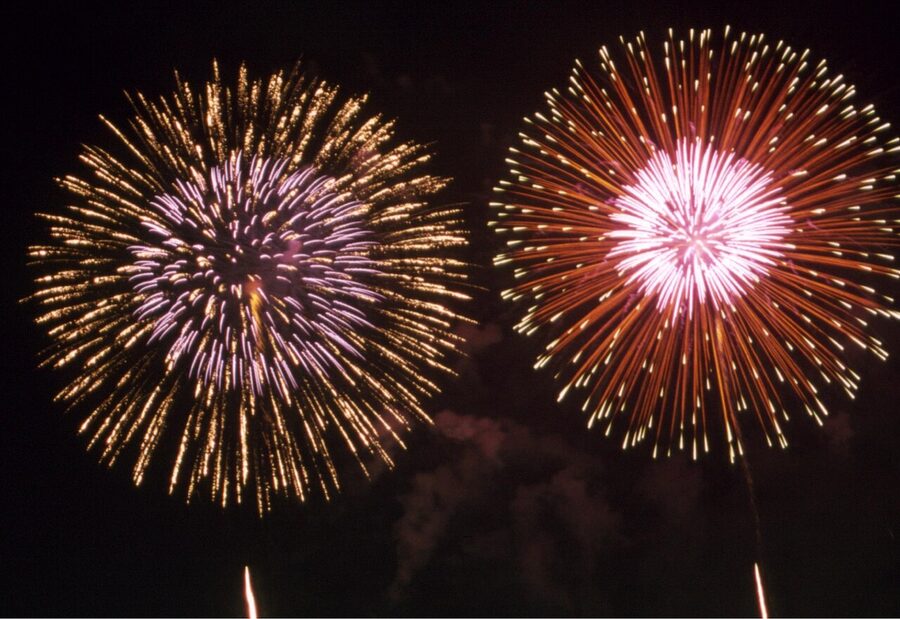
Saturday 30 May 2026 — the Adachi Fireworks Festival (足立の花火) kicks off Tokyo’s summer season. It used to go off in late July, but after lightning cancelled it in 2024 and wind cancelled it in 2025, the organisers shifted the whole thing forwards by two months. About 13,000 shells in an exactly 60-minute window, on the wide flat levees of the Arakawa River at Kita-Senju. The signature effect is a Double Niagara — two horizontal waterfall fireworks fired in parallel across 250 metres of riverbank. Bring a light jacket rather than a uchiwa fan; May evenings by the Arakawa sit around 15-18°C.
If your Tokyo trip is in late May, this is the festival for you. It’s also the quietest of the “major” hanabi, because foreign guidebooks haven’t caught up to the new date.
Late July — Sumida River, Katsushika and Hachioji (often same week)
Late July is the original heart of the Tokyo hanabi season and the week with the biggest clash for a tourist trying to fit everything in.
Saturday 25 July 2026 — the Sumida River Fireworks Festival (隅田川花火大会). This is the one you’ve seen photographed a thousand times. 20,000 shells fired in 90 minutes from two launch points between Asakusa and Ryogoku, starting 19:00, ending 20:30. Expected crowd 900,000 to 1 million+. The first 20 minutes are a juried competition between ten of Japan’s top pyrotechnic companies, and spectators shout “Tamaya!” and “Kagiya!” — the names of rival Edo-period firework guilds going back to 1733. There’s no rain date; if a typhoon hits, the whole event is cancelled for the year.
Late July (usually the Tuesday-Thursday of the same week) — the Katsushika Noryo Hanabi (葛飾納涼花火大会). Around 13,000 shells on a weeknight in the Shibamata district — the old shitamachi neighbourhood where the legendary Tora-san film series is set. Attendance around 770,000. The weekday timing is the clever part: if your Tokyo trip straddles Sumida’s Saturday and the preceding week, you can catch Katsushika on a Tuesday evening and Sumida that Saturday, getting two major festivals for the price of one itinerary.
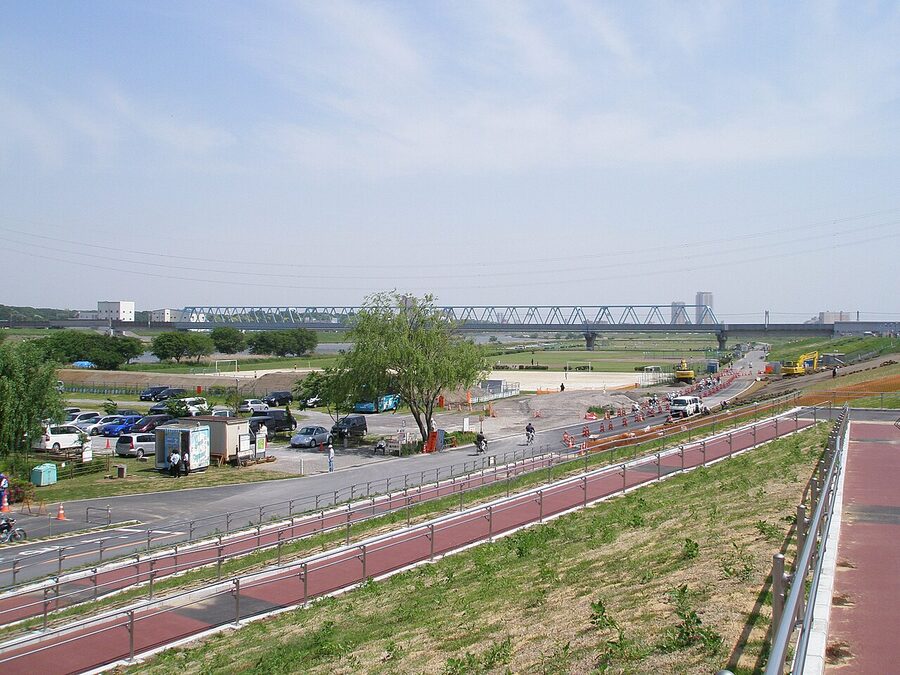
Late July or first Saturday August — the Hachioji Fireworks Festival (八王子花火大会). The smallest major Tokyo hanabi by a long way: about 3,300 shells at Fujimori Park in west Tokyo, drawing 80,000 to 100,000 spectators. This is the ground-based, family-scale one. Good for kids, good for people who have had enough of Tokyo crowds, and good if you’re already doing Mt Takao the same day. The Japanese Wikipedia fireworks list notes it occasionally runs the same evening as Tachikawa Fireworks (in Showa Memorial Park) — worth checking the date carefully because they clash.
First Saturday of August — the big clash (Edogawa vs Itabashi)
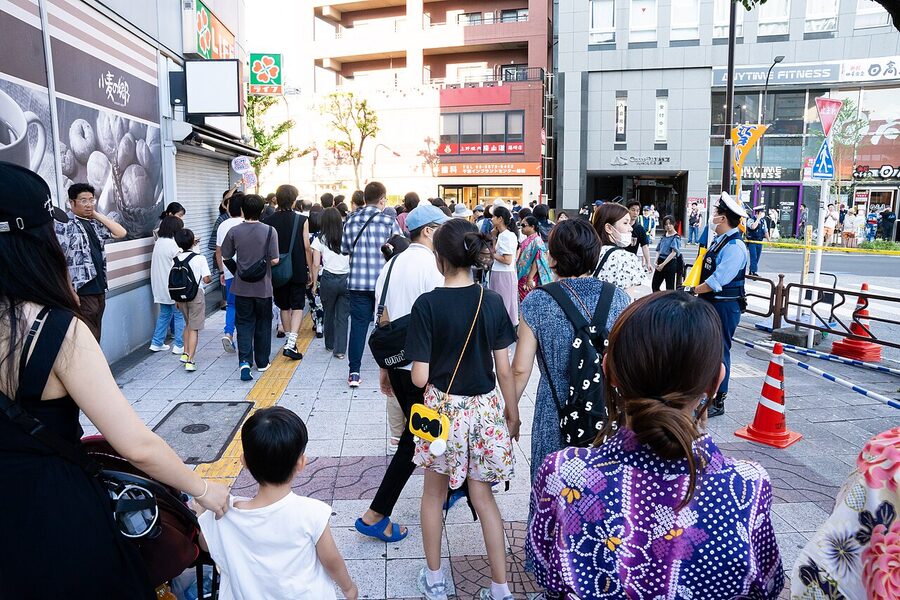
Saturday 1 August 2026 — two of the biggest Tokyo-area hanabi fire on the same night, and you have to pick one.
The Edogawa Fireworks Festival (江戸川区花火大会) runs from 19:15-20:20 on the Edo River at Shinozaki, jointly with the Ichikawa side on the Chiba bank (the Ichikawa Shimin Noryo Hanabi). Combined shell count around 14,000, combined peak attendance 1.39 million. The signature is the absurd 1,000-shell opening burst packed into the first five seconds, followed by eight themed acts each with its own music. The 2025 Mt Fuji set-piece closer was certified by Guinness at 59.2 metres — the tallest static-mountain firework ever built. If you’re picking Edogawa, the Chiba side via Ichikawa Station on the JR Sobu line is much less crushed than the Tokyo side via Shinozaki.
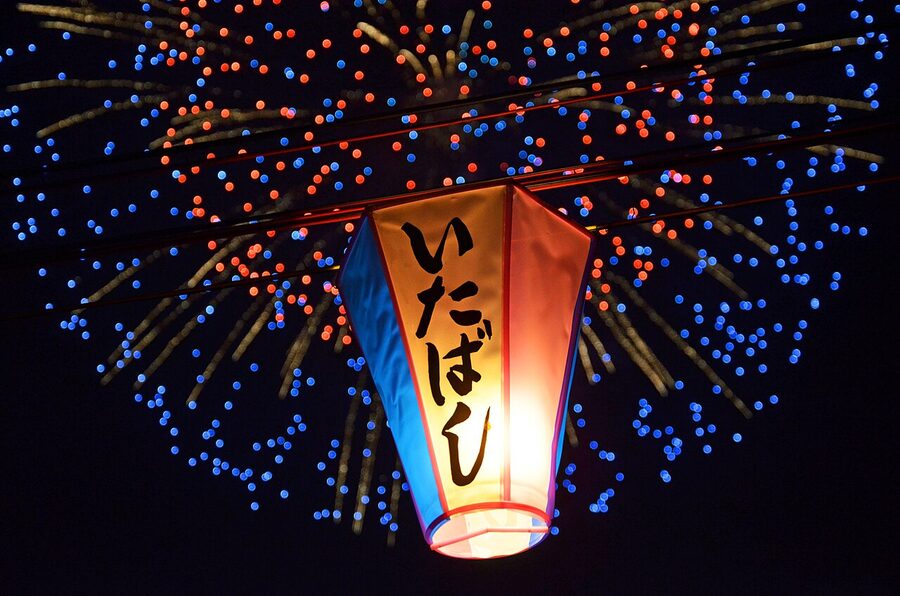
The Itabashi Fireworks Festival (いたばし花火大会), also the same Saturday, is held jointly with the Toda Fireworks Festival across the river in Saitama. About 12,000 combined shells over the Arakawa, attendance around 570,000. Itabashi’s signature is the 700-metre-long Niagara Falls waterfall effect, strung across the Toda Bridge — a horizontal cascade of fire that lasts about 90 seconds. It’s the only place in Tokyo you’ll see that specific set-piece.
Honest opinion on the clash: Edogawa wins on scale, Itabashi wins on the unique signature effect. If you’re staying on the east side of Tokyo (Asakusa, Nippori, Kinshicho areas), Edogawa’s Chiba side is the logical pick. If you’re staying on the west/north side (Ikebukuro, Akabane, Saitama border), Itabashi is easier to reach and get home from. Don’t try to do both — the two venues are over an hour apart by train, the shows overlap, and you’ll just be sitting on the Yamanote Line missing half of each.
Late August — Setagaya-Tamagawa
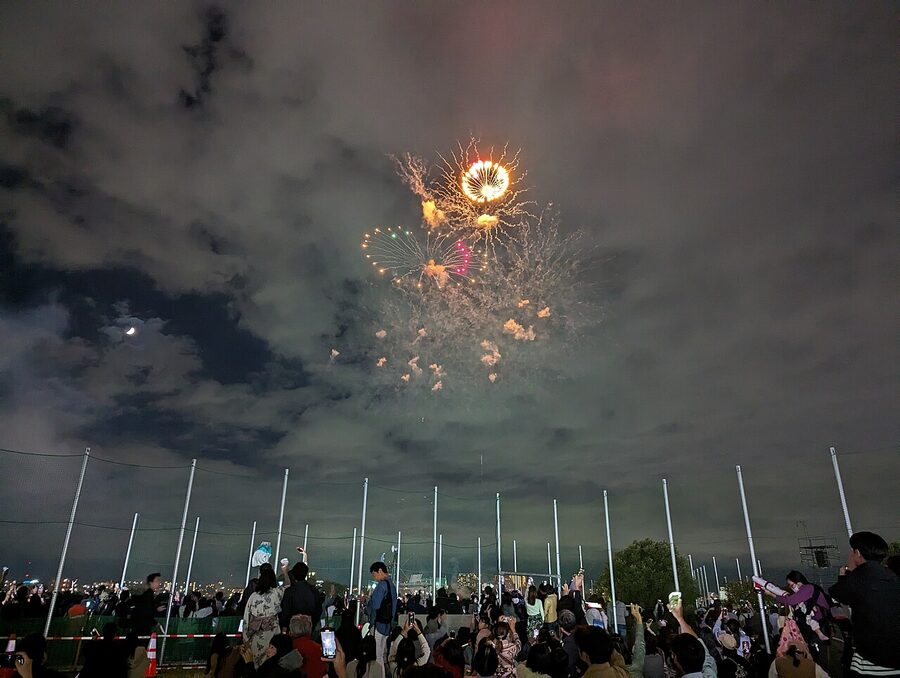
The Setagaya-Tamagawa Fireworks Festival (世田谷区たまがわ花火大会) runs in late August, jointly with the Kawasaki Tamagawa Hanabi on the Kanagawa side. About 6,000 shells on each bank fired simultaneously — combined 12,000 shells over roughly an hour. Venue is the Tamagawa riverbank around Futako-Tamagawa, which means upscale west Tokyo, decent restaurants before the show (Rise Shopping Centre has several), and one of the easier station situations in this list. Attendance around 600,000 combined. This is the festival I’d pick if you want a hanabi that doesn’t require committing to a hot tarmac for four hours beforehand.
Late September — Chofu
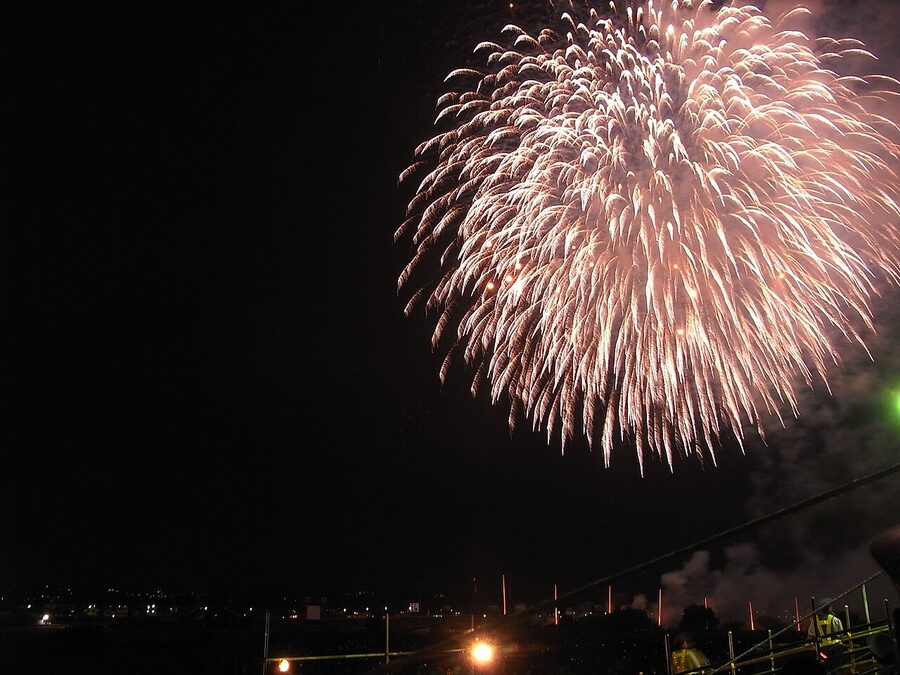
The Chofu Fireworks Festival (映画のまち調布”夏”花火), officially “Chofu — the Movie City — Summer Hanabi,” is the season closer. Late September, about 8,000-10,000 shells, attendance around 300,000, venue the Tamagawa riverbank at Chofu in west Tokyo. The musical programme is the signature — the show is synced to music from Japanese film scores (Chofu has been home to major film studios for nearly a century). It’s the quietest of the major festivals partly because it’s off-peak tourist season, and partly because the weather by then is the best of any hanabi in the calendar: evenings are cool, typhoon risk is dropping, and the crowds actually feel manageable. If your Tokyo trip is only in September, this is the only major hanabi you’ll catch, but it’s a worthy one.
How to pick if you only have one night
If your Tokyo dates overlap with multiple fireworks festivals, here’s my honest decision tree.
- You want the iconic Skytree-in-the-photo shot: Sumida River. Accept that you’ll be in the worst crowd of your life. Arrive by 14:00 for a decent spot.
- You want scale but less crowded: Adachi (late May) or Katsushika (weekday in late July). Both 600,000-770,000 crowds with shell counts in the 13,000 range.
- You want a unique signature effect: Itabashi for the 700-metre Niagara Falls, or Edogawa for the 5-second 1,000-shell opening and the Guinness-record Mt Fuji set-piece.
- You want a family-friendly, smaller festival: Hachioji. 3,300 shells at Fujimori Park, 80,000 people, you can actually sit down.
- You want upscale pre-fireworks dinner and easy logistics: Setagaya-Tamagawa. Futako-Tamagawa has the restaurants, Rise Shopping Centre has toilets, and the west-side train lines go home fast.
- Your trip is September-only: Chofu. Only major Tokyo hanabi running that late. Cooler, smaller crowds, and the music-synced programme is a genuine draw.
- You arrive late May: Adachi is your only option. Fortunately it’s a good one.
Practical tips that apply to all eight
What to bring (non-negotiable list)
- Leisure sheet (レジャーシート) — the blue plastic picnic mat sold for ¥300 at any 100-yen shop. Sitting directly on grass or pavement for 3-4 hours is miserable; this is the single cheapest item that transforms the night.
- Water — at least 2 litres per person on a July/August festival, 1 litre for May/September. The machines at the venues sell out by 17:00.
- Conbini bento purchased before 16:00, because the Lawson and 7-Eleven near every venue are stripped of cold food by late afternoon. Buy yours at a station further away.
- Uchiwa fan or a small handheld electric fan. Often handed out free at stations on the day by local businesses — grab one on your walk in.
- Cooling towel (ひやりタオル, hiyari taoru) — ¥300 at any drug store. Soak it, wring it out, drape it around your neck. For August hanabi it’s the most useful small item you can buy in Japan.
- Portable charger — everyone’s phones die trying to photograph fireworks badly. Bring a 10,000mAh battery pack.
- Rubbish bag — Tokyo has almost no public bins. You take everything home. It’s a bigger cultural point than most foreigners realise on festival night.
- Rain poncho — umbrellas are effectively banned at viewing zones because they block others. Most of these festivals run through light rain.
Yukata — welcomed but not required
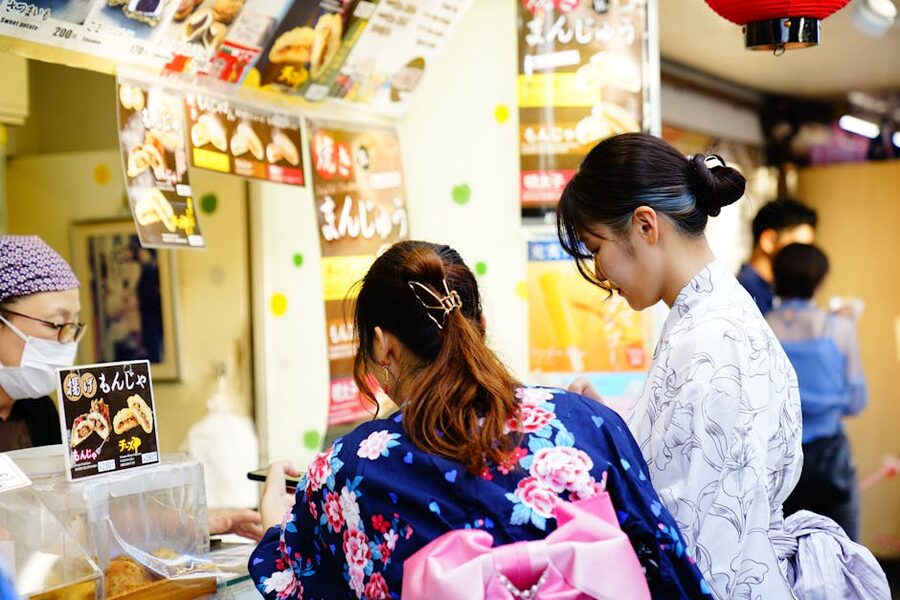
A yukata is the light cotton summer kimono you’ll see everywhere at hanabi. Rental shops around Asakusa kit you out for ¥3,000-5,000 per day including obi, bag, and geta sandals. It isn’t required and nobody cares if you show up in jeans and a t-shirt, but it does noticeably improve the photos and the atmosphere. Worth doing once. For the etiquette side of things (which side folds over which, how to sit with the obi, what not to do) my Japan dos and don’ts guide has the basics.
Arrival timing
- 3-4 hours early for the prime free riverbank spots at Sumida, Edogawa, Katsushika, and Itabashi. The front-row barriers fill from mid-afternoon.
- 1-2 hours early at Adachi, Setagaya-Tamagawa, Chofu — the venues are wider and the crowd density is lower.
- 45 minutes early at Hachioji. Seriously, you can just show up.
Exit strategy
The stations around every Tokyo hanabi venue become one-way pressure zones in the 30 minutes after the finale. The trick that works every time: walk away from the crowd. Aim for an alternate station 15-20 minutes further on foot — Mizue instead of Shinozaki, Nishiarai instead of Kita-Senju, Motoyawata instead of Ichikawa. You’ll arrive at a platform that’s busy but moving, rather than queuing for 40 minutes at the obvious station. Tap in with an IC card (Suica or Pasmo) — the paper-ticket queues at gates are their own hell. My Tokyo trains and IC card guide covers setup.
Paid seating
All seven of the bigger festivals sell reserved seating. Typical prices run ¥3,000-10,000 per seat, with premium boxes and tables going much higher. Sales open 2-6 months ahead. For a family or anyone not keen on sitting on hot concrete for four hours, they’re worth the money — you get a guaranteed seat, a toilet you can actually reach, and a much saner walk home. For the Sumida festival, official seats start around ¥7,000 and sell from mid-April through mid-May. For Edogawa, it’s ¥2,000-5,000+ from mid-June via Ticket Pia and Lawson Ticket. For Adachi, ¥5,000-20,000 via CN Playguide from late April.
Weather and cancellation reality
This is where recent years have got genuinely difficult. Late July to mid-August sits at the tail end of the Japanese rainy season (tsuyu) and the start of typhoon season — a narrow window where you can get hit by either. The organisers’ weather policies vary:
- Sumida River, Adachi: no rain date. Light rain proceeds, severe weather cancels the whole event for the year. 2024 and 2025 Adachi editions were both cancelled.
- Edogawa: light rain proceeds, severe weather cancels. Was pushed to late August in 2024 because the lead fireworks company chief had to judge judo at the Paris Olympics — a one-off exception.
- Itabashi, Katsushika, Setagaya-Tamagawa: generally have rain-delay to the following day, but this varies year to year. Check the official site.
- Chofu: late September is well clear of typhoon season and the most reliable by weather.
Rule of thumb: check the Japan Meteorological Agency (気象庁) forecast from 48 hours out and the official festival site from noon on the day. Most committees announce go/no-go by 13:00-14:00 on the day itself. Lightning or wind warnings in the afternoon frequently mean cancellation.
Skip these (former or never-was Tokyo fireworks)
A few Tokyo fireworks events that used to rank on lists no longer run in any sensible form. Don’t plan a trip around them.
- Jingu Gaien Fireworks — suspended since 2024 due to the Meiji Jingu Gaien redevelopment controversy (the protected tree felling that became a public scandal). The 2023 edition was the last held. Skip, possibly permanently.
- Tokyo Bay Grand Fireworks (Tokyo Wan Dai Hanabi Sai) — suspended since 2016. Big, beloved, gone. You’ll still see it on old lists.
- Tokyo Keibajo (Fuchu Racecourse) Summer Night fireworks — these still run on Wednesday evenings during the summer but they’re event fireworks held after races, not a hanabi taikai. Different experience, different scale. Fine if you’re at the track anyway, not worth travelling for.
- Trying to combine two festivals the same night — particularly common on the first Saturday of August. Don’t. The venues are an hour apart by train, the station crush at the end of one means you’ll miss the other, and you’ll enjoy neither.
Pairing each festival with the rest of your day
The hanabi is the evening. The afternoon is yours to spend nearby.
- Sumida River: walk through Asakusa in the morning, visit Senso-ji Temple before 9am, pick up a yukata on Nakamise Street, lunch at a yatai stall on Hoppy-dori, be on the riverbank by 15:00.
- Hachioji: do Mt Takao in the morning (cable car up, walk down trail 1, about 3 hours), back to Hachioji by 15:00, Fujimori Park by 17:00.
- Katsushika: Shibamata shotengai walk, Taishakuten Temple, the Tora-san Museum (if you love the film series — or even if you don’t, it’s a charming hour), all within 10 minutes of the launch site.
- Setagaya-Tamagawa: arrive at Futako-Tamagawa Rise Shopping Centre for lunch and air conditioning, walk the Tamagawa promenade, finish with dinner in Shibuya after the show (the Den-en-toshi Line gets you there in 12 minutes).
- Chofu: Jindaiji Temple and the botanical garden are both 15 minutes from Chofu Station and one of west Tokyo’s loveliest half-day combinations. The soba shops at Jindaiji are the reason to go.
- Edogawa (Chiba side): arrive at Ichikawa, walk through the old temple district of Konodai, or stay in Asakusa in the morning and take the JR Sobu to Ichikawa after lunch.
- Itabashi: the Itabashi side doesn’t have obvious tourist sights but the Toda Bridge walk is interesting and Akabane (one stop away) has one of Tokyo’s best sento (public bath) scenes if you want to soak before the show.
- Adachi: Kita-Senju is itself an underrated half-day — the old post-town of Senju was the first stop on the Edo-era Nikko Kaido and the backstreets still have senbei shops and izakayas that locals use. Dinner on shitamachi terms before the show.
My ranked picks for a first-time Tokyo visitor
If I had to rank the eight for a first-time visitor picking exactly one, based on what I’ve actually experienced and what genuinely rewards the effort:
- Sumida River (if in Tokyo 25 July 2026) — yes, it’s a crush. Yes, you’ll queue. Yes, you’ll remember it forever. For a first-time visitor who can only do one, the Skytree backdrop photo and the 300-year competition history genuinely do add up to a once-in-a-lifetime Tokyo night.
- Adachi (if in Tokyo 30 May 2026) — my personal favourite. Shorter (60 minutes), less crushed, quieter crowd, and it’s now the season opener. Wide Arakawa levees mean you can actually move.
- Edogawa (1 August) — the Chiba side is the best scale-to-crowd ratio of any major Tokyo hanabi, by some distance. One JR train from Shinjuku or Tokyo Station, no line changes.
- Itabashi (1 August) — if you’re already on the west/north side of Tokyo, the 700-metre Niagara waterfall is unique in Japan and the crowd is about 40% of Edogawa’s.
- Setagaya-Tamagawa (late August) — the upscale option. Good restaurants, easy trains, and a two-bank simultaneous launch that feels wider than any single-bank show.
- Katsushika (late July weekday) — genuinely underrated. The Shibamata backdrop and the weeknight timing make it the clever pick if Sumida falls in your week and you want a warm-up festival.
- Chofu (late September) — the late-season pleasure-cruise option. Best weather, quietest crowd, music-synced programme. A September-only trip should go to this one.
- Hachioji — the family/kids pick. Small, gentle, ground-based, forgiving logistics. Fine as a side-event, not the centrepiece.
Essential numbers at a glance
- Entry cost: free at all public riverbank zones across every festival
- Paid seat range: ¥2,000-¥10,000 for most reserved seats; up to ¥35,000 for yakatabune boat dinners
- Typical start time: 19:00-19:30
- Typical finish: 20:20-20:30
- Duration: 60-90 minutes
- Station crush window: 20:30-21:30 (peak 20:40-21:00)
- Temperature range: 15-18°C for Adachi (May), 28-33°C for all July and August festivals, 18-22°C for Chofu (September)
- Rain policy: varies by festival — see individual guides
Verifying a festival the week of your trip
Festival schedules shift. Two of the festivals in this guide moved dates in 2026 compared to previous years, and weather-driven cancellations are a real risk. Rather than trusting any English-language blog post (including this one) in the week of your trip, verify from the three Japanese sources that update fastest:
- The official festival website — every festival has its own domain (sumidagawa-hanabi.com, edogawa-hanabi.jp, adachikanko.net/hanabi, etc.). These announce cancellations first.
- Go Tokyo’s 2026 fireworks guide — the Tokyo Metropolitan Government tourism site, updated each season.
- Hanabi Walker Plus — the standard Japanese fireworks-festival calendar site, updated daily with weather status during peak season.
For typhoon tracking specifically, the Japan Meteorological Agency three-day forecast is the one the festival committees themselves watch.
One last thing
Japanese summer hanabi aren’t the polite, spread-out firework displays you might be used to. They’re loud, they’re dense, they’re crammed into 60-90 minutes of near-continuous light, and the sky above the launch site genuinely doesn’t clear between bursts — the smoke just keeps rolling. A lot of first-time visitors take this in and then spend the last ten minutes just watching, phones down. That bit, every time, is the best bit. Whichever one you pick, remember to stop taking photos for the final act.
If you’re still building your Tokyo itinerary, the 3 days in Tokyo guide slots a major hanabi into an evening comfortably. And if you’re flying in specifically for the summer festival season, overnighting in Asakusa gets you walking distance to Sumida, one train to Katsushika, and the prettiest shitamachi yukata rental shops in Tokyo.