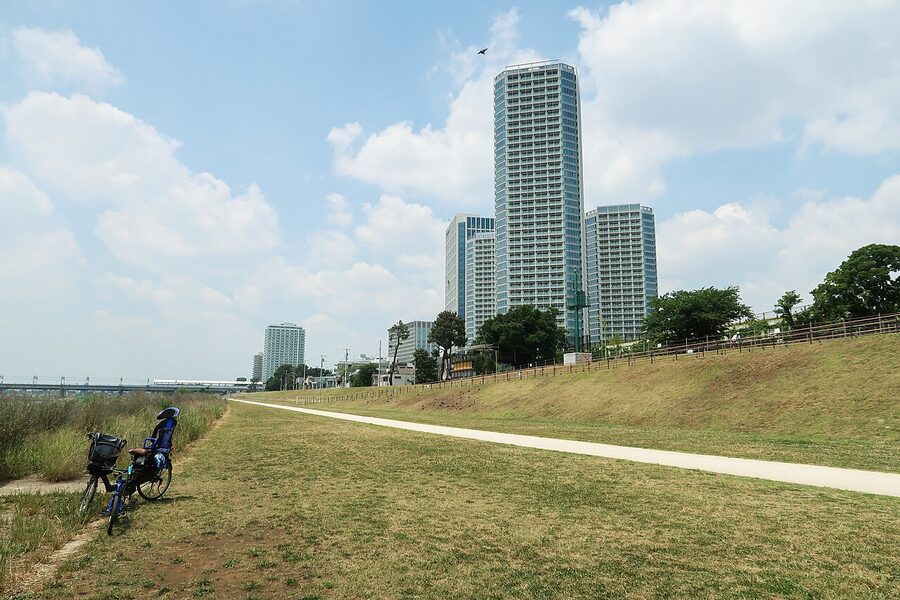
Here’s something that surprises almost everyone the first time they go: the Setagaya-Ku Tamagawa Fireworks Festival isn’t one festival, it’s two. On the same night, at the same time, on opposite banks of the Tama River, the Setagaya side (Tokyo) and the Kawasaki side (Kanagawa) both set off roughly 6,000 shells each. From the middle of the river they read as a single 12,000-shell show stretched across both sides of the sky. People in Futako-Tamagawa just call it “the Tamagawa fireworks” and don’t distinguish — which is why the old site nikotama-kun.jp nails it in one line: two launch sites, one river, one evening, watched simultaneously.
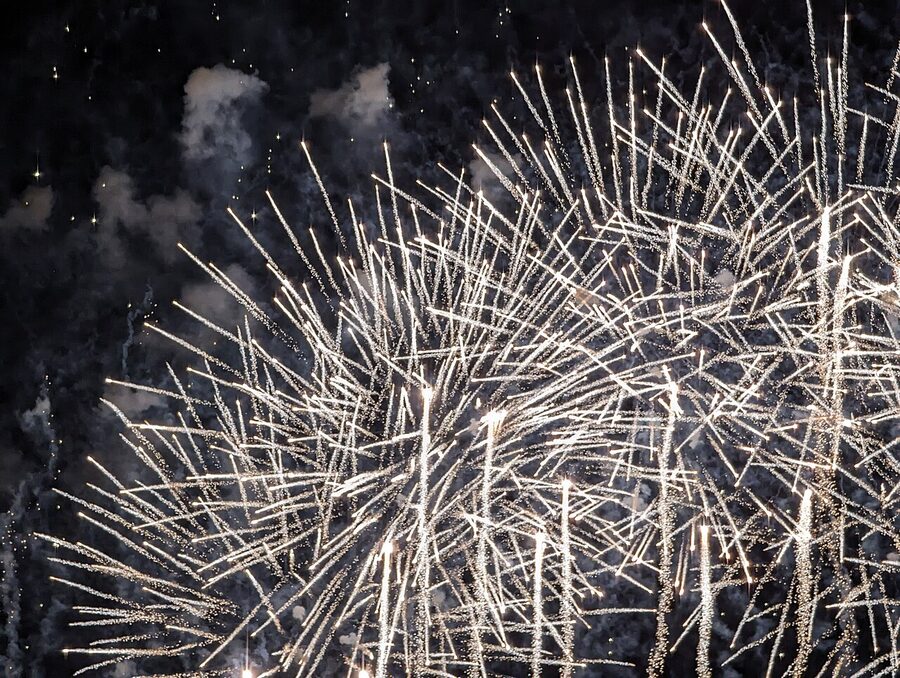
The other thing to know up front: since 2018 this festival hasn’t been an August one. It’s an October event — the third Saturday of October specifically — which makes it one of the last proper hanabi of the year and genuinely the nicest to sit out through. No 33°C humidity, no swarms of mosquitoes, just a cool autumn riverbank and everyone in yukata or light jackets. For 2026 the date is Saturday 3 October, launch time 18:00 to 19:00. That’s it. One hour. No intermission.
In This Article
- Two festivals, one river, one evening
- Why it’s October now (the 2017 story)
- The history, the short version
- When and where
- Getting there
- For the Setagaya (Tokyo) side
- For the Kawasaki (Kanagawa) side
- The practical bit
- Where to watch (honestly)
- The main Setagaya riverbank (crowded but central)
- The Unane sub-venue (Setagaya side, quieter)
- The Kawasaki side (often the smartest choice)
- Paid seating (有料観覧席)
- The paid accessibility spaces
- Futako-Tamagawa Rise rooftop
- The confession: my first Tamagawa was a disaster
- Arrival strategy — what actually works
- Exit strategy (this is where people cry)
- Weather reality check
- What to bring
- Two honest opinions
- Pairing it with a day in Futako-Tamagawa
- How I’d do Setagaya-Tamagawa as a first-timer
- Essential info at a glance
Two festivals, one river, one evening
The joint-hosting bit is what I wish I’d understood on my first visit. This is what’s actually happening on the night:
- 世田谷区たまがわ花火大会 (Setagaya-Ku Tamagawa Hanabi Taikai) — the Tokyo-side festival, now in its 48th edition in 2026. Organised by Setagaya Ward. About 6,000 shells launched from the Futako-Tamagawa Ryokuchi sports grounds at Kamata 1-chome, on the Setagaya bank just upstream of Futako Bridge.
- 川崎市制記念多摩川花火大会 (Kawasaki Shisei Kinen Tamagawa Hanabi Taikai) — the Kanagawa-side festival, now in its 85th edition in 2026. Organised by Kawasaki City and the Kawasaki Tourist Association. About 6,000 shells launched from the Tamagawa riverbank at Suwa in Takatsu Ward, just downstream of Futako Bridge.
They’ve been fired on the same night every year since 1994 — with a couple of exceptions (more on those below). A formal “cooperation agreement” between Setagaya and Kawasaki now runs the joint operation. They share traffic control, coordinate station crowd management, and even schedule the October date together. Locally this is one event, and the map at nikotama-kun.jp helpfully points out that the whole appeal of Futako-Tamagawa as a viewing spot is that you don’t have to choose — you stand on the bridge-adjacent riverbank and the sky is full on both sides.
Total combined count: about 12,000 shells in 60 minutes. For comparison, Sumida River does 20,000 shells in 90 minutes. So it’s a denser per-minute show than Sumidagawa, just shorter.
Why it’s October now (the 2017 story)
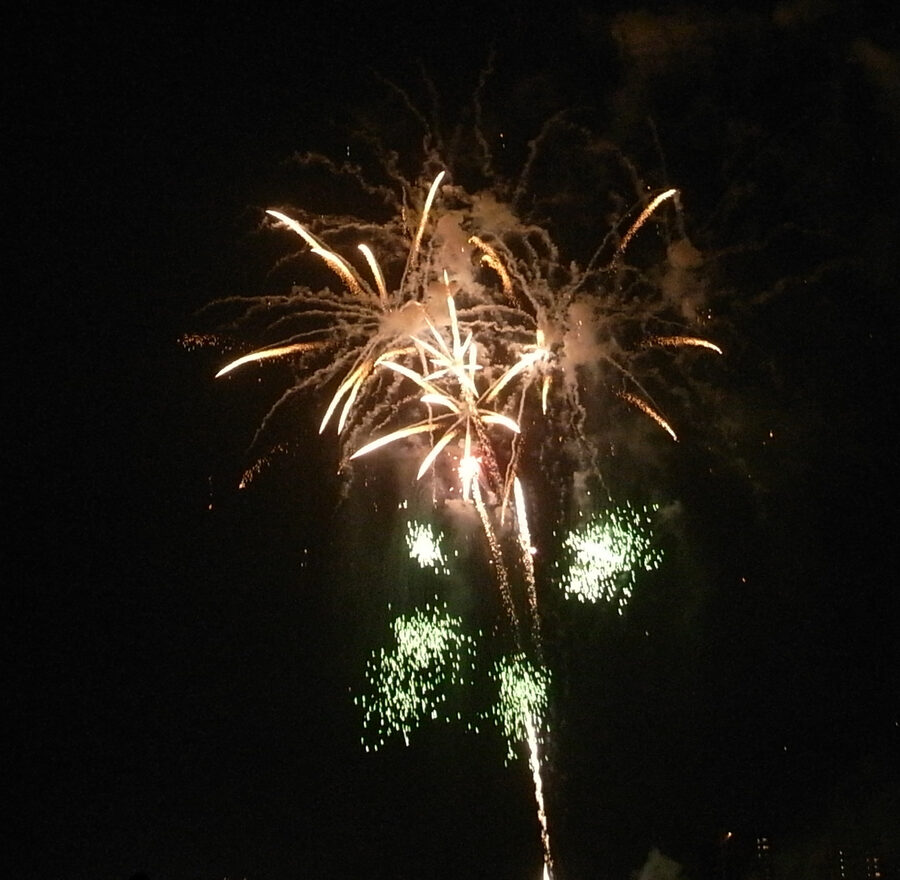
Until 2017 the Setagaya-Kawasaki Tamagawa fireworks were an August festival, usually the third Saturday. Then, on 19 August 2017, a sudden late-afternoon thunderstorm rolled in over the river. The organisers had already decided to cancel for the night, but crowds had already gathered — and lightning struck a nearby park in Setagaya, injuring nine people who were hospitalised. It wasn’t catastrophic, but it was the kind of incident you don’t ignore.
The two councils sat down the following year, looked at the summer weather data, and moved the whole festival to October. Officially the Yomiuri Shimbun reported it as a “climate stability” decision — fewer typhoons, cooler, less humid, less lightning. Since 2018 it’s been the third Saturday of October. COVID knocked out 2020, 2021, and 2022. The festival returned in 2023, has run every year since, and the safety review kept trimming: from 2026 onwards the maximum shell size on the Setagaya side drops from 10-inch (shakudama) down to 6-inch, a deliberate step to reduce fallout and crowd-distance requirements. You’ll still see spectacular bursts. They’ll just be slightly smaller ones.
The history, the short version
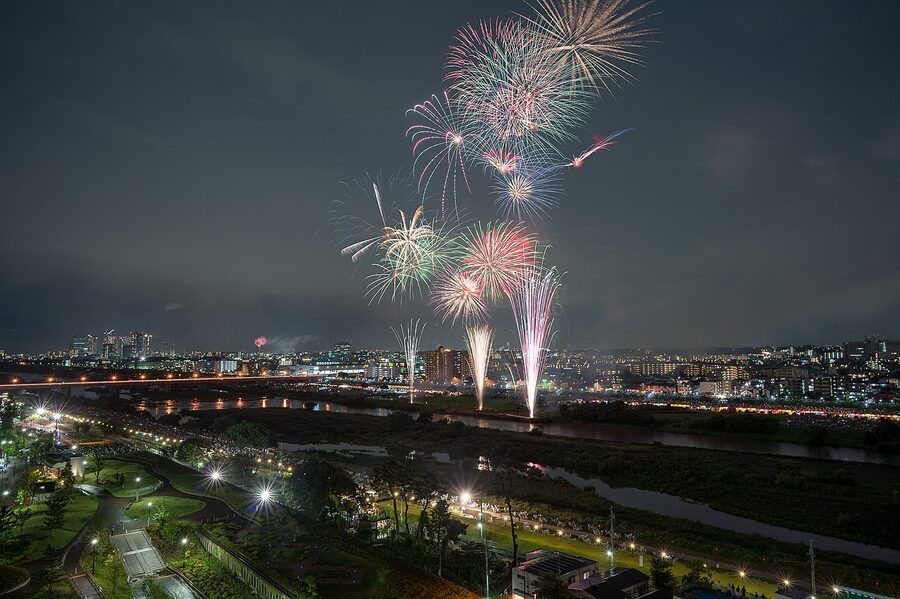
The Kawasaki side is the old one. It goes back to 1929, when the first Kawasaki Tamagawa fireworks went up near Rokugo Bridge to mark the opening of the river’s swimming season. It paused through World War II and resumed in 1949, moved to Tamagawa Ohashi in 1954, paused again from 1968-1971 because of traffic problems around the venue, restarted in 1973 to mark Kawasaki’s promotion to a designated city, and in 1975 settled at the current location around Futako Bridge.
The Setagaya side is the newer half. It was founded in 1978, and for the first 15 years or so it was an independent Tokyo festival that happened to coincide with Kawasaki’s. The formal joint-hosting only started in 1994. Since then, the year to beat remains 1995, when combined attendance across both banks topped one million people — the peak year. Typical modern attendance runs 600,000 to 700,000 combined, with around 290,000 on the Setagaya side alone.
There have been gaps. The Setagaya side was paused from 2004-2006 for Nogawa river flood-control engineering; Kawasaki ran alone those years. In 2011 the Tohoku earthquake forced Setagaya to cancel and pushed Kawasaki’s date to 1 October. And of course 2020-2022 was COVID. So this is a festival with scars. Which is partly why it feels like a community event rather than a slick tourist thing — it’s been put back together by Setagaya and Takatsu residents several times.
When and where
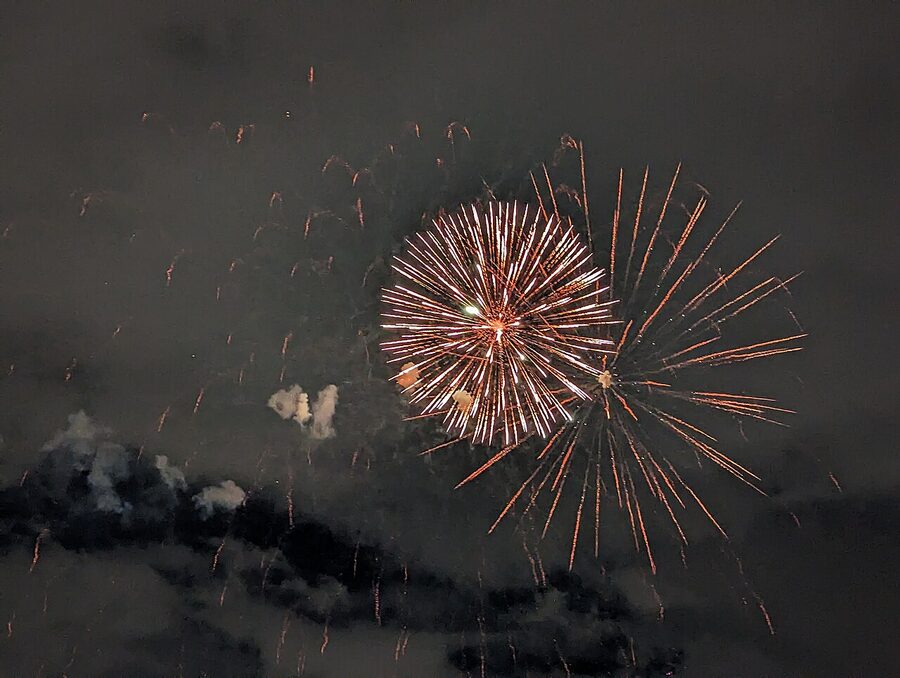
- Date: Saturday 3 October 2026
- Launch time: 18:00–19:00 (both sides fire simultaneously)
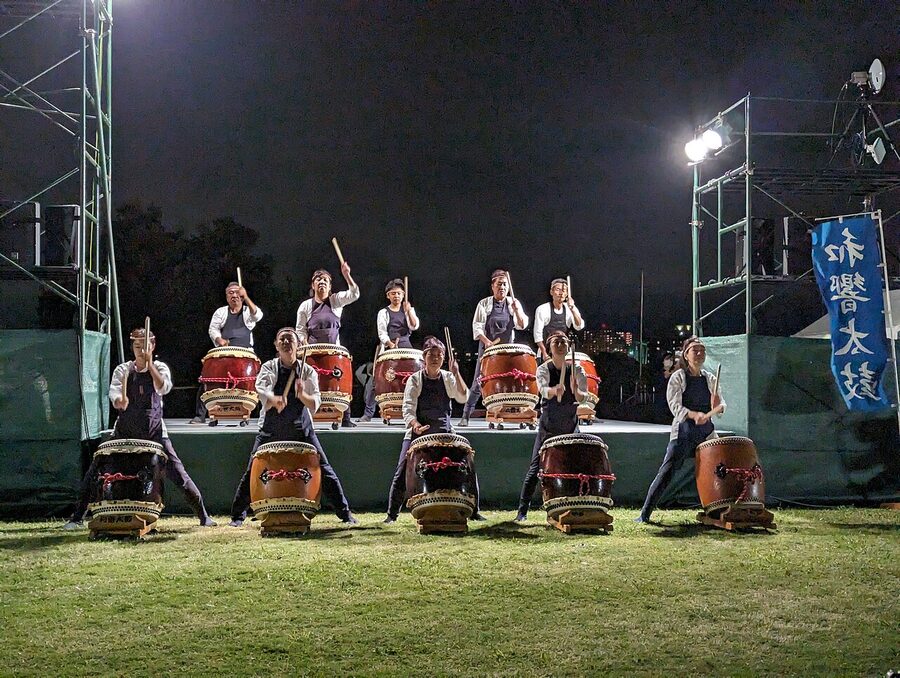
- Stage shows: 15:00–19:30 (on the Setagaya main stage — taiko drumming, singing, dance)
- Food stalls: General viewing area (Kamata venue) 14:00–20:00; paid area from 15:00; Unane sub-venue and Kawasaki riverbank 15:00–20:00
- Main venue (Setagaya): 二子玉川緑地運動場 (Futako-Tamagawa Ryokuchi Sports Grounds), Kamata 1-chome, along the left bank just upstream of Futako Bridge
- Sub-venue (Setagaya): Unane Kaijo, roughly 1km further upstream, quieter and smaller
- Main venue (Kawasaki): Tamagawa riverbank at Suwa, Takatsu-ku, between Futako Bridge and the Daisan Keihin expressway bridge on the right bank
- This year’s Setagaya theme: 翔 (Shō, “Soar”) — “Racing across the night sky, a new flight”
- Organisers: Setagaya-ku Tamagawa Hanabi Taikai Executive Committee + Setagaya Ward; Kawasaki City + Kawasaki Tourist Association on the other side
Getting there
For the Setagaya (Tokyo) side
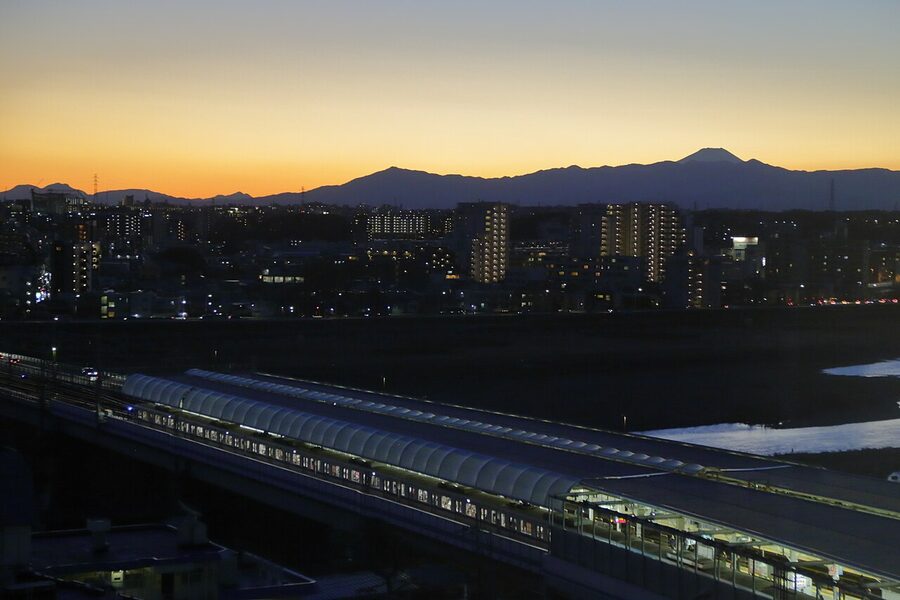
The easy station is Futako-Tamagawa (二子玉川) on the Tokyu Denentoshi Line (DT07) or the Tokyu Oimachi Line (OM15). From Shibuya, the Denentoshi Line takes about 15 minutes on an express (about 210 yen with an IC card). The walk from the station to the Setagaya main viewing venue is about 15 minutes through Futako-Tamagawa Rise shopping complex and over the embankment. The Kamata venue — where the stage is and where most fireworks are fired from — is signposted heavily once you’re on the riverside path.
If you want the sub-venue at Unane (quieter, further upstream), you can also exit at Kaminoge Station (上野毛) on the Tokyu Oimachi Line, walk down to the river, and follow the bank southwest. It’s about a 25-minute walk but you’ll avoid the main station crush.
For the Kawasaki (Kanagawa) side
The closest station is Futako-Shinchi (二子新地) on the Tokyu Denentoshi Line (DT08), one stop from Futako-Tamagawa and about 600m from the Kawasaki venue. The problem: this station is small, it’s on the Kanagawa side, and it gets entry-limited (入場制限) during peak return. On the night, local guidance is to use Takatsu Station (高津) on the Denentoshi Line (one further stop), or Musashi-Mizonokuchi Station (武蔵溝ノ口) on the JR Nambu Line, and walk from there. Both are about a 10–15 minute walk.
The practical bit
The Denentoshi Line and the Oimachi Line both run on modified timetables on the day. All Denentoshi trains run as local stops (no expresses). There’s additional turnback service at Kaji-ga-ya Station to increase capacity. The Tokyo Metro Hanzomon Line, which runs through from Denentoshi, also runs the modified schedule. Buses into Futako-Tamagawa from 15:00 onwards are mostly cancelled or severely rerouted — don’t rely on them.
There is no parking. The riverbank roads (including Route 246’s Futako Bridge and the smaller Shin-Futako Bridge) are vehicle-free from 16:00. Illegal parking is enforced aggressively. Come by train. The Tokyo trains guide on this site covers IC cards, line colours, and which stations to avoid at rush hour — all of it applies on fireworks night.
Where to watch (honestly)
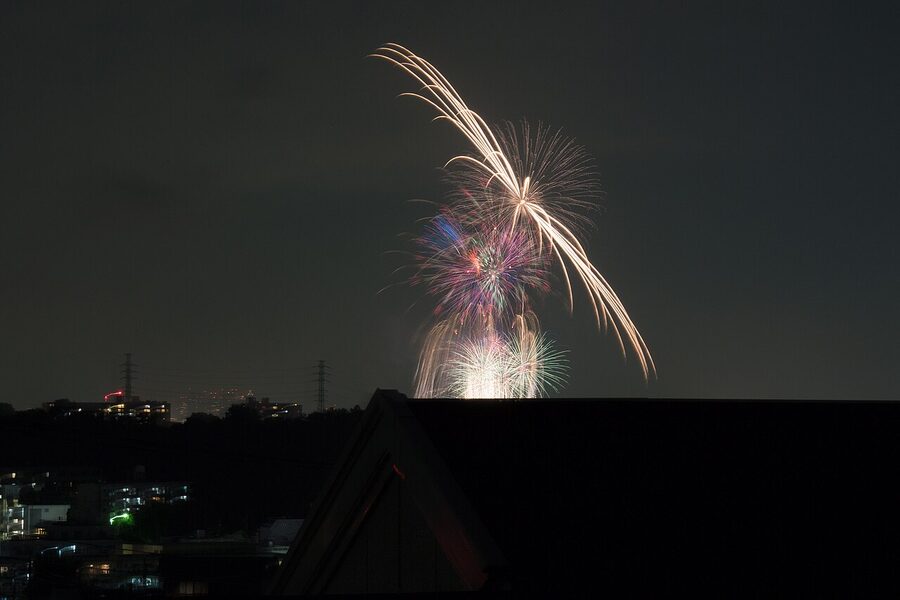
Free viewing spots break down roughly like this, from most intense to most civilised:
The main Setagaya riverbank (crowded but central)
The grass flats at Futako-Tamagawa Ryokuchi, directly in front of the main stage, fill from about 14:00 for the best front-row spots. This is where the stage performances happen and where most of the main-stage fireworks read dead-centre above you. It’s crowded but not unpleasant — the area is wide and flat, unlike the narrow riverbanks at Sumida. The Setagaya rules require each blue tarpaulin (レジャーシート) to give at least 90cm x 90cm per person, and stewards do walk around checking.
The Unane sub-venue (Setagaya side, quieter)
About 1km further upstream, the Unane Kaijo is the secondary Setagaya venue with its own kitchen cars and food stalls. You’re further from both main launch points, so the shells read smaller — but crowd density drops hard, toilets are easier, and you can actually arrive at 16:30 and still find space. This is my pick if you’re not interested in fighting for the central experience.
The Kawasaki side (often the smartest choice)
This is the one nobody tells first-time travellers: the Kawasaki riverbank is usually less crowded than the Setagaya one. There’s no direct Shibuya connection, so most casual Tokyo visitors don’t consider it, which means the Takatsu Ward riverbank often has genuine breathing room. And the view of the Setagaya-side fireworks from the Kawasaki bank is arguably better — you see both the Kawasaki shells overhead and the Setagaya shells across the river as a second layer. The downside is the trek: arrive via Musashi-Mizonokuchi (JR Nambu Line or Tokyu Denentoshi Line) and walk 15 minutes rather than trying to squeeze out of Futako-Shinchi Station.
Paid seating (有料観覧席)
Setagaya releases a limited run of paid seats every year. For the 47th festival in 2025, tickets went on sale from mid-July through Rakuten Ticket; for 2026 expect similar timing with an announcement in the 7 July edition of the Setagaya Ward newsletter (区のおしらせ). They sell fast and in previous years have priced from around ¥7,000 per seat. What you’re paying for: a numbered spot, a reserved seating area, actual access to toilets, and a less-brutal exit route. Worth it for families, older travellers, or anyone who doesn’t want to sit on grass for four hours.
The paid accessibility spaces
Worth flagging: Setagaya specifically runs a disability viewing area (障害者観覧スペース) with reserved access. You apply through the official site in advance. This is genuinely well-run — one of the better accessibility setups among major Tokyo fireworks events.
Futako-Tamagawa Rise rooftop
Some of the restaurants and rooftop decks at Futako-Tamagawa Rise shopping complex get special fireworks-night reservations. These aren’t cheap (and book out months ahead) but they’re worth knowing about. The Rise’s eighth-floor terrace, some of the upper-floor restaurants, and specific hotel rooms in the adjacent Futako-Tamagawa Excel Hotel Tokyu get clean sight lines. If you can book the Excel Hotel Tokyu on the night itself, you’ve solved the whole exit problem.
The confession: my first Tamagawa was a disaster
I genuinely thought I was being clever. I was staying in Shibuya, it was October, the forecast was clear, and I thought “I’ll pop down to Futako-Tamagawa at 17:30, grab a spot, done.” I got on the Denentoshi Line at 17:25. The train itself was fine. The station exit took 22 minutes. The walk to the riverbank took 35 minutes because every single street was one-way and staff-directed, and I had to loop around through a pedestrian zone I didn’t know existed. By the time I got to the riverside the shells were already going up. I watched the last 30 minutes standing in a side street with a tree blocking the top third of the sky, the first fireworks I saw I saw mostly through the screen of the woman filming in front of me.
Two lessons from that: arrive way earlier than feels necessary, and if you arrive late, walk towards the Kawasaki side or upstream to Unane rather than fighting for scraps at the main venue. The crowd flow is engineered for one direction and it’s not the direction you want.
Arrival strategy — what actually works
- Leave Shibuya by 14:30 at the latest. The Denentoshi Line to Futako-Tamagawa takes 15 minutes on an express, but expresses stop running on the day — you’re on locals. Add crowd time at both stations.
- Eat and kit up in Futako-Tamagawa Rise first. The shopping complex at the station has a full food court, several good casual restaurants, and Tsutaya Books for killing time. Conbini runs for leisure sheets, water, bento.
- Pick your venue and commit. Main Setagaya riverbank (front-row, crowded), Unane (further walk, quieter), Kawasaki bank via Musashi-Mizonokuchi (best split of views and space). Don’t try to switch venues mid-evening — the barricades go up at 16:00 and you can’t cross back.
- Be settled by 16:30. From 17:00 onwards, new arrivals to the main Setagaya venue get diverted progressively further from the river. By 18:00 they’re being sent to overflow cross-streets where trees block half the sky.
- Do your toilet run before 17:45. Portable toilets on site. Queues triple at 19:05 as soon as the finale hits.
Exit strategy (this is where people cry)
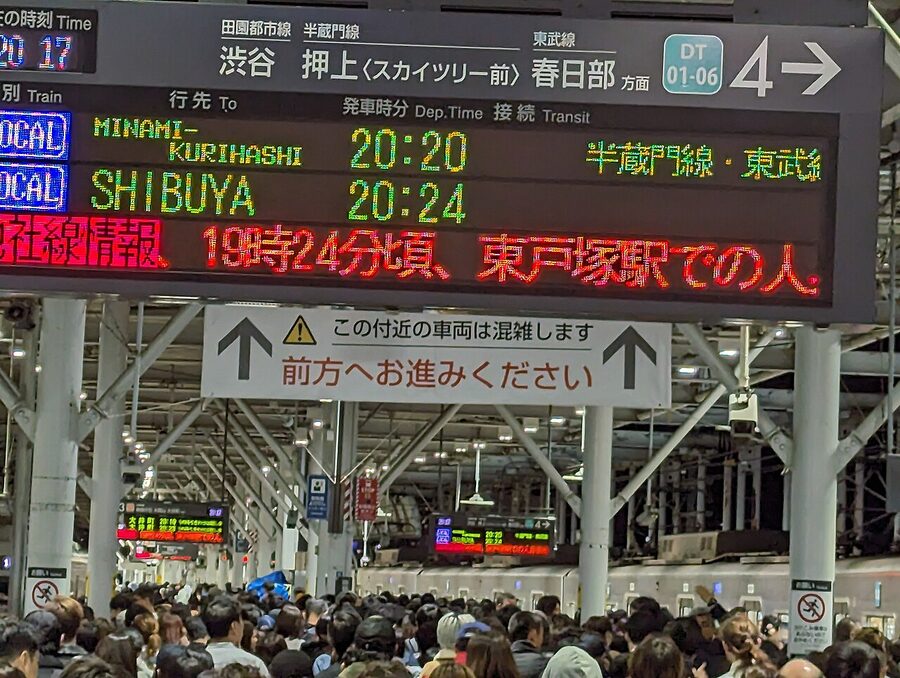
Right — this is the thing almost every first-timer gets wrong. The Setagaya fireworks finish at 19:00 on the dot. Within minutes, 300,000+ people on the Setagaya side alone start trying to get home. The main options:
- Don’t head straight to Futako-Tamagawa Station. The station handles a massive queue every year, with staff actively holding back arrivals to fit platform capacity. Expect 40-60 minutes from finale to boarding.
- Walk along the Tamagawa river esplanade instead. The riverside path runs beautifully northeast towards Tamagawa Station (多摩川) on the Tokyu Toyoko Line and Tokyu Tamagawa Line. It’s a flat, lit, 2.5km walk — about 35 minutes — and Tamagawa Station is almost empty by comparison. You arrive when the Futako-Tamagawa crowd is still fighting the gate.
- Or walk the other way to Kaminoge Station. About 25 minutes on foot, calm, on the Oimachi Line (change at Oyamadai for Jiyugaoka, or ride through to Ohimachi).
- On the Kawasaki side, walk to Musashi-Mizonokuchi. Longer than hopping on at Futako-Shinchi but much less crushing, and the JR Nambu Line connects cleanly to JR Yamanote via Shibuya or to Tokyo Station via Kawasaki.
- Or stay and let the crowd drain. The food stalls at the Unane venue and the Kawasaki bank run until 20:00. A beer and kakigori for 45 minutes after the finale costs nothing and saves you an hour of queue pain.
Weather reality check
October 3 in Tokyo is usually 22°C daytime and 17°C evening — pleasant, but cooler than most foreign visitors plan for after a summer-focused Tokyo trip. Pack a light jacket. The riverbank grass gets damp from about 17:00 onwards (dew comes in quickly at autumn sunset), so a leisure sheet is essential, not optional.
That said, Tamagawa fireworks is “cancelled if weather is bad” (荒天中止) with no rain date. Both the Setagaya and Kawasaki organisers made that call explicit after 2017 — they’d rather cancel than try to postpone and juggle the logistics a second time. Typhoons in early October are the usual risk. The organisers publish a cancellation notice on the official site and SNS channels by around 11:00 the day of the event. Rain alone usually doesn’t cancel. Thunderstorms or strong winds do.
What to bring
- Leisure sheet (レジャーシート) — a 100-yen shop blue tarp, about 180cm x 180cm. Remember the 90cm-per-person rule at the Setagaya main venue.
- A light jacket or fleece. October evenings on the riverbank are genuinely cool. You’ll regret shorts.
- Water and snacks from a conbini before you arrive. The stalls have food but queues get 20-30 minutes long by 17:00.
- A trash bag. Tokyo has almost no public bins. You carry out what you bring in — including any stall food wrappers. There’s a community clean-up event the morning after (8:00-11:00 Sunday) that anyone can join.
- Yukata if you want to. October is a slightly odd season for a yukata but plenty of locals wear them anyway. For a more seasonally-appropriate look, a light kimono or haori with jeans also reads.
- Cash. Many stalls don’t take cards or QR codes. Keep ¥2,000 in coins and small notes.
- Portable charger. Phones burn through battery taking photos. A 10,000mAh pack is standard.
- Toilet paper or tissues. The portable toilets run out.
Two honest opinions
First one: if you only have one Tokyo fireworks night and you love the biggest spectacle, skip Tamagawa and go to Sumida. Sumidagawa Hanabi is larger (20,000 vs 12,000 shells), longer (90 vs 60 minutes), and has the Skytree backdrop. My full Sumida River Fireworks guide walks through it. Tamagawa is the second-tier, lower-key cousin — but that’s exactly what makes it worth the trip.
Second one: for a first-timer travelling in autumn, Tamagawa is actually the better pick. Sumida is oppressively hot in late July and the crowd in Asakusa is a serious logistical grind. Tamagawa in October is a cool evening on a wide riverbank in a posh Setagaya neighbourhood — walkable, spacious, family-friendly, and the food stalls stay open after the show. It also happens to run on a different weekend from any other major Tokyo fireworks, so you can plan it as a single dedicated night. For the other autumn options, Adachi Fireworks at the start of the season covers the north Tokyo alternative.
Pairing it with a day in Futako-Tamagawa
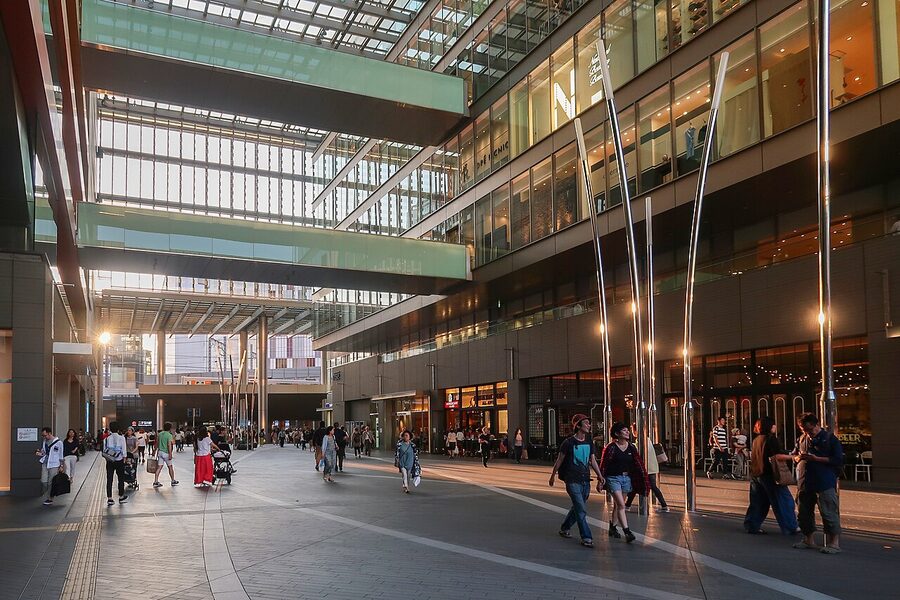
Futako-Tamagawa on a normal Saturday is one of those Tokyo neighbourhoods first-time visitors don’t usually reach — which is a shame, because it’s lovely. The area reinvented itself around the Rise shopping complex (opened 2015) and the riverbank park. The original village feel survives in the backstreets. My suggested pre-fireworks afternoon:
- Brunch at Futako-Tamagawa Rise. Second and third floors have decent casual restaurants — Eggs ‘n Things, Butter, and a good Gontran Cherrier bakery. Expect 20-minute waits on weekends.
- Tsutaya Books (蔦屋家電) on the Rise’s second floor — part bookshop, part gadget-store, with an excellent travel section. A solid rainy-plan-B.
- Tamagawa Riverside Walkway. Walk downstream from the Rise towards the bridges for 20 minutes — the path is lined with cyclists, joggers, picnicking families, and dog-walkers. Worth doing before you commit to your viewing spot so you know the terrain.
- Seijo (成城) or Denenchofu (田園調布) — quiet upscale residential districts one or two stops away on the Denentoshi / Oimachi lines. Nothing dramatic, but they’re a window into how Setagaya lives.
How I’d do Setagaya-Tamagawa as a first-timer
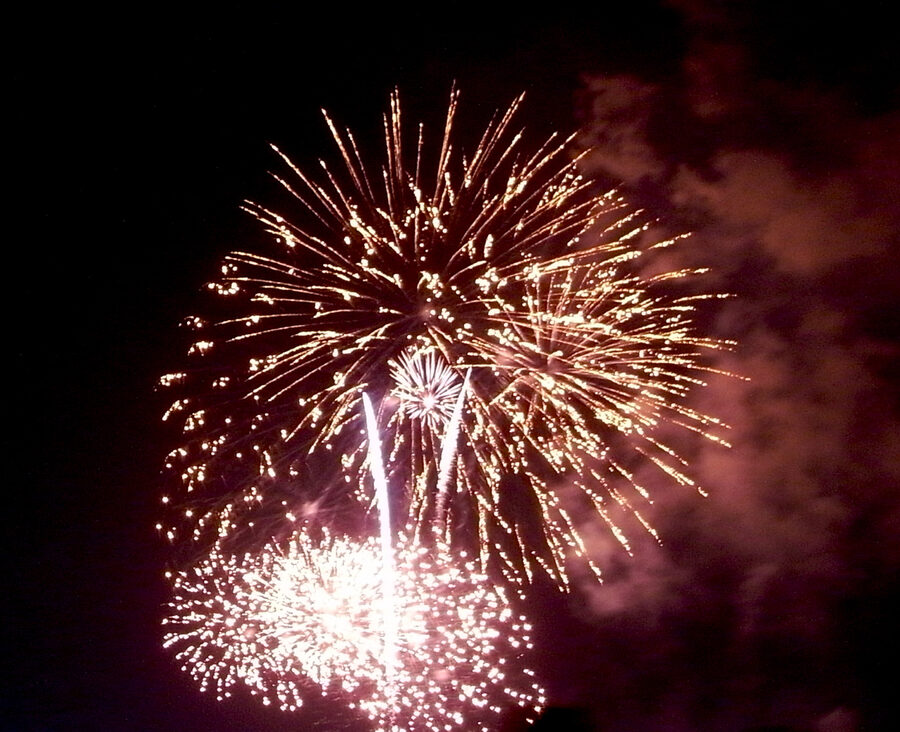
Assuming you’re coming from central Tokyo, staying in Shibuya, and this is your one Tamagawa night:
- 12:30 Shibuya: Light lunch near the station. Nothing heavy — you’ll snack later.
- 13:00 Denentoshi Line: Shibuya to Futako-Tamagawa, 15 minutes, about ¥210 with an IC card.
- 13:20 Futako-Tamagawa Rise: Coffee or cake, stock up at the conbini (water, sports drinks, onigiri, crisps, a leisure sheet, a small bin bag).
- 14:30 Pick your side: If you’re going for main Setagaya, walk through Rise and onto the grass flats at Kamata to claim a spot. If you’re going Unane, cross the bridge and go upstream. If you’re going Kawasaki, get back on the Denentoshi Line for one stop to Futako-Shinchi or two stops to Takatsu.
- 15:00-17:30 Wait: Stage performances start at 15:00 — live singing, taiko, dance. Food stalls open. This is the best part of the experience aside from the fireworks themselves.
- 17:30-18:00 Settle: Toilet run, top up water, put on your jacket as the temperature drops.
- 18:00-19:00 Fireworks.
- 19:00 onwards: Stay 30 minutes. Eat something from a stall. Then walk northeast along the riverbank path to Tamagawa Station (Tokyu Toyoko Line / Tamagawa Line), not back to Futako-Tamagawa. Takes 35 minutes, you’ll be on a Shibuya-bound train by 20:15, and you’ll skip the 40-minute station queue entirely.
Done this way, the whole evening is paced. No crush, no queue trauma, no disappointment. And you’ve seen 12,000 shells from one of the few vantages in Tokyo where the river does the reflecting work for you.
Essential info at a glance
- Next date: Saturday 3 October 2026
- Time: 18:00–19:00 launch; stage shows 15:00–19:30; stalls 14:00–20:00
- Total shells: ~12,000 (Setagaya ~6,000 + Kawasaki ~6,000)
- Cost: Free at all public riverbank viewing areas. Paid Setagaya seats from around ¥7,000 (tickets via Rakuten Ticket, released mid-July)
- Expected attendance: ~600,000 combined typical year; ~290,000 Setagaya side
- Closest stations: Futako-Tamagawa (Tokyu Denentoshi / Oimachi), Futako-Shinchi (Denentoshi), Takatsu (Denentoshi), Musashi-Mizonokuchi (JR Nambu), Kaminoge (Oimachi)
- Rain policy: Cancelled if stormy weather, no rain date
- Official site: tamagawa-hanabi.com (Japanese)
- Setagaya Ward info: city.setagaya.lg.jp
- Kawasaki info: city.kawasaki.jp
- Tokyo-wide fireworks info: Walker Plus listing
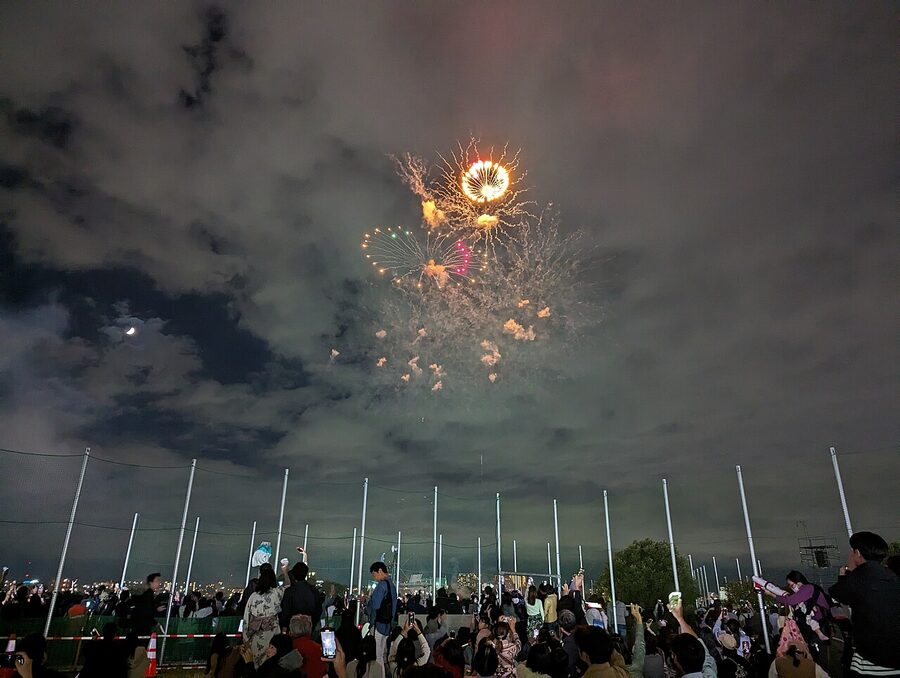
If Sumida is the city firework, Tamagawa is the neighbourhood firework — smaller, cooler, less frantic, and genuinely shared between two councils that have put it back together several times. Catch it when you’re already staying in the Shibuya area and fancy a calmer kind of spectacle. The 3 October evening on the Setagaya bank is one of the quieter great nights in the Tokyo year.