
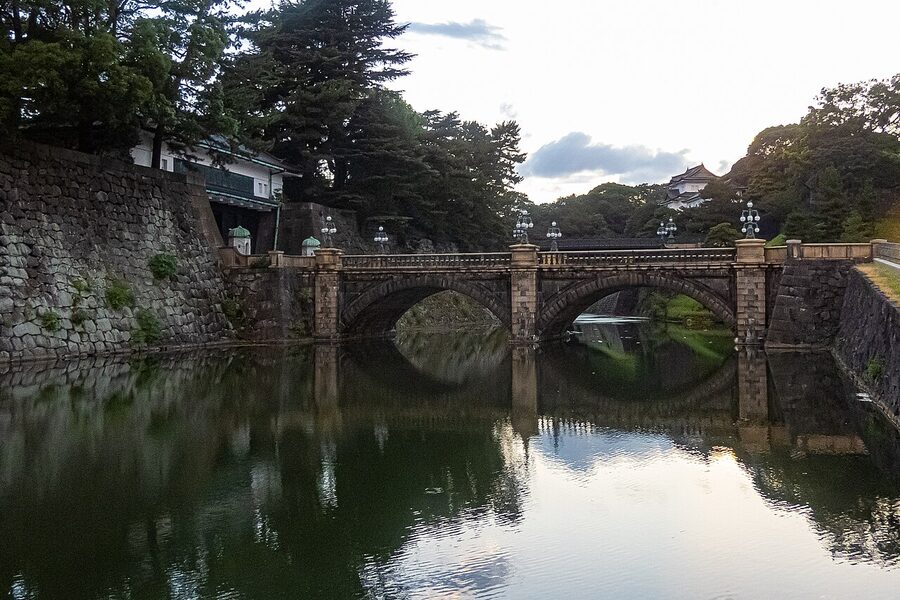
Most tourists photograph Nijubashi from across the moat and call it a day. That’s the equivalent of standing outside Buckingham Palace, taking the identical photo every other visitor has taken, and leaving. You can actually go inside the Imperial Palace grounds. Entry is free. The East Gardens are open four days a week, there’s a free guided tour into the normally-closed inner section, and twice a year you can stand in the inner courtyard with the Emperor on a balcony above you. Almost nobody does any of this.
I figured this out on my third trip to Tokyo, which is embarrassing because the signs are literally there. There’s an enormous gate called Otemon, 300 metres from Otemachi Station, and it’s open. I’d walked past it twice thinking it was an off-limits residence. It isn’t.
.jpg)
In This Article
- What the Imperial Palace actually is
- What you can actually see and do
- The East Gardens (the bit most people miss)
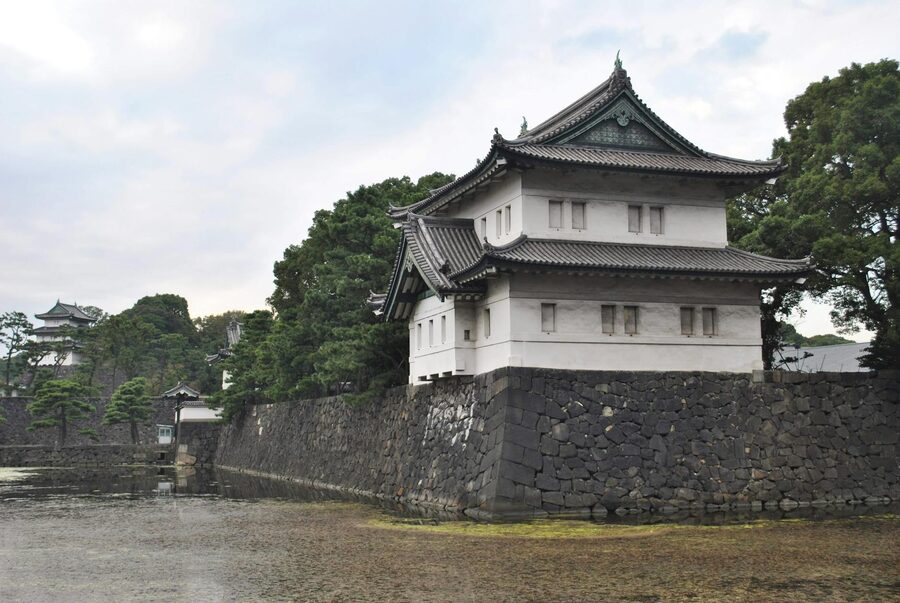
- Fujimi-yagura — the last surviving bit of Edo Castle
- The Nijubashi photo (do it quickly)
- The free guided tour into the inner palace
- Edo Castle — why this place matters historically
- Sakuradamon — the gate with a history
- Chidorigafuchi — the best quiet hanami in central Tokyo
- Kitanomaru Park and the Budokan
- Running the palace loop
- Kokyo Gaien — the outer plaza
- Nearby (and where to go after)
- Practical info
- How I’d do the Imperial Palace in 2 hours
What the Imperial Palace actually is
The Imperial Palace (皇居, Kokyo) is 115 hectares of moats, stone walls, gardens, a plaza, a park, and one very private inner residence, all sitting in the dead centre of Tokyo in Chiyoda ward. It’s built on the exact footprint of Edo Castle, which in its 17th-century peak was the largest castle in the world. When the Tokugawa shogunate collapsed in 1868, Emperor Meiji moved here from Kyoto and made this the imperial residence. It’s been that ever since.
The land alone is considered some of the most valuable on earth. Most of what’s visible from the street is water and wall. The current Emperor and Empress live in the Fukiage Palace, deep in the inner grounds, which you cannot see and will not visit. But the perimeter isn’t a perimeter in the way most palace perimeters are. Big chunks of it are public. And the public parts are genuinely worth walking through.
What you can actually see and do
This is the part nobody tells you. The Imperial Palace isn’t one thing. It’s a cluster of spaces with different rules:
- Kokyo Gaien — the outer plaza in front of Nijubashi. Always open. Free. This is the classic photo spot.
- East Gardens (Kokyo Higashi Gyoen) — the former honmaru and ninomaru of Edo Castle. Open Tue, Wed, Thu, Sat and Sun (closed Monday and Friday). Free. You walk into Edo Castle’s old inner keep.
- Kitanomaru Park — north end of the complex. Always open. Holds the Budokan, the Science Museum and the Crafts Gallery.
- Chidorigafuchi — 700m moat path along the northwest side. Always open. Best cherry blossom spot in central Tokyo.
- Free guided inner tour — 75 minutes, 2.2km walk through parts of the inner palace grounds. Book online through the Imperial Household Agency.
- January 2 and February 23 public openings — the only days of the year you can enter the inner courtyard and see the Emperor wave from a balcony.
Skip the January 2 and February 23 openings unless you specifically want to see the Emperor briefly. The crowds are enormous — we’re talking tens of thousands of people queuing from dawn — and the actual royal balcony appearance lasts maybe five minutes. Memorable, not must-do. The East Gardens are where you’ll spend your actual time.
The East Gardens (the bit most people miss)
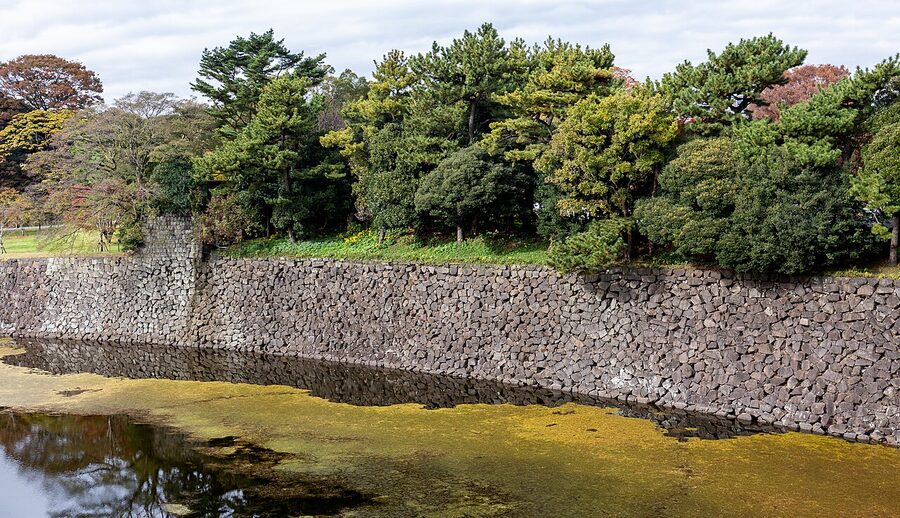
The East Gardens open at 09:00 and cover the old honmaru (main inner circle) and ninomaru (secondary circle) of Edo Castle. Entry is free. You get given a small plastic token at the gate which you return when you leave — that’s how they track numbers.
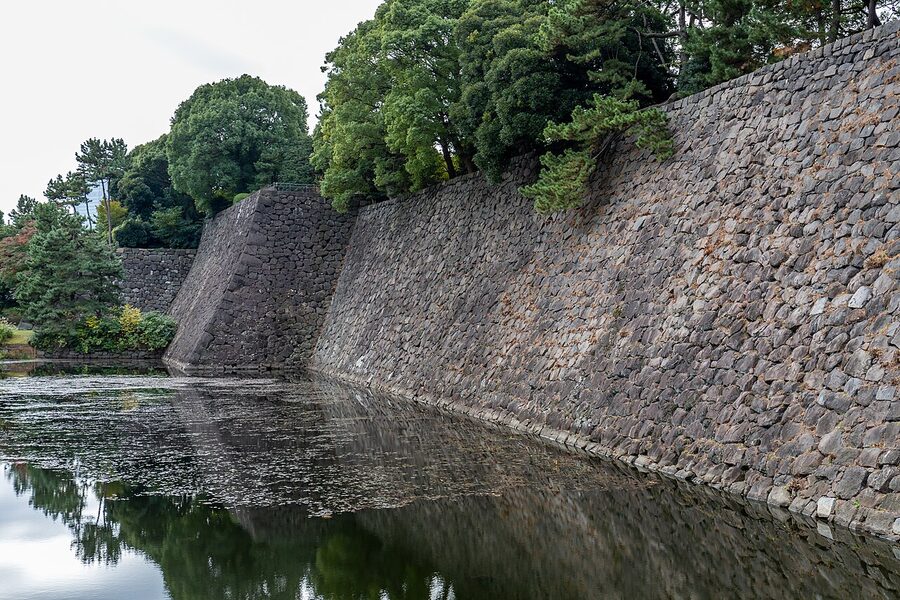
Walk in through the Otemon gate (5 minutes from Otemachi Station, 10 from Tokyo Station) and the first thing you realise is how much of Edo Castle is still physically here. The moats. The gates. The giant angled stone walls. It’s only the buildings that are gone, and almost all of those burned in a 1657 fire or in the firebombings of 1945.
Here’s how I’d actually walk it:
- Enter at Otemon. Pick up your token. Walk straight ahead into Sannomaru.
- Stop at the Museum of the Imperial Collections (Sannomaru Shozokan) — small, free, about 9,800 art pieces donated by the imperial family. Ten minutes is enough unless you’re a calligraphy person.
- Head west into the Ninomaru garden. This is the formal Japanese pond garden with koi, irises, and a small teahouse (Suwa-no-chaya) built to Emperor Meiji’s order in 1912.
- Climb the stone ramp up to the Honmaru. You’ll pass Fujimi-yagura on your right.
- On top, you stand on a huge empty lawn. This was the inner keep. Walk to the Tenshudai — a raised stone platform that used to be the foundation of the main castle tower.
- Exit via Hirakawamon or back via Otemon. Total time: 60 to 90 minutes at a slow pace.
Hours are seasonal and strict:
- 1 March – 14 April: 09:00 – 17:00 (last entry 16:30)
- 15 April – 31 August: 09:00 – 18:00 (last entry 17:30)
- 1 – 30 September: 09:00 – 17:00 (last entry 16:30)
- October: 09:00 – 16:30 (last entry 16:00)
- 1 November – end of February: 09:00 – 16:00 (last entry 15:30)
- Closed every Monday and Friday, and 28 December – 3 January
- If a Monday or Friday is a national holiday, the gardens open that day and close the next
The East Gardens beat the Nijubashi photo for your actual time. You can see Nijubashi in ten minutes. The East Gardens reward an hour and a half.
Fujimi-yagura — the last surviving bit of Edo Castle
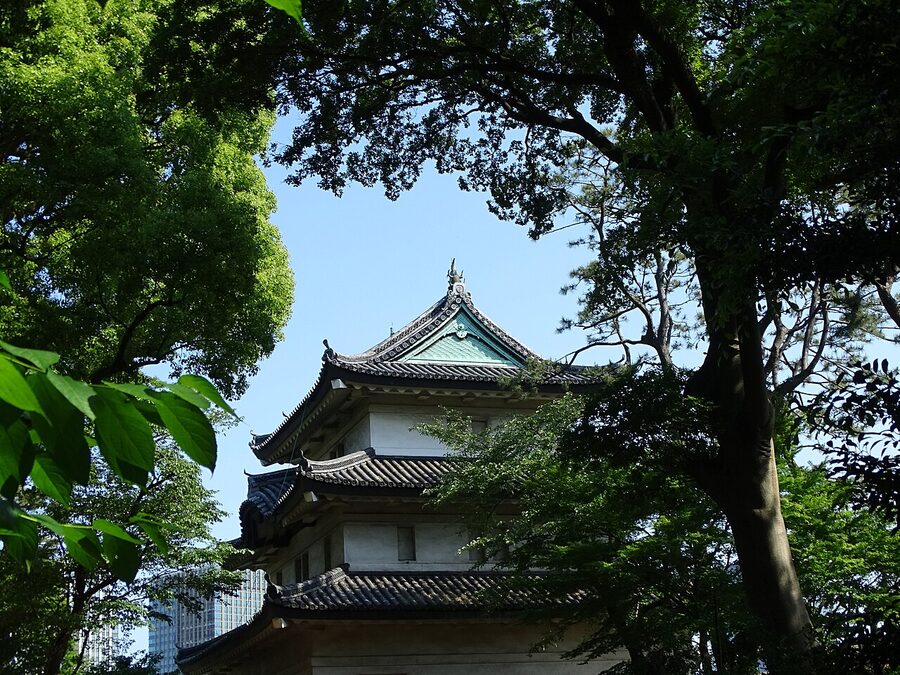

This is the one I always point out because everybody walks past it. Fujimi-yagura (“Fuji-view turret”) is a small three-storey watchtower on the south edge of the Honmaru. Every other building in the old castle is gone. This one — rebuilt in 1659 after the great fire — survived the 1923 earthquake and the 1945 air raids. It’s the only piece of Edo Castle architecture still standing.
You can’t go inside. But you can walk right up to the base of it, touch the stone foundation, and stand in the rough outline of what was once the second-tier castle keep. From the south you also get Fujimi-yagura framed against the skyscrapers of Marunouchi across the moat. It’s the photo nobody takes.
The Nijubashi photo (do it quickly)
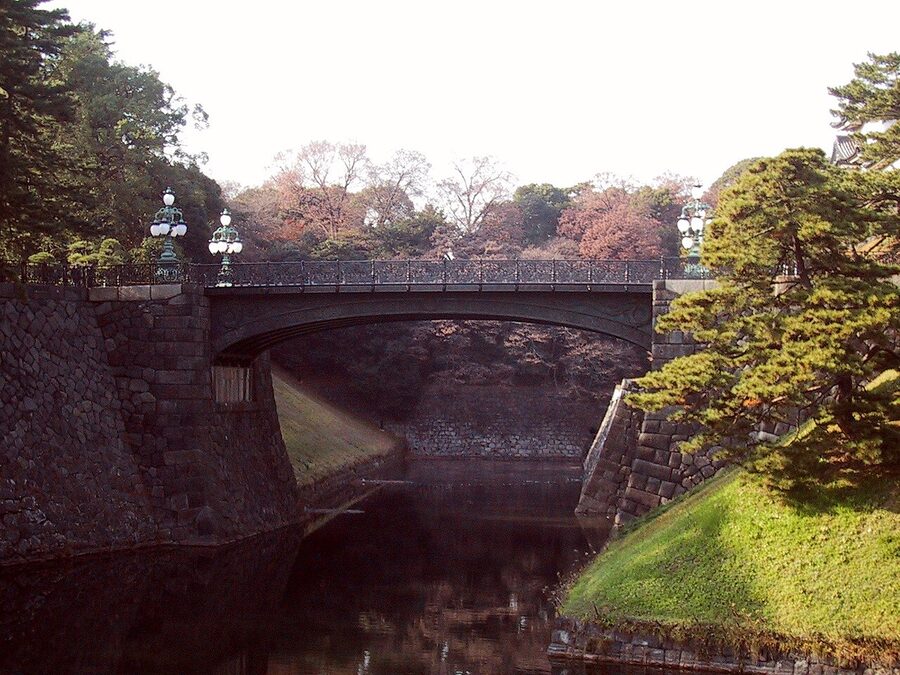

You get the iconic shot from the Kokyo Gaien plaza, standing on the gravel with the statue of Kusunoki Masashige behind you. Walk from Tokyo Station’s Marunouchi exit through Gyoko-dori (the grand axial boulevard) directly towards the palace — it’s 10 minutes on foot, flat, and impossible to miss.
Composition tips if you care:
- Stand dead-on the central path. The alignment of the two bridges reads best from here.
- Include Fushimi-yagura, the small white watchtower visible up on the hill behind the bridges. It’s what makes the photo look like a painting.
- Avoid 10:00 to 15:00 if you hate crowds. Tour buses arrive in waves.
- Early morning light (around 07:00 in summer, 08:00 in winter) hits the stone face of Seimon Ishibashi nicely.
Ten minutes, tops. Then move.
The free guided tour into the inner palace
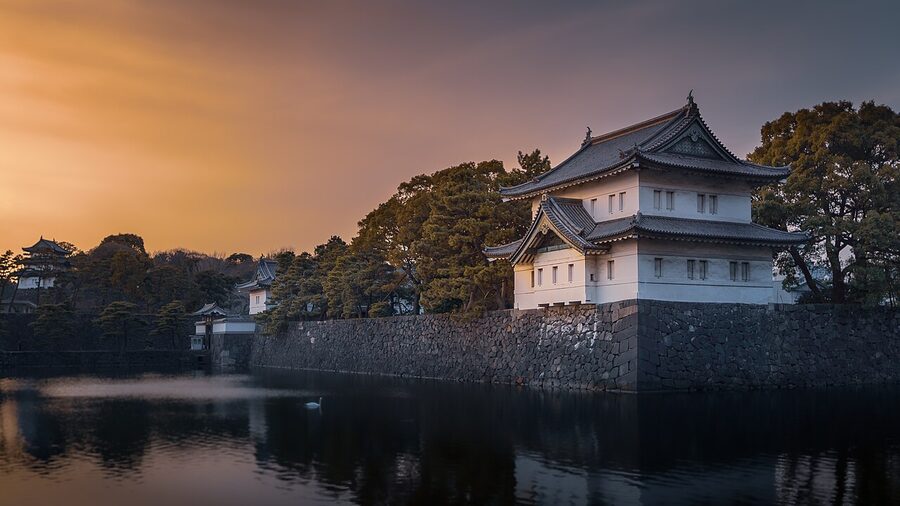
The Imperial Household Agency runs a free 75-minute guided walking tour of the normally-closed sections of the palace. It’s the only way to cross the moat into the inner grounds outside the twice-a-year public days. It’s also the single most underrated free thing in Tokyo.
What you see on the tour:
- Kikyomon gate (where you enter and where walk-in tickets are given out)
- Kyuden Totei plaza — the inner courtyard where the Emperor addresses crowds on January 2 and February 23
- The exterior of the Kyuden state halls (you don’t go inside)
- The exterior of the Imperial Household Agency building
- Fushimi-yagura watchtower up close
- Nijubashi from the inside — you cross the bridge the Emperor uses
Here’s how to book it:
- Go to sankan.kunaicho.go.jp/english — the Imperial Household Agency’s online booking site
- Pick a date. Tours run Tuesday to Saturday at 10:00 and 13:30, except on Mondays, Sundays, national holidays, and days affected by imperial events
- Online applications open at 05:00 JST on the 1st of the preceding month, and close four days before your visit
- Fill in your name, nationality, passport number and age for each person in your group
- Print or screenshot your visit permit
- Arrive at Kikyomon gate 20 minutes early with your passport
If you miss the online window, same-day walk-in tickets are distributed at Kikyomon gate from about 09:00 (morning tour) and 12:30 (afternoon tour). Limited numbers, first come first served. The gate is about 10 minutes walk south of Otemon, on the palace side of the moat.
A few practical notes. The tour is about 2.2km of walking on mostly flat paths with very limited shade — come hydrated in summer. It’s conducted in Japanese. You can borrow an English audio guide at the start, and there are printed translations in seven languages, but don’t expect a chatty English-speaking guide. Bags get inspected at the gate; use coin lockers at Otemachi Station first if you’re carrying luggage.
Edo Castle — why this place matters historically
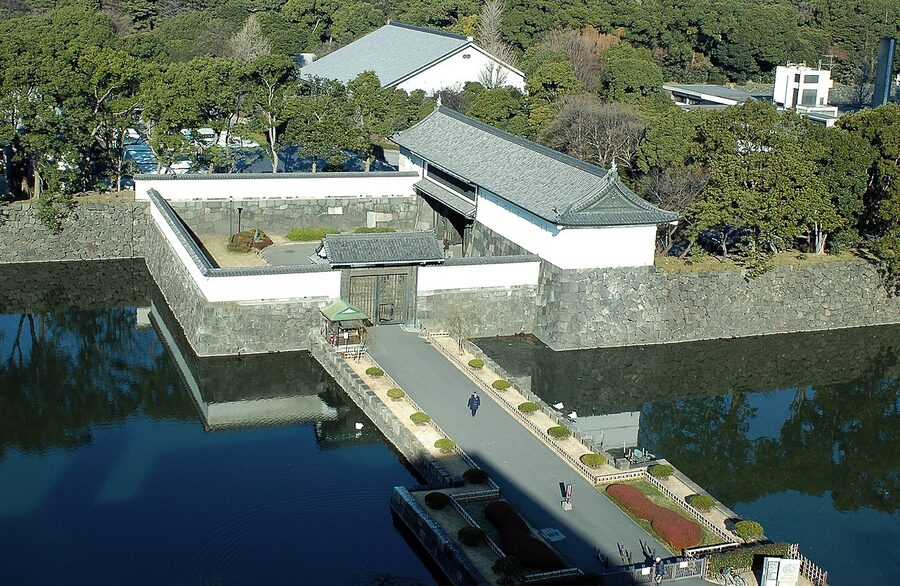

Edo Castle was founded in 1457 by Ota Dokan, a minor warlord who built a small hilltop fortress where the Kokyo Gaien plaza now sits. It stayed small for 130 years. In 1590 Tokugawa Ieyasu — who had just been given the barely-developed Kanto plain as a consolation prize by Toyotomi Hideyoshi — arrived in Edo, looked at Ota Dokan’s old fort, and decided to turn it into the biggest castle anyone had ever built.
By the mid 1600s Edo Castle covered most of what is now central Tokyo. Multiple concentric rings of moats, some of which are still there (the current palace moat is the innermost). The main keep — the Tenshudai you can stand on in the Honmaru today — held a six-storey tower that was Japan’s tallest ever. It lasted 19 years. The 1657 Meireki fire took it down along with most of the castle and about 100,000 of Edo’s citizens, and the Tokugawa decided a tower was too expensive to rebuild and diverted the funds to rebuilding the city. The castle kept running fine without it.
In 1868 the last shogun surrendered the castle peacefully to the imperial forces. Emperor Meiji moved in and renamed it Kokyo. The original palace buildings burned in 1873 and again in 1945. The current Kyuden state halls were finished in 1968. Everything the Emperor lives and works in is late-20th century. The walls and moats are original.
Sakuradamon — the gate with a history
_of_The_Imperial_Palace.JPG)
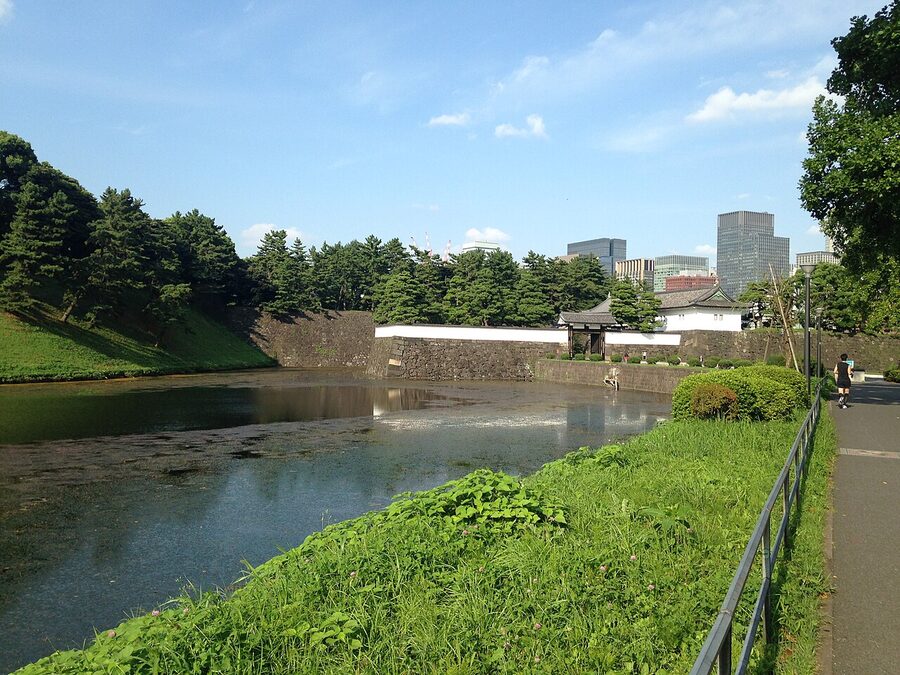
Sakuradamon — “cherry field gate” — is on the southwest corner of the palace moat, five minutes from the Kokyo Gaien plaza. It’s the grandest surviving gate in the complex. It’s also the site of one of the most famous political assassinations in Japanese history. In 1860, eighteen samurai from Mito domain attacked Ii Naosuke’s palanquin in the snow just outside the gate, killing him. Ii was the chief minister pushing to open Japan to foreign trade. His death destabilised the shogunate and helped set off the chain of events that ended it.
The gate itself is a classic masugata (box-shaped) design — you pass through two gates at right angles so any attacker gets bottlenecked. Stand in the inner courtyard between them for a minute. It’s a very pure piece of Edo military architecture.
Chidorigafuchi — the best quiet hanami in central Tokyo
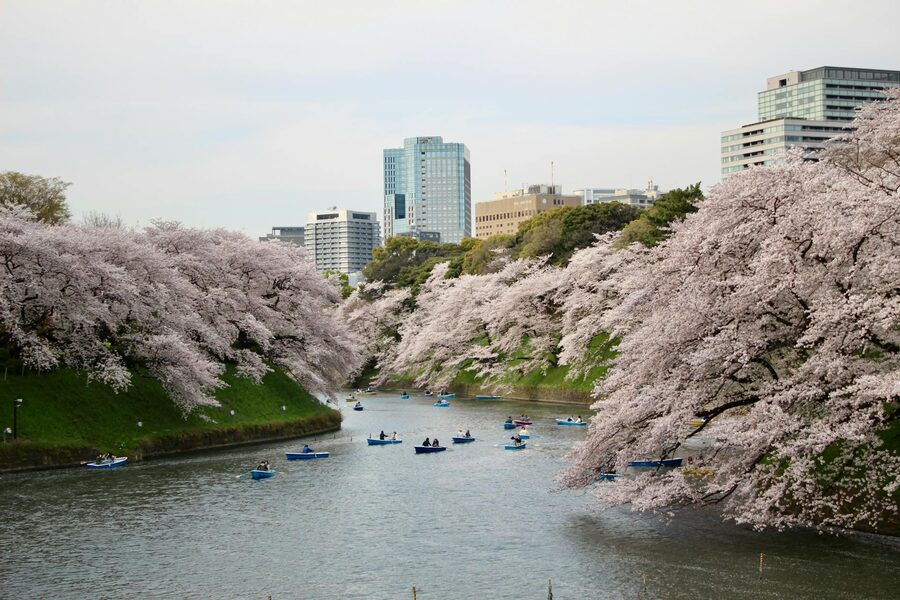
The Chidorigafuchi moat runs along the palace’s northwest side, separating the inner grounds from Kitanomaru Park. The 700-metre walking path along the top of the moat is called the Chidorigafuchi Ryokudo (Green Way), and in early April it’s lined on both sides with roughly 260 cherry trees. The blossoms bend right down over the water, and if you come on the right day, pink petals carpet the entire moat.
I rate this as the best cherry blossom spot in central Tokyo. Ueno Park is more famous and more crowded and more drunk. Chidorigafuchi is quieter, the light on the water is better, and you can actually walk without using your elbows.
There are two ways to see it:
- Walk the Green Way — free, always open. Enter from either Kudanshita Station (Exit 2, 5 minutes) or Hanzomon Station (5 minutes). Walk the full 700m.
- Rent a rowboat — Chidorigafuchi Boathouse operates on the moat only during the cherry blossom season (normally late March through early/mid April). Boats are ¥1,200 for 30 minutes. Two or three people per boat. They open at 11:00 on weekdays, earlier at weekends. Queues in peak bloom can genuinely reach two hours by mid-morning.
Chidorigafuchi is also illuminated at night during hanami — roughly 18:00 to 22:00 during the peak week — which is when it’s at its most ridiculous. Come for an hour, then walk south through Kitanomaru Park towards the palace. Ten minutes.
For more context on timing the blossoms, see my Tokyo cherry blossom guide.
Kitanomaru Park and the Budokan
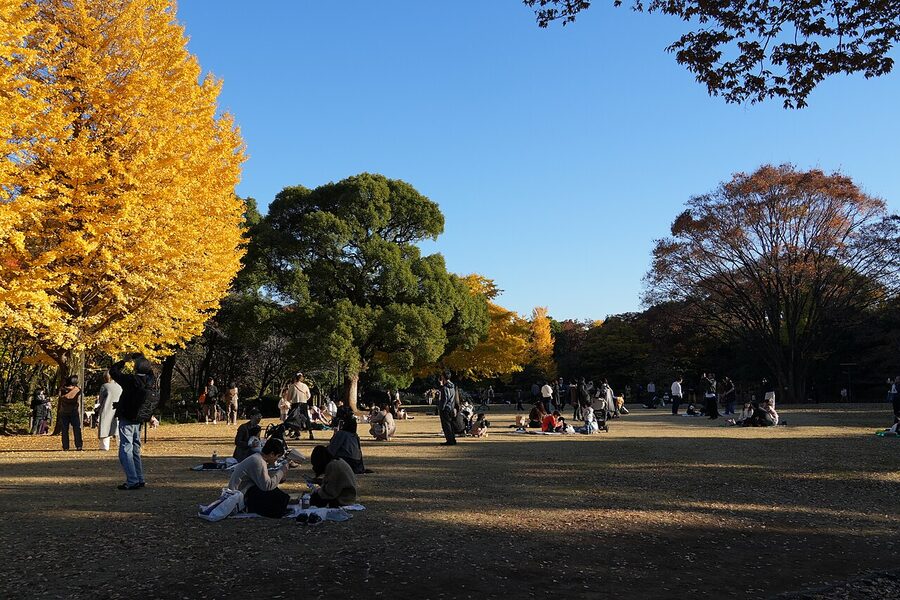
Kitanomaru Park sits at the north end of the complex and was once the third defensive ring of Edo Castle. Now it’s a public park with Japan’s most famous martial arts arena (the Nippon Budokan), the National Museum of Modern Art (MOMAT), the Science Museum and the Crafts Gallery sitting inside it. Entry to the park is free and always open. The museums charge.
The Budokan was built for judo at the 1964 Tokyo Olympics and has since become the venue every major Japanese band dreams of playing. The Beatles played here in 1966 and the building has been a concert hall ever since. If you’re in Tokyo during a tour, check what’s on — a show at the Budokan is a quintessential experience.
Walking route: from Chidorigafuchi, enter the park from the northeast, walk past the Budokan, exit through the south gate onto Kitahanebashi bridge, and you’re back in the East Gardens. It joins up neatly.
Running the palace loop
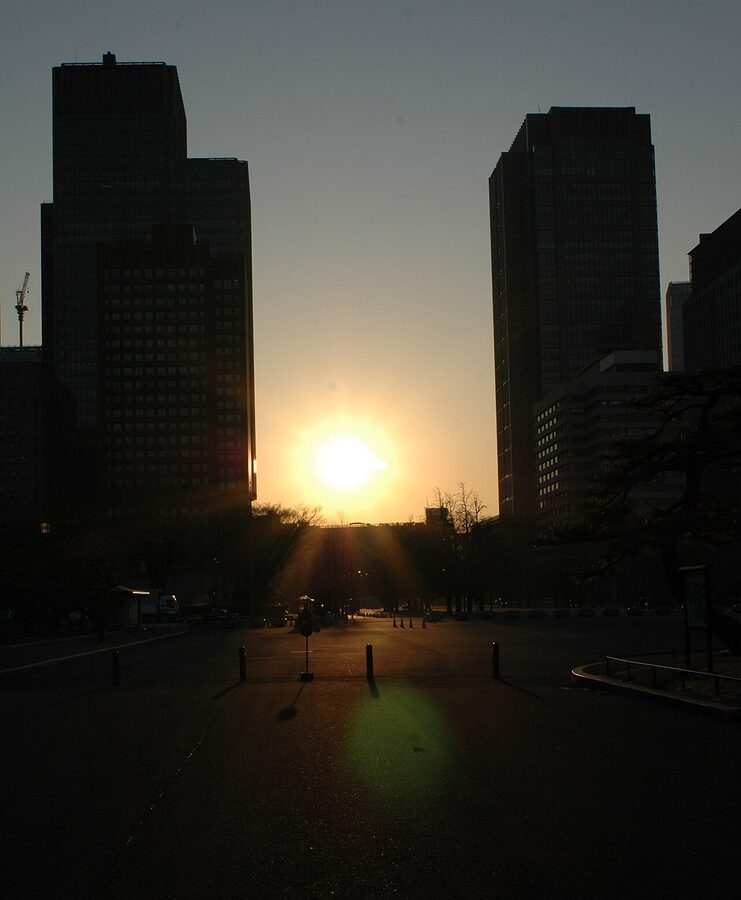

The full loop around the outer moat is exactly 5km. It’s flat, well-paved, traffic-free on the palace side, and it’s Tokyo’s most famous running route. At 06:30 on any weekday you’ll see hundreds of office workers doing laps before work. The running etiquette is counter-clockwise — don’t be the tourist going the wrong way.
Start and finish at Sakuradamon. One lap is 5km, two is 10km, three is a proper long run. There are drinking fountains at about 1km intervals. A few rental showers exist near the loop (the Kokyo Running Station in Hibiya-mae is the usual one) but nothing inside the palace grounds itself. The loop is open 24 hours.
If you’re not running, walking a single lap takes about 75 minutes at a slow pace and gives you every exterior view of the palace: Nijubashi, Sakuradamon, Chidorigafuchi and the north moat all on the same stretch.
Kokyo Gaien — the outer plaza
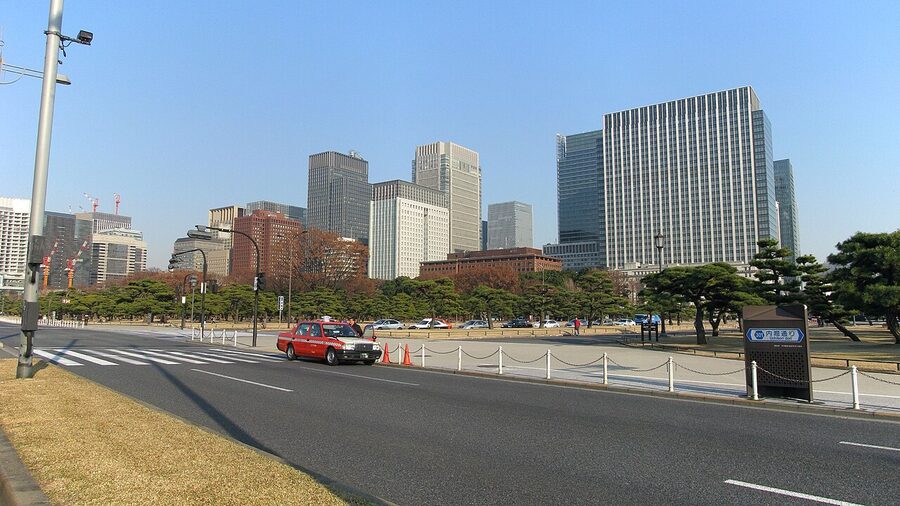

The Kokyo Gaien (“outer plaza”) is the big gravelled open space in front of Nijubashi. It’s where you stand to take the Nijubashi photo. It also holds a bronze statue of the 14th-century samurai Kusunoki Masashige on horseback, donated in 1900 and one of the most photographed war memorials in Japan.
The plaza is free, open 24/7, and notable for its black pines — roughly 2,000 of them, all shaped by hand and replanted from the old Marunouchi area in the 1930s. The place is almost empty at dawn and beautiful in slanted morning light.
Nearby (and where to go after)
The palace sits in the absolute centre of Tokyo, so walking distances to major areas are short:
- Tokyo Station — 10 minutes from Nijubashi via the Marunouchi exit. The red-brick Meiji-era facade is worth seeing from the palace side.
- Ginza — 15 minutes south on foot from Sakuradamon, or one stop on the Marunouchi line from Tokyo Station.
- Yasukuni Shrine — 5 minutes north of Chidorigafuchi’s exit at Kudanshita. Controversial and worth knowing about regardless.
- Hibiya Park — immediately south of Kokyo Gaien, the oldest Western-style park in Tokyo, nice for lunch.
- Marunouchi — Tokyo’s slightly-too-polished financial district, full of lunch spots.
If you’re plotting a whole day, see my 3 days in Tokyo itinerary — the palace fits cleanly into a morning with Ginza or Akihabara in the afternoon.
Practical info
- Address: 1-1 Chiyoda, Chiyoda-ku, Tokyo 100-8111
- Cost: Free for Kokyo Gaien, East Gardens, Kitanomaru Park, Chidorigafuchi and the guided tour
- East Gardens hours: Tue/Wed/Thu/Sat/Sun. Closed Mon and Fri. Seasonal closing times — see section above. Free entry token required (given at gate)
- Guided tour: Tue–Sat 10:00 and 13:30 (not Sundays, Mondays, national holidays). 75 minutes, 2.2km. Book at sankan.kunaicho.go.jp/english
- Public opening days: 2 January (New Year Greeting), 23 February (Emperor’s Birthday)
- Nearest stations: Otemachi (5 min walk to Otemon — Chiyoda, Tozai, Marunouchi, Hanzomon, Mita lines); Tokyo Station Marunouchi side (10 min walk to Nijubashi); Kudanshita (5 min walk to Chidorigafuchi — Tozai, Hanzomon, Shinjuku lines); Hanzomon (5 min walk to west gate); Takebashi (5 min walk to Kitanomaru Park)
- Luggage: Coin lockers at Otemachi, Tokyo Station and Kudanshita — no lockers inside the palace grounds
- Accessibility: Otemon, Hirakawamon and Kitahanebashi gates have wheelchair-accessible entries. The East Gardens has wheelchair rentals at all three entrances. Some slopes are steep (up to 12 degrees)
- Prohibited: Bicycles, cars, drones, tripods in some areas. Large bags inspected at all gates
- Official: Imperial Household Agency East Gardens page and Go Tokyo: Imperial Palace
How I’d do the Imperial Palace in 2 hours
If you’ve only got a morning, this is the sequence I actually use:
- 08:30 — arrive at Tokyo Station’s Marunouchi central exit. Walk down Gyoko-dori towards the palace. 10 minutes.
- 08:45 — Kokyo Gaien plaza. Take the Nijubashi photo. Walk up to the statue of Kusunoki Masashige. 15 minutes.
- 09:00 — East Gardens open. Walk around the moat to Otemon (10 minutes). Enter, grab a token.
- 09:15 — Loop the Ninomaru garden, climb to the Honmaru, stand on the Tenshudai, walk past Fujimi-yagura.
- 10:30 — Exit at Hirakawamon. You’re at Takebashi Station. Walk 5 minutes north to Kitanomaru Park and the Budokan.
- 11:00 — If it’s April, continue north to Chidorigafuchi. Otherwise jump on the Tozai line at Takebashi towards Nihonbashi or Ginza for lunch.
Two hours for the minimum lap, three and a half if you add Chidorigafuchi, four if you booked the free inner tour. That’s a reasonable morning in Tokyo.
I still forget sometimes, on the walk back down Gyoko-dori towards Tokyo Station, that I’ve just walked through the middle of the largest shogunate fortress in history and around the residence of a man whose family line theoretically stretches back to 660 BC. Most tourists never open that gate.