
The thing nobody tells you about Chofu Fireworks is how late in the year it runs. Most of Tokyo’s big hanabi are crammed into July and August — Sumida River, Jingu Gaien, Edogawa, all battling for the same muggy summer Saturdays. Chofu holds out until September. The 40th edition went off on Saturday 20 September 2025, and the 39th in late September 2024. If your Tokyo trip is in early autumn and you thought you’d missed fireworks season entirely, Chofu is the reason you haven’t.
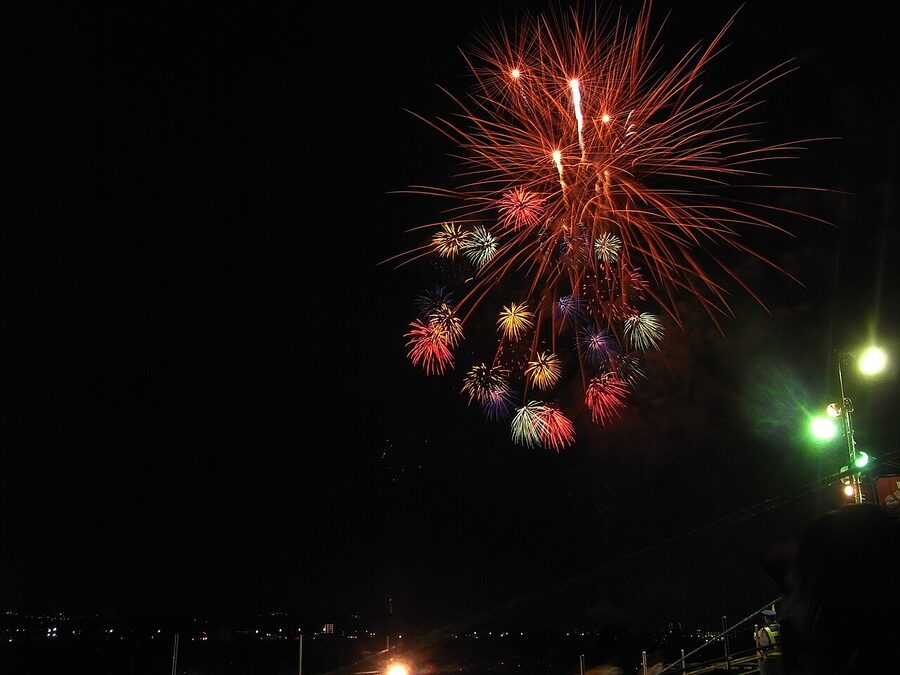
The other thing is that it doesn’t feel like a central Tokyo festival. Chofu-shi is part of Tokyo Metropolis but it sits out in the Tama area, about 20 minutes west of Shinjuku on the Keio Line. The show happens on the Tamagawa riverbank, you reach it through suburbs rather than high-rises, and the mood is closer to a town matsuri than a citywide event. People in cotton yukata walk to the bank with their families and their folding camp chairs, and the queue at the konbini is for cold beer rather than tickets.
This guide walks through what the show is, when it runs, how to get there without eating your evening on a delayed train, where to watch from, and how to turn it into a proper day out. Facts on dates, shell counts, and venues come from the official Chofu Fireworks committee and the Japanese Wikipedia page on 調布市花火大会.
In This Article
- What Chofu Hanabi actually is
- The dates and the late-season thing
- Getting there on the Keio Line
- Where to watch from
- Paid seats
- Free general seating
- The Kawasaki side
- Informal spots farther out
- The Hanabillusion and why the music matters
- The practical stuff
- Food and drink
- What to bring
- Toilets and crowds
- A confession about my first Chofu trip
- Pairing Chofu with a daytime trip
- Jindaiji Temple
- Ghibli Museum (if you planned far ahead)
- Should you pick Chofu over other Tokyo fireworks?
- Practical info block
- How I’d actually do a Chofu Hanabi day
What Chofu Hanabi actually is
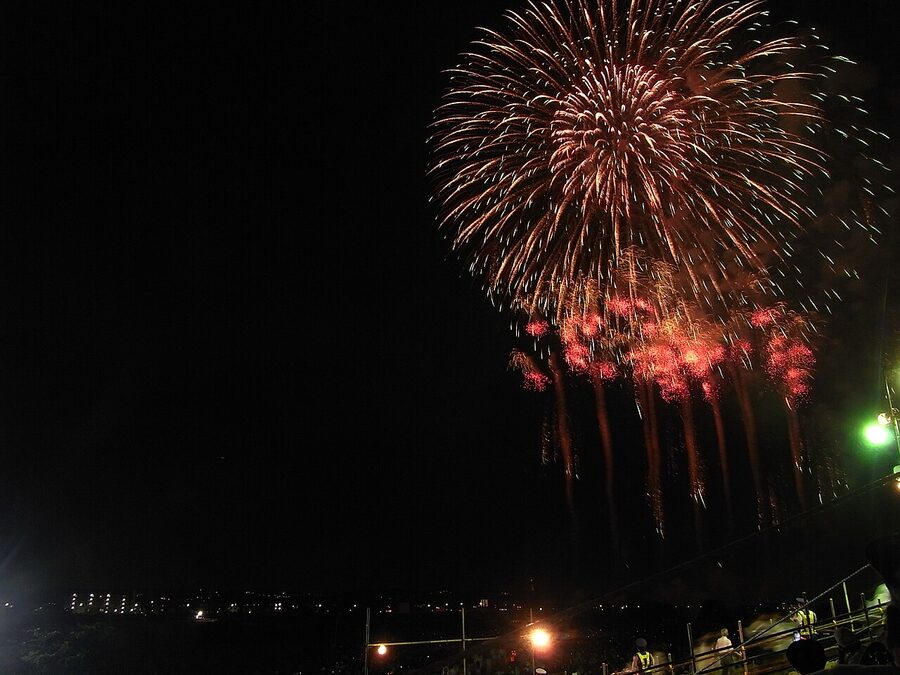
Fireworks on this stretch of the Tamagawa go back to 1933. They were paused during the war, relaunched in 1954 as the All-Japan Export Fireworks Competition (yes, really — a trade event), then re-branded in 1982 as Chofu City Fireworks after a 14-year gap. The first modern edition put about 800 shells into the sky, a twelfth of what you’ll see now. Since 2014 the official name has been “Movie Town Chofu Fireworks” (映画のまち調布花火), a nod to the film studios — Nikkatsu, Daiei — historically based in the city.
The shells are fired from a sandbar in the middle of the Tamagawa, near the Nikaryo Kamigahara Weir. Viewing spreads along both banks: the Chofu side (paid seating plus free general areas) and the Kawasaki city side across the river (no facilities, fewer people, often a better view because the prevailing wind pushes smoke toward Chofu).
The signature is a section called Hanabillusion — computer-controlled starmines choreographed to music. Chofu claims to be the birthplace of this format in Japan, starting from the 22nd edition in 2003. The soundtrack leans on film scores, FC Tokyo supporters’ songs (the club trains at Ajinomoto Stadium a short walk north), and anime music tied to Chofu — most famously GeGeGe no Kitaro, because the manga’s creator Mizuki Shigeru lived in the city. At the 2016 edition, the year after he died, they fired shells shaped like Kitaro characters.
The dates and the late-season thing
Chofu doesn’t stick to a fixed calendar date. It’s somewhere between late August and late October, depending on the year. Here’s the recent pattern:
- 2023 — Saturday 24 September (38th edition)
- 2024 — late September (39th)
- 2025 — Saturday 20 September (40th edition, timed with Chofu’s 70th city anniversary)
The 2026 date hadn’t been announced at the time of writing. If the committee keeps to form, expect a Saturday in the second half of September — check hanabi.csa.gr.jp around mid-May when paid seats usually go on sale.
A 6:15pm start is standard when the show runs in September — earlier than July festivals because it gets dark sooner. In 2025 the opening ceremony was at 18:00 and fireworks ran 18:15 to 19:15. Pre-covid July editions used to start at 18:30 and run until 19:30.
This late date is the whole selling point if you’re on a September Tokyo trip. By the time Chofu fires its first shell, most of the other big Tokyo hanabi have been over for six weeks. The trade-off is typhoon risk. The 2019 edition survived but the 2017 one was cancelled by Typhoon Lan, and heavy rain from the days before the show can raise the Tamagawa enough to cancel even on a clear evening. There’s no rain date — if it’s called off, it’s called off.
Getting there on the Keio Line
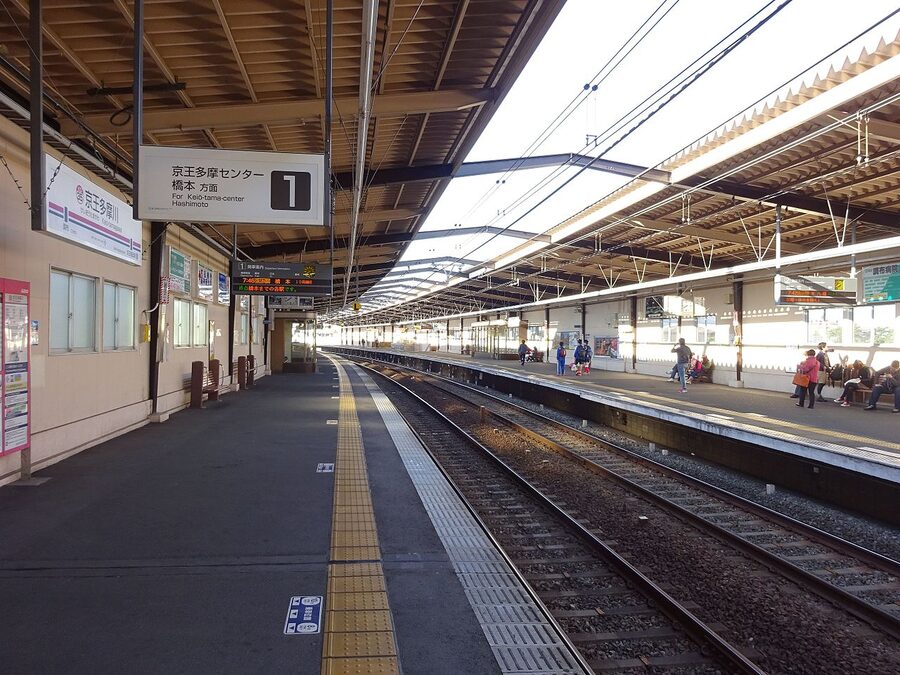
Everything into and out of Chofu runs on the Keio Line from Shinjuku. If you haven’t used it before, it’s one of the private railways (not JR), so your JR Pass won’t work — you’ll need a Suica or Pasmo IC card, or buy a single ticket from the machines. If you haven’t sorted an IC card yet, my guide to Tokyo trains and the IC card walks you through the setup.
From Shinjuku, the fastest option is a Keio Line Special Express or Semi-Special Express to Chofu Station — about 17 to 20 minutes. Local trains take 30 minutes and stop everywhere. On fireworks day the Keio Line runs a modified timetable with extra trains, and in recent years the Special Express has made an unscheduled stop at Keio-Tamagawa Station in the early evening to handle the rush.
There are three official venues and each has its own nearest station:
- Keio-Tamagawa venue (north side, upstream of the weir) — Keio-Tamagawa Station, about a 10-minute walk. This is the easiest to reach but brutal to leave after the finale, with entry restrictions sometimes imposed.
- Fuda/Kokuryo venue (south side, downstream) — Fuda Station (20 min walk), Chofu Station (25 min), or Kokuryo Station (25 min). More spread out, less crushed at the end.
- University of Electro-Communications ground (電通大グラウンド) — Chofu or Fuda Station, about 20 minutes on foot. Paid seating area, opened specifically for the festival.
My honest take: if you’re coming from central Tokyo, ride to Chofu Station and walk down. You’re farther from the launch point but you’re on a big, well-signposted station with lots of trains going back to Shinjuku, and the crowd pressure at Chofu is noticeably less than at tiny Keio-Tamagawa, which is a two-platform side station that gets swamped.
Where to watch from
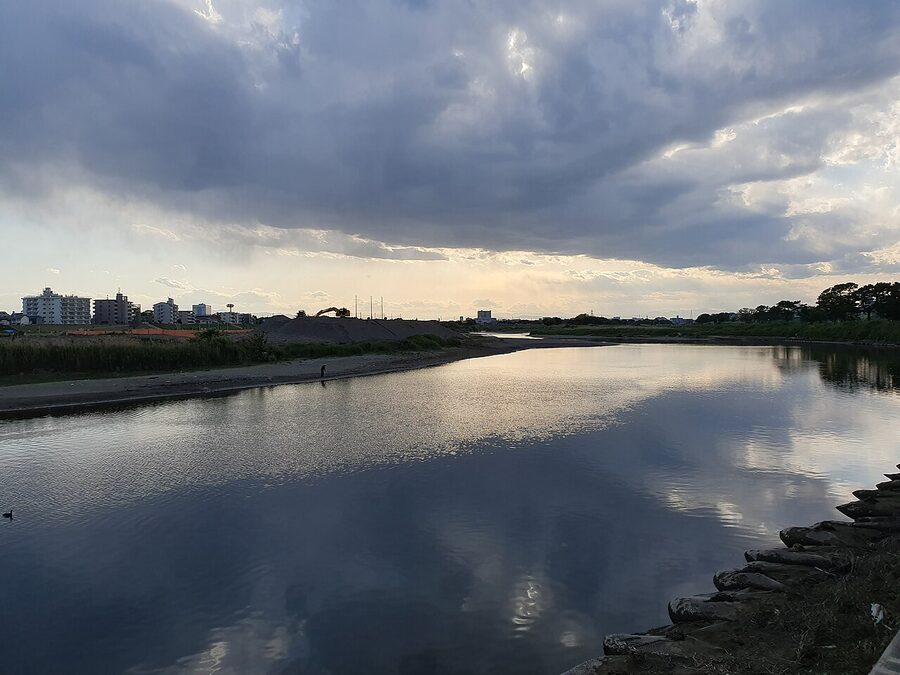
There are three tiers of viewing, and they matter.
Paid seats
The committee sells reserved seating in all three venues each year. Prices shift edition to edition but typically run ¥5,000-¥8,000 per person for an arena chair or tatami mat with a clear view of the launch area. Tickets go on sale early July via the official site. If you’re travelling from overseas and hate the idea of fighting for a patch of grass, buy a paid seat. It’s the easiest way to do this festival.
Free general seating
Free zones are set up inside both Keio-Tamagawa and Fuda venues. You turn up with a small ground sheet (no tape or ropes) and plant yourself. The official rule is no place-keeping before the morning of the show, so don’t bother trying to claim a spot at lunchtime the day before. Rangers will pull down any tarps or reserved signs. The sheet needs to be small enough that you’re sitting on it, not spreading out four metres of vinyl.
The Kawasaki side
This is the local trick. The Tamagawa is the border between Tokyo and Kanagawa, and the Kawasaki city side across the river has no entry restrictions, no ticketed zones, and, thanks to prevailing winds pushing smoke north toward Chofu, often a cleaner view. Access is via JR Nambu Line Nakanoshima or Inadazutsumi stations, or Keio-Inadazutsumi. The downside: no food stalls, no toilets to speak of, and almost no English signage. Bring your own everything, and head back well before the finale so you don’t miss the Nambu Line.
Informal spots farther out
The banks either side of the central launch zone, outside the ticketed perimeters, draw locals with camp chairs, onigiri, and canned Asahi. The view is more distant but you can hear the music on the committee’s speakers for maybe 500 metres upstream and downstream. Bring a small torch — the riverbank gets properly dark.
The Hanabillusion and why the music matters
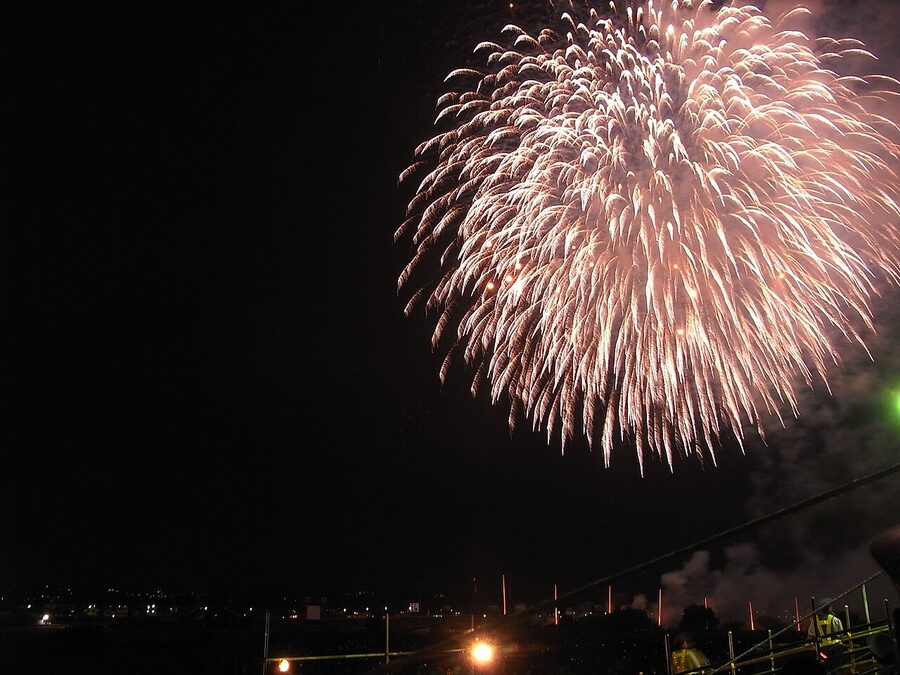
Hanabillusion is the part of the show that puts Chofu on most people’s lists. It’s a computer-controlled starmine sequence choreographed to music played over the venue speakers — not ambient soundtrack, but actually timed so that individual shells explode on specific beats.
The music is where Chofu does its own thing. Because the city is home to Japan’s old Nikkatsu and Daiei film studios, selections often draw from film scores, Studio Ghibli pieces, and anime themes. One year I watched a Hanabillusion sequence set to the GeGeGe no Kitaro theme song, with eye-shaped shells, and the older couple in front of me sang along — they’d grown up on the manga. Chofu also cues in FC Tokyo songs; the J-League club trains at Ajinomoto Stadium, just north.
A small warning: the audio is fine near a venue, muffled at 500 metres out, and nonexistent on the Kawasaki side. If the music sync is the reason you’re coming, pay for a seat or stake a free spot inside a venue.
The practical stuff
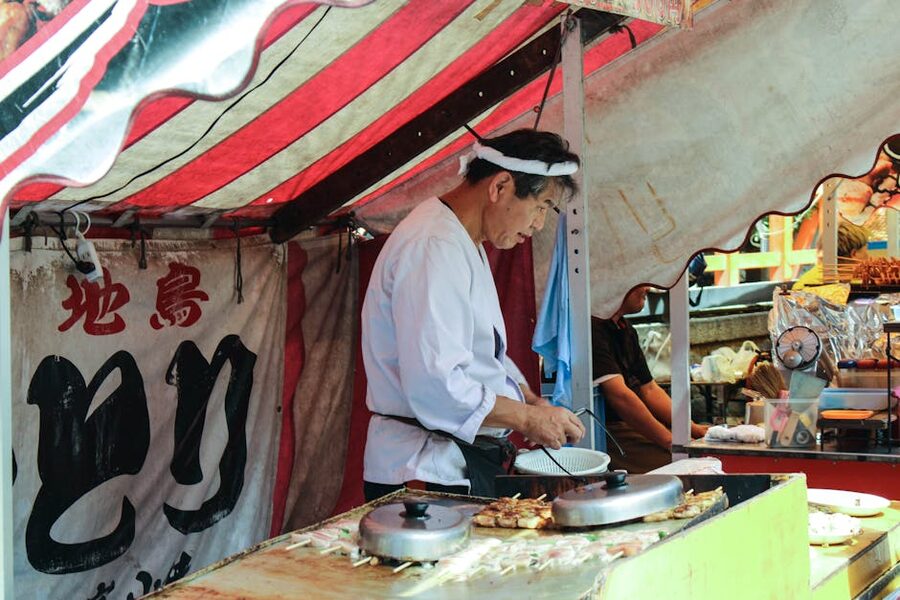
Food and drink
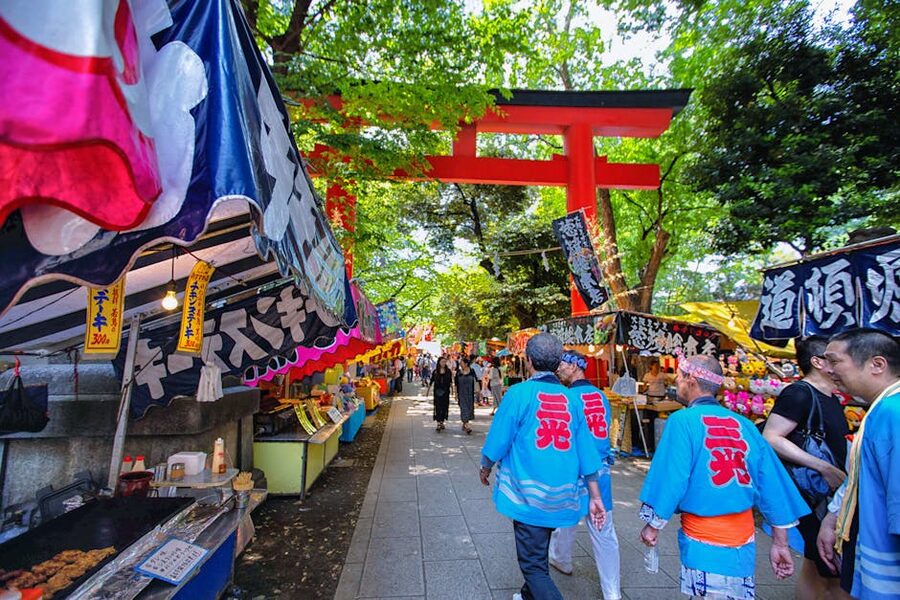
Both Chofu-side venues have yatai food stalls lining the access paths from roughly 16:00. Standard festival food — yakisoba, takoyaki, jaga bataa, choco banana — at ¥500-¥900 per item, cash almost everywhere. Beer and chuhai run ¥500 a can. A beer-garden setup appears near the Keio-Tamagawa venue most years.
To skip the queues, the konbini around Chofu Station stock up on festival food from the day before. I usually grab onigiri, karaage, a drink, and a sheet from Family Mart and walk down with it.
What to bring
- Small ground sheet (under 1m x 1m)
- Water — the stalls run out of bottled water by 18:00 most years
- Insect repellent; the riverbank in September still has mosquitoes
- Light jacket — September evenings start warm but cool off fast once the sun drops
- Small torch or phone-torch for the walk back (riverbank paths aren’t lit)
- Cash in small notes for stalls
- Rubbish bag — there are almost no public bins on the bank
Toilets and crowds
The committee puts out portable toilets at both Chofu-side venues. The queue is worst between 18:00 and the start; if you need to go, go at 17:00 or wait until the show ends. The toilet-to-visitor ratio on the Kawasaki side is essentially zero.
Attendance at past editions has hit 300,000-plus, but it’s spread over a long stretch of riverbank and two separate venues plus the Kawasaki side. You’re never shoulder-to-shoulder in the way you are for the Sumida River Fireworks. That said, the 30 minutes after the finale at Keio-Tamagawa Station are rough. Entry restrictions onto the platforms get imposed in heavy years, and you can easily spend 45 minutes just getting onto a train. Walk to Chofu Station instead if you want to be home by 21:00.
A confession about my first Chofu trip
The first time I went, I made every possible mistake. I didn’t buy a paid seat. I arrived at 17:30. I tried to stake a spot at the Keio-Tamagawa venue, which by then had almost no free ground left, and the bit I found was behind the launch line, so for the first ten minutes I was watching the backs of shells going up over a line of trees.
Then at the end I walked to Keio-Tamagawa Station with everybody else. The staff had closed the platform and were letting people up in controlled batches. It took me 35 minutes to reach a ticket gate, and the train back was a local stopping at every suburban station. I got into Shinjuku at 21:40 for a show that ended at 19:15.
What I’d do differently, and what I’d tell anybody going for the first time:
- Buy a paid seat, or turn up before 15:00 for a free spot in the Fuda venue (farther from Keio-Tamagawa Station but less crushed).
- If you’re spotting informally, sit on the Kawasaki side, where you can simply walk away afterward.
- Don’t try to go back via Keio-Tamagawa Station unless you’re at the Keio-Tamagawa venue and already right next to it. Walk to Chofu Station even if it takes you 25 minutes — the trains there move you out of the area in a fraction of the time.
Pairing Chofu with a daytime trip
Fireworks are only an hour. Most of the Saturday is yours to fill. Chofu has two genuinely good daytime options that pair well with the evening show.
Jindaiji Temple
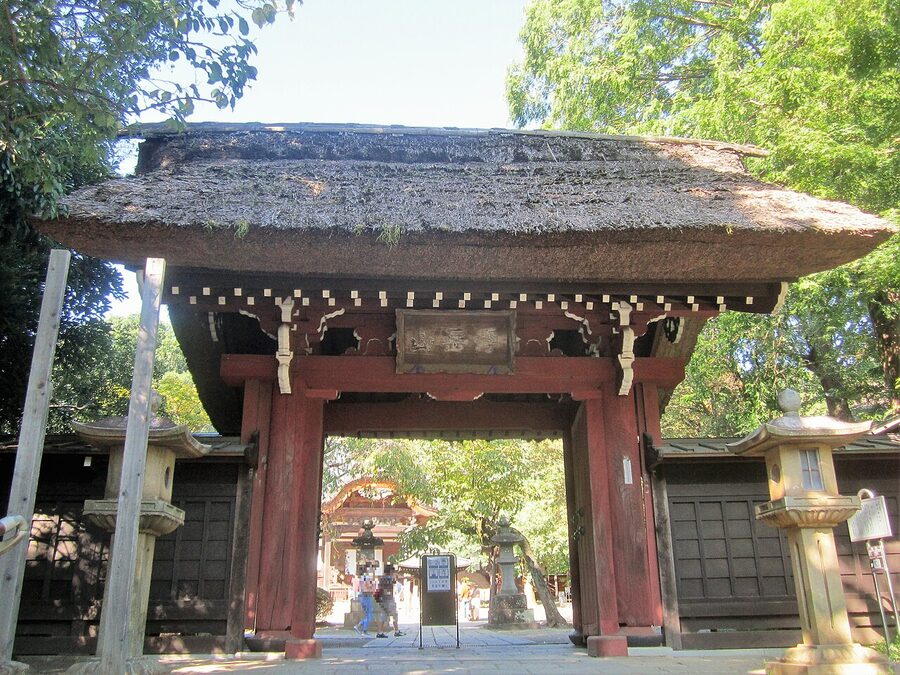
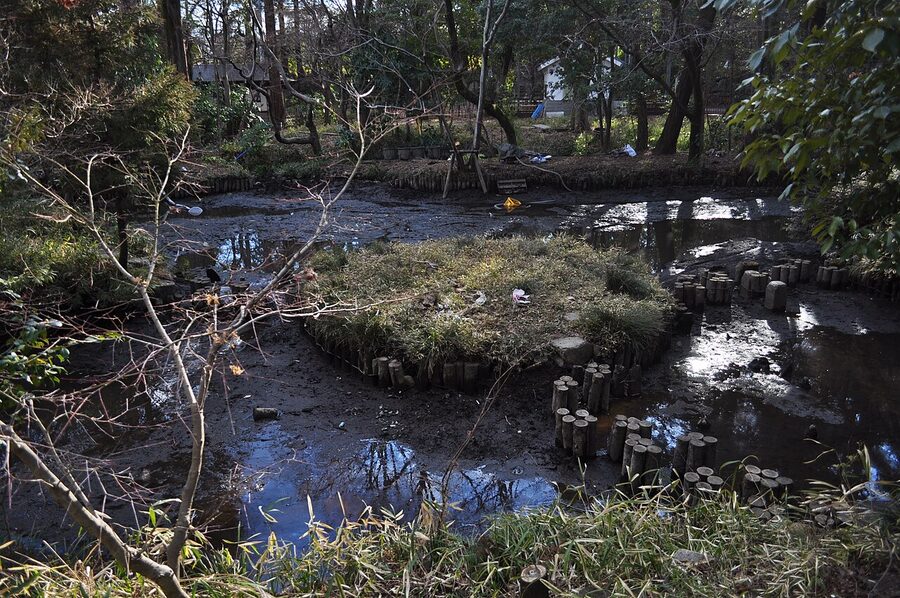
Founded in 733, Jindaiji is Tokyo’s second-oldest temple — only Sensoji in Asakusa is older. The whole complex sits in a wooded valley a couple of kilometres northwest of Chofu Station. It’s completely different in character to the big downtown temples: quiet, green, almost rural feeling. There’s a Benten pond in the grounds, a small botanical garden next door, and a long approach road lined with soba shops.
The soba is the other reason to come. Jindaiji is one of Tokyo’s named soba districts — the water on this part of the Musashino plateau is considered good for buckwheat noodle making. A bowl of zaru soba at one of the old shops costs ¥900-¥1,300. Most close by 16:00, so head to Jindaiji early afternoon and you’ll still have time to get back to the riverbank.
Getting there from Chofu Station: Keio Bus or Odakyu Bus to Jindaiji (深大寺), about 15 minutes, ¥220 on your IC card. Buses leave from the north exit every 15-20 minutes.
Ghibli Museum (if you planned far ahead)
Mitaka is one stop east of Chofu on the parallel JR Chuo Line, and that’s where the Ghibli Museum sits. If you’ve got advance tickets (and you’ll need them — they sell out a month ahead and aren’t available at the door), a morning at Ghibli and an afternoon-evening at Chofu is a good full day. Tickets go on sale on the 10th of the month before, and the Lawson ticket website is the English-friendliest way to buy.
Without advance tickets, skip it. The museum has a strict no-walk-up policy and you’ll stand outside the gates feeling sad.
Should you pick Chofu over other Tokyo fireworks?
It depends on when you’re in Tokyo.
If your trip is July or August, the bigger central Tokyo festivals will be running, and I’d probably point you toward the Sumida River Fireworks for the Edo-era atmosphere or the Adachi Fireworks for the scale and the 13,000 shells. Both are bigger productions than Chofu.
If your trip is September or October, Chofu is effectively your main option. The Edogawa Fireworks sometimes run into September but most editions wrap in August. Chofu is the reliable late-season show.
What Chofu gives you over the central Tokyo festivals, even in-season:
- The music-sync element — central festivals don’t do proper choreographed hanabi
- Noticeably less crush at the viewing areas (not at the station afterward, though)
- A family-matsuri mood that feels a lot more local
- Easier free viewing on the opposite (Kawasaki) riverbank
What it doesn’t give you:
- The sheer shell count of Adachi or the historical weight of Sumida
- Easy access — you’re an hour from central Tokyo on a side line
- A skyline backdrop; the Tamagawa banks are flat and residential
I wouldn’t try to pair Chofu with another Tokyo fireworks on the same night. The calendar almost never works — Chofu is usually a Saturday in late September when nothing else is running — and even if two festivals did overlap, the Keio Line out to Chofu is slow enough that you’d catch maybe the last ten minutes of one or the other.
Practical info block
- Typical date: Saturday in late September (40th edition was 20 September 2025; check hanabi.csa.gr.jp for current year)
- Time: Fireworks 18:15-19:15 (1 hour). Opening ceremony from 18:00
- Shell count: ~10,000
- Attendance: 300,000+
- Location: Tamagawa riverbank, near Nikaryo Kamigahara Weir, Chofu-shi, Tokyo
- Access: Keio Line to Chofu Station (17-20 min from Shinjuku on Special Express), or to Keio-Tamagawa Station on the Keio Sagamihara Line branch
- Cost: Free general seating; paid seats ¥5,000-¥8,000 via the official site
- Cancellation: No rain date. Heavy rain or typhoon means cancelled (2017 Typhoon Lan); COVID cancellations 2020-2022; resumed in 2023
- Organiser: Chofu City Fireworks Executive Committee, with pyrotechnics by Marutamaya Kokatsu
- Official site: hanabi.csa.gr.jp
- City tourist info: city.chofu.tokyo.jp
How I’d actually do a Chofu Hanabi day
Given a Saturday in late September when the show’s running, here’s the version I’d plan from a hotel in central Tokyo:
- 10:00 — Keio Line Special Express from Shinjuku to Chofu Station (17-20 min). Store anything bulky in a coin locker at the station.
- 10:30 — Keio Bus from the north exit to Jindaiji Temple. Bowl of zaru soba at one of the shops on the approach, wander the temple grounds and the Benten pond, and if the rose festival is on next door at Jindai Botanical Gardens, have a look.
- 13:30 — Bus back to Chofu Station. Drop by the konbini for water, snacks, a small ground sheet, and a beer if you’re drinking. If you don’t mind standing and the queues, grab yakisoba from a yatai once you’re on the riverbank instead.
- 14:30 — Walk down to the Fuda venue (about 20 minutes from Chofu Station) and stake a free spot. Fuda fills slower than Keio-Tamagawa and you’re better placed for the walk back to Chofu Station later.
- 15:30-18:00 — Read, eat, people-watch. Yukata count goes up as the afternoon progresses. The stalls ramp up around 16:00.
- 18:00 — Opening ceremony. Fireworks start 18:15.
- 19:15 — Finale. Don’t rush to the station — wait five minutes while the worst of it clears.
- 19:25 — Walk back to Chofu Station (25 min), not Keio-Tamagawa. Grab a train on one of the all-stations Keio Line services running back to Shinjuku.
- 20:10 — Back at Shinjuku. The izakaya around the east exit are still warming up.
The whole day costs roughly ¥2,500 in transport and food if you’re eating konbini, ¥5,000-¥6,000 if you’re drinking and eating stall food, and ¥10,000-¥15,000 if you’ve bought a paid seat. For a Tokyo evening that takes you properly outside the central tourist zones and gives you a real matsuri rather than a stadium event, it’s an exceptionally good use of a Saturday.
And the best bit about Chofu being late-season: you won’t be fighting the July humidity. I’ve been in 27-degree early autumn evenings where the air went soft at sunset and the smoke drifted north across the water and the first shell of Hanabillusion went up over the weir to a Ghibli piano line, and it was, for about an hour, exactly the Tokyo everybody pictures before they arrive.