
For decades the Adachi Fireworks Festival marked the unofficial start of Tokyo’s summer hanabi season — the earliest major fireworks display in the city, going off on a Saturday in late July before Sumidagawa, before Edogawa, before any of the others. Then, in 2024, lightning forced them to call it off twenty minutes before the first launch. In 2025, it was strong wind. Two cancellations in a row, a lot of paid-seat refunds, and a fairly urgent rethink from the organisers about when to actually hold it. So for 2026 the 48th Adachi Fireworks has been moved to Saturday 30 May 2026 — and the old “first of summer” Tokyo festival is now, slightly surreally, a late-spring festival instead.
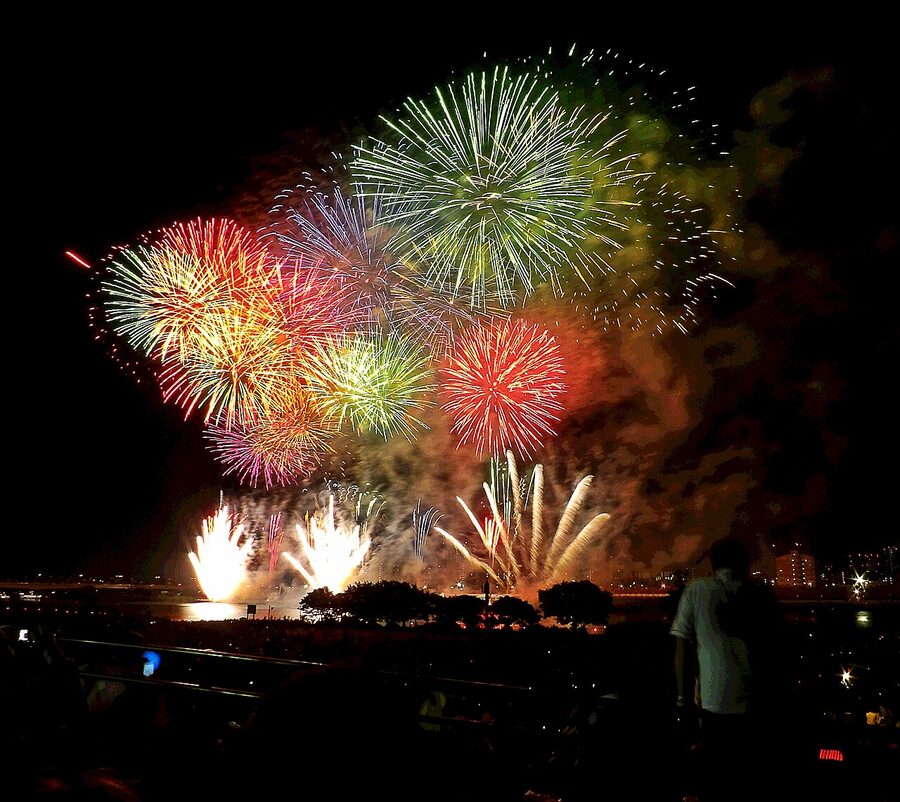
If you’re putting this in your Tokyo itinerary, the thing to understand is that Adachi is the compact Tokyo fireworks festival. Sumidagawa runs about 90 minutes and brings a million-plus people. Adachi runs exactly 60 minutes, launches roughly 13,000 shells in that time, and draws somewhere between 600,000 and 700,000 people depending on the year. That’s still a lot. But the shells-per-minute is staggeringly high, and because the whole thing is scheduled to end by 20:20 you’re off the riverbank and eating conbini onigiri on the train back by 21:00. I genuinely prefer that to sitting through the mid-show lulls at longer festivals.
In This Article
- The “first of summer” backstory
- What makes it different
- When it’s on in 2026
- Getting there (and, more importantly, back)
- Where to actually watch
- Kita-Senju south bank (Senju side)
- Kosuge / Umejima north bank
- Nishiarai Daishi area (walking distance from the temple)
- Paid seating
- Arrival timings and the spot-hunt
- What to bring
- Food and drink before the display
- Weather policy and what happens if it rains
- Adachi or Sumidagawa — which one?
- Quick facts
- How I’d do Adachi if it’s my first Tokyo hanabi
- Pairing it with the rest of your Tokyo trip
The “first of summer” backstory
The modern festival launched in 1979, but the history goes back further and it’s worth knowing because it’s the sort of thing that makes a Japanese grandmother in Senju smile when you mention it. The predecessor, Senju no Hanabi Taikai (Senju Fireworks Festival), started on 13 August 1924 to celebrate the opening of the Senju-shinbashi bridge. It ran annually through the 1930s and then — like almost every Japanese matsuri — paused for World War Two. It resumed in 1949, kept going until 1959, and then the Arakawa riverbed was dug up for flood-control works and the whole thing quietly ended.
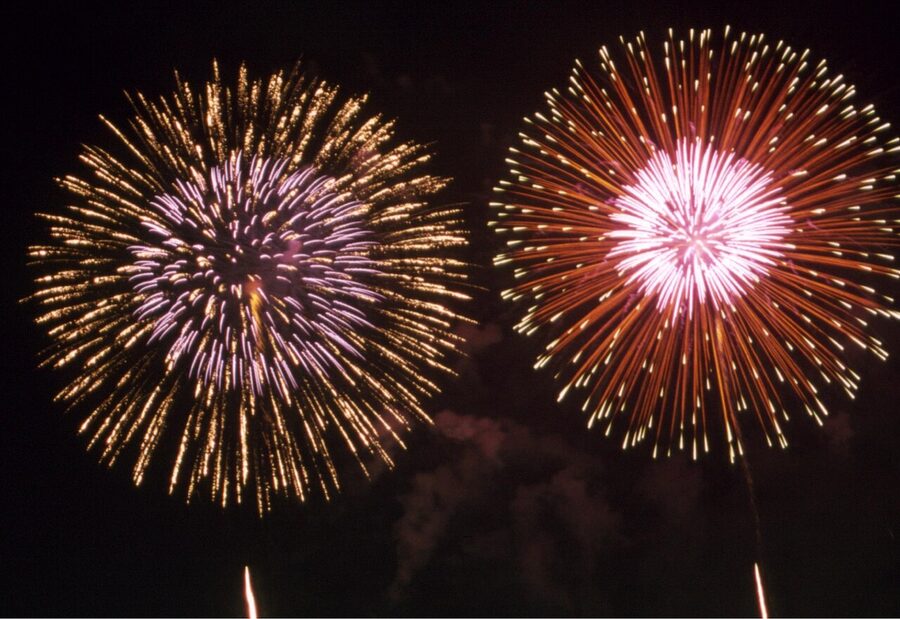
It took twenty years for locals to get a festival back. In August 1978 Adachi ward held a summer “cooling-off” event at which they fired about 800 test shells. People liked it. The next year, 11 August 1979, they officially revived the whole thing as Adachi no Hanabi with 3,700 shells, and it’s run every summer since. For most of its history the date was the Thursday two days before Sumidagawa; from 2013 it shifted to the Saturday one week before; and now it’s moved earlier still.
One small detail I like: the name. For the first 30 years it was officially Adachi no Hanabi Taikai (“Adachi Fireworks Festival”), but from the 30th edition in 2008 the official name dropped the taikai and became just Adachi no Hanabi. So if you see posters with both, they mean the same thing — the signage just hasn’t all caught up.
What makes it different
Three things, honestly. The concentration, the Double Niagara, and the venue itself.
The concentration is a function of the run-time. Thirteen thousand shells in an hour works out to around 217 shells per minute. Sumidagawa, by comparison, does roughly 20,000 shells in 90 minutes — about 222 per minute — so on paper they’re nearly identical in intensity, but Adachi feels more intense because the smoke has less time to drift away before the next barrage goes up. The sky is lit continuously. You won’t find a quiet moment to check your phone and you genuinely shouldn’t try — the 40th edition in 2018 launched 13,600 shells and the organisers have said that’s the maximum before the smoke starts obscuring the view at the venue’s current footprint.
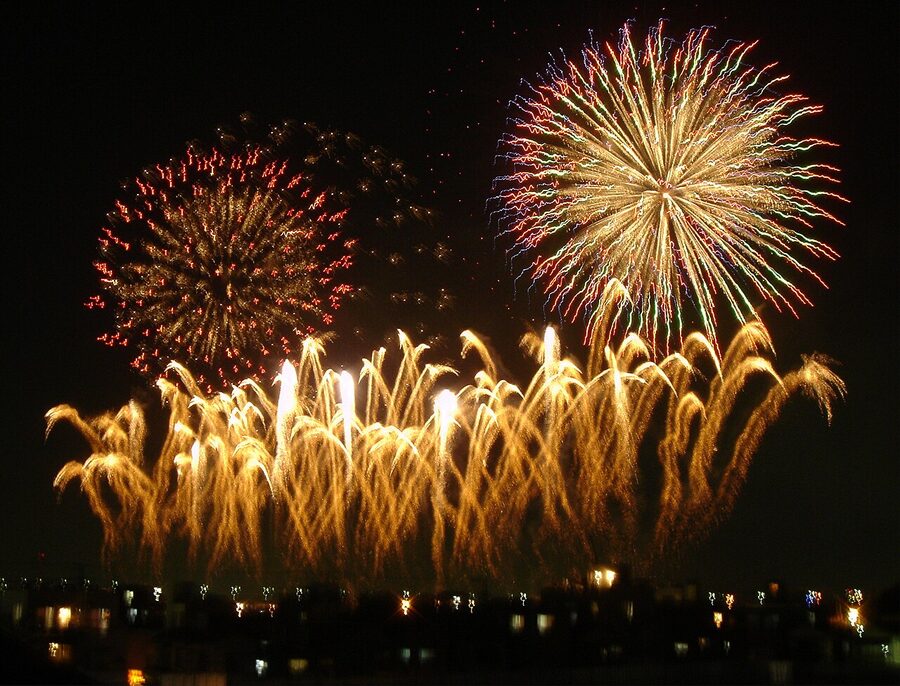
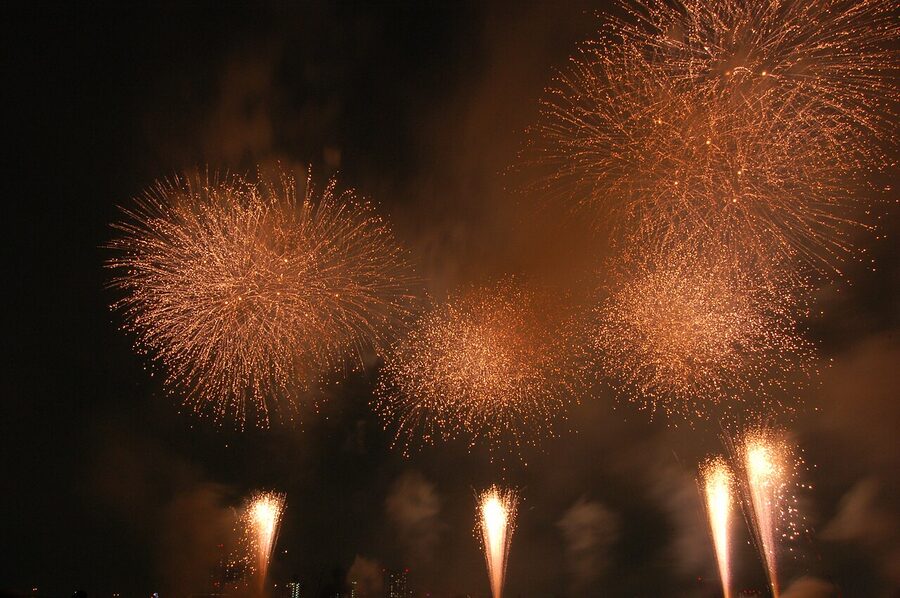
The Double Niagara is the festival’s signature. Most big hanabi displays include a “Niagara” — a horizontal line of waterfall-style fireworks cascading down from a bridge or wire. Adachi does two of them, in parallel, spreading 250 metres across the river. It debuted as part of the 40th anniversary in 2018 and it’s now the closing set-piece every year. If you’re trying to time your seat-pick, work out where the Double Niagara will be — the organisers publish a programme brochure each year — and aim your vantage point at it, not the general launching area.
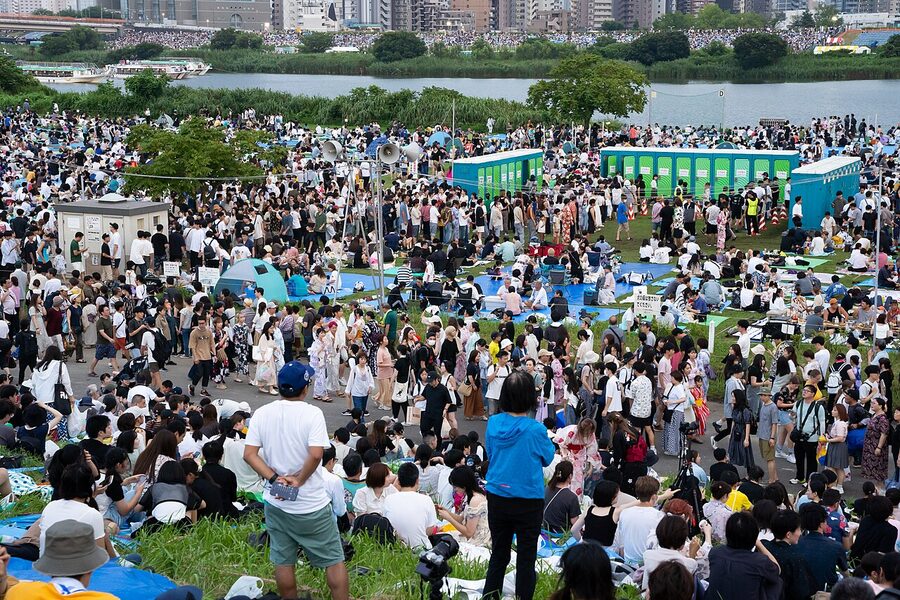
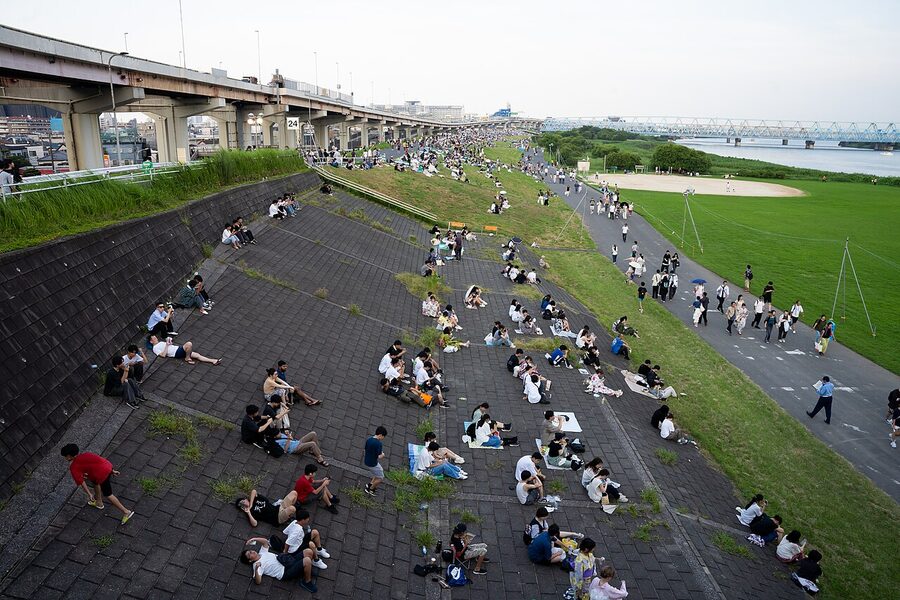
The venue is the piece most guides underplay. The Arakawa is Tokyo’s big engineered flood-control river, and the section the festival uses — between the Nishiarai Bridge and the Chiyoda Line rail bridge — has enormous flat grassy levees on both banks. You can sit 100,000 people on each side and still have room to walk. That’s not true of Sumidagawa, where the crowd is jammed onto narrow paths along a narrower river. The trade-off is distance: you’re looking up at the shells from further away than you might at a smaller festival, but the sightlines are clean.
When it’s on in 2026
Saturday 30 May 2026. Launch starts at 19:20 and ends at 20:20. Free. The ward’s tourism body (Adachikankonet) confirms the date on its English-language page, as does Go Tokyo, the city’s official tourism site, which lists it as the 48th edition.
The switch from late July to May surprised me the first time I read the 2026 schedule. The reasoning is essentially heat and typhoon mitigation. Tokyo summers have been brutal — 2023 saw heatstroke cases at the previous date, and the 2024 thunderstorm and 2025 typhoon-adjacent winds that cancelled back-to-back years were the last straw. May gives cooler evenings, lower heatstroke risk, and a lower statistical chance of the typhoon-season weather that kept killing the event. It’s still a beautiful night out; the Arakawa levees aren’t any less pleasant in late spring. Just pack a light jacket rather than a uchiwa fan.
Getting there (and, more importantly, back)
The festival is staged along the Arakawa River between Nishiarai Bridge and the Chiyoda Line rail bridge, and the launch site is on the south bank (Senju side). There are five stations within walking distance of the venue.
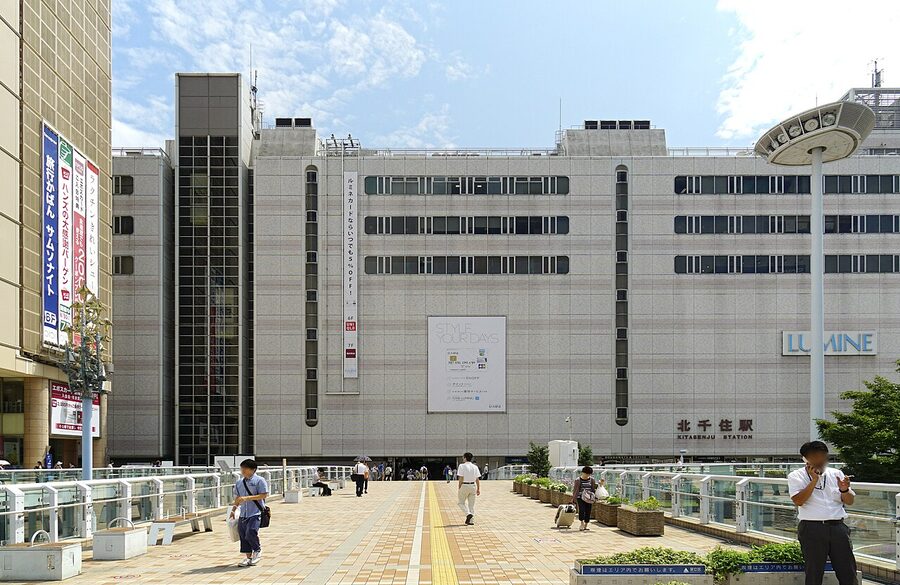
The south bank (Senju side) is the side where fireworks launch from:
- Kita-Senju Station — about 15-20 minutes on foot. JR Joban, Tokyo Metro Hibiya and Chiyoda, Tobu Skytree Line, and the Tsukuba Express. This is the station most people use. It is also the station most people get stuck at after the show.
- Adachi-odai Station — about 25 minutes on foot. Toei Nippori-Toneri Liner. Very quiet, very reliable out.
The north bank (Kosuge / Umejima / Nishiarai side) has its own set of stations on the Tobu Skytree Line:
- Kosuge, Gotanno, and Umejima — all about 15 minutes walk from the north bank viewing area.
- Nishiarai Station — about 25 minutes walk but with a wider station, a rotary, and express-train service. The ward’s own tourism site now actively recommends Nishiarai as the return station because the others (Kosuge, Gotanno, Umejima) have small platforms that get admission-controlled after the show.
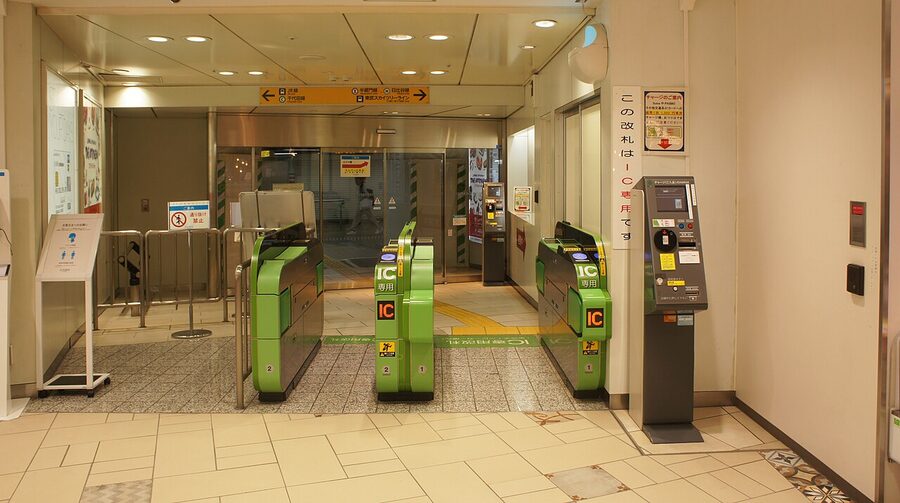
The reality of the crowd: Adachi attracted about 700,000 people in 2023 (the post-pandemic record). That’s across both banks, but the south bank takes the larger share because the fireworks launch from there. Kita-Senju Station is a five-line interchange with a big station building, so it copes better than you’d expect — but the first 20 minutes after the finale are genuinely compressed. Admission-control barriers go up. You’ll be shuffling.
If you’ve got an IC card (Suica or Pasmo) you’ll breeze through the ticket gates, but the queues to get to the gates are still real. The single best trick I can give you is this: walk to a farther station instead. An extra 10 minutes of walking saves you 30 minutes of station queue.
Where to actually watch
The viewing area is roughly 2 km along the river. There’s no single “best spot” — there are four realistic options, and the right one depends on your priorities.
Kita-Senju south bank (Senju side)
The most developed side. This is the bank the fireworks launch from, so the shells burst closest overhead. More food stalls spill down from Kita-Senju’s old shukuba district (it was the first post-station on the Nikko Kaido in the Edo period, and the old neighbourhood still has senbei shops and tiny izakayas that happily hand you beer cans to take to the river). It’s also the loudest side — not just the fireworks, the crowd. If you want the atmosphere, this is where.
Kosuge / Umejima north bank
Quieter, less food, and a slightly more distant view of the Double Niagara (it runs parallel to the launch bank, so from the far side you see it almost edge-on). But — and this matters — it’s genuinely less crowded. You can sit further apart. Families with small kids almost always pick this side because the noise is a touch less crushing.
Nishiarai Daishi area (walking distance from the temple)
The furthest free-viewing option on the north bank and therefore the quietest. You’ll miss some of the low-altitude shells but the big bursts are still spectacular. Pair it with a visit to Nishiarai Daishi (Soji-ji) earlier in the afternoon — it’s one of the three great Kanto daishi temples and almost nobody goes, which is a very different experience to Senso-ji.
Paid seating
Paid seats go on sale in late April through CN Playguide. Prices historically run ¥5,000 for a single chair seat up to ¥20,000 for a four-person table. They sell out within hours. The seats are on the Senju side riverbank at the launch point — so you get the best view of the Double Niagara — and they let you skip the arrival-time spot-hunt. For a family or a couple doing one major Tokyo hanabi this trip, I’d say they’re worth it. For a solo traveller on a budget, the free riverbank works perfectly well if you arrive by 17:00.
Arrival timings and the spot-hunt
- Arrive by 16:00-17:00. Crossing from Kita-Senju to the riverbank is about 20 minutes on foot. By 17:30 the main levee paths are full of leisure sheets. The ward bans overnight spot-holding, so people start putting sheets down from mid-afternoon on the day itself.
- Walk along the bank, pick the gap you’ll fit in, put your leisure sheet down. The sheet is the key tool. A rectangular vinyl groundsheet, 1.8 metres by 1.8 metres, costs about ¥500 at any conbini. Don’t try to sit on bare grass — the dew is real and your trousers will be ruined.
- Leave someone on the sheet, or anchor it with a bag, while you grab food and a drink. Lawson and 7-Eleven near Kita-Senju will have been stripped of cold drinks by about 17:30 — go to a conbini further in, like the ones around Senju-nakamachi, where the locals shop.
- Settle in. Sunset in late May in Tokyo is around 18:50. It’ll still be light when the first shell goes up at 19:20.
What to bring
- Vinyl leisure sheet (rejaa shiito) — grab one from a conbini on the way. About ¥500.
- Cold drinks from a conbini further from the venue. The near ones sell out.
- Hand fan or uchiwa. Less critical now the festival is in May rather than late July, but the levee is exposed and the evening sun is still warm.
- Portable battery. Everyone’s phones die trying to take bad fireworks photos. Trust me, put the phone away and watch.
- Cash. Many of the food stalls still prefer it. A few small-denomination notes and coins cover a yakitori skewer, a takoyaki tray, and a beer.
- Light jacket. Evening temperatures by the river in May are around 15-18°C, which is cooler than it feels in central Tokyo.
- A plastic bag. For rubbish on your way out. Japan doesn’t provide bins at festivals — you take your rubbish home.
Food and drink before the display
The shukuba-machi district around Kita-Senju Station is the practical food answer. Senju was the first post-town on the Edo-era Nikko Kaido road, and that heritage still shapes the neighbourhood: narrow streets, pre-war wooden izakaya fronts, senbei shops run by the same family for four generations. I’d start on the Senju-nakamachi shopping street, pick up yakitori-to-go from one of the tiny grills, add two cans of chūhai from a conbini, and walk to the river with dinner in hand.
If you’ve got a bit more time and want to sit down first, Kita-Senju has one of the densest izakaya scenes outside central Tokyo — I wrote about it in my guide to Tokyo izakayas and the shitamachi-style places around Kita-Senju’s west exit are the ones I send people to. They open from 16:00 and a quick pint before heading out to the levee works perfectly.
Weather policy and what happens if it rains
Adachi cancels in bad weather. It does not postpone. There is no backup day. This is different from some other Tokyo hanabi which move to a reserve date. The organisers explain the no-postponement rule as a logistical one: the security plan for 700,000 people, the road closures, and the hundreds of staff can’t be replicated on a second day.
Light rain during the event itself usually doesn’t stop it. Heavy rain, lightning, or strong wind will — 2024 was called off 20 minutes before start because of lightning, and 2025 was cancelled that afternoon because of wind. Paid tickets are refundable if the display is cancelled. Free riverbank viewing, obviously, just means a wasted evening.
Check the official status at adachikanko.net from 14:00 on the day. They announce cancellations by mid-afternoon if the forecast is bad; weather-on-the-day cancellations (like the 2024 lightning) are called much closer to start time.
Adachi or Sumidagawa — which one?
People ask me this a lot. Both are excellent. The honest answer depends on what your Tokyo dates look like and what you want from the night.
Sumidagawa (late July) is the famous one. Skytree in the background. More than a million people. Ninety minutes, roughly 20,000 shells. It’s a rite-of-passage Tokyo fireworks experience — and the most crowded thing you’ll ever do in your life.
Adachi (30 May in 2026) is smaller in crowd terms — 600,000-700,000 vs Sumidagawa’s 1 million+ — but the shell count and launch intensity are in the same league. The venue is wider, the viewing is easier, the atmosphere is more local. If you’re on a Tokyo trip that only overlaps with one of them, I’d pick Adachi as a first Tokyo hanabi if you want space and a shorter evening, and Sumidagawa if you want the Skytree-in-the-photos bucket-list shot.
I’ve done both. Adachi is the one I’d go back to.
Quick facts
- Date in 2026: Saturday 30 May
- Time: 19:20-20:20 (60 minutes)
- Shells: ~13,000-13,600
- Venue: Arakawa River, between Nishiarai Bridge and the Chiyoda Line rail bridge, Adachi-ku
- Attendance: 600,000-700,000 across both banks
- Cost: Free for riverbank viewing; paid seats ¥5,000-¥20,000 via CN Playguide (on sale late April)
- Nearest stations: Kita-Senju (15-20 min walk, 5 lines), Nishiarai (25 min walk, Tobu Skytree, recommended for the return)
- Rain policy: Cancelled, not postponed, in bad weather
- Japanese name: 足立の花火 (Adachi no Hanabi)
How I’d do Adachi if it’s my first Tokyo hanabi
- 14:30 — get to Kita-Senju by Hibiya Line or JR Joban and walk the Nikko Kaido shukuba district. Thirty minutes is enough. Buy a leisure sheet at a conbini and a bottle of water.
- 15:30 — early dinner at an izakaya near the west exit. A first-round chu-hai plus two yakitori skewers. Don’t overeat — you’re sitting on the levee for four hours.
- 16:30 — walk to the south bank (Senju side) of the Arakawa. About 15-20 minutes. Pick a patch on the levee roughly opposite the launch area, put down your sheet, anchor it with a bag.
- 17:30 — second conbini run. Go to one further from the river for cold drinks that haven’t sold out. Pick up another small snack.
- 19:20 — first shell. For the next hour you don’t need to do anything but watch.
- 20:20 — the Double Niagara closes the show. You’ll get goosebumps. I always do.
- 20:25 — don’t rush to the station. Pack up, take 30 minutes at a river-walk pace back toward Kita-Senju or — better — walk to Umejima or Nishiarai on the north side. The crowd at Kita-Senju is at its worst between 20:30 and 21:00.
- 21:15 — back on the train. Home by 22:00 if you’re staying in central Tokyo.
Pairing it with the rest of your Tokyo trip
Adachi works nicely on day one or two of a Tokyo trip, precisely because it’s a Saturday-evening event and doesn’t require you to miss daytime sightseeing. If you’re flying in via Narita, the Keisei Skyliner passes through Nippori — one stop from Kita-Senju on the JR Joban line — so you can land at lunchtime, check in somewhere like Ueno or Asakusa, and be at the riverbank by 17:00.
The next day, walk along the Sumida River through Asakusa — it’s a different part of the same river system and makes a nice contrast to the wide flat Arakawa levee you spent Saturday night on. If you’re doing multiple Tokyo fireworks this trip, the other big July/August ones are the Sumidagawa Fireworks and Edogawa Fireworks — I’ll have dedicated guides to both.
And if the weather cancels on you — which does happen — the Senju-side izakaya district is still open and still excellent. Treat it as a consolation. Adachi’s shukuba-machi is underrated on its own terms, and a long evening of chu-hai and yakitori under paper lanterns isn’t the worst replacement for a fireworks festival.
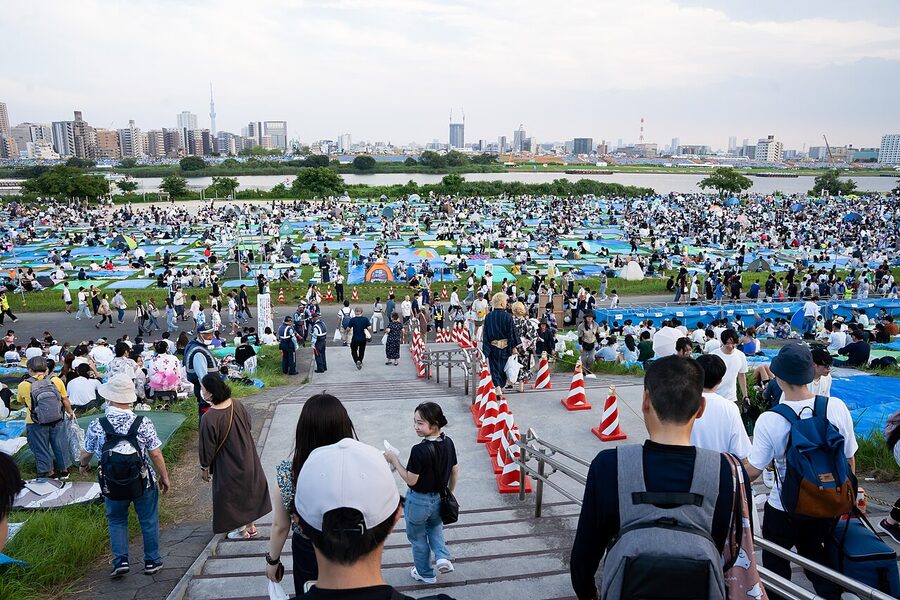
The Arakawa is a river you forget about as a tourist — it doesn’t have the Skytree behind it or the temples along it — but for this one hour each year, 700,000 people remember it exists. That’s worth putting on the calendar.