
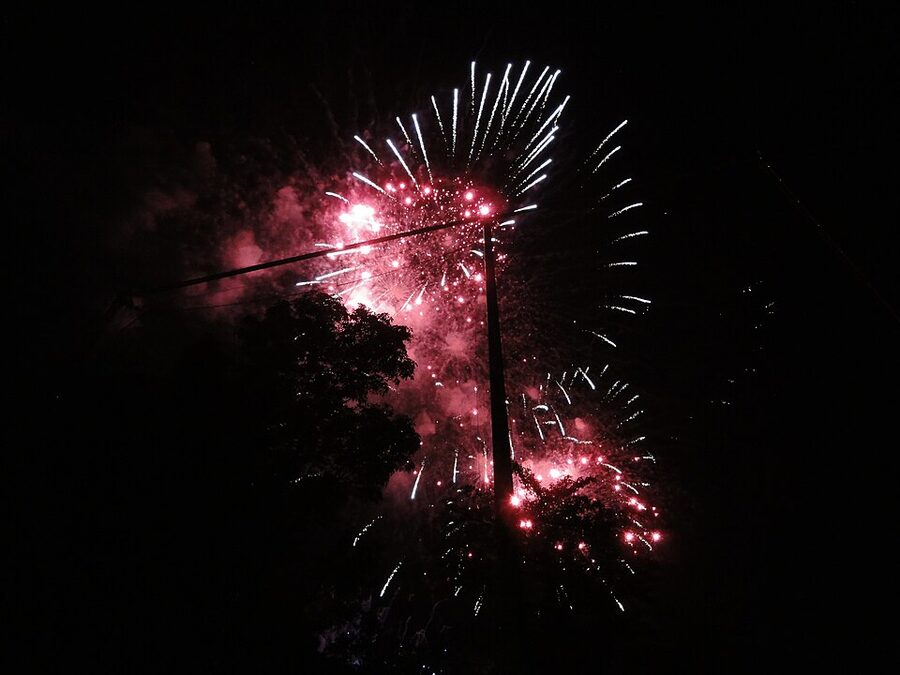
The thing almost no first-time Tokyo visitor knows about the Hachioji Fireworks Festival is that it doesn’t happen over a river. It happens over a baseball field. More specifically, over the athletic ground at Hachioji Shimin Kyujo — the city baseball stadium inside Fujimori Park, about a 20-minute walk from JR Hachioji Station. That’s unusual for Tokyo. Sumidagawa goes off along the river. Edogawa the same. Adachi uses the wide levees of the Arakawa. Hachioji just fires its shells up from a ballpark outfield while a few tens of thousands of people sit on the park lawns around it. If you’ve ever thought “I’d like to do a proper Japanese summer hanabi without getting crushed in a million-person river crowd”, this is the one.
In Japanese it’s called Hachioji Hanabi Taikai (八王子花火大会). It’s organised by the Hachioji Tourism & Convention Association as the run-up event for the much bigger Hachioji Matsuri (八王子まつり), the city’s main summer festival week that follows a few days later. In 2025 it ran on Saturday 26 July with about 4,000 shells between 19:00 and 20:15. The 2026 date hasn’t been officially posted yet — the organisers traditionally stick to the last Saturday of July and ticket-holders won’t see confirmation until late spring — so if you’re planning around it, keep checking Walker Plus.
In This Article
The scale, honestly
Let me put the numbers in perspective, because it matters for how you plan. The big central-Tokyo festivals fire roughly five times as many shells as Hachioji. Sumidagawa does about 20,000 over 90 minutes. Edogawa, about 14,000 over 75 minutes. Adachi, 13,000-plus in a single hour. Hachioji, by comparison, does roughly 4,000 shells over 75 minutes. That’s not a knock — it’s a completely different experience. It means individual shells get room to breathe, the smoke clears between big bursts, and you can actually see the star patterns from the star-mine sequences without them blurring into one another. The locals call this a shimin — “citizen” — festival, and that’s a fair description. It’s the neighbourhood hanabi, scaled for a city of 560,000 rather than a destination event for the whole Kanto region.
Attendance has historically run in the 60,000-90,000 range depending on weather. That’s about a tenth of Sumidagawa and a sixth of Adachi. What that means on the ground: you can walk from the station to the park at 18:00 without having to queue. You can pick a spot on the lawn without fighting anyone for it. You can get home afterwards without spending 45 minutes penned inside a ticket-gate holding zone. All three of those are genuinely rare for a Tokyo hanabi.
Where exactly you’re going
The venue is Fujimori Koen (冨士森公園) — Fujimori Park — in western Hachioji. It’s a 35-hectare city park with a baseball stadium, a running track, tennis courts, playgrounds, and a lot of green lawn. The shells launch from the baseball field in the centre. You sit on the park lawns around it. There’s no river; there’s no paid grandstand; there’s just grass, a small rise to the south side, and the fireworks going straight up about 100-200 metres away from wherever you’ve put your sheet down.
The park has been the site of the fireworks since the event restarted in modern form. The festival traces its origins to 1961, when the city ran a “30,000 people cooling-off” event (三万人の夕涼み) as a summer diversion for residents — the same lineage that by 1968 became the official Hachioji Matsuri and rolled in the separate historic kami no matsuri and shimo no matsuri shrine processions that had run since the Edo period. The fireworks split off as the pre-event for matsuri week, shifted to the last Saturday of July, and have stayed there ever since. The Hachioji Matsuri itself, incidentally, holds a Guinness World Record since 2016 for the largest bon-odori dance (2,130 people) — so if you stay in Hachioji for matsuri week, that’s worth seeing too.
Getting there
Hachioji is a long way west. From central Tokyo it’s not a quick taxi; it’s a suburban commuter train ride. There are two main lines and three realistic stations to walk from.
The three walking options:
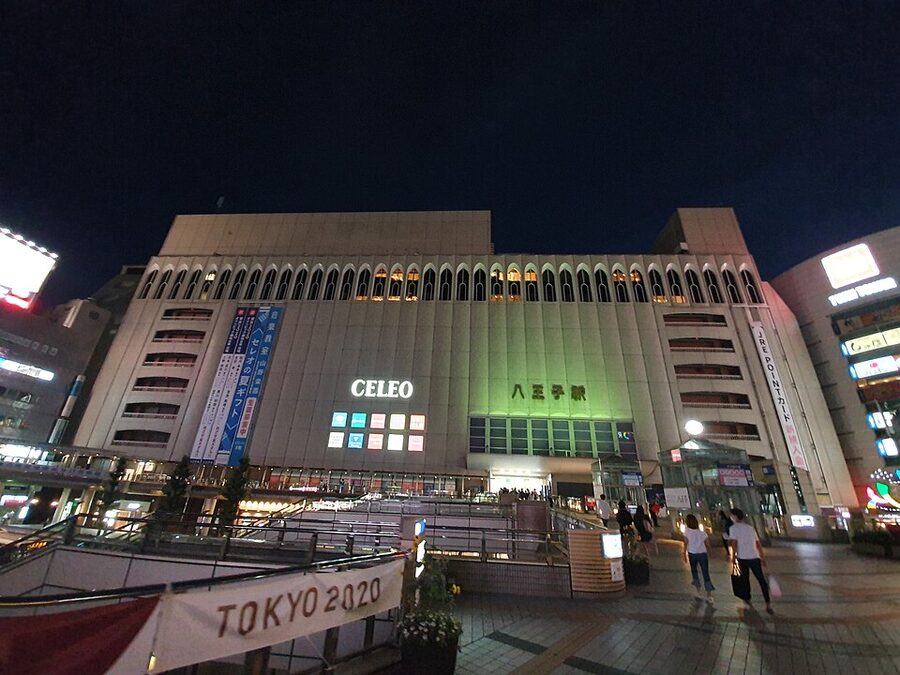
- JR Hachioji Station — roughly 20 minutes on foot from the park. Chuo Line (orange) runs from Tokyo Station, Shinjuku, and points between; the Chuo Special Rapid skips most stops and gets you there fastest. Also served by the Hachiko Line and the Yokohama Line if you’re coming from other directions.
- JR Nishi-Hachioji Station — one stop further west on the Chuo Line. About 15 minutes on foot to the park. Much quieter than Hachioji Station both going in and coming out, and the walk passes a couple of conbini where you can grab drinks and snacks without the pre-matsuri swarm.
- Keio Yamada Station (京王電鉄山田駅) — on the Keio Takao Line. About 15 minutes on foot to the park. If you’re coming from Shinjuku on the Keio rather than JR, this is the closest station.
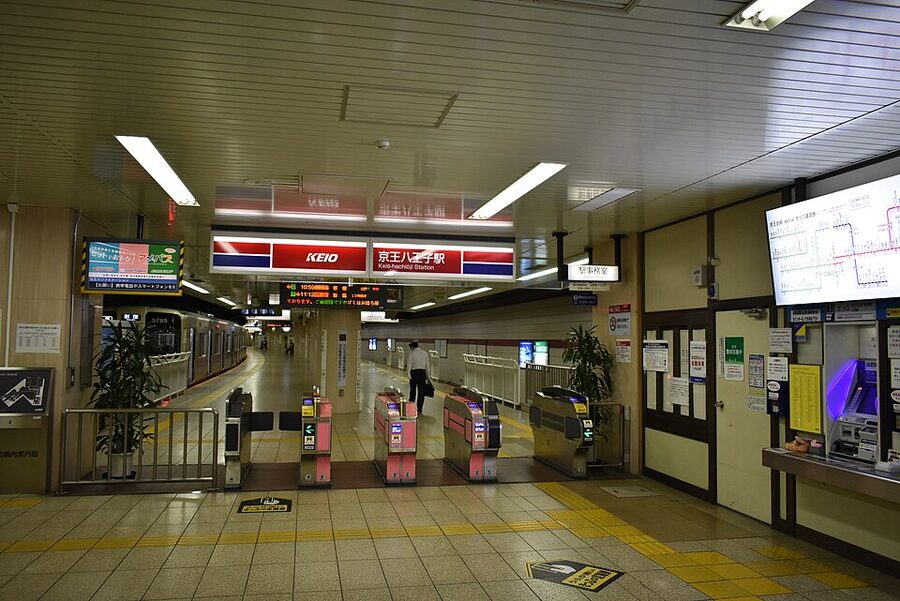
My call, honestly: take the Chuo Line in to Hachioji because it’s the fastest route from central Tokyo, and then on the way back, walk to Nishi-Hachioji instead. It’s a 15-minute walk from the park and the return trains are emptier than from Hachioji Station. Having an IC card (a Suica or Pasmo) makes the gate-tap seamless at both ends, which matters more than it sounds when a few thousand people are all trying to board the same train.
The viewing reality
Because you’re in a park rather than along a riverbank, the sightlines are dictated entirely by where you pick a spot. The shells launch from inside the baseball stadium, so anywhere on the park’s open lawns with a clear view of the launch site will work — and most of the park has that view, but there are three zones worth knowing about.
The south and southwest lawns are the most popular. They rise slightly, so even if late-arrival families sit down in front of you, you can see over them. This is where locals who’ve been coming for years will have claimed their regular spots by 17:30. The north lawn is flatter and closer to the stadium’s outfield fence — shells burst quite directly overhead here, which some people love and some find too close. The east side is the least crowded because the stadium structure partially blocks the low-altitude bursts, but the high set-pieces are fine.
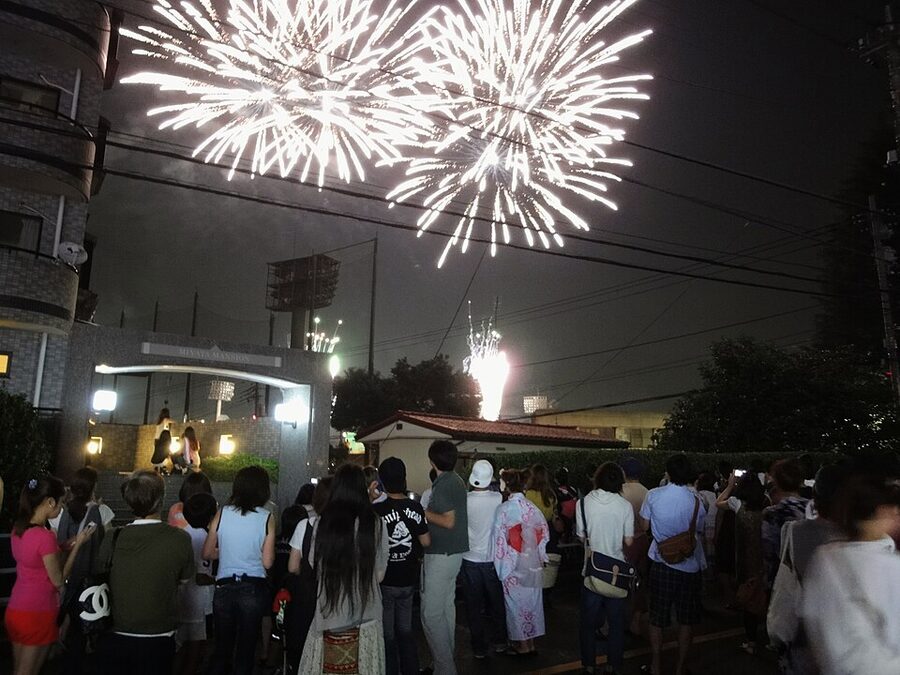
There are no paid seats at Hachioji — Walker Plus confirms this — which is the big difference from the major festivals. Everything is free, first-come, first-served, and the city’s rules about when you can put a leisure sheet down are enforced from the morning of the event onwards. You don’t have to arrive at dawn, but the longer you leave it the further from the stadium you’ll end up. My suggested times are below.
When to arrive
- By 17:00 if you want a prime south-lawn spot. Still enough daylight to find the park, spread your sheet, and settle in before the sunset crowd arrives. Conbini drinks and snacks are easy to grab at Hachioji Station on the way.
- By 18:00 if you’ll accept the flatter north or east lawns. You’ll still get a clear view overhead — the launch altitude is 200-300 metres for the bigger shells, so nothing’s blocked.
- By 18:30 is the latest you should aim for. After this, you’ll be standing at the park’s edge or even outside it; you’ll see the fireworks but you won’t have room to sit down.
- Don’t leave during the show. The finale is the best bit — the shimo no matsuri warm-up style ending — and if you try to beat the rush, you’ll miss it and still get caught in the rush.
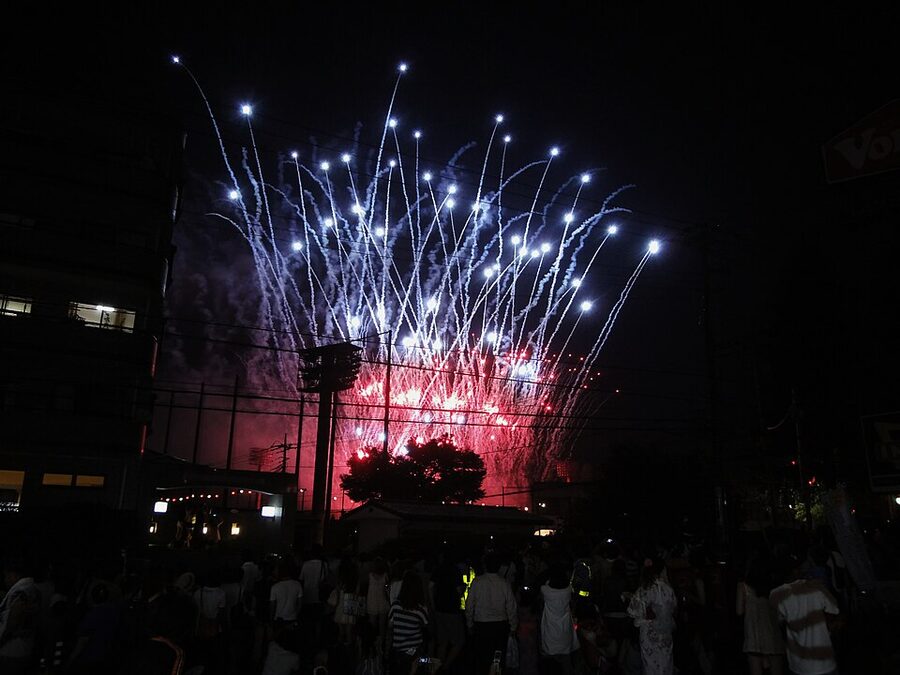
Why Hachioji rather than Sumidagawa or Edogawa
Straight answer: most first-time Tokyo visitors should go to Sumidagawa if they can. It’s the biggest, it’s the most famous, it’s photographer-bait in the best way, and it’s the one people will ask you about when you get home. But there are real reasons to pick Hachioji over it, and I think they’re underrated.
You’re travelling with small children. Central-Tokyo hanabi crowds are rough on under-eights. I’ve seen five-year-olds in tears at Kita-Senju Station an hour after the Adachi finale. Hachioji is genuinely family-friendly — the crowd is mostly local families, the station throughput is manageable, and the park gives kids space to move around before and after. It’s a completely different stress level.
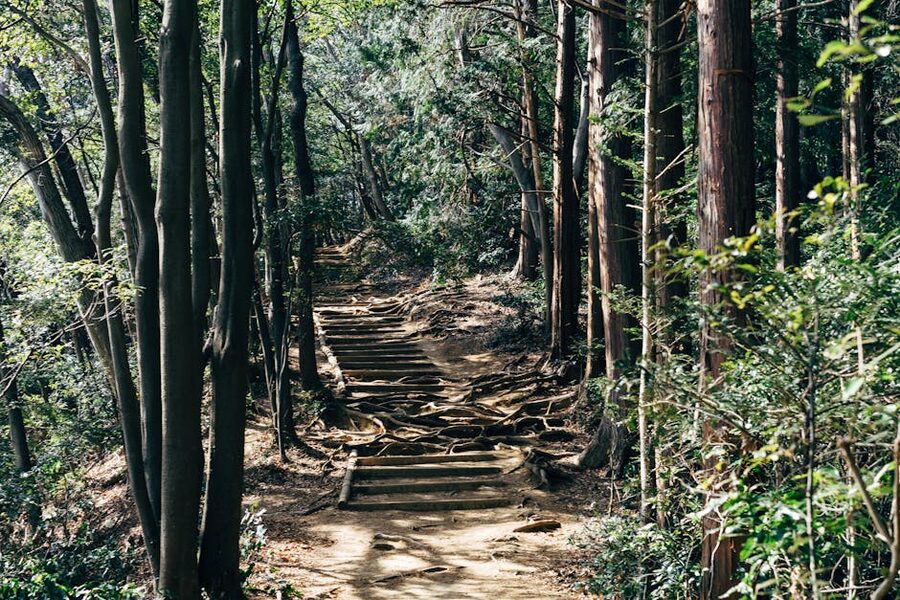
You want to pair hanabi with Mt Takao. This is the one I like. Hachioji is 30 minutes west of central Tokyo; Mt Takao is another 20 minutes further west on the Keio Takao Line. You can do a morning-to-afternoon hike on Takao, come back down on the cable car, wander Takaosanguchi Station for a late lunch, and be at Fujimori Park for sunset. That’s a genuinely great Tokyo day out and almost nobody does it.
You’re doing back-to-back hanabi nights. Tokyo summer has multiple festivals crammed into late July and early August, and doing two or three in a week is a real thing. Hachioji works as a lower-intensity night in that rotation — something you’d slot before or after a Sumidagawa, not as a replacement. The earlier end-time (20:15) also means you can get back to central Tokyo for a late dinner, which is harder from the bigger festivals.
What to skip and what to take seriously
A few honest calls:
- Skip the paid-viewing idea. There are no paid seats. Don’t get roped into any “premium viewing” packages being sold by third parties — they’re unaffiliated with the organisers and you’re paying for access to a spot that’s free if you just turn up at 17:00.
- Yukata is optional. Local families wear them. Travellers mostly don’t. Nobody cares either way. If you’ve got one you want to try, the festival has the relaxed atmosphere for it — a lot less posing and more sitting on leisure sheets eating yakisoba.
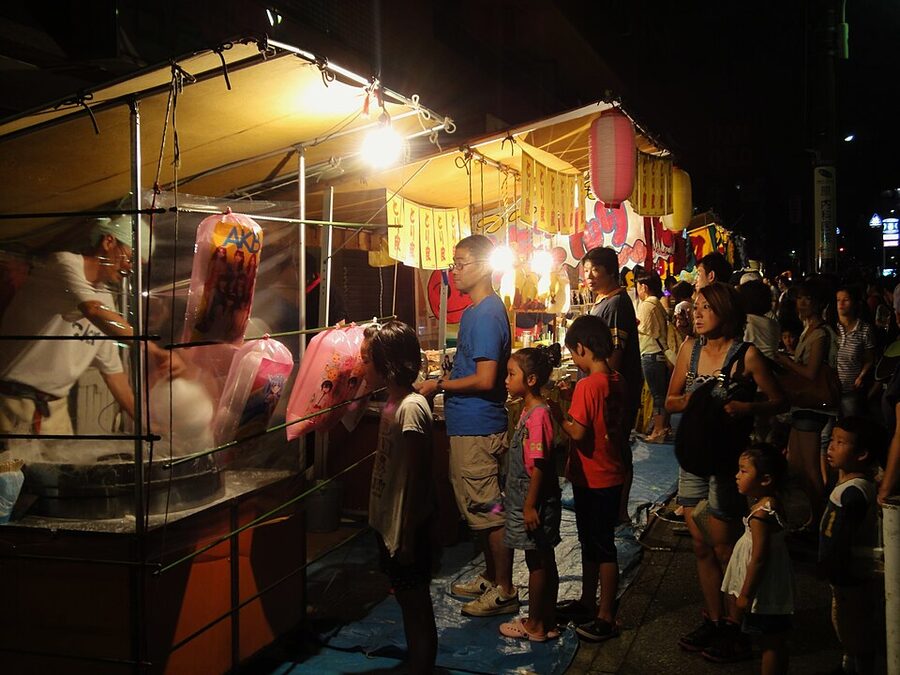
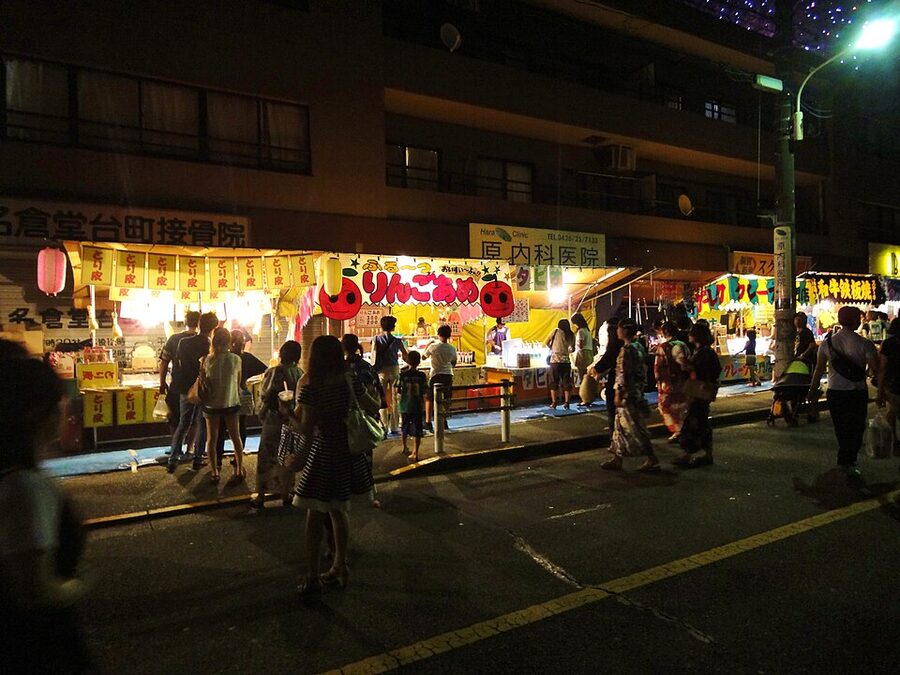
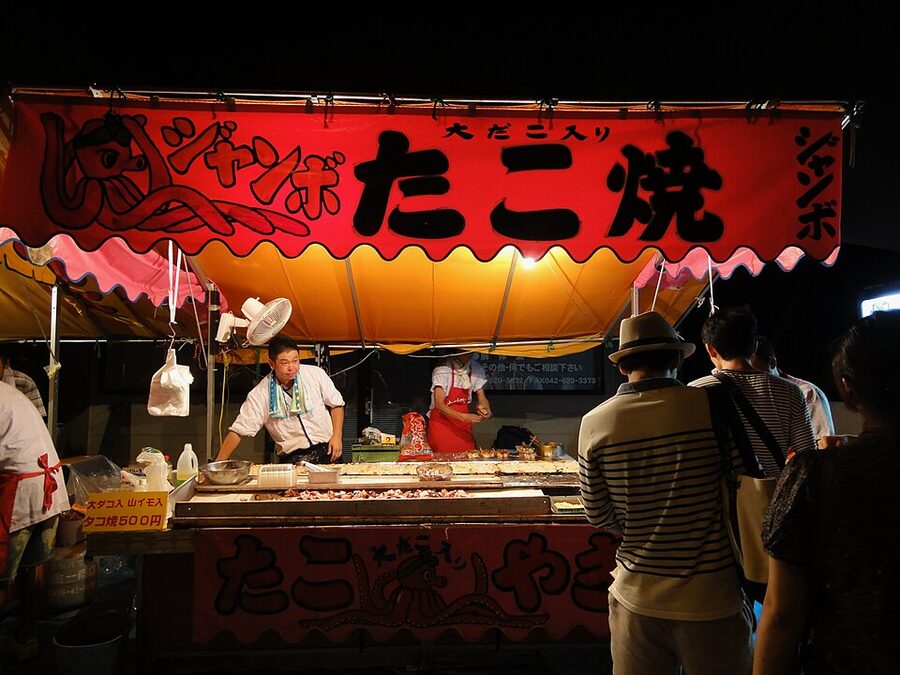
- The food stalls matter. Hachioji’s stalls (yatai) are concentrated on the paths around the park. Yakisoba, takoyaki, kakigori (shaved ice), cold beer — standard matsuri fare, but the queues here are five minutes rather than thirty, which is the entire reason you came. Budget around ¥500-800 per item and bring cash; some stalls now take IC card but not all.
- The rain-cancellation rule. If the weather’s bad on the day, the festival is cancelled, not postponed. Check the Hachioji Tourism & Convention Association site on the morning of.
The Hachioji Matsuri connection
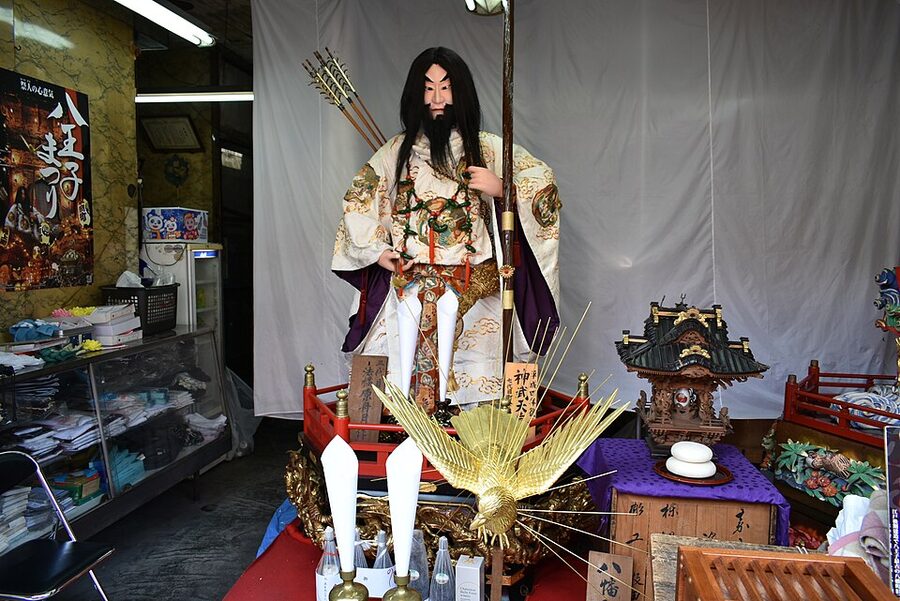
If you’re in Hachioji for the fireworks, it’s worth knowing the festival isn’t the main event — it’s the warm-up. The Hachioji Matsuri itself happens on the first Friday-Saturday-Sunday of August (so roughly a week after the fireworks), and it’s the biggest dashi (float) festival in Kanto. Nineteen elaborately-carved wooden floats, some of them almost a century old, get paraded through the city centre over three nights. Two sub-processions that pre-date the modern matsuri — kami no matsuri (Tagata Shrine) and shimo no matsuri (Hachiman Hachiun Shrine) — date back to the middle of the Edo period, which makes them over 300 years old. They’re UNESCO-adjacent in feel but without the UNESCO crowds.
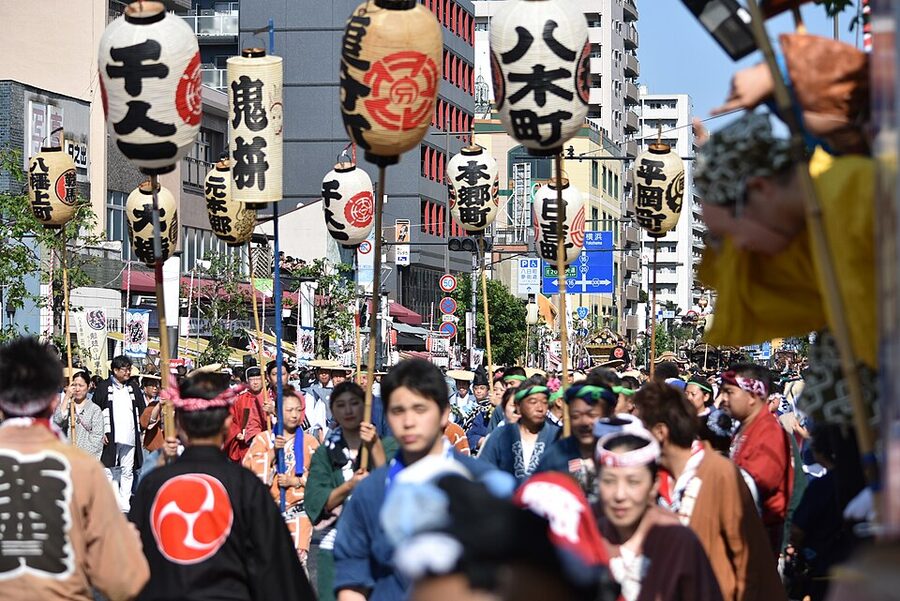
If you can stay in Hachioji for both — fireworks on the last Saturday of July, then matsuri the first weekend of August — you’re doing the whole cycle the way locals do. The city even keeps the same paper-lantern decorations up between the two events, so the shotengai streets stay festive across the intervening week. Hotels in Hachioji are cheaper than in central Tokyo and — unlike Asakusa or Shinjuku during matsuri season — they’re never fully booked.
How I’d actually do it
A one-day Hachioji plan from central Tokyo:
- 08:00 — Shinjuku JR platform. Chuo Line Special Rapid to Takao Station (about 55 minutes). Or take the Keio Line if you prefer.
- 09:15-12:30 — Mount Takao. Trail 1 up, cable car or chairlift down. The 599m summit isn’t difficult but it’s not paved all the way; sneakers are fine, flip-flops absolutely not. Views of Mt Fuji on a clear morning.
- 13:00 — Lunch around Takaosanguchi Station. The tororo soba (soba with grated yam) at any of the shops by the cable car terminus is what the hike is traditionally followed by.
- 14:30-17:00 — Ride Keio back to Hachioji. Wander the Hachioji Shotengai shopping streets; they’re unpretentious and full of small izakayas, bakeries, and coffee shops. A proper neighbourhood Tokyo hour.
- 17:00 — Walk to Fujimori Park. Lay down your leisure sheet on the south lawn.
- 17:30-19:00 — Food stalls, beer, settling in.
- 19:00-20:15 — The fireworks.
- 20:30 — Walk to Nishi-Hachioji Station (not Hachioji; it’s emptier). Chuo Line back to Shinjuku, home by 22:00.
Practical info
- Event: Hachioji Hanabi Taikai (八王子花火大会) — the 2025 edition was the most recent; 2026 date to be confirmed by the Hachioji Tourism & Convention Association in late spring.
- Typical date: Last Saturday of July
- Typical time: 19:00-20:15 (75 minutes)
- Shells: approximately 4,000
- Venue: Fujimori Park (冨士森公園), Daimachi 2-chome, Hachioji
- Access: 20 min walk from JR Hachioji Station; 15 min walk from JR Nishi-Hachioji Station or Keio Yamada Station
- Cost: free (no paid seating)
- Rain policy: cancelled, not postponed
- Organiser: Hachioji Tourism & Convention Association (hkc.or.jp)
- Paired festival: Hachioji Matsuri, first Fri-Sat-Sun of August
Where this fits in the Tokyo hanabi calendar
Hachioji sits early-to-mid in Tokyo’s summer fireworks season. If you’re trying to plan a hanabi-heavy week, here’s how it slots:
The Sumida River Fireworks Festival and Edogawa Fireworks Festival are the big central ones, both on the last Saturday of July, so they’re direct date clashes with Hachioji. You’re picking one. Chofu Fireworks is mid-August along the Tamagawa — different date, different vibe (also west-Tokyo but on a river). Adachi Fireworks moved to late May from 2026 onwards, so it’s no longer a direct calendar clash.
The cleanest combinations, if you’ve got the dates flexible:
- Hachioji (last Sat July) + Chofu (mid-August, west-Tokyo river) = full west-Tokyo hanabi weekend pair
- Adachi (late May, Arakawa river) + Hachioji (last Sat July, ground-based) = early and mid-summer variety
- Sumidagawa (last Sat July) instead of Hachioji if this is your only Tokyo hanabi
If I had to pick between Sumidagawa and Hachioji for a first-time Tokyo visitor, I’d honestly still say Sumidagawa — the scale is the whole point. But for a second-time visitor, or one travelling with children, or one combining hanabi with a Mt Takao day, Hachioji is the stronger choice. It’s the one you leave feeling like you’ve seen a Japanese summer evening, not a crowd-control exercise.