
The Edogawa Fireworks Festival does something almost no other Tokyo fireworks festival does: it is fired from both sides of a river at once, with one local government on each bank, pooling their budget so the show covers the full sky. On the Tokyo side it is officially the Edogawa-ku Hanabi Taikai. On the Chiba side, across the water, it is the Ichikawa Shimin Noryo Hanabi Taikai. Together they launch around 14,000 shells over roughly 75 minutes on the first Saturday in August, opening with 1,000 shells in the first 5 seconds — reliably one of the fastest openings of any Japanese summer festival.
In This Article
- In This Article
- Why it’s two festivals in one
- The signature opening (and why it’s absurd)
- When it runs
- Getting there (Tokyo side)
- Getting there (Chiba side — and why I’d pick this one)
- Where to watch for free
- Paid reserved seats
- What to bring
- The station crush at the end
- Weather: cancellations are real
- Yakatabune (the boat option)
- Pairing with Shinozaki Park by day
- The fireworks company makes this a family affair
- Practical info at a glance
- How I’d see Edogawa
In This Article
- Why it’s two festivals in one
- The signature opening (and why it’s absurd)
- When it runs
- Getting there (Tokyo side)
- Getting there (Chiba side — and why I’d pick this one)
- Where to watch for free
- Paid reserved seats
- What to bring
- The station crush at the end
- Weather: cancellations are real
- Yakatabune (the boat option)
- Pairing with Shinozaki Park by day
- Practical info at a glance
- How I’d see Edogawa
Why it’s two festivals in one
The first thing to understand about this festival is that it isn’t one festival. It’s two overlapping shows fired simultaneously from opposite banks of the Edo River. The Edogawa-ku side in Tokyo runs its own show. The Ichikawa side in Chiba runs its own. They coordinate the schedule, share the programme, and pool their budgets so the combined display — about 14,000 shells across both banks — is one of the biggest in the Kanto region.
This isn’t a marketing gimmick. The Edogawa-ku side started in 1976 as a ward summer festival. The Ichikawa side started in 1985 as a city summer festival. They ran as separate events for a while and then the organisers did the obvious thing and merged the schedule so both fired on the same night from both banks. The two committees still run their own operations — different mayors, different volunteer corps, different sponsors — but the fireworks are choreographed to the same eight themes with the same music programme.
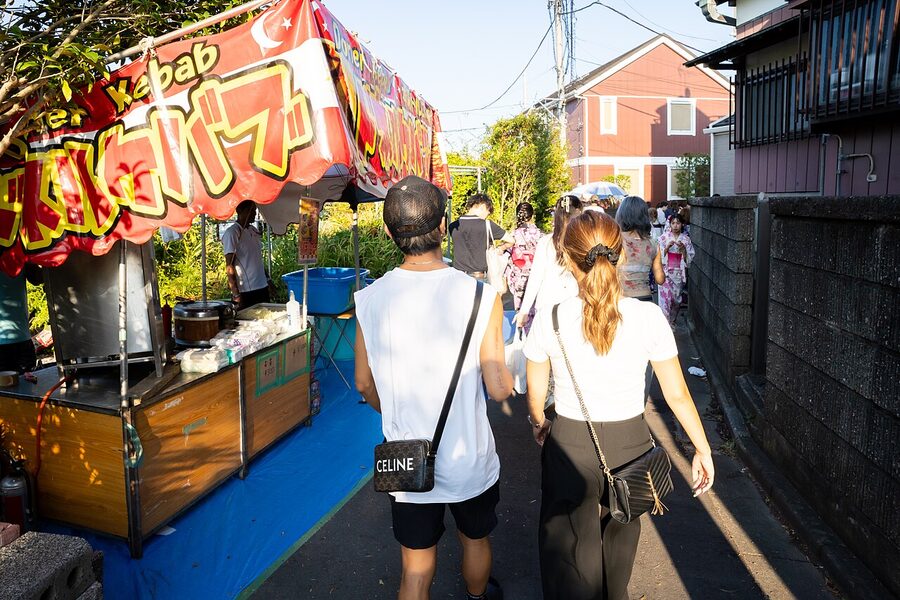
For you as a visitor this matters for one practical reason. The same show is visible from both banks. One bank (Tokyo) is more famous, has the nearest station, and gets most of the attendance — the 2019 record combined total was 1.39 million, and about 900,000 of those were on the Tokyo side alone. The other bank (Chiba) gets around 490,000. Same show. Same night. One side is much less crowded. I’ll come back to this.
The signature opening (and why it’s absurd)
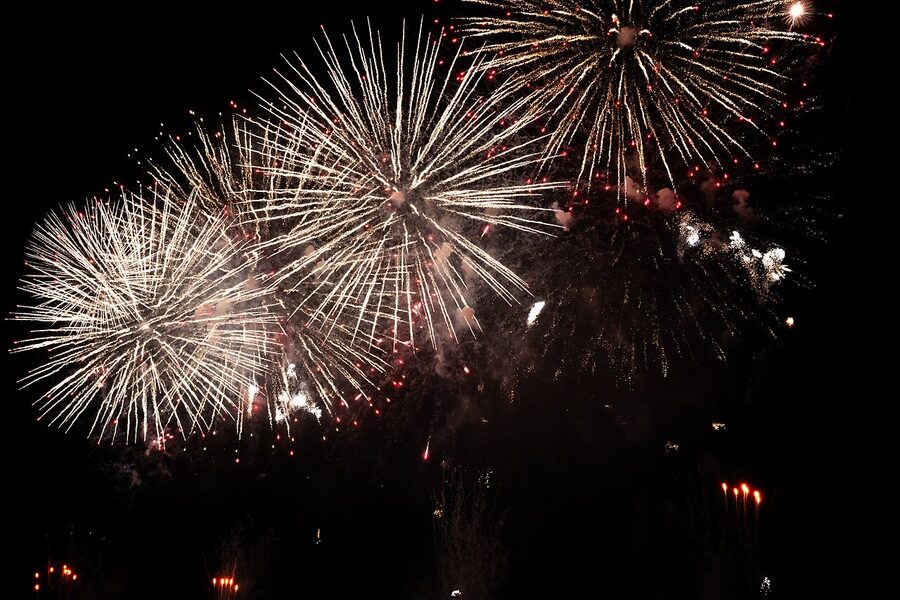
Edogawa’s defining moment happens in the first 5 seconds. The festival opens with a rapid-fire salvo of roughly 1,000 shells — launched in a continuous wall of light and sound over a five-second burst, before the music programme even starts. The official tourism page describes it plainly: “a thousand fireworks explode in five seconds.” Many festivals spread their opening burst across half a minute or more. Edogawa spends a year’s worth of impact in the time it takes you to take a breath.
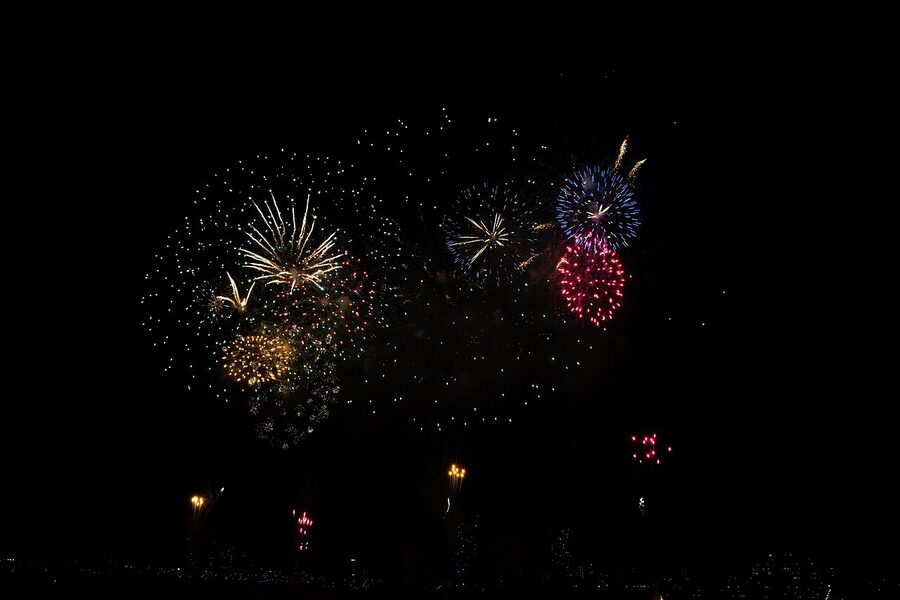
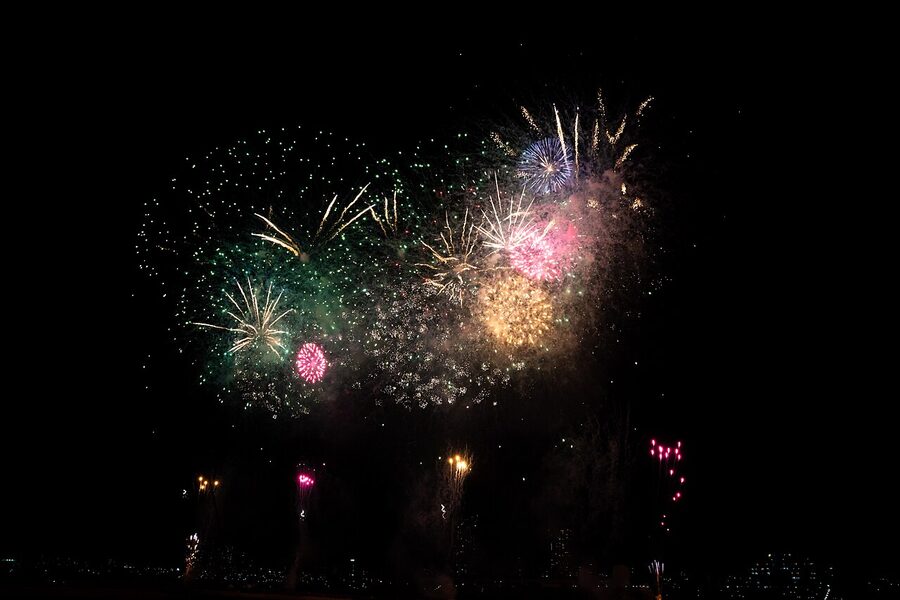
After that opening, the show is divided into eight themed acts, each with its own music. The themes rotate year to year — one year’s might include a Ghibli medley, another’s a classical set, a J-pop block. The closer almost always includes the Mt Fuji set-piece (Fuji no Daikageki), a huge static firework silhouette of Mt Fuji built across the riverbank. In 2025 the festival’s 50th anniversary, the organisers attempted and won a Guinness World Record for the tallest static-mountain firework ever — 59.2 metres. It’s the thing you’ll see photographed most often outside the opening.
The finale is traditionally the Golden Weeping Willow — hundreds of shells that burst into slowly falling gold trails, lasting long enough that the applause from both banks has time to cross the river and echo back.
When it runs
The date is almost always the first Saturday of August. Start time is 19:15, finish around 20:20. That’s it — one night a year, roughly 65 to 75 minutes of show depending on how the acts run long.
For 2026 that’s Saturday 1 August. The one exception in recent history was 2024, when the festival was pushed to 24 August (the fourth Saturday) because the head of Kagiya, the fireworks company that produces the show, had to judge judo at the Paris Olympics. That was a one-off. Check the official date on edogawa-hanabi.jp before you commit travel plans — but the default is the first Saturday.
Getting there (Tokyo side)
The venue on the Tokyo side is the Edogawa riverbank next to Toritsu Shinozaki Park (都立篠崎公園) — address: 1 Kamishinozaki, Edogawa-ku. You get there by train, and you absolutely do not get there by car.
The closest stations:
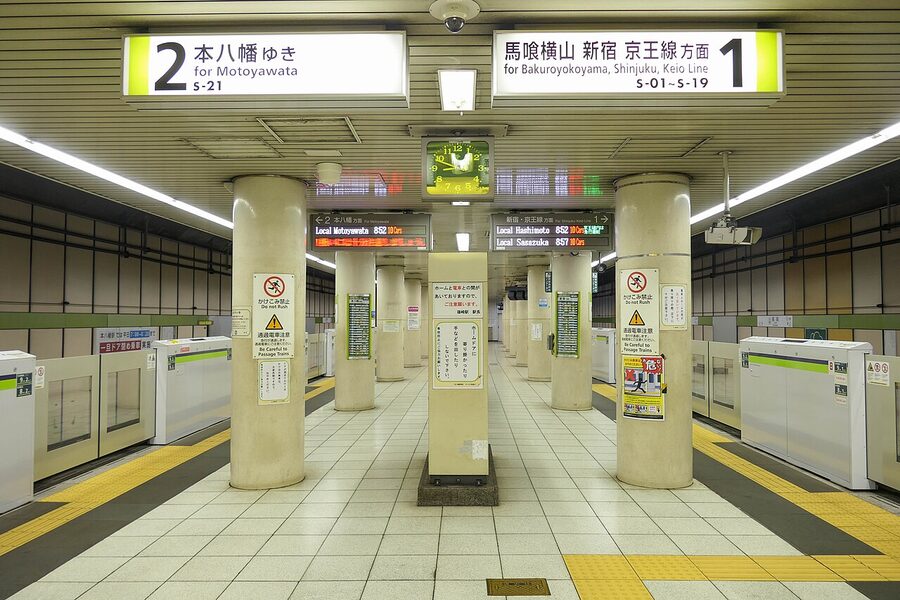
- Shinozaki Station on the Toei Shinjuku Line. 15 minutes on foot to the riverbank. This is the closest station and therefore the most dangerously crowded — the official advice is to actually avoid it on the way out (more on that below).
- Koiwa Station on the JR Sobu Line. 25 minutes on foot. Busier approach but very busy station.
- Keisei Edogawa Station on the Keisei Main Line. 25 minutes on foot. Much quieter station than the big two.
- Mizue Station on the Toei Shinjuku Line. 45 minutes on foot. The longest walk, but if you’re leaving after the finale this is the smartest station to aim for.
All the walks involve flat, paved roads. No hills. The route is well signposted on festival night, and on the final kilometre you just follow the crowd — the human river heading east is unmissable.
Two things to know about the bus. There is a Keisei bus route (Koiwa-Shinozaki, route Ko-72) that normally links Koiwa Station to the riverbank, but on festival day it diverts via Shibamata-kaido because the main road is closed. Don’t rely on it. Walk.
Getting there (Chiba side — and why I’d pick this one)
The Chiba-side venue is the Edogawa riverbank at 3 Osu, Ichikawa City, Chiba. Same river, opposite bank, same fireworks.
The nearest stations:
- Ichikawa Station on the JR Sobu Line (also the Sobu Rapid Line for Shinjuku/Tokyo connections). 15 minutes on foot.
- Motoyawata Station on the JR Sobu Line and Toei Shinjuku Line. 30 minutes on foot.
- Konodai Station on the Keisei Main Line. 20 minutes on foot.
Here’s my honest take, which none of the English guides mention: the Chiba side is the better first-timer pick. Same show. About half the crowd (490,000 vs 900,000 in the last full-attendance year). The paid reserved seating area Oshu Bosai Park is on this side, which means the whole area feels more organised. And Ichikawa Station is on the JR Sobu Line, which means you can come straight from Shinjuku or Tokyo Station without changing trains — the Toei Shinjuku Line to the Tokyo side requires at least one change from JR.
The only reason not to pick the Chiba side is if your accommodation is specifically on the Toei Shinjuku Line (Shinjuku, Kudanshita, Iwamotocho, Morishita areas). Otherwise, Chiba. It took me a festival to figure this out and I wish someone had told me first.
Where to watch for free
Most of the riverbank on both sides is free to watch from. Bring a leisure sheet (rejaa shiito, the standard blue tarp you can buy at any 100-yen shop) and you pick your spot on a first-come-first-served basis.
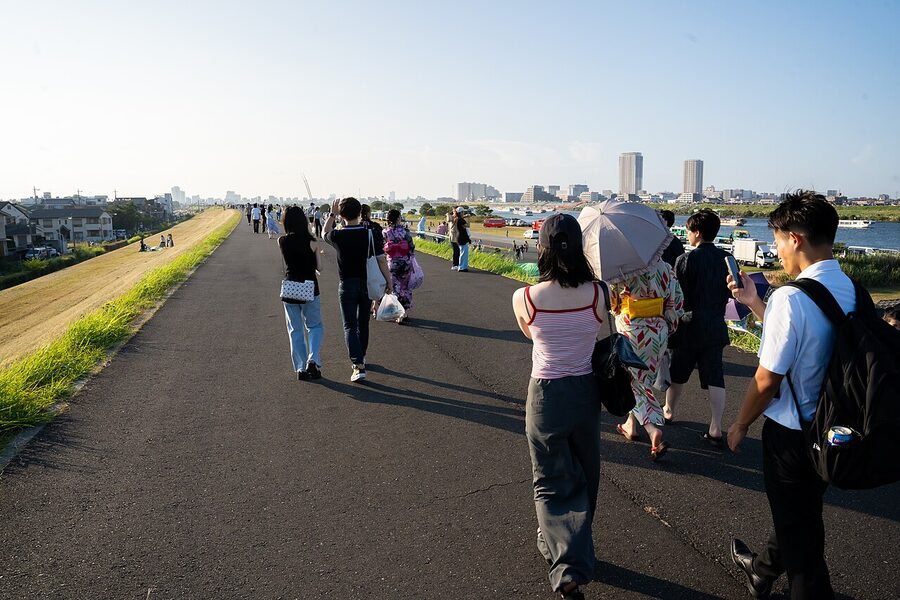
Timing matters. The grass directly in front of the launch barges fills up early — by 15:00 on festival day, the prime riverside rows on the Tokyo side are locked in. If you want a front-row spot on the Edogawa-ku bank, arrive between 14:00 and 15:00. If you’re relaxed about it and happy to sit further back, 17:00 is fine. By 18:30 you’re looking for slivers of grass.
A smaller option is Shinozaki Park itself — the big park that shares the venue’s name. The park sits up on the levee behind the launch site, so you can watch from the grass between the trees without having to cross the railway tracks. Good views, fewer people, no riverbank flats. The trade-off is you’re further back, so the low shells can be partly masked by foliage. I’d pick the park if I was coming with kids or older relatives who don’t want to wedge into tight crowds.
Paid reserved seats
If you want a guaranteed spot with a chair and enough space to not have someone’s leisure sheet under your elbow, you can buy a reserved seat.
Typical prices range from around ¥2,000 to ¥4,000 for non-reserved ticketed seats and from ¥5,000 upwards for reserved individual seats. Tables, family boxes, and premium positions scale up from there. Tickets go on sale from around mid-June via the official ticket agencies — the official Edogawa festival site links to Ticket Pia and Lawson Ticket sales.
The paid seating on the Chiba side is concentrated at Oshu Bosai Park (大洲防災公園), which is the single best reserved-seat area in terms of both sightline and exit routes. If you are planning to buy tickets, this is the spot I’d look at first.
What to bring
A few bits that actually matter:
- A leisure sheet. Non-negotiable. The riverbank grass is hard and often dusty. A 100-yen shop tarp (or a proper picnic blanket if you brought one) is the difference between enjoying yourself and being uncomfortable for three hours.
- A conbini meal bought before you get there. The yatai food stalls at the venue are fun but queues get brutal by 17:00 and you’ll lose your seat if you go foraging. My rule: buy onigiri, fried chicken, and cold drinks at a Family Mart or Lawson near the station before you walk down.
- Bottled water, more than you think. Early August in Tokyo is 30°C+ and humid even after sunset. At least 1 litre per person.
- A cooling towel (hiyari taoru). ¥300 at any drug store. You dip it, wring it out, drape it round your neck. For Tokyo summer this is the single most useful cheap item you’ll find.
- An uchiwa (paper fan). Often handed out free at stations on festival day by local businesses. Grab one.
- A rubbish bag. Take your own rubbish home — Japan festival etiquette. There are bins but they fill fast and teams of students clean up the next morning. Carry it out.
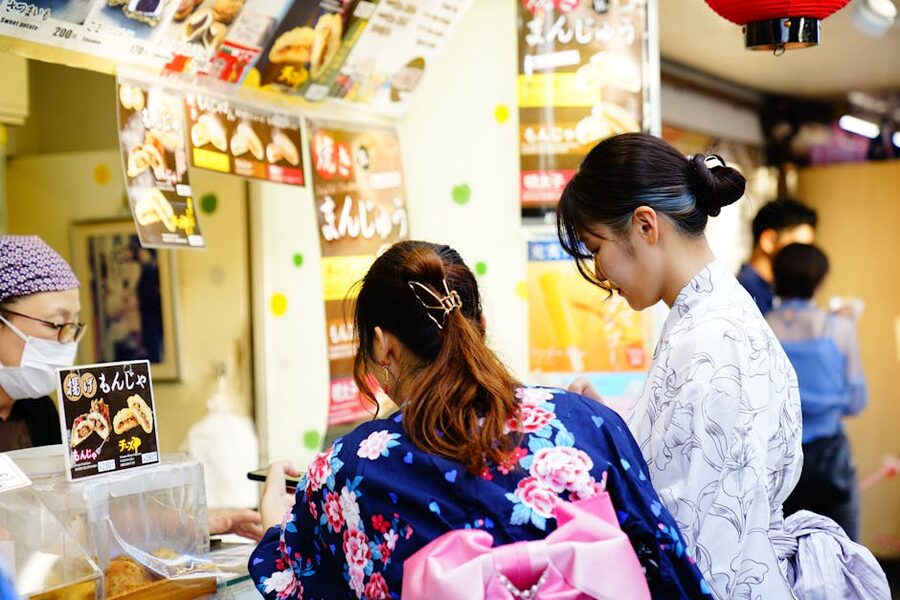
- A yukata if you own one. Not required, absolutely welcomed, photographed kindly by everyone. If you’re renting, Asakusa has dozens of yukata rental shops open that day — start there at lunchtime and walk to Ichikawa from Asakusa via the JR Sobu Line in the afternoon.
The station crush at the end
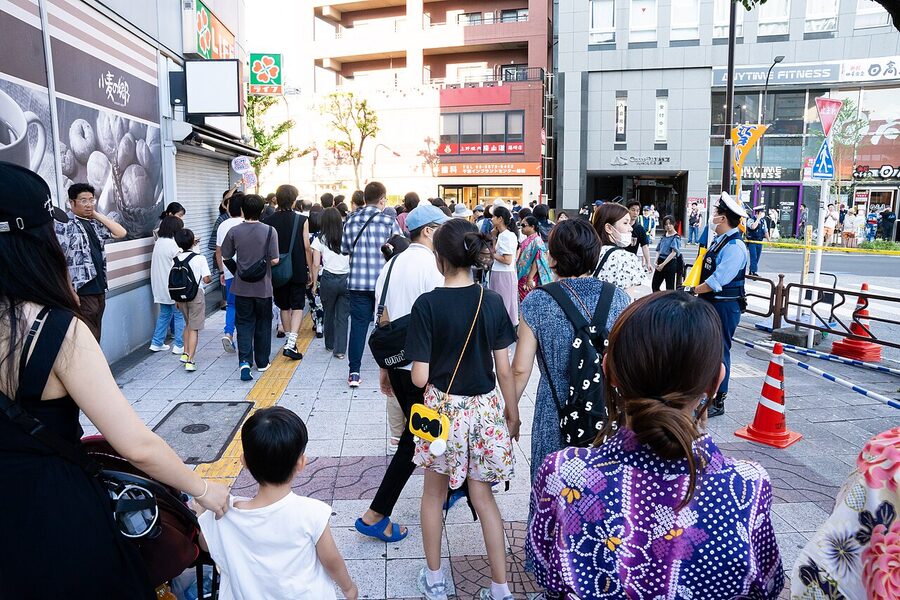
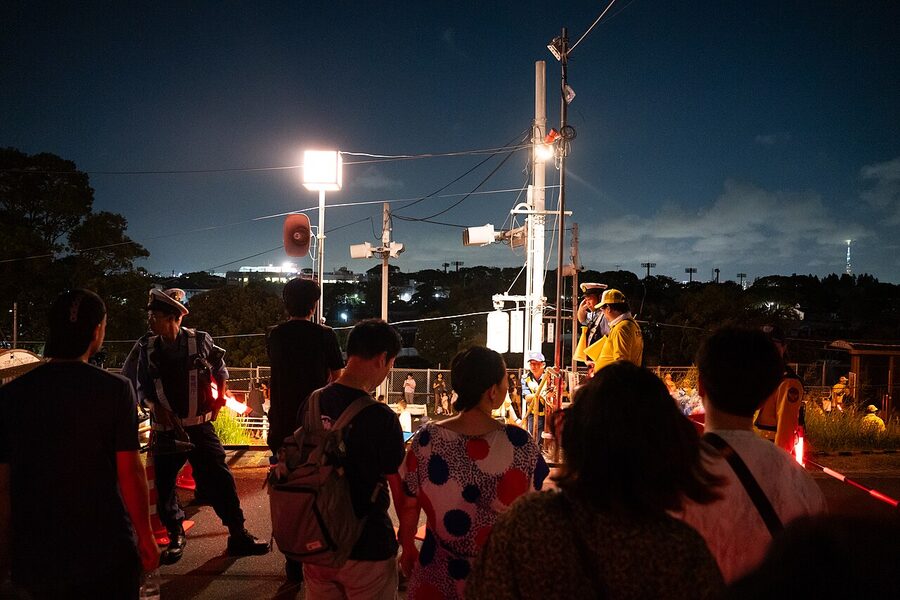
This is the part people consistently underestimate. When a show of this scale ends, 900,000 people on one bank and 490,000 on the other stand up simultaneously and start walking toward the nearest train station. The Shinozaki Station underpass on the Tokyo side has, on bad years, had queues reaching half a kilometre back toward the river. Koiwa Station processes thousands of passengers a minute in the hour after 20:30 and the platform stops being somewhere you stand and becomes somewhere you are pushed.
The official advice from Go Tokyo is literal: “Shinozaki Station and Koiwa Station are expected to become extremely congested, so please use Edogawa Station or Mizue Station.” That isn’t a suggestion. That’s the planners telling you in advance that if you queue at Shinozaki you will wait 40-60 minutes.
My exit strategy, and what I’d do:
- Start packing during the final Mt Fuji / Willow act. You won’t miss anything visually — you’ll just sacrifice the last two minutes of ambient wind-down music.
- Walk against the crowd direction away from the launch site, not directly toward the nearest station. Everyone walks toward Shinozaki. You want Mizue or Keisei Edogawa.
- Mizue from the Tokyo side — 45 minutes on foot post-festival, but you’ll walk the whole way calmly rather than queuing for a train. By the time you arrive, Mizue platforms are busy but moving.
- Or Motoyawata from the Chiba side — 30 minutes on foot, connects to both JR Sobu and Toei Shinjuku, far less crushed than Ichikawa.
- Don’t run. Walking out at a relaxed pace eating the last of your conbini snacks is significantly more pleasant than queuing in a station underpass.
Extra buses do run from Shinozaki to Kasai Station and Ichinoe Station after the festival to relieve pressure. These are the safety valves — if you absolutely need to be somewhere on the Tozai Line or JR Keiyo Line, aim for these.
Weather: cancellations are real
This festival does not have a formal rain date. The organisers run the show in light rain, delay by up to an hour in heavier rain, and cancel outright in severe weather. Typhoons cancel — in 2018 a typhoon forced a reschedule to Sunday, but in practical terms once the festival is cancelled, it’s cancelled for that year.
Check the official site on festival morning. The committees tend to post their go/no-go decision between 11:00 and 14:00 festival day. If it’s going to be borderline weather, bring an umbrella and a second cooling towel and go anyway — the atmosphere of an ambiguous-weather festival is extraordinary, because nobody knows what’s about to happen.
Yakatabune (the boat option)
If you want to watch from the water, several companies run yakatabune — traditional flat-bottomed dinner boats — out on the Edo River on festival night. You sit in a tatami-floored cabin with a kaiseki-style meal, nihonshu, and big windows onto the fireworks. Prices range from around ¥18,000 to ¥35,000 per person depending on the company and meal tier.
The boats leave from boarding points along the Sumida and Edo rivers. The Edogawa Bay yakatabune co-operative (the Tokyo-wan Yugyosen-gyo Kumiai) is one of the official sponsors of the festival, which gives you some sense that this is the established way to do boat viewing. Booking three or four weeks ahead is essential — boats sell out. Look for operators based in Odaiba, Tsukishima, or Monzen-Nakacho.
Honest opinion: yakatabune is romantic and expensive. If you’re two people on a honeymoon or a special trip, do it. If you’re on a budget first visit, the free riverbank is better value and the crowd noise is half the experience.
Pairing with Shinozaki Park by day
If you’re going to spend a full day in Edogawa-ku for the festival, arrive in the morning and make use of Toritsu Shinozaki Park itself. It’s one of the biggest public parks in east Tokyo, with cherry-blossom cultivars, a children’s traffic-training area, and enough grass for the kind of relaxed picnic that lets you claim your festival spot without camping out from sunrise.
A loose plan for a full-day visit:
- 10:30 — Arrive at Asakusa, do an hour at Senso-ji. The temple is free and the festival energy starts building around Nakamise Street from late morning.
- 12:00 — If renting a yukata, change now. Asakusa has more yukata rental shops within 200 metres of the temple than anywhere else in Tokyo.
- 13:00 — Train from Asakusa to Shinozaki via Toei Asakusa Line then Toei Shinjuku Line. Roughly 35 minutes.
- 14:00 — Walk from Shinozaki Station to the park, find your spot, lay the sheet. Snack, don’t eat the full meal.
- 17:30 — Early dinner from your conbini bag. The yatai stalls are wall-to-wall by now, skip them unless you particularly want taiyaki or a specific karaage stand you spotted earlier.
- 19:00 — Last toilet run before the show. Lines at the temporary public toilets become unmanageable at 19:10.
- 19:15 — Show starts. The 1,000-shell opening hits you.
- 20:20 — Finale ends. Start walking.
The fireworks company makes this a family affair
One detail I find genuinely lovely. The fireworks for Edogawa are all produced by Sohke Hanabi Kagiya (宗家花火鍵屋), a company founded in Tokyo in 1659 — one of the oldest fireworks firms in the world. The head office is in Higashi-Komatsugawa, in Edogawa-ku itself, about 4 km from the launch site. This is their home festival in a very literal sense. The current head, Akiko Amano, is the 15th generation of her family to run the company, and she is also the woman who had to step away from the 2024 festival to judge judo at the Paris Olympics — which is how the festival ended up being moved to late August that year. This industry runs on personal continuity that’s hard to imagine from outside.
Practical info at a glance
- Date 2026: Saturday 1 August (first Saturday of August)
- Start time: 19:15
- Finish time: 20:20 approximately
- Duration: 65-75 minutes
- Shell count: around 14,000 (combined Edogawa + Ichikawa)
- Attendance: around 1.39 million combined at the 2019 peak
- Admission (free areas): free
- Reserved seats: roughly ¥2,000-¥5,000+ per person, sold from mid-June via Ticket Pia and Lawson Ticket
- Tokyo-side venue: Edogawa riverbank in front of Toritsu Shinozaki Park, 1 Kamishinozaki, Edogawa-ku
- Chiba-side venue: Edogawa riverbank, 3 Osu, Ichikawa City, Chiba
- Nearest stations (Tokyo): Shinozaki (Toei Shinjuku, 15 min walk), Koiwa (JR Sobu, 25 min), Keisei Edogawa (25 min), Mizue (Toei Shinjuku, 45 min)
- Nearest stations (Chiba): Ichikawa (JR Sobu, 15 min), Konodai (Keisei, 20 min), Motoyawata (JR/Toei Shinjuku, 30 min)
- Weather policy: light rain proceeds, severe weather cancels (no rain date)
- Toilets: temporary portable facilities along the riverbank. Queues are bad from 18:30 onwards. Use the fixed toilets at Shinozaki Park before you take your seat.
- Official site (Tokyo side): edogawa-hanabi.jp
- Ward office info (Tokyo side): city.edogawa.tokyo.jp
- City office info (Chiba side): city.ichikawa.lg.jp
How I’d see Edogawa
If you asked me to build a one-day Edogawa Fireworks plan for a first-time visitor to Tokyo, this is what I’d say.
Go to the Chiba side. Take the JR Sobu Line from wherever you’re staying — Shinjuku, Shibuya, and Tokyo Station all connect directly — and get off at Ichikawa. Walk to the riverbank. Find a spot on the grass by 16:30. Eat conbini food. At 19:15 the sky goes white. 65 minutes later it goes dark again. Pack up fast, walk the 30 minutes to Motoyawata, take JR Sobu back.
You will have seen one of the biggest fireworks shows in Japan, on the quieter bank, with a round-trip involving one train line. You will spend roughly ¥1,500 on conbini food and transport. You’ll still be back at your hotel by 22:30. The whole thing is logistically simpler than most dinner plans in Tokyo, and more memorable than any of them.
If you want more: spend the morning in Asakusa first, rent a yukata, and arrive at the riverbank in the afternoon. If fireworks are your thing and you’re staying a week, pair this with the Sumida River Fireworks one weekend earlier — Tokyo’s other major summer fireworks festival, similar scale, completely different vibe. For navigating the trains either way, the Suica card and Tokyo train basics guide is what I’d read first. And for general preparation for your Tokyo trip, the 3 days in Tokyo itinerary has the rest of the city covered. Before you go, Japan dos and don’ts covers the etiquette details — including the take-your-rubbish-home rule that’s especially important at this kind of event.
One last small thing. The first time I went, I thought the festival ended when the Willow faded and everyone stood up. It doesn’t. For about twenty minutes afterwards, the riverbank is very quiet and a little smoky, the Edo River carries gunpowder smell downstream toward Tokyo Bay, and you can hear the announcer’s pre-recorded thank-yous echoing over the PA. If you’re not rushing for a train, sit there for that twenty minutes. Nobody tells you to. It’s the good bit.