
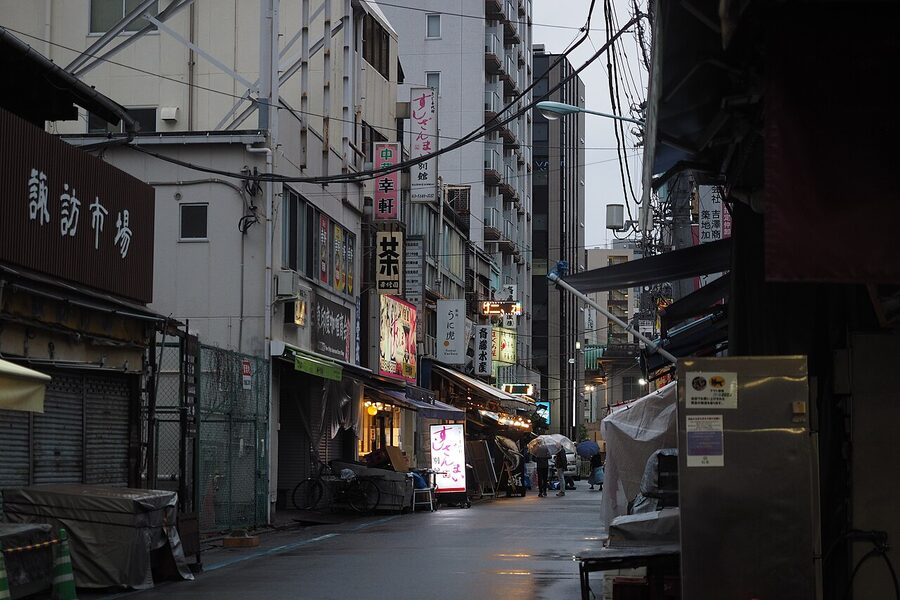
It is 07:40 on a Tuesday and the first thing I smell walking out of Tsukijishijō Station is grilled eel. Before I have even cleared the stairs, before I have seen a single tuna, a single tamago skewer, a single knife shop, the smell is already telling me I am in the right place. The second smell, about twenty steps later, is charcoal. The third is soy sauce. By the time I hit the corner of the main alley a man in white rubber boots is already wheeling a styrofoam box of crushed ice past my shoes.
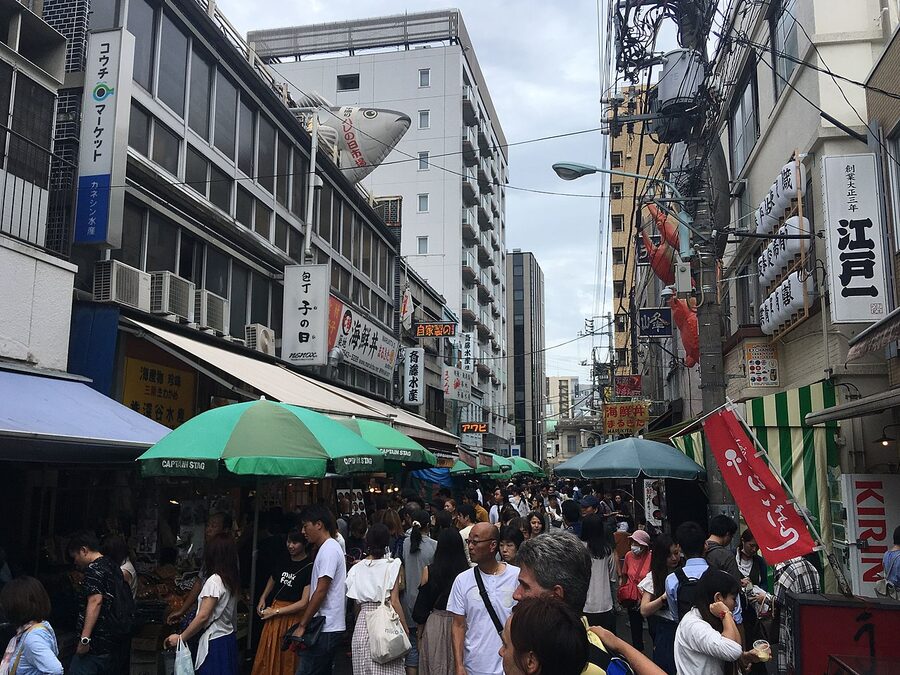
If this is your first time in Tokyo and someone has told you to see “the Tsukiji fish market”, they are almost certainly giving you out-of-date advice. Not wrong, just out-of-date. The bit of Tsukiji where the tuna auctions happened, where chefs in white coats shouted prices at 05:00, where David Attenborough-worthy shots of 300-kilogram bluefin carcasses used to happen — that bit moved to Toyosu in October 2018. What stayed behind, and what you actually want, is the Outer Market. About 400 small shops and restaurants squashed into a few blocks of Tsukiji 4-chome, still cooking, still selling, still open from before dawn. Here is how to do it properly.
In This Article
- The 2018 move, and what actually changed
- What Tsukiji Outer Market actually is today
- Best time to arrive
- What to eat, and where
- Tamago-yaki skewers
- Sea urchin (uni)
- Chutoro and otoro tuna
- Grilled eel (unagi) and fishcake skewers
- The strawberry mochi and other sweets
- The overrated thing
- Sushi breakfast, and where to queue
- Shopping: knives, katsuobushi, and other things you cannot buy on Amazon
- Japanese knives
- Katsuobushi and dashi ingredients
- Nori, tea, condiments
- How to buy a knife without overspending
- Namiyoke Shrine, the five-minute detour
- Hongan-ji and Ginza: five minutes each way
- Tsukiji vs Toyosu: which to visit
- How I would do Tsukiji Outer Market in 90 minutes
- Practical info at a glance
- Etiquette: the eight things the market wants you to know
- Getting there in more detail
- A few small things that will make your visit nicer
The 2018 move, and what actually changed
The confusing thing — and the reason I have had to explain this to friends about five times now — is that “Tsukiji” used to mean two things. The jōnai (inner market) was the wholesale operation where actual fish traders did actual business: cold, chaotic, closed to tourists before 11:00. The jōgai (outer market) was the public-facing ring of shops and restaurants that grew up around the wholesale market, feeding the workers and selling retail bits and pieces to anyone who walked in.
In October 2018 the wholesale operation (tuna auction included) packed up and moved 3 km east to Toyosu. The jōgai stayed. So when Google still tells you “Tsukiji market closed”, it is technically wrong. Half of it left. The more interesting half, if you are a visitor and not a sushi restaurateur buying 50 kg of bonito, is still right where it always was.
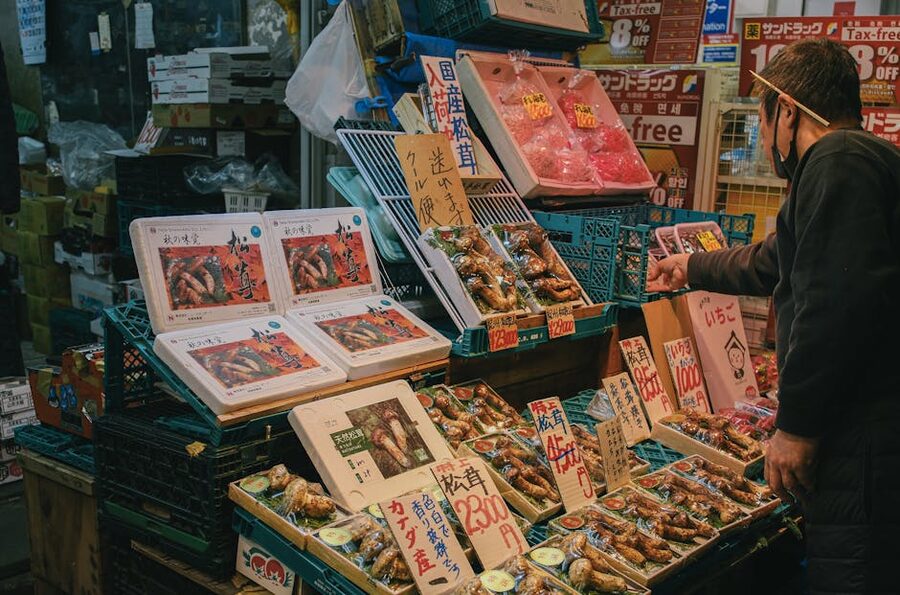
What this means for you on the ground: no tuna auction here (that is at Toyosu, and you need to book an observation-deck slot separately). But yes to street food, yes to sushi breakfast, yes to knife shops, yes to katsuobushi and nori and a hundred pickle varieties you cannot name. Yes to atmosphere. The Outer Market is small and dense enough that a full morning will cover it; a quick breakfast stop can be done in 45 minutes.
What Tsukiji Outer Market actually is today
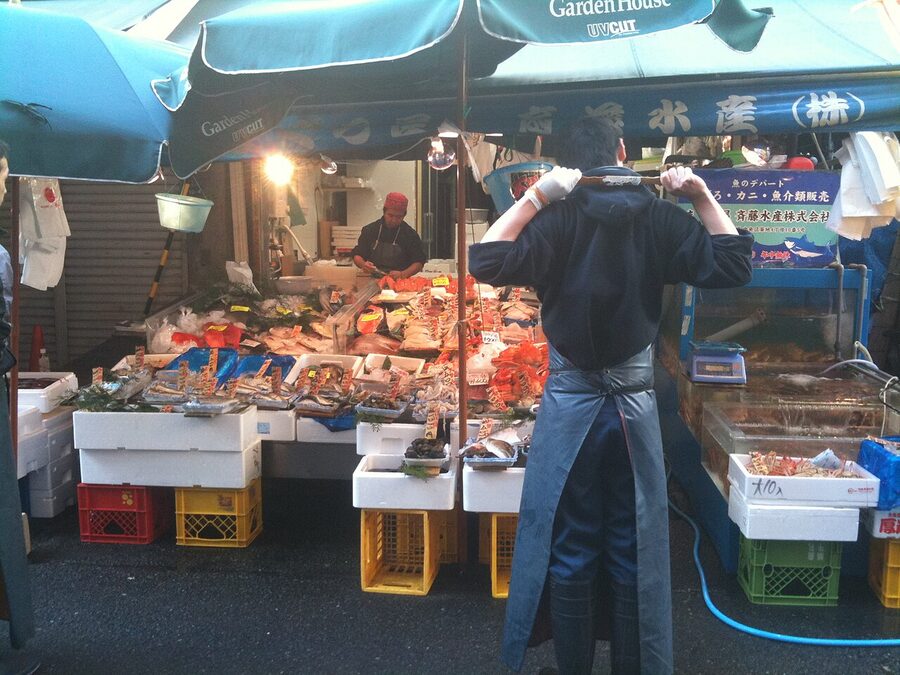
Two streets do most of the work: Tsukiji Nishi-dōri and Tsukiji Naka-dōri, which run parallel to the big road (Shin-Ohashi-dōri). Both are narrow, both are covered in places, and by 09:00 both are lined on either side with shops 6 to 8 feet wide. One sells tamago-yaki. The next one sells knives. The next one sells dried shaved bonito. The next one sells twelve types of dried fish arranged by size. The one after that is a sushi counter with six seats.
If you get off the two main streets the traffic drops fast. Some of my favourite bits of Tsukiji are the back alleys three blocks in — shops with nobody queueing because nobody has heard of them, old family vendors selling pickled plums, a tea shop where the owner is always roasting hōjicha when I walk past. It smells like burnt caramel. I have never bought any. I should.
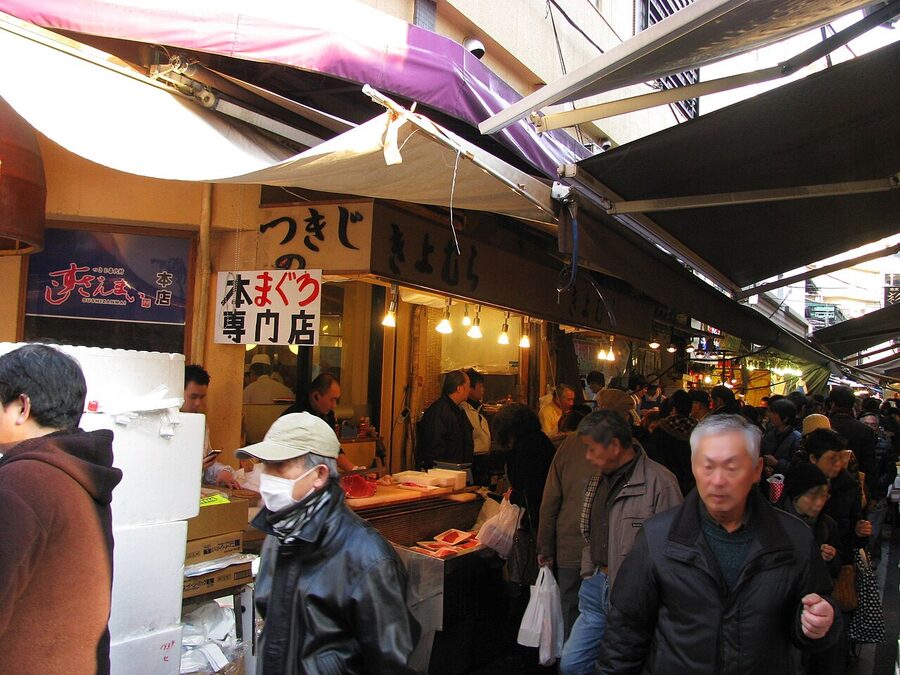
The other thing worth knowing is that Tsukiji has a covered indoor facility now too: Tsukiji Uogashi, opened in 2016 in two buildings (Odawarabashi and Kaikōbashi) on the eastern edge. Roughly 60 retail and wholesale stalls inside, plus a third-floor rooftop terrace with tables. In principle the ground floor is for trade buyers until 09:00, after which the public is welcome. On a hot or rainy day it is genuinely useful. On a dry morning I would still rather be outside in the alleys.
Best time to arrive
Earlier than you think. Shops start trading at 05:00. Most are in full swing by 06:30. By 09:30 the first wave of tourist tours is rolling through, and by 11:00 the main streets are slow-walking crowded. By 13:00 a lot of shops have already sold out or are wiping down counters. By 14:00 most of the market is shut.
My sweet spot is 07:00 to 09:00. You get the place in daylight (unlike 05:30, which is atmospheric but dark and not great for photos), the shops are all open and fresh, and the crowds are thin enough that you can actually stop in front of a stall and think about what you are buying.
Two days to avoid if you have the choice: Sundays and Wednesdays. Because the old market rhythm shuts on those days, a lot of Outer Market shops still do too, and the alleys feel 40% empty. Public holidays are also patchy. If a Wednesday is the only day you have, you will still find food — just expect your favourite stall to be the one with the shutter down. The official association publishes a monthly schedule on tsukiji.or.jp.
What to eat, and where
This is the point of coming, so take it slow. The mistake most first-timers make — me included, the first time — is ordering the first thing they see and being full before they have walked 100 metres. Better plan: do one loop of the two main streets without buying anything. Mark the three or four places you want to come back to. Then eat.
Tamago-yaki skewers
The Japanese folded omelette, slightly sweet, served in a block or on a stick. Two Tsukiji institutions: Marutake and Yamacho. Marutake skewers the omelette on a bamboo stick and sells them for about ¥100 — it is one of the cheapest bites in the market and still one of the best. Yamacho is across the road from Maguro no Miyako and does a fluffier, thicker version from about ¥150 per skewer. Both shops cook their tamago-yaki in a specific rectangular copper pan (the thick omelette is folded, not rolled, in layers of five or six passes — you can watch them do it through the glass). Eat it hot. It goes rubbery fast.
Sea urchin (uni)
Small bowls of uni over rice, or a single wooden box of fresh uni, from about ¥500 at the lower end up to several thousand yen for the good stuff. Price reflects origin: Hokkaido uni (especially Rishiri and Rebun) is the most expensive and the most delicate; Aomori uni is cheaper and stronger; imported Russian or Chilean is cheaper still. If a shop is selling “uni” at ¥500 for a bowl and the colour is orange rather than yellow-gold, it is almost certainly not the good stuff. Which is fine. Just know what you are buying.
Chutoro and otoro tuna
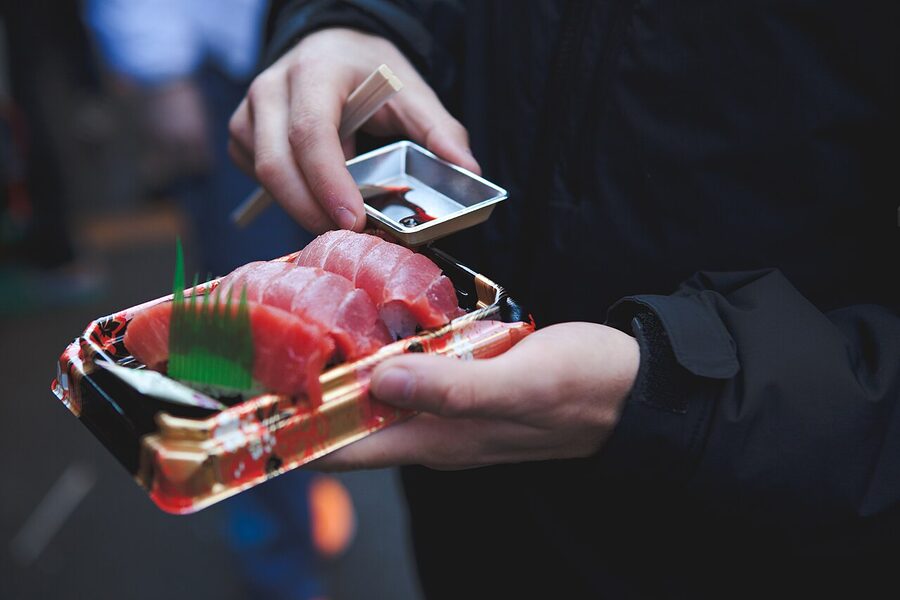
The medium-fat and fat-belly cuts of tuna, respectively. A small bowl of otoro-don (fat tuna over rice) at a decent shop is around ¥1,500–¥2,000; a proper fat-tuna bowl at Maguroya Kurogin is ¥1,800 and does actually melt. For chirashi-style (sashimi over rice) expect ¥1,500–¥3,000 depending on the spread.
Grilled eel (unagi) and fishcake skewers
Smaller stalls grill eel on a skewer for a few hundred yen — tender enough that you have to be careful lifting it. Ajino Hamato and similar stalls do the corn fishcake skewer at ¥300, which has no right to be as good as it is (the corn goes slightly caramelised against the fishcake).
The strawberry mochi and other sweets
Seasonal, but the strawberry-and-white-bean-paste mochi going around in winter and spring is worth queueing for. Not too sweet; the strawberry does the work. Taiyaki (fish-shaped pastries stuffed with red bean or custard) also turn up in a couple of shops and yes, the pun of a fish-shaped pastry at a fish market is the joke.
The overrated thing
The giant-tuna-belly skewer that every Instagram-er photographs — the one where the staff sear a big block of chutoro with a blow-torch and hand it to you on a stick for about ¥1,000 — the queue is long, the flavour is fine. If you want real otoro, sit down and order a bowl. The skewer version is an experience, not a meal. Skip it if the line is more than ten people deep.
Sushi breakfast, and where to queue
The famous names first: Sushi Dai and Daiwa Sushi — the two that had the genuinely legendary breakfast-counter queues back in the day — both moved to Toyosu in 2018. They are no longer at Tsukiji. If someone is telling you to “queue for Sushi Dai at Tsukiji,” they are looking at a 2017 guidebook.
What you can actually eat in the Outer Market for breakfast sushi:
- Sushizanmai Honten — the flagship of a national chain, 144 seats, open 24 hours, tablet ordering, English menu. Zero insider cred, but the tuna is genuinely good, there is no queue if you arrive before 09:00, and a set meal of around 8 pieces of nigiri runs ¥2,500–¥3,500. The best sushi in Tokyo? No. A reliable, comfortable, not-intimidating first sushi breakfast in Japan? Yes.
- Nippon Gyoko Shokudo — “Japan Fishing Port Cafeteria”, inside Tsukiji Nippon Fish Port Market. Specialises in wild bluefin (hon-maguro) selected by a single broker. The two-tier bluefin bento is ¥4,300, heavy on tuna cuts.
- Maguro no Miyako — small and often crowded, famous for the kaisen-yaki scallop-shell plate of grilled scallops, tuna, shrimp and uni. Budget ¥2,000–¥3,000.
- Tsukiji Yamacho — tamago-yaki shop, but also the place where the line is long and moves fast. More standing snack than breakfast, but filling.
A first-timer choosing between a Tsukiji Outer Market breakfast and a Sushi Dai queue at Toyosu (two hours, 05:00 start, restricted access) should pick Tsukiji. You will get better food density, more stalls, better atmosphere, and an extra hour of sleep. The sushi itself at Sushi Dai is arguably fractionally better. It is not worth the margin unless you specifically came to Tokyo for that sushi.
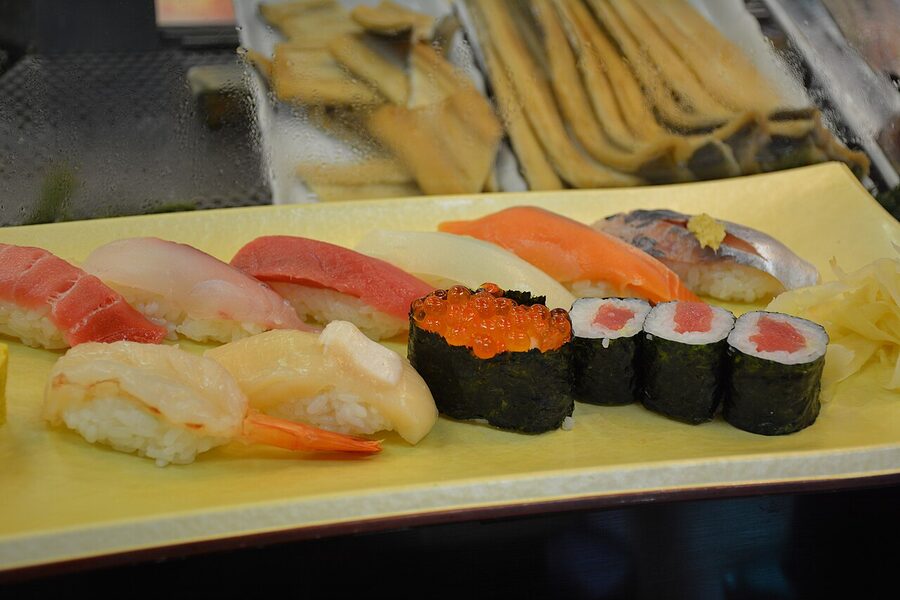
If you want a full rundown of sushi options across the city and not just at Tsukiji, my longer piece on sushi in Tokyo covers the better options in Ginza, Shinjuku and Shibuya where the counters are less crowded and the spreads are wider.
Shopping: knives, katsuobushi, and other things you cannot buy on Amazon
This is the bit of Tsukiji I think gets underrated. Everyone comes for the food. Almost no one comes for the shopping, and it is some of the best kitchen shopping on the planet.
Japanese knives
The Outer Market has a cluster of specialist knife shops selling hand-forged gyuto, santoku, deba and yanagiba — the four kitchen knives that cover 95% of what a serious home cook needs. The big names are Aritsugu (originally Kyoto, a branch in Tsukiji; blades run from about ¥10,000 for an entry-level stainless santoku to over ¥50,000 for serious carbon-steel work) and Sugimoto (Tsukiji-based, chef favourite, serious cleavers).
The useful thing almost no tourist knows: most of these shops will sharpen any knife you bring in for ¥500–¥1,500 depending on blade size. If you already have good knives at home and you are flying to Tokyo anyway, this is an excuse to bring them. I would not check them in, obviously.
Katsuobushi and dashi ingredients
Dried shaved bonito (katsuobushi) is the backbone of Japanese stock. Tsukiji has several specialist shops selling it in bags or whole, plus kombu (kelp), niboshi (dried sardines) and dried mushrooms. A good bag of katsuobushi for home dashi runs ¥800–¥1,500 and weighs nothing. If you have the slightest interest in cooking Japanese at home, this is a more useful souvenir than a fridge magnet.
Nori, tea, condiments
Specialist nori shops sell premium grades you cannot find in a Western supermarket — thicker, more fragrant, noticeably different. Small tea shops carry Japanese green teas by origin (Shizuoka, Uji, Yame), including hōjicha and genmaicha. Pickle shops, tsukudani (fish and shellfish simmered in sweet soy) vendors, seasoning specialists. Shops are typically 6 to 8 feet wide and packed floor-to-ceiling.
How to buy a knife without overspending
- Decide on one blade. Do not try to buy a set. Most cooks need a santoku (general) or a gyuto (chef’s knife). Pick one. The second knife almost never gets used.
- Set a budget in yen. A genuinely good stainless santoku starts around ¥12,000. Carbon steel starts around ¥18,000. Do not let a shopkeeper upsell you from a ¥15,000 knife to a ¥40,000 knife on your first visit — if you do not know the difference in handling, the ¥40,000 is wasted.
- Hold the knife. Ask. Most shops will let you grip it. The balance point should sit where your index finger meets the blade. If it feels wrong in your hand, move on.
- Ask for sharpening service details. Shops that back their knives with sharpening are more confident in the blade. Some will ship-sharpen internationally for a fee.
- Get it wrapped. The shop will wrap it in a cardboard sheath for the flight. Put it in checked baggage, not hand luggage — it will absolutely be confiscated otherwise.
Namiyoke Shrine, the five-minute detour
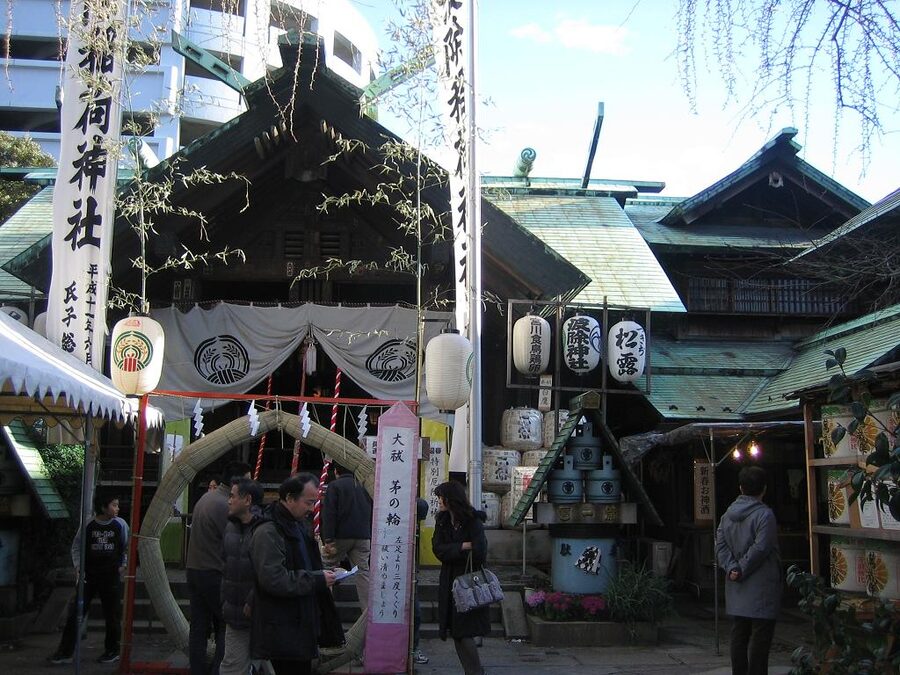
Right on the eastern edge of the market, five minutes from Tsukijishijō Station, is Namiyoke Inari Shrine. The name means “protection from the waves” — it was established in the 17th century when reclaimed land in this part of Edo kept being battered by Tokyo Bay storms, and it became the unofficial guardian shrine of the fish trade.
The shrine is small. You can walk the whole thing in under ten minutes. But the two giant lion-dog heads in the grounds are worth seeing: a red female (the traditional black teeth marking, ohaguro, was once a beauty practice in Japan) and a dark male. Traders still come in the early morning to pray for good business and, more concretely, for the fish deliveries to arrive on time. If you are already in the market, it is worth a stop.
Hongan-ji and Ginza: five minutes each way
The Outer Market sits between two of central Tokyo’s more interesting buildings. Five minutes in one direction gets you to Tsukiji Hongan-ji; fifteen in the other gets you to Ginza. Depending on what you have left in the day, either makes for a neat afternoon.
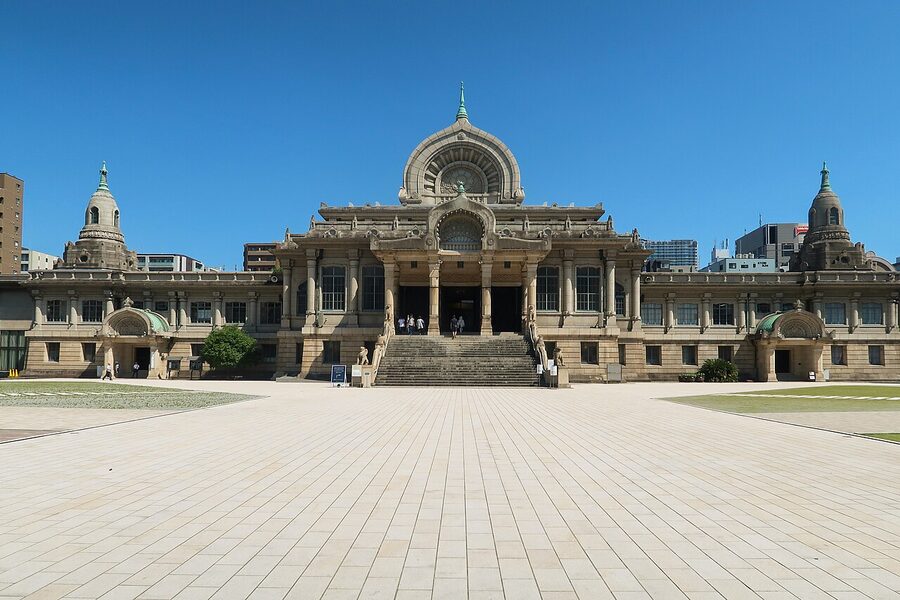
Tsukiji Hongan-ji is, visually, the strangest major temple in Tokyo. The original temple was destroyed in the 1923 Great Kantō Earthquake and the architect Itō Chūta rebuilt it in 1934 in an Indian style, using stone rather than wood to survive the next earthquake. The interior is more conventional Japanese Buddhist (with, oddly, a pipe organ — a later addition). Entry is free. It takes 15 minutes to see properly and is a useful counterweight to the usual dark-wood shrine experience. Official info at tsukijihongwanji.jp.
In the other direction: Ginza is a 15-minute walk northwest. Afternoon window-shopping territory, the department store depachika food halls are serious, and it pairs well with a Tsukiji breakfast. If you are connecting from further afield, Tokyo Station is another 10 minutes beyond Ginza.
The third nearby option is Hama-rikyū Gardens — the Tokugawa-era landscape garden with a tidal pond and a tea house, across the Sumida River. It is 12 minutes on foot from the Outer Market and costs ¥300 entry.
Tsukiji vs Toyosu: which to visit
The answer depends on what you came for.
Visit Tsukiji Outer Market if you want food, atmosphere, shopping, the retail experience, a flexible morning and zero advance planning. It is 10 minutes from central Tokyo, costs nothing to enter, and you can wander in any time between 06:00 and 13:00. About 90% of first-time visitors should do this.
Visit Toyosu if you specifically want to see the tuna auction (wholesale action, 05:30 start, observation deck by prior booking through the official Tokyo Metropolitan Government wholesale market site), or if you specifically want the Sushi Dai or Daiwa Sushi queue. Toyosu is 20 minutes further out (Yurikamome Line), a sterile modern facility, and less fun to wander.
Doing both in one morning is absolutely possible and some tours bundle it: tuna auction at Toyosu at 05:30, back to Tsukiji by 08:00 for breakfast and shopping. It is a long morning but if you are a fish person it is a good one.
How I would do Tsukiji Outer Market in 90 minutes
- 06:45 — Arrive Tsukijishijō Station (Toei Oedo Line), Exit A1 or A2. Three-minute walk north into the market.
- 06:50 — Pop into Namiyoke Shrine on the eastern edge. Two photos of the lion heads, a nod at the main hall, back out.
- 07:00 — Walk the length of Tsukiji Nishi-dōri without buying anything. Just look. Note three stalls you want to come back to.
- 07:20 — Turn into Tsukiji Naka-dōri. Tamago-yaki stop at Marutake or Yamacho, one skewer, eat standing in front of the shop (never while walking, it is rude).
- 07:30 — Duck into the quieter back alleys two blocks east. Katsuobushi shop, tea shop, dried-fish shop. Buy a small bag of katsuobushi (¥1,000) to take home.
- 08:00 — Breakfast sushi. Sushizanmai Honten if you want something reliable and English-friendly; Maguro no Miyako if you want something smaller with better atmosphere. Budget ¥2,500–¥3,500 for 8 pieces plus miso soup.
- 08:45 — One last loop for anything you missed. Knife shops (Aritsugu / Sugimoto) if you have room in the suitcase. Rooftop terrace at Tsukiji Uogashi if you want a sit-down. Out by 09:15 before the tour groups arrive.
Practical info at a glance
- Opening hours: roughly 05:00–14:00 for most shops. Varies by shop. Sushi counters and tourist-focused restaurants may open 10:00–18:00.
- Closed days: Sundays, most Wednesdays, public holidays. Check the monthly schedule at tsukiji.or.jp before going.
- Entry: free. Tsukiji Outer Market is an open public area, not a paid attraction.
- Payment: cash is still king. Most stalls accept coins and ¥1,000 notes only; bigger restaurants take cards and IC (Suica/Pasmo). Carry at least ¥10,000 in small notes.
- Tax-free shopping: available at participating stores with a minimum ¥5,000 spend. You collect the rebate at Plat Tsukiji (the information centre at 4-16-2 Tsukiji) with your passport.
- Address: 4-chōme, Tsukiji, Chūō-ku, Tokyo 104-0045.
- Closest stations: Tsukijishijō Station (Toei Oedo Line) 3 minutes; Tsukiji Station (Tokyo Metro Hibiya Line) 5 minutes.
- Accessibility: mixed. Main streets are flat but narrow and very crowded; back alleys can be tight. Tsukiji Uogashi building has lifts. Plat Tsukiji can store strollers for ¥500 per day. Rush-hour-level density after 10:00 — not ideal for mobility devices.
- Luggage: do not bring suitcases. Coin lockers at Plat Tsukiji and nearby stations.
Etiquette: the eight things the market wants you to know
The official Tsukiji Outer Market association publishes an eight-point etiquette list and, unusually for this kind of thing, the locals actually care whether you follow it. Short version:
- Give professional buyers priority before 09:00.
- Do not eat while walking. Stand still in front of the shop or sit down.
- Do not drag suitcases through the alleys.
- Move in small groups. Large tour groups clog everything.
- No haggling. Prices are wholesale-fair and bargaining is rude.
- Look, do not touch. Especially raw fish.
- Ask before photographing shops or workers. Some shops have no-photo signs; respect them.
- Smoke only in designated areas (there is one inside Plat Tsukiji).
Wearing perfume or strong cologne is also frowned upon — both because it interferes with workers’ sense of smell and because it lingers around raw fish. A subtle point, worth knowing. The Japanese dining etiquette guide on this site covers some of the related stuff (chopstick rules, tipping, how to use the wet towel at a restaurant) if you want a broader briefing before the trip.
Getting there in more detail
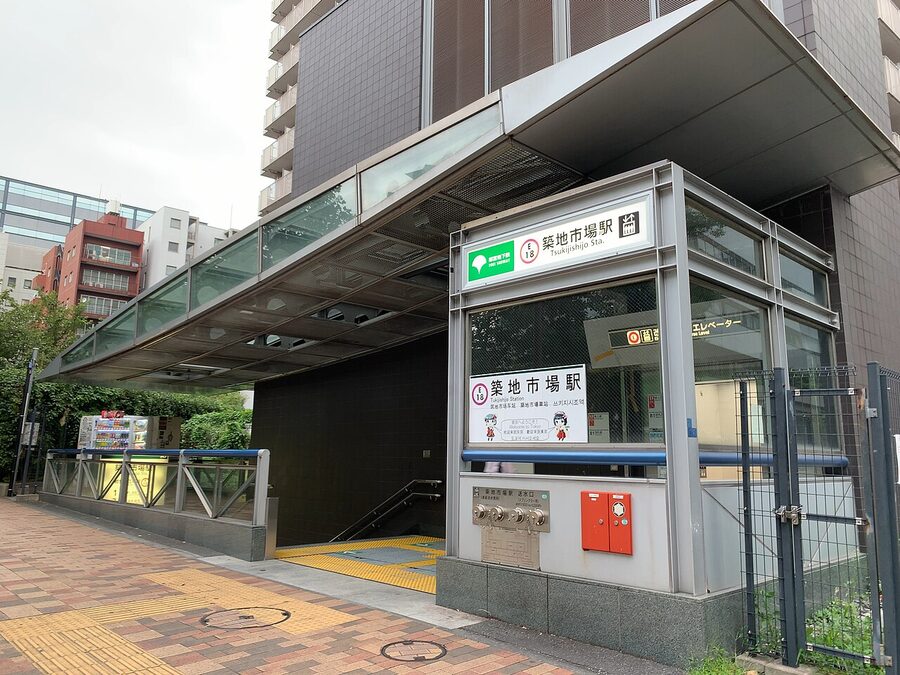
Two stations serve Tsukiji Outer Market:
- Tsukijishijō Station (Toei Oedo Line) — three-minute walk. Use Exit A1, A2 or A3. This is the closer station and puts you straight onto the main drag.
- Tsukiji Station (Tokyo Metro Hibiya Line) — five-minute walk. Use Exit 1 or 2. The Hibiya Line is often more convenient coming from Ueno, Akihabara or Roppongi.
From Tokyo Station, it is a 10-minute taxi ride (about ¥1,200) or a 15-minute walk via Ginza. From Shinjuku, the Oedo Line gets you there in roughly 25 minutes for ¥280.
Tsukiji also pairs neatly with Ginza, Asakusa or Hama-rikyū Gardens, so it fits nicely into a packed Tokyo day — I tend to slot it as the first stop on a half-day Ginza itinerary, or as the morning half of a first full day if you are following a 3-day Tokyo itinerary.
A few small things that will make your visit nicer
Bring cash, specifically in ¥1,000 notes and ¥500 coins. Several stalls still have a handwritten chalkboard queue-numbering system — first-in, first-out — and the person behind the counter will point at a number when you arrive. It is not rude; it is the system. The tamago-yaki pans are specific rectangular copper ones (tango-nabe) that are almost impossible to buy outside Japan; if you care about cooking, the knife shops sell them.
Shops closing early is a real thing. If you roll up at 12:30 and your target tamago-yaki stall is already shut, do not argue with the staff. They have probably been working since 04:30.
And one last thing: the rooftop at Tsukiji Uogashi is the best secret in the market. Third floor of the Odawarabashi Building, tables and chairs, view over the alleys. Take your sashimi there to eat. Nobody will tell you about it at the entrance. Now you know.