
In the spring of 1590, somewhere around 200,000 troops under Toyotomi Hideyoshi sat down outside Odawara, the largest city in eastern Japan at the time, and waited. Hideyoshi was reunifying the country, and the Hojo clan, who had ruled the Kanto region from this castle for almost a hundred years, were the last serious holdout. The siege lasted three months. The Hojo never even fought a proper battle for it. They argued in their council chamber, ran out of food, and surrendered, and the word for “endless indecisive meeting” in Japanese — odawara hyojo — comes from those arguments. With that surrender, the wars of the Sengoku period basically ended and Japan was unified.
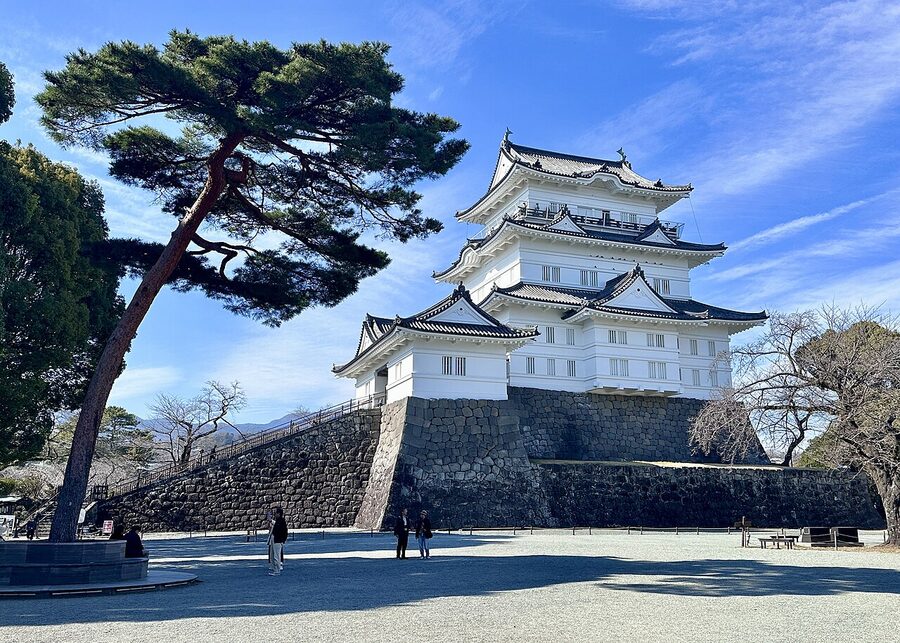
That’s the bit of Odawara that hooked me first. The castle you see today is, frankly, ordinary as Japanese castles go — concrete, painted white, only really compelling because of the view from the top — but the place itself sits on top of one of the most consequential pieces of ground in Japanese history. And it’s 35 minutes from Tokyo Station on the Shinkansen.
You can do Odawara as a sensible half-day, pair it with Hakone for a long full day, or treat it as a sleepy seaside detour where you mostly eat fish cakes. I’ve now done it three different ways. Below is what’s actually worth your time, plus the train logistics, the kamaboko shop you should definitely walk through, and the bit of the castle most people miss.
In This Article
- Why Odawara matters (more than the castle suggests)
- Getting from Tokyo to Odawara
- Walking from Odawara Station
- Walking the castle grounds
- The gates (which are honestly the best bit)
- The keep itself — concrete, surprisingly old
- Heads up — ticket prices changed in March 2026
- The samurai armour experience and the museums
- If you came for the cherry blossoms
- Kamaboko — the actual reason to walk into town
- Suzuhiro at Kazamatsuri
- Other names worth knowing
- Uiro-ya — the sweet shop that’s older than the castle
- Lunch by the harbour
- The Odawara-Hakone day combination (and whether you should)
- The bits I’d skip
- Practical info
- My Odawara castle-and-kamaboko day plan
Why Odawara matters (more than the castle suggests)
Odawara is a coastal city of about 189,000 people in Kanagawa Prefecture, sitting where the Sagami Bay coastline meets the foot of the Hakone mountains, roughly 90 km southwest of central Tokyo. For most of the 1500s it was the seat of the Late Hojo clan — sometimes confusingly called the Odawara Hojo, not to be confused with the earlier Kamakura-period Hojo regents — who built up Odawara Castle and the surrounding town until it was the largest castle town of the entire Sengoku period.
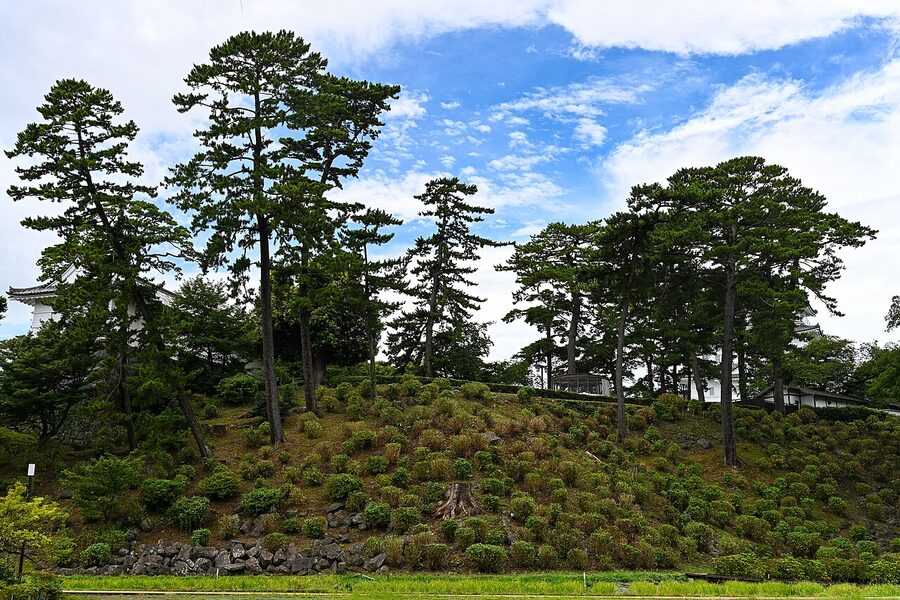
For five generations the castle held against everyone. Uesugi Kenshin failed to take it in 1561. Takeda Shingen failed in 1569. The Hojo nicknamed it “the impregnable fortress” and they weren’t being modest — they had reason to. Then Hideyoshi turned up in 1590 with an army that, depending on which Japanese source you read, was somewhere between 170,000 and 220,000 strong. They surrounded the city, picked off the satellite castles one by one, and the Hojo, sitting inside their unbreakable city, ran out of options. The siege ended without a real battle inside the walls. The Hojo were forced to commit ritual suicide or were exiled. Tokugawa Ieyasu, who was on Hideyoshi’s side, was given the Kanto region as his reward — which is the move that eventually planted him in Edo and started the rise of Tokyo.
That’s why anyone interested in Japanese history makes the trip. The town doesn’t bang on about it, though. There’s a small museum inside the keep, a few information panels, and a beautifully restored gate or two. The story is bigger than the visible castle.
Getting from Tokyo to Odawara
You have three real choices. I’ve done all three. Pick based on what’s already in your wallet.
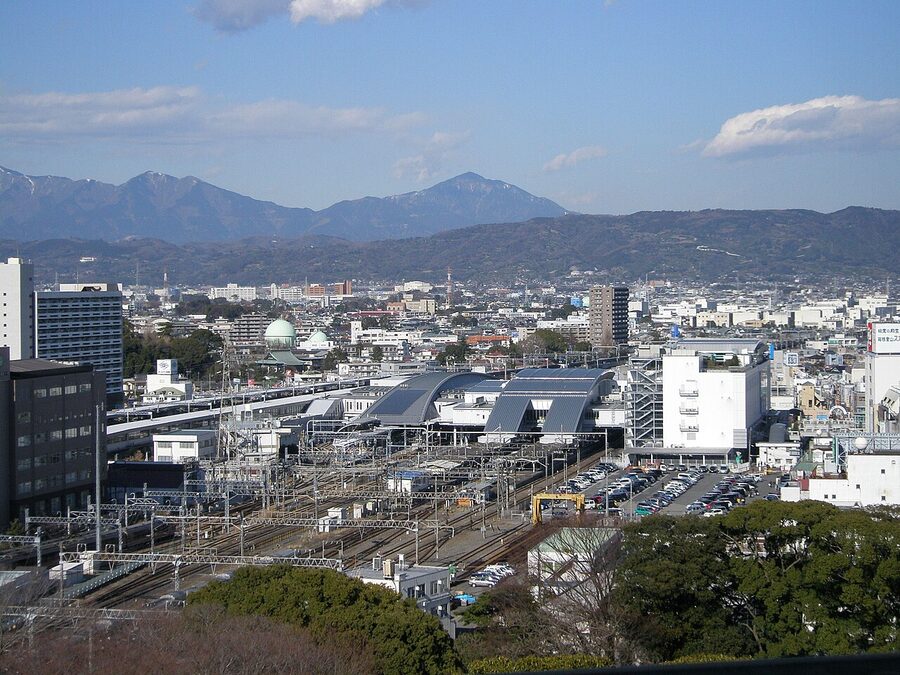
- Tokaido Shinkansen — fastest, my preferred option. Tokyo Station to Odawara is 35 minutes on a Kodama or Hikari, ¥3,670 unreserved. Covered by the JR Pass. You can also board at Shinagawa, which adds maybe 8 minutes. If you’ve got a JR Pass, this is the obvious play — see whether the JR Pass is worth it for Tokyo if you’re still deciding.
- Odakyu Romancecar from Shinjuku — most scenic. 75 minutes from Shinjuku to Odawara, around ¥1,910 one-way (you pay the standard fare plus a ¥1,000 limited-express seat reservation, currently ¥950 if you book online). The Romancecar is comfortable and the panoramic forward seats are a small experience in their own right. Not covered by JR Pass.
- JR Tokaido local — cheapest. About 80 minutes from Tokyo Station, ¥1,520. Comfortable enough, but it’s a normal commuter line and runs through industrial Kanagawa rather than anywhere pretty.
If you’re already starting your day at Tokyo Station, the Shinkansen is genuinely the right call. Walk to the Tokaido Shinkansen platforms, grab a Kodama, eat your bento, and you’re standing under the castle keep before you’ve finished your coffee.
Walking from Odawara Station
Use the East Exit (東口). The castle is signed in English, the walk is flat, and it’s about 10 to 15 minutes door to gate along Ohoribata Street. You’ll see the castle peeking out over the trees about halfway. The station also has lockers if you don’t want to carry a backpack around the keep.
Walking the castle grounds
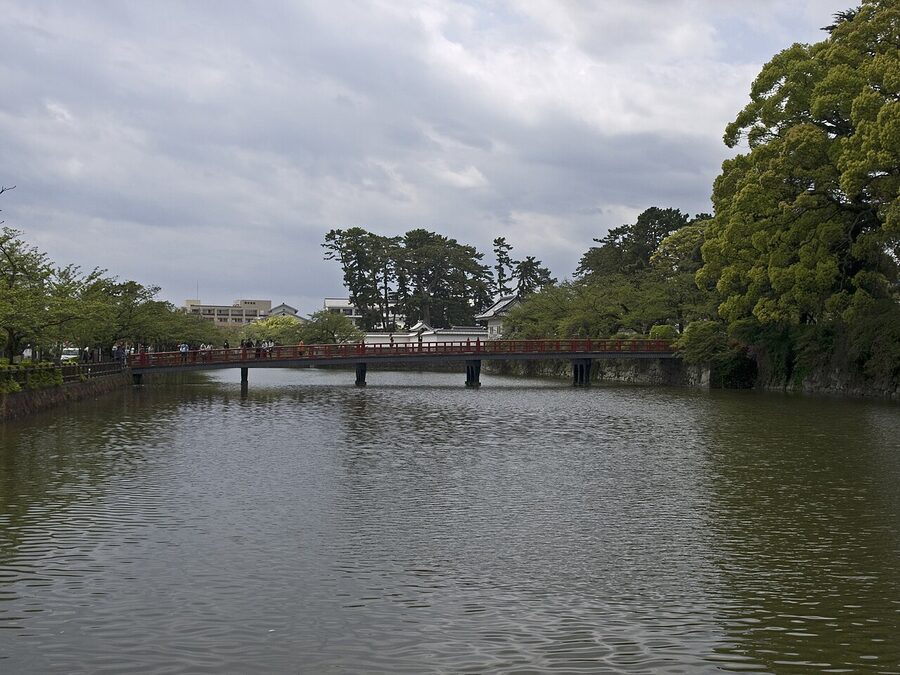
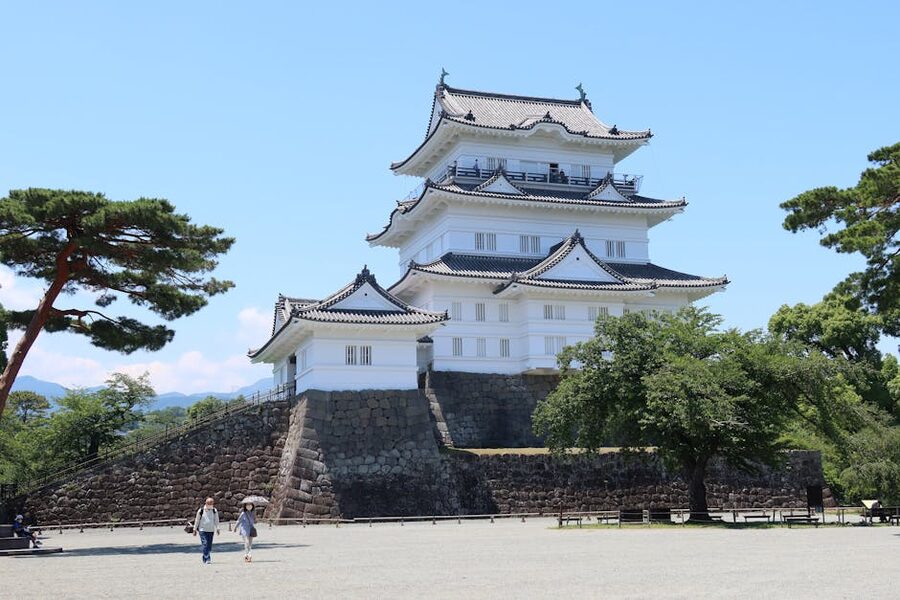
Odawara Castle Park (Odawara-jo Shiroyama Park) is a small fortress laid out in concentric defensive rings. You enter from the south, cross a moat on a wooden bridge, climb through a series of restored gates, and end up at the foot of the keep. It’s not a long walk — half an hour at a normal pace, longer if you actually read the panels.
The gates (which are honestly the best bit)
The castle has three restored gates, and I think they’re more atmospheric than the keep itself. The Akagane Gate (literally “copper gate”, reconstructed in wood in 1997) gets its name from the heavy copper fittings on its main door. The Umadashi Gate, restored in 2009, is the formal main entrance and opens onto a courtyard called a masugata, designed to slow down attackers and trap them between two sets of walls. The Tokiwagi Gate at the top of the steps is where you finally get a clean view of the keep.
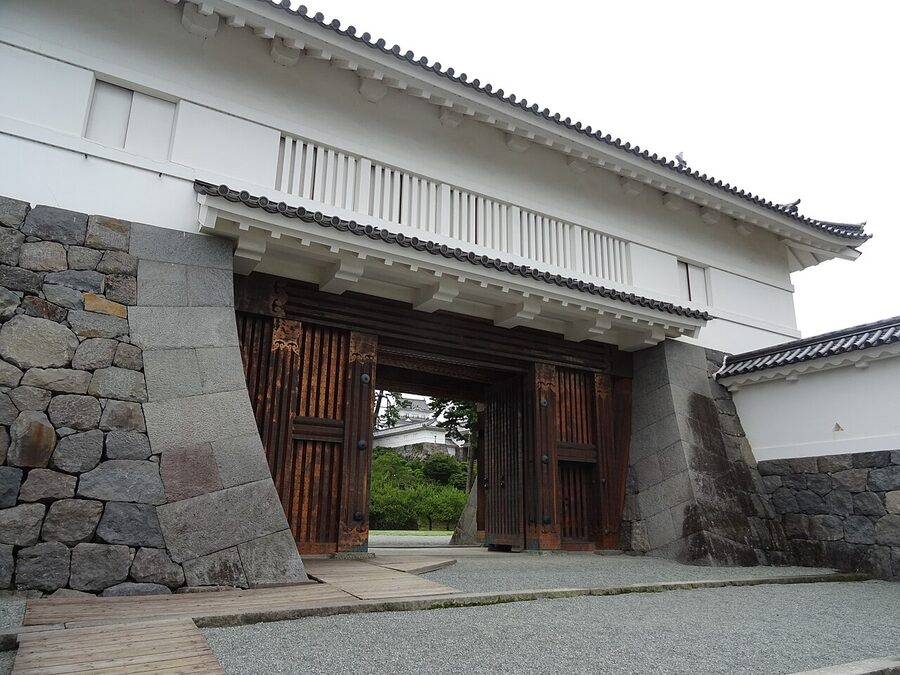
One small thing nobody points out: the roof tiles on the Tokiwagi Gate carry the triple-hollyhock crest of the Tokugawa, not the Hojo. That’s because the version we see today is the Edo-period rebuild after the Hojo were gone — the castle that survived into the 1800s was the Okubo clan’s, not the Hojo’s, and the Okubo were Tokugawa loyalists.
The keep itself — concrete, surprisingly old
Here’s the part I’d rather you knew before you queue. The current keep was rebuilt on 25 May 1960 in reinforced concrete, as part of celebrations for Odawara’s twentieth anniversary as a city. It’s not a wood reconstruction. The model used was an Edo-period miniature kept by the local Okubo Shrine, which is genuine, but a railing was added to the top floor at the city’s request that wasn’t on the original. There’s also been a major renovation in 2016 — closed from July 2015 to March 2016 for earthquake retrofitting and roof tile work, and the museum inside was substantially refreshed at the same time.
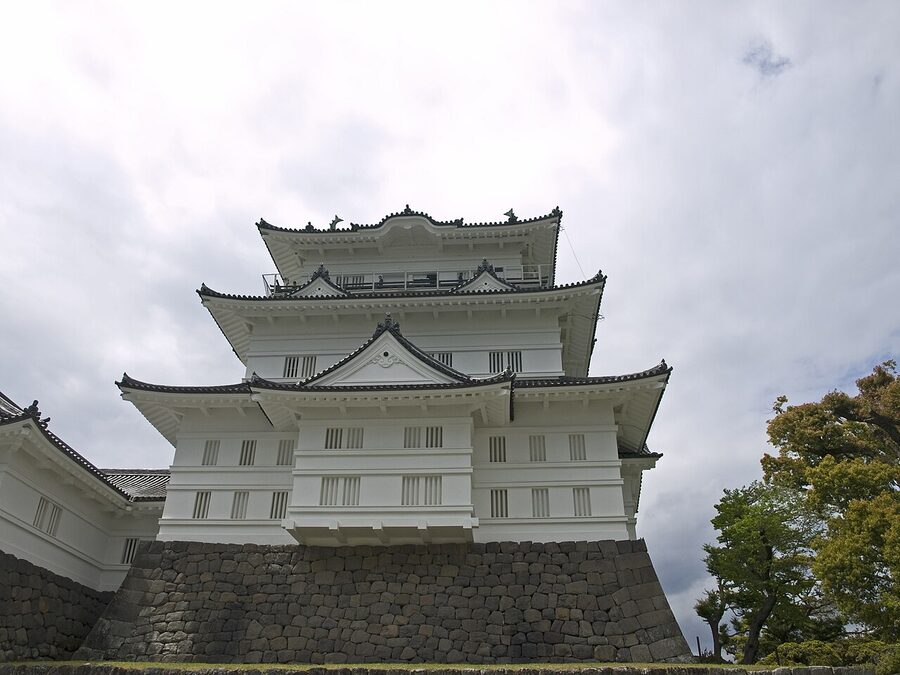
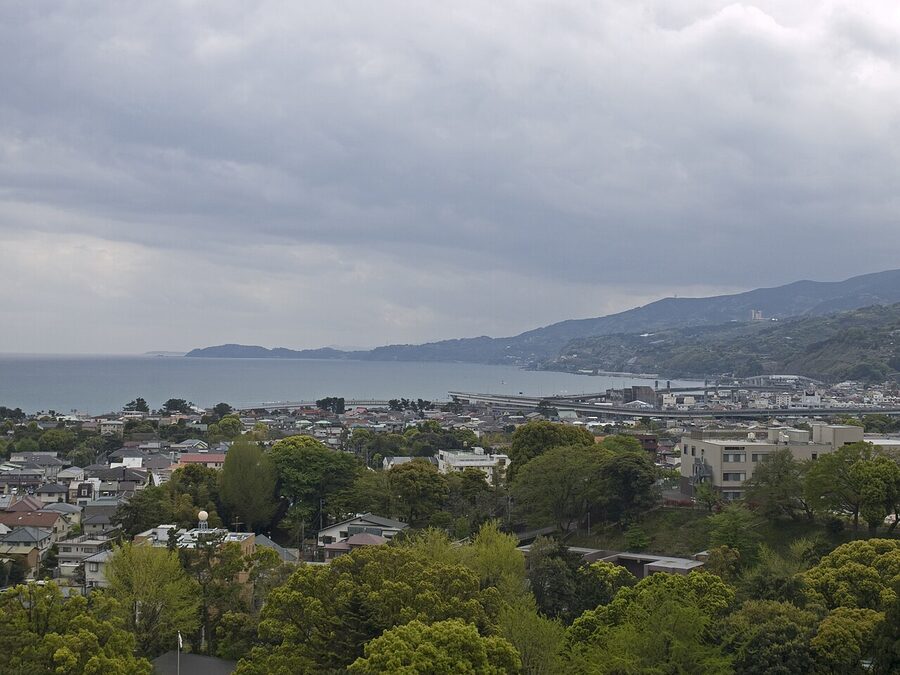
I’ll be honest — the keep is ordinary by Japanese castle standards. If you’ve already seen Himeji or Matsumoto (genuine wooden originals), this one is going to feel a bit theme-park. But the museum is well done, the exhibits cover Hojo armour and Edo-era documents, and the top-floor view is the actual reason to climb up.
Heads up — ticket prices changed in March 2026
Until early 2026 the keep was ¥510 and the ticket structure was straightforward. As of 1 March 2026 the prices went up. Current adult prices, from the official castle site, are:
- Tenshukaku (keep) — ¥1,000 adult, ¥300 elementary/junior high, free for pre-school children. Crucially, this ticket now also gets you into the SAMURAI Museum at no extra cost.
- SAMURAI Museum (Tokiwagi gate) on its own — ¥300 adult, ¥100 child.
- NINJA Museum (the old History Museum) — ¥500 adult, ¥200 child.
- Group rate (30+ people): keep ¥800 adult, NINJA ¥400 adult.
Hours are 9:00 to 17:00, last admission 16:30. The keep is closed the second Wednesday of December and on 31 December. The two museums are closed only over the New Year (31 Dec to 1 Jan). If you want all three, it’s ¥1,500 — but if your time is tight, just do the keep and skip the NINJA museum unless you have kids in tow.
The samurai armour experience and the museums
Inside the Tokiwagi Gate’s lower floor there’s a small kacchu chakuso experience, where for ¥500 you can try on a full set of samurai armour and have your photo taken. It’s open 9:30 to 16:00, last rental 15:30. It’s mildly silly and almost everyone loves it. Bring socks, take off your shoes, allow about 20 minutes.
The SAMURAI Museum on the upper floor of the same gate has actual armour, swords, and clan documents. The NINJA Museum, on the eastern side near the entrance, is essentially a kids’ attraction — there’s an obstacle course, throwing star practice, and explanations of ninja life. It’s well done but it’s pitched at families, and adults travelling solo can comfortably skip it.
If you came for the cherry blossoms
Odawara Castle Park has around 340 cherry trees and is consistently rated one of the better hanami spots in Kanagawa. Peak bloom is usually late March to early April. The trees frame the keep and the moats, and during the season the castle hosts the Odawara Sakura Festival with night illumination and food stalls.
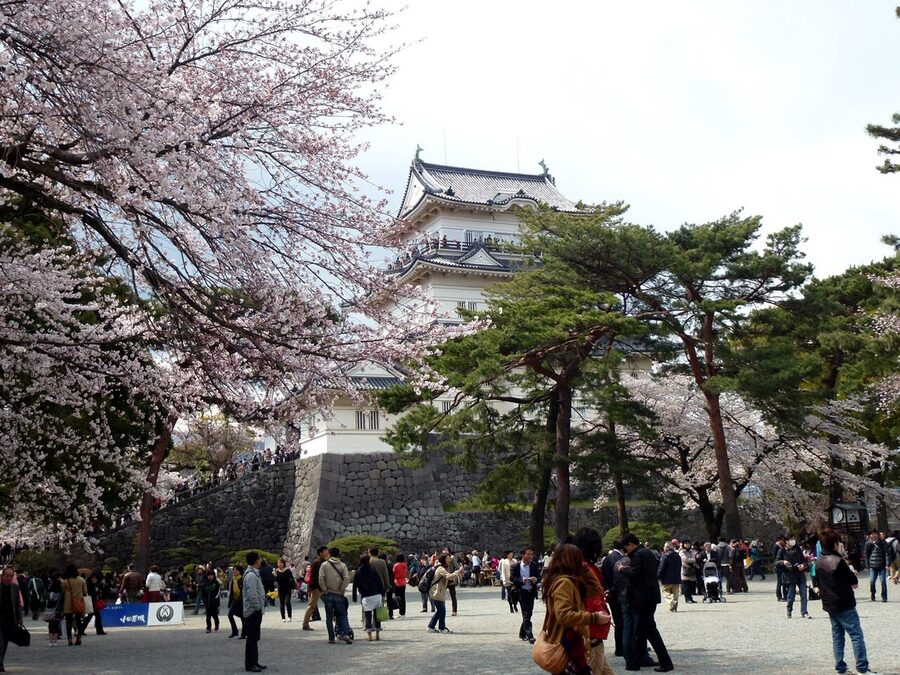
The official tourism board’s Odawara Kankou Kyokai updates the bloom forecast in March. If you’re aiming for sakura, build in a backup day — Kanto cherry blossoms are fickle, and the 2024 and 2025 seasons both had unexpected cold snaps that pushed full bloom back by 4-5 days.
Kamaboko — the actual reason to walk into town
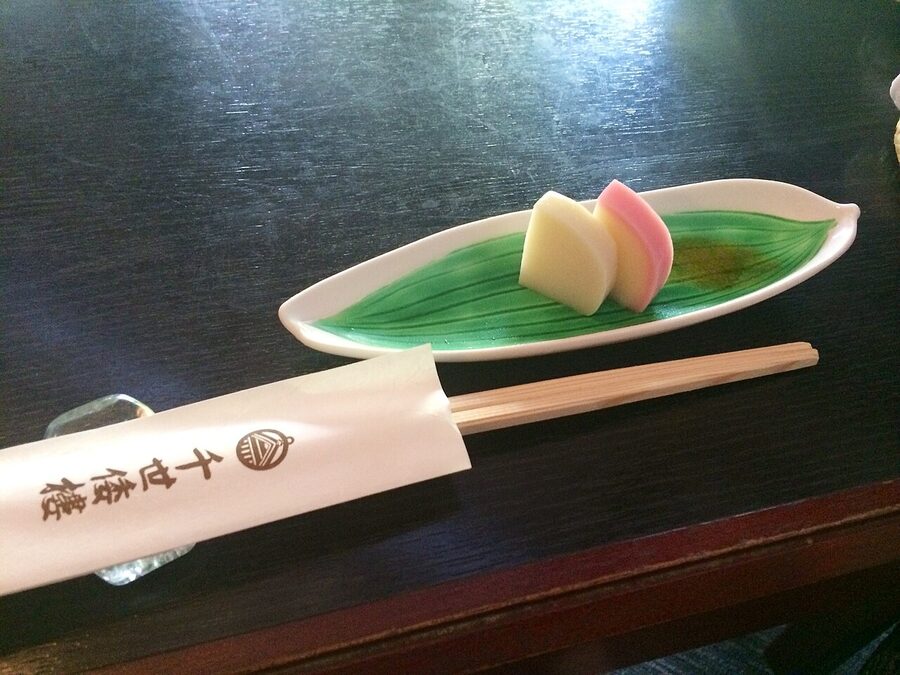
This is the bit most castle-focused tourists skip, and it’s the bit I’d argue makes a day trip worth it. Odawara has been the centre of Japan’s kamaboko (steamed fish cake) industry since the Edo period, when the town was the largest stop on the Tokaido road. The fish came in fresh from Sagami Bay, the wood for steaming came down from the Hakone mountains, and the daimyo travelling the Tokaido stopped here for it. There are still around twenty kamaboko makers in the city today.
Suzuhiro at Kazamatsuri
The big name is Suzuhiro, founded as a side business by a fishing wholesaler in 1865 (the very last year of the Edo period — they often write “founded Keio gan-nen” on their packaging). Their main complex, the Kamaboko-no-Sato, is one stop west of Odawara Station on the Hakone Tozan railway, at Kazamatsuri Station. It includes a small museum where you can watch staff hand-shape kamaboko, a tasting bar, a beer hall, and a couple of restaurants. Entry is free; the museum charges a small fee for hands-on experiences.
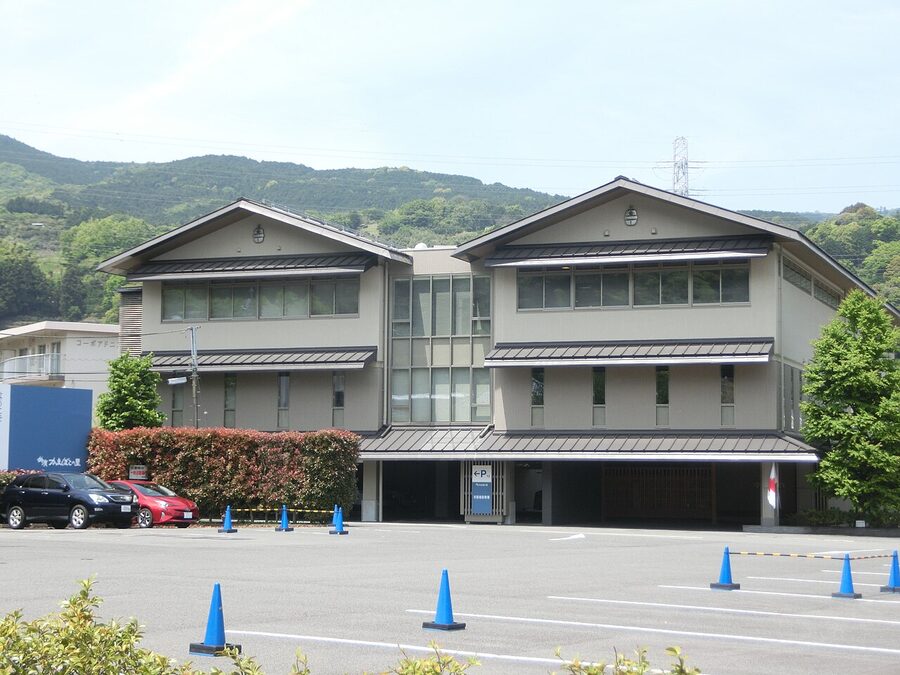
You can also pick up vacuum-packed kamaboko to take with you. Suzuhiro packages it specifically for traveller-friendly transport, and one of their most popular products — Sea-sage, a fish-paste sausage — was developed for hikers. It’s a bit of a niche thing, but I keep one in my bag whenever I’m doing a day trip.
Other names worth knowing
Suzuhiro isn’t the only one. Takaraya Honten, Kagoan, and Yamayou are three of the older makers in the centre of town, all within a 15-minute walk of the station. The downtown shopping arcade Odawara Sakaeguchi has a row of them, and prices are noticeably lower than the tourist shops at the station — about ¥800 for a board (ita) of plain kamaboko vs ¥1,200 in the station souvenir corner.
Uiro-ya — the sweet shop that’s older than the castle
This is my favourite cult stop in Odawara, and most foreign visitors walk straight past it. Uiro-ya, on Honcho 1-chome about a 15-minute walk south of the station, is run by the Uiro family — descendants of an Imperial physician who escaped the Mongol-era Yuan dynasty in China in the late 14th century, came to Japan, and brought a herbal medicine recipe with him. The Hojo invited the family to Odawara in the 1500s. They’ve been making the same medicine and the same steamed sweet — also called uiro — ever since.
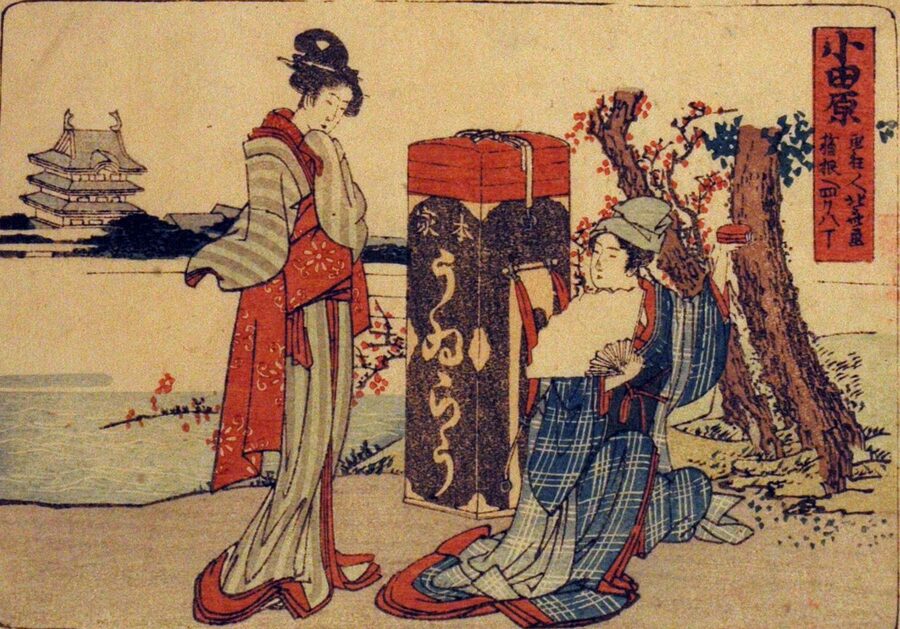
The current shop sells both — the uiro sweets (a steamed rice-flour cake, ¥410 for an upper-grade single piece, ¥1,944 for a six-piece box of the kiku-kiri seasonal version) and the namesake medicine, which is dispensed only at the main store, never at branches. The building is a reproduction of an Edo-era warehouse and the family runs a tiny museum about their lineage on the upper floor (open by appointment, free).
Even if you’re not buying, walk in. The shop staff are unfailingly polite about foreign visitors who just want to look. Uirou-ya is closed Wednesdays and the third Thursday of every month.
Lunch by the harbour
Sagami Bay is the local fishery, and Odawara Fish Center (Odawara Sakana Centre) at Hayakawa Port is where the boats actually come in. It’s about 15 minutes by bus from the station, or 20 minutes on foot if you don’t mind the seafront walk. There are seven or eight small restaurants inside the market hall doing simple seafood sets — typically aji (horse mackerel) sashimi, which is the local specialty, plus seasonal sushi sets from around ¥1,500 up.
If you want something simpler and faster, the station building has decent options — Tokai-ken, the famous Odawara ekiben (station bento) maker, has a counter on the platform selling their tai-meshi (sea bream rice bento, ¥1,300) and the various odawara-don boxes. I ate one on the Romancecar going home and I now make this specific journey just for the bento.
The Odawara-Hakone day combination (and whether you should)
Odawara is the official gateway to Hakone — Hakone-Yumoto is the next stop on the Hakone Tozan line, about 15 minutes from Odawara Station. A lot of itineraries pair them.
Here’s the honest answer: it depends on whether you want to actually see Odawara, or just pass through. If you want to do the castle properly and walk the kamaboko shops, you need 4-5 hours minimum, and that doesn’t leave nearly enough Hakone time. Trying to see Hakone properly (Owakudani, the open-air museum, the pirate ship on Lake Ashi, an onsen) plus Odawara in one day is genuinely too much. You’ll feel rushed in both places.
What does work as a combined day:
- Castle in the morning (9:00 to 11:30).
- Kamaboko-no-Sato at Suzuhiro for lunch (12:00 to 13:30 — get off at Kazamatsuri en route).
- Hakone-Yumoto for an afternoon onsen and a stroll along the river (14:00 to 17:00).
- Romancecar back from Hakone-Yumoto in the evening.
That works. What doesn’t work is castle plus full Hakone loop. For the full Hakone day, see our Hakone day trip guide — it’s its own thing and deserves the full day.
The bits I’d skip
Odawara’s tourism board promotes a fairly long list of “things to do”. A few of them are honestly mediocre and I’d rather you knew that going in.
- Odawara Children’s Amusement Park (kodomo-yuenchi) inside the castle grounds — currently suspended, and even when open it’s tiny rides for under-fives only. Skip unless you have small children with you.
- Hotoku Ninomiya Shrine, just south of the castle — fine, free, takes 10 minutes if you happen to be passing. Don’t make a special trip.
- Odawara Museum of Literature — a beautiful Western-style building, but the exhibits are entirely in Japanese with no English signage. If you’re not reading Japanese it’s a missed swing.
Practical info
- Address: Odawara Castle, 6-1 Jonai, Odawara City, Kanagawa Prefecture 250-0014
- From Tokyo: 35 min on the Tokaido Shinkansen (¥3,670, JR Pass valid); 75 min on Odakyu Romancecar from Shinjuku (~¥1,910); 80 min on JR Tokaido local (¥1,520)
- Walk from station: 10-15 minutes from East Exit along Ohoribata Street
- Hours: 9:00 to 17:00, last entry 16:30
- Closed: Second Wednesday of December (keep only); 31 December to 1 January
- Tickets: Tenshukaku ¥1,000 adult / ¥300 child (includes SAMURAI Museum); NINJA Museum ¥500 adult / ¥200 child; combined keep + NINJA + SAMURAI ¥1,500 adult
- Coin lockers: Plenty inside Odawara Station (¥400-600 for a day)
- Best time: Late March to early April for cherry blossoms; June for hydrangea and iris; November for autumn colour
- Avoid: Saturday afternoons in cherry blossom season — the queue for the keep can be 40 minutes
- Useful links: Official castle site, Odawara City, Odawara Tourism Board, Kamaboko Industry Association
My Odawara castle-and-kamaboko day plan
If I had a single Tuesday and the JR Pass already in my wallet, this is what I’d do.
- 9:08 Tokaido Shinkansen Kodama from Tokyo Station (35 min, ¥3,670, covered by JR Pass).
- 9:50 Walk from Odawara Station East Exit to the castle (10 minutes). Buy the keep + NINJA + SAMURAI combined ticket (¥1,500) — or just the keep (¥1,000) if you’re tight on time.
- 10:00 to 11:15 Walk through the gates, climb the keep, do the SAMURAI Museum on the way down. Skip the NINJA museum unless you have kids.
- 11:30 Walk back to the station via the south-side wooden bridge for the photo.
- 11:45 Hop on the Hakone Tozan Line one stop to Kazamatsuri (5 minutes). Lunch at Kamaboko-no-Sato — Suzuhiro’s restaurants do a kamaboko set lunch for around ¥1,800. Wander the museum and tasting bar afterwards.
- 13:30 Back to Odawara Station. Walk 15 minutes south to Uiro-ya. Buy a six-piece box of seasonal uiro to take home (¥1,944).
- 14:30 Either head to Hakone-Yumoto for an onsen (15 min on the Tozan line) or wander down to Hayakawa Fish Port for an aji-don and a coffee with a sea view.
- 17:00 Romancecar from Odawara back to Shinjuku (75 min, ¥1,910). Eat a Tokai-ken bento from the station kiosk on the way.
One thing about Odawara that I didn’t expect on my first visit: it’s honestly a quieter, more low-key day than Kamakura or Nikko. The castle is the headline but it’s not the whole story. The kamaboko shops, the Tokaido-era sweet maker still selling herbal medicine to descendants of the Hojo’s allies, the bento maker on platform 6 — that’s the texture of the place. Build in time for the small stuff.
If you’ve got an extra day in your itinerary, consider doing this one alongside Kamakura and three days in Tokyo, with Odawara as your second day-trip — it’s the polar opposite of the Kamakura temple-and-shrine route, and seeing both gives you a much better sense of how the Tokaido road shaped this whole strip of coast between Tokyo and Mt Fuji.