
There is a vending machine near the peak of Mt Owakudani, 1,044 metres above the plain below, selling eggs that have been boiled in sulphur water until the shells turn completely black. The local legend says eating one adds seven years to your life. I have eaten four. The maths is both confusing and encouraging, and since I first made the trip from Shinjuku on a cold February Tuesday, Hakone has sat quietly at the top of my list for day trips out of Tokyo.
I’m going to walk you through the whole thing — how to get there on the 80-minute Romancecar, whether the Hakone Free Pass is worth ¥6,100, the exact Round Course loop that takes you across the caldera by train, cable car, ropeway, and pirate ship, and then the honest version of which museums, onsen, and ryokan are worth your time once you’re there. If you only have one day, I’ll tell you how to make it a good one. If you can stretch it to an overnight, I’ll tell you why you probably should.
In This Article
- Why Hakone lands at the top of Tokyo day-trip lists
- Getting to Hakone from Tokyo
- The Hakone Free Pass maths
- The Round Course: one day in Hakone, done properly
- Mt Owakudani and the black eggs
- Lake Ashi and Hakone-jinja
- The photo queue, and how to beat it
- The pirate ships
- Onsen: day-use vs overnight ryokan
- Day-use onsen (between ¥1,500 and ¥2,700)
- Overnight ryokan (¥20,000–¥50,000 per person)
- Museums worth your afternoon
- Best time to come
- Practical info block
- My day-trip day vs my overnight day
- If I had one day
- If I had a night
- A few things nobody tells you
Why Hakone lands at the top of Tokyo day-trip lists
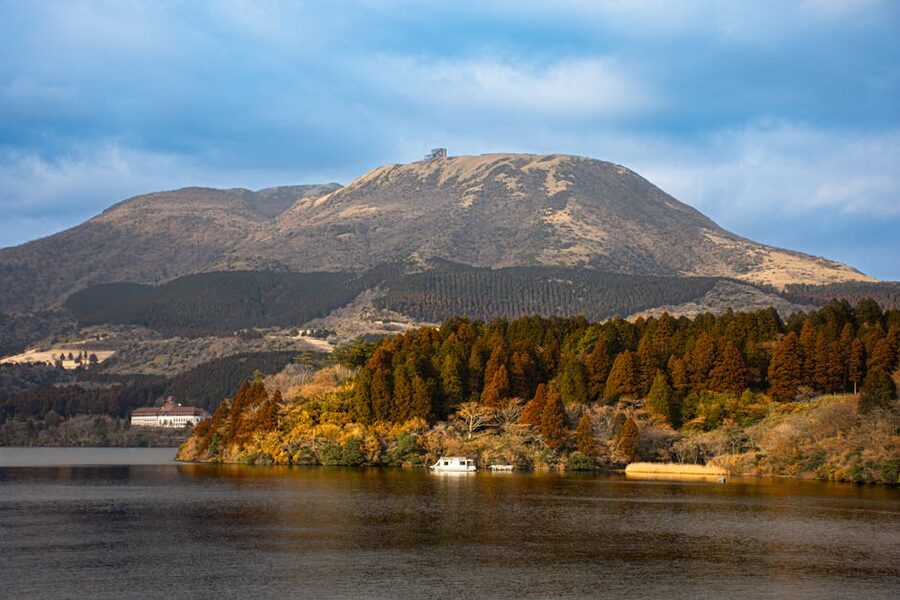
Kamakura gives you beaches and the great bronze Buddha. Nikko gives you a UNESCO-listed complex of shrines and waterfalls. Hakone gives you something neither can match: a live volcanic caldera about 85km south-west of Tokyo, with onsen fed by its own geothermal plumbing, a crater lake you cross by pirate ship, a shrine with a red torii standing in the water, and — on the right kind of morning — Mt Fuji framed directly behind the torii as if the whole thing were arranged for you.
Administratively it’s in Kanagawa Prefecture. Historically it was the last checkpoint on the old Tokaido road before samurai reached Edo. Today it’s a hot-spring resort town that somehow also has a Picasso pavilion, a ¥500 bag of eggs that look like coal, and a French Impressionist collection hidden in a beech forest. That’s an odd combination. The oddness is the point.
Getting to Hakone from Tokyo

There are three realistic ways to get from Tokyo to Hakone, and one of them is much better than the others.
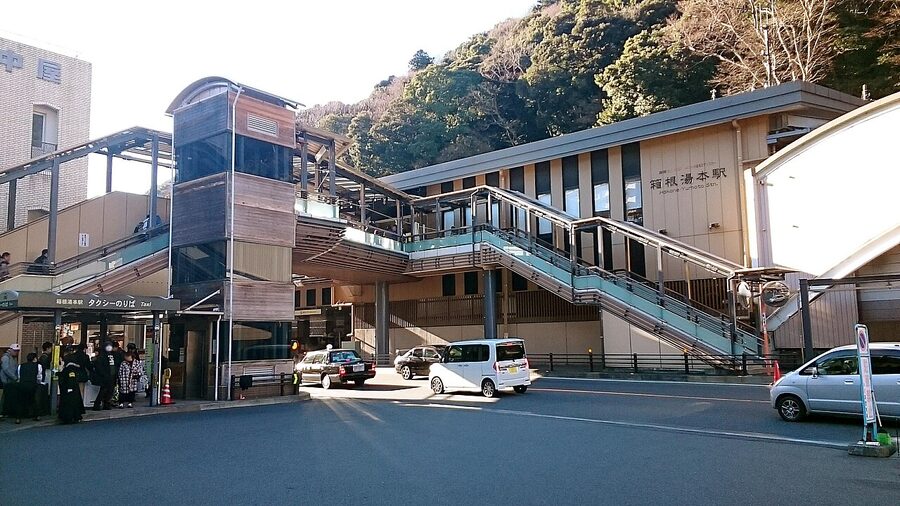
The Romancecar is Odakyu’s premium limited express. It leaves from Shinjuku, goes direct to Hakone-Yumoto, and takes about 85 minutes. Seats are reserved, the windows are huge, there’s a dedicated luggage space at the end of each carriage, and some trains have a glass-nosed observation car you can request when you book. The seat reservation costs ¥1,200 on top of whatever pass or ticket you already have. Leaving Shinjuku at 8:00am puts you in Hakone-Yumoto just after 9:20, which is my preferred window — early enough to outrun the 10am tour buses, late enough that you don’t need to set an alarm that feels hostile.
The regular Odakyu express does the same route for free if you have the Hakone Free Pass (see below) — it just takes about two hours and you change at Odawara. It’s fine. You save ¥1,200. You give up 35 minutes and the observation window. Worth it if you’re on a tight budget or if the Romancecar is sold out at your preferred time.
The Shinkansen to Odawara takes 35 minutes from Tokyo Station, then you change to the Hakone-Tozan line for another 15 minutes. This only makes sense if you already have a JR Pass that covers the Shinkansen — the fare alone is far more expensive than the Romancecar. If you’re interested in the full pass logic, I wrote a longer piece on whether a JR Pass is worth it for a Tokyo-based trip.
The Hakone Free Pass maths
The Odakyu Hakone Free Pass is one of those rare tourist products that is actually a good deal, not just marketing. The 2-day pass from Shinjuku is ¥6,100 (adults). It covers: return Odakyu from Shinjuku to Odawara, unlimited Hakone-Tozan trains between Odawara and Gora, the Sounzan funicular cable car, the Hakone Ropeway to Togendai, the pirate ships on Lake Ashi, and the Hakone-Tozan buses you need to reach Hakone-jinja and the onsen towns. Small discounts at most museums and some onsen are thrown in.
Priced separately, the round trip from Shinjuku alone is about ¥2,400. A single one-way pirate ship cruise is ¥1,200. The ropeway one-way is ¥1,500. The funicular is ¥430. You will blow past ¥6,100 in transport costs before lunch.
The 3-day version is ¥6,500 — only ¥400 more than the 2-day — so if you’re staying one night, get the 3-day and you’ll thank me on the way home. Buy it online via the official Odakyu site before you arrive, then pick the pass up at the Odakyu Sightseeing Centre near the West Ground Gate of Shinjuku Station. Online is cheaper than at the counter, and it spares you the 15-minute queue that forms there every weekend morning.
The Round Course: one day in Hakone, done properly

The “Round Course” (箱根ラウンドコース) is the standard counter-clockwise loop that Odakyu designed its pass around. Every competitor guide rearranges it slightly; after five visits I’m going to tell you the order that actually works.
- 08:30 — Leave Shinjuku on the Romancecar.
- 09:55 — Arrive Hakone-Yumoto. Drop any luggage at the delivery counter (¥2,100ish to most ryokans, delivered by 3pm if you’re here before 10).
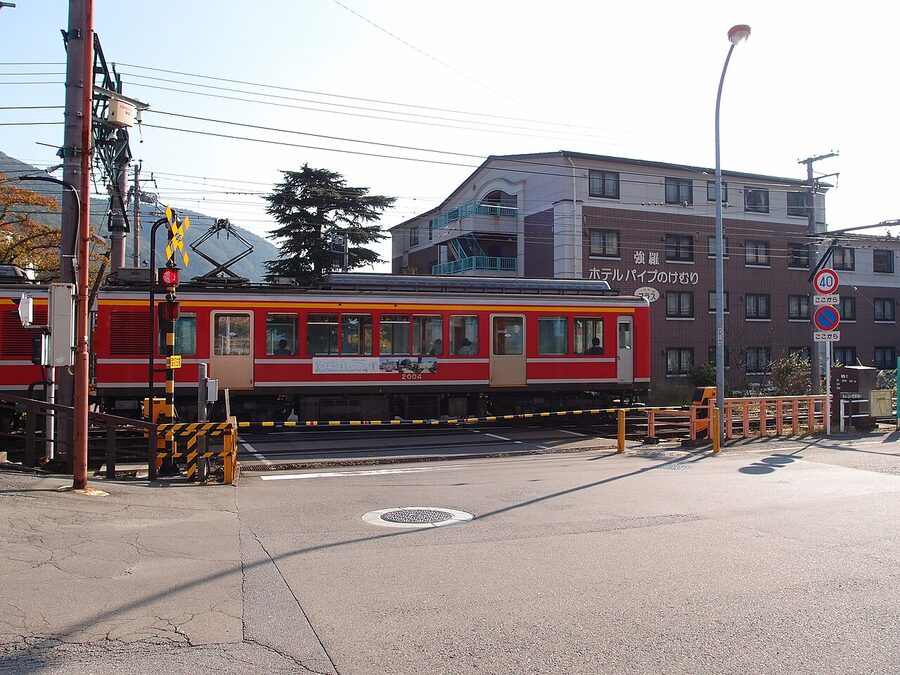
- 10:05 — Board the Hakone-Tozan mountain train up to Gora. Forty minutes, three switchbacks where the train physically reverses direction, through forest that turns completely red in late October.
- 10:55 — At Gora, transfer to the Sounzan funicular cable car. Ten minutes steeply up to Sounzan Station.
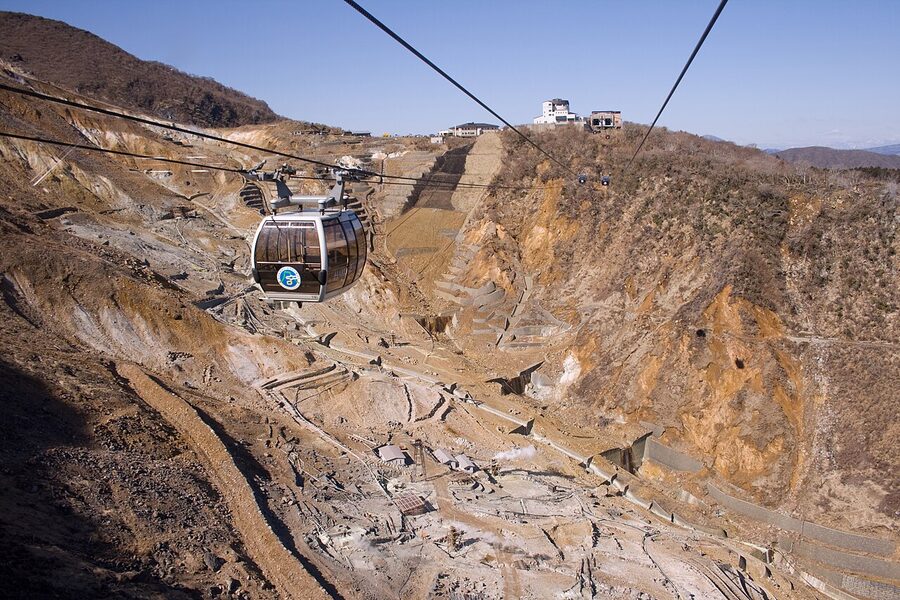
- 11:10 — Board the Hakone Ropeway (giant gondola, not a chair lift — don’t get confused). Thirty minutes total to Togendai, but you stop at Owakudani halfway.
- 11:25 — Get off at Owakudani. Eat the black eggs. Walk the short viewpoint trail. Back on the ropeway by 12:20.
- 12:50 — Arrive Togendai on Lake Ashi. Board the pirate ship for Moto-Hakone.
- 13:20 — Disembark Moto-Hakone. Lunch on the main street — the soba at Hatsuhana is excellent. After lunch, walk fifteen minutes along the lake to Hakone-jinja and the floating torii.
- 15:30 — Bus back to Hakone-Yumoto (40 minutes through the mountains, covered by your pass).
- 16:30 — Day-use onsen at Hakone Yuryo or Tenzan, then train to catch the 18:00 Romancecar back to Shinjuku for a 19:25 arrival.
That’s ten moving parts. The pass turns them all into a single piece of laminated card. You will show it to about 14 staff before the day is over and nobody will ask you for any additional ticket. This is the closest Japan gets to a hop-on-hop-off day.
Mt Owakudani and the black eggs
.jpg)
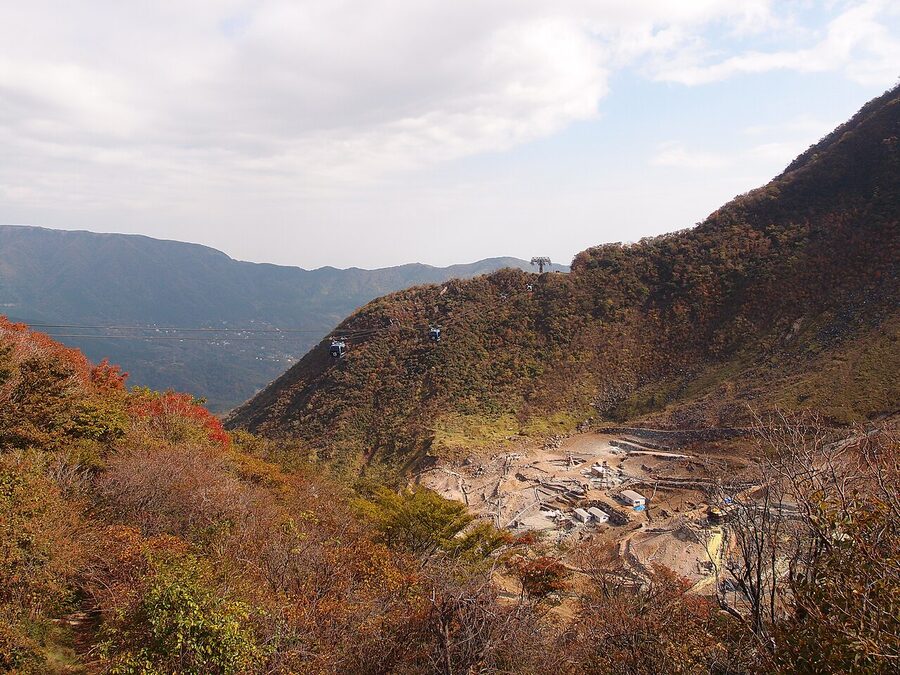
Owakudani (大涌谷 — “Great Boiling Valley”) is what happens when a volcano’s crater vents its frustrations for 3,000 years without stopping. It sits at 1,044m in what used to be the eastern flank of Mt Hakone. Steam columns the height of office buildings rise from yellow-stained rock; the air smells strongly of boiled egg and faintly of struck match. On windy days your clothes absorb the smell for hours.
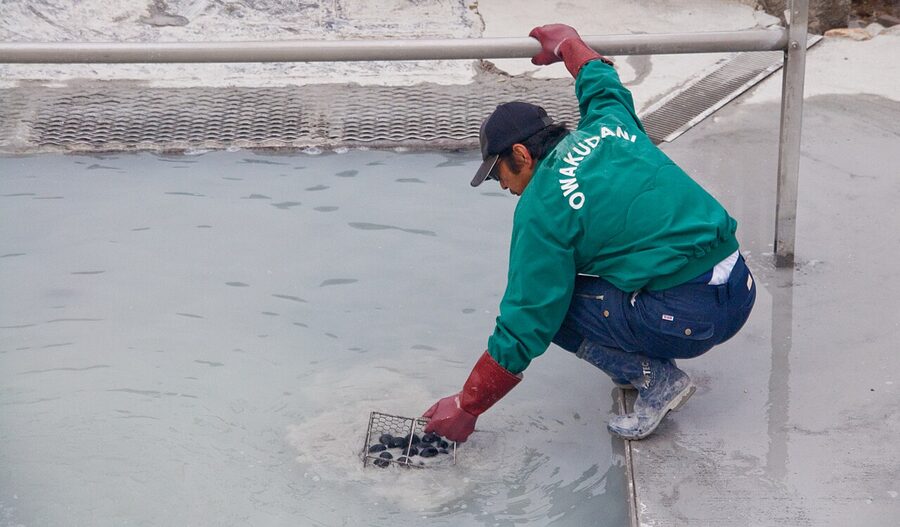
The Kuro-Tamago (黒たまご — “black eggs”) are the reason most people get off the ropeway here. You can watch them being made: ordinary chicken eggs are lowered in iron baskets into pools of 80°C sulphurous spring water for about an hour, where the iron in the eggshell reacts with hydrogen sulphide to form ferrous sulphide — a matte black coating on the shell. They’re then finished by steaming at 100°C for another fifteen minutes. The yolk and white inside are identical to any hard-boiled egg. Only the shell is different, and the novelty is the whole selling point.
A pack of five costs ¥500. Buy one pack between two people and you’ve got the experience; buy two packs and you’ll regret it by the ropeway station. There are benches just outside the main building where everyone sits to peel theirs and take the photograph.
.jpg)
One important warning: Owakudani closes without notice when volcanic gas readings rise. The whole area was off-limits for most of 2015 after a small eruption, and it now closes several times a year for shorter periods. When that happens, the ropeway runs only between Sounzan and Togendai without the Owakudani stop — you can still do the Round Course, you just miss the eggs. Check the ropeway’s English status page the morning you set off.
Lake Ashi and Hakone-jinja
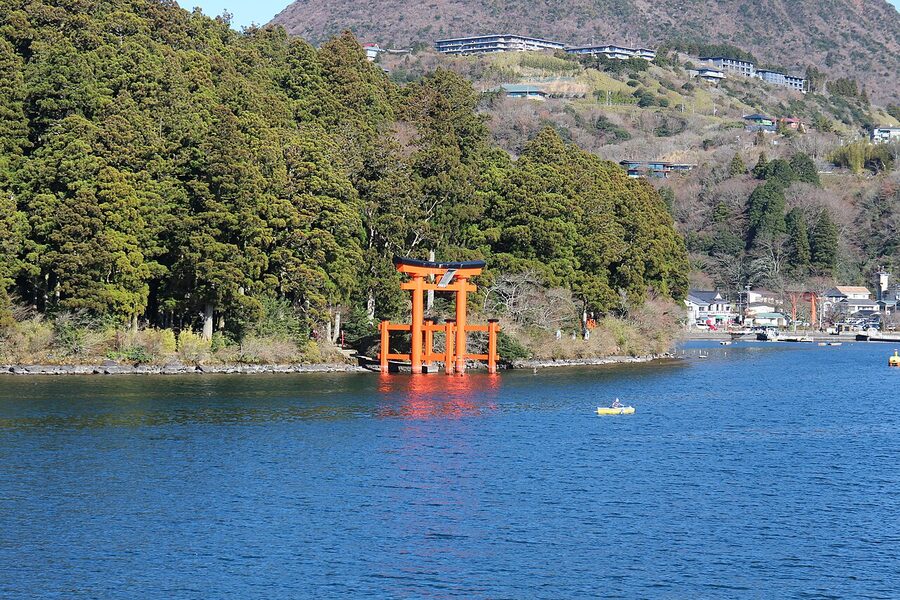

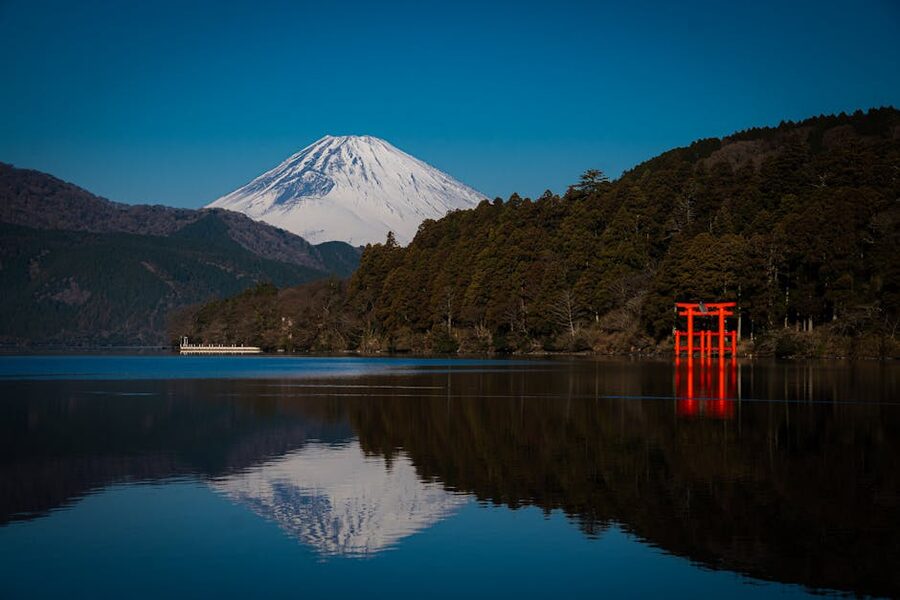
Lake Ashi (芦ノ湖) is the crater lake at 725m elevation that fills the bottom of the caldera. On a clear day Mt Fuji sits directly behind its southern shore, and on a clear winter morning the water turns into a dead-flat mirror that reflects the whole thing. You have a realistic shot at this in January, February, and the first two weeks of March. In summer, the lake is usually hazed over and you will not see Fuji at all. I would rather go to Hakone in cold weather and have the view than go in July and pretend it doesn’t matter.
Hakone-jinja itself sits in cedar forest on the western shore, reached by a long lantern-lined stone path. The shrine complex is genuinely old (first enshrined 757 CE), but the thing you’re probably here for is the red torii standing in the lake below — the Heiwa-no-Torii, or “Peace Torii”. It was erected in 1952 to commemorate the signing of the San Francisco Peace Treaty, so it’s younger than most people’s grandparents. It is still photogenic in a way that doesn’t happen often in real life.
The photo queue, and how to beat it
On weekends between about 09:00 and 15:00 there is a queue — literally a marked line on the ground, staffed on peak days — for taking the shot between the torii legs, lake behind, no other humans in frame. It moves slowly. In autumn I once waited 45 minutes. Here’s the sequence that reliably works:
- Come on a weekday, not a weekend.
- If you can only come on a weekend, be there before 09:00. The queue forms at 09:15 and never gets shorter until 16:00.
- From the shrine side, walk down the stone steps towards the lake. Turn right at the bottom.
- Join the marked queue. Phone photography is absolutely fine; staff will not let you set up a tripod.
- You get roughly 30 seconds in the shot space. Frame wide, then frame close. Move on.
- If the queue’s too long, walk back up, go around the shrine, and shoot from the short pier 50m further along — you get the torii in profile with the mountains behind, which is actually the better composition in my opinion.
The pirate ships
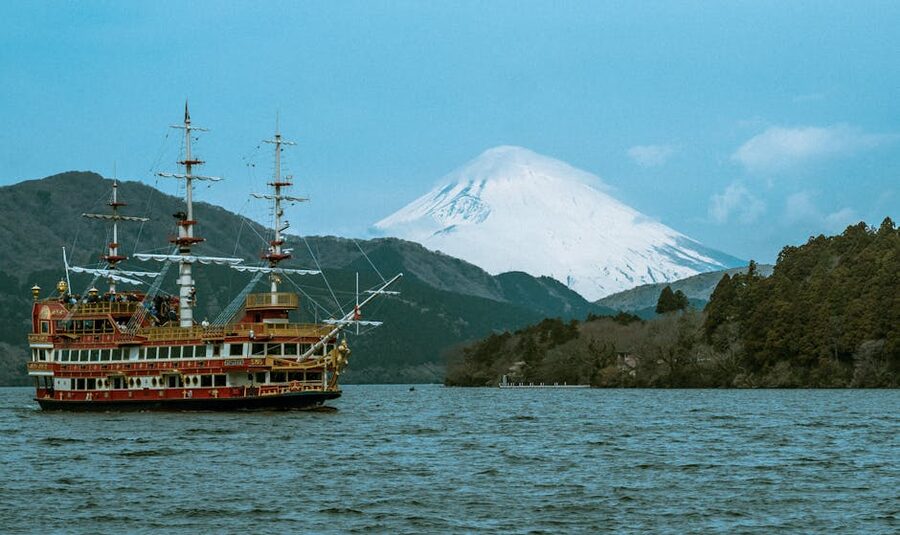
This is the part of the day that everyone pretends to be too cool for and then ends up enjoying. The Hakone Sightseeing Cruise runs three pirate-themed ferries across Lake Ashi — the Queen Ashinoko (gold-accented, the one on every tourism poster), the Royal II (blue and gold), and the Victory (red and black). The crossing between Togendai and Moto-Hakone is about 30 minutes; most services stop at Hakone-machi in between.
Honestly, it’s cheesy. It is also one of the few ways to see the Heiwa-no-Torii from the water as you pass it at about 50 metres’ distance, which is when everyone on the top deck stops pretending and rushes to the railings. Your Hakone Free Pass covers the Hakone Sightseeing boats but not the plain white Izuhakone competitor ships — check the colour before you board. There’s no food on the ship beyond a small vending machine, so eat beforehand.
Onsen: day-use vs overnight ryokan
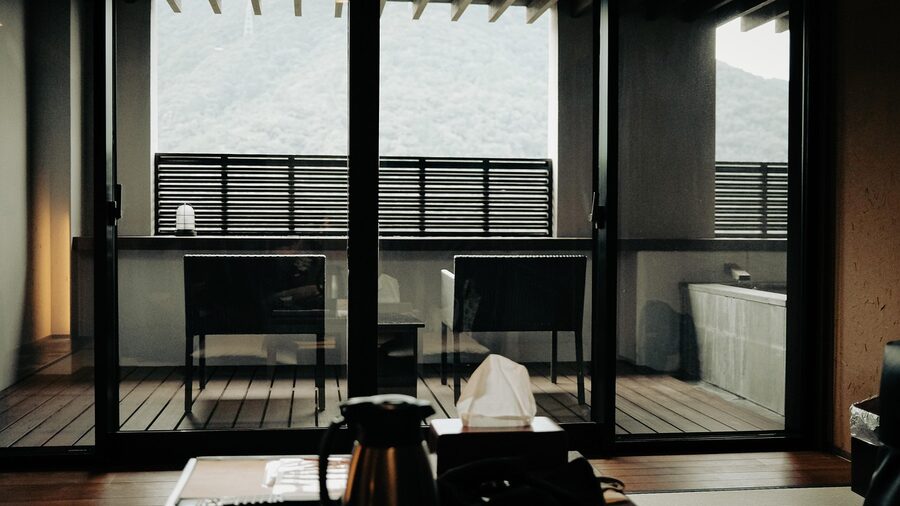
The whole reason Hakone became a resort in the first place is the onsen. Hot, mineral-rich spring water comes out of the ground at boiling or near-boiling temperature in a handful of areas — Hakone-Yumoto, Miyanoshita, Gora, Sengokuhara, Ashinoyu. Almost every hotel, inn, and ryokan has a bath fed directly from one of these springs. On a day trip you have two choices: duck into a day-use bath for an hour or two, or commit to an overnight and get the whole ryokan experience.
Day-use onsen (between ¥1,500 and ¥2,700)
Three are worth knowing about:
- Hakone Yuryo is my pick for a clean, handsome, pine-surrounded bath complex two minutes from Hakone-Yumoto Station by shuttle bus. Day rate around ¥1,700 weekdays. Strict no-tattoo policy. Private outdoor kashikiri baths bookable by the hour.
- Tenzan Tohji-kyo is the more traditional option — a rambling set of rock-lined rotenburo fed by multiple springs, about 15 minutes by free shuttle from Hakone-Yumoto. ¥1,450 adults. Also no tattoos.
- Yunessun is the theme-park one: swimsuit-allowed baths filled with red wine, coffee, and green tea. ¥2,700. I’d skip this unless you’re travelling with kids — it’s fun for children and slightly baffling for adults hoping to soak quietly.
Overnight ryokan (¥20,000–¥50,000 per person)
If you can stretch to a night, do it. A proper ryokan in Gora or Sengokuhara runs to ¥25,000–¥35,000 per person with two meals (kaiseki dinner, Japanese breakfast) — your room has a futon laid out on tatami, a private bath fed directly from the spring, and a yukata waiting in the closet. This is where Hakone pays off disproportionately compared with a day trip. Gora Kadan at the top end is the kind of place former imperial summer villas become. Gora Hanaougi Madoka no Mori and Ashinoko Hanaori are the mid-luxury options that are still a genuine splurge without being absurd.
My honest take: day-trip Hakone only if you’re squeezed for days in Japan. Overnight if you can possibly arrange it — the town shifts completely in the evening when the day-trippers leave, and a private bath at 23:00 in a silent forest is about as good as travel gets.
Museums worth your afternoon
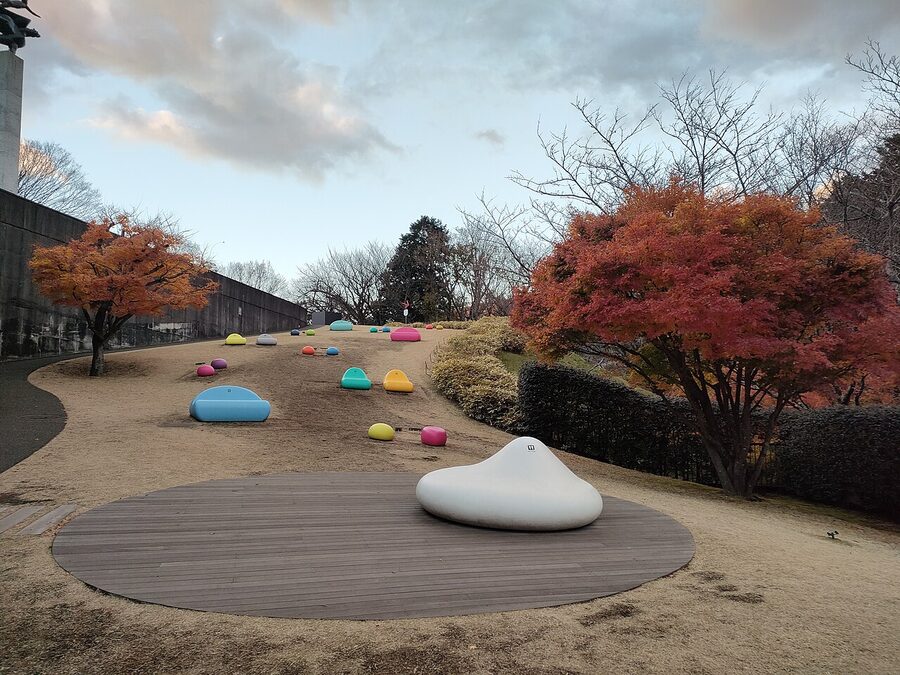

Hakone has a density of art museums you would not expect from a mountain spa town. The short list:
- Hakone Open-Air Museum — ¥1,600 adults, open 09:00–17:00. 70,000 square metres of outdoor grounds studded with 120+ sculptures (Henry Moore, Rodin, Niki de Saint Phalle) plus a dedicated Picasso Pavilion with 300+ works the family donated. The best museum in Hakone for children (there’s a giant climbable netted structure called Knitted Wonder Space) and arguably the best for adults too. Fifteen minutes on the Hakone-Tozan train from Gora.
- POLA Museum of Art — ¥2,200. Sits in a beech forest in Sengokuhara, a 10-minute bus ride from Gora. Strong French Impressionist holdings — multiple Monets, Renoirs, Cezannes, some Van Gogh, plus a beautiful Emile Galle glassware room. Photography permitted in some galleries, which is rare in Japan. The building itself, half-buried in the forest, is worth the admission alone.
- Okada Museum of Art — ¥2,800. An enormous private collection of East Asian art on the Hakone-Yumoto side, with a free outdoor foot bath out the front fed from its own hot spring. Chinese ceramics and Edo-period screens mostly. Worth it if you like Asian art specifically; otherwise the Pola and Open-Air are stronger picks.
- Lalique Museum Hakone — ¥1,500. Small but beautifully done collection of 230 Lalique glass pieces in Sengokuhara. Combines well with POLA on a combination ticket (¥2,700 for both, saves about ¥400).
Honest opinion: if you can only visit one, make it the Open-Air. If you have time for two, do the Open-Air in the afternoon and the Pola the next morning.
Best time to come
Hakone has sharp seasons and they make a real difference. My rough ranking:
- Late October to late November — the koyo (autumn colours) on the Hakone-Tozan line are genuinely spectacular. The train track becomes a red tunnel. Weekend crowds are bad, weekdays are fine.
- January and February — coldest months, fewest tourists, highest chance of seeing Mt Fuji. My personal pick. Bring layers — Owakudani can be below freezing with wind.
- Early March — still good Fuji visibility, plum blossoms starting at the shrines. Before the Tokyo cherry-blossom rush hits.
- Cherry blossom season (late March / early April) — pretty along the lake but Hakone is not primarily a cherry-blossom destination. If you only have one sakura window in Japan, spend it in Tokyo or Kyoto, not here.
- Golden Week (29 April – 5 May) — avoid. The Romancecar sells out, the ropeway queues are 90 minutes, the ryokans charge holiday rates.
- Summer (June–August) — humid, hazy, Fuji rarely visible. The rainy season in June turns everything grey. I would not prioritise Hakone in summer.
Practical info block
- Location: Hakone, Kanagawa Prefecture. ~85km south-west of Tokyo.
- Getting there: Odakyu Romancecar from Shinjuku, 85 minutes, about ¥2,470 one-way including ¥1,200 seat reservation.
- Hakone Free Pass: 2-day ¥6,100, 3-day ¥6,500 from Shinjuku. Covers all the round-trip transport plus local buses, trains, cable cars, ropeway, and Hakone Sightseeing pirate ships. Book online.
- Opening hours: Hakone-jinja is a shrine (free, always open). Hakone Open-Air Museum 09:00–17:00. Owakudani 09:00–16:00 (gas-dependent). Ropeway generally 09:00–16:15.
- Day-use onsen: Hakone Yuryo ¥1,700, Tenzan ¥1,450, Yunessun ¥2,700.
- Ryokan range: ¥20,000 per person at entry level; ¥35,000–50,000+ for the well-known Gora establishments. Book two months ahead minimum, four months for koyo season.
- Tattoo policy: Most onsen refuse visible tattoos. Private (kashikiri) baths or tattoo-friendly properties are your workaround — I cover the details in our separate onsen etiquette guide.
- Currency: yen only. ATMs available at 7-Eleven inside Hakone-Yumoto Station.
- Official sites: Hakone Navi, Hakone-jinja, Hakone Open-Air Museum.
My day-trip day vs my overnight day
If I had one day
08:00 Shinjuku → 09:25 Hakone-Yumoto on the Romancecar. 10:10 Hakone-Tozan train up to Gora. 11:00 funicular up to Sounzan. 11:15 ropeway to Owakudani. Black eggs, viewpoint, back on the ropeway. 12:45 arrive Togendai. 13:00 pirate ship to Moto-Hakone. 13:35 lunch on the lakefront. 14:30 Hakone-jinja and the floating torii. 15:30 bus back to Hakone-Yumoto. 16:15 day-use onsen at Hakone Yuryo. 17:45 18:00 Romancecar back to Shinjuku. Home by 19:25. Tiring but complete.
If I had a night
08:00 Shinjuku → 09:25 Hakone-Yumoto. Leave the suitcase with the delivery service. 10:00 Hakone Open-Air Museum (arrive on opening). 12:30 lunch near Gora. 13:30 funicular up, ropeway across, eggs, pirate ship across Lake Ashi. 15:00 Hakone-jinja without the tour-bus crush. 17:00 check in at the ryokan in Gora, first bath before dinner. 19:00 kaiseki dinner. 22:30 second bath in the private outdoor tub, dark, silent, Fuji invisible in the dark but you’ll see her in the morning. Sleep on a futon. Next morning: Pola Museum and Sengokuhara pampas grass field, back to Tokyo on the 16:30 train.
A few things nobody tells you
.jpg)
The Hakone-Tozan mountain train between Hakone-Yumoto and Gora uses three switchbacks — the driver and conductor actually swap ends of the train three times during the climb, because the line is too steep to build a normal curve. If you sit in the last carriage on the way up, you end up in the front carriage on the way down. It’s quietly the most interesting train ride in Kanto.
Your Hakone Free Pass becomes valid at the moment of first use, not the moment of purchase. If you pick it up in Shinjuku the afternoon before, the 2-day window starts the next morning when you actually board — the pass tracks calendar days, not 48 hours, so you get whatever remains of day one plus the full second day.
The Romancecar has a reserved observation seat at the very front of car 1 where the driver is essentially behind you, up a glass wall. You can book it when you reserve, but it sells out two weeks ahead on weekends.
The Fujiya Hotel in Miyanoshita opened in 1878 and was the first Western-style hotel in Japan — it’s halfway up the mountain, has a koi pond, and serves afternoon tea that you can drop into without staying. If you’re doing the Round Course, alight at Miyanoshita Station on the Hakone-Tozan line, walk four minutes, and you’ll see it. Worth a cup of coffee even if you’re not a history nerd.
If Owakudani is closed for volcanic gas, don’t cancel the trip — just swap the black eggs for a stop at the Hakone Open-Air Museum and eat the eggs vicariously via my photos.
More day-trip ideas from Tokyo on my Kamakura guide (beaches, Great Buddha, easier than Hakone if you don’t love transport puzzles) and the Nikko write-up (UNESCO shrines, two hours north). If you want to see how Hakone fits into a longer stay, my three-day Tokyo itinerary suggests where to slot it in.
Hakone won’t be your quietest day of Japan. It will probably be one of the ones you tell people about afterwards.