
Most travel blogs will tell you to buy the JR Pass. Most travel blogs are out of date. In October 2023 the 7-day pass jumped from ¥29,650 to ¥50,000 — a 69% hike overnight — and the tidy maths that made it a no-brainer for short Japan trips died that day. I’ve bought a JR Pass three times in the years since, and I regretted it twice. If your trip is mostly Tokyo, or Tokyo plus one side quest, you should almost certainly not buy one. Here’s what changed, when the pass still wins, and what I’d actually book instead.
In This Article
- The 2023 price hike, and what it changed
- The simple maths
- When the JR Pass still wins
- When the JR Pass loses, hard
- The Nozomi thing, explained properly
- Regional passes you should probably buy instead
- How to buy the pass (and where)
- Inside a JR East Travel Service Center
- Shinkansen basics for first-timers
- Practical info at a glance
- If I’m planning your trip, here’s what I’d actually book
The 2023 price hike, and what it changed
Until October 2023, the JR Pass was one of the great deals in world travel. A 7-day pass cost ¥29,650 and a single Tokyo-Kyoto round trip on the Shinkansen — which you were almost certainly doing — already came close to paying for it. So you bought one, used it a couple of times, and felt like a winner.
Then JR raised the price to ¥50,000. The 14-day pass went from ¥46,390 to ¥80,000. The 21-day went from ¥59,350 to ¥100,000. In exchange they added the Nozomi and Mizuho (the fastest Shinkansen services) to the pass — but only with an extra supplement — and the whole economics of buying a pass flipped from “yes by default” to “do the maths first, and probably no.”
Most travel guides you’ll read on the topic were written before this, or they’ve been half-updated. They still say “just buy the pass”. Don’t. The old advice was right for the old prices. It isn’t right anymore.
The simple maths
Here are the current prices for the standard (ordinary) JR Pass:
- 7-day pass: ¥50,000 (adult) / ¥25,000 (child 6-11)
- 14-day pass: ¥80,000 / ¥40,000
- 21-day pass: ¥100,000 / ¥50,000
And here are the routes most first-timers actually do, at the gate price (reserved ordinary seat, one-way unless stated):
- Tokyo to Kyoto on Hikari — ¥13,320
- Tokyo to Kyoto round trip — ¥26,640
- Tokyo to Osaka round trip — about ¥29,800
- Narita Express to central Tokyo round trip — ¥6,140
- Tokyo to Hiroshima round trip on Hikari — about ¥38,000
- Tokyo to Kanazawa round trip on Hokuriku Shinkansen — about ¥29,000
So for a 7-day pass to break even you need at least ¥50,000 of JR travel in that window. One Tokyo-Kyoto round trip gets you to ¥26,640 — just over halfway. A Narita Express round trip adds another ¥6,140. You’re at ¥32,780. You are still ¥17,000 short of breaking even, and you’ve already used two of the biggest train days a Tokyo-based trip would contain.
It used to be that one Tokyo-Kyoto round trip alone almost paid for the whole pass. Now it doesn’t even cover two-thirds. That is the entire story of why the pass is a harder sell than it used to be.
When the JR Pass still wins
The pass is still a good buy in these cases:
A proper multi-city itinerary in 7-10 days. Tokyo, Kyoto, Hiroshima, Osaka, back to Tokyo. Add in a day trip to Nara or Himeji and you’ll burn through ¥60,000-¥70,000 of train tickets without trying. The 7-day pass at ¥50,000 saves you real money and, more importantly, you stop caring about each ticket — you just get on and go.
A 14-day trip that covers two regions. Tokyo plus Kyoto and Osaka plus Hiroshima plus a run up to Tohoku, or down to Fukuoka. The 14-day pass at ¥80,000 is genuinely hard to beat if you’re moving between multiple regions.
A 21-day backpacker route hitting four or five regions. The 21-day pass at ¥100,000 works out to about ¥4,760 a day, which is less than the cost of one short Shinkansen hop. If you’re really city-hopping it becomes cheap.
A trip where you truly don’t want to think about individual tickets. There is a non-financial value to the pass — you walk up to the JR gate, flash it at the staff, get on whatever train works. I grant you that’s pleasant. But ¥50,000 is a lot of money to spend on the feeling of not having to tap an IC card.
When the JR Pass loses, hard
Here are the trips where the pass is almost always a mistake:
Tokyo-only trips. Even 10 days in Tokyo won’t rack up ¥50,000 of JR travel. The Yamanote Line is about ¥170-¥230 a ride. Even if you ride it six times a day for a week, you’re at ¥10,000. Your Narita or Haneda airport transfers add another ¥3,000-¥6,000. You’d have to genuinely try.
Tokyo plus one day trip. Add a day in Kamakura (¥940 each way on the Yokosuka Line) or Nikko (¥2,670 each way) and you’re still nowhere close to ¥50,000. Buy individual tickets, or the JR Tokyo Wide Pass (more on that below).
Any trip under 5 days. Short trips can’t stretch the pass. By the time you’ve landed, slept off the jet lag, eaten breakfast and worked out how to use the subway, a third of your 7-day window is gone before you’re on a Shinkansen at all.
Trips where you’re using the bullet train sparingly. If you’re flying between cities, or only doing one long train ride, the pass loses. A Tokyo-Osaka round trip (¥29,800) plus a bit of local travel in each city won’t get to ¥50,000.
Kansai-only trips. If you’re basing yourself in Kyoto or Osaka and doing Nara, Himeji and Kobe as day trips, the JR Kansai Wide Area Pass (¥12,000 for 5 days) crushes the national pass on value.
The Nozomi thing, explained properly
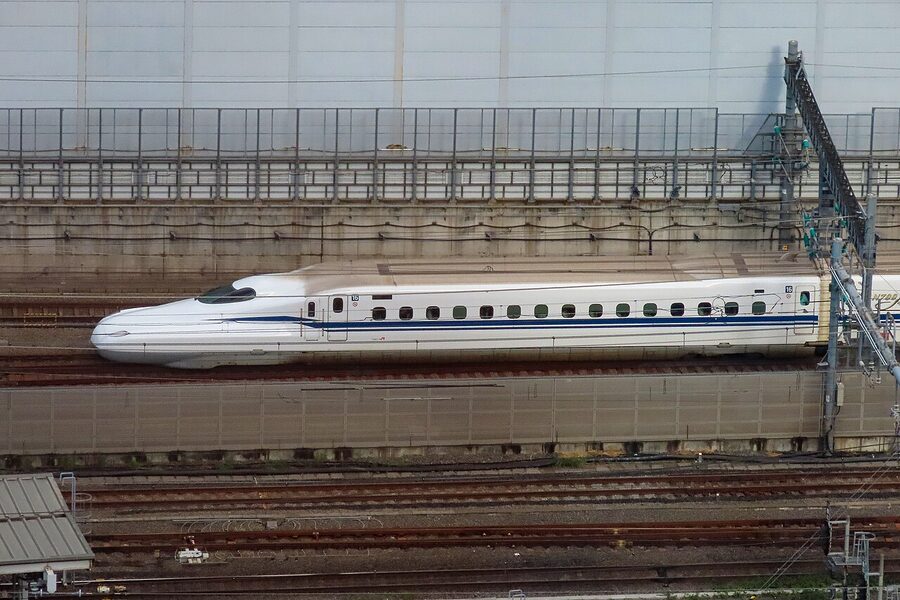
Here’s the bit every outdated blog gets wrong: the basic JR Pass does not let you ride the Nozomi and Mizuho, which are the fastest Shinkansen services on the Tokaido and Sanyo lines. You can ride the Hikari and Sakura (one step slower) and the Kodama (stops at every station). Hikari is almost always fine. The Nozomi is only about 20 minutes faster Tokyo to Kyoto, 2h 10m vs 2h 27m on Hikari. That is not a lot of minutes to pay extra for.
If you really want Nozomi, you have two options. You can pay a supplement — roughly ¥4,960 one-way Tokyo to Kyoto on top of your JR Pass — which is essentially paying a second time for the fast train. Or you can buy the “Nozomi-included” version of the JR Pass, which is priced higher (the regular JR Pass Nozomi version is about ¥70,000 for 7 days). Unless your schedule is genuinely tight, skip both. Hikari is the same train in all the ways that matter. It just pauses at slightly more stations.
Regional passes you should probably buy instead
The most under-used fact in Japan travel planning: there are about a dozen regional JR passes, and most of them are better than the national pass for the trip you’re actually doing. The ones worth knowing:
JR Tokyo Wide Pass — ¥15,000 for any 3 days within a 14-day window. Covers the Shinkansen to Nikko, Karuizawa, Echigo-Yuzawa, plus the Fuji Excursion train to Kawaguchiko, plus all JR lines in Tokyo. For a Tokyo-based trip with two or three day-trip ambitions, this is almost always the correct answer. If I’m only doing Tokyo, Nikko and a Mt Fuji day — this pays for itself by the second day.
JR East Pass (Tohoku area) — ¥30,000 for 5 days. Covers Tokyo all the way up to Aomori and Akita. If your trip takes in Sendai, Matsushima or the Tohoku onsen country, this beats the national pass handily.
Hokuriku Arch Pass — ¥30,000 for 7 consecutive days. This is the underrated one. It covers Tokyo to Kanazawa on the Hokuriku Shinkansen, then down to Kyoto and Osaka via the Thunderbird. If your trip is Tokyo plus Kanazawa plus Kyoto plus Osaka, this at ¥30,000 is less than half the cost of the 7-day JR Pass and covers exactly what you need.
JR Kansai Wide Area Pass — ¥12,000 for 5 days. Covers the Sanyo Shinkansen (Shin-Osaka to Okayama), plus Kyoto, Nara, Himeji, Kobe, and out to Kinosaki Onsen. Ideal if you’re based in Osaka or Kyoto and doing the classic day-trip run.
Kanto Area Pass — ¥10,180 for 1 day (non-Japan residents). Covers most JR lines in the Kanto region. Useful for a one-off heavy travel day but rarely the best call for a whole trip.
What’s striking when you look at these passes side by side is that almost every classic Japan itinerary has a regional pass that covers it cheaper than the national JR Pass would. The national pass really only makes financial sense if your route is actually national — covering the length of the country, not just one region.
How to buy the pass (and where)
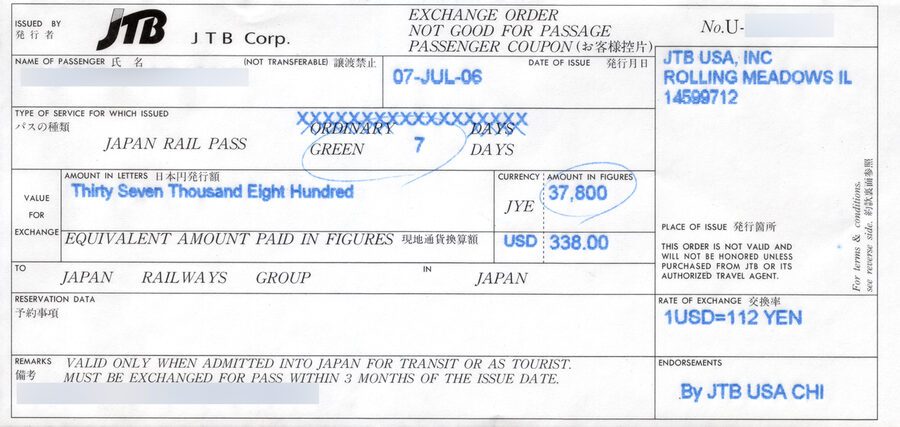
The traditional route: you buy an exchange order from an authorised vendor before you fly to Japan, then swap it for the actual pass at a JR East Travel Service Center on arrival. Authorised vendors include JRPass.com, Klook, JTB, and several others. Prices vary by a few hundred yen and shipping times — I’ve used Klook twice and had no issues.
Since 2020 you can also buy the pass directly in Japan at major stations, but it’s priced higher (a “convenience” penalty of roughly ¥5,000-¥10,000 depending on pass type), and it still requires activation at a Travel Service Center. For almost everyone, the cheaper answer is still to buy the exchange order before you fly.
The voucher validity window that nobody mentions: once you buy the exchange order, you have three months to exchange it in Japan. After that it’s dead. Don’t buy six months in advance thinking you’re being organised — you’re just burning money.
Here’s how the exchange actually works, step by step:
- Arrive in Japan with your exchange order and passport. The passport has to match the name on the order exactly — middle names and all.
- Find a JR East Travel Service Center. Narita, Haneda, Tokyo Station, Shinjuku, Shibuya and Ueno all have them. Narita’s is near the JR gates at both terminals. Haneda has one at Terminal 3.
- Queue. This is the bit people don’t warn you about. On a busy arrival day at Narita the queue can be 30-60 minutes. If you can hold off and exchange on day two in central Tokyo instead, you’ll likely wait five minutes.
- Hand over exchange order and passport. You’ll pick a start date — this can be any day within the next 30 days, so think about it. I usually set the start date to the morning I’m heading to Kyoto, not the day I land.
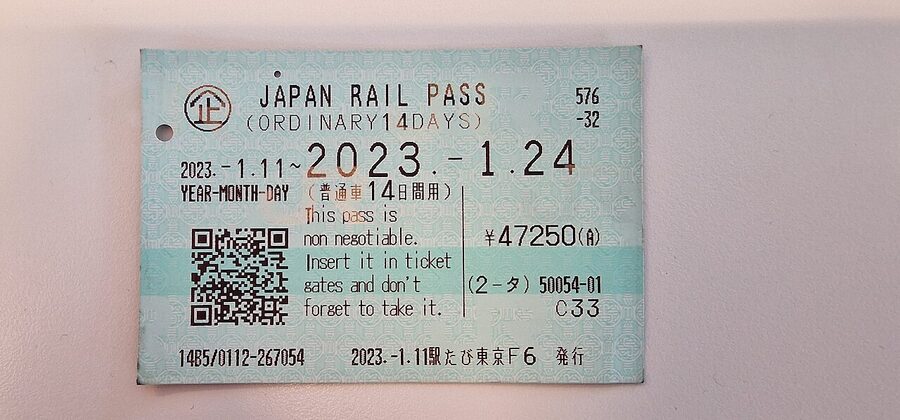
- Collect the pass. Paper, roughly credit-card sized. Don’t lose it — they won’t replace it.
- Reserve your seats, ideally then and there. The same counter will book your Shinkansen seats for free. I always reserve the outbound Kyoto leg at the moment I pick up the pass — takes two minutes, saves me faff later.
- Keep the pass somewhere you can find it quickly. You’ll be showing it at every JR gate for the next week.
Inside a JR East Travel Service Center
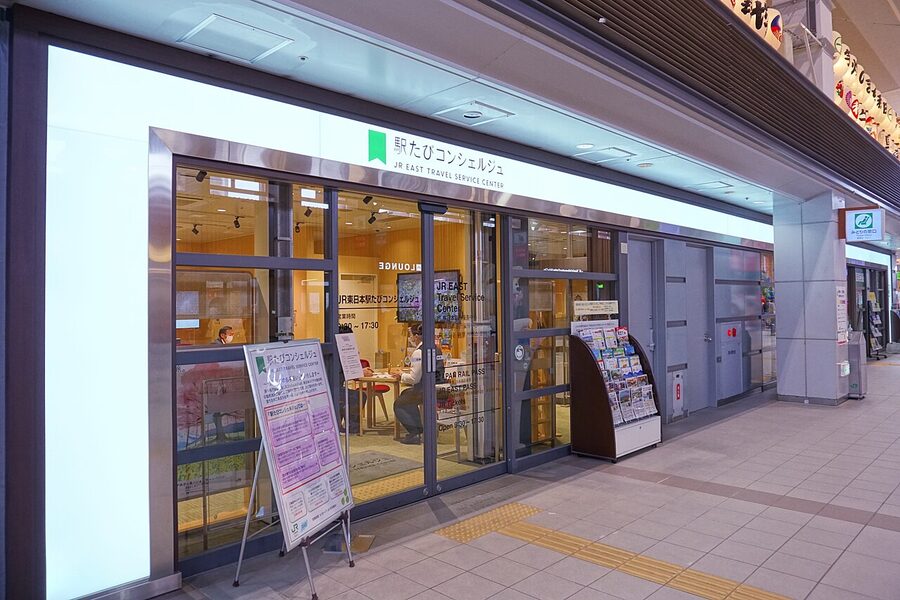
A few practical things the travel centre will and won’t do:
- They exchange the voucher for the actual pass — that’s the main job.
- They’ll reserve Shinkansen seats on the spot. Do it. You don’t have to pick every seat for the whole trip, but book the first long leg you know.
- They’ll sell you individual tickets and IC card top-ups.
- They can’t sort local subway issues or non-JR lines (so don’t ask about Keio or Odakyu at this counter).
- They don’t do refunds on a pass you’ve already activated. Refunds on un-exchanged vouchers go back through the vendor you bought from.
Shinkansen basics for first-timers
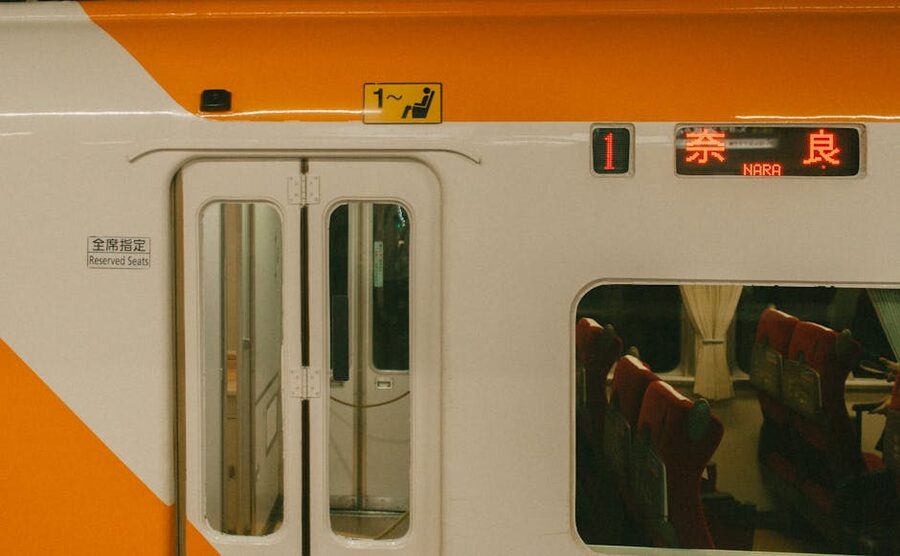
If this is your first Shinkansen ride, two rules make life easy.
First, you don’t need to reserve. Non-reserved carriages (the first 3-5 of most trains) are free to sit in with a JR Pass, and outside of Golden Week and New Year they almost always have plenty of empty seats. I’ve done Tokyo-Kyoto non-reserved on a Wednesday morning with the carriage half-empty.
Second, if you’re carrying big luggage, you need to reserve — specifically. On the Tokaido, Sanyo and Kyushu Shinkansen, if your suitcase is between 160cm and 250cm in total dimensions (length + width + height), you must book a “oversized baggage” seat. These are the seats at the rear of each carriage with space behind the last row for your case. Without this reservation you can technically be fined ¥1,000 and your bag can be moved to the luggage cage. In practice the staff are polite, but don’t push it.
Here’s how I reserve a Shinkansen seat when I’m already in Japan with my pass:
- Find a JR ticket machine with an English option — every big station has them, and they take passports and JR Passes.
- Select “Reserved seat” or “Shinkansen reservation” — the English menus are clear, but if you’re stuck, the staff counter will do it for you in under three minutes.
- Pick your train. Times, origin, destination. Bear in mind the Nozomi supplement if you’re on a basic pass — stick to Hikari or Kodama to avoid extra charges.
- Choose the carriage if you have a preference. I like Car 5 (quiet, close to the exit at most stations). Car 11 has the luggage area. Women-only seating exists on some services — ask if relevant.
- Collect the reservation slip. It’s a small paper ticket. You’ll need to show it alongside your JR Pass at the gate.
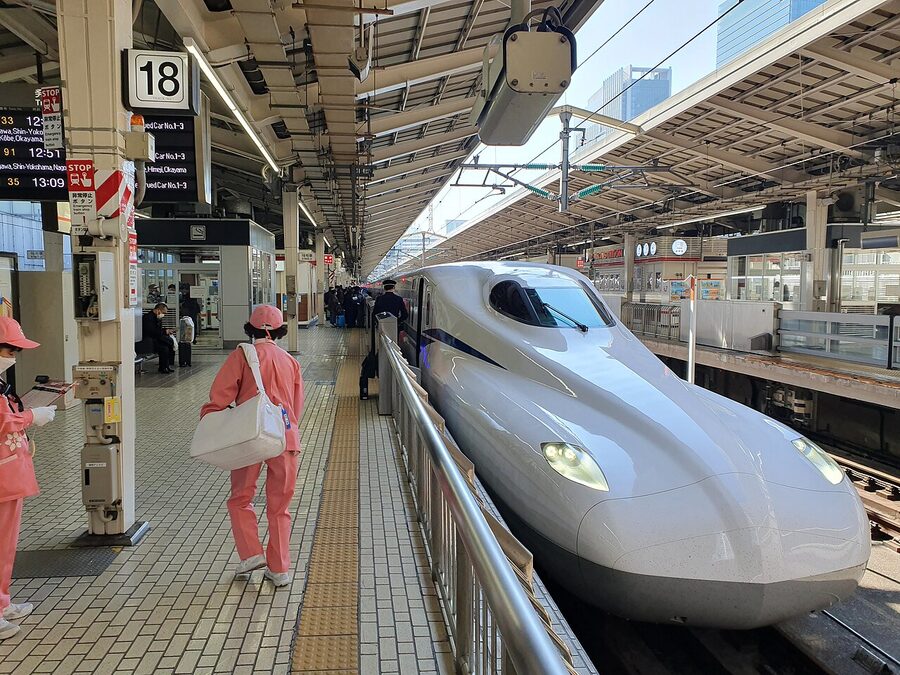
Two more tiny details nobody mentions: Shinkansen platforms have painted lines showing where each carriage door stops, so you can queue in exactly the right spot before the train arrives. And the carriages have a quiet, almost eerie way of rolling in — no squeal of brakes, no wheeze, just a hush and then a set of very pristine doors in front of you.
Practical info at a glance
- 7-day ordinary JR Pass: ¥50,000 adult / ¥25,000 child
- 14-day ordinary: ¥80,000 / ¥40,000
- 21-day ordinary: ¥100,000 / ¥50,000
- Green (first class): roughly 40% premium on top of ordinary
- Exchange order validity: 3 months from purchase date
- Covers: JR Shinkansen (Hikari, Sakura, Kodama — not Nozomi/Mizuho on basic), JR local lines, Narita Express, Tokyo Monorail
- Doesn’t cover: Tokyo Metro, Toei Subway, private railways (Keio, Keikyu, Odakyu, Tobu), non-JR buses, local buses
- Break-even for 7-day pass: roughly two Tokyo-Kyoto round trips, or one round trip plus Hiroshima, or multi-city across three regions
- Nozomi supplement: about ¥4,960 one-way Tokyo-Kyoto on a basic pass
- Oversized luggage: 160-250cm requires free reservation on Tokaido/Sanyo/Kyushu Shinkansen
- Activation queue at Narita/Haneda: up to 60 minutes on busy arrival days; five minutes on a quiet weekday at a central station
If I’m planning your trip, here’s what I’d actually book
This is the bit I’d skip everything else for. Here is the matrix, based on real trips I’ve taken and planned:
Tokyo only (any length): No JR Pass. Use an IC card like Suica or Pasmo for local trains and subway. Pay for your airport transfer separately — either the Narita Express to central Tokyo, the Skyliner from Keisei (which isn’t JR anyway), or the Limousine Bus.
Tokyo plus Kamakura or Nikko day trip: Still no national JR Pass. Either buy the point-to-point tickets individually, or grab the JR Tokyo Wide Pass (¥15,000 / 3 days) which covers both. For a Kamakura day trip alone, the Wide Pass is overkill — individual tickets are about ¥2,000 round trip.
Tokyo plus Kyoto (5-7 days total): Probably no pass. One Tokyo-Kyoto round trip on Hikari is ¥26,640 direct. Add a Narita Express or Haneda transfer and your total JR spend is maybe ¥32,000 — nowhere near the ¥50,000 break-even.
Tokyo + Kyoto + Osaka (7-10 days): Run the numbers carefully. Individual tickets might beat the pass. A 7-day pass still helps if you’re also planning Hiroshima or Nara, or if you want the flexibility to jump on any Shinkansen without thinking.
Tokyo + Kyoto + Hiroshima + Osaka + Nara or Himeji (7-10 days): 7-day JR Pass. This is the itinerary it was designed for and where it clearly wins.
Tokyo + Kanazawa + Kyoto + Osaka: Hokuriku Arch Pass (¥30,000 / 7 days). Genuinely the best value pass for this specific route, and a lot of people miss it.
Kansai-based trip (Osaka, Kyoto, Nara, Himeji, Kobe): JR Kansai Wide Area Pass (¥12,000 / 5 days). Don’t bother with the national pass.
Two weeks across three regions (Tokyo + Tohoku + Kyoto or similar): 14-day national pass (¥80,000) is probably worth it.
The short version: the national JR Pass is now a specialist product for multi-city trips that cover a lot of ground. It is no longer the default “first thing you buy before going to Japan”. Don’t let outdated advice cost you ¥20,000.
One last opinion. If this is your first trip and it’s centred on Tokyo, I’d pocket the money you’d have spent on the national pass and put it towards either a Tokyo Wide Pass for one good day-trip run, or a nicer hotel room. You’ll get more out of it. Most of what makes Tokyo brilliant doesn’t need a Shinkansen to reach.
If you’re still not sure, cross-check your exact route using the Japan-guide JR Pass calculator or the official JR Pass site. Plug in your stops, add the fares, compare with the pass cost. If you’re within a few thousand yen either way, buy the pass for the convenience. If you’re ¥10,000 or more below break-even, buy individual tickets. That’s all the calculation really needs to be.