
Tokyo is not the best place in Japan to see cherry blossoms. If that’s what you came for, and you only have one stop, go to Kyoto or Yoshino or Hirosaki. Their trees are older, the crowds are more civilised, and the temples behind the blossoms are half the reason you’re taking the photo in the first place.
I still think Tokyo is the right first stop for hanami, and it has almost nothing to do with the flowers. It’s the city you’re seeing the flowers against — 700 pink cherry trees tunnelling over a moat with the Imperial Palace on one side and a 38-million-person metropolis on the other, a Skytree poking up over a riverbank lined with petals, a canal in Nakameguro lit by 800 paper lanterns at 8pm on a Wednesday because the local shopkeepers’ association felt like it. That contrast is the point. Come here for the contrast, not the quality of the blossoms themselves, and you will not be disappointed.
In This Article
- First, the contrarian bit you need to hear
- What “cherry blossom season” actually means
- The other varieties, and why they matter for your flight dates
- When to actually book your flight
- A very brief hanami history (because it helps you enjoy it)
- Where to actually see them in Tokyo
- Chidorigafuchi — the one you queue for
- Shinjuku Gyoen — the quieter one with the longest season
- Meguro River (Nakameguro) — the one I’ll quietly tell you to consider skipping
- Ueno Park — the legendary party, and why I mostly send people to Chidorigafuchi instead
- Sumida Park — sakura with a Skytree in every photo
- Yoyogi Park — the quieter party
- Inokashira Park — the swan boat one
- Rikugien — for one very specific tree
- Yozakura — the night illumination spots, ranked
- Actually, about the photos
- Kanzan — the second cherry blossom season almost no visitor knows about
- A three-day plan if you have limited time
- Hanami, properly done
- What to actually book, and when
- The practical bit
First, the contrarian bit you need to hear
Most cherry blossom guides tell you to chase peak bloom. Peak bloom, mankai in Japanese, is when every flower on the tree is open. This is what the forecasters predict, what the tourism boards celebrate, and what your Instagram feed in early April is full of.
Peak bloom is overrated.
The three days before peak — the window the Japanese forecast service calls shichibu-zaki (7/10 of blossoms open) — is the week you actually want. Here’s why. The flowers look fresher. The crowds haven’t fully arrived yet, because the TV weather segments are still saying “not quite full bloom.” You can still queue for boats at Chidorigafuchi in under 45 minutes instead of two hours. You can still get a table at restaurants in Nakameguro. The photos look identical to peak — the difference between 70% open and 100% open is invisible to a phone camera, but the difference between 70% and “past peak and starting to fall” is not. If you time your trip for mid-peak, you’re also one bad storm away from seeing bare branches.
I learned this the expensive way. My first hanami trip, I optimised for the date the Japan Meteorological Agency predicted mankai in Tokyo. I arrived, it had just rained, and 40% of the petals had already blown off the Somei-yoshino in Ueno. Everyone I’d told to come “when the forecast says peak” was standing around looking slightly bereaved. The second time I came, I arrived four days earlier than the forecast. I caught Chidorigafuchi at 8 out of 10 stages of bloom. It was, I will be direct, one of the best two days of travel I’ve ever had.
What “cherry blossom season” actually means
Here’s the thing nobody says clearly enough: cherry blossom season is not a single week. It’s not even a single variety. The short, high-pressure version of sakura season you’ve read about — the one where people say you have “one week and one week only” — is specifically about one tree: the Somei-yoshino (染井吉野). Every other variety extends the window.
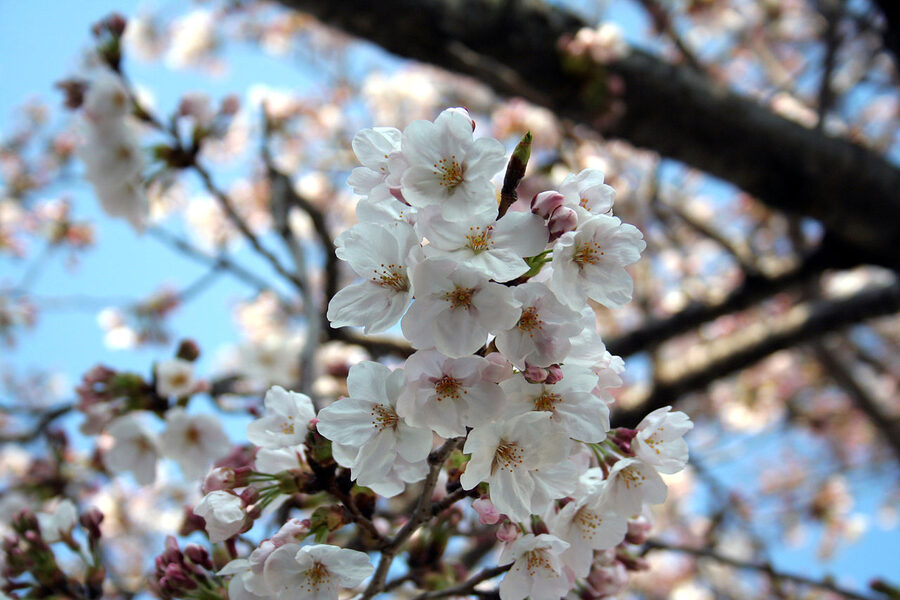
That clone detail is the wild one. Somei-yoshino doesn’t reproduce from seed the way normal trees do. Every tree is grafted from one original, which means every tree on your street in Tokyo has the same genetics as every tree on a street in Yokohama, and they all respond to the same temperature cues. When the conditions are right, an entire city goes into full bloom over about 48 hours. It’s why the cherry blossom forecasts work at all — you can predict one organism.
The 5-stage bloom forecast that the Japan Meteorological Agency and its weather partners publish daily during the season runs like this:
- Kaika (開花) — first bloom. Roughly 5-6 of the designated flowers on the “sample tree” for your city have opened. In Tokyo that sample tree is in Yasukuni Shrine. This is day zero.
- Sanbuzaki (三分咲き) — 3/10 open. Day 3-4.
- Gobuzaki (五分咲き) — 5/10 open. Half bloom. Day 5-6.
- Shichibuzaki (七分咲き) — 7/10 open. The sweet spot I told you about. Day 6-7.
- Mankai (満開) — full bloom. Day 7-8. What you see on TV.
After mankai you get maybe four good days before hanafubuki — the “flower storm” — starts. This is the part where the petals fall by the thousands at the first gust of wind, and for about 15 minutes your Instagram gets another chance at a really good photograph. Then it’s over until the late varieties kick in.
The other varieties, and why they matter for your flight dates
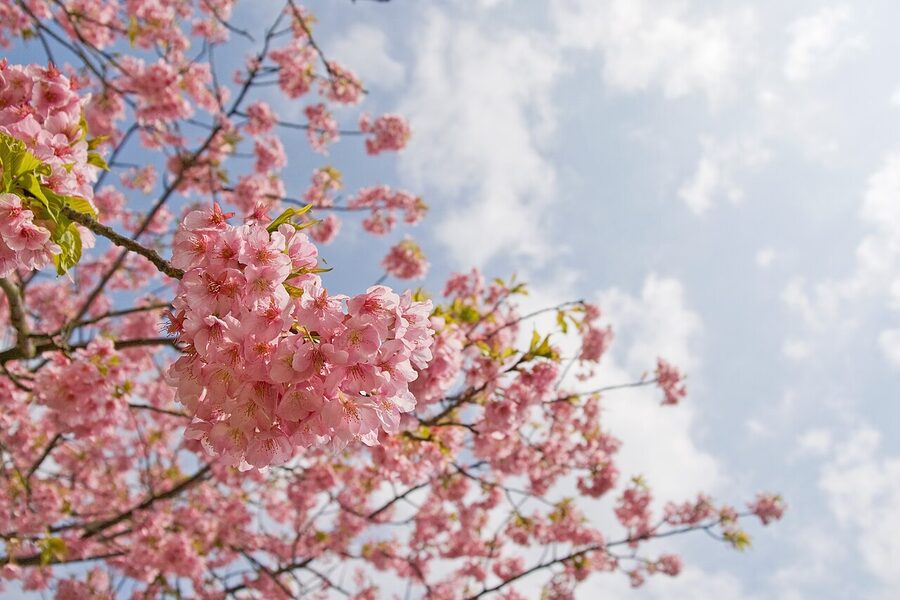
If you can’t come in late March or early April, you are not out of luck. Here are the other varieties that extend the Tokyo window out to almost eight weeks:
- Kanhi-zakura (寒緋桜) and Kawazu-zakura (河津桜) — mid-February to early March. Saturated, almost magenta pink. Drooping clusters rather than the flat face of Somei-yoshino. Ueno Park has some. Izu Peninsula (a day trip south) has thousands.
- Shidare-zakura (枝垂桜) — weeping cherry. Mid-to-late March, usually slightly before Somei-yoshino. Long willow-like branches with pink blossoms cascading down. The one giant 70-year-old shidare at Rikugien is floodlit at night during its peak — it’s the single best tree in Tokyo.
- Somei-yoshino (染井吉野) — late March to early April. The main event.
- Yae-zakura / Kanzan (八重桜 / 関山) — mid to late April. Double-petalled, dense, almost fluffy. Bright bubblegum pink. A second full cherry season two weeks after the first, and one most first-time visitors miss entirely.
So when the internet tells you to book your flight for the first week of April, what they mean is “the first week of April for Somei-yoshino in Tokyo on an average year.” If you can’t make that window, you can still plan around the others — mid-March for shidarezakura, late April for yaezakura. Don’t panic-cancel your trip.
When to actually book your flight
The honest answer: you can’t know. You can only guess, and then you watch the forecasts and hope. Here’s how I’d do it if I were planning right now.
The first JMA forecast for the following year usually drops around the last week of January. It will give predicted kaika (first bloom) and mankai (full bloom) dates for about 58 cities, updated every 7-10 days until the blossoms actually open. The dates shift as winter progresses — a warm February pulls everything earlier, a cold March pushes it later.
Don’t book your flight until the February forecast. By then the predictions are within a 4-5 day window, and that’s enough to plan a trip. If you’re trying to optimise, book for three days before the predicted mankai and stay at least eight days. That gives you wiggle room if the forecast updates in either direction. Tokyo’s average peak over the last five years has been 24-28 March. Warmer winters have pushed it as early as 17 March. It used to average 2-5 April in the 1960s — climate change is steadily pulling it earlier, and Japanese meteorologists now expect the trend to continue.
Also, and this is the unglamorous part: book accommodation the same day you book the flight. Every half-decent hotel in central Tokyo is full from three months out during the cherry blossom weeks. Anything you find the week of will cost double.
A very brief hanami history (because it helps you enjoy it)
Hanami (“flower-viewing”) has been a thing in Japan since at least 812 AD. The earliest record is of Emperor Saga holding a picnic under cherry trees at the Shinsen-en garden in Kyoto. For the first few centuries it was an aristocratic pursuit — court ladies writing poetry about the flowers, samurai philosophising about impermanence. It didn’t really become a popular festival until the Edo period (1600s-1800s), when Shogun Tokugawa Yoshimune deliberately had cherry trees planted along the Sumida River and in spots like Asukayama Park to give the ordinary people of Edo (now Tokyo) a reason to go outside and drink.
The old aristocratic angle — mono no aware, the “gentle sadness of things passing” — is still in there somewhere. The blossoms last a week, fall in a windstorm, and are gone. You are meant to notice that. Modern hanami is mostly just a very good picnic with very good timing, but if you’re sitting under a cherry tree at dusk with a can of something from a convenience store, it genuinely is hard not to feel a small wistful thing. I’ve cried once. It was embarrassing. I stand by it.
Where to actually see them in Tokyo
There are about 700 places with cherry trees in Tokyo. Most are fine. The seven below are the ones worth building your trip around, and I’ve ranked them by a combination of how good the trees are, how unique the setting is, and how badly the crowds ruin it.
Chidorigafuchi — the one you queue for
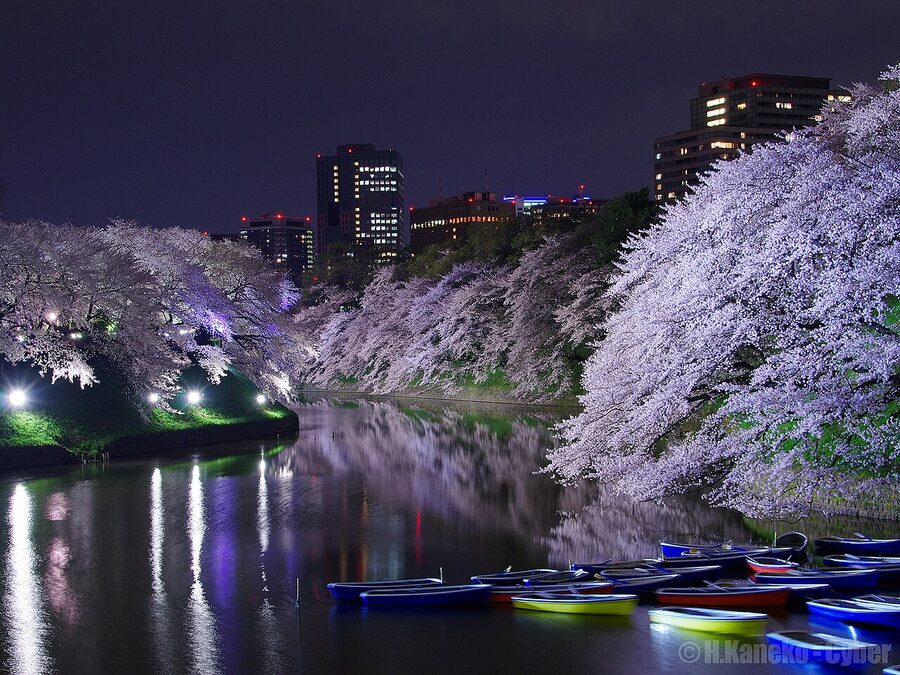
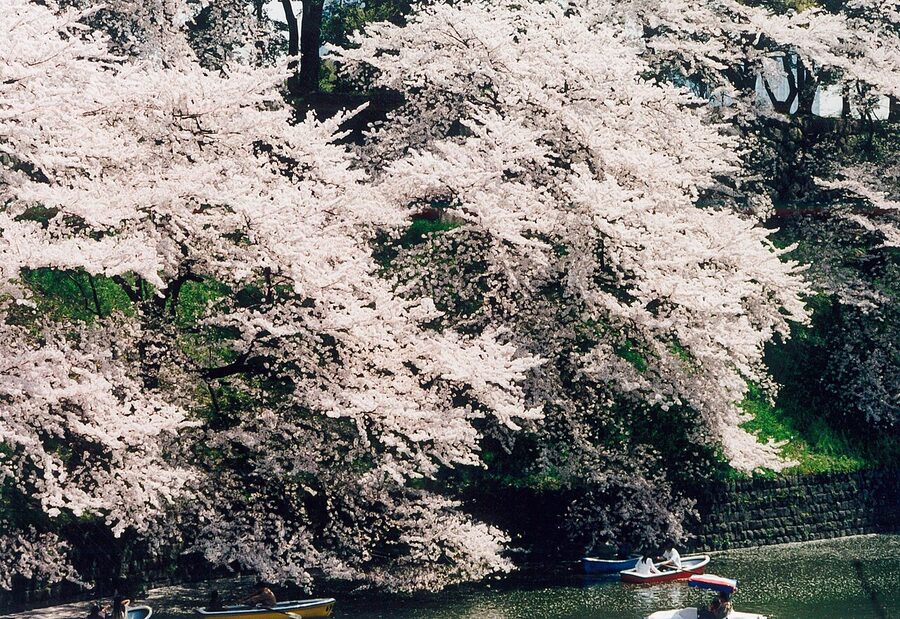
Chidorigafuchi is the moat on the northwest side of the Imperial Palace. Around 260 cherry trees line a 700-metre footpath along the water, and because the moat curves, you get an unbroken tunnel of pink arching over both the path and the water itself. It is genuinely the single most impressive stretch of sakura in Tokyo.
It has two things no other spot has. First, the rowboats. You can rent a wooden rowboat and paddle through the petal-covered water underneath the flowers. It is an unreasonable experience to have in the middle of a 38-million-person city. Second, the night illumination. The lanterns come on around sunset and the whole moat glows until 10pm. Unlike the Meguro River version, the Chidorigafuchi lights are warm white rather than pink, which means your eyes and your camera can still make sense of what they’re seeing.
The boats: ¥800 for 30 minutes, or ¥1,600 for an hour per boat (not per person). Cash only. Ticket office opens at 9am. During peak, queues routinely run 1-2 hours, sometimes longer. Here’s the trick: they hand out time-slot tickets — you queue once in the morning to get a ticket, then come back at your allotted hour and skip the line. Do not just show up at noon expecting to get on a boat.
Access: 3 minutes from Kudanshita Station, exit 2. The southern end of the footpath starts right there. The boat pier is about 5 minutes further along the moat.
Best time: 8am for walking the path. Go back at 7pm for the illumination. Free, 24 hours for the path itself, lit roughly 6.30pm-10pm during peak.
Shinjuku Gyoen — the quieter one with the longest season
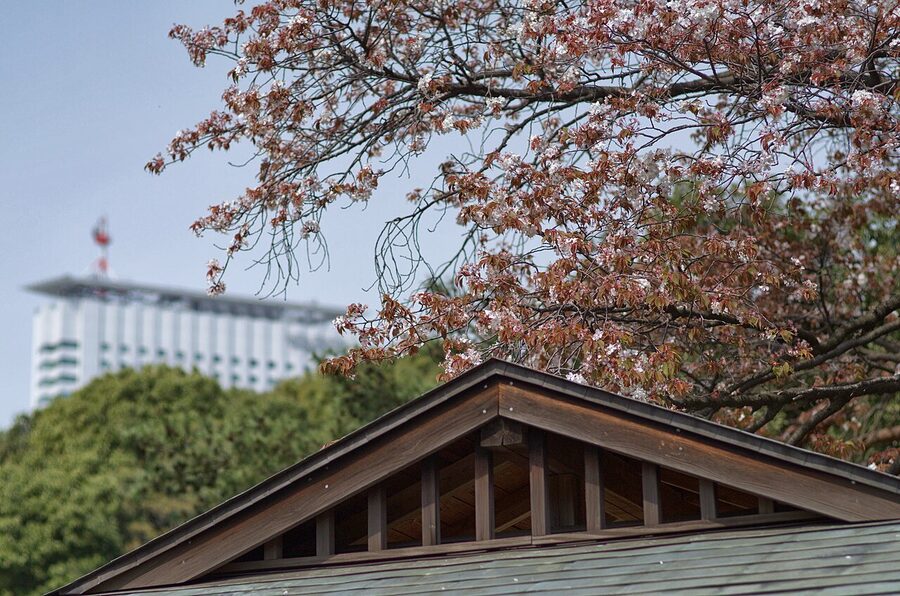
If you want actual peace during hanami, Shinjuku Gyoen is the answer. It’s a 58-hectare former imperial garden with roughly 1,000 cherry trees across 70+ varieties, which means the total bloom window here stretches from mid-February (kanhi-zakura) through late April (yaezakura). You can come here on the same trip at a “wrong” date and still see cherry blossoms somewhere in the garden.
The other thing: no alcohol is allowed. That sounds boring. It is not. It’s the reason this park is genuinely pleasant during peak week instead of being a lager-soaked obstacle course. You get families, couples, older people reading in deck chairs, school kids with sketchbooks. The tone is completely different from Ueno.
Entry: ¥500, cash or IC card. You must pre-book online for weekends and holidays during the cherry blossom season — this was introduced in 2023 after the park kept having to turn people away at the gate. Weekdays you can walk up.
Access: Shinjuku-Gyoemmae Station (Marunouchi Line), exit 1. Two minutes to the Okido Gate. You can also walk 10 minutes from JR Shinjuku.
Hours: 9am to 6pm during peak, last entry 5:30pm. Closed Mondays.
Meguro River (Nakameguro) — the one I’ll quietly tell you to consider skipping
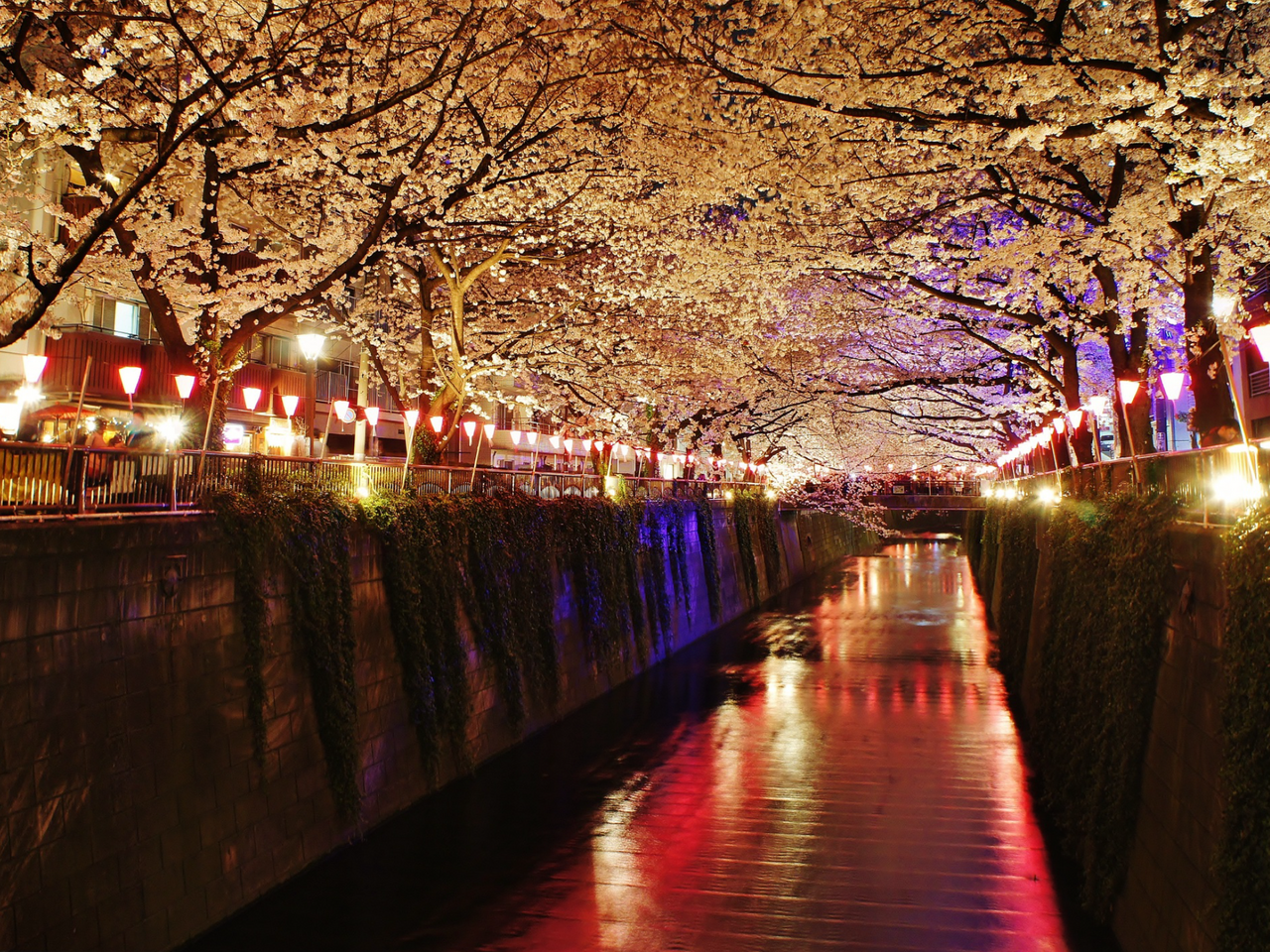
The Meguro River stretch is about 4 kilometres of canal walls lined with roughly 800 Somei-yoshino trees, with several hundred pink paper lanterns strung overhead, and a parade of little pop-up stalls selling sakura-themed everything (mulled sake, pink onigiri, strawberry mochi). It is not subtle. At night during peak, the whole thing is lit by the overhead lanterns and it photographs like someone poured a milkshake over a Tokyo canal.
Here’s the problem. The path on either side of the river is about a metre and a half wide. During peak bloom after dark, you will be moving at roughly the speed of a very polite queue at a bus stop. The Meguro River festival attracts something like four million visitors in two weeks. And the photos you’ll take come out nothing like the ones you saw on Pinterest — the pink lantern light washes the whole scene in a magenta that your phone’s white balance can’t cope with. Your memory of the night will be better than any image you get.
Go once, at dusk (around 6pm) when the light is still in the sky but the lanterns are on. Eat a street-food thing. Walk ten minutes of the path. Then leave. Do not plan your whole evening around it.
Access: Nakameguro Station (Tokyu Toyoko Line / Hibiya Line), central point of the river. Meguro and Ikejiri-Ohashi stations reach the northern and southern ends respectively.
Cost: Free. Lanterns lit roughly 5pm to 9pm during peak (mid-late March), dates announced a week in advance.
Ueno Park — the legendary party, and why I mostly send people to Chidorigafuchi instead
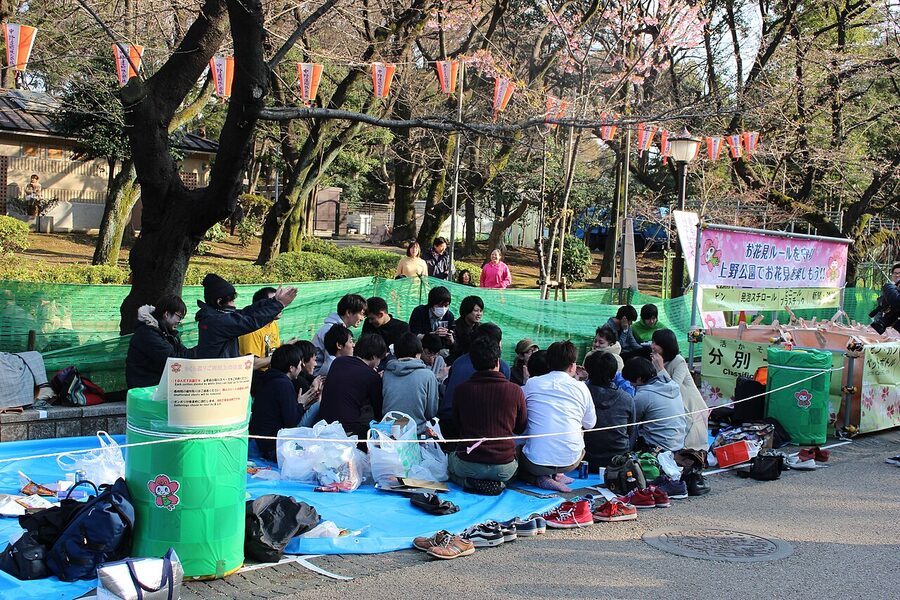
Ueno Park is the classic. Around 1,200 cherry trees along a central avenue, hundreds of blue tarps on either side, groups drinking and eating and doing karaoke, lanterns strung over the path for night viewing, and the whole thing free and open 24 hours. This is the full hanami party and it is, to be fair, an experience.
It is also completely overwhelming. By 2pm on any weekend during peak, the central path is shoulder-to-shoulder; the grass is invisible under blue tarpaulin; and the volume is somewhere between “lively” and “1997 British pub.” If you’re travelling with kids, or you came for the trees rather than the drinking, this will be a lot. Ueno’s trees are good — not spectacular, not even the best in the area — and the crowds are what you’re really coming to see.
Here’s the thing nobody tells you. Chidorigafuchi is 10 minutes by train from Ueno, direct on the Yamanote Line and then a short Tozai Line hop. You can do an hour at Ueno to see what a real Tokyo hanami looks like, then bail on the crowd and go watch the sun set over the moat. Almost nobody does this. It is the single best hack in this article.
Access: Ueno Station (JR Yamanote / Ginza / Hibiya), any exit. Cherry avenue starts 3 minutes from the park exit.
Cost: Free. 24 hours open. Lanterns lit roughly until 8pm during peak.
Sumida Park — sakura with a Skytree in every photo
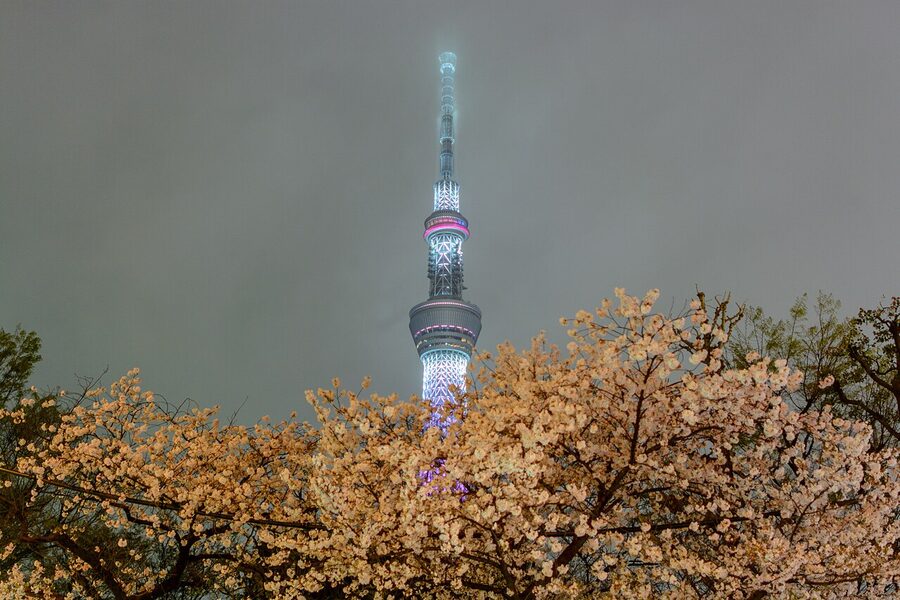
Sumida Park runs along both sides of the Sumida River near Asakusa. About 1,000 cherry trees line a one-kilometre stretch, and the Tokyo Skytree looms over the east bank of the river — which means every photograph you take of the trees has a 634-metre tower in the background. Love it or hate it, that composition is hard to get bored of.
This one has actual historical weight. The Tokugawa shogunate planted cherries here in the 1720s specifically as a public amenity. The riverside has been a hanami spot for 300 years. That’s longer than most American cities have existed.
Combine it with a temple visit — Senso-ji in Asakusa is a 5-minute walk and the two fit together neatly into a morning. You can also take a yakatabune cruise (traditional Japanese pleasure boat) up the river past the trees.
Access: Asakusa Station (Ginza / Asakusa / Tobu lines), 2 minutes to the west bank. Cross the Azuma Bridge for the east bank and the Skytree shots.
Cost: Free, 24 hours. Lantern illumination during the two-week Sumida Park Sakura Festival in late March/early April.
Yoyogi Park — the quieter party
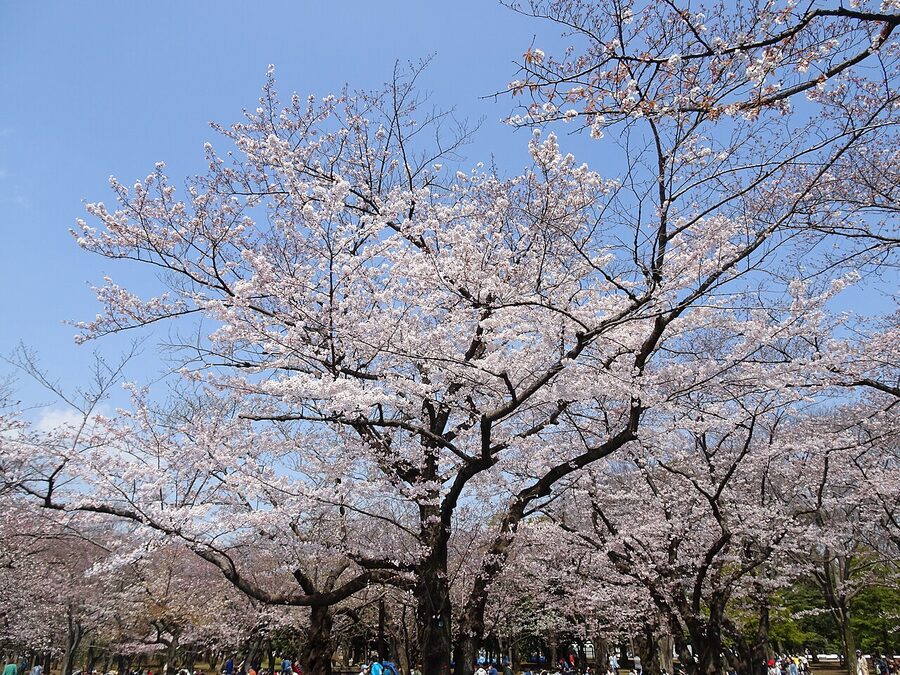
Yoyogi is Ueno’s more relaxed cousin. Around 600 cherry trees, massive open lawns (the lawns are the point — at Ueno everyone’s packed on narrow grass strips), families and music students and groups of friends rather than salaryman drinking parties. Right next to Harajuku station, and walking distance from Meiji Shrine, which is one of the better one-two combinations for a morning in Tokyo.
The trees here aren’t the best in the city. They’re fine. But the atmosphere is the best of the popular parks — proper picnic room, no forced jollity, genuinely mixed crowd of locals and visitors.
Access: Harajuku Station (JR Yamanote) or Meiji-jingumae Station (Chiyoda / Fukutoshin). 2 minutes either way.
Cost: Free. 5am to 8pm. No lanterns after dark.
Inokashira Park — the swan boat one
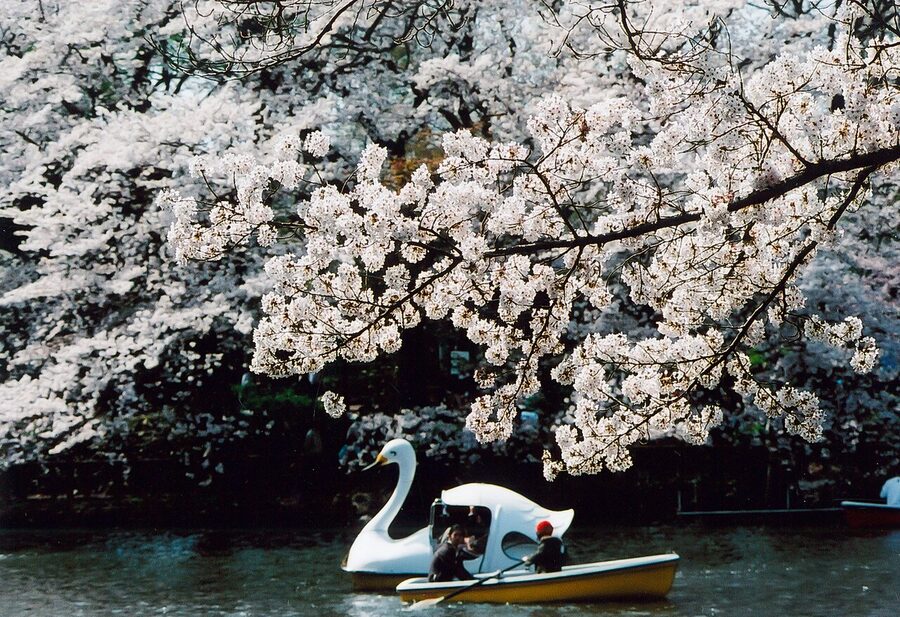
Inokashira is in Kichijoji, 20 minutes west of Shinjuku on the Chuo Line. About 500 cherry trees surround a central pond, and the trees overhang the water in a way you don’t quite get at the big central parks. You can rent either a rowboat or (if you’re bolder) a giant swan-shaped pedal boat, which costs ¥800 for 30 minutes.
It’s the best cherry blossom neighbourhood experience. Kichijoji itself is an extremely liveable Tokyo suburb — lots of independent shops, a Ghibli Museum fifteen minutes walk from the park, proper cafes. You can make half a day of it without ever feeling touristy. It’s my choice for hanami if I’m already in west Tokyo.
Access: Kichijoji Station, south exit, 5 minutes walk.
Cost: Park free. Boats ¥800 for 30 minutes, 10am to 4.30pm, cash only, queues of 30-45 minutes during peak.
Rikugien — for one very specific tree
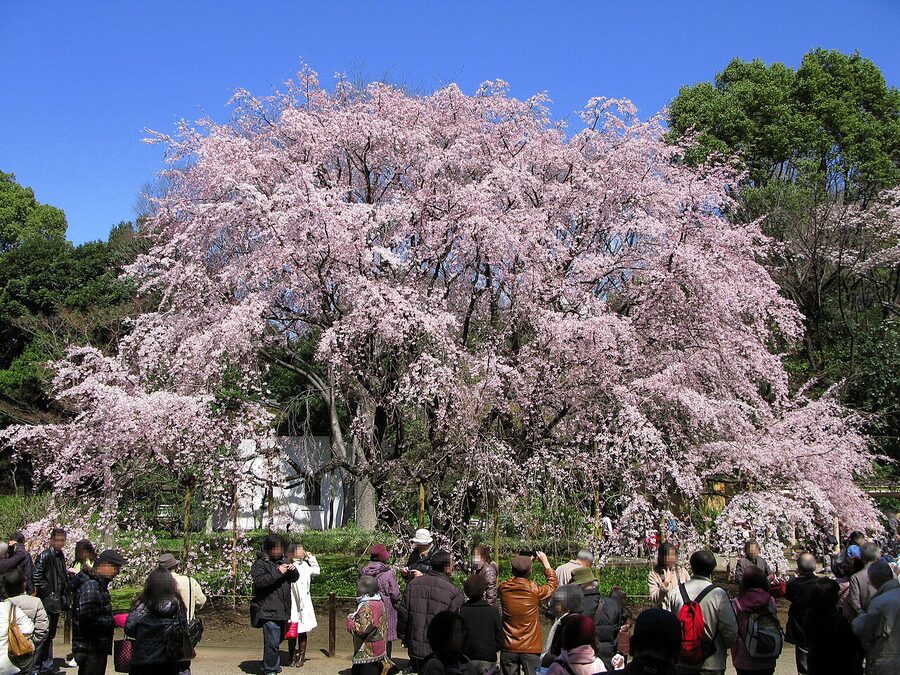
A lot of people write off Rikugien during cherry blossom season because the garden only has a handful of cherry trees total. That’s missing the point. Rikugien has one cherry tree — a 70-year-old shidare-zakura, 15 metres tall with a canopy that cascades like a waterfall — and during peak they floodlight it every evening until 9pm. Just the tree. Against a black background. It is the single most photographable object in Tokyo during cherry blossom season, and it’s over within about six days of opening.
This one is easy to miss because it peaks a week before the Somei-yoshino forecast. Track it separately — Rikugien announces the illumination dates on its own site about two weeks before bloom.
Access: Komagome Station (JR Yamanote / Namboku Line), 7 minutes.
Cost: ¥300 entry. Evening opening 9am-9pm during illumination (normally closes at 5pm).
Yozakura — the night illumination spots, ranked
Cherry blossoms at night are called yozakura. Not every park does them — it takes infrastructure, and some parks close at 5pm. Here are the five where it’s worth showing up after dark, in order:
- Chidorigafuchi — warm white lanterns over the moat, reflections on water, 24-hour access for walking. Best in Tokyo.
- Rikugien — the single floodlit shidare. Controlled, elegant, quiet. If you’re a photographer, this is the one.
- Meguro River — dramatic pink lanterns, huge festival energy, but camera-hostile.
- Ueno Park — lanterns strung over the main path, very loud crowd, fine for atmosphere.
- Sumida Park — lit during the festival only, Skytree in the background. Pretty.
Night lighting can make blossoms photograph strangely. Lanterns tend to wash everything in their own colour temperature — the Meguro River ones come out fuchsia, the Ueno ones orange, the Chidorigafuchi and Rikugien ones surprisingly natural because they’re warm white. If you care about getting good photos at night, go to Chidorigafuchi or Rikugien. If you want the vibe, go to Meguro.
Actually, about the photos
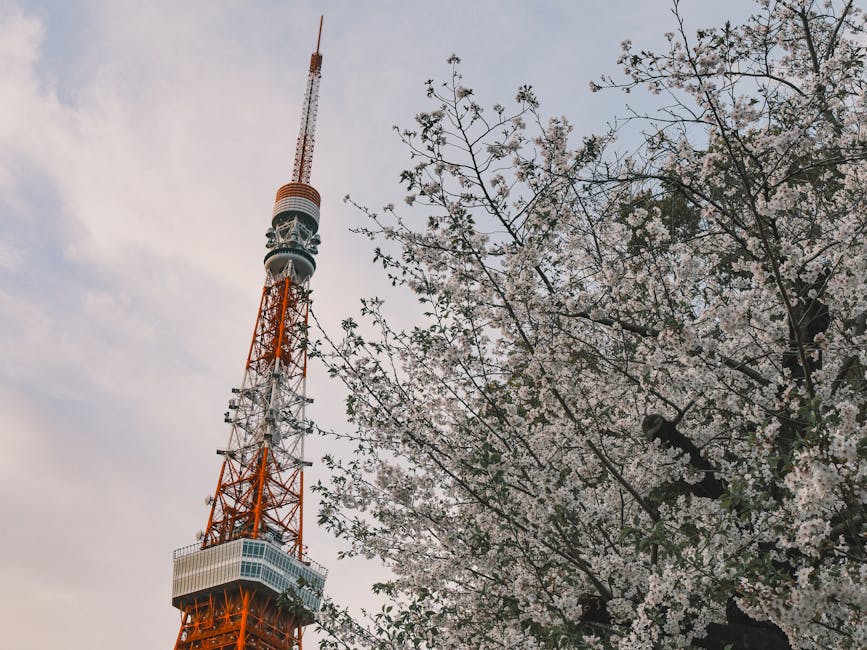
Most hanami photos are bad. I mean your photos, mine, everyone’s. The blossoms have a pale, almost white-pink that the human eye corrects in real time but a camera sensor does not — so your picture either comes out grey (blossoms blown out by bright sky) or muddy (wrong white balance under overcast), and never quite the pale pink you remember. Add in lanterns at night and it gets worse. Add in phone HDR and you get magenta.
A few things that actually work:
- Shoot around blue hour, about 20 minutes after sunset. The sky goes cobalt, the blossoms glow against it, and the contrast is finally good.
- Include a dark object — a shrine gate, a temple roof, the Skytree, a tree trunk. Pure flowers against sky is where phones fail worst.
- Don’t trust HDR. Turn it off and let the sky overexpose slightly. The blossoms will read cleaner.
- Stop trying to get the tunnel shot at Meguro River at night. It’s the one every tourist attempts. It’s the hardest lighting in Tokyo. Your phone cannot do this scene justice.
Mostly, though, put the phone down. The flowers last 72 hours at peak. You’ll enjoy the two minutes you spend actually looking at them more than the two hours you’d spend taking photos.
Kanzan — the second cherry blossom season almost no visitor knows about
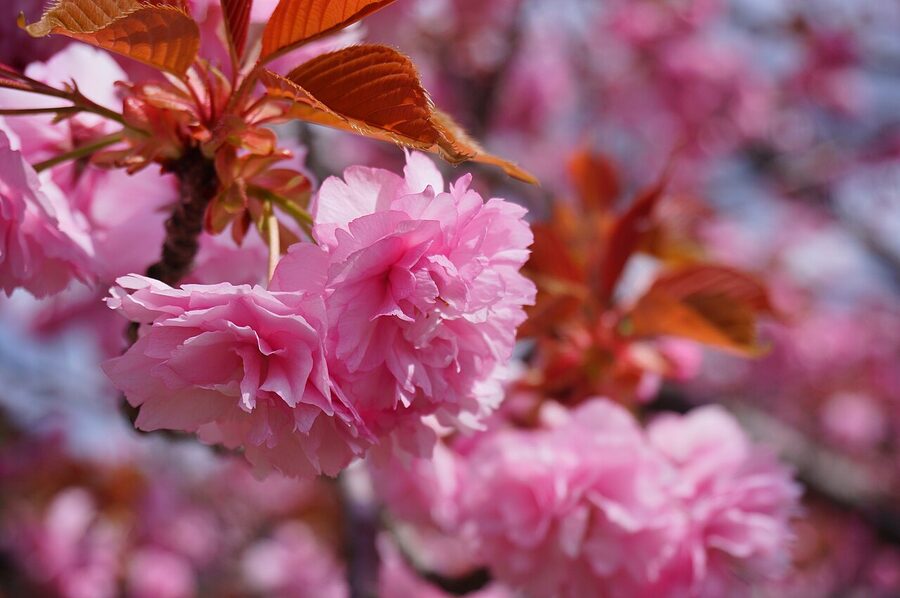
If you missed the main Somei-yoshino window and you’re still in Tokyo in late April, go to Shinjuku Gyoen and find the Kanzan trees. They’re dense, bubblegum-pink, double-petalled, and they bloom about 10-14 days after the regular cherry blossoms have finished. Almost no first-time visitors know about them. Restaurants and hotels have normal availability again. Prices are back to regular. You can walk the park without queuing for entry.
This is the single biggest thing I wish someone had told me the first time I planned a hanami trip. The “you missed it” panic is almost always false. There’s another whole week of cherry blossoms two weeks later.
A three-day plan if you have limited time
If you’ve got three days in Tokyo and you want to do cherry blossoms properly, here’s what I’d do:
Day 1 (morning): Chidorigafuchi. Arrive 8am. Walk the footpath before the crowds. Get a timed boat ticket for later. Come back around 11am for the boat. Quick lunch in Kudanshita.
Day 1 (afternoon): Shinjuku Gyoen. Take the Hanzomon Line across. Spend 3-4 hours. Wander, don’t rush. Sunset around the Japanese garden is gorgeous.
Day 1 (evening): Go back to Chidorigafuchi after dinner for the illumination. Yes, the same spot twice. It looks completely different.
Day 2 (morning): Sumida Park and Asakusa. Walk the river, get the Skytree photo, eat street food. Do Senso-ji while you’re there.
Day 2 (afternoon): Inokashira Park. Train out to Kichijoji. Rent a rowboat. Spend the rest of the afternoon in the neighbourhood — actual Tokyo life here rather than tourist Tokyo.
Day 2 (evening): Nakameguro briefly. Go for 45 minutes, eat one festival food, leave before you get trapped.
Day 3 (morning): Yoyogi Park and Meiji Shrine. Quiet start. Picnic breakfast from a convenience store on the Yoyogi lawns.
Day 3 (afternoon): Rikugien if it’s in bloom, otherwise wander Ueno Park for the cultural-shock factor of the full hanami party. Stay for sunset.
Hanami, properly done
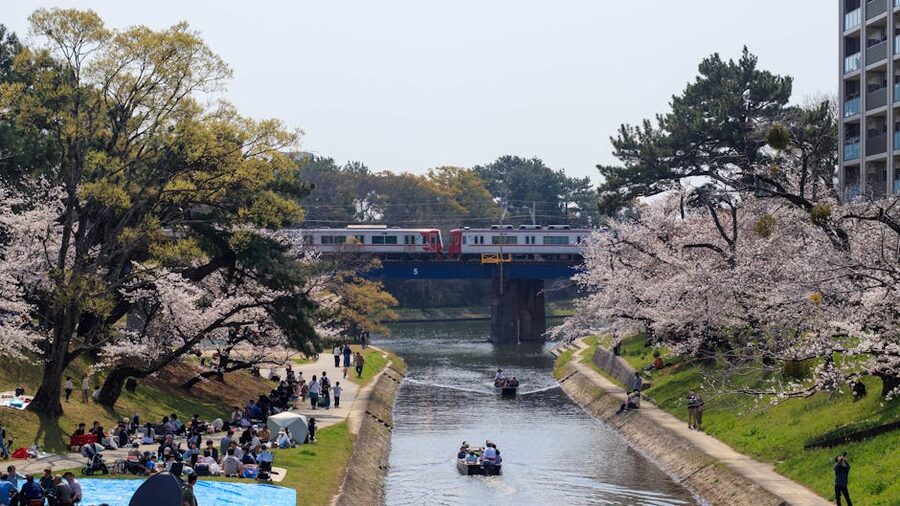
If you want to do a real picnic, here’s the drill.
- Blue tarp or picnic blanket. Cheap blue tarps are sold in every 100-yen shop in late March. Don’t use your hotel towels.
- Go early for a spot. At Ueno and Yoyogi, people send one poor friend at 7am to sit on the tarp until the rest of the group arrives after work. Be that friend, or don’t.
- Food: a konbini haul works. Onigiri, fried chicken, sakura-themed sweets, a bottle of something. Lawson, FamilyMart, and 7-Eleven all have hanami-season bento. The pink sakura onigiri is worth the cliche.
- Bin your rubbish. This is where tourists give hanami a bad name. Take a bag. Bring everything out with you. Japan has very few public bins, especially during events.
- Shoes off on the tarp. Leave them along the edge.
What to actually book, and when
- Hotel: as soon as the JMA drops its February forecast, book. Aim for central Tokyo — Shinjuku, Marunouchi, or Ueno area. Anything outside the Yamanote Line will cost you 40 minutes of commute during crowded weeks.
- Flight: with the February forecast, target 3 days before predicted mankai, and fly out 8 days later to allow for shifts.
- Chidorigafuchi boats: can’t book in advance. Just turn up at 8am with cash.
- Shinjuku Gyoen: book online via the park’s reservation site for weekends and holidays.
- Rikugien night illumination: no booking, just turn up after 6pm. Line is 10-15 minutes.
- Yakatabune (river boat): book via the official Go Tokyo listings or an operator like Edogin.
The practical bit
- Weather: daytime highs in late March are usually 15-18°C. Take a light jacket for evenings — night viewing can feel 5°C colder than the day.
- Rain: cherry blossom week often coincides with hanami-ame (“blossom rain”). Carry a cheap conbini umbrella. If the forecast warns of wind, go that day — hanafubuki in person is worth rearranging for.
- Cash: most hanami stalls and boat rentals are cash only. Carry ¥5,000-10,000 in small notes.
- Transport: Chidorigafuchi, Shinjuku Gyoen, Ueno, Yoyogi, and Meguro River are all on the Tokyo Metro / JR network, IC card usable. Inokashira needs the Chuo Line.
- The forecasts to watch: the Japan Meteorological Agency publishes first bloom dates. Private forecaster Weathernews updates live goryoku (5-stage) predictions for all major parks in Tokyo daily. Go Tokyo runs a live map during the season showing current bloom stages for 50+ specific locations.
If you only remember three things from this whole guide: come three days before peak, go to Chidorigafuchi at 8am, and don’t panic if you miss the Somei-yoshino week — the Kanzan two weeks later are more beautiful anyway, and you’ll have the parks almost to yourself.
The blossoms will be over by the time you read this. Or they’ll be starting tomorrow. That’s kind of the whole thing.