
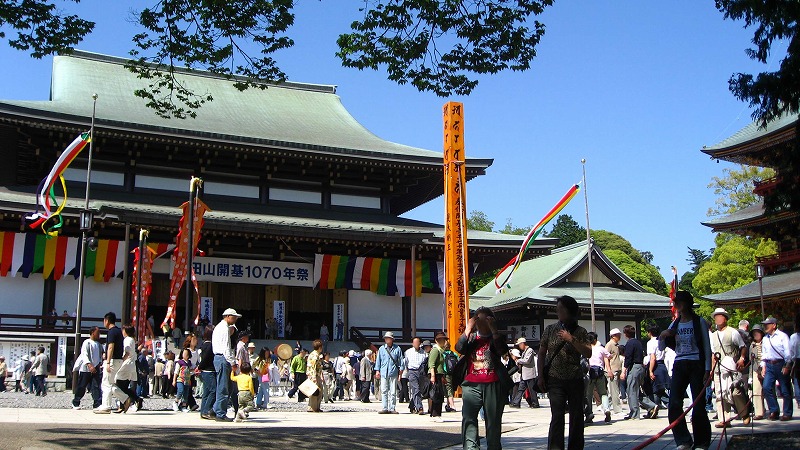
Naritasan Shinshoji is the Buddhist temple that stops the country for three days every January. Around three million people pour through its gates over New Year for hatsumode — the year’s first prayer — making it Japan’s second-busiest religious site after Meiji Shrine, and the busiest temple of all. It’s also the temple that founded itself in the year 940, after a monk called Kancho was sent here from Kyoto with a sacred Fudo Myo-o statue and an imperial order to pray down a samurai uprising. The uprising ended. The statue stayed.
And here’s the part nobody tells you on the way through Narita Airport: the whole 150-hectare complex sits ten minutes from your terminal by train. Ten minutes. With a layover of three hours or more, you can leave your bag in a locker, ride one stop on the Keisei line, walk one of the most atmospheric pilgrimage approaches in Japan, and be back at the gate with a temple in your camera roll. I’ve done it on a four-hour layover and still had time for a leisurely bowl of unagi.
In This Article
- What it actually is
- The bit I’d actually do — the goma fire ritual
- Getting there from the airport — and from Tokyo
- The Omotesando approach (do not skip this)
- Kawatoyo, and what to know about Narita unagi
- Through the Niomon gate and into the temple proper
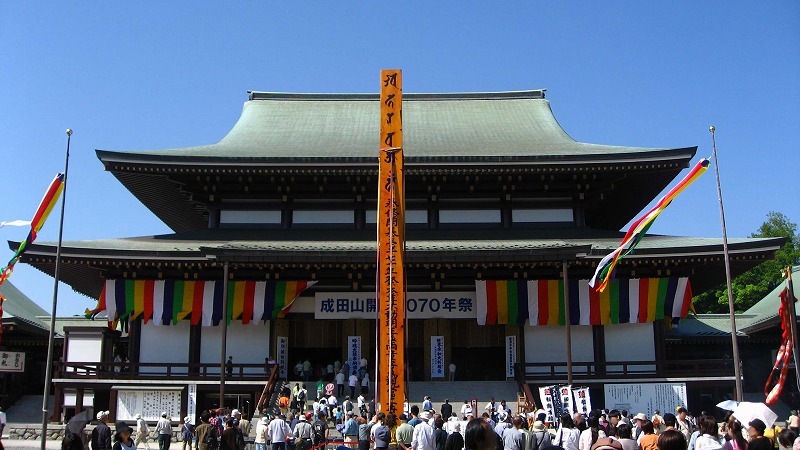
- Daihondo (Great Main Hall)
- Three-storied pagoda
- Komyodo
- Daitou — Great Pagoda of Peace
- Okunoin (the inner sanctuary)
- Other small details
- Naritasan Park — the bit nobody mentions
- The numbered layover plan (3-4 hours, gate to gate)
- The full day plan (from Tokyo)
- Practical info at a glance
- If you’re staying in Tokyo and want more like this
- My Narita-san layover plan
What it actually is
The full name is Narita-san Shinsho-ji — 成田山新勝寺 — and you’ll see it written as one word, two words, or with hyphens depending on whose sign you’re reading. Shinshoji means “newly victorious temple” because it commemorates the suppression of Taira no Masakado’s rebellion in 940. Naritasan is the mountain name. Locals just call it “Narita-san” or “Ofudo-sama” (お不動さま) — affectionate shorthand for the deity at its centre.
That deity is Fudo Myo-o, the Wisdom King who looks furious in every depiction — black or dark blue, holding a sword and a rope, ringed by flames. He’s not angry at you. Flames burn worldly desire, the rope catches you when you fall, the sword cuts through ignorance. Naritasan is one of Japan’s biggest centres of Fudo worship — head temple of the Shingon sect’s Chisan branch, with around 70 affiliated temples nationwide.
The bit I’d actually do — the goma fire ritual
If you only do one thing on the temple grounds, do this. The goma (護摩) is a Shingon fire ritual where monks burn cedar sticks inscribed with prayers, in a furnace inside the main hall, while chanting. It happens five times a day on weekdays — roughly 5:45, 9:00, 11:00, 13:00 and 15:00 — and a few extra times on weekends and holidays. Each one runs about 25-30 minutes. Anyone can sit and watch. It’s free.
The thing I wish someone had told me my first time: you can hand your bag, wallet, phone or laptop to the desk by the door, and a monk will hold each one over the flames briefly to bless it. No fixed donation — most people drop ¥500 or ¥1,000 in the box. You get your bag back at the end, slightly warmer and now considered protected for the year. I had my camera bag blessed in 2023 and haven’t dropped a lens since. Make of that what you will.
How to actually do it:
- Time it. Goma sessions are listed on the wooden board outside the Daihondo and on naritasan.or.jp. Don’t rely on Google’s hours.
- Arrive 10 minutes early. Shoes off at the entrance, into the inner hall. Floor cushions, no chairs — sit cross-legged or kneel.
- Hand your item to the desk on the right. Numbered card. Tick the box for the blessing you want — safe travel, family safety, success in studies, recovery from illness.
- Sit, watch, don’t take photos. Photography is forbidden. The monks chant, beat a drum, ring a bell, feed the fire — it’s hypnotic.
- Collect your item when they call your number, bow on the way out.
If you can’t time it, the Daihondo is still open between sessions — drop a coin, ring the bell, pray (or don’t), wander.
Getting there from the airport — and from Tokyo
From Narita Airport, take the Keisei Main Line one stop south to Keisei-Narita Station, or the JR Sobu Main Line to JR Narita Station. Both stations are a 2-minute walk from each other, and both put you about a kilometre — a flat 10-minute walk — from the temple’s entrance gate. The trip from the airport takes around 8-12 minutes and costs ¥260 on Keisei or ¥200 on JR. There’s a Keisei round-trip pass called the Narita Kaiun Pass (¥480) that saves you a few coins if you know you’re coming back the same day.
From central Tokyo, you’ve got two reasonable options:
- Keisei Limited Express from Keisei-Ueno or Nippori — about 70-80 minutes, ¥840 each way. The cheapest route. Trains every 20 minutes.
- JR Sobu Rapid from Tokyo Station — about 80 minutes, ¥1,150 each way. Covered by the Japan Rail Pass if you have one. The slower but JR-Pass-friendly option.
If you’ve got a JR Pass burning, take JR. If not, the Keisei Limited Express is honestly fine — it’s a regular commuter train, you sit, you read your book, you arrive. Skip the Skyliner unless you’re catching a flight afterwards; it stops at the airport, not at Narita town. For more on the airport-to-Tokyo logistics in general, see my guide to getting from Narita to Tokyo.
The Omotesando approach (do not skip this)
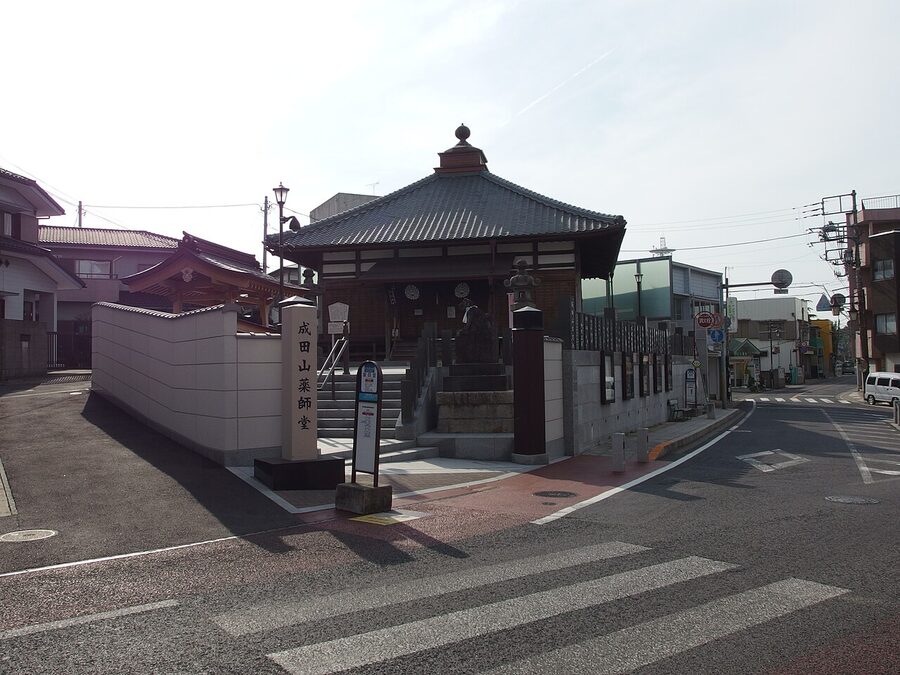
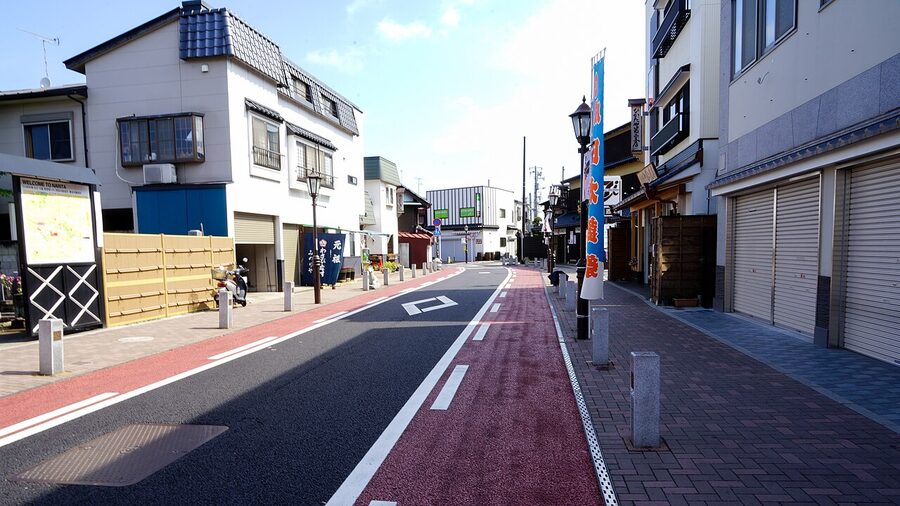
Omotesando just means “approach road” in Japanese, and most major Japanese temples have one — but Narita’s is genuinely special. It curves downhill from the station to the temple in a long S-shape, lined with around 150 shops and restaurants, many in their original Meiji and Taisho-era wooden buildings. This was the last leg of the old Narita Kaido pilgrimage road from Edo, walked for centuries by people coming to pray to Fudo Myo-o. You can still feel that on the street.
You’ll smell the unagi before you see it. Narita’s famous for grilled freshwater eel — a tradition going back to when the area was the Inba swamp, full of wild eels that pilgrims could eat for protein on the long journey. The shops still grill on charcoal out front, sweet-smoky soy glaze hanging in the air all the way down the street.
A few things worth pointing out as you walk:
- Yokan and senbei stalls. Yokan is a firm sweet bean jelly cut from a block; senbei are large rice crackers, often grilled in front of you. Both survive a long-haul flight as gifts. ¥200-500 a piece.
- The Tourist Pavilion halfway down on the right. Free wifi, free maps in English, sometimes free tea.
- Carved animal statues. Several shops have wooden monkeys, dragons, or horses on their roof corners — old protective amulets that pre-date the temple. Easy to miss if you’re staring at your phone.
- Ogawaya Honten and Kikuya. Two older, smaller unagi places, usually quieter than Kawatoyo.
Kawatoyo, and what to know about Narita unagi
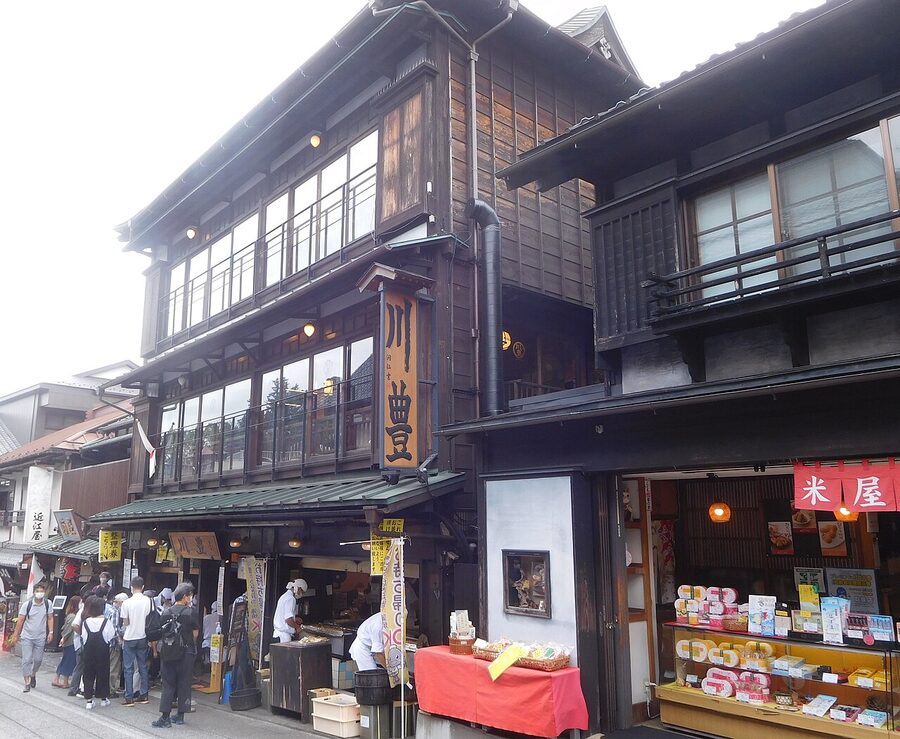
Kawatoyo (川豊) is the unagi restaurant everyone goes to. Founded in 1910, it sits roughly halfway down Omotesando, and you’ll know it from the small glass-fronted window where a man fillets eels in real time, all day, with a movement so practised it looks like he’s barely working. They go from live eel to dressed fillet in under thirty seconds. I have stood and watched this for ten minutes.
Three things about Kawatoyo worth knowing:
- The queue is the queue. Lunch on a Saturday is 60-90 minutes. Weekdays are calmer — 20-30 minutes. They take names at the door; once you’re on the list, wander up to the temple and come back when your phone buzzes.
- The basic una-jyu is around ¥3,500, premium ¥5,000. No menu trickery.
- It’s that good. Eel fluffy, sauce not too sweet, rice cooked right — regional speciality made by people who’ve been making it for over a century.
If your layover is under two hours, skip the queue. Grab a kabayaki skewer from one of the smaller stalls — ¥800-1,200 for a skewer you eat standing up. Same regional flavour, fraction of the time.
Through the Niomon gate and into the temple proper
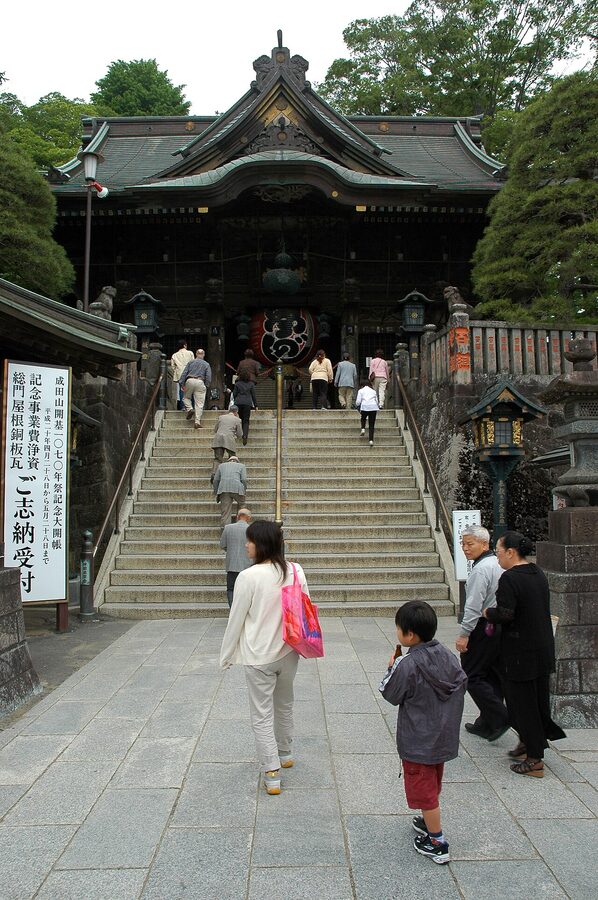
At the bottom of Omotesando, the Niomon — the inner gate of two guardians — dates from 1830. The two enormous Nio statues either side scare evil spirits off the precinct. One has its mouth open (“ah” — beginning), the other closed (“un” — end). The first and last syllables of the universe.
From here a short flight of stone steps opens onto the temple grounds — 150 hectares, bigger than Kew Gardens, with 17 designated cultural properties and a park beyond. Free entry, every day.
The buildings worth knowing, in the order you’ll meet them walking from the Niomon:
Daihondo (Great Main Hall)
Built in 1968 for the temple’s 1030th anniversary, replacing an older main hall further up the slope. This is where the goma ritual happens. Inside is the Fudo Myo-o statue, designated an Important Cultural Property — tradition says the original carving is by Kobo Daishi himself in the 9th century, but the deity is so revered it’s almost never on full public display.
Three-storied pagoda
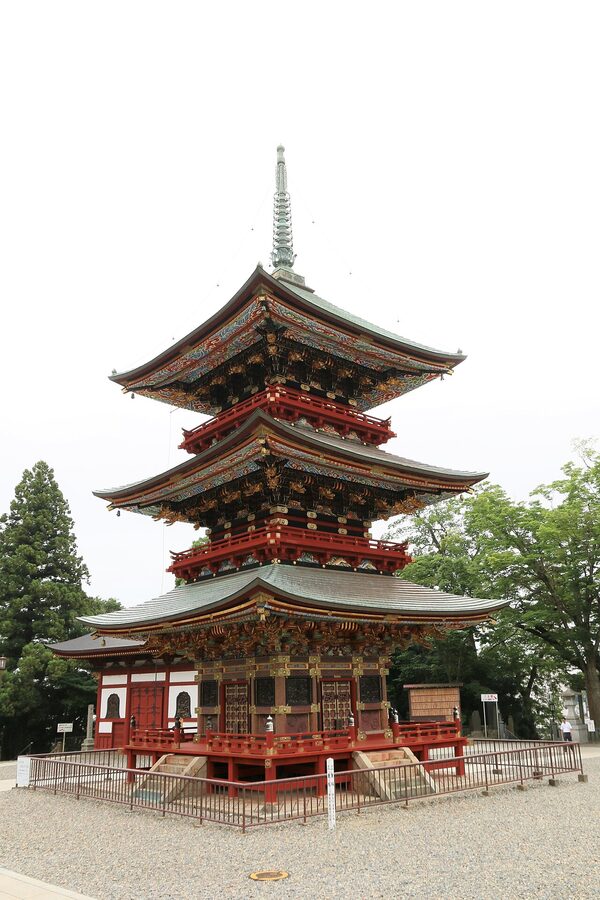
To the left of the main hall, the Sanjunoto pagoda was built in 1712 and is one of the temple’s older surviving structures — also an Important Cultural Property. Stand directly underneath and look up at the ceiling: the painted ceiling panels under each eave are original Edo work, faded but intact. Restored, never replaced. Nobody seems to look up here. It’s worth a minute.
Komyodo
The Komyodo — Hall of Light — is one of the oldest buildings, originally the main hall during the early Edo period. Tucked up the slope behind the current Daihondo. Older, smaller, quieter. If you’ve come for atmosphere rather than scale, this is the one. Designated nationally important.
Daitou — Great Pagoda of Peace
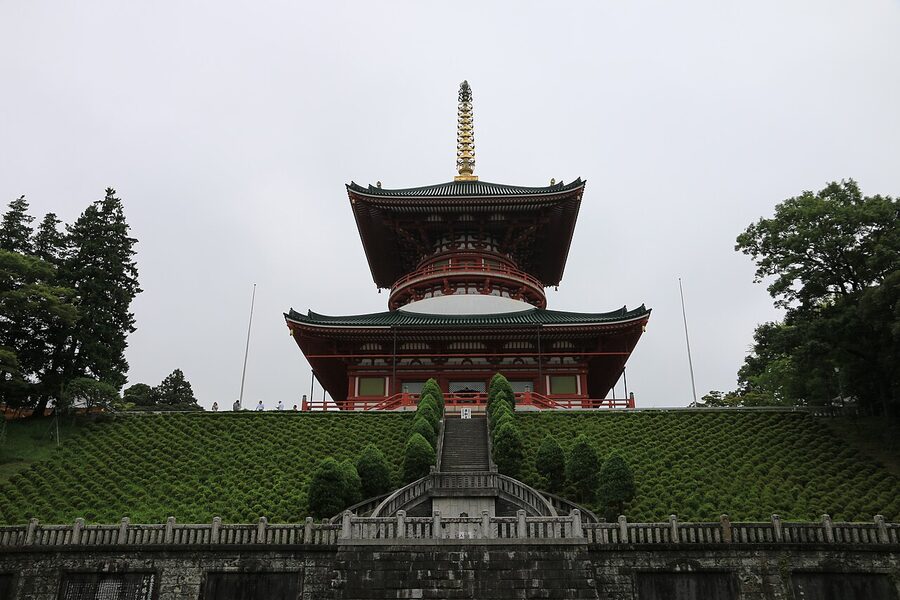
The Daitou is the building you keep seeing in photos. It was completed in 1984 — by far the youngest of the major temple buildings — but built in the older Tahoto style, a two-storey pagoda with a square base and a circular upper tier. It’s 58 metres tall. The lower hall houses a small museum on Shingon Buddhism with displays about Kukai (Kobo Daishi), the founder of the sect, and the temple’s history. Free to enter. The view from the platform around the base is the best in the complex on a clear day.
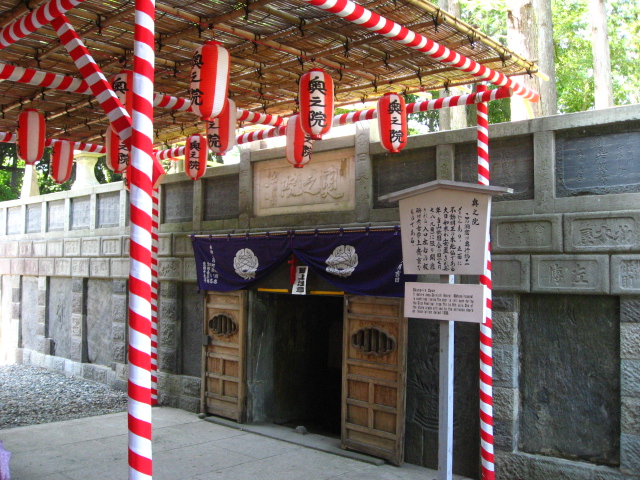
Okunoin (the inner sanctuary)
Other small details
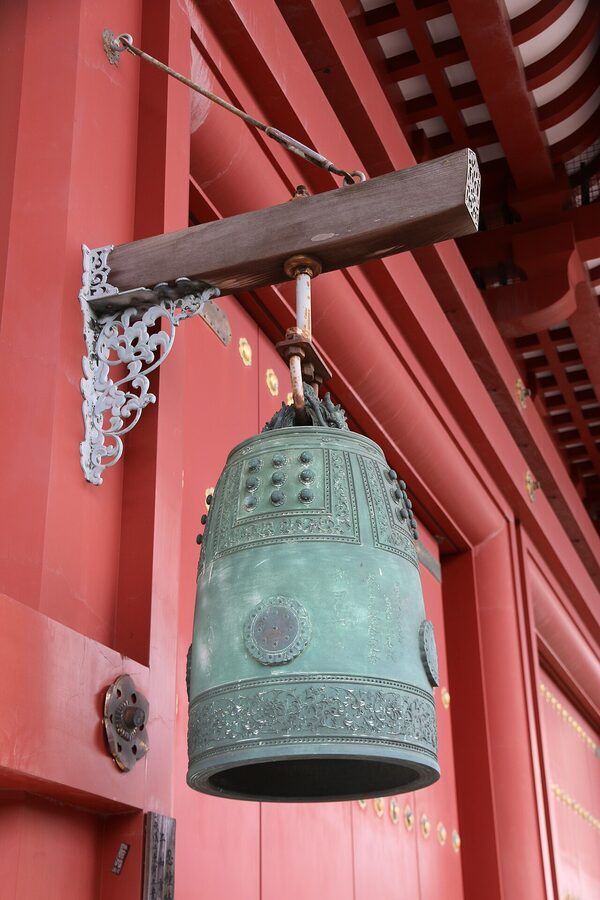
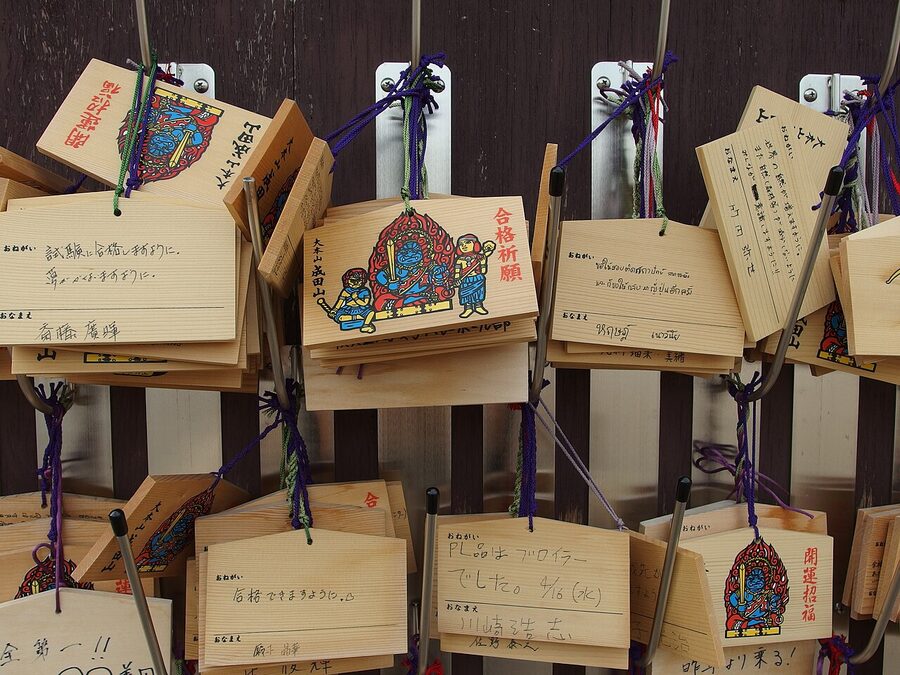
Wandering the grounds you’ll find a temizuya (water purification basin — rinse left hand, right hand, then your mouth from your left palm; never drink straight from the ladle), several smaller halls including a Shotoku Taishi Hall and a Shakado, dozens of votive stone lanterns, and an ema (絵馬) wall where visitors hang wooden plaques inscribed with prayers.
Naritasan Park — the bit nobody mentions
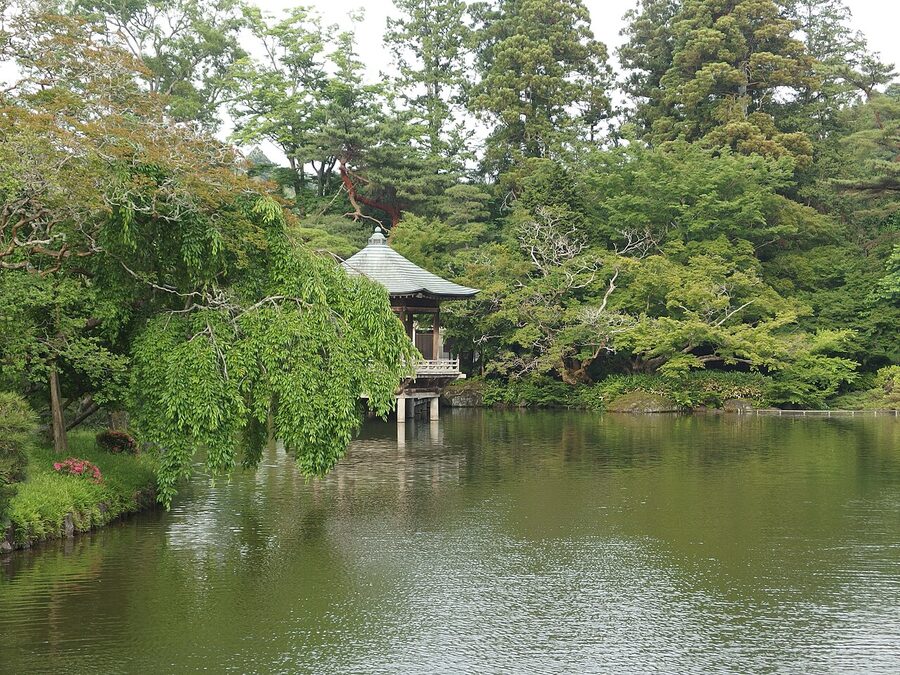
Behind the Great Pagoda is Naritasan Park (成田山公園), a 165,000 square-metre Japanese garden with three ponds, small waterfalls, and a calligraphy museum. Most visitors don’t make it this far, which is exactly the point — it’s the quietest part of the whole complex.
Seasonal interest is real: plum blossom in late February, cherry in early April, wisteria in May, hydrangea in June, lotus in July-August, and the late November momiji are among the best in this part of Chiba. No entry fee, no crowds. I walked through the maple grove on a Tuesday afternoon in mid-November and saw four other people the whole hour.
Allow 40 minutes for the full loop including the calligraphy museum (¥500 entry, closed Mondays). If tight on time, walk to the lower pond and the small bridge — best photo spot.
The numbered layover plan (3-4 hours, gate to gate)
With a layover at Narita Airport between 3 and 4 hours, here’s exactly what I’d do.
- 0:00 — clear immigration. Drop your hand luggage in a ¥700 coin locker in arrivals. Keep wallet, phone, charger.
- 0:20 — Keisei or JR Narita Airport station at B1F. ¥260 Keisei single (or ¥480 Narita Kaiun round-trip). Next train to Keisei-Narita.
- 0:35 — arrive Keisei-Narita. Out main exit, turn right. Omotesando starts here, signed for the temple. Walk slowly downhill — 20-25 minutes.
- 1:00 — Niomon gate, climb to the Daihondo. Time the next goma ritual; if it’s about to start, sit in. Otherwise walk the grounds — three-storied pagoda, Komyodo, Daitou.
- 2:00 — back to Omotesando for unagi. Tight? Get a ¥1,000 skewer. Time? Get on Kawatoyo’s list.
- 2:45 — Keisei back to the airport, 10 minutes. Bag, security.
- 3:15 — at your gate.
Six hours or more is the sweet spot — add the park, eat properly at Kawatoyo. Under three hours I’d skip the trip; clearing immigration twice eats too much buffer.
The full day plan (from Tokyo)
Coming from central Tokyo as a proper day trip rather than an airport sneak? Here’s a slower version.
- 09:30 — Keisei Limited Express from Keisei-Ueno (¥840). About 75 minutes.
- 10:50 — arrive Keisei-Narita. Coffee at a station cafe.
- 11:15 — start walking down Omotesando. Browse senbei stalls, the Tourist Pavilion.
- 12:00 — get on Kawatoyo’s list. While you wait, walk into the temple grounds.
- 12:45 — unagi lunch at Kawatoyo. Allow an hour.
- 14:00 — temple grounds. Catch the 13:00 or 15:00 goma. Walk to the Daitou. Walk the park.
- 16:00 — slow walk back up Omotesando, last senbei stop.
- 16:30 — Keisei back to Tokyo, at Ueno by 17:50 in time for dinner.
The temple grounds stay quietly atmospheric until close. No evening illumination, just regular light spilling from the halls — it goes dark and theatrical around 17:00 in winter, 19:00 in summer. Omotesando shops mostly close by 17:00-18:00.
Practical info at a glance
- Address: 1 Narita, Narita City, Chiba 286-0023
- Phone: +81 (0)476-22-2111
- Entry: Free (donations welcome). Goma ritual free. Calligraphy Museum in the park ¥500.
- Hours: Grounds 06:00-16:00 daily for the main hall; outer grounds and park accessible until dusk. Goma ritual sessions at approximately 05:45, 09:00, 11:00, 13:00, 15:00 weekdays plus extra weekend slots — confirm at naritasan.or.jp
- How to get there from Narita Airport: Keisei Main Line to Keisei-Narita (¥260, 8 min) or JR Sobu to JR Narita (¥200, 11 min). 10-minute walk to temple.
- How to get there from Tokyo: Keisei Limited Express from Keisei-Ueno or Nippori (¥840, 70-80 min) or JR Sobu Rapid from Tokyo Station (¥1,150, 80 min, JR Pass-eligible). See how Tokyo trains and IC cards work if you’ve never used them.
- Accessibility: The Niomon and main hall plaza are reached by stone steps but a step-free ramped route runs around the side. Wheelchairs welcome on the main grounds; the upper park has gravel and gentle hills.
- Best time of year: avoid 1-3 January (hatsumode crowds, three million people). Otherwise any weekday outside Golden Week (29 April-5 May) and Obon (mid-August) is calm. November maple leaves in the park are the seasonal highlight.
- Coin lockers: available at JR Narita and Keisei-Narita stations (¥400-700) if you arrive with a bag. Better to leave it at the airport.
- Toilets: multiple clean public toilets on the temple grounds and along Omotesando. All free.
If you’re staying in Tokyo and want more like this
Naritasan pairs well with Tokyo’s other big temple-and-shrine days. Sensoji in Asakusa is the obvious next stop for a temple comparison — older, more central, very different atmosphere. Meiji Shrine is the Shinto equivalent on the western side of the city, also free and free of crowds outside hatsumode. If you’ve got a longer trip, my 3 days in Tokyo route is built around walking all three of these and a few neighbourhoods between.
My Narita-san layover plan
Drop the bag in a locker. Keisei one stop. Walk slowly down Omotesando, stopping for a senbei. Time it so I’m at the Daihondo for the 13:00 goma. Hand over my camera bag for blessing, sit at the back, watch the fire for half an hour. Through the Niomon, look up at the three-storied pagoda’s eave paintings, climb up to the Daitou for the view. Park if I have time. On Kawatoyo’s list at 14:30, eat unagi at 15:00, train at 16:00. Through security by 16:30. Coffee at the gate.
A temple in Japan, a regional speciality eaten at its source, and a 1,080-year-old fire ritual — in the gap between two flights. There’s not a lot in the world that’s that easy.
Useful official links: Naritasan Shinshoji official site, Narita City Tourism Association, Narita City government site, Keisei Railway timetables and tickets.