
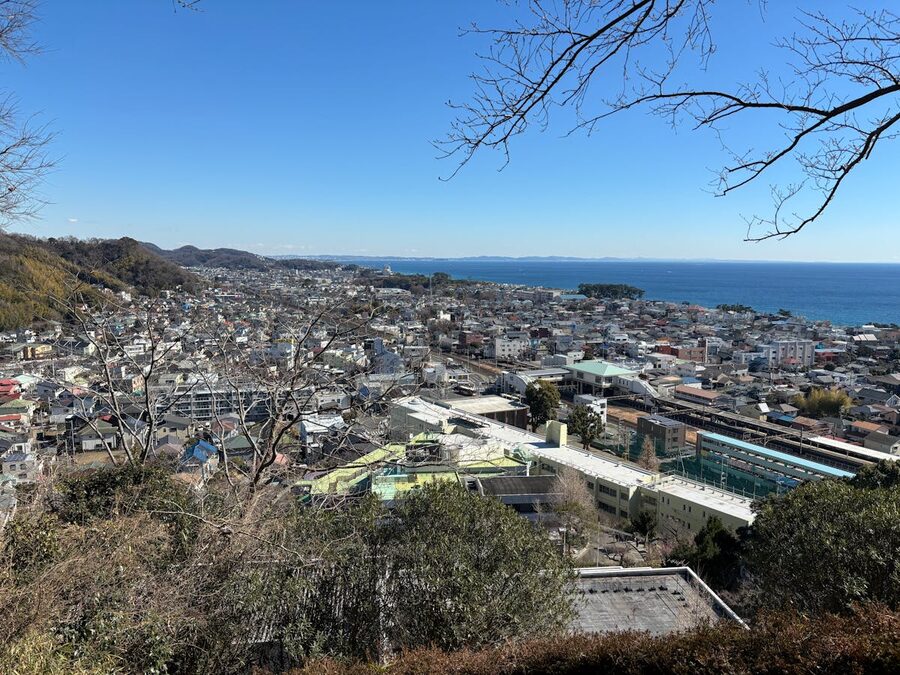
Fifty-six minutes on the JR Yokosuka Line from Tokyo Station puts you in a town with one 13.35-metre-tall bronze Buddha, over a hundred shrines and temples, and a beach. The beach part isn’t really why you go. The Buddha part is why most guidebooks send you. The temple part is why you’ll want to come back for a second trip.
Kamakura was the capital of Japan from 1185 to 1333. That is not a long time as capitals go, but it was long enough for one small military government to build more temples than you can see in a day, to bring Zen Buddhism to the country, and to cast a giant bronze Buddha that is still sitting, outdoors, on the exact same stone platform where they put it in 1252. The town is an hour south of Tokyo, it’s on the sea, it has a single-track coastal tram called the Enoden, and the whole thing still runs on the bones of a medieval capital that never quite went away.
In This Article
- Kamakura in thirty seconds
- First, the confession
- Why you actually go
- Getting there
- Buying the Kamakura-Enoshima Pass
- The big four sights
- The Great Buddha (Kotoku-in)
- Hasedera Temple
- Tsurugaoka Hachimangu
- Kencho-ji and Engaku-ji
- Hokoku-ji, the bamboo temple
- Komachi-dori
- The Enoden
- Shichirigahama beach
- The Enoshima add-on
- What to eat
- My one-day Kamakura plan
- When to come
- Practical info at a glance
- Where to sleep (if you stay over)
- Useful links
Kamakura in thirty seconds
A small coastal town about an hour south of Tokyo. Over 100 shrines and temples packed into a 40-square-kilometre valley. A 13-metre bronze Buddha that has been sitting outside since 1498 because the hall around it got washed away by a tsunami. A famous Zen monastery that’s the oldest of its kind in Japan. An old single-track tram line that runs along the Pacific. Hydrangeas in June, cherry blossoms in April. You can do it in one full day if you’re disciplined. You can also do it in two and sleep over, and if you love temples you probably should.
First, the confession
The first time I went to Kamakura I tried to do it all. Engaku-ji, Kencho-ji, the Daibutsu, Hasedera, Hokoku-ji, Hachimangu, and Enoshima. In one day. Starting at 10am.
Reader, I did not see Kamakura. I saw the queue for Kamakura. By the time I arrived at the Great Buddha at 14:30, the line to get inside the statue was 45 minutes long. I skipped it. I got to Hasedera at 16:00 and the hydrangea path had already been closed off to new entries for the day. I took the Enoden back at 17:15 so exhausted I fell asleep and rode two stops past Kamakura Station.
If you’re going to do one thing I tell you to do in this article, do this. Arrive at Kamakura Station by 8:30 at the latest. The first train from Tokyo Station on the JR Yokosuka Line leaves around 05:08; a reasonable 7am departure from Tokyo gets you there before the tour buses. You’ll have the first hour of every major site almost to yourself. By 11:00 the Daibutsu courtyard is shoulder-to-shoulder, and by 14:00 Komachi-dori is a slow-moving river of tourists.
Why you actually go
If you’ve got a week in Japan and you’re wondering whether to spend a whole day on a Tokyo side trip, here is the pitch. You go to Kamakura for three specific things, and one of them isn’t the Buddha.
The first is the Daibutsu, yes. Standing in front of a 13-metre, 121-tonne bronze sculpture that was cast in 1252 is a different experience from looking at a photograph of one. The scale does not come across on Instagram. You also can’t see, in any photo, the patina on the bronze — the slight green tint that comes from 770-odd years of sea salt in the air. In person you can.
The second is the temple density. Within a two-kilometre walk of Kamakura Station you have access to a Zen monastery founded in 1253, a shrine founded in 1063, a temple with a 9-metre wooden Kannon statue, another temple with a bamboo grove good enough to rival Arashiyama in Kyoto, and about ninety more I don’t have time to list. Tokyo doesn’t have this. Kyoto has more, but Kyoto is a four-hour Shinkansen ride away. Kamakura is 56 minutes on a local train.
The third is the coastal light. This sounds like a nonsense sentence until you stand on the terrace at Hasedera and look out at the Shonan coast and understand why a thousand years of Japanese painters and photographers have tried to capture exactly the quality of the afternoon sun that comes off Sagami Bay. It is different from the Pacific-side light you get further south. Go once and you’ll see.
Getting there
Three sensible routes from Tokyo, depending on where you’re staying.
- JR Yokosuka Line from Tokyo Station: the one I’d take. Direct to Kamakura, about 56 minutes, ¥940 one-way. The train runs via Yokohama. Use the Yokosuka Line platforms (underground, in the Marunouchi direction).
- JR Shonan-Shinjuku Line from Shinjuku: also direct, about 55 minutes, ¥940 one-way. A better option if you’re staying around Shinjuku or Shibuya. Fewer trains than the Yokosuka Line — roughly every 15-20 minutes vs every 5-10.
- Odakyu Line from Shinjuku to Fujisawa, then the Enoden from Fujisawa to Kamakura. Slower (about 75-90 minutes), cheaper, and gets you onto the scenic Enoden line the long way round. Worth it only if you’ve bought the Odakyu Enoshima-Kamakura Freepass (¥1,640 from Shinjuku; includes unlimited Enoden and Odakyu trains plus discounts).
If you already have a JR Pass or a JR East Wide Pass, both cover the Yokosuka Line ride to Kamakura and back at no extra charge. The JR Tokyo Wide Pass in particular is a strong option if you’re doing Kamakura plus Nikko or Hakone in the same trip.
For one-day planning, the Kamakura-Enoshima Pass is the one to know about. It’s a JR East day pass that costs ¥700 and gives you unlimited rides on the JR Yokosuka Line between Ofuna and Kamakura, plus the whole Enoden line from Kamakura to Fujisawa via Enoshima. If you’re going to hop between Kamakura Station, Hase (for the Buddha and Hasedera), and Shichirigahama or Enoshima, it pays for itself after the second or third Enoden ride. If you’re only riding the Enoden once, skip it and just tap in with Suica.
Buying the Kamakura-Enoshima Pass
- Buy it at Kamakura Station on arrival — there’s a JR East ticket window (midori-no-madoguchi) on the JR side of the station. Cash or credit card.
- Show your passport if asked. It’s a local Japanese product, not a tourist-exclusive, so a passport isn’t strictly required but sometimes requested.
- Keep the paper pass. You feed it into the gates the old-fashioned way. Don’t tap it like an IC card.
- It expires at midnight on the day of purchase. A one-day pass means literally one day, not 24 hours.
The big four sights
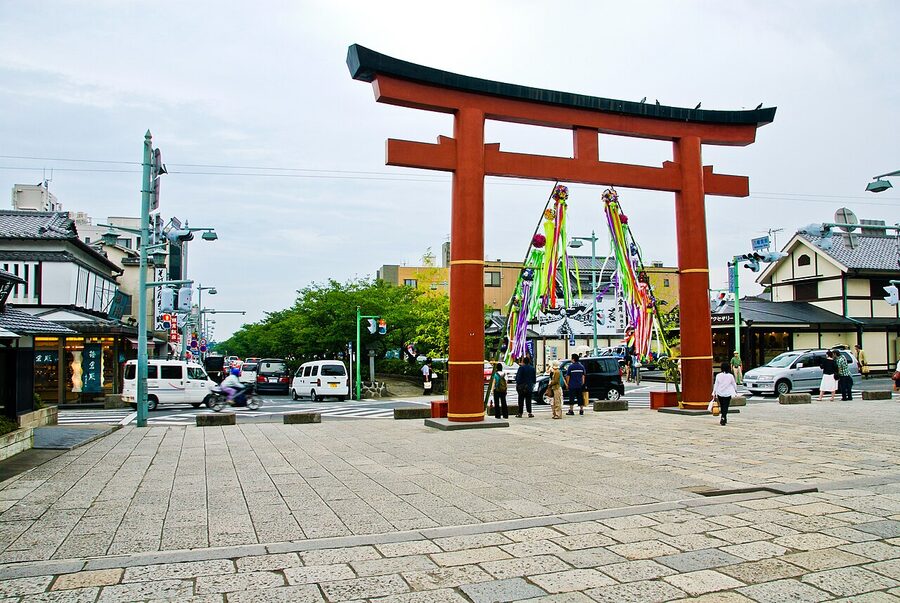
If you have one day, these are the four you do: the Great Buddha at Kotoku-in, Hasedera Temple, Tsurugaoka Hachimangu Shrine, and Kencho-ji. The rest — Hokoku-ji’s bamboo grove, Engaku-ji, the Enoden ride to Shichirigahama — are add-ons that come down to what you’re there for. I’ll cover each one in detail and tell you where I’d cut if you’re running behind.
The Great Buddha (Kotoku-in)
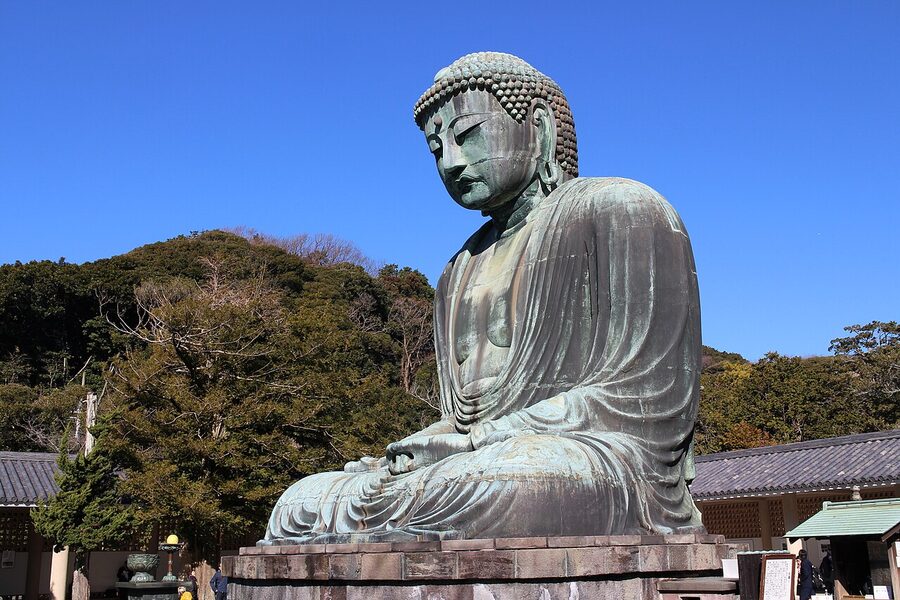

The statue is 13.35 metres tall, weighs 121 tonnes, and was cast in bronze in 1252. The project took about ten years. The original hall around it was destroyed by a storm in 1334. The second hall was destroyed by another storm in 1369. The third hall was destroyed by the tsunami that swept through the Shonan coast in 1498. Since then the Daibutsu has been sitting outside, on the same stone platform, exposed to wind and salt air and over five hundred years of earthquakes, and it has not moved.
This is the thing that surprises people when they stand in front of it. It’s not a statue that has been restored or relocated. The casting seams on the bronze are still visible up close — they run horizontally across the body in segments of about 60 centimetres. The 13th-century craftsmen cast it in parts and then joined the parts together, and you can still see where.
Admission is ¥300. Standard entry. The statue sits in a walled courtyard, and you walk in through a traditional temple gate. Ten minutes of wandering around it — front, sides, back — is plenty unless you want photos.
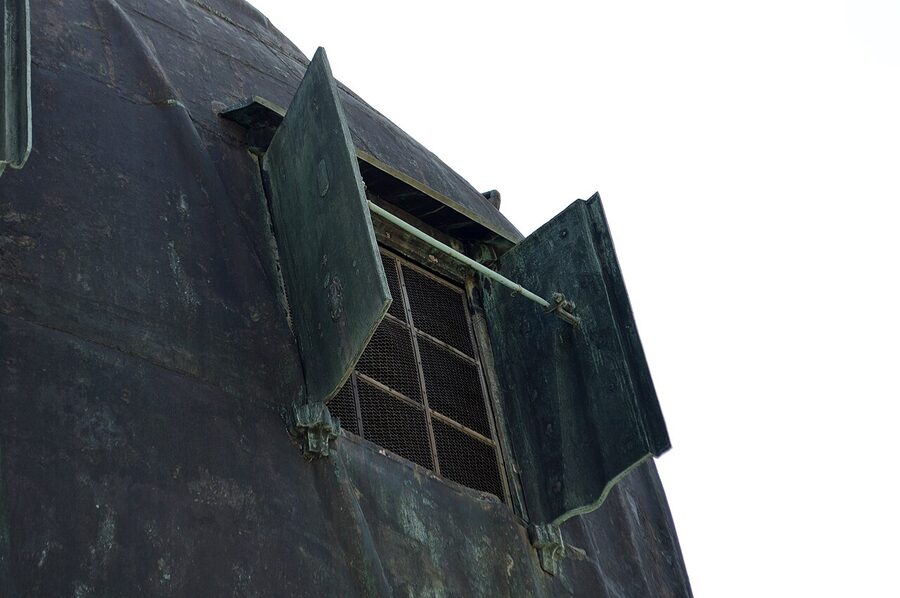
What you should pay extra for, and what most tour groups skip because they’re rushing, is going inside. For an additional ¥50 you can enter the statue through a small hatch at the back. I’m going to be straightforward: the inside is not beautiful. It’s a hollow bronze shell, roughly ten feet of floor space, and it smells faintly of old metal. What you’re paying for is the engineering — you can see the internal scaffolding and the casting joints from the inside, and you can put your hand on the wall and know you’re touching 13th-century bronze that was poured into sand moulds. If you’re tall (I’m 1.78m) your shoulders almost brush the walls. It’s cramped. It’s also the closest you’ll ever get to how medieval Japanese craftsmen actually made something like this.
Practical notes. Kotoku-in opens at 08:00 and closes at 17:30 in the summer months (April-September), 17:00 in winter. The interior-viewing hatch closes fifteen minutes before the main gate. If you’re arriving on the 07:00 train from Tokyo, you can realistically be first through the Kotoku-in gate at 08:30 and have the statue to yourself for about twenty minutes. Not a metaphor. Actually to yourself. Go then.
The Daibutsu is a 10-minute walk from Hase Station on the Enoden line, or a 20-minute walk from Kamakura Station if you want to skip the train.
Hasedera Temple
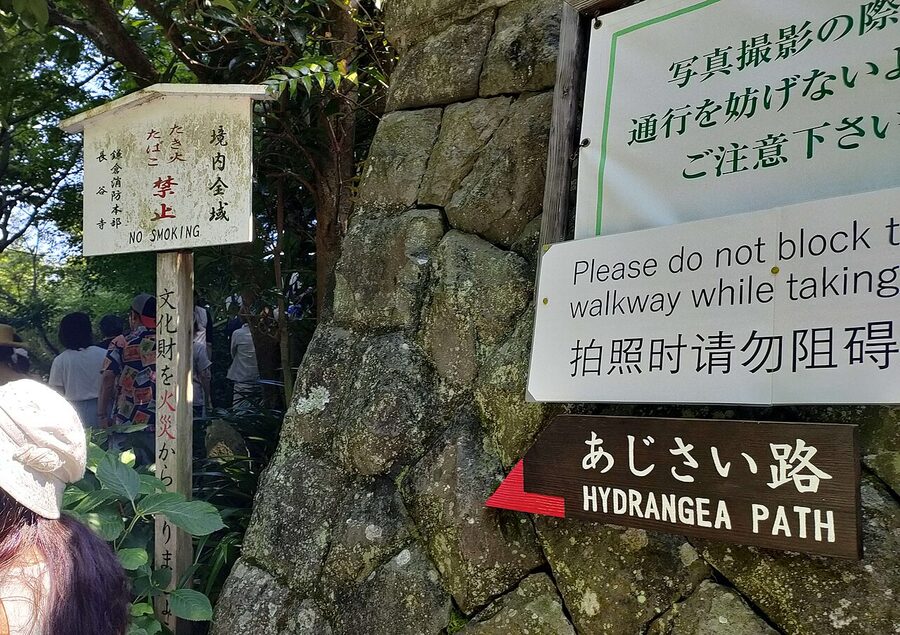
Here is my gently controversial opinion: the Great Buddha is the photograph, but Hasedera is the better visit. If you have only 90 minutes in Kamakura and have to choose one or the other, I’d send you here.
Hasedera was founded in 736 AD — four and a half centuries before the Kamakura shogunate existed. The main hall houses a 9-metre carved wooden statue of the Eleven-Headed Kannon, gilded, and according to legend carved from the same camphor tree as the similar statue at Hasedera in Nara. I am sceptical of the legend and the dates don’t quite work, but the statue is real and it’s enormous and when you stand in the main hall with the afternoon light coming in through the rice-paper panels you understand why people have been coming here for 1,300 years.
The temple is built into a hillside. The grounds are vertical. You enter at the bottom, pay ¥400, and then climb through several levels. On the lower level is a cave full of small Benzaiten statues — duck your head, it’s low-ceilinged. On the middle level is the jizo grove, with over 2,500 small stone jizo statues set up by parents who’ve lost children; it’s intentionally quiet and you should be too. On the upper level is the main hall, a tea garden, and an observation terrace.
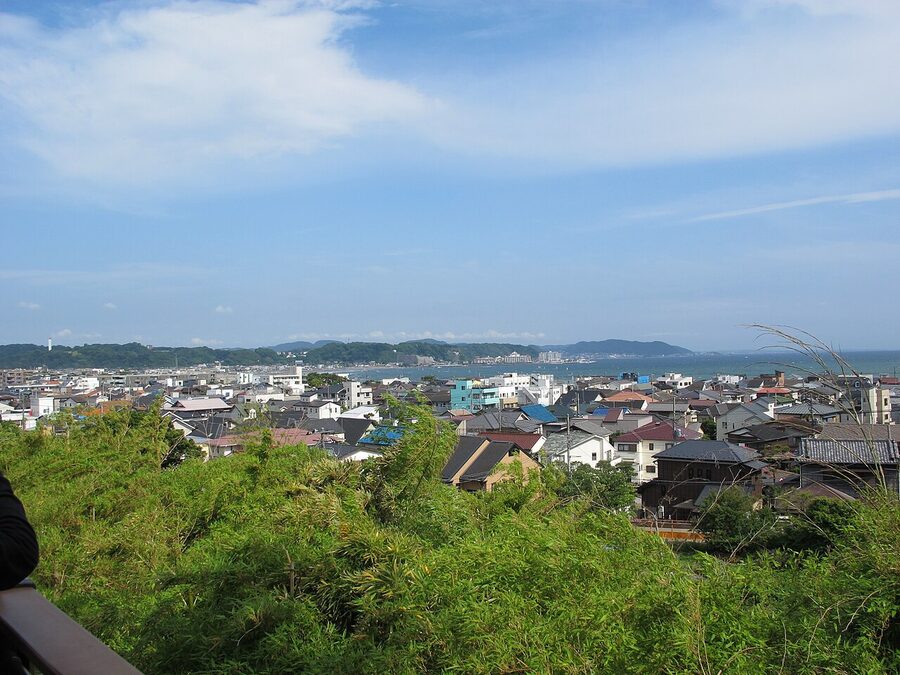

The observation terrace is what earns Hasedera the better-visit title. You get the ocean, the rooftops of Kamakura, and in the middle distance the whole sweep of Yuigahama beach. If you have only 15 minutes, skip everything else at the temple and sit here for 15 minutes. Bring a coffee from the on-site cafe.
The hydrangea path is the other reason to come. It’s a narrow, switchbacked walkway up the hillside planted with over 2,500 hydrangea bushes of 40 different varieties. Bloom peaks in the first two weeks of June. During peak season the temple runs a reserved-entry system — you get a timed ticket when you arrive, and wait in the temple grounds until your slot. On a Saturday in mid-June the waiting time can be two to three hours. Book online via the temple website a week out if you’re going in June.
Outside of hydrangea season the path is still open and free-access, and the views from the top are the same. I like it most in late November, when the maples come out and nobody’s there.
Hours are 08:00-17:00 (closing extended to 17:30 in summer). Admission ¥400. A 5-minute walk from Hase Station on the Enoden line, and about 5 minutes from Kotoku-in.
Tsurugaoka Hachimangu
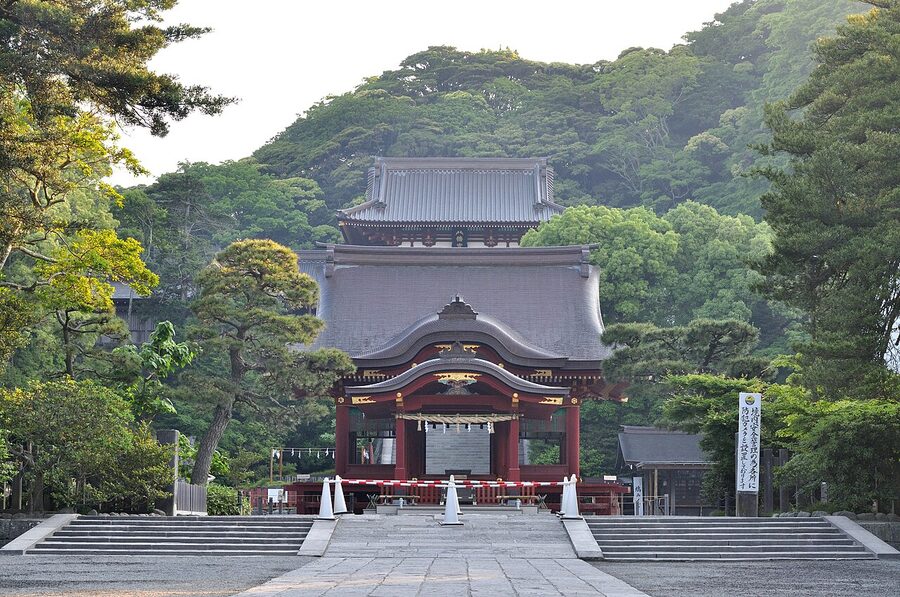
This is Kamakura’s most important shrine, and the one the whole town was designed around. It was founded in 1063 in a different location and moved to its current site in 1180 by Minamoto no Yoritomo, the first Kamakura shogun. Hachiman is the god of war and the patron of the Minamoto clan. The shrine is dedicated to him, and by extension to the dynasty that ran Japan out of Kamakura for 150 years.
The layout is the whole 1.8km ceremonial avenue of Wakamiya-oji running south from the shrine down to Yuigahama beach. You’re meant to enter from the sea end and walk the full length up through three torii gates. Nobody does, because it’s a long walk past mostly residential streets. Most people, myself included, walk the final 600 metres from Kamakura Station up through the main shopping street and enter through the third torii. This is fine. It’s the shortest approach and it’s still part of the sacred avenue.
The shrine grounds are free. You walk up a wide stone approach, past two koi ponds (one called the Genji Pond after the Minamoto clan, one called the Heike Pond after their rivals), climb the stone staircase, and reach the main hall. The view from the top of the staircase back down the avenue toward the sea is one of the best in Kamakura. Do not miss looking back.
Cherry blossoms line the approach in early April. The main festival is in mid-September and features yabusame — horseback archery demonstrations by men in period armour. If you’re in Kamakura on 14-16 September, this is a reason to rebuild your itinerary around it.
Open 06:00 to 20:30 (shorter hours in winter). Admission free. A 10-minute walk from Kamakura Station’s east exit, straight up Wakamiya-oji or Komachi-dori.
Kencho-ji and Engaku-ji
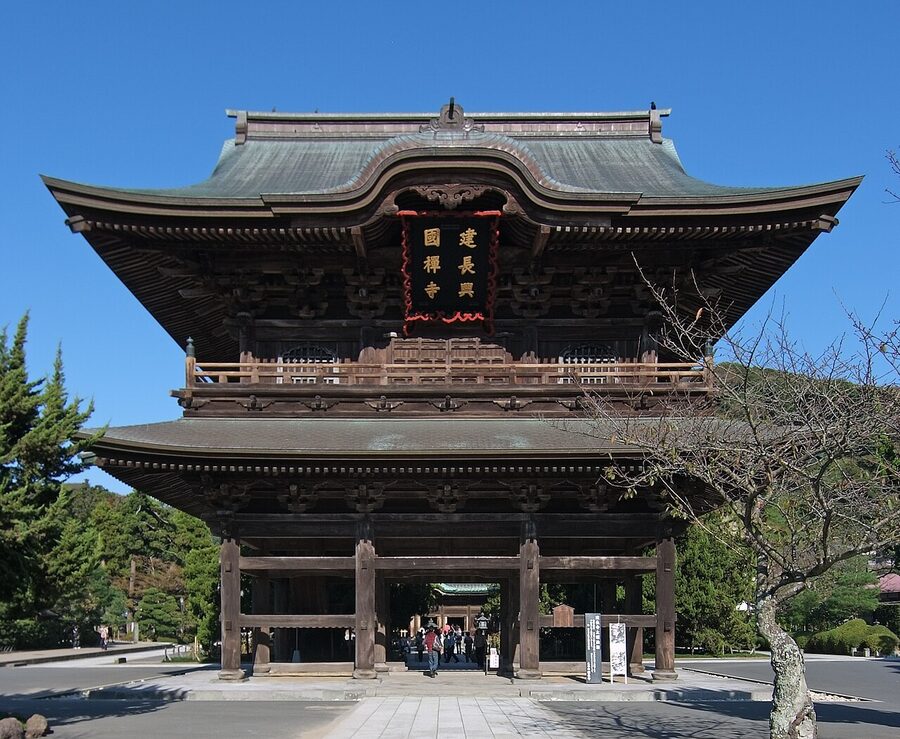

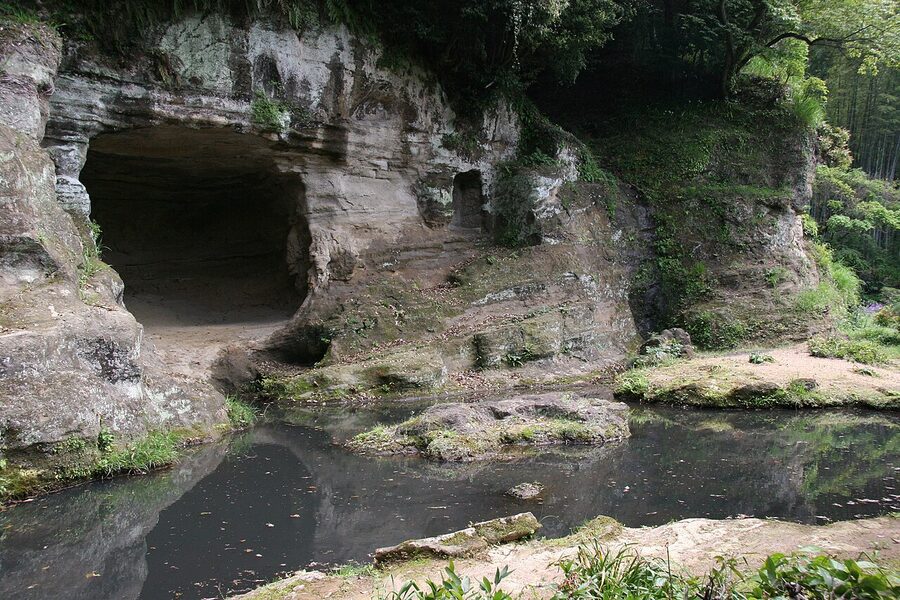
Kencho-ji is the oldest Zen training monastery in Japan. Founded in 1253 by the fifth Kamakura regent, Hojo Tokiyori, specifically to import the Chinese Rinzai school of Zen and establish a Japanese lineage. It’s the number-one temple of the Kamakura Gozan — the five great Zen temples of Kamakura — and it’s still a working monastery. You can occasionally hear the monks chanting from the back of the compound.
Engaku-ji, two stops up the line at Kita-Kamakura Station, is the number-two of the Kamakura Gozan. Founded in 1282 to console the souls of the Japanese and Mongol soldiers killed in the two Mongol invasions of 1274 and 1281. If those dates mean nothing to you, the short version: the Kamakura shogunate successfully repelled two enormous Mongol fleets, both times with the help of typhoons that wrecked the Mongol ships; the Japanese called those typhoons the kamikaze or “divine wind”; you’ve heard that word in a different context and now you know where it started.
.jpg)
Practical. Kencho-ji admission is ¥500; Engaku-ji admission is ¥500. Both open 08:30 to 16:30 in winter, 17:00 summer. Both have short morning-meditation sessions open to the public at 05:30 (Kencho-ji) and 06:00 (Engaku-ji) — you turn up at the gate, sit with the monks for 30 minutes, pay nothing. Check the temple websites for the exact days, which shift seasonally.
If you like Zen gardens, rock-and-moss compositions, mossy stone steps, and quiet cedar forests, both temples are worth your morning. If you don’t — if you’re more about the Buddha, the shrine, and the beach — skip both. A rushed visit to Kencho-ji is worse than no visit to Kencho-ji. The whole point of a Zen monastery is that you slow down inside it.
Hokoku-ji, the bamboo temple
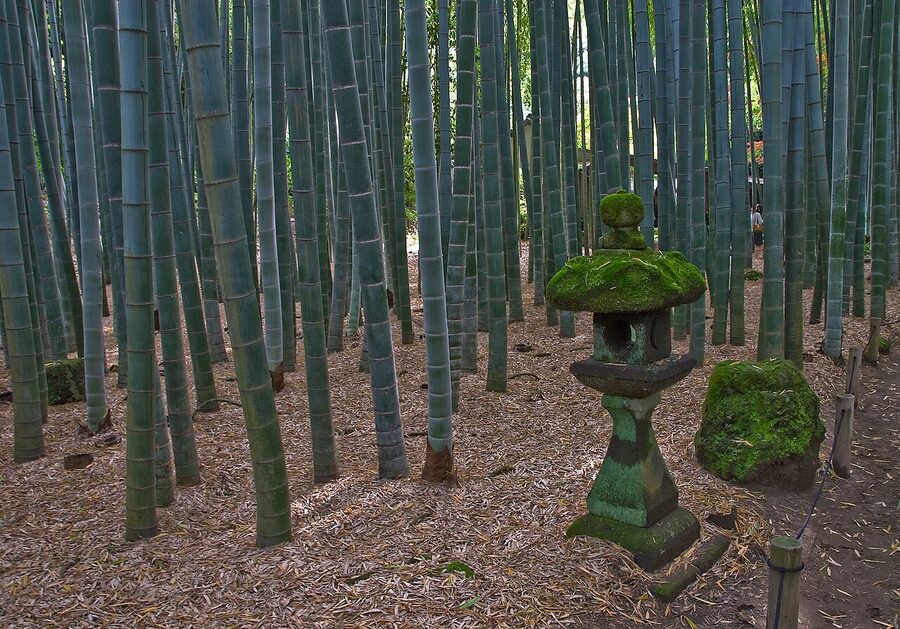
Here is the temple that makes people who’ve been to Arashiyama in Kyoto say, quietly, “ok actually this is better.” Hokoku-ji is small, unassuming, a 12-minute bus ride (or a 25-minute walk) east of Kamakura Station. The main hall is modest. What’s behind it is the point.
Walk through the gate, past the main hall, and you arrive at a bamboo grove of about 2,000 tall stalks. There is a narrow path through it, lit by filtered green light, and in the middle of the grove is a small wooden tea pavilion. You pay ¥400 at the entrance; for an additional ¥600 (total ¥1,000) you get a bowl of matcha and a seasonal wagashi — traditional Japanese sweet — served to you at the pavilion. You sit on tatami, drink green tea, and look at bamboo. This is it. This is the activity. It takes about 20 minutes if you’re not being rushed.
The reason it beats Arashiyama: there are rarely more than 20 people in the grove at once. Hokoku-ji is not on most day-trip itineraries. The reason you’ve heard of Arashiyama and not Hokoku-ji is entirely marketing.
Hokoku-ji is open 09:00 to 16:00. The matcha ticket stops being sold at 15:30. From Kamakura Station, take any bus from stop 5 (Keihin Kyuko bus) in the direction of Kamakuragu — the bus stop is called Jomyoji. About 12 minutes.
Komachi-dori
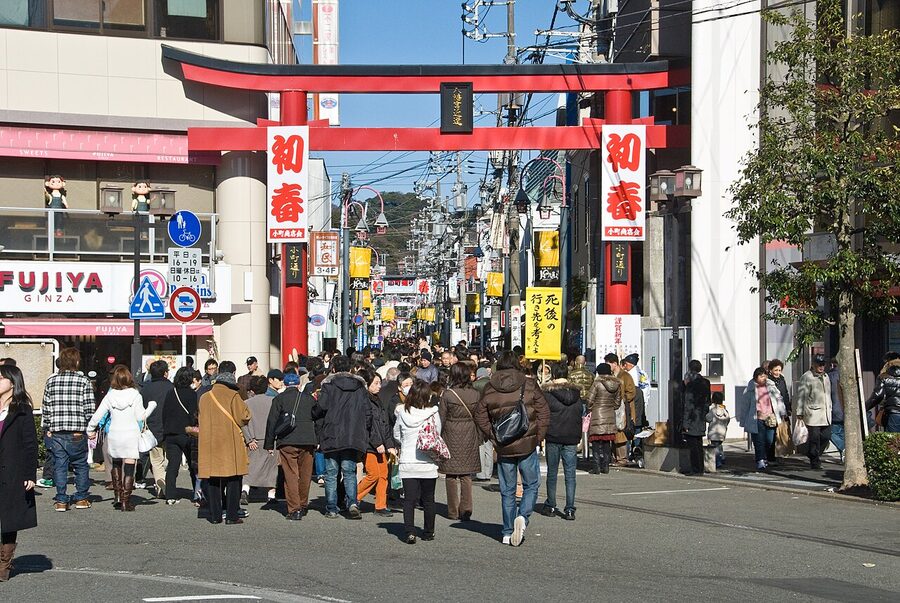
This is the main shopping street from Kamakura Station’s east exit up to Hachimangu shrine. About 800 metres of souvenir shops, rice-cracker sellers, matcha soft-serve stands, small craft shops, and one place that sells sweet-potato ice cream. It’s an institution.
My take on Komachi-dori: the first time is fun, the tenth time is a tax. The quality of the souvenirs is middling. The queue for sweet-potato ice cream is always 25 minutes. On a Saturday between 12:00 and 15:00, walking the full length takes about 20 minutes at shuffle pace, where it should take 7.
If you want the vibe without the crowd, walk Komachi-dori when you first arrive in the morning (it opens around 09:00, empty until 10:00), and on the way back to the station take the parallel Wakamiya-oji instead. Wakamiya-oji is the proper ceremonial avenue — wider, lined with cherry trees, with almost no foot traffic between the shrine and the second torii. It’s the more interesting walk and most tourists don’t know it exists.
The Enoden
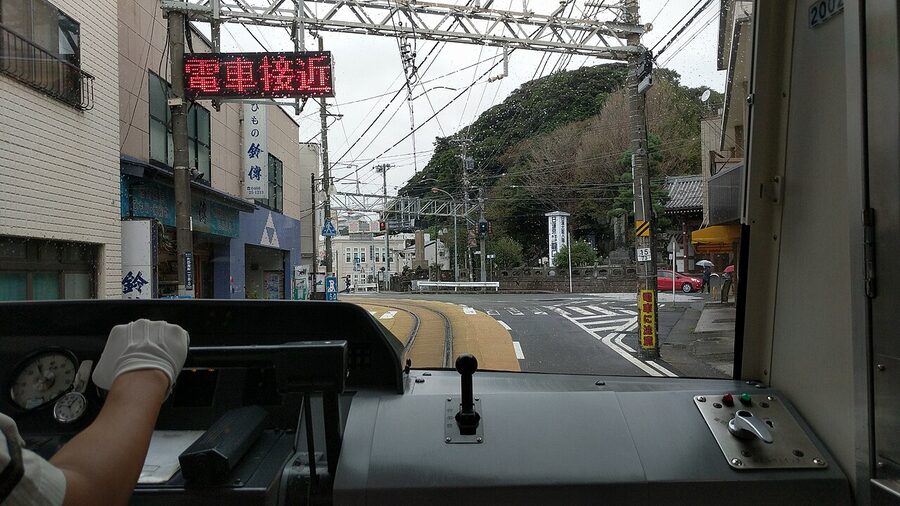

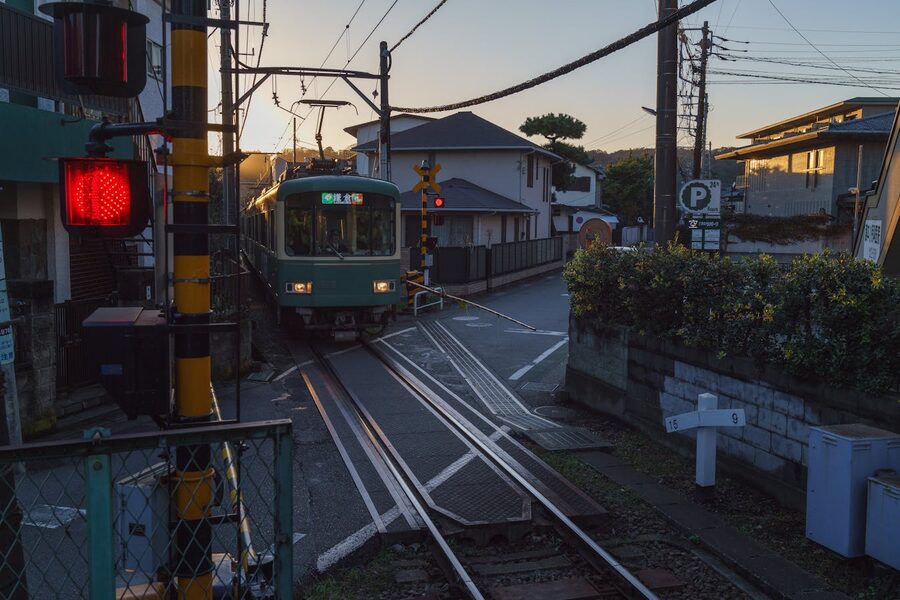
The Enoshima Electric Railway — Enoden for short — is a 10km single-track tram line that runs between Kamakura and Fujisawa via Enoshima. It was founded on Christmas Day 1900. It is one of the oldest railways in Japan and it has not changed very much since. The trains are short, green-and-cream, and old-fashioned in a way that is not a marketing gimmick; the line actually runs through what used to be quiet coastal villages and what are now somewhat-less-quiet suburbs of Kamakura.
The whole ride takes 34 minutes end-to-end and costs ¥310 for a single one-way. The Enoden 1-day hop-on pass is ¥800. If you’re doing three or more stops in a day, the pass pays for itself.
The scenic bits are the stretch between Koshigoe and Shichirigahama, where the line runs along the coast. You’re two metres from the Pacific. Some of the single-track sections have passing loops where the two directions alternate — it’s cleverly signalled and you can watch the eastbound train pull over so the westbound can pass.
The Kamakurakoko-mae station is the famous one — it’s the stop made famous by the anime Slam Dunk, and the level crossing just outside the station, with the train coming through and the ocean behind, has become a full-blown photography pilgrimage. On a weekend, 50 people can be standing at the crossing trying to take the same photo. If that’s your thing, do it on a weekday morning.
Shichirigahama beach
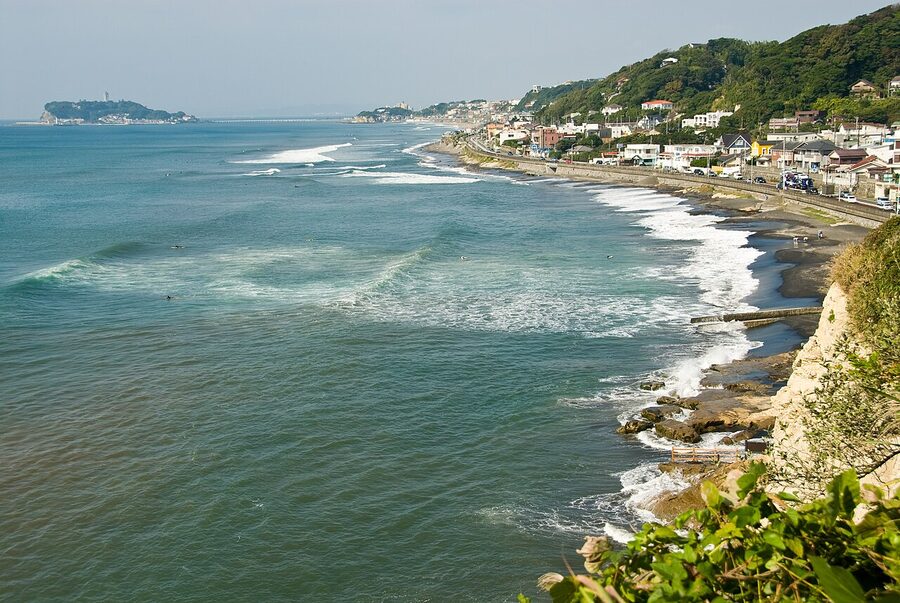
The beach itself is dark volcanic sand, not white, and the water is usually too choppy to swim in outside of the height of summer. It’s not really a swimming beach. It’s a walking and surfing beach, and on a clear day it has the view that shows up on every Kamakura postcard: Mt Fuji, small but unmistakable, sitting directly above the Pacific.
The Mt Fuji photo is a winter photo. The best odds are December, January, and February, early morning, before the haze sets in. On a summer afternoon you will not see Fuji. Don’t plan a day around it in July.
The best viewpoint is not the beach itself but the small hill at Inamuragasaki Park, one station east of Shichirigahama. Walk up the headland path, about eight minutes uphill, and you’ll get Shichirigahama in the middle distance and Fuji on the horizon. It’s a proper view.
The Enoshima add-on
Enoshima is a small island at the western end of the Enoden line, connected to the mainland by a 600-metre bridge. It has three shrines, a lighthouse, a sea-cave complex, a samurai-era history, and good tourist infrastructure.
My straightforward opinion: skip Enoshima on a one-day Kamakura trip. You will rush the Kamakura bits. If you’ve got two days and you love islands, come back and do Enoshima as a separate half-day. If you’re travelling with someone who wants the beach day more than the temple day, flip it — do Enoshima on day one, Kamakura on day two.
If you’re going to combine them, the absolute minimum viable version is: Kamakura in the morning (08:30-13:00, do Hachimangu-Daibutsu-Hasedera), then the Enoden from Hase to Enoshima (about 20 minutes), then the Enoshima Observation Lighthouse and the sea caves (~2 hours), then back to Tokyo via Fujisawa. You’ll have skipped Kencho-ji, Hokoku-ji, and Komachi-dori.
What to eat
Kamakura’s local specialty is shirasu — tiny whitebait, either raw or slightly boiled, served over rice. Raw shirasu (nama-shirasu) is a seasonal dish; it’s only available when the local fishing boats go out, which depends on weather and season. Boiled shirasu (kama-age) is available year-round. Ask for a shirasu-don, get a bowl of rice absolutely blanketed in tiny translucent fish, add a bit of soy sauce, eat. It’s strange the first time and then you want it every time.
Along Komachi-dori and the streets off it you’ll find shirasu-don restaurants, soba shops, and a lot of places selling matcha soft-serve. I like to skip the tourist strip and walk five minutes west to the small grid around Yuigahama-odori, where shirasu-don costs ¥1,200 instead of ¥1,800 and the fish is actually a bit fresher.
For tea and matcha wagashi, go to Hokoku-ji’s tea pavilion (see above) or to one of the small cafes around Hase Station — Kannon Coffee at the corner near Kotoku-in is good for pastries and an iced matcha before or after the Buddha.
Cash is still king at smaller places in Kamakura. Bring a few ¥1,000 notes. Many of the pottery and antique shops along the Hase stretch are cash-only, and some operate on the honour system — the owner isn’t always there and you’re expected to put your money in a box.
My one-day Kamakura plan
This is the sequence I’d do if I had one day and wanted to hit the best of Kamakura without sprinting. Total walking is around 8km over the day, all on flat ground or gentle slopes except inside Hasedera.
- 07:00. Catch the JR Yokosuka Line from Tokyo Station (or Shonan-Shinjuku from Shinjuku). Buy a Kamakura-Enoshima Pass at the JR ticket window on arrival at Kamakura (¥700).
- 08:15. Walk up Wakamiya-oji or Komachi-dori to Tsurugaoka Hachimangu Shrine. The approach is empty this early. Pay your respects at the main hall, wander the two koi ponds, and walk back out the way you came.
- 09:15. Bus from Kamakura Station stop 5 to Jomyoji. Walk to Hokoku-ji. Pay ¥1,000 for temple entry plus matcha. Sit in the bamboo grove for 25 minutes. This is the quietest part of your day.
- 10:45. Bus or taxi back to Kamakura Station. Jump on the Enoden to Hase (three stops, ¥200, about 5 minutes).
- 11:15. Kotoku-in and the Great Buddha. Get the inside-the-Buddha ticket. There will be a queue. Budget 45 minutes.
- 12:30. Lunch. Shirasu-don at a small place off the main street. Budget ¥1,200-1,800 and 30 minutes.
- 13:30. Hasedera. Pay ¥400, climb through the grounds, sit on the observation terrace for a full 15 minutes. If hydrangeas are in bloom and you booked a slot, use it now.
- 15:00. Enoden from Hase towards Enoshima. Get off at Shichirigahama. Walk up to Inamuragasaki headland for the Fuji view (if the day is clear).
- 16:30. Enoden back to Kamakura Station. Browse Komachi-dori on the way out — at this hour the crowds have thinned.
- 17:15. JR back to Tokyo. You’re home by 18:15.
If you’re a Zen-temple person, swap Hokoku-ji for Kencho-ji and Engaku-ji: get off one stop early at Kita-Kamakura Station on the way in, do Engaku-ji first (it’s two minutes from the station), walk the 1.5km downhill to Kencho-ji, and then continue the 800 metres down to Kamakura Station and pick up the itinerary at step 4.
When to come
Kamakura in cherry blossom season (late March-early April) is beautiful and extremely crowded. Wakamiya-oji is lined with cherry trees and the full avenue in bloom is a sight, but the weekends in this window are close to unmanageable.
Kamakura in hydrangea season (first two weeks of June) is also beautiful and even more crowded, because everyone who knows about Kamakura knows about Hasedera’s hydrangea path. If you’re coming for the flowers, come on a Tuesday or Wednesday and book the Hasedera timed entry online in advance.
Kamakura in summer (July-August) is humid and busy; the beaches get going but the temples are a slog and a lot of people go to Enoshima instead.
The best times, if you can choose, are late October through mid-November for autumn colours, or mid-January for the Mt Fuji visibility and the clean winter light. Both have smaller crowds and both photograph well.
Weekdays beat weekends every time. Weekends during any peak season are hard.
Practical info at a glance
- Transport: JR Yokosuka Line, Tokyo Station to Kamakura, 56 minutes, ¥940 one-way.
- Local pass: Kamakura-Enoshima Pass, ¥700 for a day of JR Yokosuka (within the area) + full Enoden.
- Admissions: Kotoku-in ¥300 (+ ¥50 to go inside), Hasedera ¥400, Kencho-ji ¥500, Engaku-ji ¥500, Hokoku-ji ¥400 (¥1,000 with matcha), Tsurugaoka Hachimangu free.
- Opening hours: most temples 08:00-17:00 in summer, 08:30-16:30 in winter. Hachimangu opens earliest, 06:00-20:30.
- Cash: bring ¥5,000-10,000 in cash. Small temples and shops are cash-only.
- Walking: expect 6-10km in a full day. Wear proper shoes.
- Left luggage: coin lockers at Kamakura Station, ¥400-700 depending on size.
- Wi-fi: free wi-fi at Kamakura Station and most major temples; patchy elsewhere.
Where to sleep (if you stay over)
I think Kamakura is a day trip, not a stay-over, if you’re based in Tokyo for the rest of your trip. Where to stay in Tokyo covers the neighbourhoods that make the best day-trip base; anywhere with JR Yokosuka or Shonan-Shinjuku access (Tokyo Station, Shinjuku, Shibuya, Yokohama) is fine. If you want a night on the coast, the small ryokans around Yuigahama beach and the hotels around Hase give you early-morning access to Hasedera and the Buddha before the day-trippers arrive, which is a real advantage. If you’re still sorting out getting around the city, the Tokyo trains and IC card guide will cover the basics for tapping into the JR gates.
The combination of one still-medieval shrine, one giant bronze Buddha, one bamboo grove with matcha, and one antique tram running along the Pacific coast is — and I mean this as someone who has been to a lot of Tokyo side trips — the cleanest argument for leaving Tokyo for a day. If you’ve only got one day to get out of the city, I’d send you here.
Useful links
- Kamakura official tourism site — event listings, temple festival dates, hydrangea bloom updates.
- Kamakura City official site — practical municipal info.
- Kotoku-in (Great Buddha) official site — opening hours and closures.
- Hasedera Temple official site — hydrangea path timed-entry tickets.
- JR East Kamakura-Enoshima Pass — official pass page.