
In 1886, a Canadian missionary called Alexander Croft Shaw walked into a sleepy post-town on the old Nakasendo highway, took one look at the cool summer air and the cedar forest, and declared that this was where he was going to spend his Augusts. The man was from Toronto. He had opinions about what a decent summer felt like, and this was it. That single visit is why Karuizawa exists today as Japan’s oldest highland resort — the Imperial family has a villa here, John Lennon and Yoko Ono came for eleven consecutive summers, and the Hokuriku Shinkansen can now get you here from Tokyo Station in 65 minutes flat.
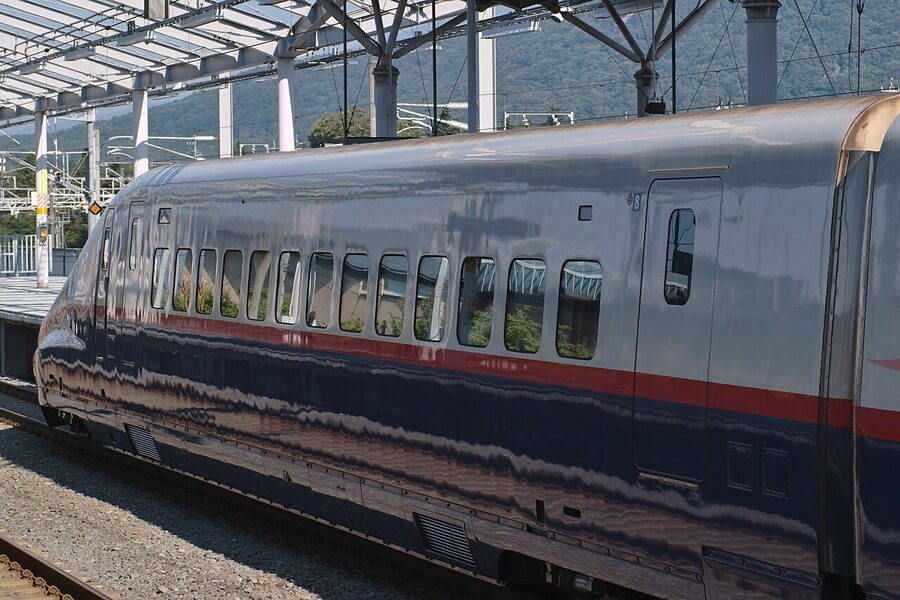

I’m going to walk you through the whole day — the Shinkansen logistics and whether the JR Pass maths actually work, how to pick between walking, cycling and the local bus once you arrive, which of the churches and waterfalls are worth your time, and the honest version of whether the outlet mall is a trap. Karuizawa sits at around 1,000 metres above sea level in Nagano Prefecture, about 170km north-west of Tokyo. It’s roughly 10°C cooler than the city in summer. That alone is the reason it was invented.
In This Article
- Why Karuizawa is the one day-trip that doesn’t feel like a day-trip
- Getting to Karuizawa from Tokyo
- What to book and when
- The layout, and why it matters
- Three ways to get around, honestly compared
- Kyu-Karuizawa Ginza, and the jam question
- Shaw Memorial Chapel — the building that started everything
- Kumoba Pond (Kumoba-ike)
- Walking path around the pond
- Shiraito Falls — the one you take the bus for
- St Paul’s Catholic Church
- Harunire Terrace and the Stone Church
- The Stone Church, if you’re a design person
- The Old Mikasa Hotel — the 1906 one
- The outlet mall, honestly
- The seasons, ranked
- Food beyond the Ginza
- Practical info block
- My Karuizawa day-trip plan, in order
- If you’ve already done the obvious day-trips
Why Karuizawa is the one day-trip that doesn’t feel like a day-trip
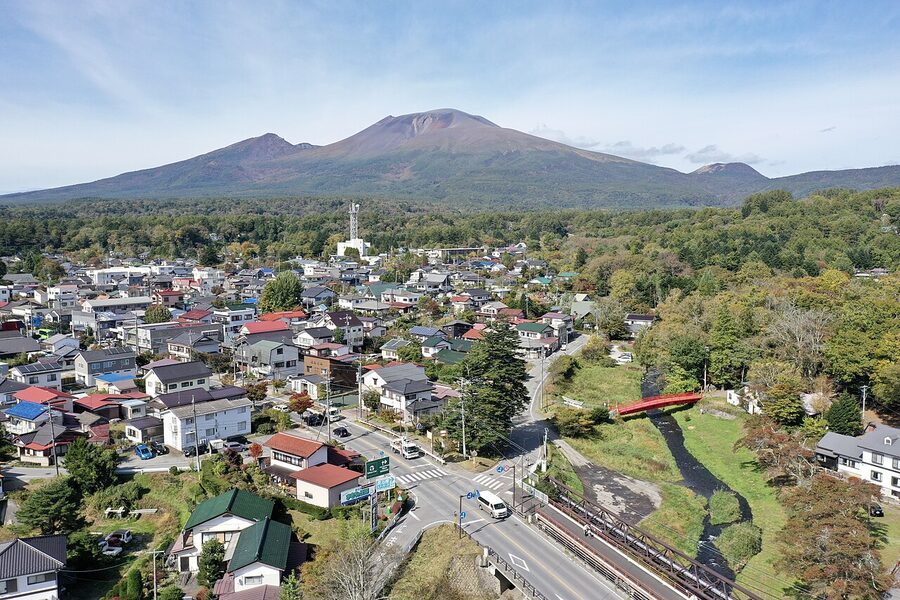

Hakone gives you a volcanic caldera, Nikko gives you UNESCO-listed shrines, Kamakura gives you beaches and the great bronze Buddha. Karuizawa gives you something none of them match: a full-on mountain resort town, purpose-built since the late 19th century by people who wanted to escape the heat of the plain. Villas dotted through cedar forest, a proper High Street called Kyu-Karuizawa Ginza that’s been selling jam and rusk since the 1910s, the oldest Western-style hotel outside Tokyo (the Mampei, still running), a Kendrick Kellogg organic-architecture stone chapel from the 1980s, a 70m-wide curtain waterfall, and a shopping plaza that is somehow also one of the largest outlet malls in Japan.
Administratively it’s in Nagano Prefecture, on the old Nakasendo road between Tokyo and Kyoto. Historically Karuizawa was a post-town — a place you changed horses and slept overnight. That is worth remembering on the day you arrive, because the town still retains that “pass-through” geography: long and narrow, hugging the slope of Mt Asama, with the old Ginza high-street at one end and the Shinkansen station at the other, connected by 15 minutes of walking or five minutes of cycling. It’s a very walkable place. That’s half the pleasure.
One fact worth noticing: in 2023 the G7 foreign ministers came here for their summit, because Karuizawa was considered the correct kind of quietly upmarket location to host foreign secretaries. That’s the reputation it still has domestically. This is where wealthy Tokyo families have had summer houses for four generations. You can feel it in the streets — nobody is in a hurry, nobody is trying to sell you anything loudly, and the coffee is consistently good.
Getting to Karuizawa from Tokyo
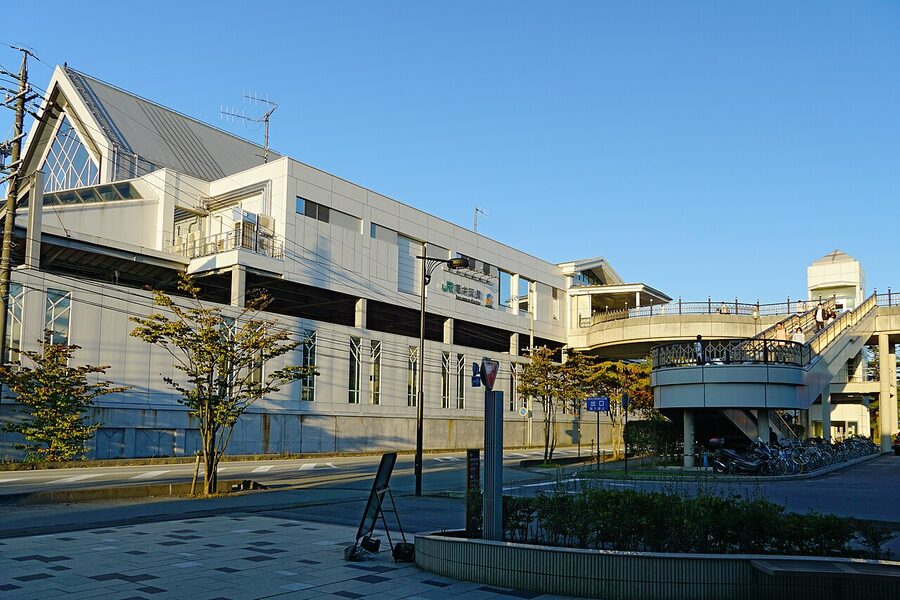

One route is meaningfully faster than everything else. The Hokuriku Shinkansen (also called the Hokuriku-Nagano line; it opened in 1997 as the Nagano Shinkansen, then extended to Kanazawa in 2015) runs direct from Tokyo Station to Karuizawa. Most services are called “Asama” (名前: あさま), named after the volcano, and they take 65-75 minutes depending on the stopping pattern. A few Hakutaka services skip stops and do the run in just over an hour.
The one-way reserved-seat fare from Tokyo Station is roughly ¥6,000 (¥5,490 unreserved, about ¥5,810-6,020 reserved depending on the service type and season). That’s the full walk-up cost. Buy tickets at any JR East midori-no-madoguchi counter, via the JR East Online reservation site, or at a ticket machine on the day. The Shinkansen platforms at Tokyo Station are on tracks 20-23 — they’re on the far Yaesu side, so leave yourself ten minutes from the Marunouchi side. If you want more on navigating the building itself, I wrote a longer guide to getting in and out of Tokyo Station.
The JR Pass actually covers this. This is a bigger deal than it sounds. Hakone isn’t covered (the Romancecar is private Odakyu), and Nikko requires the Tobu line for the useful part of the journey, but the Hokuriku Shinkansen all the way from Tokyo to Karuizawa sits on JR East metals, which means a standard JR Pass or JR East Pass (Nagano/Niigata area) covers the entire ride — including the ¥6,000 one-way fare. If you already have a JR Pass in your wallet, Karuizawa goes from being a ¥12,000 return day to a zero-marginal-cost day. That’s the single strongest argument for prioritising it over Hakone. I’ve written about whether the JR Pass is worth it for a Tokyo-based trip separately — if you’re on the fence, Karuizawa is one of the destinations that tips the numbers.
What to book and when
In summer (July, August, most weekends in September) and during the autumn koyo peak (late October to early November), Karuizawa-bound Shinkansen trains fill up on weekend mornings. Book a reserved seat two to five days ahead. In winter and spring the unreserved car is usually fine — just arrive ten minutes early and queue on the platform. The key insight is to take a morning train. Aim for the 08:00-09:00 window out of Tokyo; the first Asama service leaves at 06:28 if you’re keen, but 08:24 is my preferred slot. It puts you on the ground in Karuizawa by 09:40 with the full day ahead and most tour groups still at breakfast.
The layout, and why it matters
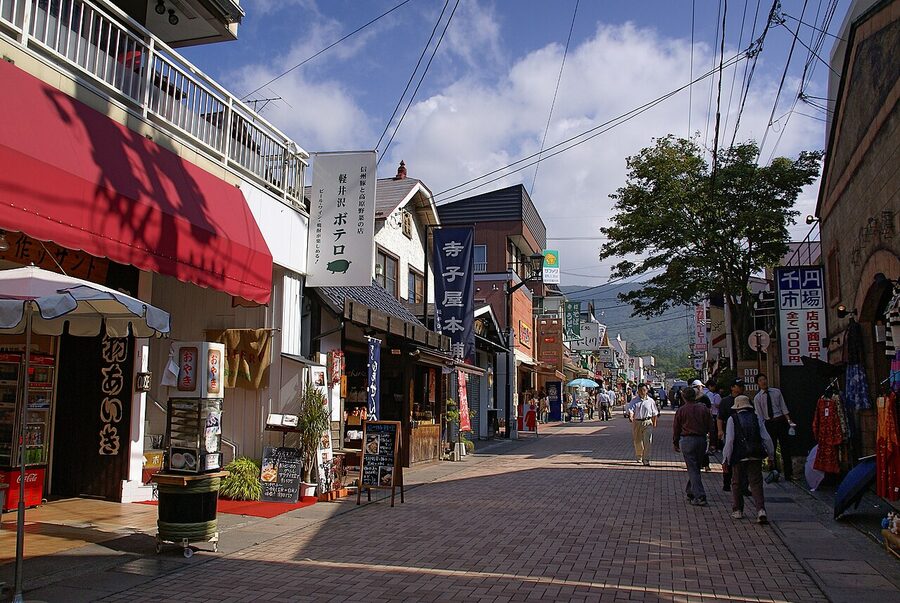

Karuizawa is not a compact pedestrian village — it’s a ribbon along the southern slope of Mt Asama, about 3km from end to end. The useful geography:
- Karuizawa Station (JR Hokuriku Shinkansen + Shinano Railway) — your arrival point and the southern end of town. Shinkansen gate spits you out with the Prince Shopping Plaza directly to your south and the rental-bike shops directly to your north.
- Kyu-Karuizawa (Old Karuizawa) — 15 minutes’ walk north of the station. This is the historic resort core: the Ginza high street, Shaw Memorial Chapel, St Paul’s Catholic Church, the old Mikasa Hotel.
- Kumoba Pond (Kumoba-ike) — halfway between the station and Kyu-Karuizawa, a 10-minute detour off the main road.
- Shiraito Falls — 12km north into the mountains, accessed by bus (25 minutes) or taxi from the station.
- Naka-Karuizawa, Harunire Terrace and the Stone Church — 4-5km west of Karuizawa Station. The Shinano Railway has a station at Naka-Karuizawa, or you bus there from the station in 15 minutes.
The implication is important: you can’t do everything on foot in a day. You need a plan.
Three ways to get around, honestly compared
- Rental bicycle — my clear first choice. Several shops cluster around the station’s north exit. Standard bikes are ¥500-1,000 per day, electric assist bikes ¥1,500-2,000. Most rentals open 09:00-17:30. Karuizawa is essentially flat along the resort strip, with one gentle climb up to St Paul’s. A bike gets you from the station to the Ginza in 5 minutes and around Kumoba Pond without breaking a sweat. It will not, however, get you to Shiraito Falls — that’s 12km uphill one-way and is realistically only feasible on the e-bikes, and even then you’d want a full day for it alone.
- Local buses (Kusakaru and Seibu) — the Kusakaru Kotsu bus runs to Shiraito Falls in 25 minutes for ¥720 one-way. Seibu runs the Harunire Terrace shuttle from the station. If you’re doing Shiraito Falls, the bus is the only sane option short of a taxi. Get the timetable at the station information centre on arrival — the bus runs roughly hourly and you do not want to miss the last one down.
- Walking — perfectly fine for the Station → Kumoba → Kyu-Karuizawa Ginza → Shaw Chapel loop. That’s about 5km round-trip, on pavements, flat. If you want to save the cycling cost and you’re not planning to go to Shiraito or Harunire, walking works.
I’ve done it all three ways. The e-bike day is the best day, by some distance.
Kyu-Karuizawa Ginza, and the jam question
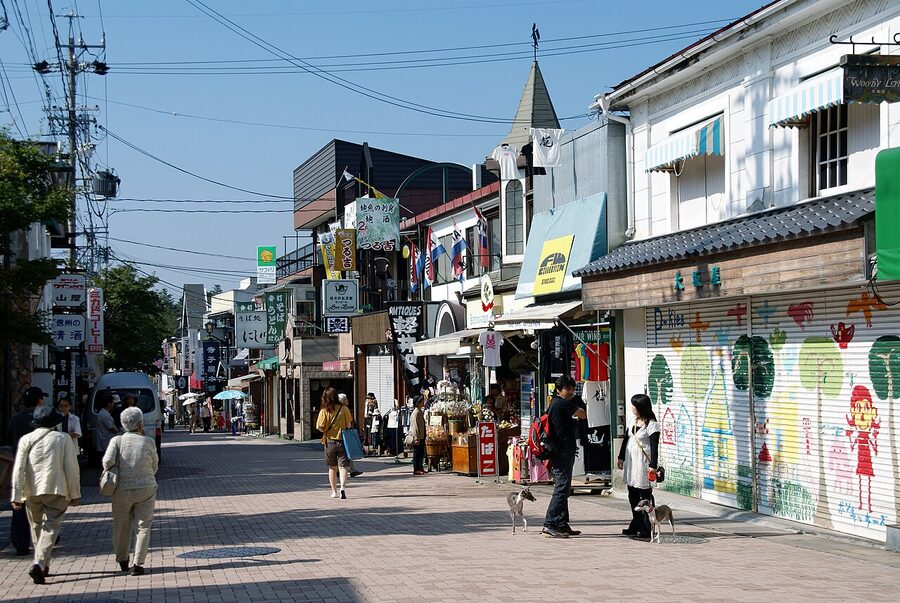

Kyu-Karuizawa Ginza Dori (旧軽井沢銀座通り) is a 750m high street at the old-town end of Karuizawa. It runs from Karuizawa Tourist Hall up towards the foot of Usui Pass. It is, frankly, the most enjoyable 45 minutes of wandering you’ll do all day, provided you skip the first 200m of souvenir-keychain shops and push on to where the locals go.
The things worth stopping for:
- Sawaya Jam (沢屋) — the Karuizawa jam institution since the 1950s. The strawberry, the blueberry, and their seasonal rhubarb are excellent. Tasting spoons on the counter. A 150g jar is around ¥1,200.
- Nakayama’s Jam — smaller, more craft-leaning. They sell the one with whole raspberries that looks like a science experiment.
- French Bakery — a rustic bakery that used to be frequented by John Lennon during his summers in Karuizawa in the late 1970s. The bread and the pain au raisin are still very good. There is no Lennon shrine. This is not Liverpool. Just buy bread.
- Atelier de Fromage — Nagano-made cheeses on tasting boards with a glass of wine. A civilised 30-minute sit-down.
- Mikado Coffee — the original location from 1952. Their mocha soft-serve is the legitimate Karuizawa soft-serve. Queue on hot days.
- Karuizawa Rusk — rusk is essentially toasted cake bread with sugar glaze. Karuizawa is famous for it. I think a little of it goes a long way, but everyone under twelve loves it.
Honest note: skip the “information centre” that charges ¥200 entry on the main drag. It’s a small shop of reprinted postcards. The actual tourist information (free) is in the classic wooden Karuizawa Tourist Hall at the start of the street — they have good maps and English-speaking staff.
Shaw Memorial Chapel — the building that started everything
Ten minutes’ walk up from the end of the Ginza, in a stand of conifers, sits a tiny wooden church called Karuizawa Shaw Memorial Chapel (軽井沢ショー記念礼拝堂), first built in 1895 by Canadian Anglican missionary Alexander Croft Shaw. Shaw was lecturing at the University of Tokyo in 1886 when a Scottish colleague called James Main Dixon told him about the cool summer air on the old Nakasendo. Shaw came up, liked it, built a mission and then a summer villa, and the rest of the Tokyo foreign community followed him. Within 25 years there were a hundred-plus foreign villas clustered around this church. Today the Shaw House next door is a small free museum reconstructed on the original site.
It’s tiny. It takes five minutes. But it’s the place to stand if you want to feel the origin of the whole resort — the literal reason Karuizawa exists as we know it. Free entry, daylight hours only, Protestant services are still held on Sundays.
Kumoba Pond (Kumoba-ike)
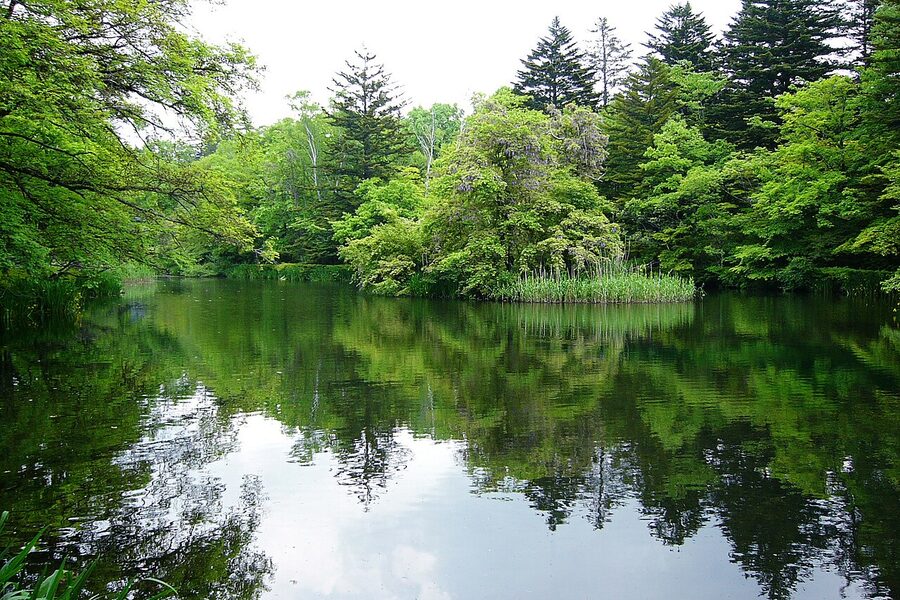

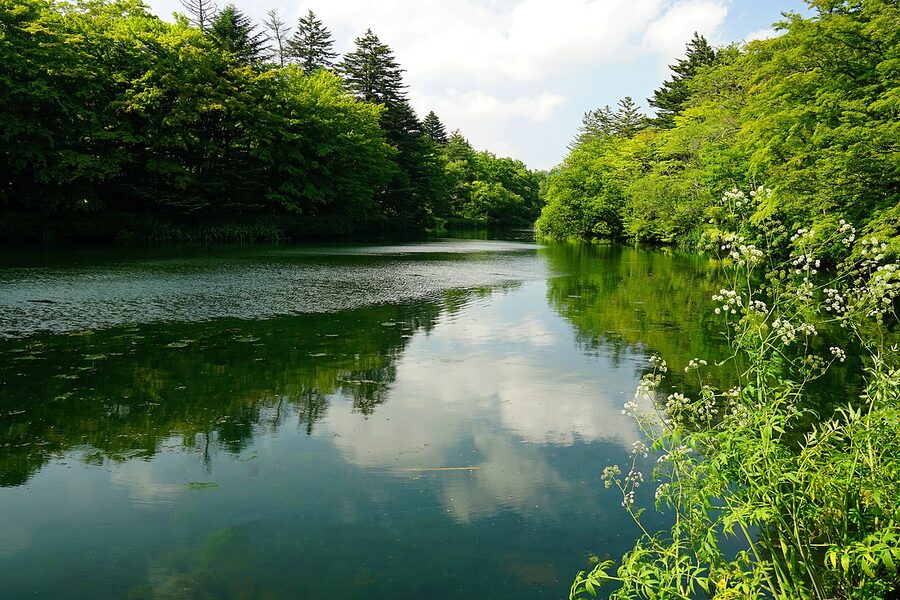
Kumoba Pond (雲場池 — “cloud-market pond”, though most locals just call it Swan Lake) is a small man-made pond fed by a spring called Gozen-sui on the Hotel Kashima-no-mori’s grounds. It’s about a 15-minute walk from either the station or the Ginza. The loop path is exactly 1km, takes 20 minutes at a very slow pace, and is entirely flat.
The pond is the classic autumn koyo (紅葉) shot of Karuizawa. When the Japanese maples turn red in the last week of October and the first week of November, reflected in still water against cedar green, this is the image every Nagano tourism board uses. You will not be the only person there during that fortnight, but the path is wide enough to handle it. Outside koyo it’s a pleasant 20-minute stop on the way up to Kyu-Karuizawa.
Walking path around the pond

Shiraito Falls — the one you take the bus for
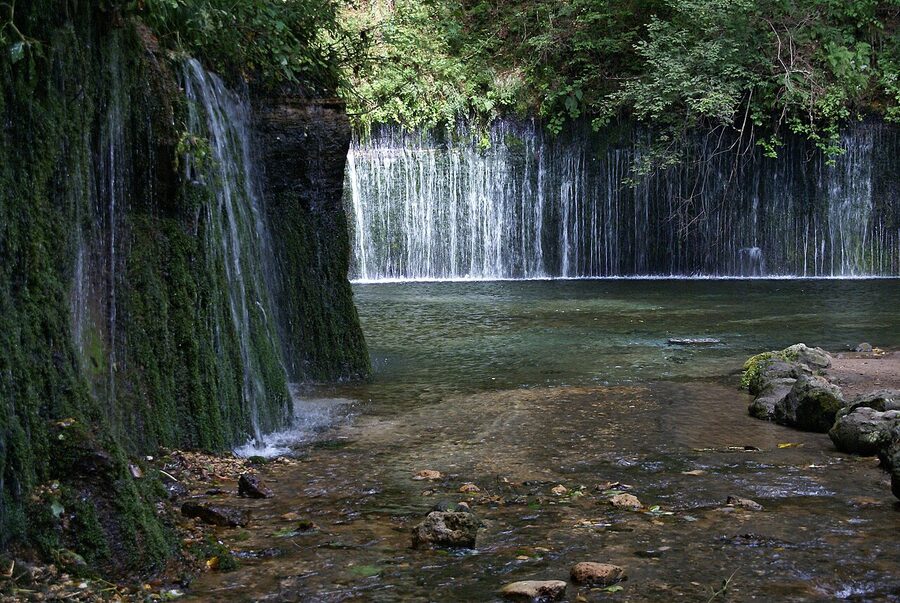

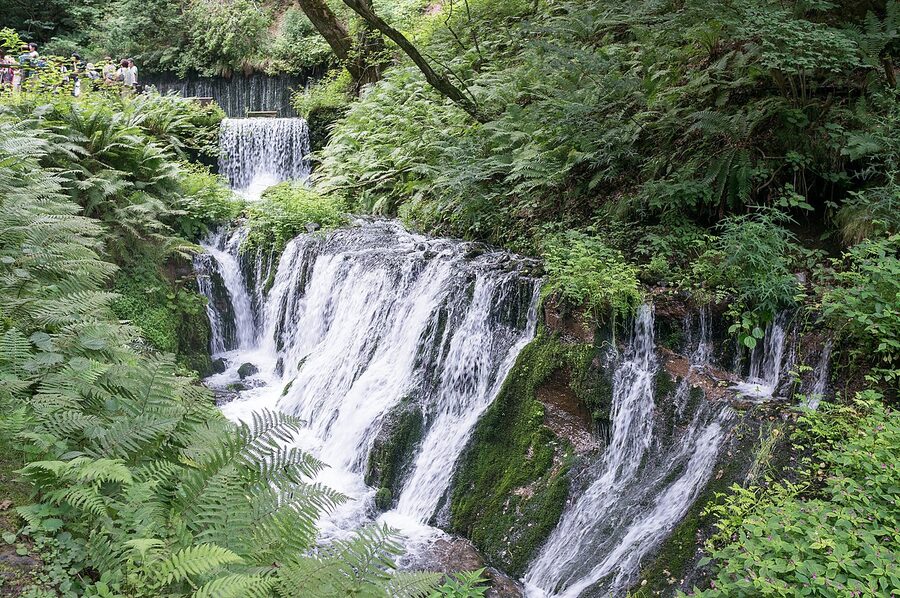
Shiraito Falls (白糸の滝 — literally “white thread falls”) is what everyone else photographs from Karuizawa, and it deserves its reputation. It’s unusual because it’s short but broad — only 3 metres of vertical drop but 70 metres across, and the water emerges as hundreds of individual strands of white water out of a porous rock cliff above the Yugawa River. Geologically, it’s not a waterfall in the classical sense at all: the water is filtered through volcanic rock from Mt Asama above over a period of six years, then exits horizontally through the cliff face. This is why the flow never varies and the pool at the base stays 11°C year-round.
To get there: take the Kusakaru Kotsu bus “Shiraito Kogen Line” from stand 1 outside Karuizawa Station. The ride is 25 minutes, costs ¥720 one-way, and drops you at “Shiraito no Taki” stop. From there it’s a three-minute flat walk to the falls. Return buses leave roughly hourly — check the posted return times before you go in, and give yourself about 45 minutes at the falls themselves.
.jpg)
Honest take: Shiraito is the one non-town thing I’d put on every itinerary. Go before 11:00 and you’ll have clean photos; after midday tour groups arrive. If you’re going in winter, check the bus status before leaving the station — I’ve been up there in January with a nearly-empty bus which is a different kind of lovely, but it’s the shoulder months (April-May, October-November) when it’s at its best.
St Paul’s Catholic Church
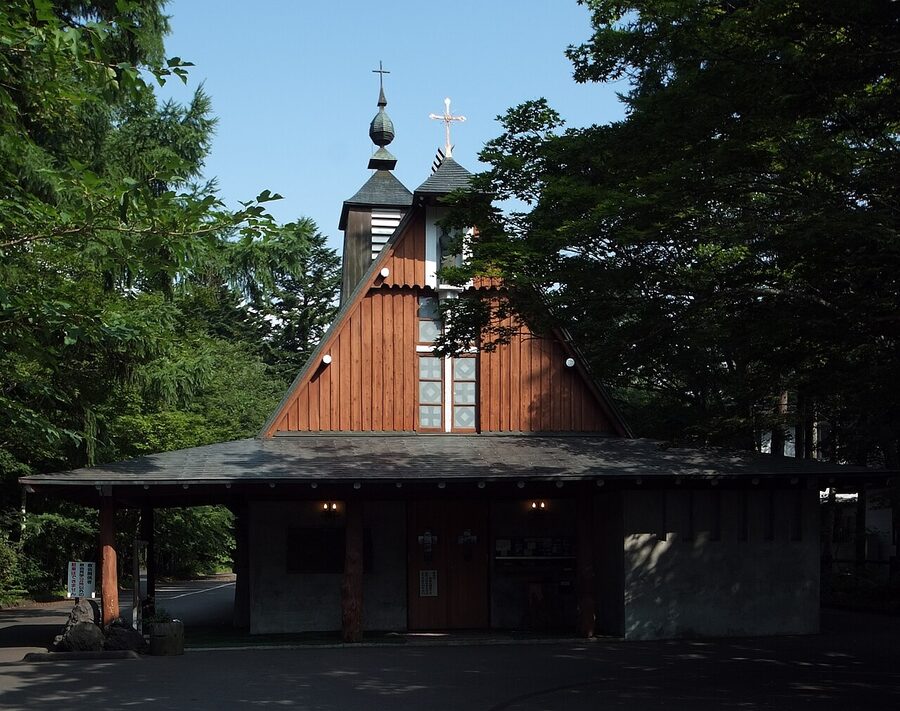

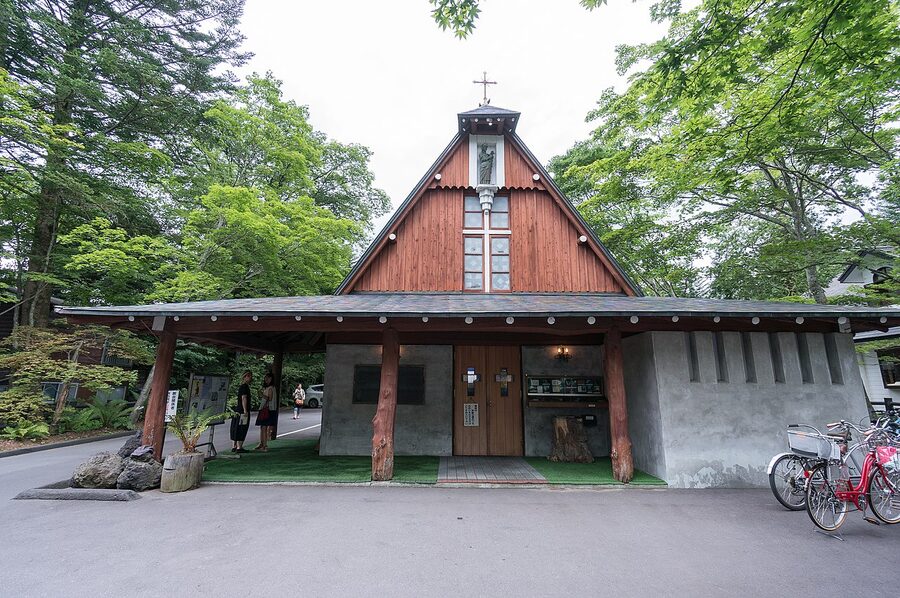
Five minutes’ walk off the top of Kyu-Karuizawa Ginza, up a quiet side lane, sits St Paul’s Catholic Church (聖パウロカトリック教会). It was built in 1935 to a design by Antonin Raymond, the Czech architect who came to Japan in 1919 as Frank Lloyd Wright’s assistant on the Imperial Hotel and decided to stay for fifty years. The church is entirely wooden, steeply gabled, with a roof that almost touches the ground on the exterior, and inside is a single bare-timber vaulted nave that smells exactly like a church should. Entry is free, you are welcome to sit quietly, and there’s a small sign asking you not to photograph if a wedding is in progress — St Paul’s does about 200 weddings a year and the ceremonies are short, so if one’s happening, loop back in twenty minutes.
.jpg)
Harunire Terrace and the Stone Church
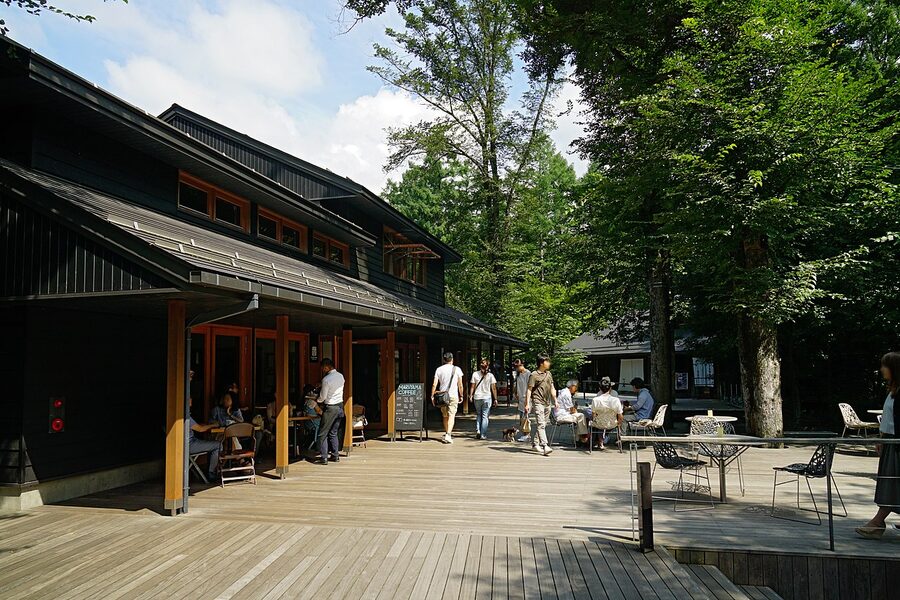

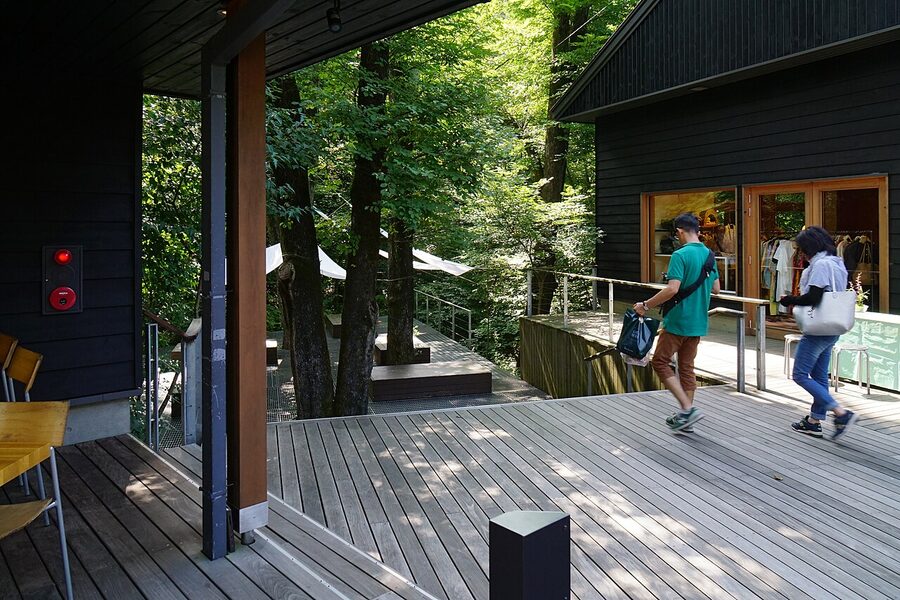
About 5km west of Karuizawa Station, in an area called Hoshino, there’s a modern riverside development called Harunire Terrace (ハルニレテラス) that opened in 2009. Nine wooden buildings connected by decks, 16 restaurants and small shops, all built around a grove of about 100 native haru-elm trees next to the Yugawa stream. It’s owned and run by Hoshino Resort, the same group that owns a high-end ryokan nearby.
The restaurants here are good. Kawakami-an for soba made with Shinshu buckwheat, Il Sogno for pizza, and the bakery Sawamura for sourdough. None of them are cheap — Harunire prices match central Tokyo — but the quality is reliable, which on a day trip matters. The Seibu Hoshino Onsen shuttle runs from Karuizawa Station in 15-20 minutes and drops you right at the entrance. Bus is ¥470 one-way or free if you have a Seibu day pass.

The Stone Church, if you’re a design person
,_Karuizawa.jpg)
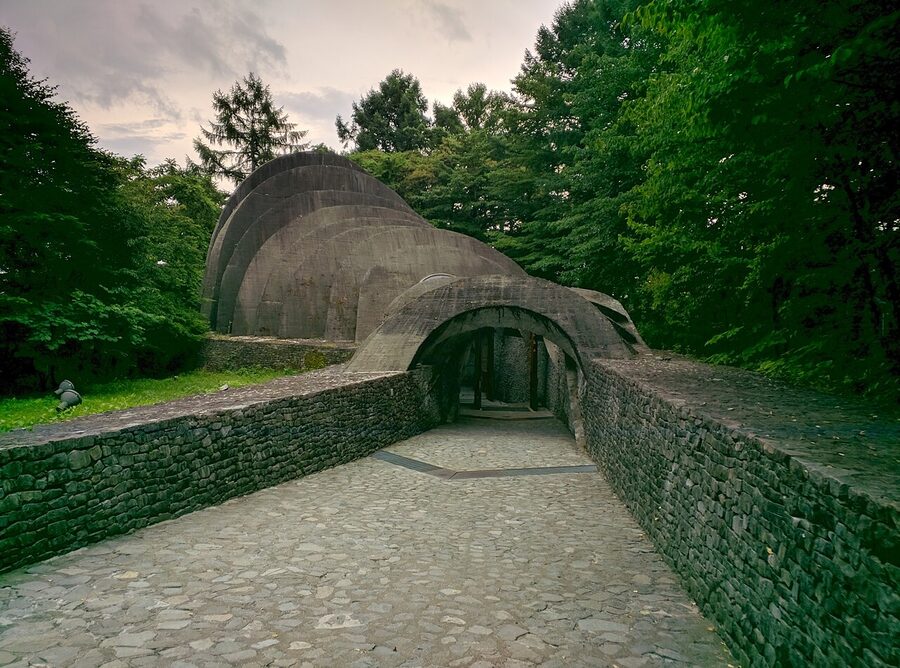
Ten minutes’ walk up from Harunire Terrace, at the Hoshino resort compound, is the Stone Church / Uchimura Kanzo Memorial Hall (石の教会・内村鑑三記念堂). It was designed in 1988 by the American architect Kendrick Kellogg, a student of Frank Lloyd Wright and one of the few practitioners of what’s called organic architecture. The church is a series of stone arches half-buried in the hillside, with glass between them so you’re half in a cave and half under sky. It was built to commemorate the Christian philosopher Uchimura Kanzo, who died in 1930 and preached a form of Japanese Protestantism without churches — the irony that he now has a church is quite Japanese.
Practical warning: the Stone Church books out for weddings on most weekends. On weekdays you can usually walk in and look for 20 minutes for free. On weekend afternoons it’s typically closed. Check the Hoshino Area calendar (their website lists wedding dates) before you make the trip. If it’s closed when you arrive, you can still photograph the exterior from the approach path, which is most of what you came for anyway.
The Old Mikasa Hotel — the 1906 one
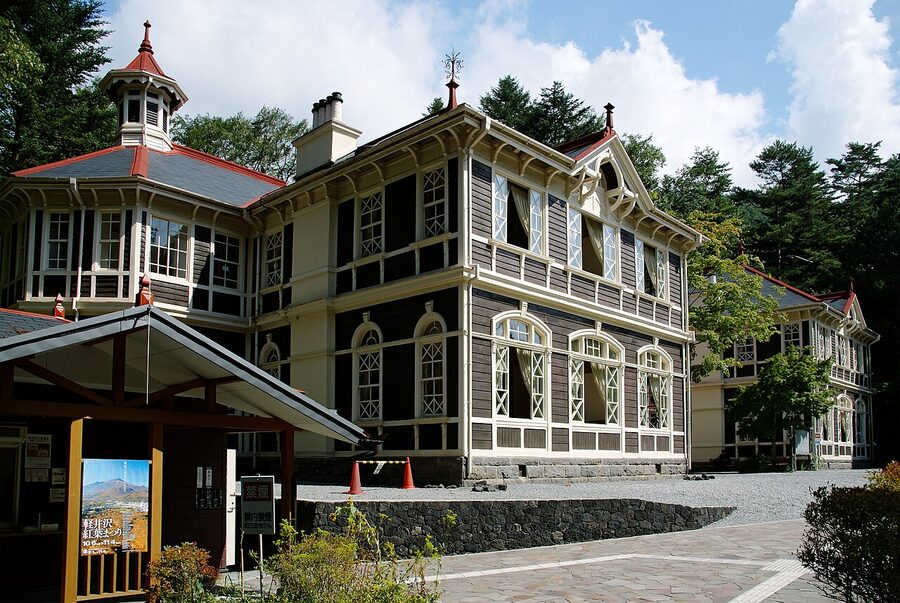

If you care about Meiji-era architecture, the Old Mikasa Hotel (旧三笠ホテル, built 1905-06) is a 20-minute walk or a 5-minute cycle beyond the top of Kyu-Karuizawa Ginza. It was the grandest Western-style hotel in resort Japan when it opened — three floors of wood-frame in a half-timbered European idiom, built for the same foreign clientele Shaw’s chapel catered to. It was designated a national Important Cultural Property in 1980. As of late 2025 it’s closed to interior tours for major seismic strengthening and is expected to reopen in 2027. You can still walk the grounds, and the exterior is the point. Skip this if you’re not a building nerd — go if you are.
The outlet mall, honestly
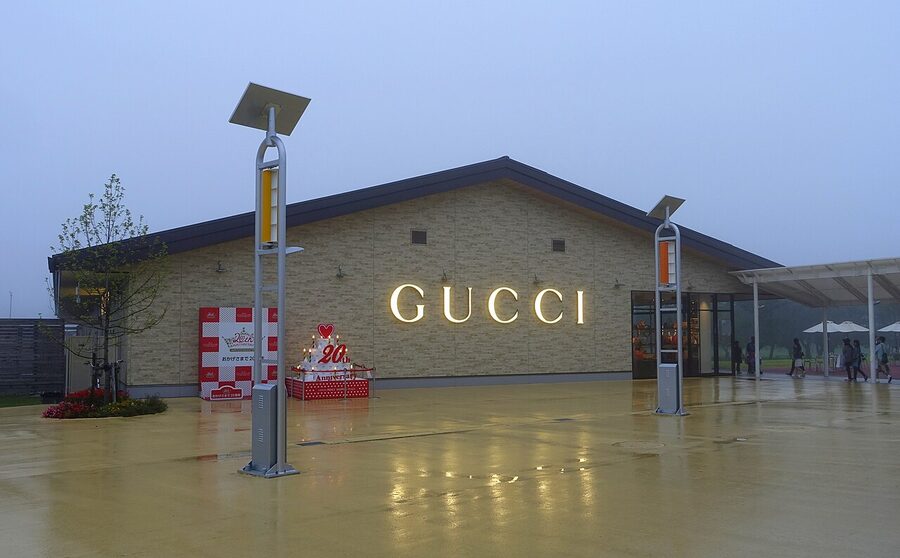

Karuizawa Prince Shopping Plaza (軽井沢プリンスショッピングプラザ) sits directly south of Karuizawa Station — you come out of the Shinkansen gates, walk across a plaza, and you’re in it. It’s operated by Seibu, which owns most of the infrastructure in this part of Karuizawa, and it’s one of the largest outlet malls in Japan: around 200 stores arranged as a low-rise open-air village with Mt Asama looming over the north end.
Brands worth coming for: Japanese outdoor labels (Snow Peak, The North Face, Arc’teryx), Japan-only collaborations at Beams, outlet prices at Comme des Garçons, and the usual international suspects (Adidas, Nike, Coach). Prices are 30-50% off retail, which is good-but-not-incredible — you’ll see better discounts at Gotemba Premium Outlets near Mt Fuji, for instance.
My honest take: if this is your day-trip plan, you’ve misunderstood Karuizawa. You didn’t come to a mountain resort to shop for Nike. The outlets are best used as a 90-minute stop before your return train — buy the one thing you wanted, pick up Karuizawa jam at the food hall at the east end, get coffee, go. The full afternoon devoted to shopping here is available cheaper in Tokyo and with more brands.
The seasons, ranked
Karuizawa has sharp seasons. They matter more here than in Tokyo because the whole point of the town is its microclimate. My ranking:
- Late October to early November — koyo season. The most photogenic time. Kumoba Pond’s reflection is at peak, the elms at Harunire Terrace turn gold, and the morning air around Shaw Chapel smells of leaf mould. Weekdays fine; weekends booked-out.
- July and August — the historically obvious choice. This is why the town was built — temperatures of 22-26°C while Tokyo is at 33°C+. Peak rates at ryokan, busy on weekends, but the whole town is working for you. If you have to come in summer, come mid-week.
- Late April to mid May — Karuizawa’s cherry blossoms arrive about three weeks after Tokyo’s, because of the altitude. If you missed the Tokyo sakura, you can catch them here. The Ginza is flower-lined for about ten days. Cool enough for a jacket.
- Winter (December-February) — skiing and skating. The Prince Snow Resort is literally adjacent to the station — two minutes’ walk, you can go from the Shinkansen gate to the chairlift in under 15 minutes. Temperatures typically -2°C to -8°C. Shiraito Falls is effectively closed and outdoor cycling is off. Good if you’re specifically coming for ski. Wear proper boots — the station approach ices.
- June — tsuyu (rainy season). Skip unless you don’t mind wet hiking. The mist on the cedars is pretty, but two days in three are actually grey.
- September weekends — busy, often warmish, hazy. Weekdays in September are a sleeper-hit window — the coach groups are gone and the weather is still summer.
Food beyond the Ginza
A few rules for eating in Karuizawa that save a lot of time:
- Shinshu soba — Nagano is soba country. The buckwheat is local. Every half-decent soba-ya in town makes its own noodles. Kawakami-an at Harunire and Sobakiri Mikasa in Kyu-Karuizawa are both reliable. A plate of zaru soba is ¥900-1,300.
- Smoked trout (amago / yamame) — river fish from the Yugawa. The smokehouses at Harunire Terrace sell trout rillettes you can eat on bread.
- Karuizawa jam — you will buy at least one jar. My rule is: only buy the ones with photos of the actual fruit you can recognise on the label. The ones with abstract art are tourist products.
- Mikado Coffee mocha soft-serve — already mentioned, on the Ginza. ¥500. Worth it.
- Shinshu beef — the regional wagyu. Several steakhouses around Harunire and in Kyu-Karuizawa serve this. Not cheap — budget ¥6,000 for a set lunch.
- Coffee — Karuizawa has a disproportionate number of serious third-wave coffee shops. Maruyama Coffee (Naka-Karuizawa) and 14:08 Coffee (near the station) are both the kind of place you’d pay to sit in Tokyo, and here they’re half-empty on a Tuesday.
Practical info block
- Location: Karuizawa-cho, Kitasaku-gun, Nagano Prefecture. ~170km north-west of Tokyo. Elevation 939-1,000m on the resort plain.
- Getting there: Hokuriku Shinkansen “Asama” or “Hakutaka” services from Tokyo Station, 65-75 minutes. Approximately ¥5,490 unreserved / ¥6,020 reserved one-way. Fully covered by JR Pass and JR East Pass.
- Return: Last Asama back to Tokyo leaves Karuizawa around 21:50, arriving Tokyo 23:05. Don’t cut it fine.
- Bike rental: Several shops north of Karuizawa Station. Standard ¥500-1,000/day, e-bike ¥1,500-2,000/day. 09:00-17:30 typical hours.
- Bus to Shiraito Falls: Kusakaru Kotsu, stand 1 outside station. ¥720 one-way, 25 minutes. Runs roughly hourly, reduced in winter.
- Harunire Terrace shuttle: Seibu bus from Karuizawa Station, ¥470 one-way, 15-20 minutes.
- Entry fees: Shaw Chapel free. St Paul’s free. Stone Church free (when open). Shiraito Falls free. Kumoba Pond free. The outlet mall is free to walk around.
- Tourist information: Karuizawa Tourist Hall in Kyu-Karuizawa (free, English staff); Karuizawa Station Tourist Information Centre on the north side of the station concourse.
- Useful official sites: Karuizawa Tourism Association, Town of Karuizawa, JR East Hokuriku Shinkansen.
- Currency: yen only. ATMs in Karuizawa Station, Prince Shopping Plaza, and 7-Eleven on the Ginza.
My Karuizawa day-trip plan, in order
- 08:24 Tokyo Station → 09:40 Karuizawa on an Asama Shinkansen (reserved in summer/autumn).
- 09:50 Rent an e-bike from one of the station-north shops (¥1,800 for the day).
- 10:00 Cycle 10 minutes north to Kumoba Pond. One slow loop (20 minutes). Sit on a bench. Drink coffee.
- 10:30 On to Kyu-Karuizawa Ginza (10 minutes by bike). Jam tasting at Sawaya, Mikado Coffee soft-serve, pick up bread at French Bakery.
- 11:45 Walk up to Shaw Memorial Chapel and the Shaw House Memorial (free, 20 minutes).
- 12:15 Lunch on the Ginza — I’d go for soba at Sobakiri Mikasa or rillettes and bread picnic on a bench near the chapel.
- 13:30 Cycle back past the pond, cut over to St Paul’s Catholic Church. Sit inside for a few minutes.
- 14:00 Drop the bike at the station. Board the Kusakaru bus to Shiraito Falls (¥720, 25 min). Return bus around 15:15.
- 15:45 Back at the station. 30 minutes at the Prince Shopping Plaza for whatever you actually wanted.
- 16:15 Final coffee at 14:08 Coffee. Train home.
- 17:14 Asama to Tokyo. Home by 18:30. Good day.
If you have a weekday rather than a weekend, or if you want a calmer version, drop the Prince Shopping Plaza step entirely and spend an extra 90 minutes at Harunire Terrace — ride the Seibu shuttle over for a late lunch instead. Karuizawa rewards slowness.
If you’ve already done the obvious day-trips
Karuizawa sits naturally between the three canonical Tokyo day-trips and fits into longer itineraries better than some. If you’re considering it alongside the others: my Hakone guide is the direct competitor — both are highland resorts, Hakone has the volcanic onsen and Karuizawa has the JR-Pass-covered Shinkansen. If you like shrines and are prepared for a longer day, Nikko is the UNESCO option. And Kamakura is the low-effort coastal one. If you’re slotting Karuizawa into a longer stay, my three-day Tokyo itinerary has notes on where a day out fits best.
Karuizawa is the day-trip most first-timers skip, which is a small mystery. It’s an hour from Tokyo on a train you’ve already paid for, the weather is cooler, the mountains are the kind you’d put on a postcard, and nobody will try to sell you a tour bus. Catch the 08:24 and see.