
Reviewed · CITY TOURS
Tokyo: 3 Towers Tour – A Sky-High View of the City
Tokyo is easiest to understand from above, and this private tour gives you three very different looks at it in one day. You’ll begin at the Tokyo Metropolitan Government Building, move to the familiar orange frame of Tokyo Tower, then finish at Tokyo Skytree, the tallest of the three by a wide margin.
I like the changing viewpoints and the fact that subway fares, admission, and an English-speaking guide are included. I also like the private format, since guides such as Atsushi and Chikako have been able to adjust the pace and add shopping stops when guests wanted them. The main drawback is the price: at $307 per person, this is a costly way to visit observation decks, especially since meals and hotel transportation are not included.
In This Review
- Key points to know before booking
- Three towers, three ways to read Tokyo
- Starting at the Tokyo Metropolitan Government Building
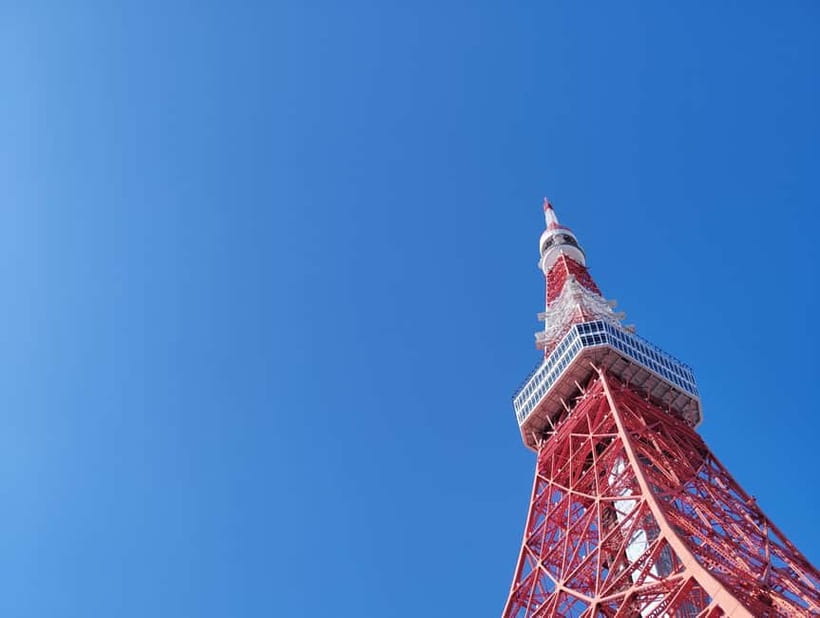
- Tokyo Tower, the city’s familiar orange landmark
- Finishing at Tokyo Skytree
- Why the private guide matters
- Subway travel is part of the day
- The price and what you receive
- Who will enjoy this tour most
- Should you book the three-tower tour?
- FAQ
- How long does the Tokyo three-tower tour last?
- Where does the tour begin?
- Where does the tour finish?
- Which towers are included?
- Is an English-speaking guide provided?
- Are subway fares included?
Key points to know before booking
- Three very different views: The Tokyo Metropolitan Government Building gives you a modern Shinjuku outlook, Tokyo Tower frames the central city, and Skytree opens a much wider view from far higher up.
- Private English-speaking guide: You get personal help with navigation, local background, and the subway connections between stops.
- Mount Fuji depends on weather: Fuji may be visible from the Government Building or Skytree on a clear day, but no tower can promise a clear view.
- A full half-day on your feet: Each stop is planned for about 1.5 hours, with additional time for subway travel between them.
- The tour ends at Skytree: You begin at Tomin Hiroba beside the Tokyo Metropolitan Government Building and finish at Tokyo Skytree, so you will need to arrange your own return.
- Best for height fans: Observation decks are the whole point, so this is not a good match if you are afraid of heights.
Three towers, three ways to read Tokyo
A single observation deck gives you a postcard. Three give you a lesson in Tokyo’s scale and layout.
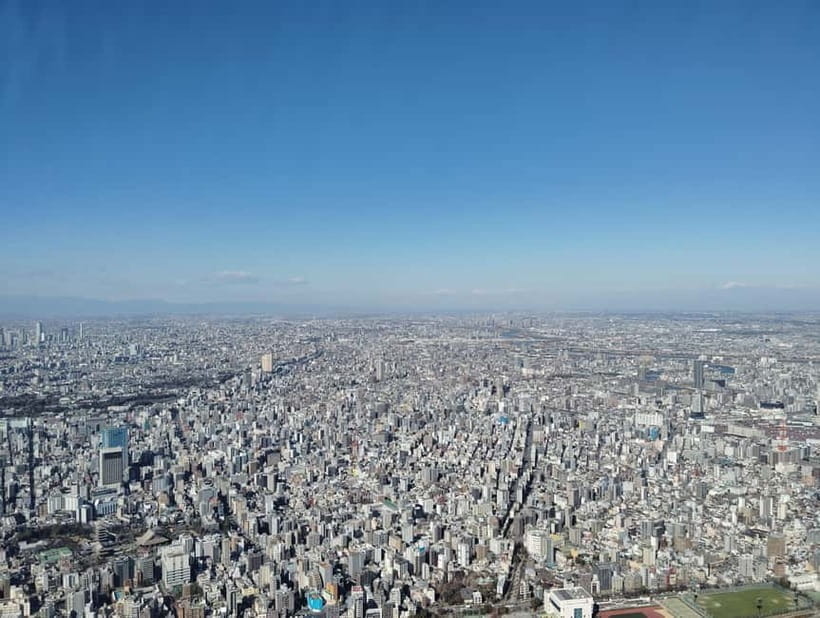
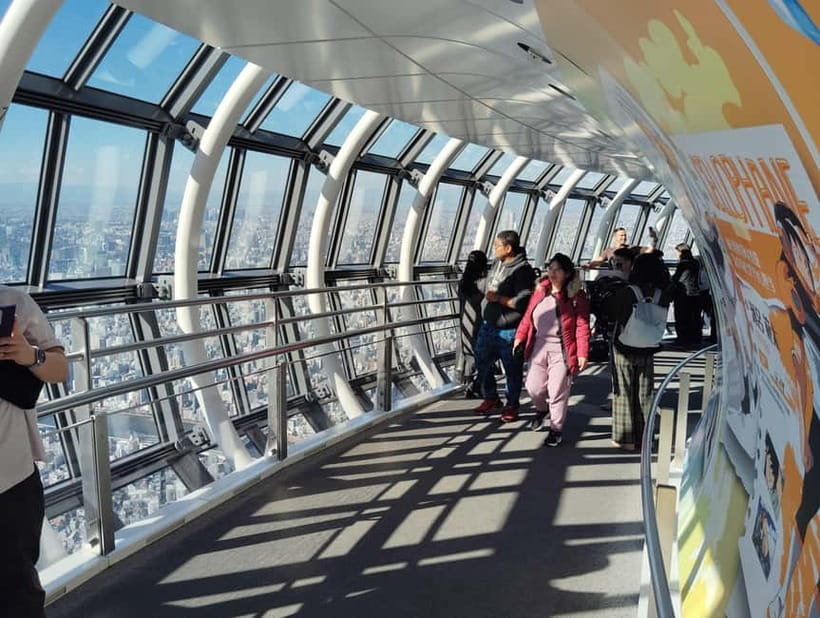
At the Government Building, you look across the dense western side of the city from a major administrative center. Tokyo Tower offers a more central view, with Roppongi Hills and Tokyo Bay in the distance. Skytree changes the scale again. From 634 meters, the city spreads far beyond the immediate cluster of high-rises.
That progression is the strongest idea behind this tour. You are not simply checking off three tall buildings. You are comparing the city from different heights and locations, then noticing how the view changes with each move.
The schedule allows about 1.5 hours at each tower. The stated tour length is five hours, while the individual sightseeing blocks add up to about 4.5 hours. The remaining time is useful for subway transfers and walking. I would still keep the day flexible, since Tokyo’s stations can take time to navigate even when the actual ride is short.
Other city tours we've reviewed in Tokyo


Starting at the Tokyo Metropolitan Government Building
The meeting point is Tomin Hiroba, the public plaza at the Tokyo Metropolitan Government Building. Look for the guide holding the yellow Deep Experience sign.
This first stop is more than a quick photo halt. The building serves as Tokyo’s administrative center, and its observation decks on the 45th floor give you a broad opening view of the city. It is a good place to begin because you can see Tokyo as a modern mass of office towers, roads, and distant districts before moving on to the more famous landmarks.
On a clear day, Mount Fuji may appear beyond the city. That possibility is one reason to pay attention to the weather forecast, though you should treat Fuji as a bonus rather than a promise. Clouds, haze, and rain can block it even when the rest of Tokyo is easy to see.
I would also use this stop to get your bearings. Your guide can point out how the districts relate to one another and explain the building’s role. The view is broad rather than theatrical, which makes it a useful first chapter.
The Government Building is also a practical value point. Admission is included, and this stop gives you a high view without the cost and fame attached to Tokyo Tower or Skytree. If you have already seen Tokyo from another high floor, this may be the least distinctive stop, but it still helps set up the rest of the tour.
Tokyo Tower, the city’s familiar orange landmark
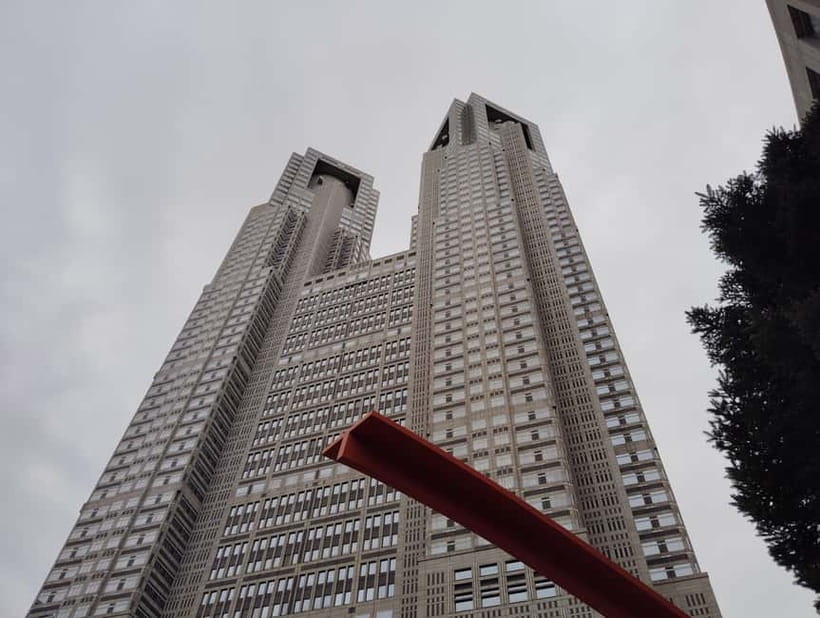
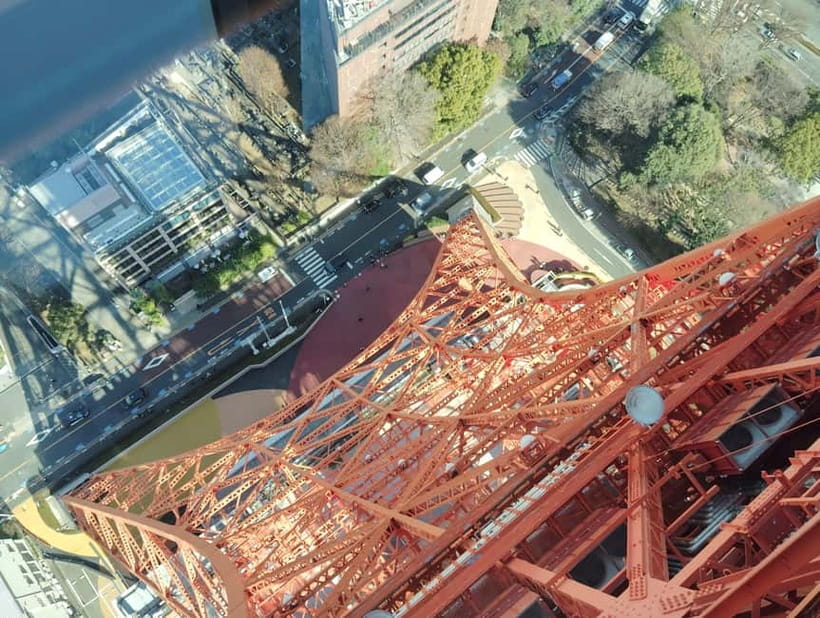
The second stop shifts the mood. Completed in 1958, Tokyo Tower has been one of the city’s best-known symbols for decades. From its observation decks, you can look toward Roppongi Hills, Tokyo Bay, and the central districts.
The tower’s appeal is partly visual. You are no longer simply looking out from a high building. You are inside a landmark that you have likely already seen from street level, where its orange and white structure rises above the city. That change gives the visit a stronger sense of place.
Your guide provides background on the tower and helps you focus on what is visible from the decks. In daylight, the view shows the spread of Tokyo and its major clusters. After sunset, the lights become the main event. The exact timing of this tour is not fixed in the information provided, so do not assume you will automatically get both daylight and night views. Check the starting time when you book.
This is also the stop most likely to feel less essential if you have visited Tokyo Tower before. One recent guest found the Government Building and Skytree more interesting than Tokyo Tower. That is a fair warning, not a reason to skip the tour altogether. Tokyo Tower supplies the middle perspective, and the contrast between it and Skytree is part of the value.
If your main goal is the highest possible view, Tokyo Tower will not be the highlight. If you want the classic Tokyo icon and a central outlook that includes Roppongi Hills and Tokyo Bay, it earns its place.
Finishing at Tokyo Skytree
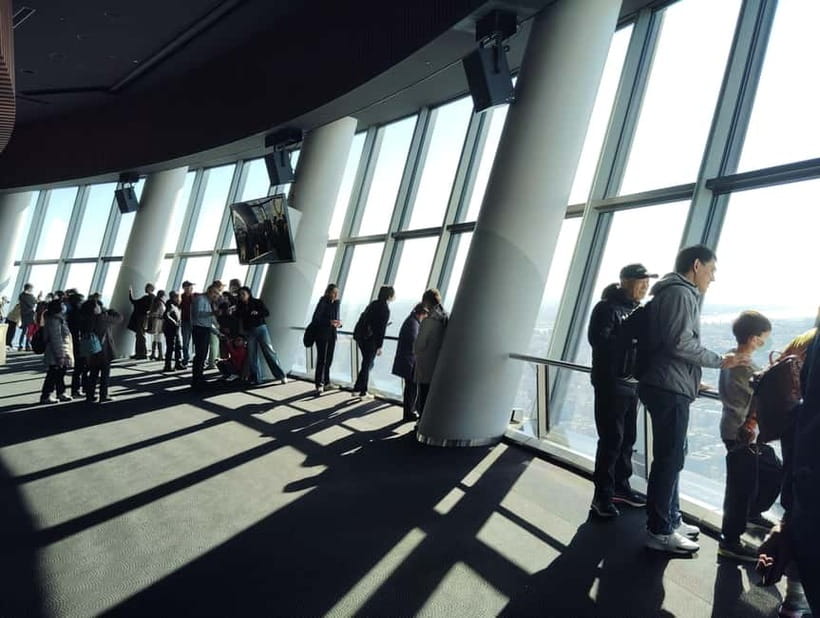
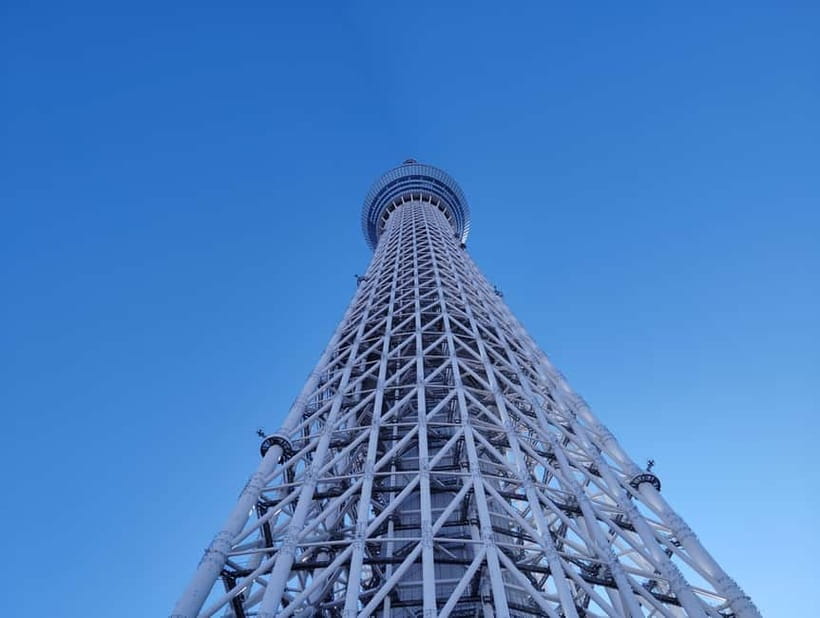
Skytree is the grand finale. At 634 meters, it is currently described as the tallest tower in the world, and its observation areas provide a 360-degree view over Tokyo and beyond.
The difference in height is immediately useful. The Government Building and Tokyo Tower show you dense sections of the city. Skytree gives you a wider sense of how far Tokyo reaches. On a clear day, Mount Fuji may be visible in the distance, and after sunset the city lights stretch in every direction.
I like ending here because the last stop offers the biggest change in scale. You have already seen Tokyo from two lower points, so the view feels like a payoff rather than just another elevator ride. The guide can also help you compare what you have seen earlier in the day.
Skytree is not necessarily the most personal or historic-feeling stop. Its appeal is height, reach, and the full circle of windows. Some people prefer Tokyo Tower’s familiar design and central location, while others want the widest possible view. This tour lets you decide for yourself instead of choosing between them.
The tour finishes at Tokyo Skytree. That is convenient if you want to continue exploring the area, but it is not a hotel-to-hotel outing. You will make your own plans after the final stop.
Why the private guide matters
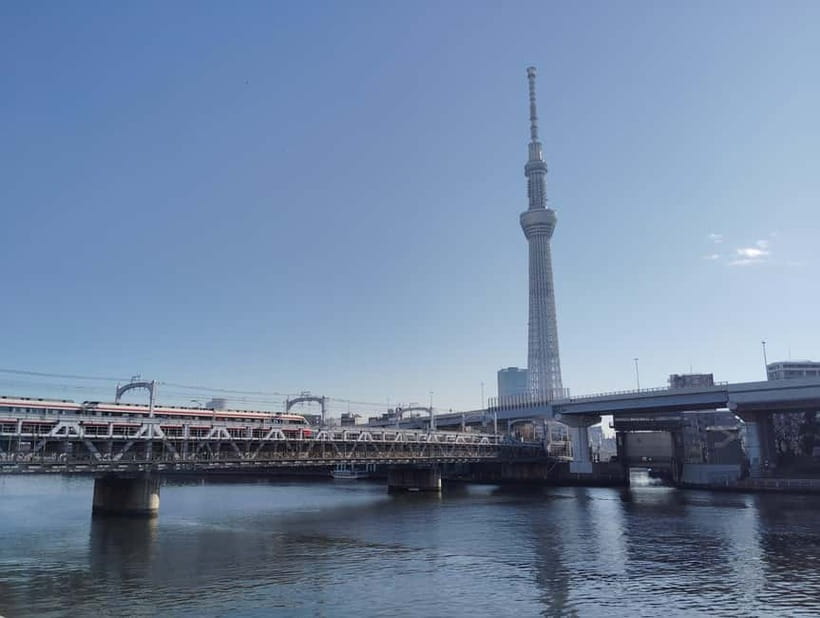
The towers are easy to name but less simple to connect in one outing. The private English-speaking guide handles the movement between them, including subway fares within the tour. That matters in Tokyo, where station signs and transfers can slow down a day even when the train ride itself is straightforward.
Your guide also adds context that an elevator ride cannot provide. The tour includes historical and architectural information about each building, along with local observations about what you are seeing. The guide’s role is especially useful at the Government Building, where the view may not explain itself, and at Skytree, where the large panorama can be hard to read without orientation.
The private format gives you more room to ask questions and set the rhythm. Atsushi adjusted the pace and locations around weather and personal interests on one recent outing. Chikako was also praised for listening closely and bringing a friendly, professional approach. Those specific guides may not be assigned to every departure, so consider them examples of the type of service, not a guarantee.
One useful detail from a recent tour is that the guide helped with shopping for gifts. That is not listed as a fixed part of the route, so I would not book this solely for shopping. Still, it shows how the private setup can be useful if you have a request that fits the day.
Subway travel is part of the day
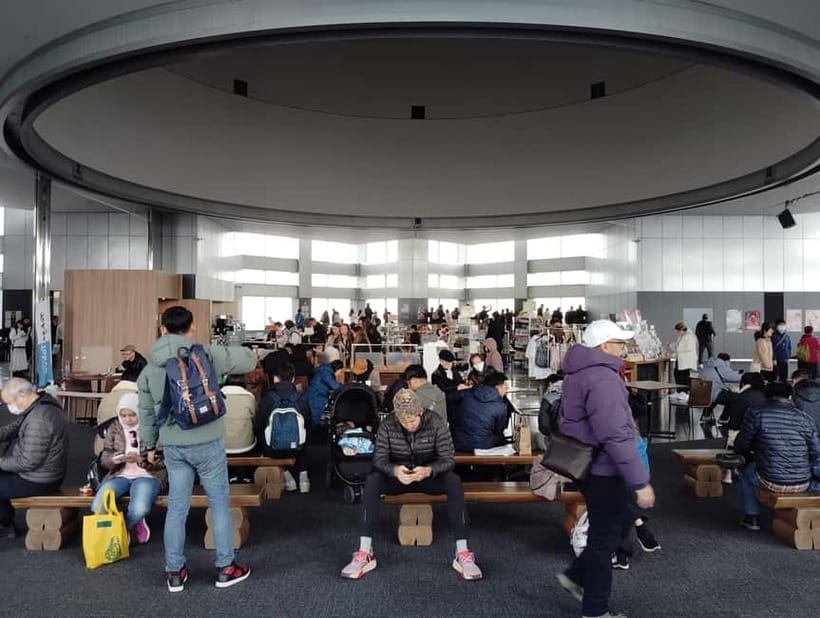
Subway fares within the tour are included, and taking the subway adds a small slice of everyday Tokyo to a day otherwise spent in famous landmarks.
Do not think of the subway sections as dead time. They connect three areas that are not next door to one another and let you see how the city works at street level between viewpoints. Your guide takes care of the route, which is helpful if you are not comfortable navigating Tokyo’s large stations.
You should wear comfortable shoes. The tour includes walking at all three sites as well as movement through stations, and the information specifically describes the walking as moderate. Bring water and a camera. The tour operates in all weather, so dress for the forecast rather than for an ideal clear day.
There is no hotel pickup or drop-off. You must reach the Government Building meeting point yourself, then make your own arrangements from Skytree at the end. The starting point is specific, so allow enough time to find Tomin Hiroba and the yellow sign.
The price and what you receive
At $307 per person, this tour sits in the expensive category. The cost covers three admissions, subway fares during the outing, a professional English-speaking guide, and a private group rather than a large shared party.
That package can make sense if you value convenience and personal attention. You avoid planning three separate visits, working out the train connections, and finding your way through each site without English support. A private guide can also adjust the pace and answer questions in a way a self-guided visit cannot.
The value is weaker if you mainly want photographs from the decks. You could prefer to visit fewer towers, spend more time in one neighborhood, or arrange the sites independently. Meals and drinks are extra, and there is no hotel transfer, so budget for those items separately.
I would see the tour as a time-saving service, not a bargain. It suits a first visit, a short stay, or a special private day when you want the city explained as you go. It is less suited to a budget-minded visitor who enjoys doing research and using Tokyo’s transport system alone.
Who will enjoy this tour most
You should consider booking this if you want:
- A private outing rather than a large group
- Clear English commentary throughout the day
- Three observation decks in one planned route
- Help with subway travel and city orientation
- A chance to compare daytime, sunset, or evening views
- Personal attention to weather and sightseeing preferences
It is especially good for first-time visitors who want a quick visual introduction to Tokyo. Families and couples may also appreciate the private format, though everyone in the group should be comfortable with a moderate amount of walking and high observation decks.
I would hesitate if you dislike heights, want a slow neighborhood tour, or prefer to spend an entire day at one landmark. The route is focused. You will see famous buildings, ride the subway between them, and keep moving.
The weather deserves special attention. The clearest reward is Mount Fuji, but the tour operates in rain and other conditions. Bring suitable clothing and keep your expectations flexible. If the sky is gray, the city itself remains the main view, but Fuji may not appear.
Should you book the three-tower tour?
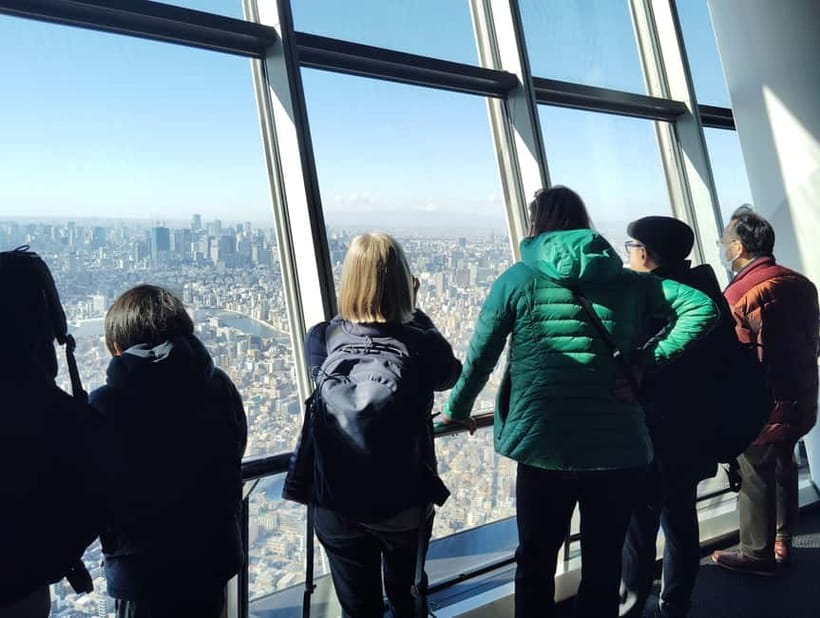
Book it if you want an efficient, guided comparison of Tokyo from three heights and you are willing to pay for private convenience. The Government Building provides a broad modern view, Tokyo Tower supplies the classic symbol, and Skytree gives you the widest sweep. Together, they make more sense than any one tower alone.
Skip it if $307 feels high for observation decks, or if Tokyo Tower is already familiar to you and you would rather spend that time in a neighborhood. The strongest reasons to book are the private English-speaking guide, included admissions and subway fares, and the ability to adjust the pace. The strongest reason to hesitate is simple: much of the day is spent looking out from above.
For a clear-weather day, a first visit, and a group that enjoys big city views, this is a well-organized way to see Tokyo from top to bottom. Just wear good shoes, bring water, and remember that the city looks different at every height.
FAQ
How long does the Tokyo three-tower tour last?
The activity is listed as lasting five hours. The three main sightseeing stops are planned for about 1.5 hours each, with additional time for walking and subway travel.
Where does the tour begin?
You meet at Tomin Hiroba at the Tokyo Metropolitan Government Building. The guide will be holding the yellow Deep Experience sign.
Where does the tour finish?
The tour finishes at Tokyo Skytree. Hotel pickup and drop-off are not included.
Which towers are included?
The tour visits the Tokyo Metropolitan Government Building, Tokyo Tower, and Tokyo Skytree. Admission to all three is included.
Is an English-speaking guide provided?
Yes. A professional live guide conducts the private tour in English.
Are subway fares included?
Yes. Subway fares used within the tour are included. Meals and drinks are not included.
More City Tours in Tokyo


More tours in Tokyo we've reviewed


City Tours, compared.
 ★ 4.8Tokyo: Private City Highlights Tour with Local GuideFrom $1064 - 8 hours
 ★ 4.7Tokyo: Asakusa, Skytree & Akhihabara Go-Kart City ExperienceFrom $961h 10m
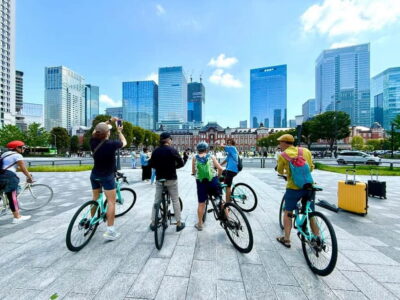 ★ 4.8Tokyo: 3-Hour Bike or E-Bike City Highlights TourFrom $453 hours
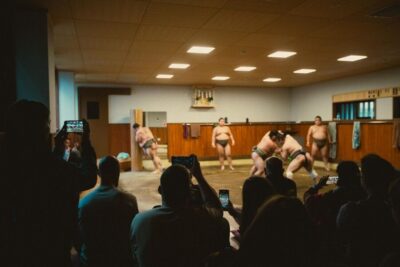 ★ 4.8Tokyo: Sumo Morning Practice Tour at Sumida CityFrom $1162 hours
 ★ 4.5Private Haneda Airport (HND) to Central Tokyo City TransferFrom $119
 ★ 4.8Tokyo: 3-hour Guided E-Bike Tour of the City’s Hidden GemsFrom $65