
Reviewed · MUSEUMS
Japan Football Association museum tour at 「blue-ing!」
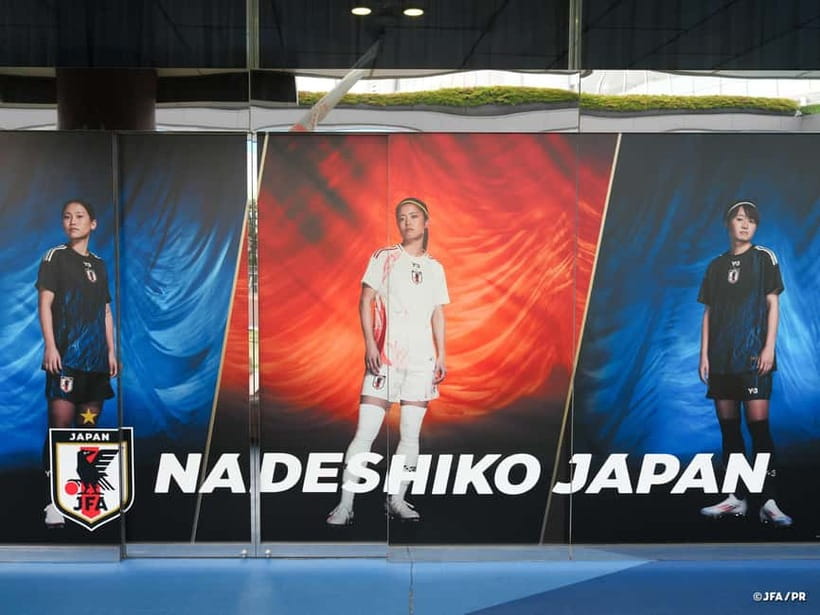
Japan’s football story gets a modern telling at blue-ing!, the Japan Football Association’s museum and creative space in Tokyo Dome City. You’ll move from Japanese football exhibits to digital football content, including generative AI, with an English-speaking guide leading the way.
I like the mix of old and new here: the displays give you a sense of how Japanese football developed, while the technology keeps the visit active. I also like the free drink, which makes the $25 price easier to accept, especially if you already plan to spend time in Tokyo Dome City.
The main drawback is size. One hour is enough for a focused visit, but serious football fans may want more objects, more match detail, and a longer look at the sport’s past.
In This Review
- Key points at a glance
- Starting at blue-ing! in Tokyo Dome City
- Japanese football through JFA exhibits
- Digital football content and generative AI
- Walking across the artificial turf
- A free drink at the cafe and bar
- The goods shop and the wider visit
- Is $25 a fair price for one hour?
- Who should book blue-ing!?
- Should you book this football museum tour?
- FAQ
- Where is the Japan Football Association museum tour held?
- How long does the tour last?
- What is included in the ticket?
- Is the tour offered in English?
- How many people can join the group?
- What can I see at the facility?
- Is the activity wheelchair accessible?
- How much does the experience cost?
- Can I cancel for a full refund?
Key points at a glance
- JFA’s own football museum: See exhibits connected to Japanese football and its development.
- Generative AI and digital content: Technology gives the visit a modern edge beyond ordinary display cases.
- Small English tour: The group is limited to 10 people, making it easier to follow the guide.
- Artificial turf meeting point of ideas: The turf reflects the feel of a football ground and shapes the facility’s identity.
- One free drink included: You can use the cafe and bar space before or after the tour.
- Inside Tokyo Dome City: The museum works well as part of a wider day in the complex.
Starting at blue-ing! in Tokyo Dome City

You begin at the Discovery Area reception at blue-ing!, the Japan Football Association facility in Tokyo Dome City. The meeting point matters because the building includes more than one kind of activity, and you’ll want to check in at the Discovery reception rather than simply looking for a generic football shop or stadium entrance.
The setting gives the visit a useful context. Tokyo Dome City is already a major entertainment area, so this is not a museum that requires a separate half-day trip across Tokyo. You can fit it around other plans in the area, making the one-hour length a real advantage.
The activity is offered as a small-group tour for up to 10 people. I prefer this size for a museum visit because the guide can keep the group together without turning the tour into a crowd scene. You also have a better chance of hearing the English explanations clearly and asking a short question as you go.
There is an important map warning. The Google Maps link connected with the activity can point to the wrong place. Use the map shown in the profile image and confirm that you are heading to blue-ing! in Tokyo Dome City before setting out.
Other museum experiences in Tokyo

Japanese football through JFA exhibits
The first part of the experience centers on Japanese football exhibits. The displays provide a look at the sport’s development in Japan, which is the main reason I would recommend this tour to a football fan visiting Tokyo.
The information is not presented as a huge national museum collection. Think of it as a compact introduction, with the guide helping you connect the objects and displays to the wider story of Japanese football. That guided element is useful because a display can mean much more when someone explains why it matters.
You may find the historical material especially helpful if you know international football but are less familiar with Japan’s football story. It gives you a local angle that you will not get from a general sports attraction. Instead of focusing only on famous global teams, the visit looks at the football culture managed and represented by the Japan Football Association.
The amount of material is the one point to keep in mind. A serious collector or football historian may want more shirts, match artifacts, statistics, and detailed timelines. The tour works better as a sharp introduction than as a vast archive.
One useful detail for British football fans is the connection to early international football visits to Japan. A Scottish visitor suggested researching Stirling Albion’s 1966 tour, when the club was reportedly the first British side to tour Japan. That point is not presented as a promised exhibit, so you should not book expecting to see it, but it shows how the museum could grow by adding more international links to its Japanese story.
Digital football content and generative AI
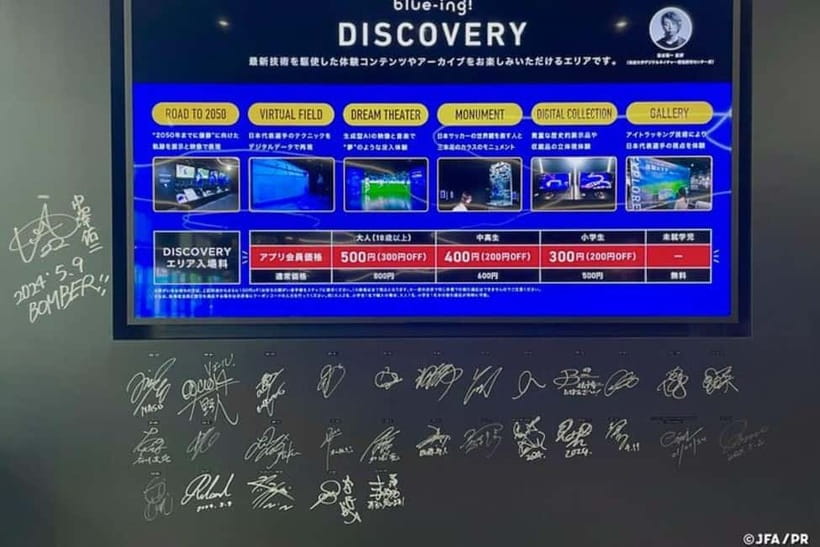
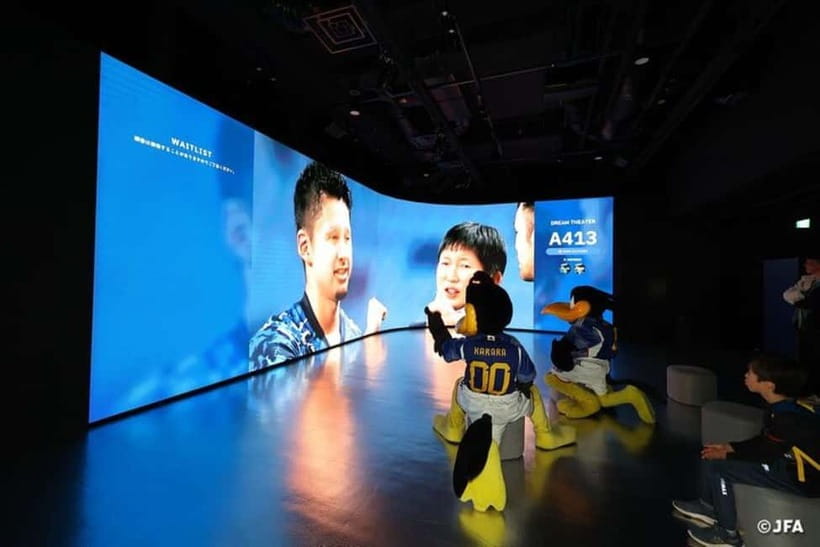
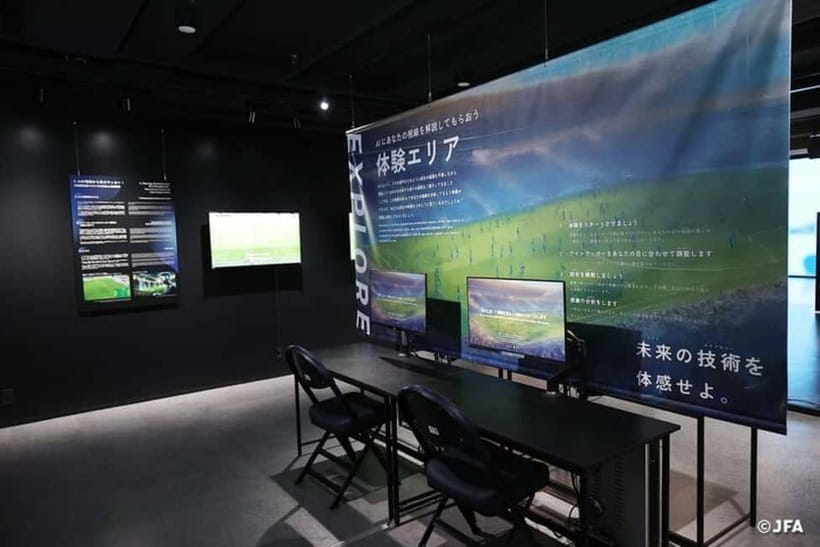
The museum does not stop with traditional objects. Digital content forms a major part of the experience, including material using generative AI.
I like this choice because football is now watched, analyzed, designed, and shared through screens as much as through printed programs or physical trophies. The digital section gives blue-ing! a current feel and helps explain the facility’s idea of being a place for communication and creativity.
You should expect the digital material to be part of the guided visit rather than a separate technical class. The guide helps place it in the wider football setting, so you do not need to arrive with specialist knowledge of artificial intelligence.
This section will suit visitors who enjoy interactive technology and younger members of a family who might lose interest in static displays. It also helps non-football fans find an entry point. You can approach the visit through design, media, and technology, not only through league tables and famous players.
At the same time, technology is not a substitute for physical football history. If your main goal is to see rare memorabilia, the digital content will not fully make up for a smaller object collection. I would treat it as an added layer, not the sole reason to visit.
Walking across the artificial turf
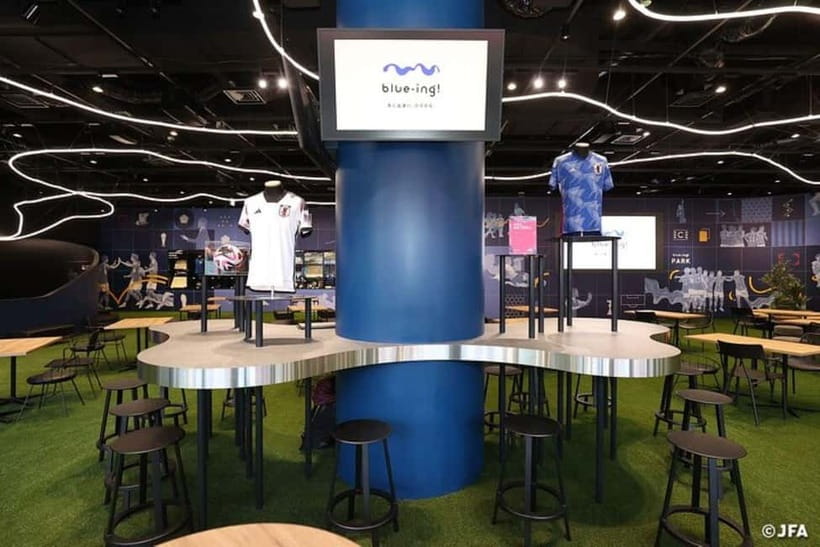
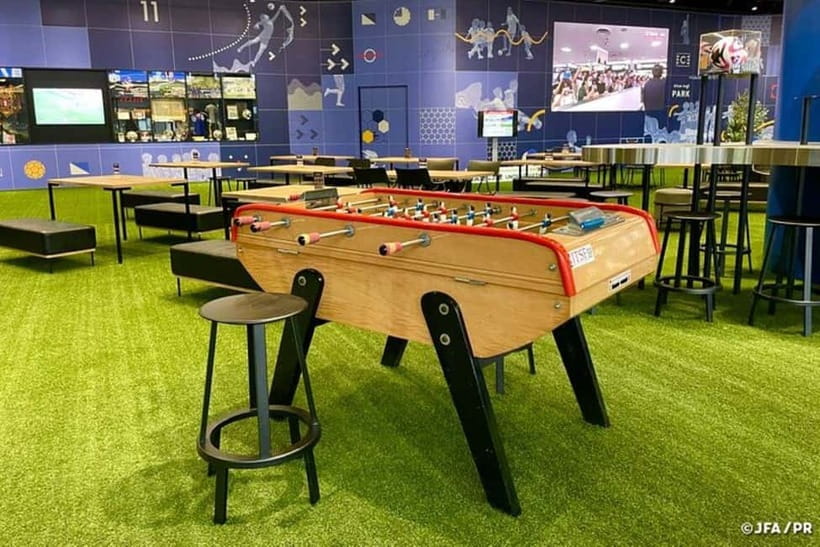
Artificial turf is built into the facility and symbolizes the football ground. This is a simple idea, but it helps the space feel connected to the sport rather than just another indoor exhibition room.
The turf gives the visit a physical center. You are not only reading about football or watching content on a screen. The surface reminds you of the place where the game actually happens, from local pitches to major competition grounds.
Do not expect a full match or a large stadium experience. The supplied details describe the turf as part of the facility’s design, not as a scheduled playing session. Its value is mainly atmospheric and symbolic, and it helps tie together the exhibits, digital displays, cafe, and shop.
For a football fan, that connection is worthwhile. For someone tagging along, it gives the building a more relaxed feel than a formal museum. The space is designed for communication and creativity, so you can look at it as a football culture center as much as a conventional museum.
A free drink at the cafe and bar
The ticket includes one free drink, served through the cafe and bar space. That small benefit matters when you compare the $25 cost with the length of the activity.
A one-hour museum visit at this price needs to offer more than a quick look around. The drink gives you a chance to slow down before or after the guided portion, and it makes the facility feel like somewhere to spend time rather than somewhere to enter, take photos, and leave.
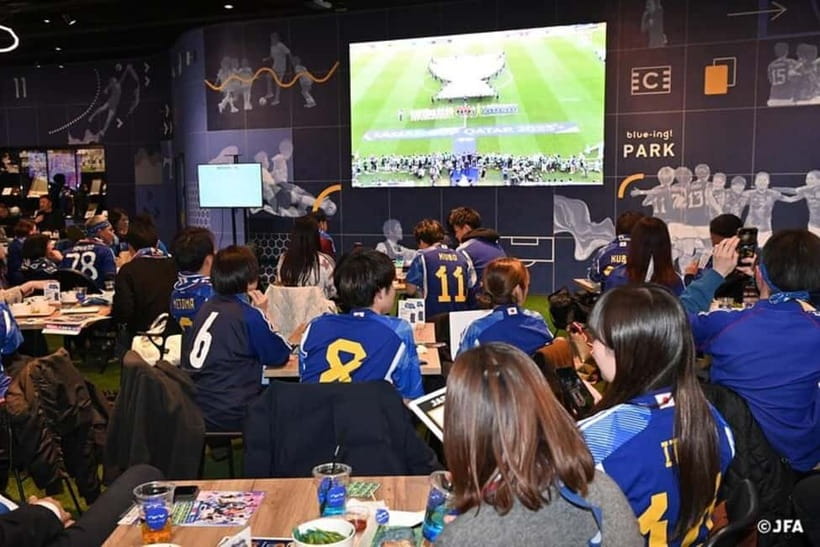
The cafe and bar also broaden the appeal beyond dedicated supporters. A non-football companion can enjoy a drink and the atmosphere even if the exhibits are not their main interest. That makes blue-ing! easier to include in a mixed-interest day.
I would not book the experience for the drink alone. Its value comes from the combination of an English guide, museum admission, digital content, and the included refreshment. Still, the free drink is a pleasant practical extra, especially in a busy Tokyo schedule.



The goods shop and the wider visit
A goods shop is part of the facility, giving you time to browse football-related items after the tour. The available information does not specify the full product range, so I would not promise rare shirts or particular team merchandise. Think of it as an optional add-on rather than a guaranteed shopping destination.
The shop is useful because it lets you continue the football theme after the guided hour. You can look for a small souvenir, browse without buying, or move on to the rest of Tokyo Dome City.
The location makes the museum a good short activity. If you are already in the area, the visit can fill a gap between other plans. If you are crossing Tokyo only for this museum, the compact size becomes more important to consider. The attraction is worthwhile for a football enthusiast, but it may not justify a long journey by itself unless you also want to visit Tokyo Dome City.
Is $25 a fair price for one hour?
At $25 per person, this is not a bargain-basement museum stop. The price includes the Discovery admission, a live English-speaking guide, a small group capped at 10, and one free drink.
For me, the guide is the key part of the value. Without the guide, a compact collection and digital displays might feel expensive for a one-hour visit. With the guide, you get context and a clear path through the space, which is especially useful when the subject is Japanese football and you do not already know the local story.
The price works best for three types of visitors:
- Football fans who want a Japan-specific experience
- Visitors who value English explanation rather than browsing alone
- People already planning time in Tokyo Dome City
It is less convincing for someone seeking a large museum packed with memorabilia. The attraction itself recognizes this balance by combining exhibits, technology, turf, food, and shopping. You are paying for a compact cultural experience, not an entire afternoon of football archives.
The average rating shown for the activity is 4.5 from five reviews. The strongest praise focuses on the English guide. Jake from Australia gave the guiding a 10 out of 10, while Felipe from Brazil described his guide as friendly and fun. Robert from the United Kingdom found the visit thoroughly enjoyable but wanted more football objects and historical material. That gives you a fair picture: the guided experience is the strongest feature, while collection size may limit the appeal for specialists.
Who should book blue-ing!?
I would recommend this tour first to football fans who want to understand Japan’s side of the sport. It is also a good pick if you prefer a guide to explain what you are seeing, rather than walking through a display room alone.
The small group and English language make it practical for international visitors. Families and mixed groups can also make it work because the digital content, turf, cafe, and shop offer more variety than a traditional football archive.
You may want to skip it if your priority is a huge collection of match-worn items, detailed club records, or an extended stadium tour. The visit is short, and the historical section may leave experts hoping for additional objects and stories.
Book with enough time to locate the correct reception. Since the map link can be inaccurate, check the profile map before you leave. Free cancellation up to 24 hours before the activity and the reserve-now, pay-later option also reduce the risk of fitting this short visit into a changing Tokyo schedule. The activity is wheelchair accessible.
Should you book this football museum tour?
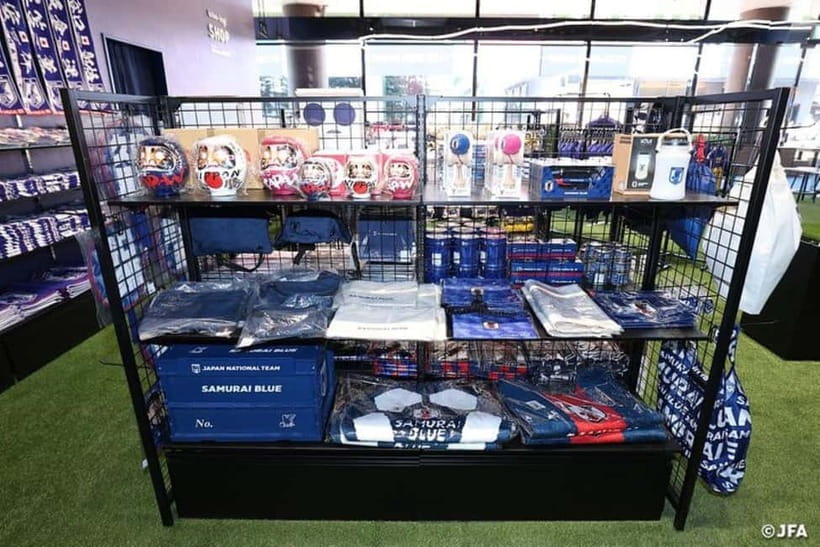
Book it if you are a football fan, already visiting Tokyo Dome City, or curious about Japanese football but want an English guide to explain the setting. The strongest reasons are the small group, friendly guiding style, Japanese football focus, digital displays, and free drink.
Skip it if you want a large, object-heavy football museum or need several hours of content. At $25, the tour earns its value through guidance and presentation rather than sheer size. For the right visitor, that makes blue-ing! a tidy and enjoyable stop with a clear local focus.
FAQ
Where is the Japan Football Association museum tour held?
The tour takes place at blue-ing! in Tokyo Dome City on Honshu, Japan. Check in at the Blue-ing! Discovery Area reception.
How long does the tour last?
The tour lasts one hour.
What is included in the ticket?
The ticket includes the gate fee for DISCOVERY, an English-speaking tour guide, and one free drink.
Is the tour offered in English?
Yes. The tour language is English, and it includes a live English-speaking guide.
How many people can join the group?
The group is limited to 10 participants.
What can I see at the facility?
You can see Japanese football historical exhibits, football-related digital content, generative AI content, and artificial turf that symbolizes a football ground. The facility also has a cafe and bar space and a goods shop.
Is the activity wheelchair accessible?
Yes, the activity is wheelchair accessible.
How much does the experience cost?
The listed price is $25 per person.
Can I cancel for a full refund?
Yes. You can cancel up to 24 hours in advance for a full refund.
More Museum Experiences in Tokyo

More tours in Tokyo we've reviewed









Museums, compared.
 ★ 4.6Tokyo: teamLab Planets TOKYO Digital Art Museum Entry TicketFrom $251 day
 ★ 4.6Tokyo: Samurai Ninja Museum Guided tour and ExperienceFrom $27
 ★ 5.0Ninja Experience (Family Friendly) at Samurai Ninja Museum TOKYOFrom $47
 ★ 4.5Tokyo Studio Ghibli Museum and Ghibli Film Appreciation TourFrom $193
 ★ 5.0Tokyo Sword Experience – includes Museum Ticket/Ninja ExperienceFrom $84
 ★ 4.8Samurai Ninja Museum Asakusa: Samurai Sword Lesson & TourFrom $632 hours