
Reviewed · SHINJUKU TOURS
Shinjuku: Explore the Hidden Local Bars – 3.5 Hours
Shinjuku’s best food experiences often happen behind narrow doors, where a little local know-how matters. This 3.5-hour evening walk takes you from Nishi-Shinjuku through Omoide Yokocho and Kabukicho, ending in Golden Gai, with food, drinks, and cultural context along the way. At least six dishes may include chicken skewers, okonomiyaki, gyoza, wagyu, sushi, and other local snacks.
I like the three food stops, which give you more than one taste of Shinjuku’s nightlife, and I like the guide-led access to small places you might skip because of the language barrier. Guides including Emma, Miharu, Natsuki, Ryo, and Masafumi have been praised for their warmth and local tips. The main drawback is the strict timing: arrive more than 10 minutes late without notice and the tour can be cancelled.
In This Review
- Key points to know before booking
- Why this Shinjuku night out works
- Starting in Nishi-Shinjuku
- Omoide Yokocho and the first tastes
- Kabukicho after dark
- What the bar stops add
- Golden Gai and the final stop
- Food, customs, and the value of a guide
- Timing, group size, and practical concerns
- Is $87 a fair price?
- Who should book this experience?
- Should you book the Shinjuku hidden-bars tour?
- FAQ
- How long does the Shinjuku bar tour last?
- Where does the tour begin?
- Where does the tour end?
- What food is included?
- Are drinks included?
- Is the tour available in English?
- What happens if I arrive late?
Key points to know before booking
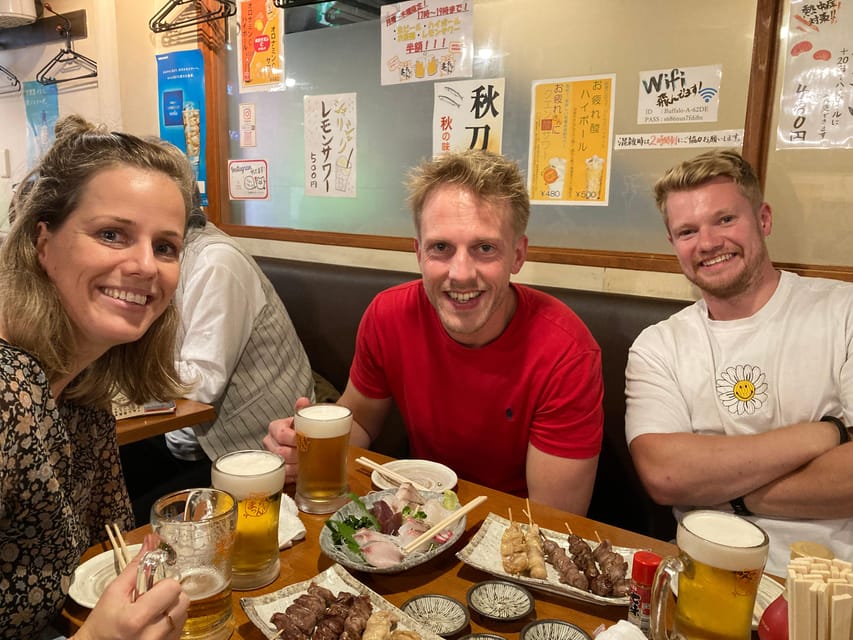
- Three-hour food and bar route: Expect about 3.5 hours on foot, with food, beer, alcoholic drinks, and local snacks.
- At least six dishes: The tasting menu can include chicken skewers, okonomiyaki, gyoza, wagyu, sushi, and other Japanese favorites.
- A useful route through Shinjuku: The walk links Nishi-Shinjuku, Omoide Yokocho, Kabukicho, Hanazono Shrine, and Golden Gai.
- English-speaking local guide: Guides such as Emma, Miharu, Natsuki, Ryo, and Masafumi explain food, manners, and nightlife customs.
- Small groups or private bookings: You can choose a private or small-group format, depending on the option booked.
- Arrive early: The meeting point can vary, and late arrival rules are strict.
Why this Shinjuku night out works
Shinjuku can feel like several different cities packed into one Tokyo district. Glass towers rise over Nishi-Shinjuku, tiny food alleys sit near the station, Kabukicho glows with signs and entertainment venues, and Golden Gai compresses hundreds of small bars into a few narrow lanes.
That variety is the real point of the tour. You are not simply sitting down for one set meal. You are walking between different parts of the district and seeing how food, drinks, nightlife, and local etiquette fit together.
I especially like the balance between eating and explanation. Six or more dishes give you enough variety to compare flavors, while the guide helps explain what you are eating and how to behave in small Japanese bars and restaurants. That guidance can make a big difference if you are new to Japan.
The experience is listed at $87 per person. That is not the cheapest way to eat in Shinjuku, since you could order inexpensive food on your own. The value comes from the route, the food at three stops, the included alcoholic drinks, the English commentary, and the confidence of entering places that may be difficult to approach without Japanese.
A few more Tokyo tours and experiences worth a look
Starting in Nishi-Shinjuku
The tour begins in Nishi-Shinjuku, with a listed starting option near 7-chōme-10 Nishishinjuku and Shinjuku Station. Because the exact meeting point can depend on the option you book, check your confirmation closely and allow extra time to find it.
This part of Shinjuku is a practical place to begin. You are close to the major station, but the route soon moves away from the broad roads and tall office buildings. The opening section takes about an hour and introduces the area through food, drink, and local context.
You should wear comfortable shoes. The tour includes several walks, including a 10-minute section early on and about 20 minutes later in the evening. Tokyo station areas can be confusing, especially after dark, so do not treat the meeting time casually.
The guide is central to the experience. The listed language is English, and past guides have included Emma, Miharu, Natsuki, Ryo, Masafumi, Hikaru, and Minoru. Each name appears in connection with strong praise for warmth, clear explanations, and the ability to make people feel included.
Emma is a particularly good fit if you want cultural points explained for a Western audience. She has lived in the United States for a long time, and her background helps her bridge everyday Japanese customs and the questions an English-speaking visitor is likely to ask.
Omoide Yokocho and the first tastes
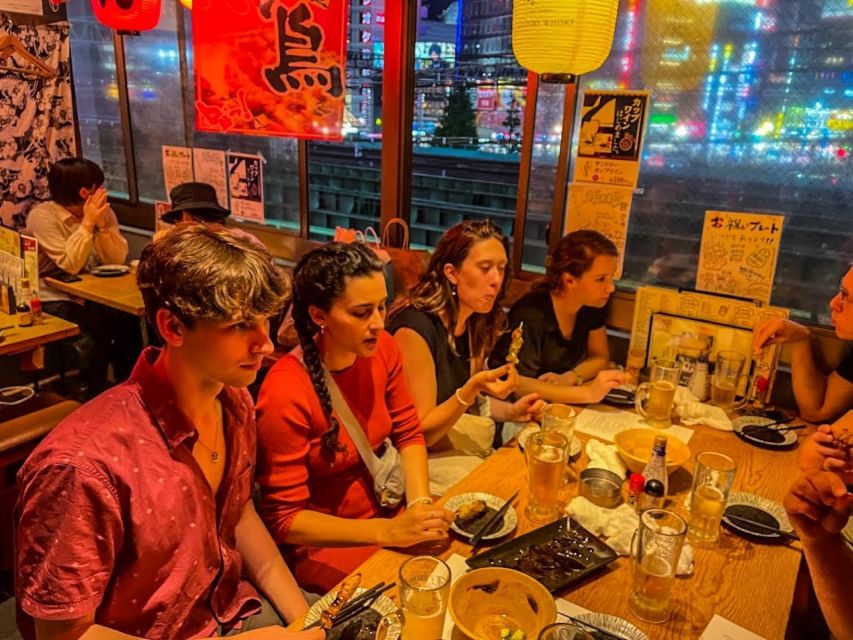
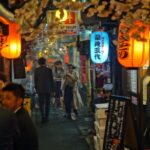
Omoide Yokocho is one of the most memorable sections of the route. Its narrow lanes are lined with compact eating places, and the setting feels far removed from the large-scale Tokyo you see around the station.
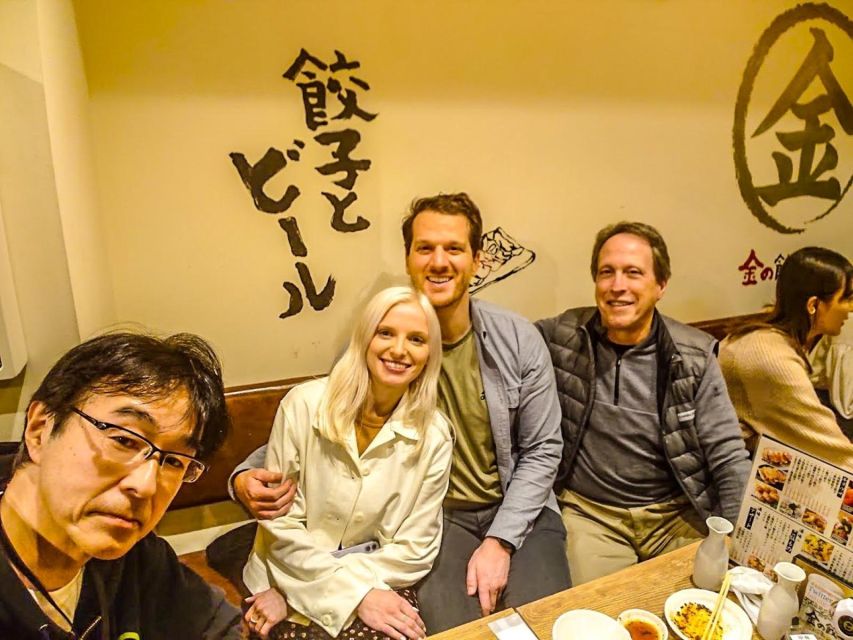
The stop here helps set the tone for the night. You might sample chicken skewers, local snacks, or another small dish, depending on the evening’s food choices. The important point is variety: you are tasting rather than filling up on one large plate.
Chicken skewers are a useful introduction to izakaya-style dining. They are easy to share, quick to eat, and suited to a drink. Your guide can also help explain the difference between casual bar food and a formal restaurant meal, along with the social rhythm of ordering several small plates.
The narrow setting is part of the charm, but it may not suit everyone. Small bars and food counters can mean limited space, close seating, and a less polished atmosphere. If you want a quiet dinner with plenty of room, this is not that kind of evening.
I would also keep expectations flexible. The supplied information promises at least six dishes and three food stops, but it does not promise an identical menu at every departure. Food choices may vary, so approach the tour as a guided tasting of Shinjuku rather than a fixed restaurant menu.
Kabukicho after dark
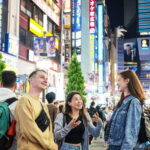
The route then reaches Kabukicho, where about two hours of the experience takes place. This is the longest part of the night and the section most closely linked to Shinjuku’s entertainment culture.
You will pass notable points including the Godzilla Head, Hanazono Shrine, and the streets around Kabukicho. The Godzilla landmark is an easy orientation point in an area filled with signs, towers, and side streets. Hanazono Shrine offers a different mood, with a traditional religious site within the same wider district.
That contrast is one of the tour’s strengths. You can move from modern entertainment streets to a shrine, then back to food counters and bars within a short walk. The guide’s explanation gives these places more meaning than a quick photo stop would provide.
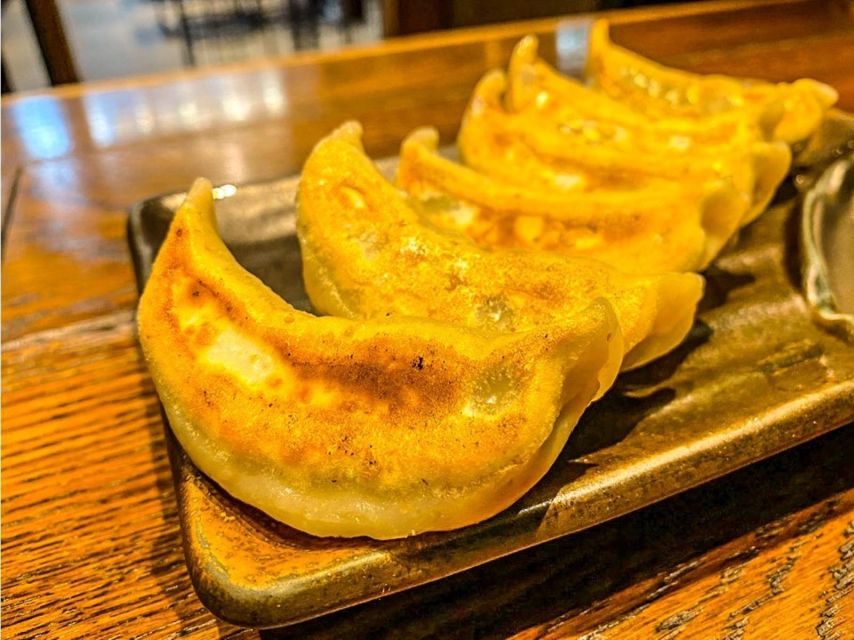
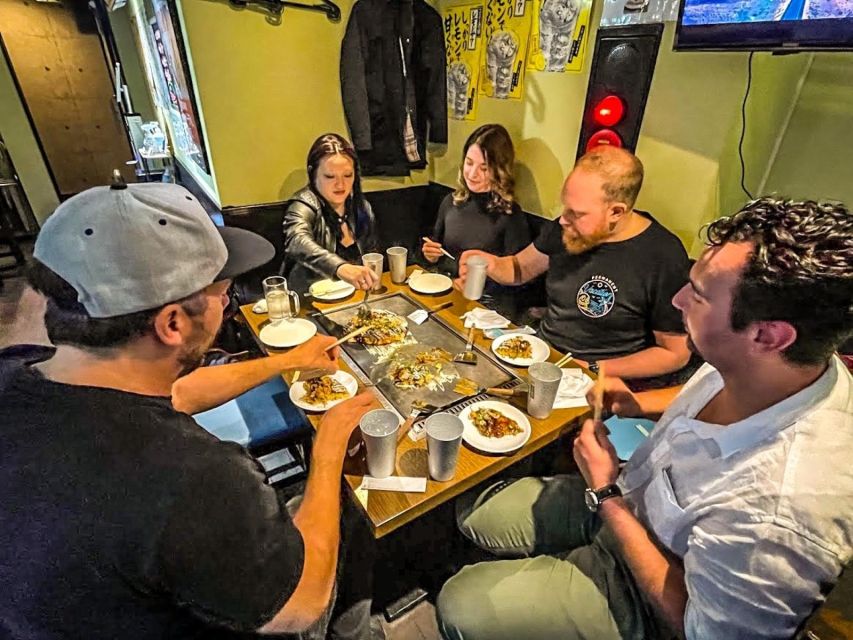
Food remains the anchor. Okonomiyaki and gyoza are among the dishes associated with the experience, while other tastings may include wagyu and sushi. One guide’s food suggestions made okonomiyaki the clear favorite, so it may be worth saving room for that stop.
Okonomiyaki is especially useful for understanding the informal side of Japanese dining. It is hearty, social, and very different from sushi or grilled skewers. Gyoza adds another texture and flavor profile, while wagyu and sushi, when included, give the evening a more indulgent edge.
Drinks are included, including alcoholic beverages. Beer is specifically listed, along with dinner and local snacks. If you do not drink alcohol, check the available alternatives before booking, since the supplied details do not specify a nonalcoholic drinks policy.
What the bar stops add
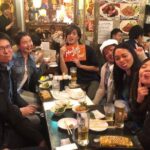
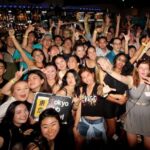
The tour includes three food stops, but the exact number of bars is not stated in the activity details. The experience is described as an exploration of local bars, and one account describes spending an evening in three bars, so you should expect a bar-hopping format rather than one long restaurant visit.
That format lets you see how different venues feel. One place may be cozy, another lively, and another more modern. The selection can include traditional izakaya-style venues and cocktail bars, giving you a wider picture of Shinjuku nightlife.
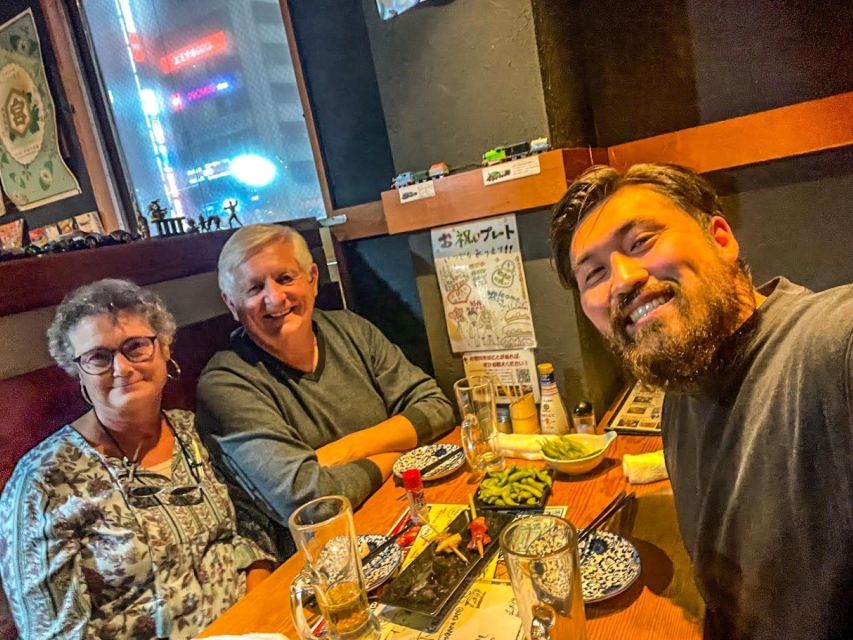
The guide’s role is most valuable here. Tiny bars can have unwritten rules about seating, ordering, and how long to stay. A local guide removes much of the uncertainty and can translate the menu and explain what is happening around you.
This is also where the social side matters. The strongest guide comments focus on friendliness, conversation, and making everyone feel welcome. If you enjoy asking questions over a drink, you will likely get more from the tour than someone who wants to eat quietly and move on.
There is a tradeoff. Bar hopping can be less predictable than a standard food tour. You may spend time walking, waiting, or adjusting to the pace of each venue. The reward is a more natural night out, but you should not expect a tightly controlled restaurant itinerary.
Other nightlife experiences in Tokyo
Golden Gai and the final stop
The tour ends in Shinjuku Golden Gai, at 1-chōme-1-6 Kabukichō. This area is known for its tightly packed lanes and very small bars, and it provides a fitting finish to a night focused on local nightlife.
Golden Gai is not a grand monument. Its appeal comes from scale and atmosphere. Bars are often small, distinctive, and personal, with each doorway offering a different experience. A first-time visitor can easily feel unsure about where to enter, which is why arriving with a guide is useful.
The formal tour disbands in Golden Gai. One account describes the guide continuing to chat and share a drink afterward, but you should not assume that this is guaranteed as part of the booked service. Treat the end point as a chance to continue on your own if you wish.
The area can also be a challenging final stop if you are tired, do not drink, or prefer wide-open spaces. You may find tight rooms and a late-night setting. Comfortable shoes and a willingness to walk are more important here than dressing up.
Food, customs, and the value of a guide
The food is a major reason to book, but the cultural explanation may be the longer-lasting benefit. A dish such as okonomiyaki, gyoza, or a chicken skewer is easy to find in Tokyo. Learning how to order, share, and behave in a small local venue is harder to pick up alone.
The guide can explain details that are easy to miss. You may learn how an izakaya differs from a restaurant, how small dishes fit into a drinking evening, and why some venues feel more intimate than others. The exact content depends on your guide, but cultural explanation is a stated part of the activity.
Guide quality appears to be a real strength. Miharu is praised for warmth and attention to detail, Natsuki for energy and strong venue choices, Ryo for keeping the group included, and Minoru for reliable food and drink recommendations. Hikaru is described as fun and well informed about Japanese food and culture.
That range of guide personalities is worth noting. This is not a self-guided audio walk. Your enjoyment will depend partly on the person leading your group and on how much conversation you want during the evening.
Photos are included, which is a pleasant extra for anyone who wants a record of the night. The details do not specify how many photos you receive or how they are delivered, so do not book this primarily for professional photography.
Timing, group size, and practical concerns
The full duration is 210 minutes, or 3 hours and 30 minutes. That is long enough for several food stops and a real walk through the district, but short enough to fit into an evening without taking over your entire night.
Private and small-group options are available. A private booking can suit couples, families with older children, or friends who want more control over the pace. A small group may be better value and can make the shared food and bar setting feel more social.
Babies under one year old are not suitable for this activity. The details do not provide a wider accessibility statement, so anyone with mobility concerns should ask the provider before booking. The route includes walking and narrow nightlife venues, and transportation costs are not included.
Hotel pickup and drop-off are not included. You will need to make your own way to the meeting point and from Golden Gai afterward. Public transport is not part of the tour price, so allow for those costs separately.
The late-arrival rule is unusually strict. If you are more than 10 minutes late without notice, the tour can be cancelled. The activity also says that if there is no contact six hours before the start, the tour is cancelled and fully refunded. Keep your phone available and confirm the meeting details before leaving your hotel.
You can cancel up to 24 hours ahead for a full refund, and reserve now while paying later. Those policies help if your Tokyo schedule is still changing, but they do not protect you from missing the meeting point through poor planning.
Is $87 a fair price?
At $87 per person, this is best judged as a guided evening rather than a simple dinner. If you only want six inexpensive dishes, you can spend less by ordering at casual restaurants on your own.
The price makes more sense if you value the guide, the three stops, included alcohol, translation help, photos, and the route through several distinct Shinjuku neighborhoods. You are paying for access and confidence as much as for food.
The value is strongest for a first visit to Tokyo, especially if you are curious about izakaya culture but unsure how to enter small bars. Repeat visitors may still enjoy it if they want new venue suggestions or prefer a social night without planning every stop.
Food lovers should also note the range. Chicken skewers, okonomiyaki, gyoza, sushi, and wagyu cover plenty of ground, but the menu is not fixed in the information provided. If one particular dish is your main reason for booking, confirm its availability first.
Who should book this experience?
I would recommend it to first-time Tokyo visitors who want an easy introduction to Shinjuku after dark. It suits people who enjoy walking, small portions, drinks, and conversation more than people looking for a formal, quiet meal.
It is also a good choice for solo visitors. A guide and small group give you company, while the bar format makes the evening feel more natural than sitting alone in an unfamiliar restaurant.
Couples and friends can use it as a ready-made night out. You do not need to research venues, work out menus, or worry about whether a tiny bar welcomes outsiders. The guide handles those decisions.
I would be more cautious if you have strict dietary needs, do not drink alcohol, dislike narrow venues, or need a fully accessible route. The details do not spell out dietary substitutions, alcohol-free options, or accessibility arrangements, so ask before paying.
Should you book the Shinjuku hidden-bars tour?
Book it if you want food, drinks, and local guidance in one evening, especially if the language barrier would stop you from trying small places alone. The route gives you a useful look at Shinjuku’s changing moods, from Omoide Yokocho to Kabukicho and Golden Gai.
Skip it if you prefer to choose every restaurant yourself or want a fixed menu with guaranteed dishes. For everyone else, $87 is a reasonable price for a well-planned introduction to Shinjuku nightlife, provided you arrive on time, wear good shoes, and keep an open mind about the evening’s exact stops.
FAQ
How long does the Shinjuku bar tour last?
The tour lasts 210 minutes, or 3 hours and 30 minutes.
Where does the tour begin?
The experience begins in Nishi-Shinjuku. One listed starting option is near 7-chōme-10 Nishishinjuku and Shinjuku Station, but the exact meeting point can vary by booking option.
Where does the tour end?
The tour ends in Shinjuku Golden Gai at 1-chōme-1-6 Kabukichō, Shinjuku City, Tokyo.
What food is included?
At least six different dishes are included. Examples listed for the experience include chicken skewers, okonomiyaki, gyoza, wagyu, sushi, and local snacks.
Are drinks included?
Yes. Alcoholic beverages are included, and beer is specifically listed among the drinks.
Is the tour available in English?
Yes. The live tour guide language is English.
What happens if I arrive late?
If you are more than 10 minutes late without notice, the tour can be cancelled. The activity also says that if there is no contact six hours before the start, the tour is cancelled with a full refund.
More Nightlife Experiences in Tokyo
More Shinjuku Tours in Tokyo

More tours in Tokyo we've reviewed


Shinjuku Tours, compared.
 ★ 5.0Tokyo: Shinjuku Food Tour (13 Dishes at 4 Local Eateries)From $86
 ★ 5.0Tokyo Bar Hopping Tour in Shinjuku (All-You-Can-Drink + Dinner)From $106
 ★ 4.9Tokyo: Shinjuku Food Tour (15 Dishes and 4 Eateries)From $853 hours
 ★ 5.0Best of Shinjuku: Izakaya Food Tour (4 Stops, 14+ Tastings)From $92
 ★ 4.9Tokyo: Shinjuku Local Bar and Izakaya Guided Walking TourFrom $343 hours
 ★ 5.0Tokyo Shinjuku Chopsticks Making ClassFrom $20