
Tokyo Tower is older than most tourists think. It opened on 23 December 1958 — thirteen years after the end of the Second World War — and for a few years it was the tallest freestanding tower in the world. A third of its steel came from melted-down US tanks left over from the Korean War. The design is a clear lift from the Eiffel Tower, except it’s nine metres taller and used less metal to get there. The orange-and-white paint scheme isn’t a style choice; it’s a Japanese aviation regulation from a very specific era. And despite being eclipsed by Tokyo Skytree in 2012, it’s still the second-tallest tower in Japan, and the one most locals actually love.
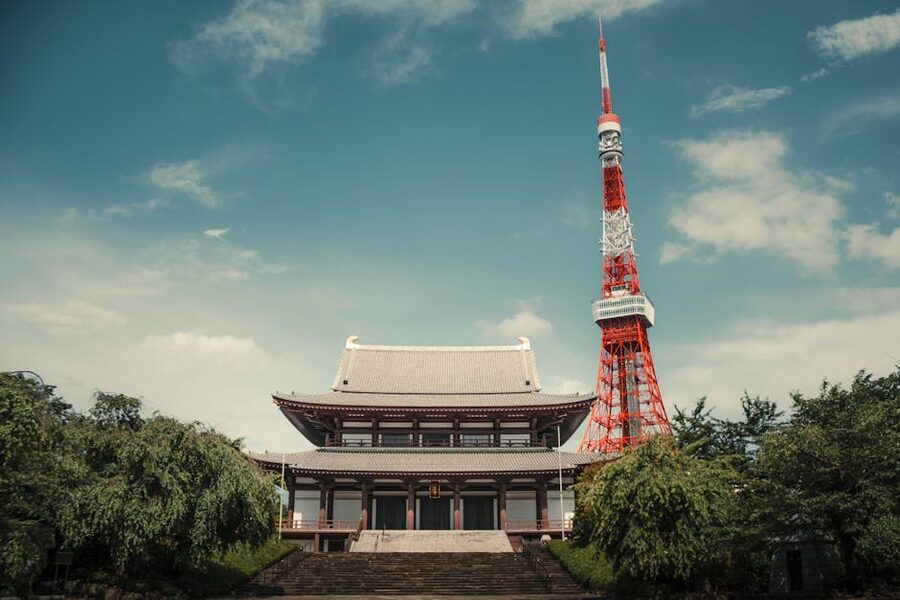
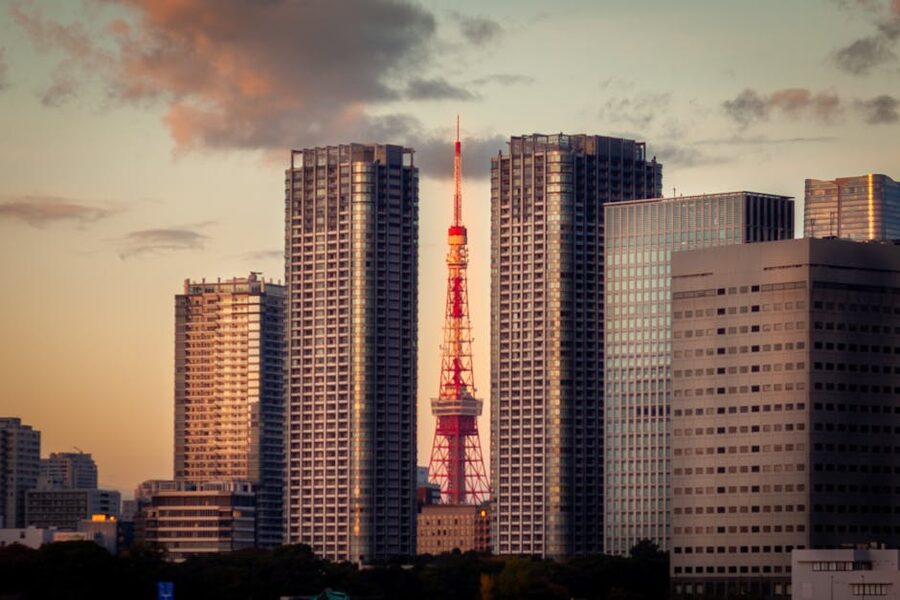
I first walked up to the tower on a Tuesday in March, just after it had rained, expecting something touristy and a bit cheesy. And it is a bit cheesy. There’s an e-sports theme park in the base building. There used to be a One Piece attraction. The gift shop sells tower-shaped biscuits. But stand at the corner of Shiba Park at dusk when the floodlights flick on, and you understand why this building gets more screen time in Godzilla films than the actual monster — it has presence. It looks like Tokyo’s idea of itself, from a decade when Tokyo very much needed an idea of itself.
This is a guide to visiting Tokyo Tower without spending money on things that aren’t worth it. The decks are not always the point. Sometimes the point is the tower.
In This Article
- A post-war announcement, built in 18 months
- How it looks, and why the paint matters
- The two observation decks — and whether to pay for both
- Tokyo Tower at night, and what the lights actually mean
- Where to photograph the tower
- Zojoji Temple forecourt — the classic shot
- Roppongi Hills Mori Tower (Tokyo City View)
- Azabudai Hills Sky Lobby
- Akabanebashi Bridge and the crossing below
- Odaiba and Tokyo Bay
- Zojoji Temple, the 1393 neighbour
- Getting there
- Tokyo Tower vs Tokyo Skytree — the real answer
- When to go, and how long it takes
- FootTown — the base building
- How I’d see Tokyo Tower in 90 minutes
- What’s nearby (and worth linking up)
- Practical details at a glance
A post-war announcement, built in 18 months
In 1958, Japan had been rebuilding for about a decade. Television was new. The Tokyo area was about to start demanding broadcast antennas at serious height, and NHK plus a handful of early private broadcasters needed something tall enough to reach the whole Kanto plain. So the government-adjacent entity that became Nippon Denpatō commissioned a broadcasting tower.
The architect was Tachū Naitō, who’d already designed several of Japan’s earliest skyscrapers and was obsessed with the Eiffel Tower. He copied the Eiffel silhouette — that four-legged lattice pyramid narrowing to a point — and then pushed it nine metres taller on purpose. The Eiffel Tower is 324m. Tokyo Tower’s antenna tip is 332.9m. This was deliberate. Japan wanted a headline number. And remarkably, they used about half the steel Eiffel used, because welding technology had moved on by six decades.
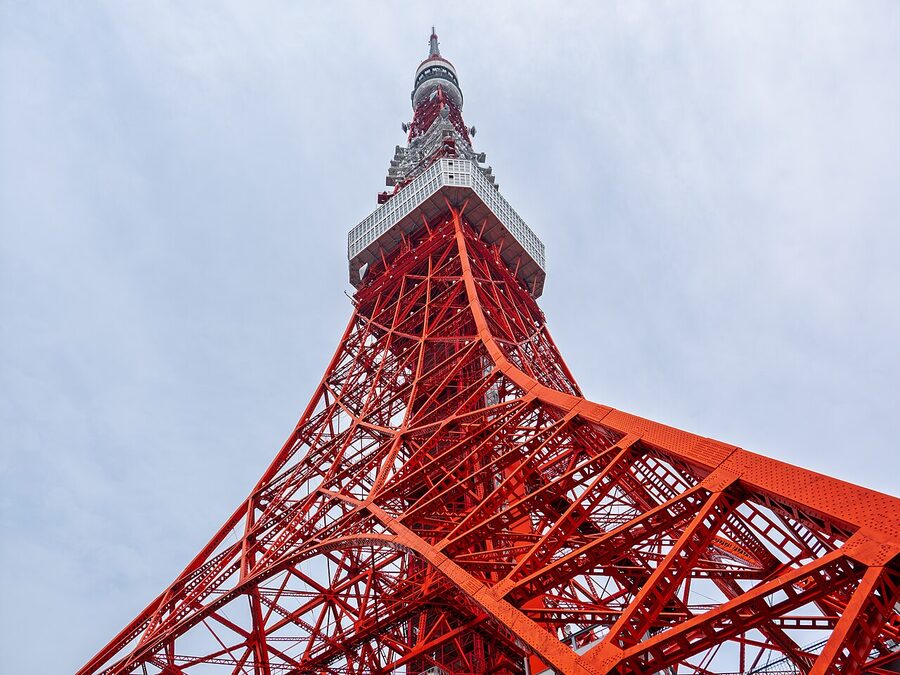

Here’s the detail I find fascinating. About a third of the structural steel came from US Army M4 Sherman tanks damaged in the Korean War. The tanks were being sold as scrap by the American military. Japan’s steel industry bought them, melted them down, and rolled them back out as the girders of Tokyo Tower. The tower is, quite literally, beaten into a different purpose. I don’t think there’s a more on-the-nose post-war metaphor anywhere in Tokyo.
Construction took 18 months. Around 220,000 workers cycled through the site. On 14 October 1958 they bolted the final 90-metre antenna into place, and Tokyo Tower became — briefly — the tallest freestanding tower on earth, taking that title from the Eiffel. It lost the title in 1967 to the CN Tower’s predecessor in Canada and the Ostankino in Moscow, but Japan had made its point. The tower opened to the public on 23 December 1958.
The name is actually misleading. Its official registered name is Nippon Denpatō — “Japan Radio Tower”. “Tokyo Tower” is the nickname that stuck because the broadcasters didn’t care what the building called itself, they just needed the antenna.
How it looks, and why the paint matters
The “international orange and white” colour scheme is a specific Japanese aviation regulation from the 1950s, applied to any structure over 60m tall near airspace. Every few dozen metres, the colour alternates. This was to make the tower visible to aircraft before the days of radar-based collision avoidance. All later tall towers in Japan either got exemptions (Skytree is grey-white lattice) or were too far from flight paths to need it. Tokyo Tower is one of the last major structures in the country still painted to the original aviation spec.
The paint is not cheap. The entire structure is repainted every five years. The process takes a year to complete (they work on one face at a time while keeping the tower open) and uses about 90 tonnes of paint per cycle. It’s done by hand, by a small crew of specialists. If you’re there during a repaint cycle you’ll see them — tiny figures halfway up, working in harnesses.
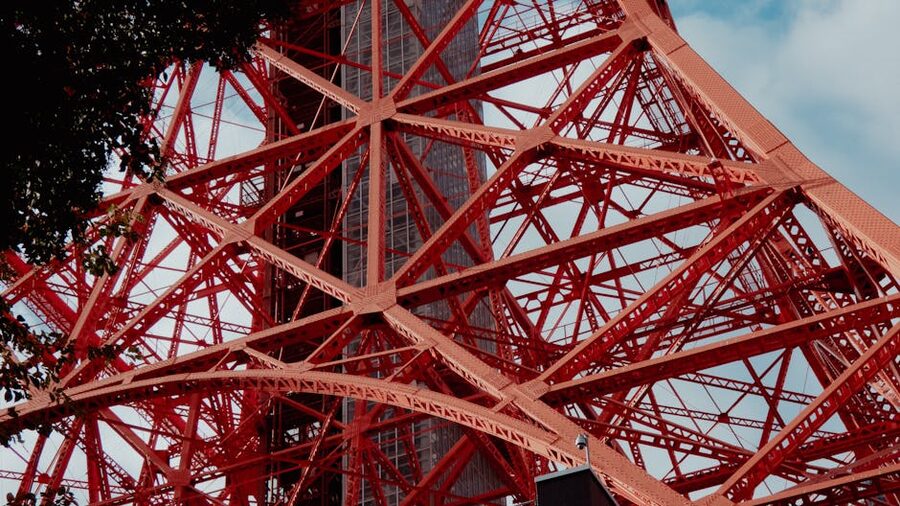
The other thing to notice: the tower is not actually free-standing in the way it looks. It shares structural load with the FootTown building at the base, which acts as a wide concrete plinth holding everything down. The lattice legs anchor into the first floor of FootTown itself. This is why the base doesn’t look like the Eiffel’s open arches — there’s a five-storey mall in the way.
The two observation decks — and whether to pay for both
There are two decks. The Main Deck sits at 150m and is the standard observation experience. The Top Deck is at 250m and only accessible via a guided timed tour.
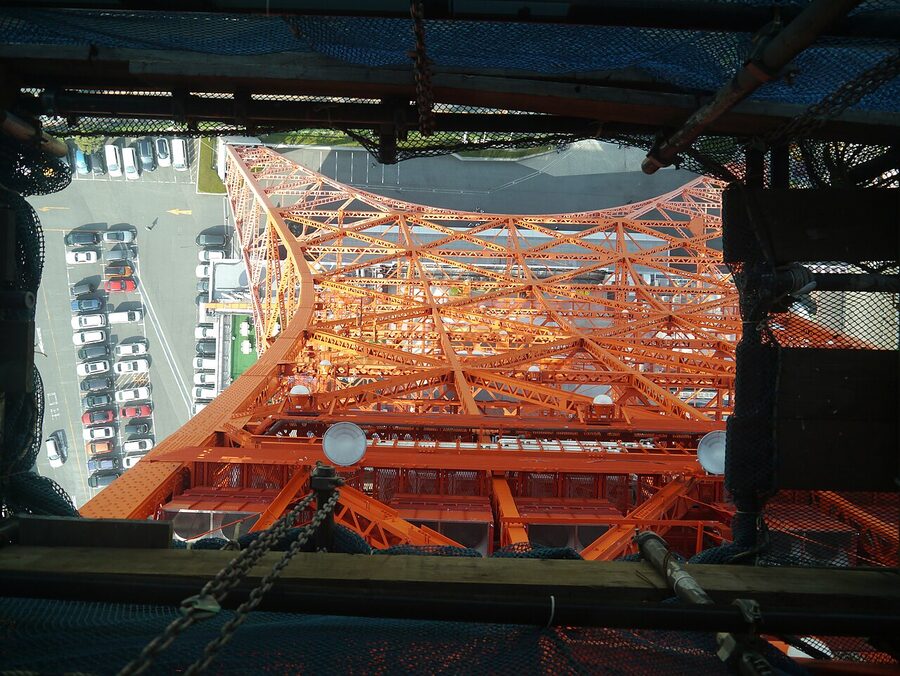
The Main Deck is a two-storey ring around the tower at the 145m-150m level. Floor-to-ceiling windows, a small cafe, some mildly tacky gift stands, and — the thing people queue for — three glass-floor sections where you can stand on clear panels with 145m of nothing beneath you. The glass floor is genuinely unnerving. Children love it. Adults hover politely.

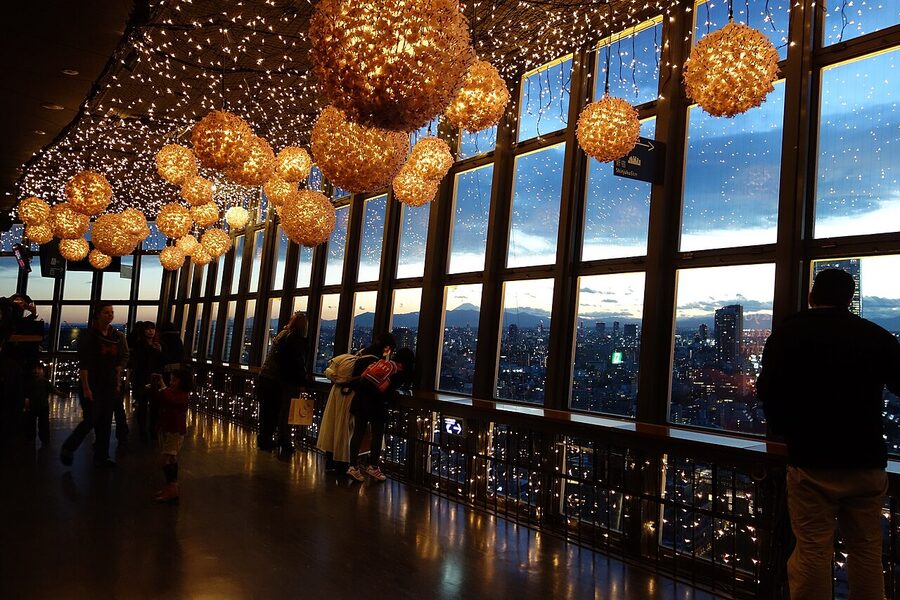

The Top Deck is smaller, requires booking a timed slot, and includes a multilingual audio guide, a welcome drink between elevators, and a mirrored corridor in the access passage that feels a bit Infinite-Mirrors art installation. It’s 100m higher than the Main Deck but — and this is the bit nobody writing about Tokyo Tower quite wants to admit — it’s not 100m’s worth of a better view.
Prices as of 2026, from the official site:
- Main Deck only: ¥1,500 adult, ¥1,200 high school, ¥900 elementary/junior high, ¥600 age 4+
- Top Deck Tour (includes Main Deck): ¥3,300 web / ¥3,500 counter adult, ¥3,100 / ¥3,300 high school, ¥2,100 / ¥2,300 child, ¥1,500 / ¥1,700 age 4+
- Tokyo Diamond Tour (Main + Top + private lounge, 70 people per day max): ¥7,000 adult
Booking online saves ¥200 per adult ticket and guarantees your time slot. For the Top Deck this matters — on weekends the slots sell out by late afternoon. For the Main Deck you can usually walk up on a weekday without queueing. I did that on a Thursday at 11am and was standing at the glass floor within 12 minutes.
My view on the Top Deck: skip it unless you have a specific reason to want the 250m altitude. The view from 150m of central Tokyo — with Shinjuku on the horizon and Tokyo Bay to your left and the rooftops of Minato below — is already very good. The Top Deck gets you 100m higher but the guided-tour format means you can’t really linger, and the mirrored corridor, while pretty, is a 15-minute novelty. The extra ¥1,800 goes further if you buy a drink at the New York Bar instead.
Tokyo Tower at night, and what the lights actually mean
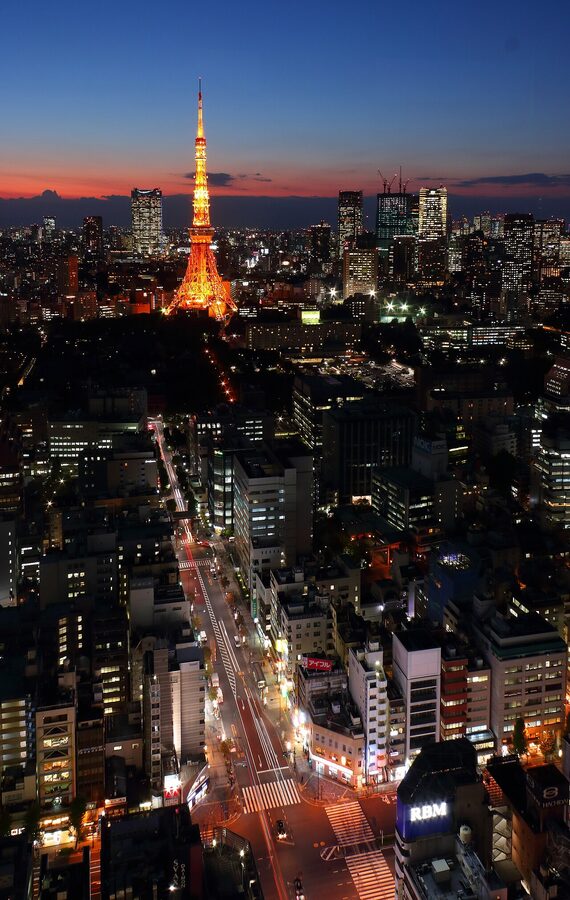
The illumination is the part everyone photographs. Until 1989 the tower was just lit with plain floodlights. Then lighting designer Motoko Ishii — one of Japan’s pioneer architectural-lighting designers — was commissioned to redesign the scheme. Her 1989 “Landmark Light” is the standard orange-yellow warm glow you see on most nights. From 1 October to 6 July it’s the warm Landmark Light (yellow-orange); from 7 July to 30 September it shifts to a cooler silver-white summer version. That’s because the original brief was literally “make it feel seasonal”.
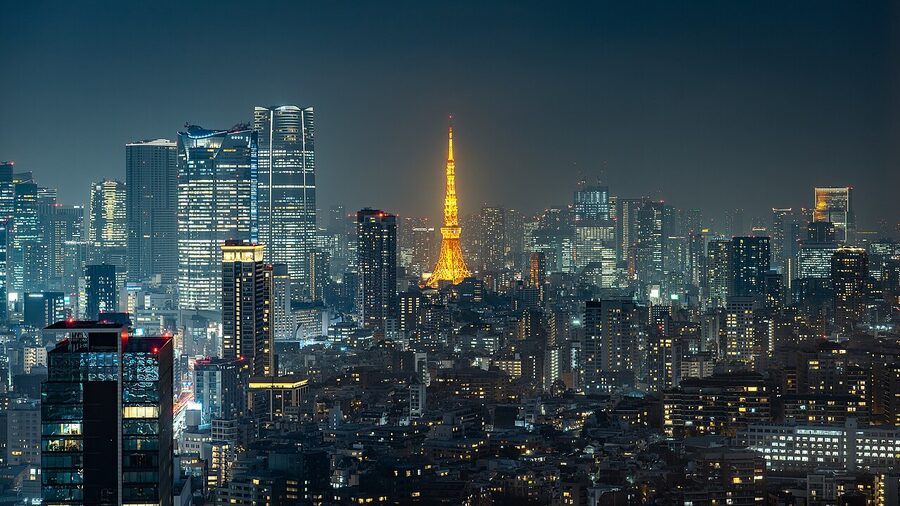

On top of the standard light there’s the “Infinity Diamond Veil” — an LED system added in 2008 for the tower’s 50th anniversary. It can do colours. On Valentine’s Day it’s red and pink. On cherry blossom evenings in late March it does cherry pink. For international events it sometimes does the flag colours of whoever Japan is honouring (I saw it do the Ukrainian blue-and-yellow in 2022). Big sports events, Olympic medal nights, national holidays — all trigger Diamond Veil variations. The official site posts the schedule a week in advance if you care.
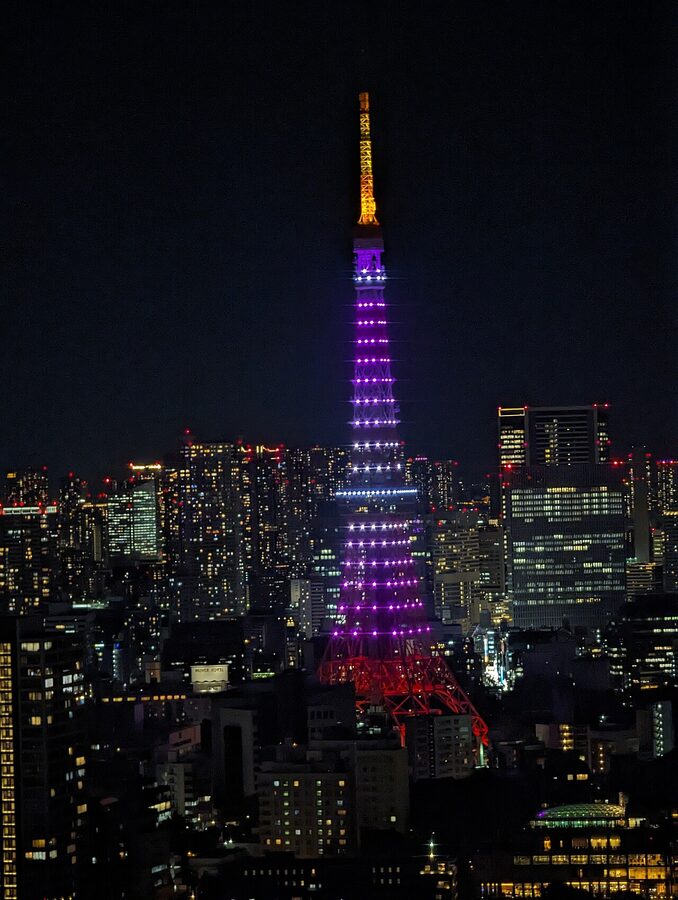
The lights switch on at sunset — which is roughly 17:00 in winter and 19:00 in summer — and stay on until midnight. The tower is shorter in summer because the steel contracts less, not because the lights are different; it’s a structural quirk. The tower swings about 2-3m in high wind. You’ll feel it on the Top Deck on a blustery day.
Where to photograph the tower
The truth about Tokyo Tower is that it’s better to look AT than to stand inside. The best view is the tower, not the tower’s view. Here’s where I’d actually go.
Zojoji Temple forecourt — the classic shot
This is the one composition you should try to get. The temple sits directly at the tower’s base. Walk to the Sangedatsumon main gate (1622, one of the oldest wooden structures in central Tokyo), stand about 30m in front of it, and frame the shot so the gate is in the foreground and the tower rises directly behind the temple roof. Late afternoon light is warmest. Don’t bother at midday — the light flattens the tower against the sky.
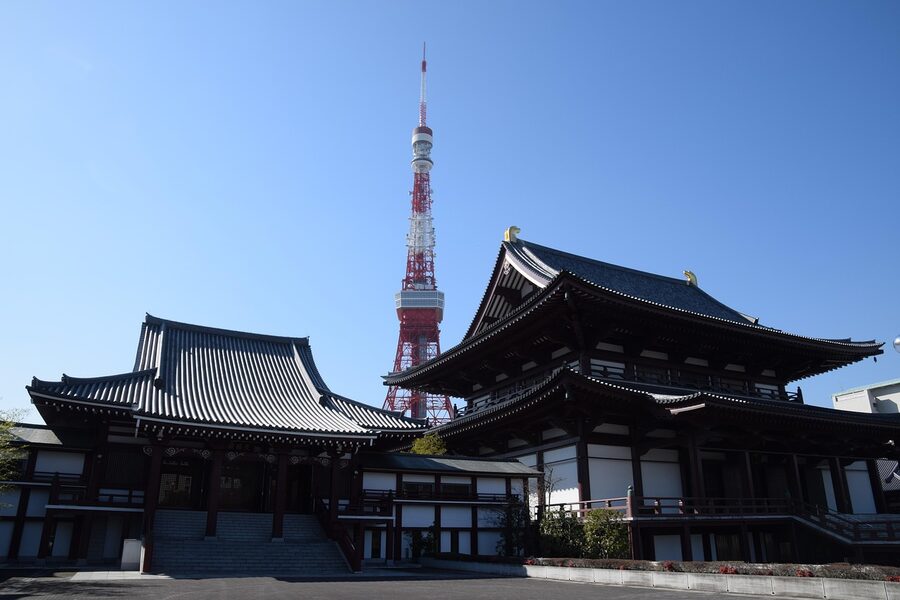
Steps to get this photo specifically:
- Exit Onarimon Station (Toei Mita Line) via Exit A1. You’re right at the entrance to the temple approach.
- Walk through the Sangedatsumon gate. Don’t stop here — that’s the wrong composition.
- Keep walking about 40m into the forecourt until you’re level with the second smaller gate.
- Turn around. The main gate and the tower are now stacked — compress with a 35mm or phone 1x lens, not ultra-wide.
- Step slightly left or right until the tower sits centred over the gate’s roof ridge. There’s usually a tourist already standing in the right spot.
Roppongi Hills Mori Tower (Tokyo City View)
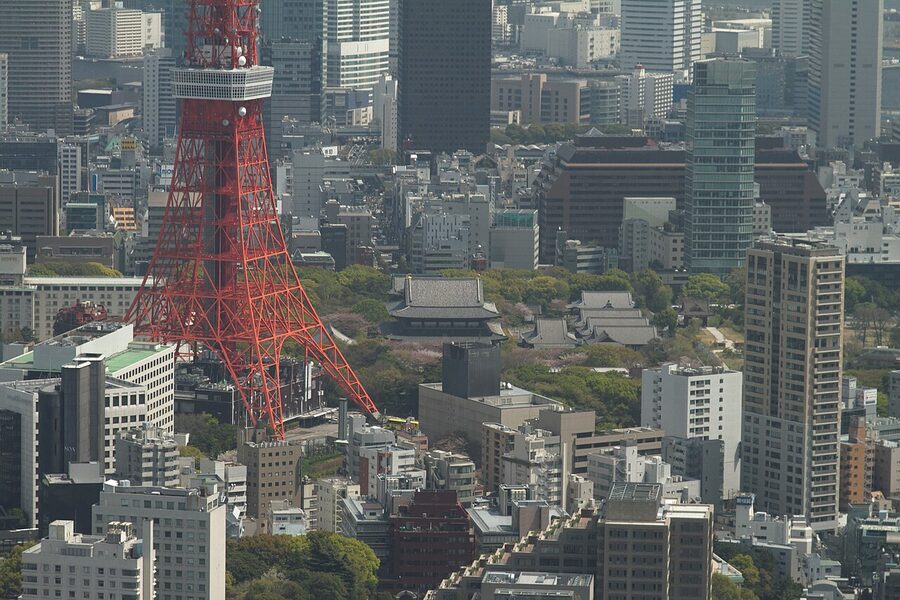
On the 52nd floor of Mori Tower in Roppongi, there’s an indoor observation deck called Tokyo City View (and a rooftop Sky Deck in good weather). From here Tokyo Tower sits in the middle distance, framed by the Shiba Park greenery, with Tokyo Bay behind. This is where all the published night-from-above photos of Tokyo Tower are taken from. Entrance is around ¥2,200.
.jpg)
Azabudai Hills Sky Lobby
The new Azabudai Hills opened in November 2023 and has a free observation lobby on the 33rd floor. It’s directly across the street from Tokyo Tower — the closest elevated free view. The perspective is almost level with the Main Deck. This is where I’d go if you want the look of a paid observation deck without paying for one.
Akabanebashi Bridge and the crossing below
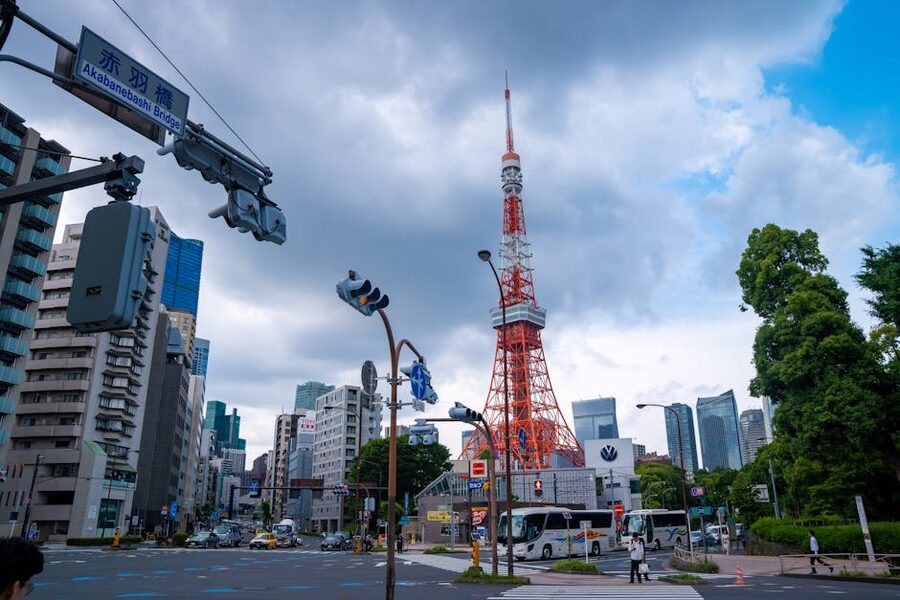
Come out of Akabanebashi Station (Toei Oedo Line) and walk about 2 minutes south-west toward the tower. There’s a pedestrian crossing under the Shuto Expressway where the tower lines up perfectly between traffic lights. It’s an instantly recognisable Tokyo shot — you’ll have seen it in travel blogs, anime, and photo feeds.
Odaiba and Tokyo Bay
From the Odaiba waterfront (specifically near the Fuji TV building or the Rainbow Bridge walkway) Tokyo Tower is a distant red sliver against the Minato skyline. Not the best angle, but if you’re already in Odaiba it’s worth a look. Rainbow Bridge from Odaiba, with the tower in the background, is a classic composition.
Zojoji Temple, the 1393 neighbour
You can’t write about Tokyo Tower without writing about the temple that sits in its shadow. Zojoji was founded in 1393 as the main Tokyo temple of the Jōdo-shū school of Pure Land Buddhism. The Tokugawa shoguns — who ran Japan from 1603 to 1868 — used Zojoji as their family temple. Six of the fifteen Tokugawa shoguns are buried here in a mausoleum complex behind the main hall.
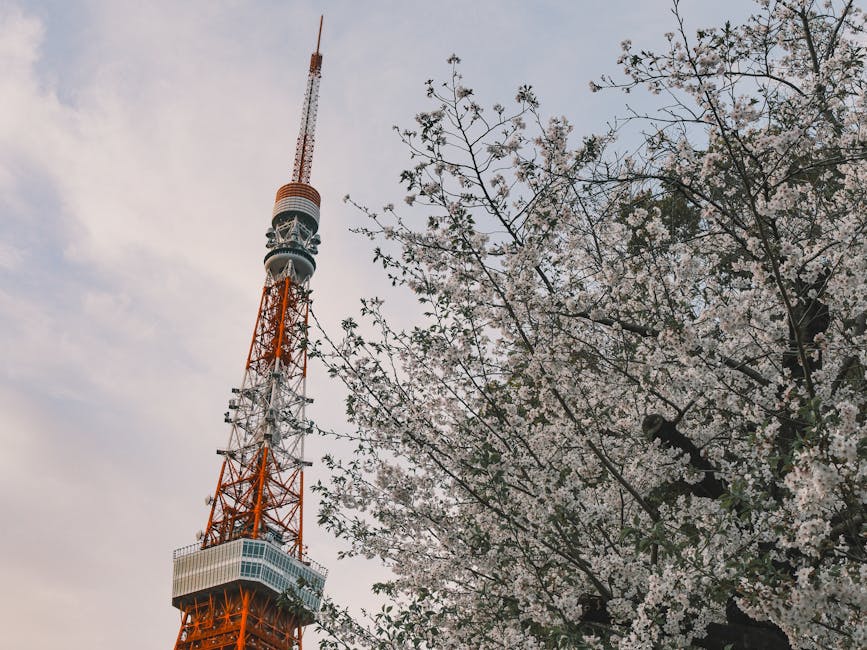
The entire temple complex burned down in the 1945 bombing of Tokyo. What you see today was rebuilt — the main hall (Daiden) dates from 1974, the bell tower from 1972. The Sangedatsumon main gate is the only original structure — it somehow survived the fire and the war — and is officially designated an Important Cultural Property. If you look carefully at the lower beams you can see char marks from firebombs that dropped around but not on the gate.
Zojoji itself is free to enter. The Treasure Gallery museum underneath the main hall costs ¥700 and holds some Tokugawa period artefacts. The small children’s memorial garden to the side — rows of tiny Jizō statues with red caps and windmills — is for miscarried or lost children, and you should treat it respectfully and not photograph close-up. The temple website lists opening hours and ceremony schedules.
Getting there
Three metro stations put you within 5 minutes of the base. Don’t overthink this.
- Akabanebashi Station — Toei Oedo Line. Exit 1 (Akabanebashi-guchi). 5 minutes walk.
- Kamiyacho Station — Tokyo Metro Hibiya Line. Exit 2. 7 minutes walk uphill.
- Onarimon Station — Toei Mita Line. Exit A1. 6 minutes walk through Zojoji Temple grounds (this is the nicest approach).
If you’re on the JR Pass, Hamamatsucho Station on the JR Yamanote Line is 15 minutes on foot and the walk goes through the old Kyu Shiba Rikyu Garden — a genuinely pretty Edo-era stroll garden that almost nobody bothers with. IC cards (Suica, Pasmo, Welcome Suica) work on every Tokyo metro and JR line you’d use.
The tower is accessible by lift from the base. FootTown has lifts to the ticket counter floor and there’s a separate accessible route to the Main Deck. The Top Deck Tour is wheelchair-accessible on request — contact the tower in advance.
Tokyo Tower vs Tokyo Skytree — the real answer
I’ve been up both. The question most first-timers ask is “which deck should I pay to visit?” and the real answer is: it depends what you want from the experience, and if you’re only in Tokyo for 3-4 days, you probably don’t need both.
Here’s how I’d split them.
Go to Tokyo Tower if:
- You want the atmospheric, Showa-era, retro-Tokyo feeling
- You’re staying in central Tokyo (Ginza, Roppongi, Shinagawa) and want a convenient evening
- You like the idea of a structure with actual history over a pure engineering landmark
- You’re on a budget — the ¥1,500 Main Deck ticket is less than half the ¥3,500 Skytree Tembo Galleria combo
- You want to pair the visit with a proper temple (Zojoji is right there)
Go to Tokyo Skytree if:
- You want the absolute highest observation deck in Tokyo
- Seeing Mt Fuji on a clear day is a priority (Skytree is 450m and farther from central clutter — better odds)
- You’re pairing it with Asakusa/Senso-ji (they’re walking distance)
- You like the modern aesthetic — Skytree is pale grey-white lattice with LED accents
- You want shopping and food around the base — Solamachi at Skytree is a full mall, FootTown at Tokyo Tower is smaller
My actual pick: Tokyo Tower for the tower, Shibuya Sky or Tokyo Metropolitan Government Building North Observatory for the view. The free TMGB viewing platforms in Shinjuku give you most of what you’d pay ¥3,500 for at Skytree, and the Mori Tower view gets you Tokyo Tower itself in the composition. If you only do one observation experience in Tokyo and it has to be a tower, do Tokyo Tower for the atmosphere — the view doesn’t need to be the point.
The comparison article at the Tokyo Skytree guide has the detailed Skytree-specific breakdown if you’re specifically deciding on that one.
When to go, and how long it takes

Opening hours: Main Deck 09:00-23:00 (last admission 22:30). Top Deck Tour 09:00-22:45 (last tour 22:15). The outdoor staircase from FootTown roof to the Main Deck is open weekends and holidays 09:00-16:00 (about 600 steps, 15 minutes to climb).
Best times in my order of preference:
- Opening (9:00-10:00) on a weekday. Clearest air, shortest queues, best Mt Fuji odds in winter. I went on a Tuesday in February and was on the Main Deck within 10 minutes.
- Blue hour (30 minutes after sunset). The tower’s own lights come on and you get the city lights transitioning on. This is the photographer’s time. Book a Top Deck slot for 30 minutes before sunset and you’ll catch both daylight and night views during the tour.
- Late evening (21:00-22:00). Fewer people, all the city lights on, and the main queues have cleared. Weak Mt Fuji visibility but who’s going to see Fuji at night anyway.
Avoid:
- Weekends in April, May, October, November — these are peak domestic tourism months and the queues double
- Golden Week (29 April – 5 May) — genuinely horrible, stay away
- New Year’s Eve — the tower itself is closed off for the hatsumode crowds at Zojoji anyway
- Rainy days — not because the tower closes but because the view goes to 0
On a clear winter day (December to February) you have about a 40-50% chance of seeing Mt Fuji from the Top Deck. The Main Deck has a lower success rate because the altitude is lower and Roppongi Hills partly blocks the western view. Summer visibility is usually poor — humidity haze turns the horizon to milk.
FootTown — the base building
FootTown is the five-storey commercial base that the tower stands on. Its purpose was originally just “sell tickets and house the elevators.” Over the decades it’s absorbed various attractions — an aquarium that closed in 2018, a Tokyo One Piece Tower theme park that ran from 2015 to 2020, a wax museum (closed 2013). In 2022 the upper floors became Redº Tokyo Tower, a VR/e-sports complex with about 25 attractions spread across three floors. Passport ticket is ¥4,500 weekday, ¥4,600 weekend — a separate purchase from the observation deck tickets.
Skip Redº unless you specifically want a couple of hours of gaming. It’s fine for what it is but it’s not why you came to Tokyo Tower. The ground-floor area does have some genuinely useful things: coin lockers (¥400-600 for a day), decent-if-not-amazing food including a ramen counter, a post office that sells tower-themed postcards, and the stamp book station for the goshuin collectors. The second floor has the souvenirs — the wooden tower models are made locally and are a better gift than the biscuit tins. There’s also a small Shinto shrine on the second floor, Tokyo Tower Taijingu, where you can get an omamori amulet printed with the tower.
How I’d see Tokyo Tower in 90 minutes
If you only have an hour and a half, here’s the sequence that gets you the most out of it without paying for things you don’t need. Assume you’re coming from central Tokyo.
1. Arrive at Onarimon Station (A1 exit), 16:00. Walk through the Sangedatsumon gate into Zojoji Temple. Spend 10 minutes in the temple — look at the main hall, the bell tower, the Jizō memorial garden. Free.
2. Photograph the tower from the Zojoji forecourt. Walk about 40m past the main gate, turn round, and get the classic gate-plus-tower composition. 5 minutes.
3. Walk to FootTown. 5 minutes uphill from Zojoji. Buy Main Deck tickets at the counter or pull up your online booking. If it’s a weekday you’ll be on the elevator within 10 minutes of arriving.
4. Main Deck, 16:30-17:15. Do one full loop of the outer windows, do the glass floor (queue or skip depending on how long it is), grab a coffee at the tea counter. Don’t pay for the Top Deck unless you specifically planned to — by this point you’ve decided if the extra altitude is worth it.
5. Descend at 17:15. Timing this for sunset (17:30 in winter, later in summer). Walk out of FootTown and round to the north — the Landmark Light is about to come on. Watch the switch from a bench in Shiba Park. The lights come up progressively over about 90 seconds, not all at once.
6. Optional: Azabudai Hills 33F Sky Lobby. 7 minutes walk north-west. Free elevated view of the lit tower against the dark sky, no ticket needed. Closes around 21:00.
Total time: 90 minutes at the tower, plus another 20-30 if you add Azabudai Hills. Total spend: ¥1,500 for the Main Deck, plus whatever coffee or omamori you pick up.
What’s nearby (and worth linking up)
Shiba Park surrounds the tower and is one of Tokyo’s oldest public parks (1873). Good for a picnic. Atago Shrine, 10 minutes north-east on foot, sits on a small hill with a steep staircase called the Stairs of Success — before the skyscraper era, this was one of central Tokyo’s main viewpoints. Roppongi Hills is 15 minutes walk and has both the Mori Tower observation deck and some of Tokyo’s better restaurants. The Roppongi guide covers the whole neighbourhood.
If you’re putting together a first-time Tokyo week, Tokyo Tower pairs naturally with Ginza (20 minutes walk east) and a half-day in Odaiba for the Tokyo Bay views back toward the tower. The Ginza guide runs through the shopping and lunch options, and the 3-day itinerary slots Tokyo Tower into an afternoon on day 2.
Practical details at a glance
- Address: 4-2-8 Shibakoen, Minato-ku, Tokyo 105-0011
- Hours: Main Deck 09:00-23:00 (last entry 22:30); Top Deck Tour 09:00-22:45 (last tour 22:15)
- Main Deck: ¥1,500 adult / ¥1,200 high school / ¥900 elementary-junior high / ¥600 age 4+
- Top Deck Tour (incl. Main): ¥3,300 web / ¥3,500 counter adult, down to ¥1,500-1,700 for age 4+
- Tokyo Diamond Tour: ¥7,000 adult (includes private lounge, 70 people per day max)
- Tickets: tokyotower.co.jp — online saves ¥200 per adult
- Stations: Akabanebashi (Oedo), Kamiyacho (Hibiya), Onarimon (Mita) — all 5-7 min walk
- Accessibility: step-free to Main Deck via lift; Top Deck accessible on request
- Outdoor staircase: Weekends and holidays only, 09:00-16:00 up / descent until 21:00, included in Main Deck ticket
- Official tourism: gotokyo.org | zojoji.or.jp
Tokyo Tower has a built-in advantage that Skytree can’t match: it’s been the city’s emotional backdrop for 68 years. Godzilla has destroyed it twice on film. Countless anime open on a wide shot of it at sunset. In 1958 it was the boldest statement Japan could make — taller than the Eiffel Tower, built from the war’s leftovers, and pointed skyward during a decade that needed a skyward-pointing thing. You don’t need to go up inside it to feel that. You just need to be nearby when the lights come on.