
Mount Takao gets called the world’s most-visited mountain — about 2.6 million people climb it every year — and it’s 47 minutes from Shinjuku on a single train ride that costs ¥390. The summit is 599 metres above sea level, which is small as Japanese mountains go, and the entire round trip can be done in half a day. There’s a cable car that’s the steepest passenger railway in Japan, an 8th-century Buddhist temple at the top, statues of long-nosed mountain goblins guarding the trail, and on a clear winter day you can see Mt Fuji from the observation deck. It is the easiest serious day trip you can do from Tokyo, and most first-timers don’t even know it’s there.
In This Article
- Mt Takao in thirty seconds
- Why Takao actually matters
- Getting there from Tokyo
- The cable car and chair lift
- The eight trails (and which one to actually pick)
- Trail 1 (Omotesando Course)
- Trail 6 (Biwa Falls)
- Inariyama Trail (Ridge Course)
- Trails 2, 3, 4, and 5
- How I’d combine them
- Yakuo-in Temple
- The tengu — Takao’s mountain goblins
- The summit
- Food — tororo soba
- When to actually come
- How to dodge the koyo crowds
- How I’d actually spend a day on Takao
- The Takao 599 Museum
- Accessibility
- Practical info block
- My first-time Mt Takao plan
Mt Takao in thirty seconds
A 599-metre forested mountain on the western edge of Tokyo. Around 2.6 million visitors a year, which is more than any other mountain in the world. Eight numbered hiking trails plus a cable car and a chair lift — you can hike the whole thing or skip the lower section entirely. A working Buddhist temple at the top, founded in 744 AD, that’s the headquarters of one of the three great Kanto branches of the Shingon school. Tengu folklore goes back centuries; you’ll see two big bronze statues of them at the temple. Mt Fuji on clear days. Cherry blossoms in early April. Autumn koyo in mid-November — the busiest fortnight of the entire year on the mountain. Tororo soba, grated yam over noodles, is the lunch you order. Michelin gave the mountain itself three stars in 2007 and the Japanese government designated it a Japan Heritage site in 2020.
Why Takao actually matters
People glance at Mt Takao on a Tokyo map, see “Hachioji,” assume it’s suburbs, and move on. Then they end up doing Hakone or Kamakura instead. I get it — nobody comes to Tokyo for the western fringe. But here’s the case for Takao.
It’s the closest mountain to the world’s most populated metropolitan area, and the contrast is the whole point. You go from the Shinjuku platforms, where 3.6 million people pass through every day, to a 599-metre forested ridge where you might hear nothing but cedar branches creaking. The transition takes 47 minutes. Nowhere else around Tokyo gives you that kind of city-to-mountain switch on a single train ticket.
The other thing is that this isn’t a recreation hill. It’s a working pilgrimage site. Mt Takao has been a sacred mountain in the Shugendo (mountain ascetic) tradition since the 8th century — old enough that there’s a 600-year-old cedar growing along Trail 1 that pilgrims were already passing on their way up. The Yakuo-in temple at the top isn’t a museum reconstruction. It’s the same lineage of monks doing the same fire-walking and waterfall-purification rituals they’ve done since the Edo period. You walk the same paved path everyone has walked for the last 1,300 years.
And the Michelin Green Guide gave Takao three stars in 2007 — the same rating as Mt Fuji, the Itsukushima floating torii, and Kyoto’s Kinkaku-ji. They’ve renewed it every edition since. This is, on paper, one of Japan’s most highly-rated tourist destinations. It’s also one of the most consistently underestimated by foreign visitors.
Getting there from Tokyo
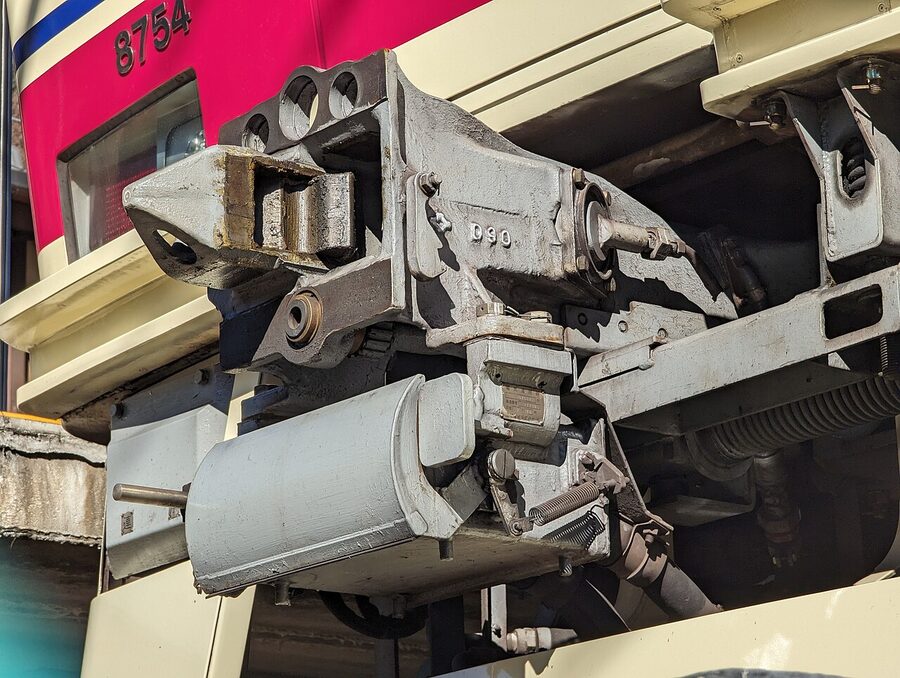
You only need one train, and it’s not on the JR network. Most first-time guides get this wrong.
The route is the Keio Line from Shinjuku to Takaosanguchi, the western terminus of the Keio Takao Line. From Shinjuku Station’s Keio platforms (south of the JR concourse, follow the yellow Keio signs), board a Semi-Special Express or Special Express marked for Takaosanguchi. The journey is 47 to 55 minutes depending on the service, costs ¥390 one way, and is direct — no transfers. The trains run every 10 minutes during the day and roughly every 5 minutes at peak.
A few specific things first-timers get caught out by:
- Not all Keio Line trains go to Takaosanguchi. The line splits at Kitano. Make sure the destination on the front of the train, and on the platform sign, says “Takaosanguchi” (高尾山口) and not just “Takao.” If it says “Hashimoto” or “Hachioji,” you’re on the wrong branch.
- The JR Pass does not cover this train. Keio is a private railway. You pay separately with a Suica/Pasmo card, or you buy a paper ticket at the Keio gate. If you have a JR Pass and want to use it, the alternative is the JR Chuo Line from Shinjuku to Takao Station, then a 5-minute walk to Takaosanguchi — about 50-60 minutes total, ¥560 if you don’t have the pass. The Keio route is faster and cheaper.
- The Keio “Takao Discount Ticket” bundles the Shinjuku round-trip with a cable car or chair lift round-trip for ¥1,420. If you’re going to ride the cable car at all, this saves you about ¥120 and the queue at the cable car ticket window. Buy it at any Keio Line ticket machine in central Tokyo — the machine has an English menu.
The train pulls into Takaosanguchi at the foot of the mountain. The cable car terminus is a 5-minute flat walk from the ticket gate, sign-posted in English. Trail 1 starts in the same direction. The Takao 599 Museum is across the road from the station and free.
The cable car and chair lift
.jpeg)
You have two ways up the lower mountain that aren’t walking. They both run in parallel from the trailhead area at Takaosanguchi to the same point about halfway up the mountain (around 472 metres altitude), where Trail 1 picks up again for the last 30 minutes to the summit.
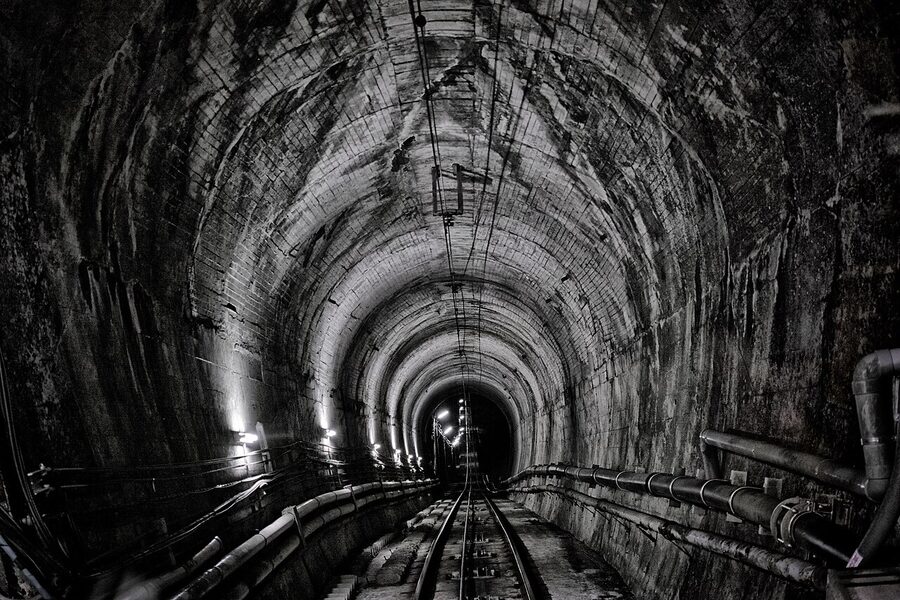
The cable car (run by Takao Tozan Railway since 1927) is the famous one. Six minutes from Kiyotaki Station at the bottom to Takaosan Station near the top. The published gradient at the steepest point is 608 per mille, which works out to about 31 degrees. The official site is straightforward about it: this is the steepest passenger cable railway in Japan. The carriages are built so the floor stays roughly horizontal even when the track angle changes, which means you can feel the angle change as you go — halfway up, the seats subtly tip the other way. Cable car: ¥500 one way, ¥950 round trip. Cars run every 15 minutes, more frequently at peak.
The chair lift (called the Echo Lift, opened 1964) is the alternative. Two-seater open chairs, no seatbelts, no roof. Twelve minutes from bottom to top, which is twice the cable car time, but you’re sitting outside in the trees the whole way. Same price: ¥500 one way, ¥950 round trip. The chair lift only runs from 9:00 to about 16:00 (16:30 in summer); the cable car runs longer, from 8:00 until at least 17:15.
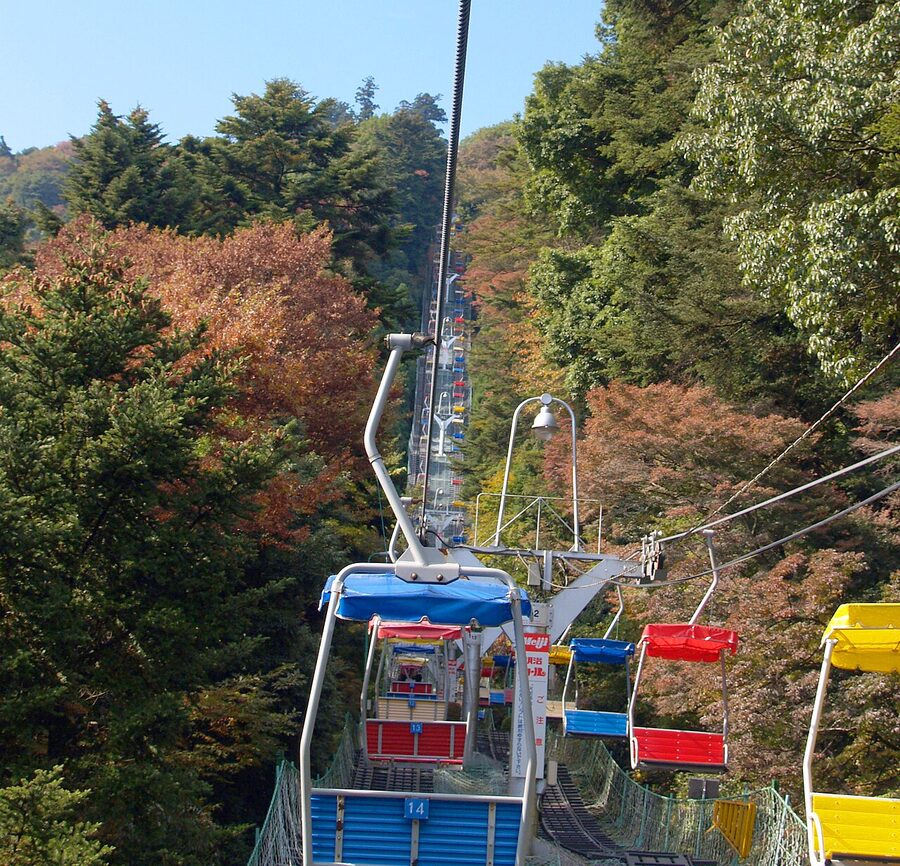

My honest take: take the chair lift up and the cable car down, if the weather’s fine. The chair lift is the more memorable ride and the views going up are better. The cable car is interesting once but it’s a closed carriage, and after the novelty of the steepness you’re mostly looking at people in front of you. Going down, taking the cable car is a bit faster and you don’t risk the chair lift queue (which can hit an hour at peak koyo weekends in November).
You can also walk the entire mountain and skip both. Trail 6 from the foot of the cable car to the summit takes about 90 minutes uphill, mostly through forest along a stream — a good option in summer because the stream keeps the air cool. More on the trails next.
The eight trails (and which one to actually pick)
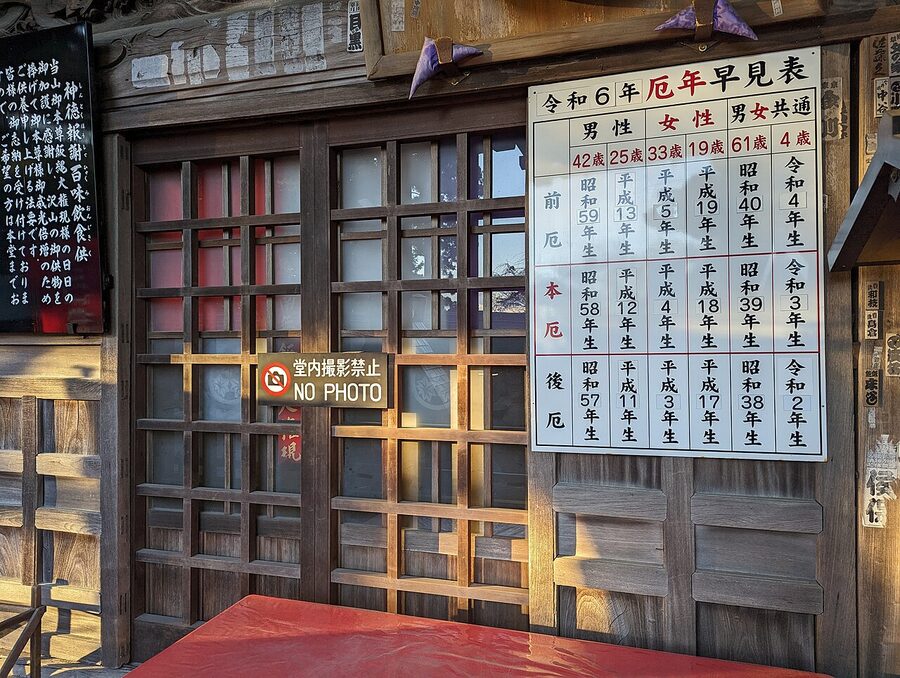
There are seven numbered trails and an extra ridge route called the Inariyama Trail. Most maps and signs will refer to them by number, so Trail 1, Trail 2, etc. They each have a flavour. Here are the ones you actually need to know.
Trail 1 (Omotesando Course)
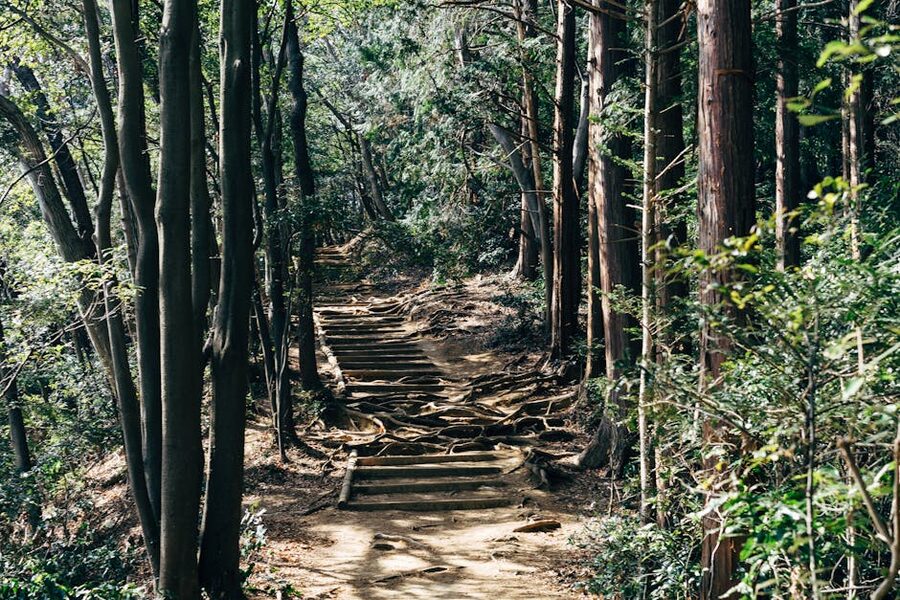
The main route. 3.8 km from the cable car base at Kiyotaki to the summit, paved the whole way, takes about 90 minutes uphill or 75 down. Originally a temple service road, which is why vehicles still occasionally drive on it. Goes past the cable car upper station, the Takao Monkey Park, Yakuo-in Temple, and a 600-year-old cedar before hitting the summit. This is the trail every first-time visitor takes, and rightly so.
The catch: it’s the busiest trail by a wide margin, and on autumn weekends in mid-November it can feel like a slow-moving queue from the temple to the summit. If you want the temple-and-summit version of Takao without much trail effort, you take Trail 1. If you want a forest hike, take something else for at least one direction.
Trail 6 (Biwa Falls)
The second-most-popular trail, and the one I’d send you on if you want a proper hike. 3.3 km, takes about 90 minutes uphill, runs alongside a stream for most of its length and passes the small Biwa Falls (where waterfall ascetic training still happens, you might see white-robed monks underneath). Cooler in summer because of the water. The final approach to the summit is a steep set of wooden stairs — not difficult, but you’ll be breathing hard. This is the trail to do up if you’re hiking the cable car’s lower section instead of riding it.
Inariyama Trail (Ridge Course)
3.1 km, 90 minutes, follows the ridge along the south side of the mountain. The quietest of the popular routes — the bus tours don’t come this way. There’s a small viewpoint shelter (the “azumaya”) about 400 metres up where you can see Mt Tsukuba on a clear winter day. The final approach to the summit is a 230-step staircase. Most guidebooks recommend Inariyama as a downhill route, but I think it works better uphill in spring or autumn — you’re facing the trees, not your knees.
Trails 2, 3, 4, and 5
These are shorter loop trails near the upper part of the mountain that you can use to vary the route once you’re up there. Trail 4 (1.5 km, 50 minutes) is the one worth knowing about — it has a short suspension bridge over a small valley, less crowded than Trail 1, and a good downhill option from the summit. Trail 3 is closed for repairs sometimes, including for periods most years — check the signs at the trailhead. Trails 2 and 5 are short loops most casual visitors won’t do.
How I’d combine them
For most first-timers I’d say: cable car or chair lift up, then Trail 1 from the cable car upper station to the summit (about 30 minutes through Yakuo-in), then Trail 4 back down to the cable car upper station, then the cable car back down. That gets you the temple, the summit, the suspension bridge, and you don’t murder your knees on the descent. About 4 hours total including lunch and temple stops.
For a proper hike: chair lift up, Trail 1 to the summit, Trail 6 all the way down to the cable car base. About 5 hours total. The bottom of Trail 6 is where the day ends — you’re back at Takaosanguchi Station and can grab a beer.
Yakuo-in Temple
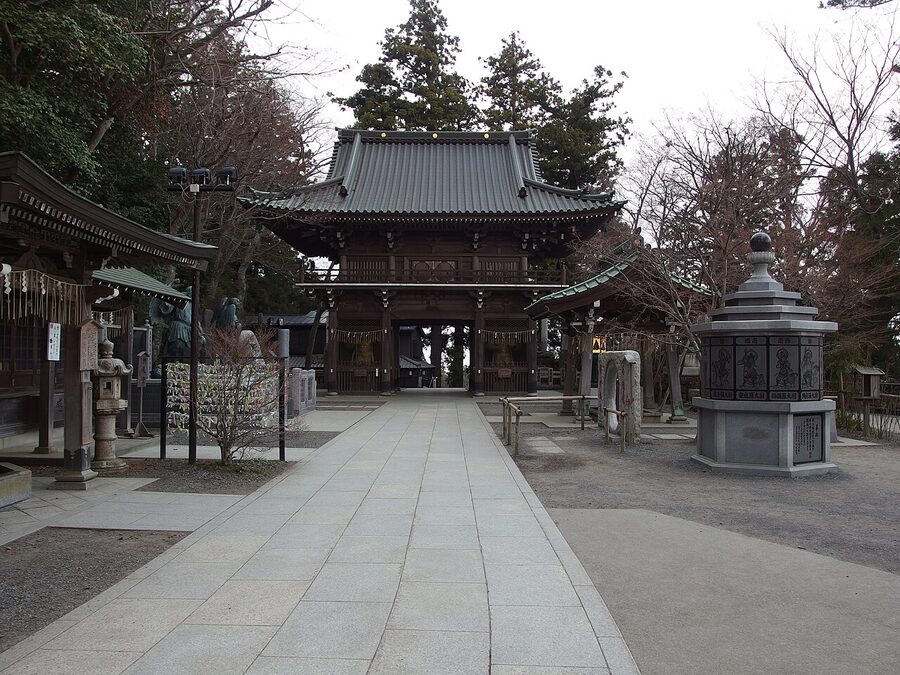
.jpg)
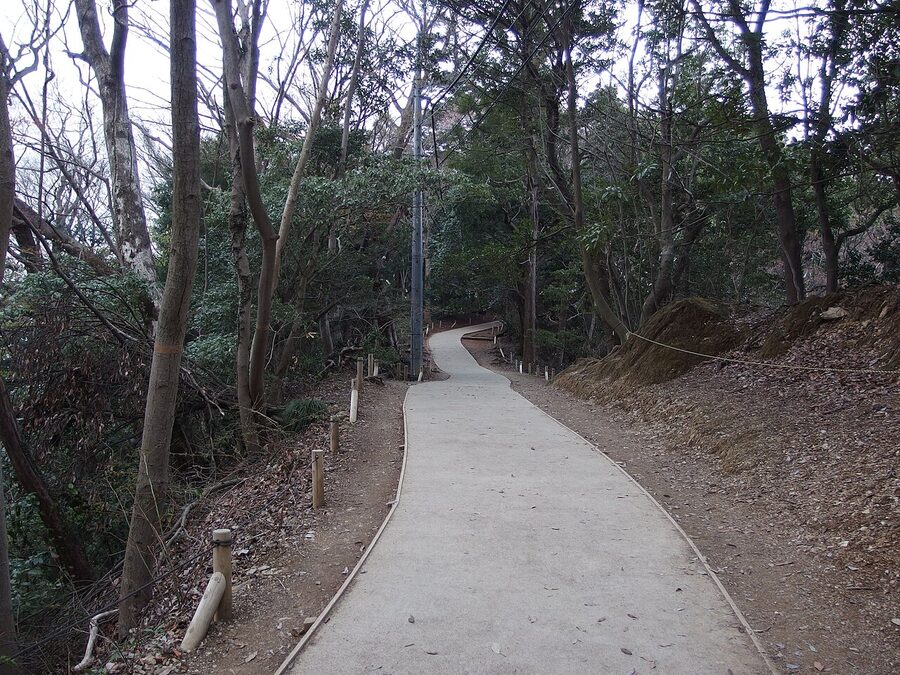
This is the historical heart of the mountain and the reason Takao has been protected as forest for 1,300 years. Worth slowing down for, even if you’re not religious.
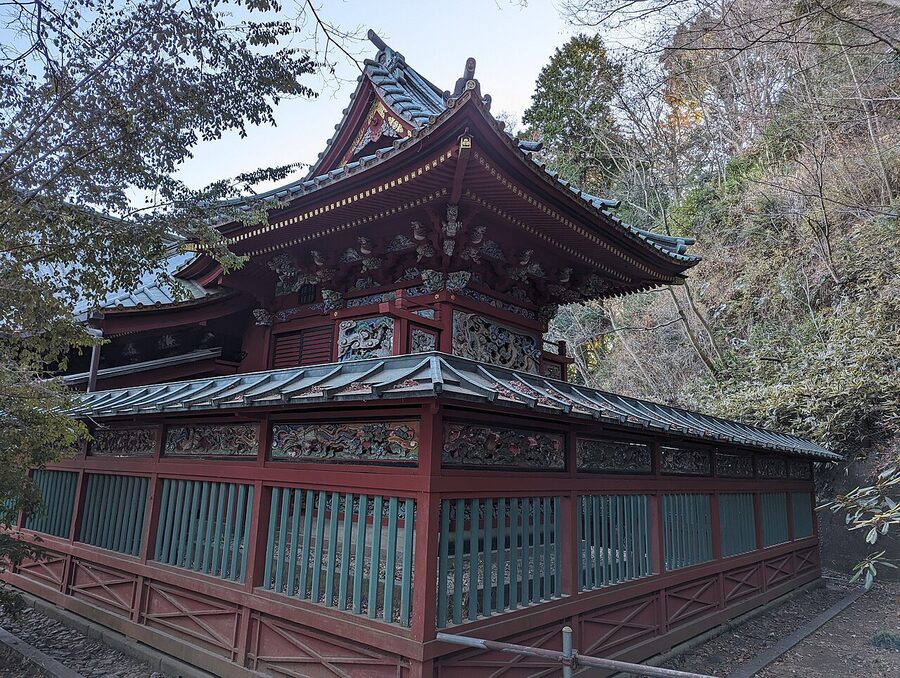
Yakuo-in (full name: Takaosan Yakuo-in Yuki-ji) was founded in 744 AD — that’s the Tenpyo era of the Nara period — by a monk named Gyoki under imperial decree from Emperor Shomu, the same emperor who built the giant Buddha at Todai-ji in Nara. It started as a temple to Yakushi Nyorai, the medicine Buddha, which is where the “Yakuo” in the name comes from. In the 14th century the temple shifted to focus on Izuna Daigongen, a syncretic mountain deity worshipped by Shugendo ascetics, and that’s the figure most of the on-site rituals are about today. It belongs to the Chizan school of Shingon Buddhism, and it’s one of the three head temples (Kanto-sandai-honzan) of that school in eastern Japan.
Practical bits: it’s free to enter and walk through. You don’t need to know anything to visit. The grounds spread up the slope from the main gate to the inner sanctuary, and the path runs straight through them on the way to the summit.
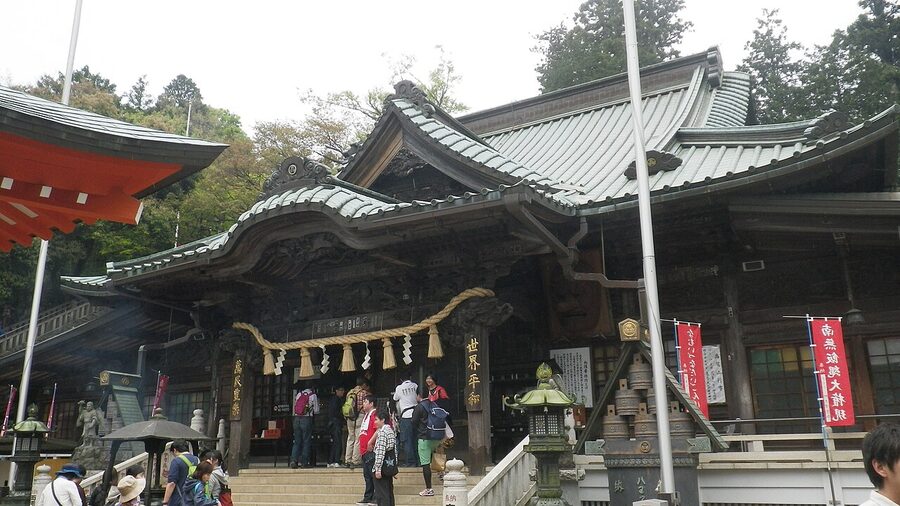

The thing to know is that there’s a small ritual people do here, and most foreign visitors miss it. At the Hachidai Ryuoudo (the eight-dragon-king hall, near the main gate), there’s a basin of running water with a small stone basket. You’re meant to wash a coin in the basket, then keep that coin as a charm for prosperity. It’s ¥5 or ¥100, your choice. The ritual takes about 30 seconds and is a nice slow-down moment.
The big annual event is the Hiwatari-sai, the fire-walking festival, on the second Sunday of March. Yamabushi monks build a huge bonfire and walk barefoot across the embers; the public is invited to walk after. About 5,000 people show up and several hundred actually walk the coals. If you’re in Tokyo in early March, this is worth restructuring your day around.
The tengu — Takao’s mountain goblins
.jpg)
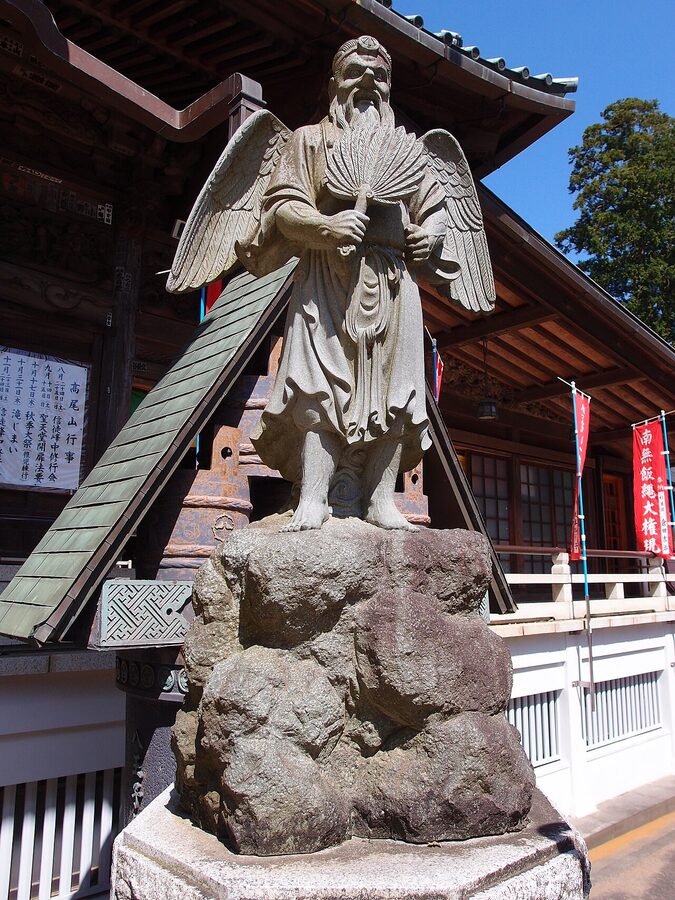
You will see tengu everywhere on Mt Takao. On signs, on souvenir charms, on shop curtains in town, in the form of waffle cakes for sale at stalls along Trail 1, and most prominently as two large bronze statues at Yakuo-in.
Tengu are mountain spirits in Japanese folklore. They come in two main flavours: the Daitengu (great tengu), with a long red nose, who are the powerful, sometimes haughty leaders; and the Karasu Tengu (crow tengu), with a bird-like beak, who are the sharper, more agile attendants. The two are usually shown as a pair. Both have wings and both are associated with mountain ascetic training — in the folk tradition, they were the unseen teachers of the Shugendo monks who trained on peaks like Takao.
Why Takao is the tengu mountain: medieval pilgrims considered Takao one of the most powerful tengu mountains in eastern Japan, partly because of its association with Izuna Daigongen, who is depicted in tengu form. The two big statues at the inner sanctuary at Yakuo-in are there as guardians.
If you only spot one piece of tengu folklore on the day, look at the statues. If you spot two, look for the tengu-yaki — a baked waffle in the shape of a tengu face, sold from stalls on Trail 1, hot and full of red bean paste. About ¥200 each. They’re a snack, not a meal, but the queue is short and the gimmick is on-brand for the mountain.
The summit
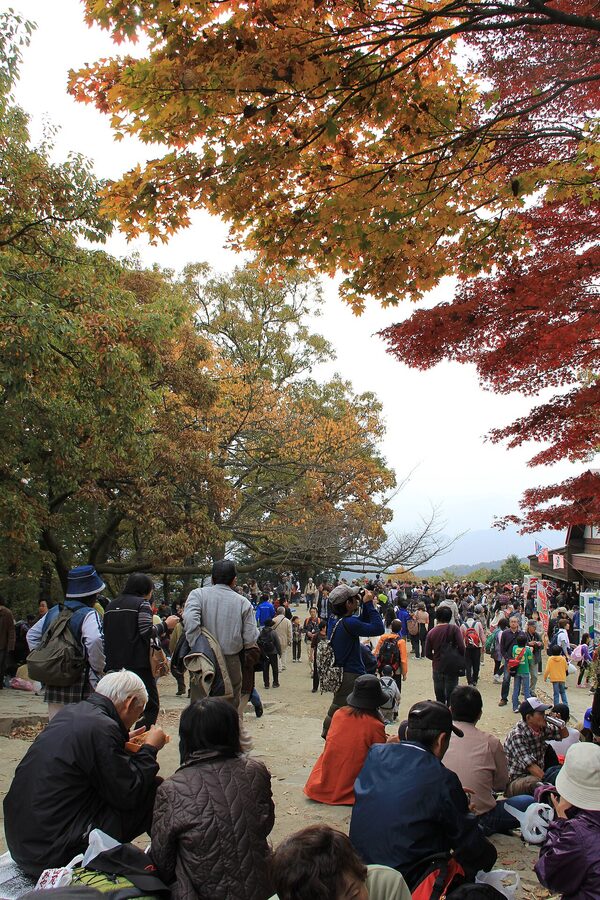

The summit is a flat clearing at 599 metres, marked with a wooden pole stamped “高尾山 599m.” It’s officially called Daimiharashi-en (“great-view park”). There’s an observation deck with a westward view of the Tanzawa mountains, the Visitor Centre with toilets and free wifi, a couple of small shops selling soba and snacks, and benches where you can sit with your lunch.
The Mt Fuji view is the headline. On a genuinely clear day — clearest in winter when the air is dry — Fuji sits framed between the Tanzawa peaks to the west, looking close enough to walk to. On a hazy day you get a vague suggestion of a triangle. On a humid summer day you get nothing at all. This is the single most important thing to know before you commit a day to Takao: the summit view is unreliable, and the difference between a clear day and a poor one is the difference between worth-the-trip and didn’t-need-to-come-up-here. Check the Tokyo weather forecast the night before. If the Tokyo skyline is hazy from your hotel window, the Fuji view from Takao won’t be there either.
One specific timing note: in late December, around the winter solstice, the sun sets directly over the top of Mt Fuji as seen from Takao’s summit. This is called Diamond Fuji and it’s a thing — people come up to Takao specifically to photograph it for those few days a year. If you’re in Tokyo between roughly 19 December and 24 December, look up the exact sunset time and aim to be on the summit by 16:00. Bring a coat. It’s cold.
Food — tororo soba
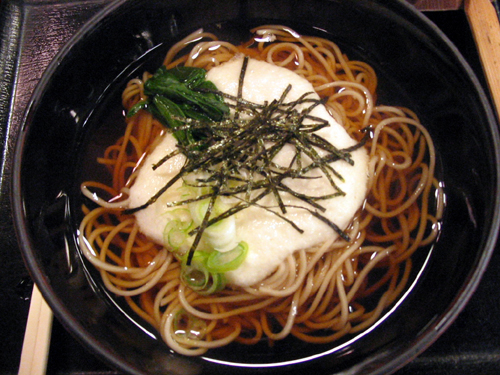

The signature dish is tororo soba — buckwheat noodles topped with grated mountain yam (tororo). The yam is sticky and faintly sweet and turns the broth into something halfway between a soup and a sauce. The texture is the surprising part — if you’ve never had grated yam before, it’s nothing like anything else in Japanese cooking. The locals eat it because the yam is supposed to give you energy for the climb. The historical version is that it became a Mt Takao specialty in the Meiji era, served to pilgrims at the temple as a meal, and the soba shops on the trail today are the descendants of that.
If you only have time for one specific food thing on Takao, this is it. Order it at one of the soba restaurants on Trail 1 between the cable car upper station and Yakuo-in — there are at least six of them within a 10-minute walk — or at the summit. Around ¥1,000 to ¥1,300 a bowl. Hot tororo soba in winter, cold tororo soba in summer. Both work.
Other things you’ll see along the way: tengu-yaki (the waffle, ¥200 each, mentioned above), grilled rice cakes, kushi-dango (rice dumplings on a stick, often coated in sweet soy glaze, around ¥300), and the inevitable soft-serve ice cream. There’s a beer hall called Takao Beer Mount at the top of the cable car which runs as an open-air beer garden every summer from mid-June to mid-October — all-you-can-drink-and-eat for two hours, around ¥4,500. Reservations strongly recommended on weekends, you can book through the official Takao Tozan site. It’s genuinely fun, and 500 metres up a mountain is a novel place to drink a beer.
When to actually come
.jpg)
Mt Takao has the most extreme high-season-low-season swing of any easy day trip from Tokyo. Same mountain, same trail, completely different experience depending on when you turn up. Here’s the rough ranking.
- Mid-November (autumn koyo, peak): the most beautiful Takao gets, hands down. Maples and other deciduous trees light up red and orange against the cedars. The peak window is roughly 10 to 25 November, with weekend 15-16 November being the absolute madhouse year on year. Cable car queues hit 60-90 minutes. The summit is shoulder-to-shoulder. If you don’t mind crowds and want the postcard photo, come on a weekday. If you don’t love queues, do not come on a koyo weekend.
- Early to mid-April (cherry blossom): moderate crowds, beautiful blossoms along Trail 1 and at the summit. Takao isn’t a top-tier hanami spot the way Shinjuku Gyoen is, but it’s a forest hike with sakura, which is a different and arguably better thing.
- Late December (Diamond Fuji): very specific draw, very specific dates. Mostly photographers. Otherwise winter is the quietest season and gives you the best Fuji view.
- Summer (June to August): hot, humid, the trails are leafy-green but the views are hazy and Fuji is usually invisible. Trail 6 (the streamside one) is more comfortable than the exposed Trail 1. The Beer Mount is at the top of the cable car. Expect 28°C-plus and bring water.
- Winter (January, February): cold, dry, the clearest skies of the year, almost nobody on the mountain on weekdays. My pick for a first visit if you’re in Tokyo in winter. The trails can be icy in early-morning shaded sections; trainers are fine on Trail 1 if you’re careful, but proper shoes for the others.
How to dodge the koyo crowds
- Come on a weekday in mid-November, ideally Tuesday to Thursday. Saturday is the worst day, Sunday a close second.
- If you must come on a weekend, take the first train: Keio Line out of Shinjuku at around 06:30, on the mountain by 08:00. Cable cars start at 08:00. You get a clean two-hour window before the day-trippers arrive.
- Hike up rather than queue for the cable car — Trail 6 is the cool option, and the queue at the cable car at peak koyo can be 90 minutes one way.
- For the descent, hike down on Trail 4 or the Inariyama trail. The cable car queue going down at koyo weekend afternoons is its own special hell.
How I’d actually spend a day on Takao
Half-day version, suitable for first-timers and people who want a temple-and-summit day:
- 08:00 — Keio Line semi-special express from Shinjuku, ¥390. Buy the Takao Discount Ticket if you can find the right machine; otherwise just pay as you go.
- 09:00 — Arrive Takaosanguchi. Use the loo at the station, grab a coffee from the conbini opposite. Walk 5 minutes to the chair lift base station.
- 09:15 — Chair lift up, 12 minutes. (Cable car if it’s raining.)
- 09:30 — Walk Trail 1 from the upper station up to Yakuo-in temple. About 25 minutes. Stop at the eight-dragon-king hall to wash a coin.
- 10:30 — At Yakuo-in. Spend 30 minutes here. Look at the tengu statues. Climb to the inner sanctuary at the back.
- 11:00 — Walk on up to the summit, about 25 more minutes. Photograph the 599m marker. Walk past the marker into the trees for the proper Mt Fuji viewpoint.
- 11:45 — Lunch at the summit shop or back down at one of the Trail 1 soba restaurants near the temple. Tororo soba.
- 13:00 — Trail 4 down to the cable car upper station (about 50 minutes), crossing the suspension bridge. Cable car back to the bottom.
- 14:30 — Quick visit to the free Takao 599 Museum across from the station — small, well-designed, gives you the natural-history context for what you just walked through. Twenty minutes is plenty.
- 15:00 — Keio Line back to Shinjuku, on a sofa by 16:00 or eating dinner in Shinjuku by 17:30.
Full-day version: same route up, but hike Trail 6 down all the way to the cable car base instead of taking the cable car. Adds about 90 minutes. End at one of the soba restaurants near Takaosanguchi Station. Or pair Takao with the Hachioji fireworks festival if you’re visiting in early August — Hachioji is one stop east of Takaosanguchi on the Keio Line, and the festival on the river is exactly the right way to end a Takao day.
The Takao 599 Museum
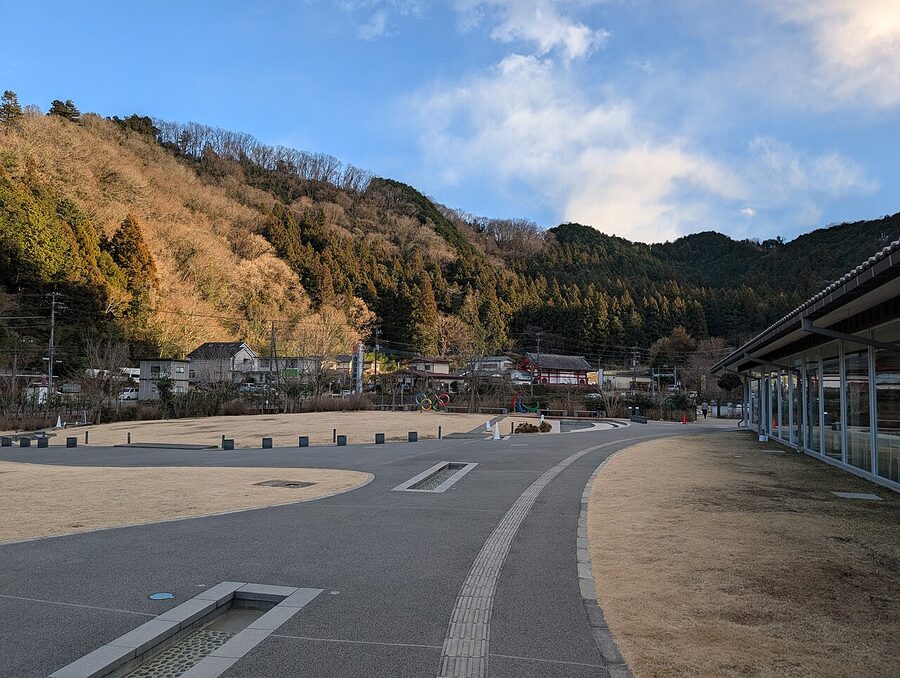
One specific thing worth knowing about: there’s a small modern museum at the foot of the mountain called the Takao 599 Museum, named after the summit’s height. It’s free, it’s open daily 8:00 to 17:00 (closes 16:00 in winter), and it’s a 1-minute walk from Takaosanguchi Station. The main exhibition is a long display wall of resin-encased plant and insect specimens collected on the mountain — it sounds dry, it’s actually beautiful, and you can match what you see to what you saw on the trail. There’s also a 13-minute projection film (subtitled) about a year on the mountain.
I wouldn’t make a special trip just for the museum, but as a 20-minute add-on either at the start or end of your day it’s a nice piece of context. If it’s pouring with rain, the museum and a soba lunch is a perfectly reasonable plan B.
Accessibility
Takao is more accessible than you might expect for a working mountain. The cable car has step-free boarding from the platform and the carriages are level inside. The lower section of Trail 1 (from the cable car upper station to Yakuo-in) is paved, has a moderate gradient, and is genuinely wheelchair-friendly — it’s the same path the temple uses for vehicles. From Yakuo-in to the summit the path narrows and steepens, but it’s still paved.
The chair lift is not accessible. Trails 2 through 6 and the Inariyama trail are unpaved forest paths with stairs and roots. Takaosanguchi Station has lifts, accessible toilets, and step-free access to the cable car base.
The 599 Museum is fully accessible and has accessible toilets.
Practical info block
- Getting there: Keio Line from Shinjuku to Takaosanguchi Station. 47-55 minutes, ¥390 one way. Direct, no transfers. JR Pass not valid — it’s a private railway.
- Discount ticket: Keio Takao Discount Ticket bundles the train round-trip and the cable car or chair lift round-trip for ¥1,420.
- Cable car: Takao Tozan Railway. ¥500 one way, ¥950 round trip. Takes 6 minutes. Steepest passenger railway in Japan (608‰, ~31 degrees). Runs from 08:00.
- Chair lift: Echo Lift. Same prices. Takes 12 minutes. Open seats. Runs roughly 09:00 to 16:00, longer in summer.
- Yakuo-in Temple: free entry. No fixed closing time but the grounds are quiet by sundown. Founded 744 AD.
- Trail 1 (Omotesando): 3.8km paved path from cable car base to summit, ~90 mins uphill, ~75 mins down.
- Summit: 599m. Observation deck, free wifi at the Visitor Centre, small shops, benches.
- Takao 599 Museum: free, opposite Takaosanguchi Station. Open 08:00-17:00 (16:00 in winter).
- Best season for Fuji view: winter (December-February), clearest skies. Worst: June-August (humid haze).
- Best for koyo: 10-25 November. Avoid weekends if you can.
- Best for cherry blossoms: early to mid-April, moderate crowds.
- Beer Mount (summer beer garden): mid-June to mid-October at the cable car upper station, ~¥4,500 all-you-can-drink-and-eat.
- Lunch: tororo soba, ¥1,000-¥1,300, at restaurants on Trail 1 or at the summit.
- Time needed: half-day with cable car both ways, full day if you hike up or down.
Useful official sites for planning: Takao Tozan Railway for cable car and chair lift schedules, Takao 599 Museum for the museum, the Keio Railway site for train timetables and the discount ticket, and Go Tokyo for the official Tokyo tourism overview. If you’re trying to combine Takao with another day trip on the same week, the Kamakura day trip guide, the Hakone day trip guide, and the Nikko day trip guide all pair well, and the 3 days in Tokyo itinerary has slot suggestions for where to fit Takao if you only have a long weekend. Sort out your transit before you arrive with the Suica/IC card guide — you’ll need a working card to tap through Takaosanguchi’s gates.
My first-time Mt Takao plan
If I had one chance to introduce someone to Mt Takao, here’s what I’d do. A clear weekday in February, ideally Tuesday or Wednesday. Out of Shinjuku at 08:00 on the Keio semi-special express, ¥390. At Takaosanguchi by 09:00. Skip the cable car queue and take the chair lift — quieter mountain, and the cedars look better through open air than through a window. Walk Trail 1 from the upper station to Yakuo-in, slow, and stop at the eight-dragon-king hall. Wash a coin. Look at the tengu. Climb the steps to the inner sanctuary. Walk on up to the summit, take twenty minutes on the observation deck looking at Fuji. Eat hot tororo soba at one of the summit shops. Walk Trail 4 back down to the cable car upper station — the suspension bridge and the wood-and-leaf-litter quiet are the bit you’ll remember. Cable car down. Twenty minutes at the 599 Museum. Back on the Keio Line by 15:00, in Shinjuku by 16:00, dinner at an izakaya by 18:00. The whole day for under ¥3,000 plus food. Mt Fuji visible. No queues. The mountain almost to yourself.
That’s the version of Takao the locals get. Most foreign visitors do it on a koyo Saturday and queue for an hour for the cable car. Yours doesn’t have to be that one.