
You take your shoes off in a room that looks a bit like a very clean gym. You roll your trousers up to the knee. A staff member hands you a plastic wrap for your phone and mimes a waterproofing motion. You stash your bag in a free locker. Then you walk down a dark corridor, and about ten steps in the concrete floor gives way to a ramp lit from above by what looks like a waterfall made of light. And that is the first three minutes of teamLab Planets.
In This Article
- What teamLab Planets actually is
- Planets vs Borderless — pick one
- The rooms, one by one
- Before you arrive (dress, bag, phone)
- Tickets and how to book
- Getting there (Shin-Toyosu Station)
- When to go
- The eight-step visit sequence
- How to book online (four steps)
- Honest reality check
- Practical info at a glance
- What I’d do around Planets
I’ve been twice now, once alone in the late afternoon and once with a friend who drags her heels about “experiential” anything. Both times we came out blinking and a little silly about it. This is not a museum. It is not a gallery. It is the closest thing I’ve found in Tokyo to walking into a very expensive daydream, and if you have half a day spare and any tolerance for mild sensory overload, you should go.
In This Article
- What teamLab Planets actually is
- Planets vs Borderless — pick one
- The rooms, one by one
- Waterfall of Light Particles
- Soft Black Hole
- The Infinite Crystal Universe
- Drawing on the Water Surface Created by the Dance of Koi and People
- Floating Flower Garden
- Moss Garden of Resonating Microcosms
- The Forest wing (new since January 2025)
- Before you arrive (dress, bag, phone)
- Tickets and how to book
- Getting there (Shin-Toyosu Station)
- When to go
- The eight-step visit sequence
- How to book online (four steps)
- Honest reality check
- Practical info at a glance
- What I’d do around Planets
What teamLab Planets actually is
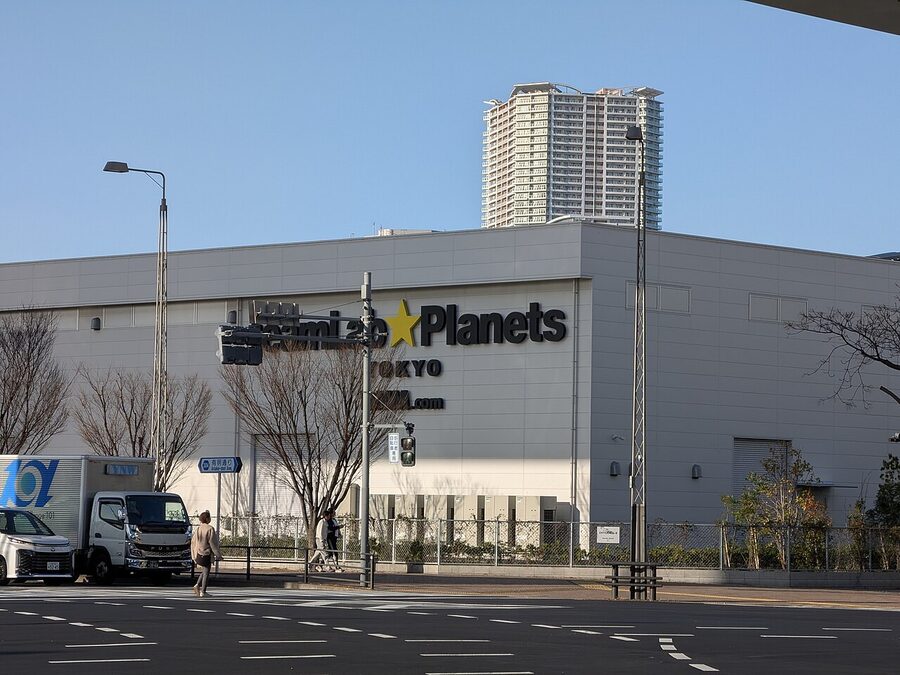
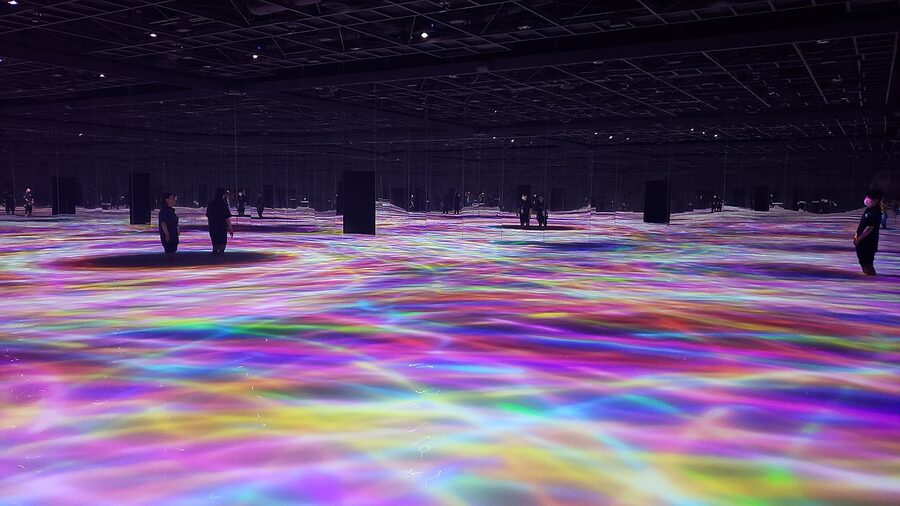
teamLab Planets TOKYO DMM is a permanent-feeling immersive digital art exhibition in Toyosu, east Tokyo. It opened in July 2018 as a temporary follow-up to the old teamLab Borderless in Odaiba. Seven years later it’s been extended so many times that the current end date — the end of 2027 — already feels like a placeholder. I wouldn’t be surprised if it stretches again.
The work is made by teamLab, which isn’t a studio so much as a collective of about 500 programmers, engineers, animators, architects and mathematicians who have been making code-driven art since 2001. The founder is Toshiyuki Inoko. The style is unmistakable — flowers that grow and die in real time on walls, koi that dissolve when you touch them, mirrored rooms that make you feel like you’ve fallen into a Christmas tree. If you’ve seen the Instagram photos with the hanging orchids, those are from here.
There are four indoor “Water” rooms where you walk through shallow warm water, two garden areas (Floating Flower Garden and Moss Garden), and since January 2025 a whole new wing called “Forest” — three connected spaces aimed partly at kids but honestly just as fun if you’re a grown adult. Plan on 90 minutes minimum. Three hours if you want to go through the good rooms twice, which you probably will.
In 2024 it set a Guinness World Record as the most-visited single-artist museum on the planet — 2.5 million people in one year. You feel it on a Saturday. More on that in a minute.

Planets vs Borderless — pick one
This confuses people constantly, including me the first time, so here is the clean version.
teamLab Planets is at Toyosu. That’s this one. Water rooms, barefoot, the orchid room, the koi. Scheduled to close end of 2027 (for now).
teamLab Borderless is a completely different exhibition at Azabudai Hills in central Tokyo, near Tokyo Tower. It reopened there in February 2024 after the original Odaiba version closed in 2022. Borderless is shoes-on, flat floors throughout, wheelchair accessible, and the concept is different — you wander between rooms with no set path, projections migrate from one room to another, and there’s no water. It’s more about looking at beautiful things; Planets is more about walking into them.
My honest take: pick one per trip. They share enough aesthetic DNA that doing both in the same week feels like eating two desserts in a row. If you like the idea of physical sensation — wading through water, squishy floors, orchids lowering around you — go to Planets. If you have mobility issues, travel with small children in strollers, or just want to stare at projections in peace, go to Borderless. If you’re genuinely torn, Planets is the more memorable one for most people. It’s also the one with the Instagram rooms people recognise.
The rooms, one by one
There are seven proper installations in the original “Water” + “Garden” loop, plus the new Forest wing as of January 2025. I’ll go through the original loop in order, because there actually is an order, and then do the Forest separately.
Waterfall of Light Particles
The first room after the lockers. You walk up a dark inclined ramp with a wall of projected white light flowing down it towards you — based, apparently, on an actual waterfall in Shikoku. It’s the warm-up act. You’re not wet yet. You’re not barefoot on the wet side yet. It’s mostly there to reset your brain and get you to slow down.
Soft Black Hole
This is the bit my friend warned me about and I still wasn’t ready. The floor is made of enormous beanbag-style cushions. You have to walk across them in the dark to the other side of the room. When other people move, your footing shifts. It’s genuinely disorienting and I have seen multiple adults giggle like they were seven years old. If you don’t want to do it — pregnancy, bad knees, balance issues, wearing a baby in a carrier — there’s a bypass corridor on the right-hand side. Use it without shame.
The Infinite Crystal Universe
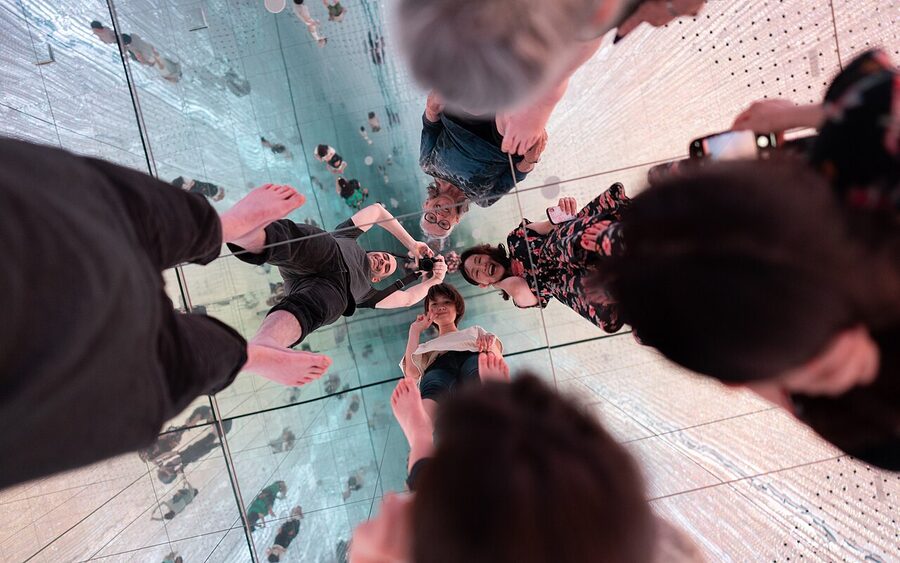
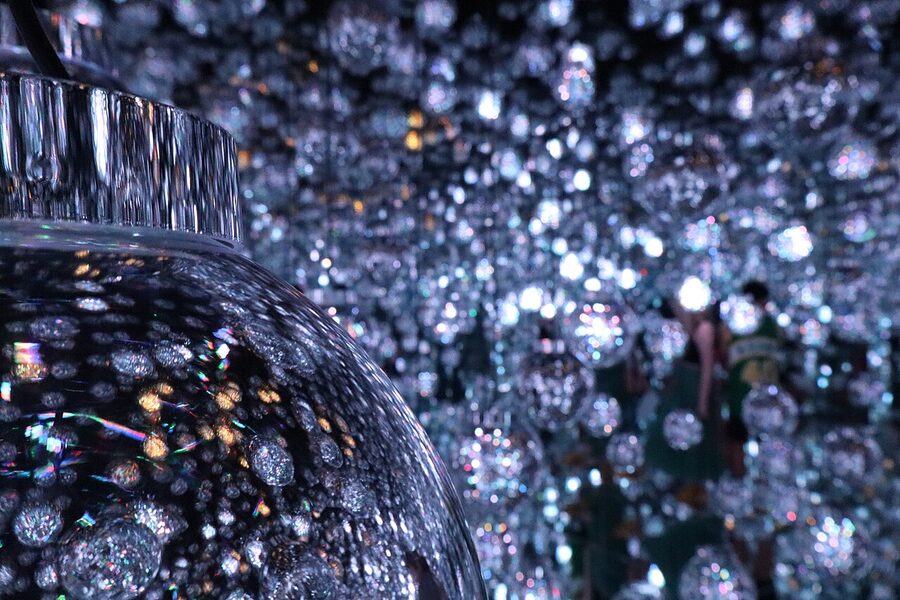
This is the headliner. A large room with hanging LED strings forming a cube of light all around you, with a mirrored floor and mirrored walls, so the LEDs appear to extend infinitely in every direction. The lighting pattern cycles through maybe eight or nine sequences — some are slow fades between pastel colours, some are sharper, one is basically a starfield. Each full cycle is about three minutes. It holds about 20 people at a time and there’s a short queue at peak hours; when you get in, stay for at least two cycles. The photos you’ve seen are all taken here.
Drawing on the Water Surface Created by the Dance of Koi and People
The one with the koi. You wade into a wide shallow pool, the water is warm and about calf-height, and projected koi fish swim across the surface. When they collide with your legs — or with other koi — they burst into flowers. The fish are generated live, so the exact moments are never the same twice. This is the room I stayed in longest on my second visit. There’s something about the warm water and the ankle-level brightness that makes people slow down and stop photographing. A quiet room even when it’s full.

Floating Flower Garden
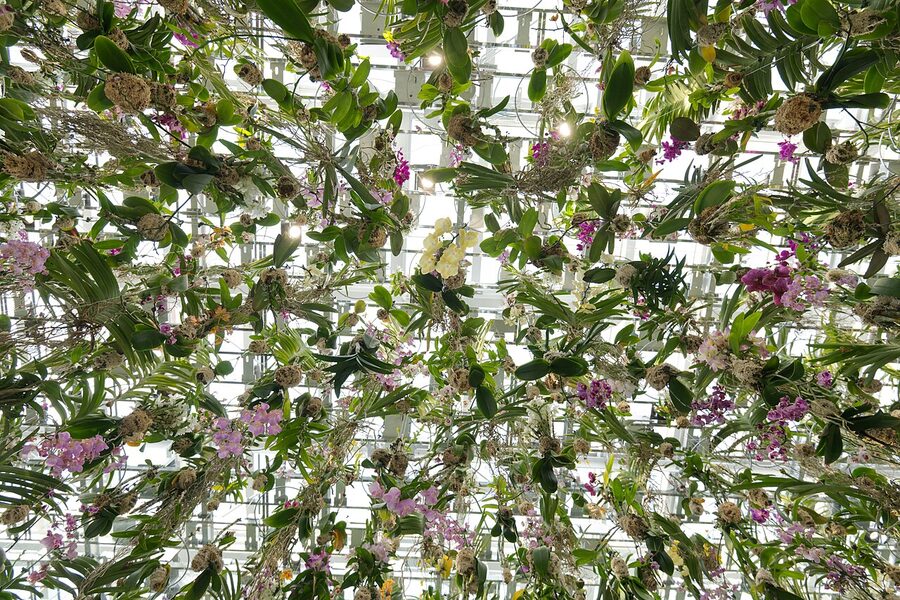
Real orchids. Thousands of them, on strings, arranged as a ceiling-filling canopy around a mirrored central space. When you walk in, the flowers above your head slowly rise to let you through, so you’re always standing inside a clearing that moves with you. I think this is the most technically impressive room in the building, because the orchids are genuinely alive — they’re rotated out regularly and replanted. This room has a capacity limit and runs in timed cycles of about ten minutes; if there’s a queue at the entrance, it moves faster than it looks. The rotation catches out people who arrive five minutes before closing.
Moss Garden of Resonating Microcosms
This is the only outdoor room and the lighting changes everything. You step onto a raised walkway through a bed of real moss dotted with enormous LED eggs — teamLab call them “ovoids” — that shift colour slowly through the day. When someone knocks one over or the wind pushes one, it falls, then rights itself, and releases a slow bell tone. The eggs around it respond with matching tones, so a single nudge can set off a ripple of chimes across the whole garden. Go at dusk if you can. During daylight the moss looks like moss and the eggs look like lawn ornaments. After dark, they glow and it becomes the best-looking room in the place.

The Forest wing (new since January 2025)
This is three adjoining rooms — Athletic Forest, Future Park, and Catching and Collecting Forest — and they are clearly pitched at kids. Bouncing spheres, climbable grids, digital creatures you catch on your phone like a Pokémon game. But I watched a group of four twenty-somethings lose a solid 25 minutes to the room where you sketch a sea creature on paper, hand it to a scanner, and watch it come to life on the wall. It scales. Don’t skip it just because of the target audience.
Before you arrive (dress, bag, phone)
This is the bit that trips up people who haven’t been. teamLab Planets requires a small amount of pre-planning, more than any other museum I can think of in Tokyo. Here’s what matters.
Dress. Wear shorts, or trousers you can roll to the knee. You will be walking through warm water up to mid-calf in two rooms, so anything that can’t roll up will get soaked. If you’re in a skirt or dress, teamLab provide free wrap-around shorts at the entrance — just ask. They’re plain black cotton, they fit over most things, and they exist because several of the rooms have mirrored floors and it would otherwise be a problem. Nobody is shy about borrowing a pair.
Socks. You’ll be in and out of the water area, so tights and anything that covers the full foot is a pain. Regular socks are fine. You can wear them in the garden rooms but not the water rooms. There are towel stations at the water exits to dry off.
Phone. They hand out waterproof plastic wraps at the entrance to the water section. Use them. I’ve seen someone drop a phone into the koi pool and yes, it did survive, but the look on her face was enough warning for me.
Bag. Lockers are free, inside the entry area. They fit a small daypack. Don’t bring a large roller bag — the lockers aren’t huge. Tripods and selfie sticks are banned. Phones are fine; everyone has one out the whole time.
Cuts on your feet. If you have an open wound or anything freshly unhealed, keep it covered. The water is chlorine-treated and will sting.
Phone charge. Bring your phone in at 100%. The visit will drain it faster than you expect — projection-lit rooms, two hours, and lots of photos.
Tickets and how to book
Book online, in advance, through the official ticket site or through Klook or GetYourGuide. Tickets are timed entry — you pick a 30-minute slot — and sell out days ahead in peak periods (Golden Week in late April / early May, summer school holidays, the week between Christmas and New Year, cherry blossom season). Weekday mornings are usually bookable a day ahead. Weekends in peak season, you want to book at least a week out.
Adult tickets currently sit around the ¥3,800 mark, with youth and child discounts, and a higher-priced Premium Pass that lets you skip the line at the entrance. Prices have shifted several times since 2018 — check the official site for the current figure before you book. Children under 4 are free.
I wouldn’t bother with the Premium Pass unless you’re going on a Saturday in summer. With a regular timed ticket, the entry queue moves quickly.
Ticket includes entry only. The on-site Vegan Ramen UZU restaurant is separate, and so is the small “Orchid Glass House” tea room. Both are reachable without a museum ticket — you can eat and then leave if you want, which is a nice quirk.
Getting there (Shin-Toyosu Station)
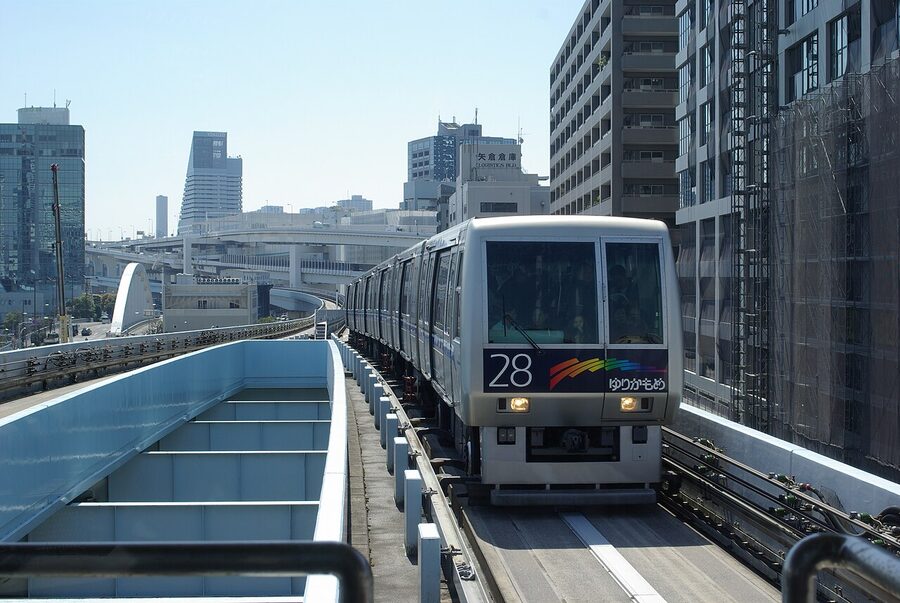
The nearest station is Shin-Toyosu, one stop east of Toyosu Station on the Yurikamome Line — the elevated, driverless train that runs out to the Odaiba waterfront. From Shin-Toyosu it’s a one-minute flat walk to the door. You can see the black teamLab building from the station exit.
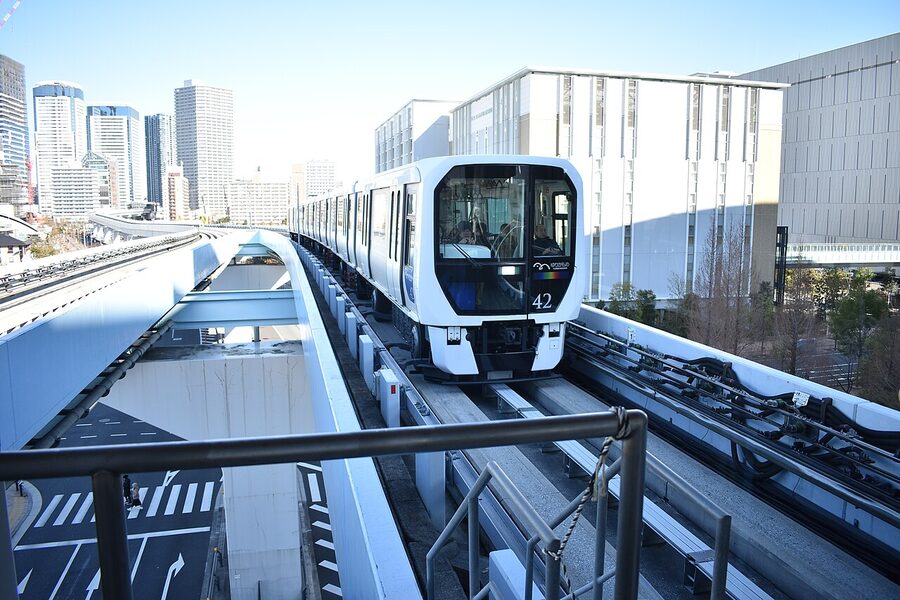
From Shimbashi (where the Yurikamome starts), Shin-Toyosu is about 30 minutes. Tap in with Suica or Pasmo. The Yurikamome is not covered by the JR Pass — it’s a separate private line — but the fare is cheap (about ¥390 one way from Shimbashi) and your IC card works automatically. If you’re coming from anywhere on the JR Yamanote Line, change at Shimbashi. If you’re in Ginza, walk south to Shimbashi Station (about 10 minutes).
Alternative: from Toyosu Station (Yurakucho Line), it’s about a 10-minute walk. Don’t love this one — there’s no scenic payoff and the walk is along featureless roads.
A shuttle bus runs from central Tokyo on some days; most people will find the Yurikamome more reliable. If you’re staying in Shinjuku, Shinjuku to Ichigaya on the Shinjuku Line, then Ichigaya to Toyosu on the Yurakucho Line is the standard route. For more on how the IC card covers everything except the JR Pass, see my guide to Tokyo trains and the Suica card.
When to go
The museum runs roughly 09:00 to 22:00 on weekdays and until 22:00 on weekends, with last entry an hour before close. Exact hours shift by season — check the official site when you book.
The quietest slots are the first two hours of the day (09:00-11:00) and the last two hours (20:00-22:00). The busiest is lunch until mid-afternoon, especially Saturdays. If you have the option, book either the 09:30 or 10:00 slot on a weekday. You’ll have some of the rooms nearly to yourself for the first loop, and the Infinite Crystal room won’t have a queue.
Evenings are almost as good for numbers and better for the Moss Garden, which needs dusk to look right. If you can only do one visit and you don’t mind going after dark, book 19:00-20:00 on a weekday evening.
Avoid Golden Week (late April to early May), New Year, and peak cherry blossom dates. These are the weeks when day-of tickets are impossible and even timed slots sell out a week ahead.
The eight-step visit sequence
- Arrive 15 minutes before your slot. Any earlier and you’ll be told to wait outside; any later and you may lose your slot.
- Scan your ticket at the entry gate. QR code on your phone is fine.
- Take off your shoes in the shoe-locker area. Everyone does this at once, it moves fast.
- Put bags and jackets in a free locker. Keep your phone and the waterproof wrap they’ll hand you. Don’t bring your wallet in — there’s nowhere to buy anything inside.
- Roll up trousers, grab wrap shorts if needed. Staff at the counter will hand them over, no questions.
- Walk the Water loop first. Waterfall → Soft Black Hole → Crystal Universe → Koi water room. This is the order you’re physically led through.
- Return to the drying station, put socks on, and cross to the Garden and Forest rooms. These are dry-feet areas.
- Go back and redo your favourite water room. There’s no rule against it, and the second pass is usually less crowded.
How to book online (four steps)
- Go to the official ticket site. English version is clean and works.
- Pick a date. The calendar shows sold-out days in grey — if grey, try Klook as a backup, sometimes they have separate allocation.
- Pick a 30-minute entry slot. Morning slots are usually cheapest and least crowded.
- Pay with card, get the QR code by email. No need to print — show it on your phone at the entrance. Save it offline in case you lose signal.
Honest reality check
I think teamLab Planets is extraordinary. I also think it’s been copied — there are similar immersive-art pop-ups in London, LA, Berlin, and half a dozen other cities now, and if you’ve been to one of those you’ll feel a small flicker of déjà vu in the Crystal Universe room. Planets is still the original and still, I think, the best. But it’s fair to say the concept is no longer novel.
The other honest note: the Instagram crowd is real. People pose for five solid minutes in the Crystal Universe, which is fine, but it means you’ll queue. If getting “the photo” matters to you, come at 09:30 and head straight to the Crystal room first. If it doesn’t, just enjoy the rooms with people in them — teamLab actually designs with other bodies in mind, and I think the Koi room genuinely needs other people in it to work properly.
A few other things I’d skip or ignore. The Vegan Ramen UZU on site is fine, not great — I’d eat at the market before or after instead. The gift shop is pricey. And if you’ve already been to teamLab Borderless on this trip, give Planets a miss, and vice versa. Two is one too many in the same week.
Practical info at a glance
- Address: 6-1-16 Toyosu, Koto City, Tokyo 135-0061
- Nearest station: Shin-Toyosu (Yurikamome Line), 1 minute walk. Also reachable from Toyosu (Yurakucho / Oedo Line), 10-minute walk.
- Hours: Roughly 09:00-22:00 daily, last entry 21:00 (varies by season — check before booking)
- Adult ticket: Around ¥3,800. Youth (13-17) around ¥2,800. Child (4-12) around ¥1,500. Under 4 free.
- Premium Pass: Around ¥8,400 — skip-the-line, only worth it at peak times
- Duration inside: Plan 90 minutes minimum, 2-3 hours for a full loop with repeats
- Dress: Shorts or rollable trousers; wrap shorts provided free if needed
- Bags: Free lockers. No tripods or selfie sticks.
- Phone: Allowed everywhere. Waterproof wraps provided for the wet rooms.
- Accessibility: The water rooms and Soft Black Hole aren’t fully wheelchair accessible. The garden and Forest rooms are. Check the official accessibility notes before booking if this matters.
- Official site: teamlab.art/e/planets
- Currently scheduled to close: End of 2027 (extended several times — likely to extend again)
What I’d do around Planets
If I had a full day to spend around here, it’d look like this:
05:00-08:00 — Toyosu Market sushi breakfast and tuna auction. Toyosu Fish Market is one stop north on the Yurikamome at Shijo-mae. Go very early — the restaurants at the market open at 05:00 and some of the best sushi breakfasts in Tokyo are there. It’s not as theatrical as old Tsukiji was, but you can still watch the tuna auction from an observation deck if you book ahead.
10:30 — walk or take the Yurikamome one stop back to Shin-Toyosu. Kill half an hour with a coffee.
11:00 — teamLab Planets. Book the 11:00 slot. You’ll be inside from 11:00 to around 13:30 with the morning crowd thinning out as you go.
14:00 — head south to Odaiba on the Yurikamome. About 15 minutes. Odaiba is the big reclaimed-island entertainment complex with a beach, the Rainbow Bridge view, and a scattering of mid-2000s theme-park oddness. I’ve written more about what’s actually worth your time in my guide to Odaiba. Stay for sunset over the bay — the view back at central Tokyo is one of the best free things in the city.
18:00 — eat in Odaiba or head back to Ginza. If you want one more thing that day, Tokyo Skytree is a 30-minute train ride and makes sense if you haven’t done the Tokyo-from-above thing yet. If you’ve had enough for one day, I don’t blame you — Planets is exhausting in the way a theme park is, in that you come out happy and ready to lie down for an hour.
And that’s it. You’ll have had digital koi under your feet, orchids lowering around your head, and a night view of the city you half-invented in a mirror room. Not a bad day.