
I’ve put seven friends into Tokyo hotels in the last four years, all of them first-timers. Only one ever came back angry with me, and that was because I’d convinced him to stay on the wrong side of Shinjuku Station and he didn’t sleep for three nights. The other six are the reason I write this kind of guide. They wanted somewhere safe, somewhere where the front desk understood their bad pronunciation of “I forgot my key”, and somewhere they could collapse after a 12-hour flight without taking three trains and a taxi to find. None of them cared about a rooftop bar. All of them cared about whether the airport bus stopped outside.
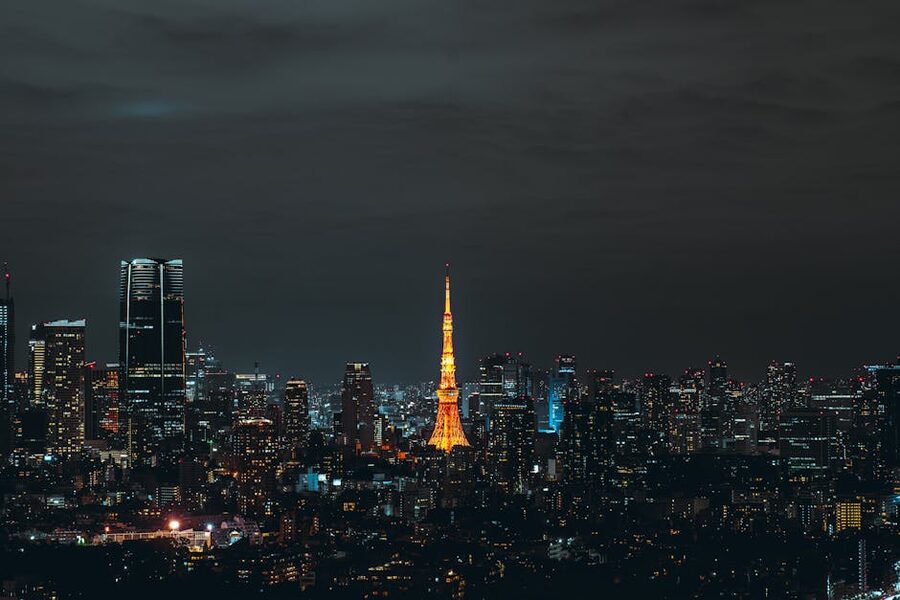
This article is the version of “where to stay” I would have wanted before my first trip. It’s not the cheapest list — for that I’ve got a separate budget-conscious Tokyo hotels guide with capsule and hostel picks. This one is for the nervous first-timer with a reasonable mid-range budget who just wants the trip to work. Expect ¥15,000 to ¥35,000 a night for the hotels in this piece, English-speaking front desks at every single one, and step-by-step airport access from both Narita and Haneda.
In This Article
- What “first-timer” actually means (and why it’s not the same as “budget” or “luxury”)
- The five neighbourhoods, ranked for first-timers
- Shinjuku — the default, and mostly right
- Shibuya / Harajuku — style, energy, and the park
- Tokyo Station / Marunouchi — quiet, organised, day-trip ready
- Ginza — mid-range “luxury”, easy airport access
- Asakusa — the temple trade-off
- The six hotels I actually recommend
- Shiba Park Hotel — the calm under-the-radar pick
- The Tokyo Station Hotel — for the nervous traveller who doesn’t want to take a train
- Hotel Niwa Tokyo — the Japanese-style hotel that’s still easy
- Keio Plaza Hotel Tokyo — the big reliable Shinjuku one
- Mitsui Garden Hotel Ginza Premier — the high-floor Ginza pick that doesn’t break the bank
- Hotel Gracery Shinjuku — the fun, mid-range, Godzilla-and-cinema one
- The areas everyone tells you to stay in that I’d skip on a first trip
- Getting from Narita and Haneda to your hotel without wanting to cry
- Practical info every first-timer wishes they’d known
- How I’d actually book — three steps
- What I’d actually book if I were you
What “first-timer” actually means (and why it’s not the same as “budget” or “luxury”)
Most Tokyo hotel guides assume you’ve already decided whether you want cheap or fancy. First-time travellers don’t think like that. The thing that matters on trip number one is whether things work. Specifically:
- Safety — you can walk back to the hotel at 11pm having lost your sense of direction in Shinjuku and feel completely fine. Tokyo is statistically one of the safest big cities on earth, but staying near a busy lit-up station, not in a quiet residential alley, makes a real difference for a jet-lagged solo traveller.
- English at reception — not staff who speak fluent English. Just staff who can write down a restaurant address in Japanese script for you to show a taxi driver, and who won’t visibly panic when your ICOCA card stops working.
- Airport access without changes — a hotel where the limousine bus from Narita or Haneda stops outside, or where it’s a single train from Tokyo Station / Shinjuku Station, beats one that’s “only ¥3,000 cheaper but a 30-minute schlep with a suitcase”.
- A concierge that books restaurants for you — this is the underrated one. Most popular Tokyo restaurants don’t take walk-ins, English websites are limited, and TableCheck is a fight. A concierge at a mid-range hotel will phone the place for you in five minutes.
- Quiet sleep — you will be jet-lagged. You will wake up at 3am wanting silence. A hotel on a thin shopping street where rubbish trucks reverse-beep at 5am is going to ruin your trip.
None of those things are about money. A ¥9,000 capsule in Akihabara fails on three of them. A ¥40,000 boutique in Nakameguro fails on airport access. The sweet spot for a first trip is a mid-range business or design hotel in one of five neighbourhoods, and that’s what the rest of this guide is.
The five neighbourhoods, ranked for first-timers
Tokyo isn’t really a city, it’s a stack of districts that each behave like their own town. For a first trip, only a handful of those districts actually make sense to sleep in. Here’s how I rank them.
Shinjuku — the default, and mostly right
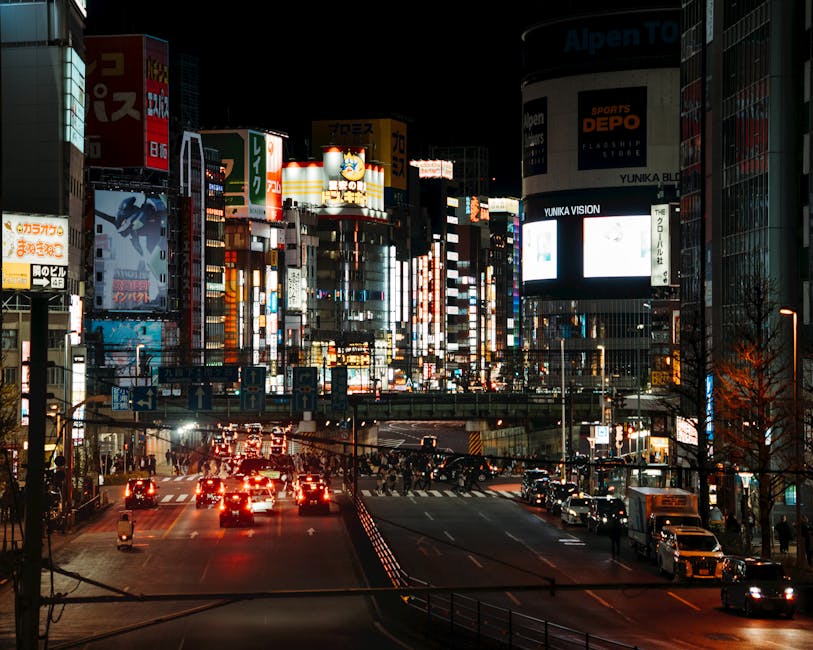
If you only do Tokyo once, sleep in Shinjuku. The station is the busiest in the world and it sounds horrifying, but the hotels are clustered on the west side around the skyscraper district where it’s actually quite calm. From here you’ve got the Narita Express direct, the Limousine Bus from both airports, and most of Tokyo’s metro lines five minutes away. Department stores are downstairs. Twenty-four-hour pharmacies and conbinis are everywhere.
Stay here if: you want one base for the whole trip, you’re doing day trips to Hakone or Kawaguchiko, or you have a flight out of Narita and want the easy train.
Don’t stay here if: you want quiet, romantic, or “old Tokyo” — Shinjuku is none of those.
Shibuya / Harajuku — style, energy, and the park
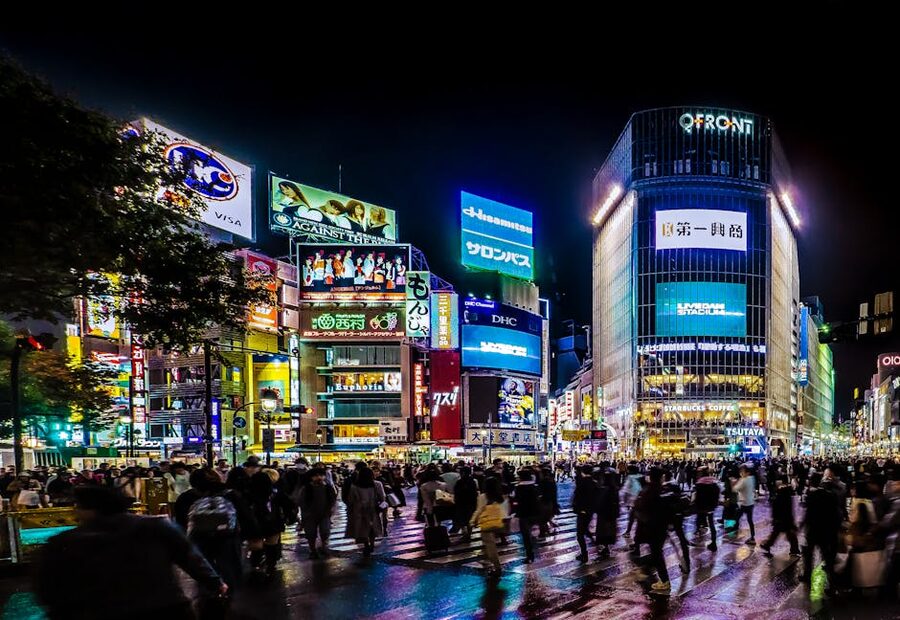
Shibuya and Harajuku are basically one continuous strip these days, joined by Meiji Shrine and Yoyogi Park. The vibe is younger, more shop-led, more design-aware than Shinjuku. Hotels here tend to be smaller and pricier per square metre, but you wake up two minutes from the Meiji Shrine forest, which is the single most calming thing in Tokyo for a jet-lagged morning.
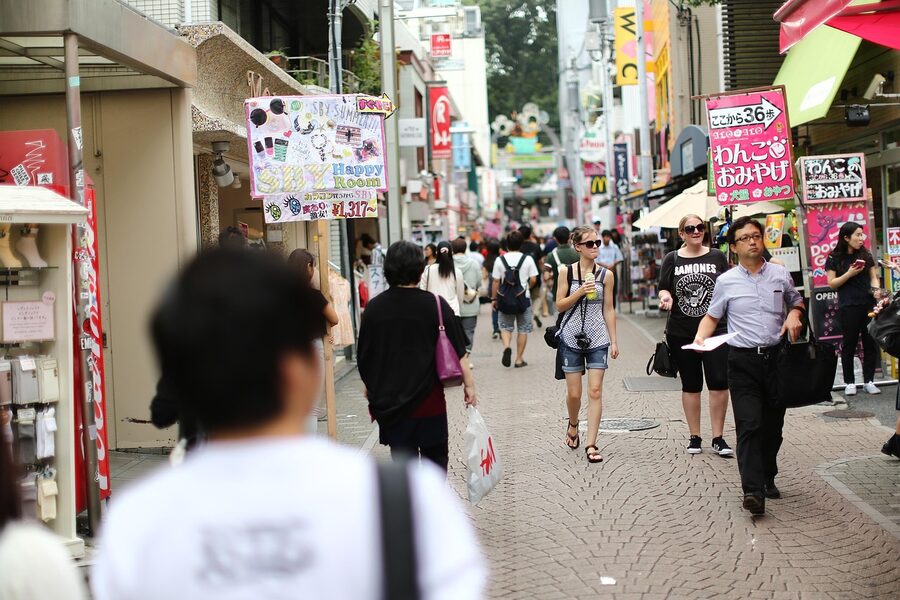
Stay here if: you want shopping, vintage, weekend people-watching, and a daily forest walk.
Don’t stay here if: you need to be near Tokyo Station for early Shinkansen, or you want quiet weekends.
Tokyo Station / Marunouchi — quiet, organised, day-trip ready
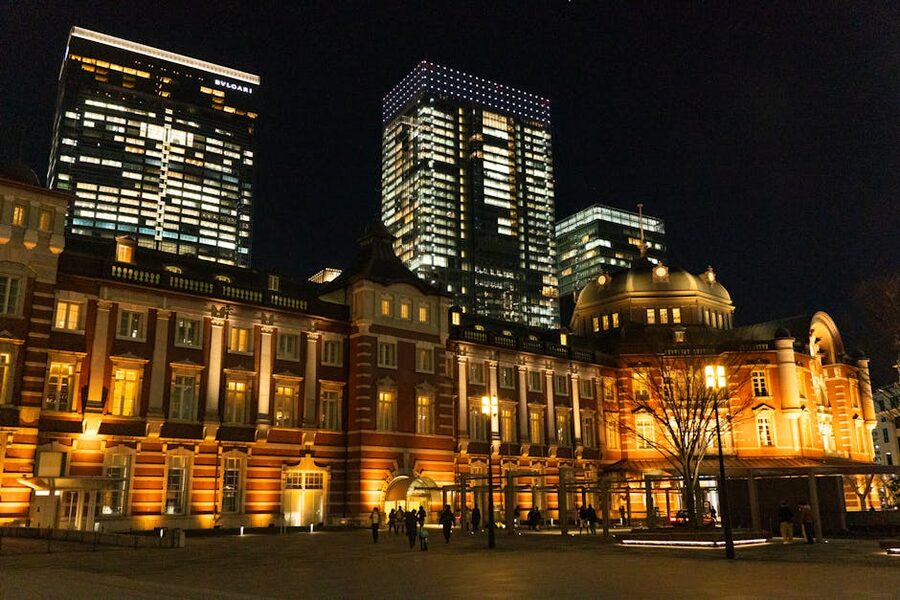
This is my pick for nervous first-timers. Marunouchi is the financial district, which means it’s clean, signposted in English, mostly office workers, and very quiet from Friday evening to Monday morning. Tokyo Station is one of only two places where you can walk straight from the airport bus or Narita Express drop-off into your hotel lobby. The Shinkansen platforms are downstairs. Imperial Palace gardens are a five-minute walk.
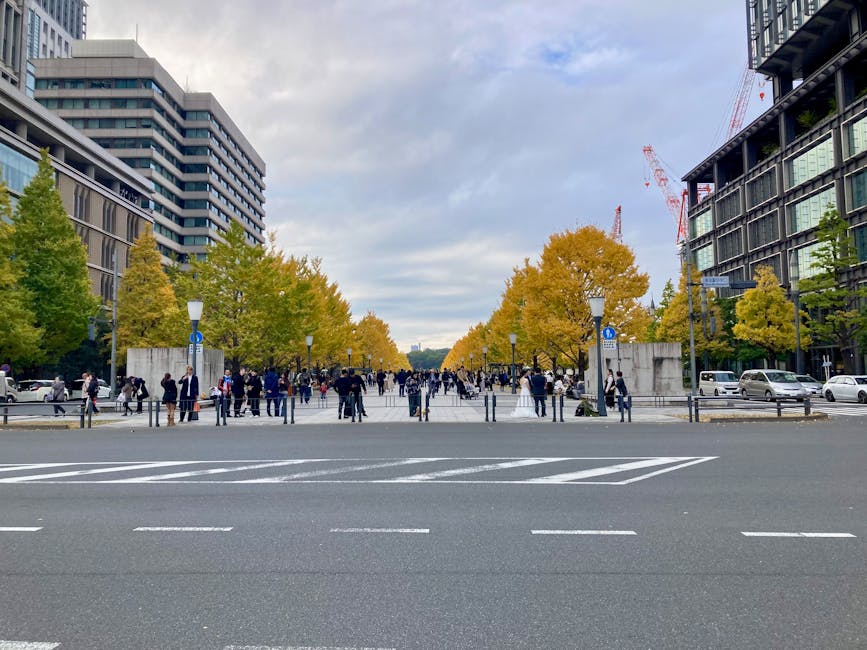
Stay here if: you’re doing day trips by Shinkansen, travelling with parents, nervous about navigation, or have an early Haneda flight back.
Don’t stay here if: you came to Tokyo for nightlife — Marunouchi closes after about 9pm.
Ginza — mid-range “luxury”, easy airport access
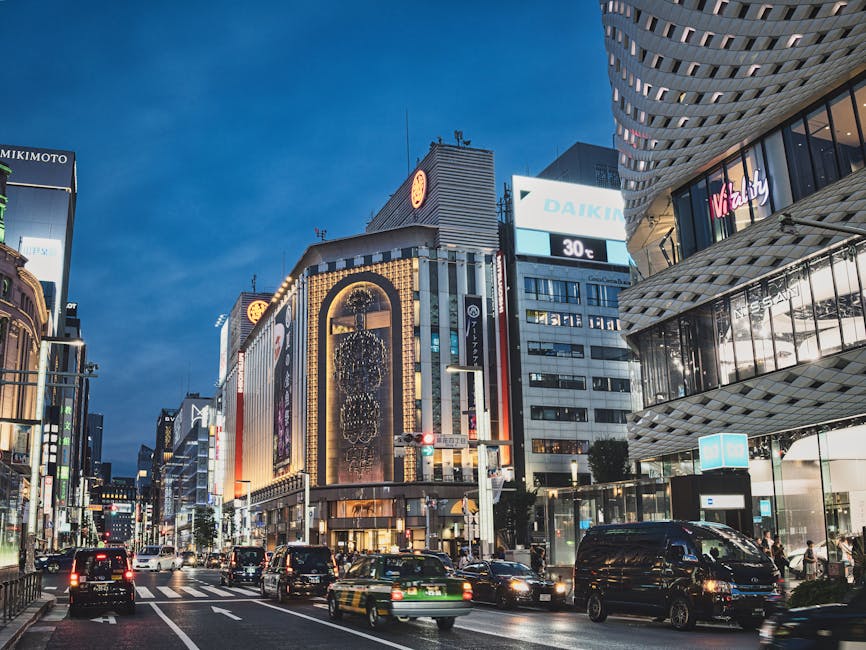
Ginza is what people picture when they think of Tokyo as elegant. It’s wide pavements, expensive shops you don’t have to enter, sushi restaurants where the chef doesn’t speak English but it doesn’t matter, and one of the easiest airport bus routes in the city — both Narita and Haneda Limousine Buses stop at the Marunouchi side and a few drop directly in Ginza. Hotels here are pricier per square metre but the quality bar is high.
Stay here if: you want sushi, theatre (the Kabuki-za is here), or a slightly grown-up trip.
Don’t stay here if: you want neighbourhood texture or anywhere to eat under ¥3,000.
Asakusa — the temple trade-off
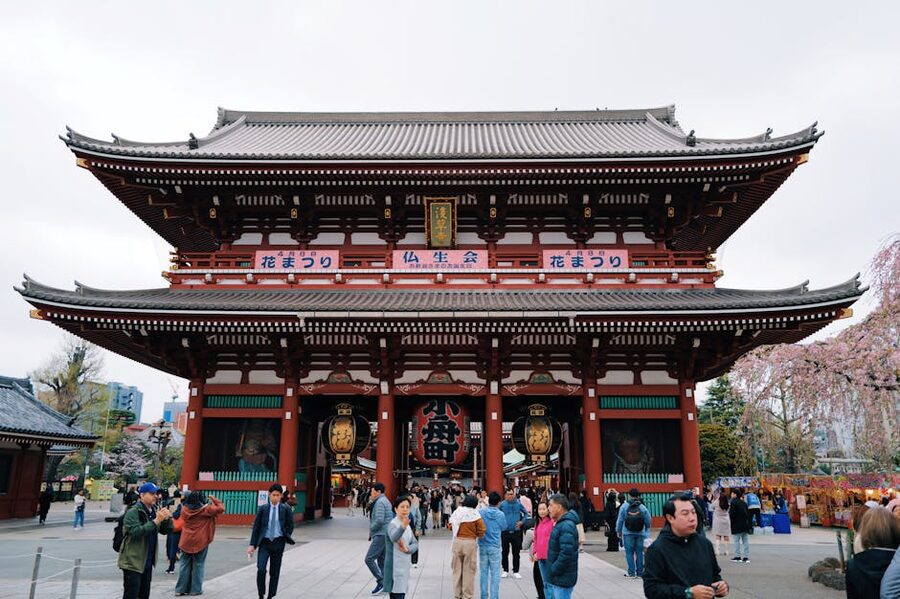
Asakusa is the most “old Tokyo” of the central neighbourhoods, with Senso-ji Temple, Nakamise shopping street, and a much lower-rise feel than the rest of the city. It’s also the most divisive choice for a first trip. The good: you wake up across the road from the most famous temple in Tokyo. The bad: you’re 30+ minutes by metro from Shinjuku, Shibuya, and a lot of the food you’ll want to eat at night, and the area genuinely shuts down by 10pm.
Stay here if: you’re a temple-and-history traveller, or you’ve got a Skytree obsession.
Don’t stay here if: it’s your only base and you’re doing the full Tokyo greatest hits — the daily commute will eat into you.
The six hotels I actually recommend
These are my mid-range first-timer picks across the five neighbourhoods above. All of them have English-speaking reception, all are walking distance from a major station, and all are in the ¥15,000–¥35,000/night band most of the year. I’ve stayed at four of them personally and put friends into the other two.
Shiba Park Hotel — the calm under-the-radar pick
Nearest station: Onarimon (Mita Line) — 2 min walk | Daimon (Asakusa Line) — 6 min walk
Best for: couples, design lovers, anyone landing at Haneda
From ¥18,000/night
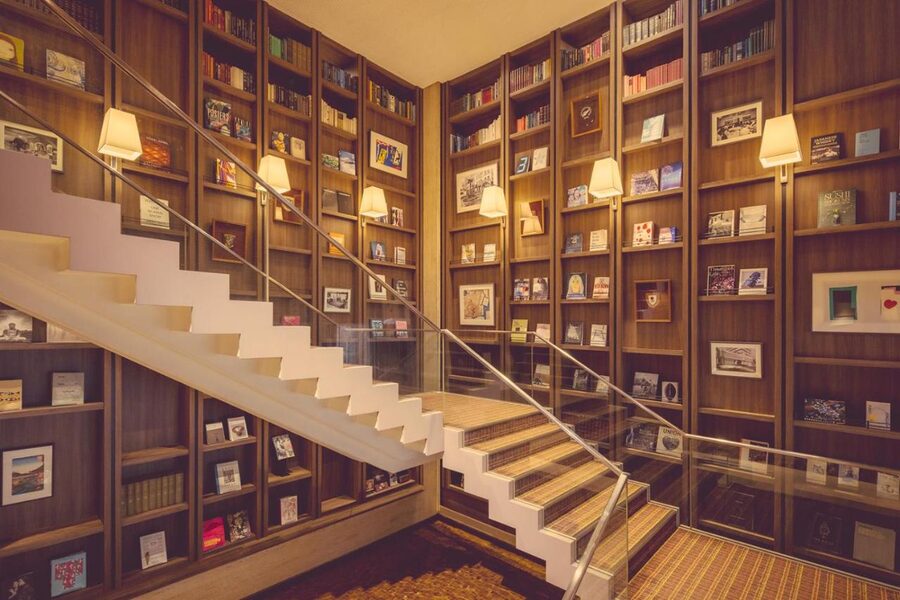
Shiba Park sits at the foot of Tokyo Tower in Minato — quiet, residential, full of leafy temple grounds, and a 20-minute direct ride from Haneda Airport on the Keikyu line. The hotel itself was renovated in 2020 with a focus on books, plants, and a slightly Scandinavian feeling that’s unusual in central Tokyo. Rooms are small by Western standards (the Comfort Twins are around 22m²), but the bathrooms have proper tubs and the linens are some of the best I’ve slept in for under ¥25,000.
What makes it a first-timer hotel rather than just a nice hotel is the front desk. They book restaurants, write taxi notes in Japanese, will store your luggage for days after checkout, and in my experience answer email replies in fluent English within an hour. The on-site cafe-restaurant does a proper Japanese breakfast that I’d actually order off-property.
The trade-off: you’re not in the middle of the action. Onarimon and Daimon are quiet stations, which is exactly what you want at 11pm but means you’ll be on the metro for 15 minutes to get to Shibuya or Shinjuku for dinner.
What’s good:
- Tokyo Tower lit up two blocks from the front door — you’ll walk past it twice a day without trying
- Front desk speaks better English than my Tokyo bank manager
- Some of the highest-quality breakfast included with bookings I’ve had at this price point
What’s not:
- The neighbourhood has nothing happening at night — you’ll always be commuting for dinner after 8pm
- Standard rooms feel snug; if you’re sharing with someone tall, upgrade to a Superior
Book it: Shiba Park Hotel on Booking.com
The Tokyo Station Hotel — for the nervous traveller who doesn’t want to take a train
Nearest station: Tokyo Station (everything) — inside the building
Best for: first-time nervous travellers, parents with kids, Shinkansen day-trippers
From ¥32,000/night
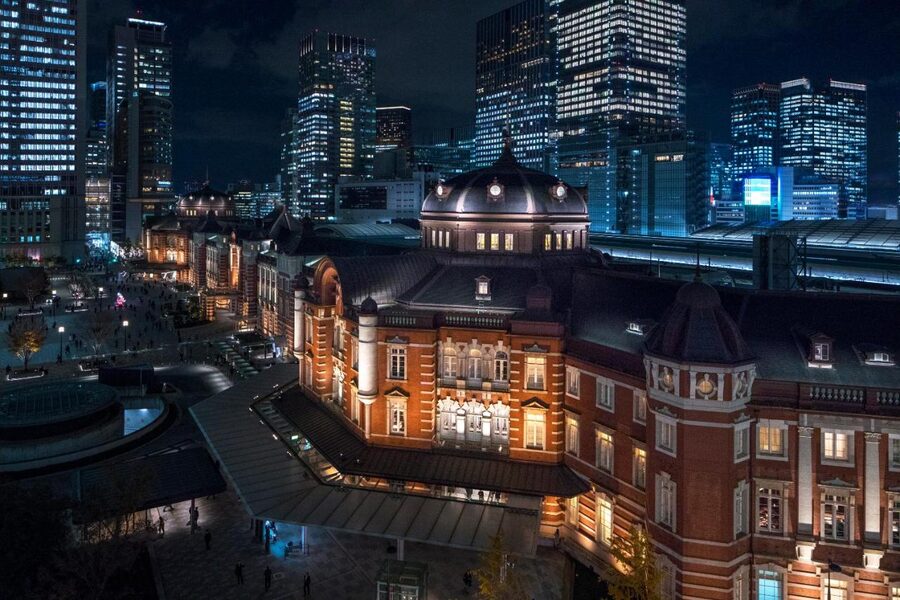
This is the hotel I recommend most often, and the most-booked one off the back of this site. It’s literally inside Tokyo Station — the Marunouchi side, in the restored 1914 red-brick building — so you walk off the Narita Express, take an internal escalator up, and you’re at the front desk. No outside walk with luggage. No metro change. Nothing.
It’s also the most expensive of the six picks here, sitting at the upper end of the mid-range band. Justified, in my view, because it solves the single biggest first-day Tokyo problem (luggage transit) and the rooms — even the standard ones, which start at 27m² — are unusually large. Bathrooms have separate showers and tubs, the on-site Mauro Colagreco breakfast is genuinely a destination, and the hallways have that European-hotel feel because the architecture pre-dates everything else in this list by 80 years.
Practical thing nobody tells you: ask for a room on the Marunouchi (palace) side, not the Yaesu side. The Marunouchi rooms look out onto the brick facade and the imperial gardens. Yaesu rooms look at a roof.
What’s good:
- Genuinely zero-step access from Narita Express, Shinkansen, and the Limousine Bus from both airports
- Rooms much larger than usual for central Tokyo, with proper sound insulation
- Concierge that handles restaurant bookings, day trips, and luggage forwarding without being asked twice
What’s not:
- The pricing peaks in cherry blossom and autumn weeks — book three months out or expect ¥45,000+
- The “inside a station” location means there’s no neighbourhood texture; you’ll need to walk to Marunouchi or Ginza for evening atmosphere
Book it: The Tokyo Station Hotel on Booking.com
Hotel Niwa Tokyo — the Japanese-style hotel that’s still easy
Nearest station: Suidobashi (JR Chuo / Mita Line) — 4 min walk | Jinbocho (Hanzomon) — 7 min walk
Best for: design lovers, first-timers wanting traditional Japanese touches without a ryokan stay
From ¥22,000/night
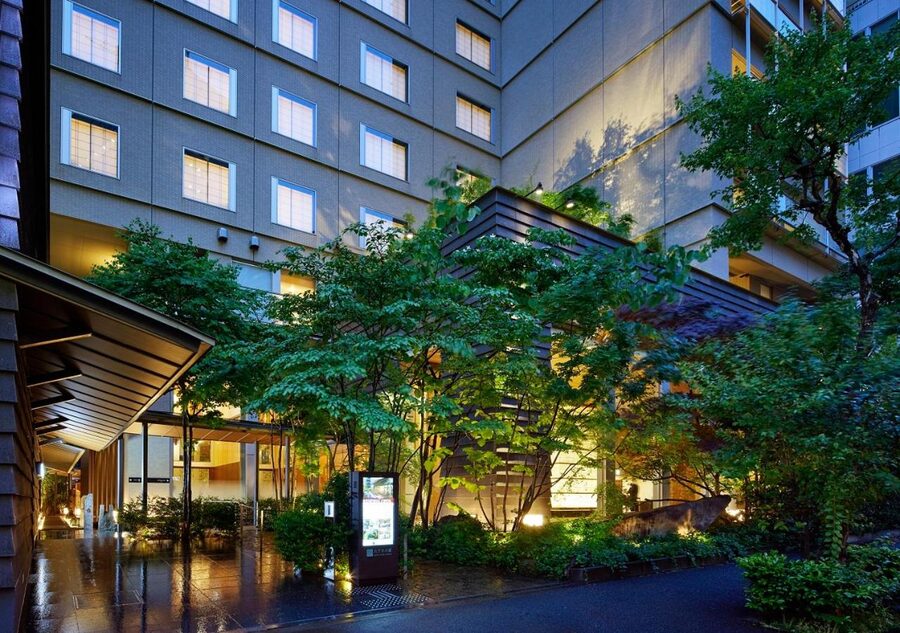
Hotel Niwa (“garden hotel”) is the design-led, traditional-modern Japanese option I send first-timers to when they want the Japanese aesthetic without the floor mattresses, shared baths, or ryokan etiquette. It sits between Akihabara and the Imperial Palace in Kanda — a part of central Tokyo that doesn’t get tourist traffic and feels like an actual neighbourhood. The lobby is dark wood, paper lanterns, and a small inner courtyard. Rooms have shoji-screen-effect partitions, futon-style bedding on Western frames, and the kind of attention to detail you don’t normally find under ¥30,000.
The location quietly delivers. Suidobashi station puts you a single ride from Tokyo Station, two stops from Akihabara, and within a 10-minute walk of Jinbocho’s used bookshops — one of the best half-day wanders for first-timers who want to see “real Tokyo”.
Worth knowing: the building is older and the elevators are slow during morning checkout. Add 10 minutes to your “leaving for the airport” time and you’ll never have to think about it again.
What’s good:
- The most aesthetically Japanese hotel in this guide that still has a proper Western bed and English-speaking reception
- Walking distance to Imperial Palace, Akihabara, Jinbocho — the city’s three quietest big sights
- Tea and snacks in the lobby in the late afternoon, included in the rate
What’s not:
- Older lifts mean check-in/checkout queues, especially Friday and Sunday mornings
- Slightly off the Yamamoto Line — you’ll need to memorise one local line if you’re moving around a lot
Book it: Hotel Niwa Tokyo on Booking.com
Keio Plaza Hotel Tokyo — the big reliable Shinjuku one
Nearest station: Tochomae (Oedo Line) — 1 min walk | Shinjuku (everything) — 5 min walk
Best for: families, parents with one kid, anyone wanting a proper “international hotel” experience
From ¥20,000/night
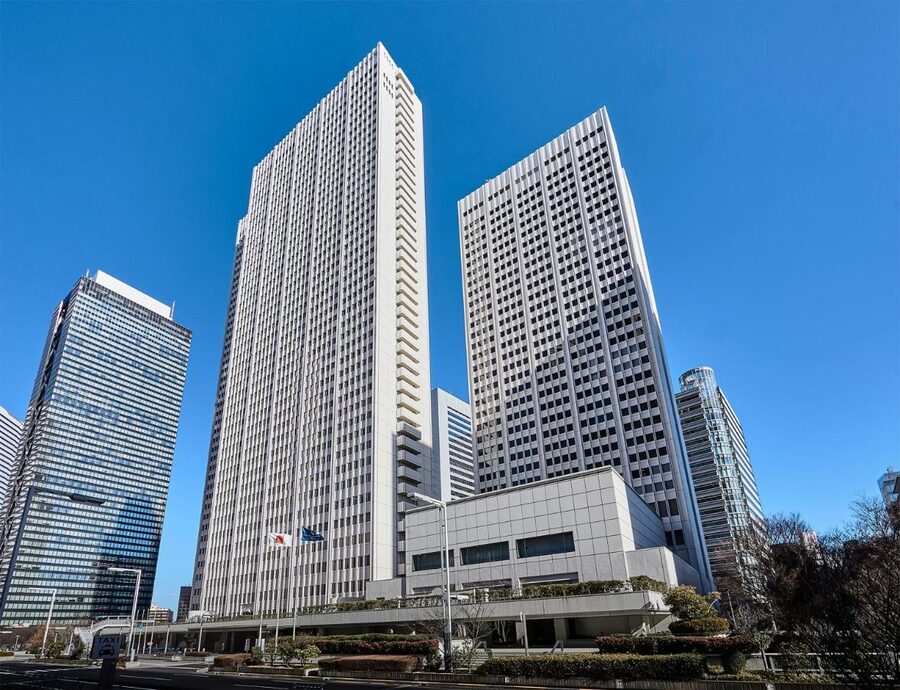
Keio Plaza is the giant, ageing-but-classic, very-much-a-real-hotel Shinjuku option. 47 floors, two towers, 1,400+ rooms, every kind of restaurant on site, English information desk in addition to the front desk, and — most useful for first-timers — the Tokyo Limousine Bus from both Narita and Haneda stops outside the lobby door. You don’t have to take a train at all on arrival or departure.
Rooms vary wildly. Avoid the “Standard” rooms in the original tower (small, dated, no view); pay the ¥3,000 upgrade for an “Executive” room or anything in the South Tower above the 30th floor. From there you get the Mt Fuji view on a clear day, which is the photo your phone will thank you for.
This is also the hotel I’d send anyone travelling with one child for the first time. There’s a Japanese-style themed family room, a swimming pool (rare in central Tokyo), and the bathrooms are big enough to actually bathe a kid in.
What’s good:
- Limousine Bus to both Narita and Haneda stops at the front door — no wheelie-bag-on-trains stress
- One of the few central Tokyo hotels with a real swimming pool
- Multilingual concierge that’s used to first-timers and answers basic Japan questions without judgement
What’s not:
- It’s a 1970s building — even with renovations, the standard rooms feel of their era
- 1,400 rooms means peak-hour breakfast queues; eat at 7am or 9.30am, never 8
Book it: Keio Plaza Hotel Tokyo on Booking.com
Mitsui Garden Hotel Ginza Premier — the high-floor Ginza pick that doesn’t break the bank
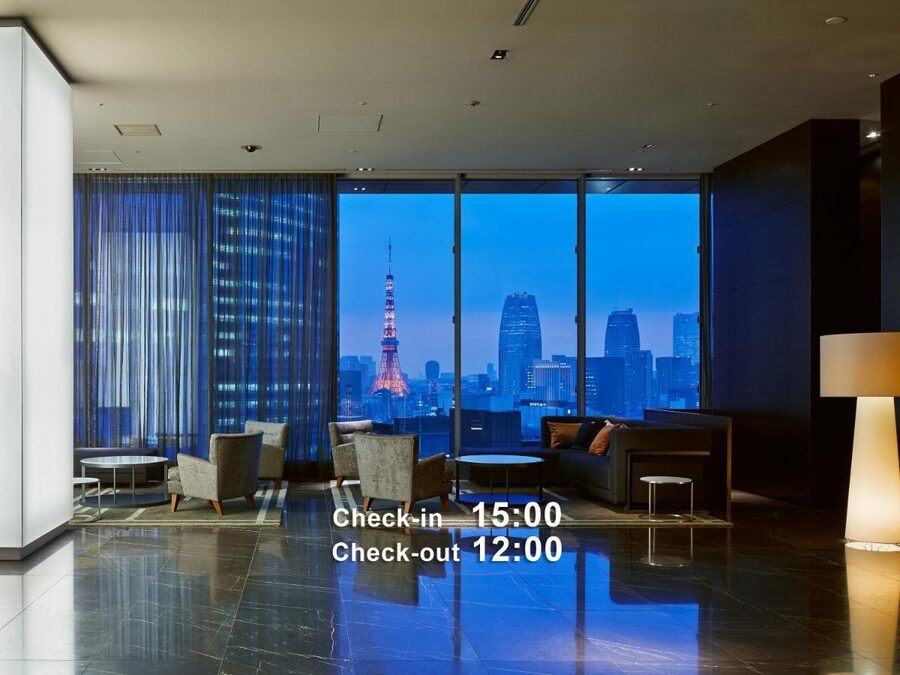
Nearest station: Shimbashi (JR / Ginza / Asakusa Line) — 3 min walk | Ginza (Marunouchi / Hibiya) — 8 min walk
Best for: couples, solo women, anyone wanting Ginza without paying The Peninsula prices
From ¥25,000/night
Mitsui Garden is a Japanese mid-range chain that’s incredibly consistent — every property feels like it was designed in the same studio, with the same pale wood, the same surprisingly good amenities, and the same unfussy professionalism at the front desk. The Ginza Premier is the chain’s flagship: a tall building where every room is on floor 16 or above, with skyline views from the bath and a 16th-floor lobby that has the best free coffee-and-tea station of any hotel I know in Tokyo.
The reason this is on a first-timer list and not a luxury list is that it does the practical things well. Reception writes you a Japanese-script address card if you’re heading somewhere a taxi driver won’t recognise. There’s a free amenity bar in the lobby (skincare, hair tools, sleep masks) where you take what you need. The Limousine Bus from Haneda stops a 5-minute walk away at the Imperial Hotel.
It’s also the hotel I’d recommend to a solo woman travelling Tokyo for the first time. The Shimbashi side of Ginza is very well-lit, very walkable, and the front desk is staffed 24 hours with English-fluent staff who treat solo women travellers as completely normal — because they are, this is Tokyo.
What’s good:
- Every room above the 16th floor — the Tokyo skyline view from the bathtub is genuinely something
- Free amenity bar (skincare, sleep masks, phone chargers) in the lobby — useful when you’ve forgotten something
- Calm, well-lit walk to and from Shimbashi station at any hour
What’s not:
- The breakfast buffet is fine but not a destination — skip the buffet rate and eat at the basement food halls of Mitsukoshi or Matsuya instead
- Standard rooms are still small (around 19m²); the upgrade to a King is worth it
Book it: Mitsui Garden Hotel Ginza Premier on Booking.com
Hotel Gracery Shinjuku — the fun, mid-range, Godzilla-and-cinema one
Nearest station: Seibu-Shinjuku — 3 min walk | Shinjuku (everything) — 7 min walk
Best for: first-timers who want centre-of-the-action energy, families with older kids
From ¥15,000/night
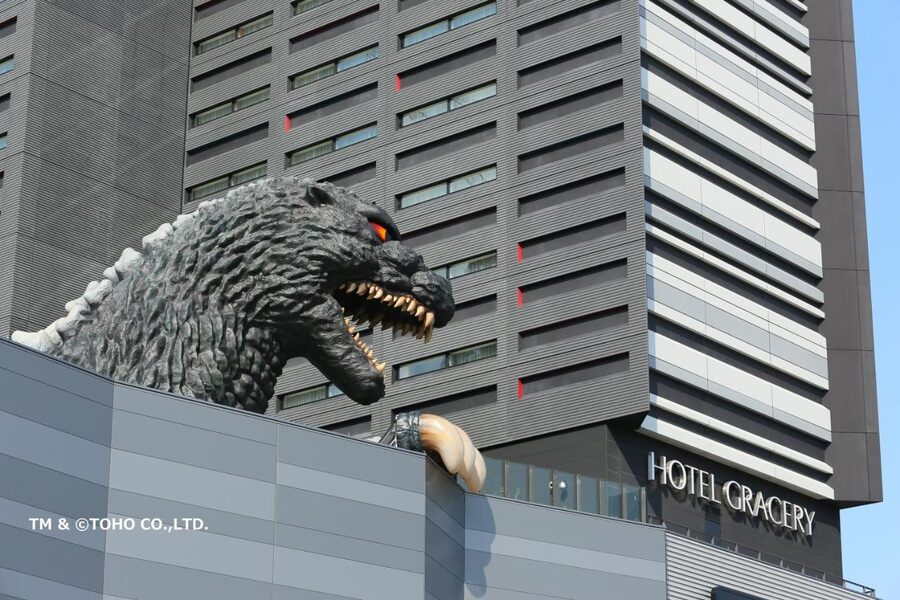
Gracery is on the cheaper end of this list and gets you right into the heart of Kabukicho, on top of the Toho Cinema (with the Godzilla figure on the roof), with all the restaurants and konbinis of east Shinjuku within a four-block radius. It’s not glamorous, the rooms are small, but it’s reliable, English-friendly, and absolutely the easiest hotel in Tokyo to wander out of at midnight in search of ramen.
The trade-off you’re making here is in exchange for that location: Kabukicho is the loudest neighbourhood in Tokyo. It’s not unsafe, but it’s busy and lit up until 3am, and rooms below the 12th floor get the noise. Pick a room on the 18th floor or higher and the noise drops to nothing — and on the higher floors you actually get a Mt Fuji view to the west.
One useful detail for nervous first-timers: the front desk speaks fluent English, will hold your luggage from 6am, and the Skyliner-equivalent Limousine Bus from Narita stops on the Yasukuni-dori side, which is about a 4-minute drag with a suitcase.
What’s good:
- The cheapest hotel on this list while still hitting all the first-timer criteria
- Centre-of-Shinjuku location — you can stumble back at 1am without taking a train
- High-floor rooms (18+) have surprisingly good Mt Fuji views to the west
What’s not:
- Kabukicho-loud at street level — anything below the 12th floor will be noisier than you want
- The Godzilla head roars on the hour through the day. Feature, not a bug, but worth knowing
Book it: Hotel Gracery Shinjuku on Booking.com
The areas everyone tells you to stay in that I’d skip on a first trip
Three districts come up in every “where to stay Tokyo” article that I genuinely think don’t make sense for a first-timer. Skipping them isn’t snobbery, it’s logistics.
Roppongi. Famous for nightlife, expensive hotels, and being a 40-minute commute from anything you actually want to see. Unless you’re booking the Ritz-Carlton or have a specific work reason to be there, the trade-off in train time vs every other neighbourhood doesn’t add up.
Akihabara / Ueno. Lots of cheap business hotels, but the area is basically empty at night and surprisingly far from Shinjuku, Shibuya, and Harajuku. Fine for the second trip when you’ve already seen the headline sights. Not great as your one base.
Shinagawa. Listed in every guide because it’s a Shinkansen stop and an easy Haneda transit. But the neighbourhood itself is offices and a couple of shopping malls — there’s nothing to do once you’re back from your day. Pick Tokyo Station instead and get the same Shinkansen access in a much more interesting district.
Getting from Narita and Haneda to your hotel without wanting to cry
This is the bit nobody plans properly on a first trip and the bit that breaks more first nights than anything else. Some specifics, because the choice depends on which hotel above you’ve booked.
From Narita (NRT):
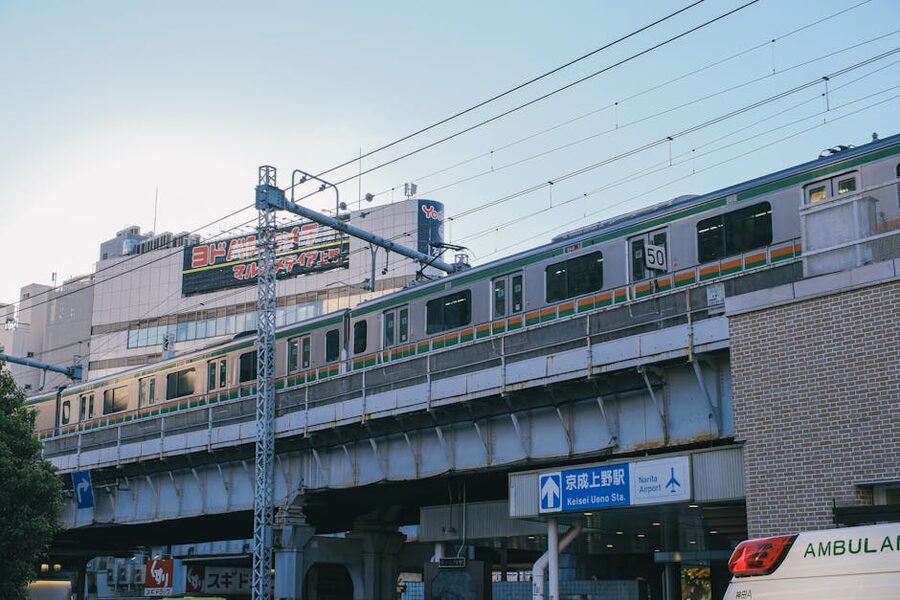
- Narita Express (N’EX) — direct to Tokyo Station (60 min, ¥3,070) and Shinjuku (80 min, ¥3,250). The right call if you’re at The Tokyo Station Hotel, Hotel Niwa, Mitsui Garden Ginza Premier, or Keio Plaza. Reserve seats — it’s not optional, it’s how the train works. Tickets at the station counter on arrival are fine.
- Tokyo Limousine Bus — door-to-door at most large hotels including Keio Plaza, the Imperial (5 min walk to Mitsui Garden), Shiba Park (a 5-minute walk from a major bus stop), and others. Around ¥3,600 from Narita. The right call if you’ve got two suitcases, are travelling with a child, or are jet-lagged enough that “one more train” sounds like cruelty.
- Keisei Skyliner — the cheapest fast option to Ueno (41 min, ¥2,580). Only worth it if you’re heading to Asakusa or specifically Ueno; otherwise you’ll need a metro change.
From Haneda (HND):
- Tokyo Monorail — to Hamamatsucho (13 min, ¥520), then JR or metro change. Cheap and fast but with the change.
- Keikyu Line — direct to Shinagawa (12 min, ¥330) or Asakusa (40 min, ¥620). The right call if you’re at Shiba Park (4-min walk from Sengakuji or transfer at Sengakuji) or anywhere on the Asakusa Line.
- Tokyo Limousine Bus — door-to-door, around ¥1,200–¥1,400 from Haneda. Stops at Keio Plaza, the Imperial, the Marunouchi side of Tokyo Station, and Asakusa.
If you’re arriving on a long-haul flight and it’s your first ever Tokyo trip: take the Limousine Bus. The price difference vs the train is ¥500 to ¥2,000, and the difference in stress is enormous when you’ve been awake for 19 hours.
Practical info every first-timer wishes they’d known
Check-in is always 15:00. If you land at 7am, you cannot get into your room. Every hotel in this list will store your luggage from 6am free of charge — drop the bags, take a shower at the gym near the station if you have one, and start your day.
Cancellation policies are usually generous. Most of these hotels offer free cancellation up to 24–72 hours before check-in if you book the standard rate (not the prepaid one). For a first trip, always book the cancellable rate even if it’s ¥1,500 more — flight changes happen and Japan’s typhoon season can shift travel dates with no notice.
Peak pricing windows. Cherry blossom (last week of March, first week of April), Golden Week (29 April – 5 May), Obon (mid-August), and the autumn leaves window (mid-November in Tokyo) all see prices double or triple. Book at least three months ahead for those weeks. The cheapest weeks across the year are mid-January, early February, and the second half of June (rainy season).
Ask the concierge to book your restaurants the day you arrive. This is the single most under-used hotel service in Tokyo. The hotels in this list will phone restaurants in Japanese for you, including the popular ones with no English booking system. Walk up to the desk on day one with a list of three places you want to try, and they’ll handle it.
IC cards. Buy a Suica or Welcome Suica at the airport when you land — every hotel front desk will assume you already have one. It’s the same card for trains, metro, buses, conbinis, and most vending machines.
Getting to the airport on departure. Most hotels above offer paid luggage forwarding (yamato or sagawa) to the airport for around ¥2,000–¥3,000 a bag. Pack a day bag, drop the suitcase the morning before, and travel light to the airport on the train. It’s the move every Japan regular uses and it transforms a checkout day.
How I’d actually book — three steps
- Pick the neighbourhood first, the hotel second. Decide if you want centre-of-action Shinjuku, calm Marunouchi, design-led Kanda, or grown-up Ginza. The neighbourhood will narrow it to two hotels in this list.
- Check Booking.com on the standard cancellable rate, not the prepaid one. Compare the same dates on the hotel’s own website — about a third of the time the hotel is cheaper direct, especially for Mitsui Garden and Keio Plaza, where members get a 5–10% discount.
- Email or message the hotel two weeks before arrival with your flight details and one or two restaurant requests. Every property in this guide replies in fluent English within 24 hours, and the bookings they secure for you are the difference between a good Tokyo trip and a great one.
What I’d actually book if I were you
Here’s the matrix I use when friends ask. Pick the row you fit, book the hotel.
| You are… | Hotel | Why |
|---|---|---|
| A couple, first trip, want one base | Mitsui Garden Hotel Ginza Premier | Skyline views, calm Ginza walks, easy Haneda access, 25m² rooms |
| A solo woman, slightly nervous | Mitsui Garden Hotel Ginza Premier | Well-lit walks, 24-hour English-fluent reception, very-easy airport bus |
| Parents travelling with one kid | Keio Plaza Hotel Tokyo | Pool, family rooms, both airports’ Limousine Bus at the door |
| Nervous about navigating, doing day trips | The Tokyo Station Hotel | Shinkansen and Narita Express literally inside the building |
| Want centre-of-action, on a tighter budget | Hotel Gracery Shinjuku | From ¥15,000, in the middle of east Shinjuku, English-speaking |
| Want the calm “real Tokyo” feel | Shiba Park Hotel or Hotel Niwa Tokyo | Quiet streets, design-led, both walking distance to a major sight |
If you’re staring at this list and still cannot pick: book Mitsui Garden Hotel Ginza Premier and don’t think about it again. It’s the option that fails for the fewest types of first-timer.
And if you’ve decided you want to keep the budget tight after all, my budget-conscious Tokyo hotels guide covers the proper sub-¥12,000 hostels and capsules with the same first-timer lens. Useful background reading for any trip is the official Go Tokyo transport guide for cards, passes, and lines, and my own neighbourhood pieces on Shinjuku, Ginza, and Tokyo Station if you want to look at the streets you’ll be walking out of every morning.