The specific sound of a sushi chef shaping nigiri — the slight slap of tuna against rice, the wet click of fingers against the counter, the low “hai” when the plate is slid across — is the soundtrack of a Ginza lunch counter at 12:15 on a Tuesday. I am a terrible orderer of sushi. I have, on multiple occasions, forgotten the word for the fish I wanted and pointed to something and eaten whatever arrived. I have also, once, spent ¥28,000 on lunch because I let a chef read the room wrong and thought “sure why not” was an acceptable response to “shall we keep going”. I tell you this so you know I am not writing from the Michelin pedestal. I am writing from the stool at the end of the counter, slightly over budget, with a bit of wasabi on my cheek.
This guide is written for the first-timer with a week in Tokyo and a realistic budget — the traveller who wants to eat sushi properly at least three times but does not have a concierge, a reservation from three months ago, or ¥50,000 per person to spend on a single meal. Tokyo’s sushi spans roughly five price tiers. I will walk you through each, tell you exactly what you get at each price, and be honest about which ones are not realistically available to you. There is an enormous amount of nonsense on the internet about Sukiyabashi Jiro, so I will deal with that too.
In This Article
- The five tiers of Tokyo sushi
- Kaiten-zushi, the first-timer default
- How to order at a kaiten (the touchscreen method)
- The four kaiten chains and what they each do well
- Standing sushi, the local’s quick lunch
- Neta counters, where I eat most often
- Neta counters to look up
- Mid-range reserved omakase (¥8,000–15,000)
- How to book a reservation at this tier
- High-end sushi and the Sukiyabashi Jiro problem
- High-end shops my sources actually got into
- Tsukiji outer market, breakfast sushi
- How to do the Tsukiji sushi breakfast
- Toyosu market, the wholesale side
- How to actually eat nigiri
- The four steps
- Gari, wasabi, soy sauce — the three things on the counter
- A short glossary so you can read a sushi menu
- Fish in season — what to order when
- Practical info at a glance
- How I’d eat sushi across three Tokyo days
- What to skip
The five tiers of Tokyo sushi
The easiest way to think about Tokyo sushi is as a price ladder. Each rung is a different experience, and all five are worth trying if you have the stomach and the yen.
- Kaiten-zushi (conveyor belt): ¥130–500 per plate, ¥1,500–3,000 for a full meal. Sushiro, Kura Sushi, Hamazushi. Order on a touchscreen, pay at the machine.
- Standing sushi (tachi-gui): ¥200–500 per piece, ~¥3,000 for a set. You stand at a counter for ten minutes, eat well, leave.
- Neta counter (casual nigiri bar): ¥3,000–6,000 for a 10–12 piece lunch set at a small counter with a proper chef. Examples later.
- Mid-range reserved omakase: ¥8,000–15,000 per person. Reservation 2–4 weeks ahead. This is where I go for a nice dinner.
- High-end omakase: ¥20,000–60,000. Ginza and Roppongi concentration. Reservations 1–3 months ahead, often tourist-inaccessible without a Japanese introduction or concierge.
Honest opinion up front: you do not need tier 5 to understand Tokyo sushi. A tier 1 kaiten lunch plus a tier 3 counter dinner will give you 80% of the education at maybe 15% of the cost. I rank the tiers by value, not price, and the mid-tiers win.
Kaiten-zushi, the first-timer default
If it is your first night in Tokyo and you are jet-lagged and hungry, go to a kaiten-zushi. You will pay ¥1,500, eat fifteen plates of sushi, press a button for hot green tea, and walk out oddly happy. This is not a lesser version of sushi. It is a category of its own.
A heads-up before you walk in: since 2023, most kaiten chains have either paused the moving belt or reduced the plates on it, after a “sushi terrorism” scandal where a few teenagers filmed themselves tampering with food. Sushiro went fully made-to-order for a while. Nemuro Hanamaru keeps a belt running but with fewer plates. If you want the full moving-belt experience, check a recent review of the specific branch before you rely on it.
How to order at a kaiten (the touchscreen method)
- Take a number from the ticket machine at the door. Wait for it on the screen.
- Sit where the staff points. There is a small touchscreen menu at every counter seat — tap the Union Jack or globe icon for English.
- Browse by category: tuna, salmon, shellfish, cooked, tamago, desserts, drinks. Prices are on the tiles; most are ¥130, ¥180, ¥280 or ¥380.
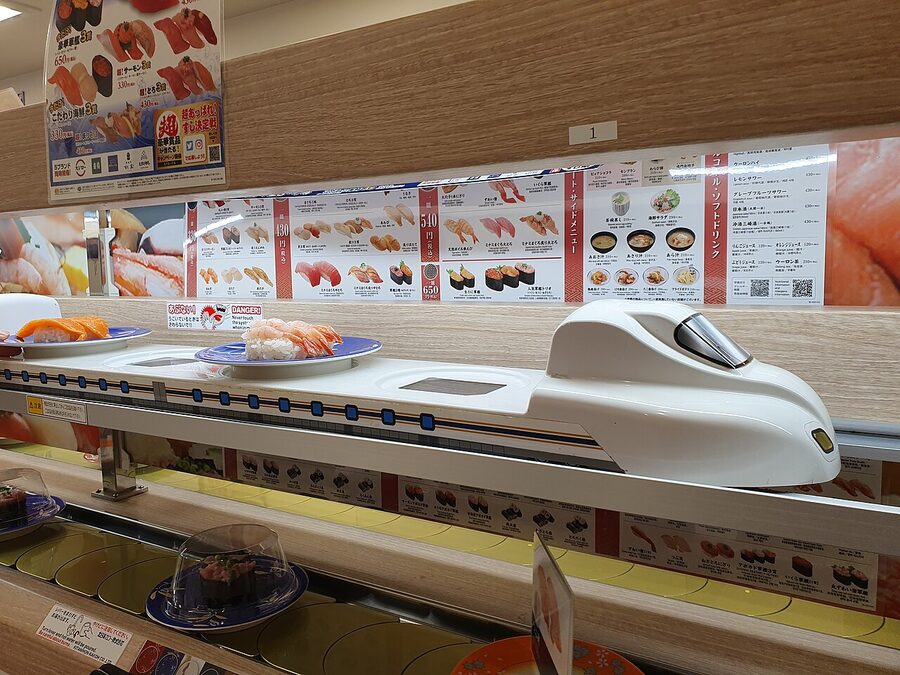
- Press the green “order” button. A little train or personal mini-belt delivers your plate in 90 seconds to three minutes, stopping dead at your seat.
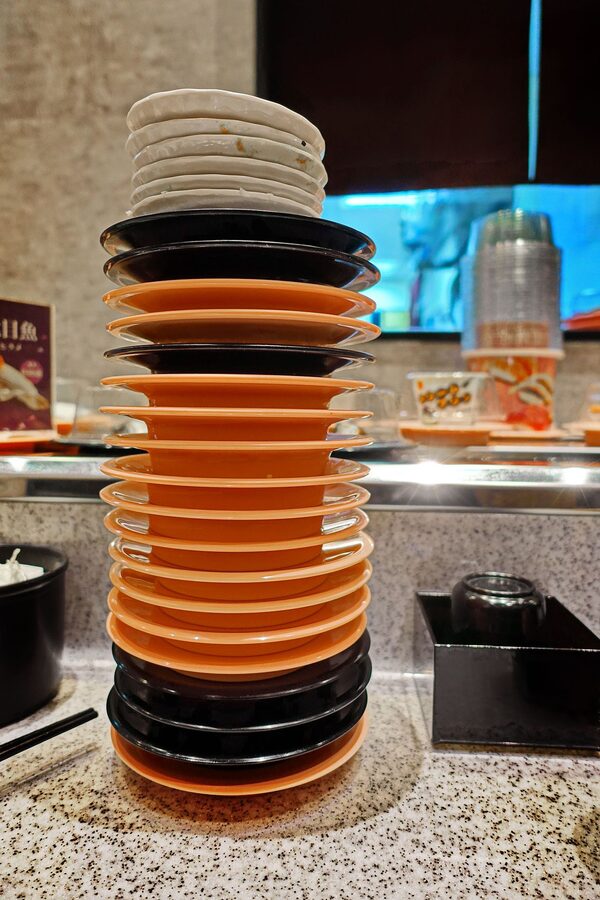
- Stack your plates as you go. When you finish, press “bill please” on the screen, take the slip to the cashier or a vending machine, pay.
The four kaiten chains and what they each do well
- Sushiro: the biggest, most consistent, the widest menu including weird novelties like corn tempura nigiri and hamburger nigiri. Go for value and variety. Currently most branches are fully made-to-order, with a virtual belt on screen.
- Kura Sushi: the family-friendly one. Every five plates you slot into the slot in the counter, you get a gachapon-style mini-game on the screen. Win and a little capsule toy drops out. If you are travelling with kids, go here first.
- Hamazushi: the cheapest of the big chains on weekday lunchtimes — plates start at ¥100 during weekday off-peak. Menu is shorter, but the sushi is fine.
- Nemuro Hanamaru: a Hokkaido-origin chain, slightly pricier (¥160–500), chefs still make every plate by hand, and the belt is still actually turning. This is where I go when I want the classic kaiten experience rather than the fully-automated version. The Kitte Building branch near Tokyo Station is very easy to find.
Standing sushi, the local’s quick lunch
Tachi-gui, or “eat standing”, is a category most tourists miss. You walk into a counter the size of a phone booth, stand shoulder-to-shoulder with salarymen, eat six pieces of very fresh nigiri for about ¥1,500–2,500, and leave in fifteen minutes. The cost-to-quality ratio is absurd. These places exist because Tokyo office workers have a 45-minute lunch and want real sushi, not a chain, and the only way to make that economic is to turn the counter fast.
You order by pointing or by the English laminated menu every one of these places keeps under the counter for sheepish foreigners like me. Beer is usually available in a can from a small fridge behind the counter. No tipping, no table service, no atmosphere in the Michelin sense. Just very good fish, stood up.
Neta counters, where I eat most often
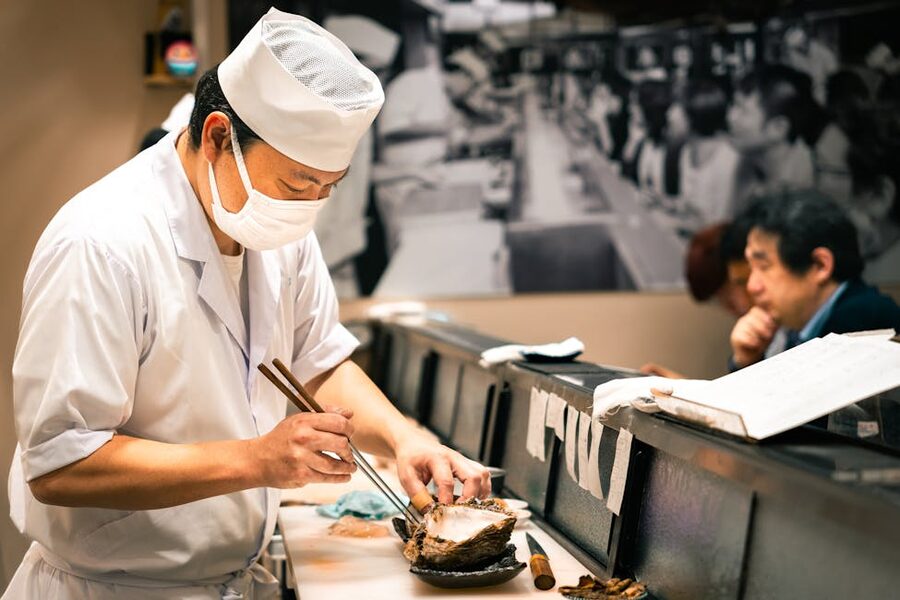
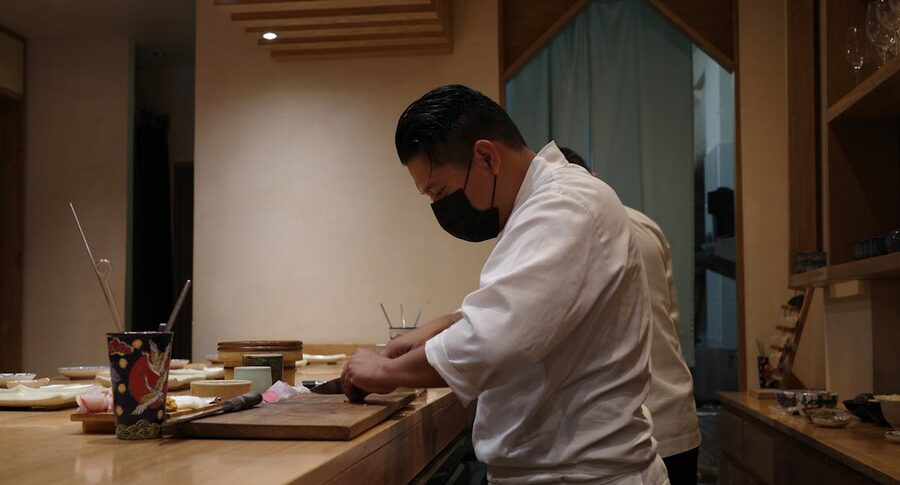
This is the sweet spot and the tier most first-timers skip because they have never heard of it. A neta counter is a small proper sushi shop — six to twelve seats at a wooden counter, a chef in whites working in front of you, a lunch nigiri set at ¥3,000–6,000. You reserve a few days ahead or walk in at odd hours.
The difference between a neta counter and a kaiten is night and day. The rice is hand-seasoned and served body-temperature. The fish has often been aged a few days in cheesecloth, which is a technique most Westerners do not associate with sushi at all. The chef will usually ask if there is anything you cannot eat and will adjust.
Neta counters to look up
These are all from the specific lists in my research sources, not from general knowledge — I would not invent a sushi shop name. Verify the current address and hours on Tabelog before you go; small counters move, close, or change their lunch hours more often than you would think.
- Kyubey (Ginza): larger than most Ginza sushi shops and noticeably more boisterous. The first high-end counter many visitors try. Lunch nigiri sets from ¥4,000. Walk-ins are allowed but call a few days ahead if you can.
- Bentenyama Miyako Sushi (Asakusa): a scruffy, blue-collar shop doing classic Edomae-style sushi for generations. Seventy-five-year-old chef. Nigiri sets from ¥2,200 — a remarkable price for what you get.
- Kizushi (Ningyocho): third-generation Edomae shop. Ten-piece lunch set around ¥3,000. Strong, sour, properly seasoned rice.
- Yoshino Sushi Honten (Nihonbashi): old-school, working-class atmosphere. Eight nigiri plus a hosomaki for ¥2,200 at lunch.
- Sushi Iwa (Ginza): cheapest lunch around ¥5,000 for ten pieces. Reservation recommended 2–3 weeks out.
These shop names come from The Sushi Geek’s Tokyo shortlist, which has been my reference for sit-down sushi under ¥5,000 for years. Not every shop will still match its 2018 pricing, so confirm.
Mid-range reserved omakase (¥8,000–15,000)
At this tier you reserve two to four weeks ahead, arrive at 18:00 or 20:30 for one of two sittings, and eat for about ninety minutes. The chef decides everything. You get twenty to thirty little things brought to you one at a time: nigiri, a small cooked dish, a seasonal something, nigiri again, a bowl of soup at the end. This is when sushi stops being a meal and becomes a piece of theatre you are allowed to watch from the front row.
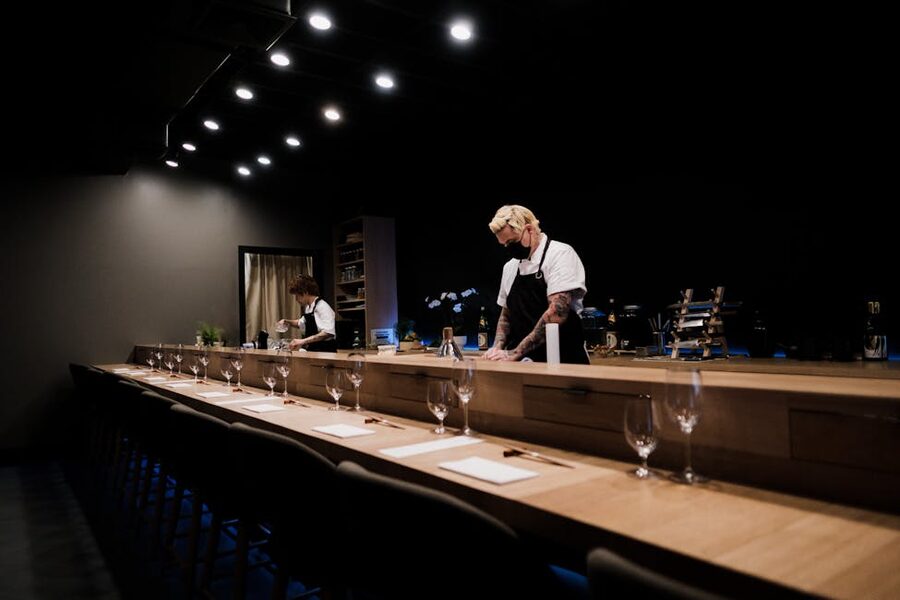
Names worth looking up in this tier from my sources: Sushi Ya in Ginza (a Kanesaka outpost, lunch omakase from around ¥8,000, “their tamago is insane”), Takamitsu in Meguro (known for uni and tuna; eleven seats, no English, you will need Google Translate and the chef will still look slightly puzzled by you, which is also fine), Sushi Taira in Motoazabu (tourist-friendly, three types of rice depending on the fish), and Umi in Minami Aoyama (formerly two Michelin stars, eight seats, English-friendly, their seared anago is the best most reviewers have ever had).
How to book a reservation at this tier
Three practical routes, in order of ease:
- Pocket Concierge (pocket-concierge.jp) and TableCheck — both take card bookings in English. Pocket Concierge charges a booking fee (usually ¥1,000–2,000) and is the main way foreign travellers get into mid-range shops. Book two to four weeks out.
- Your hotel concierge. If you are staying somewhere like the Bulgari, Aman, Park Hyatt or Okura, the concierge has relationships with sushi-ya and can get you seats that are “not available”. I have never paid more than a ¥1,000 tip for a concierge booking in Tokyo.
- TableAll (tableall.com) for the hard-to-get tier above this. Charges around ¥8,000 per person as a booking fee and is not guaranteed, but has worked for me and for my sources.
If the site says “fully booked”, keep refreshing once a day. Cancellations happen a week out. This is how most single-traveller seats get filled.
Read the separate guide to restaurant reservations in Tokyo for the full process, including the polite phrasing for calling a sushi-ya directly in the rare case you need to.
High-end sushi and the Sukiyabashi Jiro problem
Let me get this out of the way early — the Sukiyabashi Jiro question. You have seen the documentary. You have Googled “how to book Sukiyabashi Jiro”. The answer, since 2018, is: you cannot. The main Ginza branch stopped taking walk-in or online bookings and now runs on a closed regulars list. It is not obstinacy, it is crowd control — it is an eight-seat counter and there are millions of people who want to go. Stop Googling it. Read the reservations guide for what you can realistically book instead.
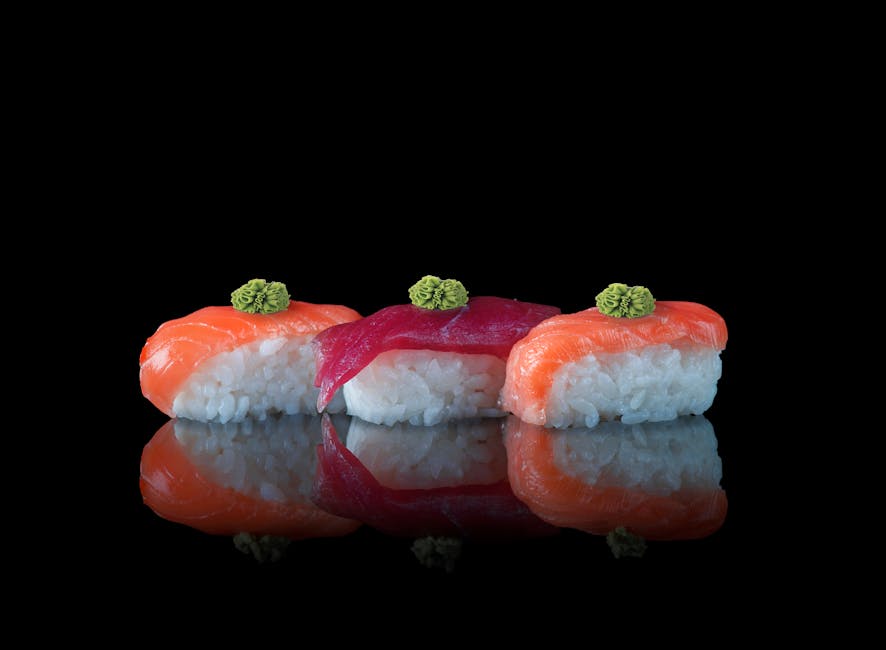
Here is the reality of tier 5. Sushi Saito (Akasaka, ~¥33,000) is the most famously elite. It does not take direct foreigner bookings. TableAll will occasionally get you in via their paid booking service. Sushi Sugita is similar — “virtually impossible to get into unless you are a regular or have a plugged-in local.” Sushi Hoseki at the Bulgari Hotel (Yaesu, ¥44,000) is hotel-based and the concierge can actually get you a table; it is one of the rare truly elite experiences that is open to foreigners with money. Sushi Arai is bookable online 2–3 months out, and you will likely be seated at the side counter rather than the main one, which is absolutely fine — the sous chef serves there and speaks English.
Honest opinion: unless someone local is actively booking for you, I would not chase tier 5 on a first Tokyo trip. You will spend more time trying to get the reservation than you will eating the meal, and the jump in quality from a ¥12,000 omakase to a ¥35,000 omakase is real but nowhere near proportional to the price. The jump from ¥1,500 kaiten to ¥12,000 omakase is the jump worth making.
High-end shops my sources actually got into
- Sushi Hoseki (Bulgari Hotel, 40F, Yaesu): 3-Michelin-star head chef Kenji Gyoten of Sushi Gyoten in Fukuoka. Two lunch sittings, three dinner sittings. Hotel concierge can book it.
- Sushi Saito (Akasaka): two sittings at 18:00 and 20:30. Use TableAll if you are serious about it.
- Hakkoku (Ginza): Chef Hiroyuki Sato. Classic Edomae with firm, strongly-vinegared rice and a purist selection.
- Sushisho Masa: “nearly 50 dishes in the omakase”, online reservations a month ahead. Considered better value at the top end than most.
- Sushi Ya (already mentioned above in mid-range for lunch — at dinner it jumps into high-end territory).
Tsukiji outer market, breakfast sushi
Tsukiji’s wholesale tuna auction moved to Toyosu in October 2018. What stayed open is the outer market — the rows of retail shops, food stalls, and small sushi counters between the wholesale area and Tsukiji Hongan-ji. It is the single best thing to do on a jet-lagged Tokyo morning, for two reasons: you will already be awake at 5am anyway, and sushi for breakfast is a perfectly normal thing to do there.
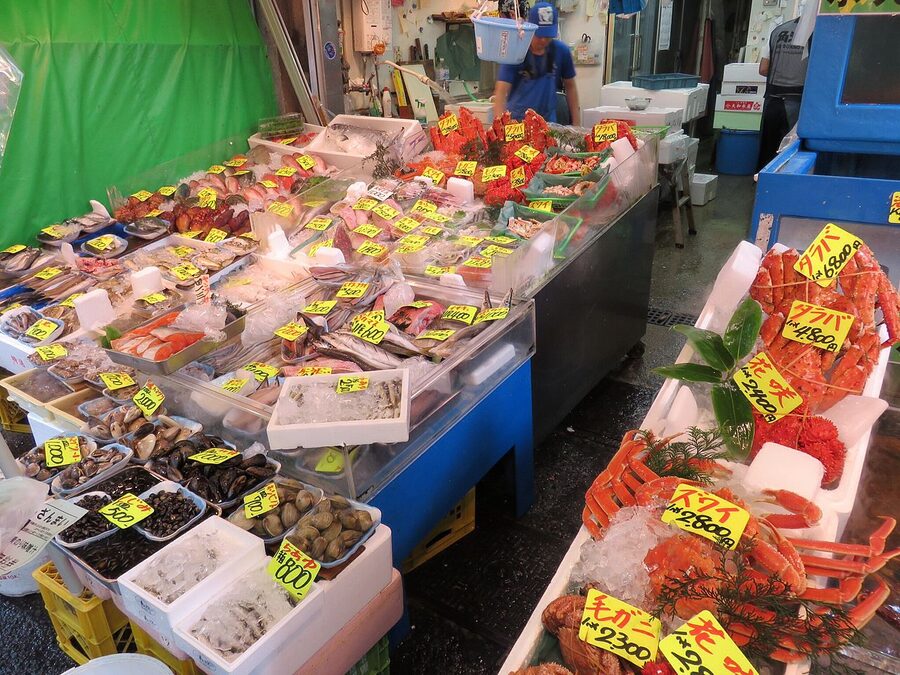
Sushizanmai has a branch right in the outer market and another one that is open 24 hours. It is a reliable mid-range chain, not high-end, and the outer market branch is exactly the right level for a 07:00 breakfast. You can walk in, sit down, and have a proper set nigiri in front of you in ten minutes. Many guides sniff at Sushizanmai because it is a chain, but it is what a lot of Tokyo office workers actually eat.
How to do the Tsukiji sushi breakfast
- Leave your hotel at about 05:30. Take the Hibiya Line to Tsukiji Station. Exit 1 is closest to the outer market.
- Walk past the first few food-stall alleys. Do not eat yet. Look at the grilled uni, the tamago-yaki stall, the tiny pickle shops. You will come back for these afterwards.
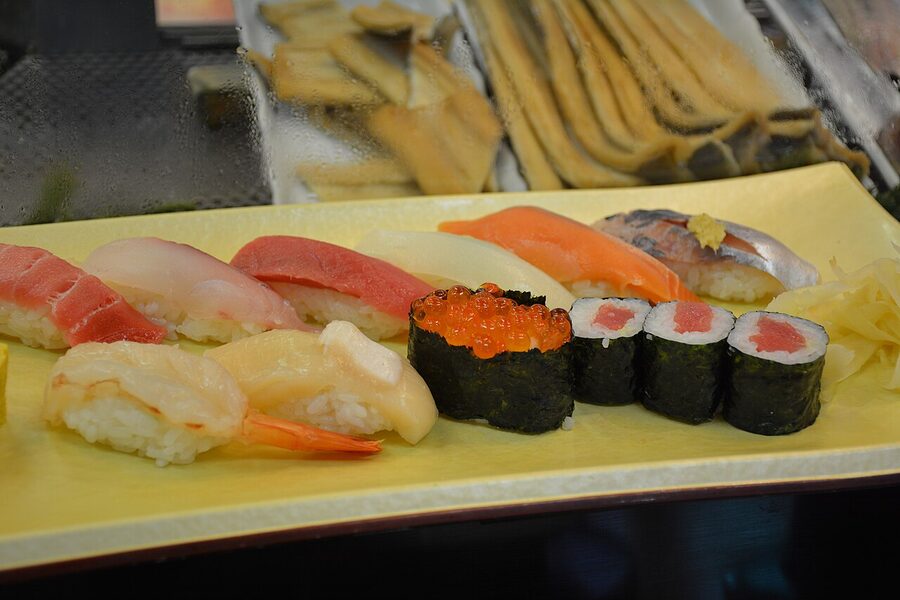
- Find a sit-down sushi counter with a short queue — Sushizanmai is the easy default. Order the lunch nigiri set (¥1,800–3,500 depending on level) and a miso soup.
- Eat slowly. You have nowhere to be. The point of this meal is the contrast with whatever you are going to do after — a morning at Hamarikyu Gardens is perfect.
- Walk back through the stalls you skipped. Buy a tamago-yaki stick (¥200). Eat it standing up. Watch the fishmonger’s cat, if the fishmonger’s cat is there.
- Walk 10 minutes south to Ginza for the absurd contrast between the outer market at 08:00 and Ginza at 10:00.
Skip your hotel breakfast one morning. Even if you are at a place that serves a ¥4,500 buffet, it is not worth it compared to a proper Tsukiji sushi at sunrise.
Toyosu market, the wholesale side
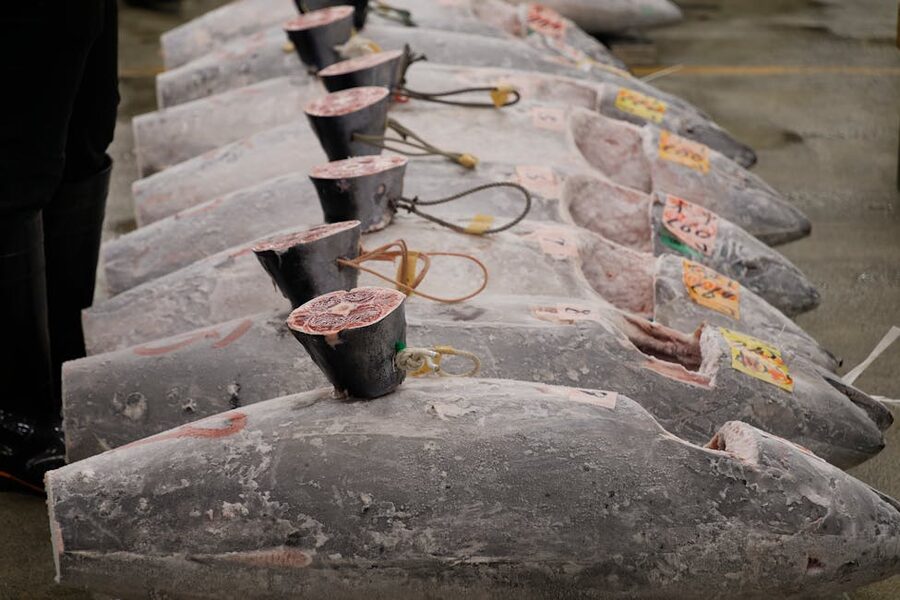
Toyosu is the new wholesale market. It opened in 2018 when Tsukiji’s wholesale operation relocated. It is enormous, modern, clinical, and largely walled off from tourists. You can visit the tuna auction viewing deck at 05:30 (pre-book free tickets via the Toyosu Senkyaku Banrai website) and watch the bidding through a window for about 25 minutes. It is interesting but heavily removed from the action.
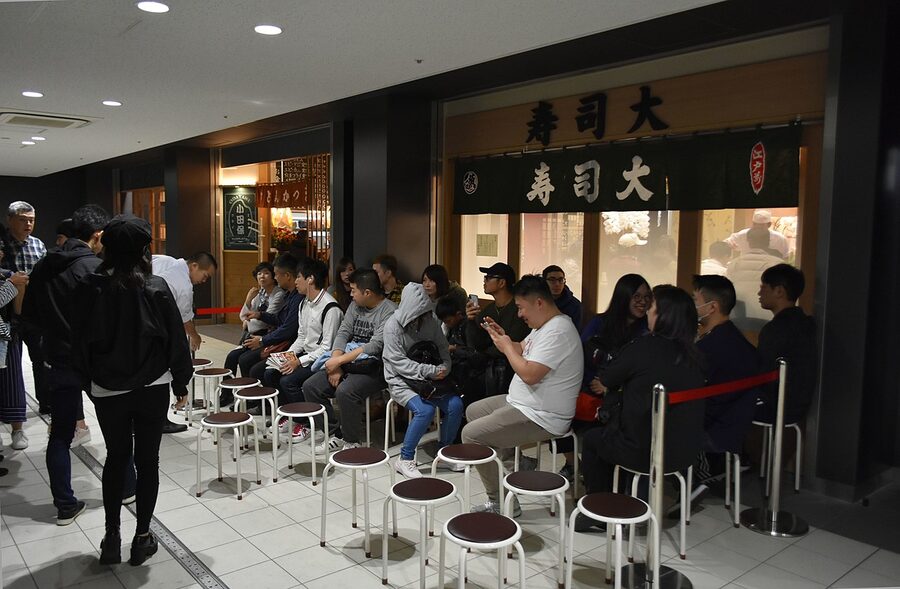
The real reason to come to Toyosu is the sushi breakfast. Sushi Dai and Daiwa Sushi both moved here from Tsukiji, and they both still pull long early-morning queues. Sushi Dai used to require a 04:00 queue for a 07:00 opening at the old Tsukiji; it now opens at 05:30 with around twenty seats, which has eased the wait — but it is still long. My source says a full omakase at Sushi Dai runs around ¥5,000 per person and is “hands-down the best sushi I’ve had under that price point”. Daiwa Sushi next door has more counter seats and a shorter queue (~30 minutes from 07:00), for comparable food.
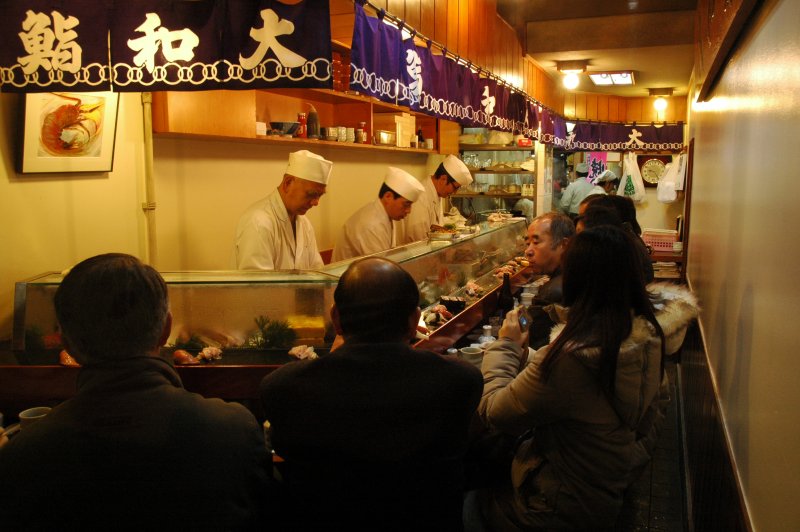
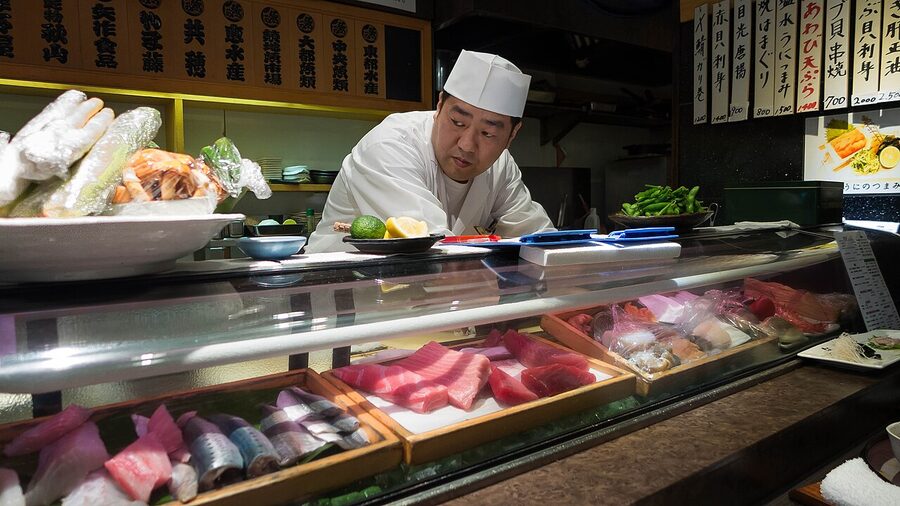
Honest take: the fish at Sushi Dai is not actually fresher than at a ¥20,000 Ginza omakase. Every high-end shop in Tokyo buys from the same Toyosu auction daily. What you are paying for at Sushi Dai is the experience — being in the market building, the queue mythology, the “I ate sushi at Toyosu at 08:00” dinner-party line. Worth doing once. Not worth arranging your whole Tokyo trip around.
How to actually eat nigiri
The number of things you can get wrong here is oddly manageable. There are only a few rules, and if you break them at a casual shop nobody will mind. At a high-end counter, though, the chef notices everything.
The four steps
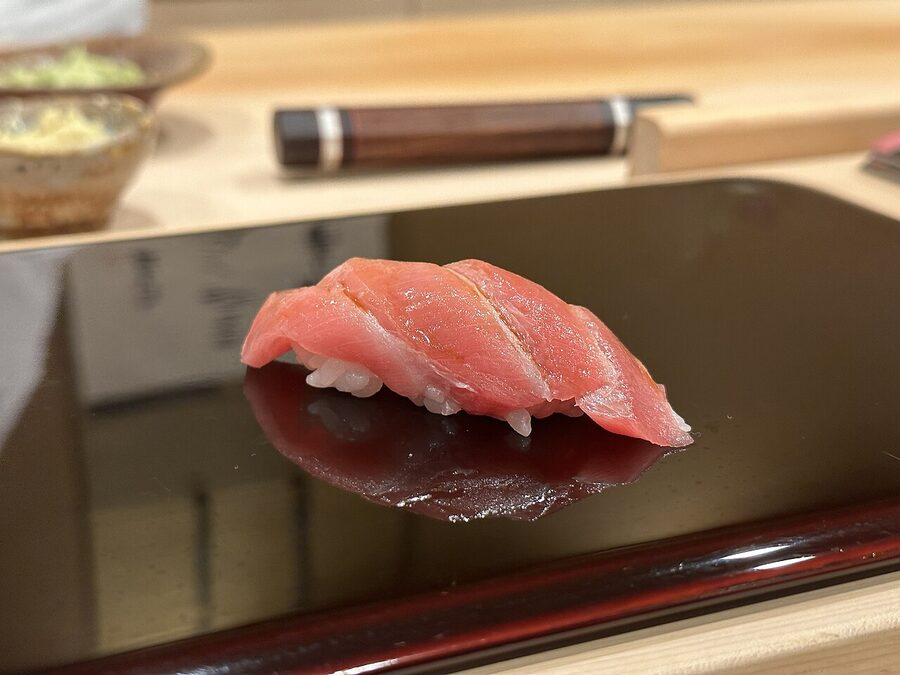
- Pick it up with your fingers. Nigiri is historically finger food. The first sushi in Edo-period Tokyo was a handheld street snack. Chopsticks are for sashimi. At a high-end counter, reach for the piece with your thumb, index, and middle finger, the way you would pick up a small cupcake.
- Turn it fish-side down. Tilt the piece so that when you dip it, the fish hits the soy sauce, not the rice. Rice soaks up soy like a sponge and then falls apart in your mouth. A tiny dip, not a marinade.
- Do not add wasabi. At a proper counter the chef has already placed wasabi between the fish and the rice. More wasabi in the soy sauce is considered rude to the chef, because it means you think his seasoning is insufficient. At a kaiten, feel free, nobody cares.
- Eat in one bite. Nigiri is engineered as a single mouthful. Two bites and the shape collapses. If it is too big for you, tell the chef “chiisai, onegaishimasu” at the start and he will make them smaller.
Gari, wasabi, soy sauce — the three things on the counter
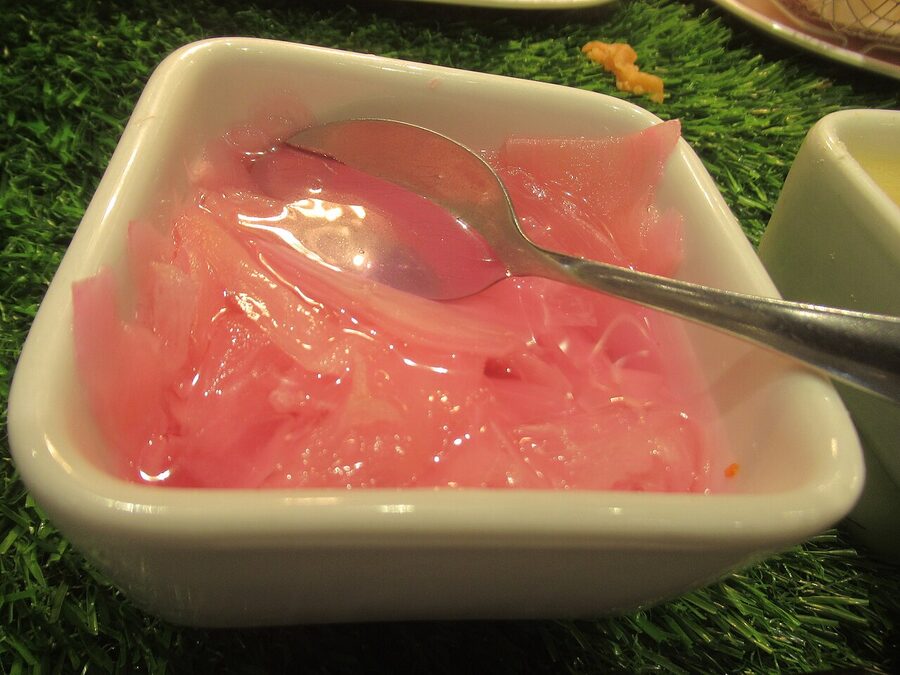
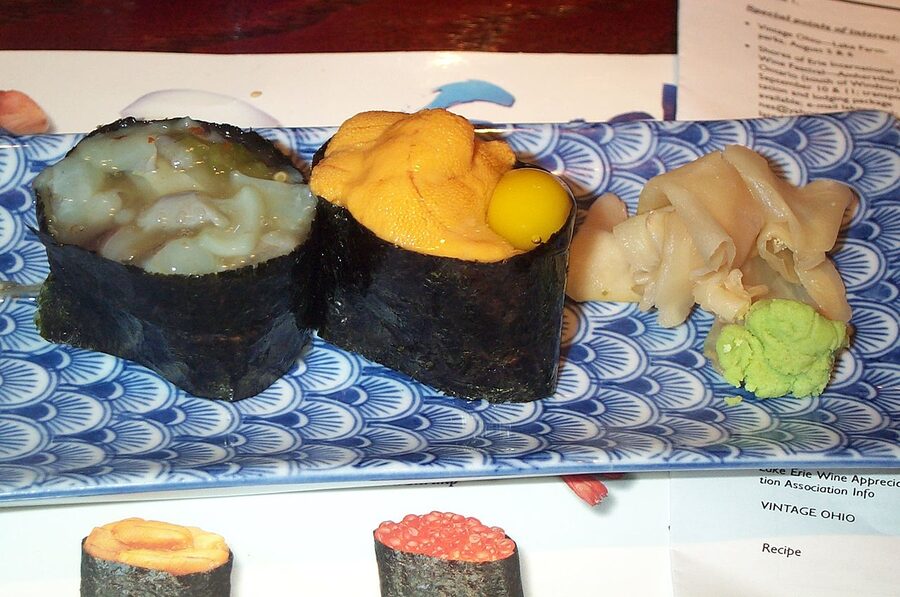
There is always a little pile of pink pickled ginger on the side. This is gari. It is not a garnish. You eat it between bites, not on them, to reset your palate — so the maguro does not bleed into the saba into the tamago. A tiny slice between each piece is plenty. Never put gari on top of your nigiri, ever.
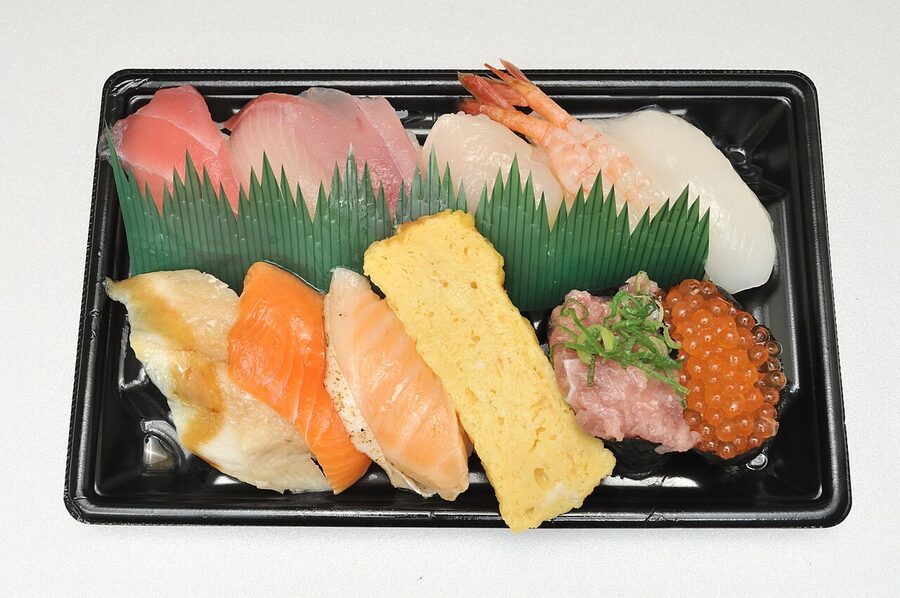
And the tamago. Traditionally, a sushi chef’s first test is the tamago — the slightly sweet folded-egg nigiri that looks like a small yellow cushion. Chefs are judged on the tamago before the tuna. If the tamago has a clean, uniformly firm edge, with no scorch mark and a slight sweetness that is not cloying, the rest of his sushi will be good. If the tamago is rubbery or unevenly cooked, politely finish your meal and consider going elsewhere next time. I learned this from a blog I barely remember and have used it as a shortcut ever since.
For the full set of etiquette rules (bowing at the door, shoe removal, tipping — the answer is don’t) see the Japanese dining etiquette guide.
A short glossary so you can read a sushi menu
Most menus at casual shops have photos. But at a neta counter or omakase, the chef will call out the name of each piece as he hands it to you. Knowing about twenty words gets you through basically everything.
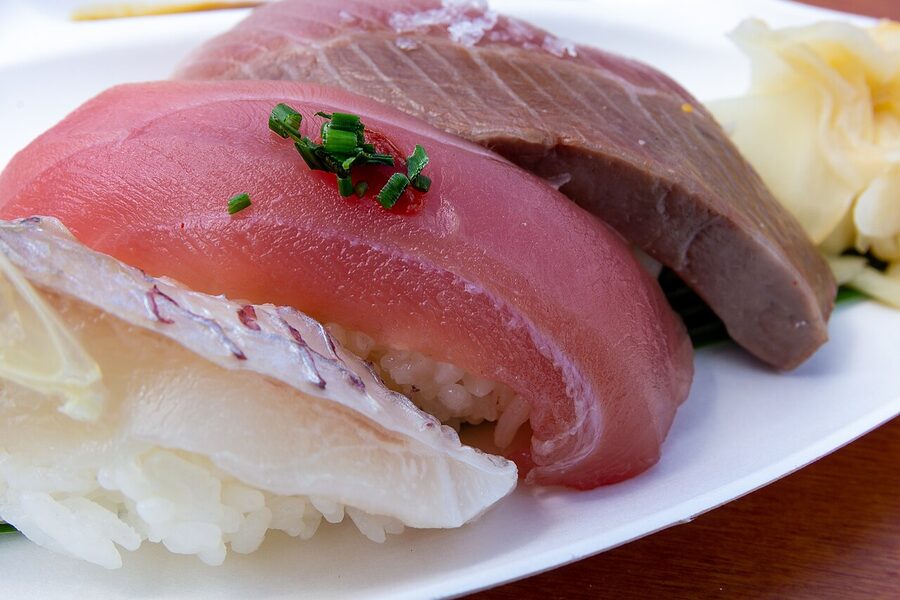
- maguro — tuna. akami is the lean red flesh, chutoro is the medium-fatty cut, otoro is the richest fatty belly cut.
- sake — salmon (same romanisation as the rice wine, different kanji; context is usually obvious).
- saba — mackerel, usually salted and vinegared. Strong flavour.
- hamachi / buri — yellowtail. Silky, mid-strong.
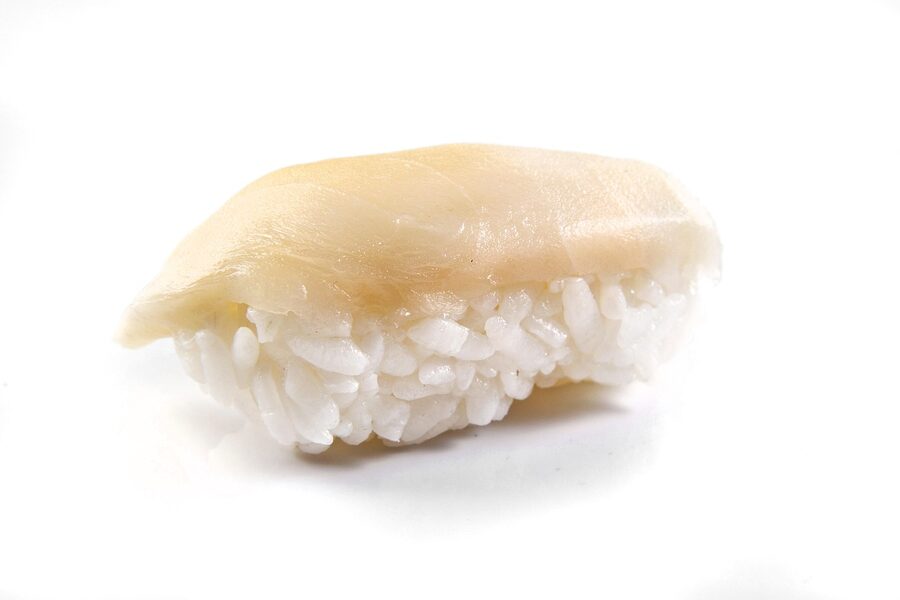
- hirame — flounder. White, mild, often first in an omakase.
- tai — sea bream. Another classic white fish.
- kohada — gizzard shad. A classic Edomae staple, vinegared, silver-scaled, an acquired taste.
- aji — horse mackerel. Stronger.
- hotate — scallop. Sweet, winter is its season.
- ebi — prawn, usually cooked. amaebi is the sweet raw prawn.
- ika — squid. tako — octopus.
- uni — sea urchin. Creamy, yellow-orange, served on a strip of nori as gunkan. Hokkaido-sourced is most prized.
- ikura — salmon roe. Bursts.
- anago — sea eel. Cooked, brushed with sweet sauce. Different and usually milder than unagi, the freshwater eel.
- tamago — folded egg. The chef’s test.
Fish in season — what to order when
Japanese sushi is deeply seasonal. The concept of shun — the peak window for each fish — is central to how a chef builds a menu. Toro and salmon and tamago are year-round. Most other things have a season. If you are visiting in a specific month, order accordingly:
- Spring (March–May): katsuo (bonito, early spring is “first bonito” season — a delicacy), kisu (sillago), new-season hamaguri (clam).
- Summer (June–August): iwashi (sardine — peak in June), aji (horse mackerel), uni from Hokkaido peaks July–August.
- Autumn (September–November): sanma (pacific saury, peak October), kohada at its best, sake returning from sea.
- Winter (December–February): hirame, buri (yellowtail — the fattiest winter fish), hotate (scallop), fugu if you want to go off-piste (not usually sushi, but counter-served sashimi at certain shops).
At a good omakase counter you do not choose — the chef orders the day’s Toyosu catch and builds the menu around what is at its peak that morning. This is another reason to choose omakase over à la carte in the mid and high tiers.
Practical info at a glance
- Kaiten opening hours: typically 11:00–23:00, no break. Dinner queue 18:30–20:00.
- Sit-down counter lunch: 11:30–14:00, one sitting.
- Sit-down counter dinner: usually two sittings — 17:30–19:30 and 20:00–22:00.
- Tsukiji outer market stalls: 05:00–14:00; the sushi-ya inside open 05:00 or 06:00.
- Toyosu sushi breakfast: Sushi Dai and Daiwa Sushi open 05:30, close around 14:00. Queue from 05:00 if you want Sushi Dai.
- Prices: kaiten ¥1,500–3,000; standing ¥2,000–3,500; neta lunch ¥3,000–6,000; mid-range omakase ¥8,000–15,000; high-end ¥20,000–60,000.
- Reservations: essential for tiers 3–5. Use Pocket Concierge or TableCheck. Book 2–4 weeks ahead for mid-range; 1–3 months for high-end.
- Payment: cards are accepted at kaiten, most mid-range, and high-end shops. A small minority of old-school Edomae shops are cash-only — check in advance.
- Dress: no code at kaiten or standing. Smart casual at mid-range and above. Shoes stay on; it is not a traditional restaurant in that sense.
- Tipping: never. Tipping is not done in Japan and will confuse the chef.
- Allergies: tell the chef or waiter at the start. At omakase the set will be adjusted; at kaiten just avoid what you cannot eat.
How I’d eat sushi across three Tokyo days
If you want to hit every tier without breaking yourself, here is my actual sequence:
Day 1 — kaiten dinner. Arrive in Tokyo, check into your hotel, drop bags, get back on the train. A Nemuro Hanamaru at the Kitte Building near Tokyo Station is walking distance from several hotel areas. ¥2,500 for a proper dinner of twelve plates, including a beer. You are calibrating your palate at the low end — and the next two meals will feel extraordinary by comparison.
Day 2 morning — Tsukiji outer market breakfast. Sushizanmai at the outer market, ¥1,800 for a nigiri set at 07:00. Tamago-yaki stick afterwards. Walk to Ginza for the 10:00 opening of the luxury stores — the contrast of a 07:00 Tsukiji alley and 10:00 Ginza Chuo-dori in the same morning is pure Tokyo.
Day 2 dinner — neta counter. Kyubey in Ginza for dinner if you can get in, or Bentenyama Miyako in Asakusa if you want something more working-class. ¥5,000–7,000, about ninety minutes, proper Edomae sushi. This is the education bit.
Day 3 — mid-range omakase. Book Sushi Ya or Sushi Taira via Pocket Concierge two weeks before your trip. ¥10,000–15,000. Three hours. This is the meal you will remember.
Three very different meals. Total budget around ¥25,000 per person. You will have eaten more sushi in three days than most Tokyoites eat in two months, and you will understand the five tiers better than a tourist who spent ¥45,000 on a single high-end dinner.
What to skip
I promised honest opinions. Here are the sushi things I would not bother with on a first Tokyo trip:
- Conbini sushi. 7-Eleven makes excellent onigiri, bento, and sandwiches. The sushi is fine. But you are in Tokyo. Read the conbini food guide for what to actually buy at 7-Eleven, and let the sushi live at a real counter.
- The Sushi Dai queue if it is over ninety minutes. Cross the courtyard to Daiwa. You will not tell the difference.
- Sukiyabashi Jiro. Stop. I mean this kindly.
- All-you-can-eat sushi buffets. These exist in Tokyo and they are not Tokyo. They are a specific thing for a specific market. Skip.
- Giant Instagram rolls with flaming torches and edible gold. There is a tiny industry of sushi shops set up for tourist photos. The sushi is not good and the concept is not Japanese.
And things that pair well with a sushi-heavy itinerary: the Tokyo ramen guide for dinner after a sushi lunch, and the general Tokyo restaurant reservations walk-through for the logistics of getting into the omakase counters above.
Useful external links for planning: Pocket Concierge for English-language bookings, Tabelog for the Japanese ranking data (the Gold and Silver Awards are the most reliable rankings in Tokyo food), and JNTO’s sushi explainer for general background.